Sure, it can mean money or wealth, but here we’re talking about luck, fate, Fortuna. It’s part and parcel of roleplaying games everytime you roll dice. (Yeah, there’s Amber… hush.) Add ‘em, look for a certain number or symbol for “success”, look for matches — the dice giveth, and the dice taketh away. “Probability is like gravity,” says Crockett in Miami Vice (the meh movie, not the fantastic [first two seasons] television show.) Like gravity, it was inescapable.
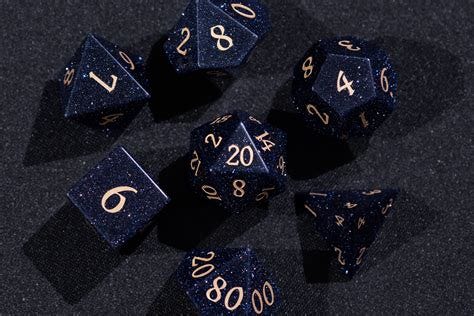
Dice aren’t the only way to add probability into the equation. Some LARPers use rock-paper-scissors. In Castle Falkenstein, they used playing cards as the randomizer, and having a hand meant having options and being able to plan your actions. (It was pretty innovative, and with some manhandling for combat, it worked very well.) You can use d6s like normal board games. You can use d20s, or other polyhedrals, or combinations, looking to create differing probability curves. Outside of the stats for a character, probability — fortune — is the life’s blood of an RPG.
Over the years, our gaming table has seen incredibly lucky rolls — the kind that waste your big bad in a shot or allow the characters to mess up all of your meticulous planning. (As with combat, no plan survives contact with your players.) We’ve also seen improbable die rolls where 32d6 led to not one single 6 (in this case, Alien — I think their fancy dice aren’t well balanced, folks.) We’ve also seen six — count ‘em, six 100s come up in a critical scene where a player’s highly-skilled fighter pilot was attempting to dodge a missile in James Bond: 007, only to have his plane lose an engine and go into a flat spin. At each altitude level, he had a roughly 60ish percent chance of recovery — that’s pretty good. Rolls 100 each time — six 100s in a row. Finally, he punches out of the craft — 100. He gets killed by the tail of his wildly spinning craft.
‘cause probability is like gravity — it’s inevitable.
What’s a good moment of fortune — good or bad for your games?


Leave a Reply