We always tell folks to be proud — of their accomplishments, who they are, where they’re from — but for much of humankind, pride is seen as a danger, as well. Pride is probably the one sin that crosses all religions. For the Greeks, hubris was the ultimate crime against the gods…even though they often respected heroes who skirted the edges of this with their pride. Proverbs 16:18 tells us “Pride goes before destruction, and a haughty spirit comes before a fall.” and hits us a bit later with “Before destruction, the heart of man is haughty, but humility comes before honor.” The Bhagavad Gita lists excessive pride as a nullifying of good karma, and that modesty (namrata) is the first virtue. Pride is called māna in Buddhism (this is the “excessive” form word in Hindu) and is tied to an excessive ego and causing harm to others. Since increasing suffering is the opposite of achieving enlightenment, it is considered a mental poison.
Is there something wrong with taking pride in doing a good job? No. Is there pride in seeing yourself as somehow better than other people — well, that’s where things get dicey. Excessive pride leads you to over-estimate your abilities, your worth as a person, undervalue others and their contributions. It makes you slip up, because you don’t see that possibility. And let’s face it…we all love to watch the mighty fall; history is replete examples. Perhaps one of the best examples of this is the poem Ozymandius by Percy Bysshe Shelley — a story of the ruined remains of a statue to some prideful king, the plinth boasting of his works…surrounded by desert.
So, let’s create our own Ozymandius for Legend in the Misti — a nobleman and warrior of stunning ability in the early portion of his career: Antra Langress, from the mountainous of the north, has inherited his father’s small fiefdom and seeing the ills of the world, is rushing out to meet them and bring order and peace to the world (or as much of it as he can…) Young, smart, and cunning, he knows he is destined for something great…that some fate awaits him. He is boastful, and usually rightfully so. (The worst kind!) He leaves foes crushed behind him, but seething in their defeat. He leads an army of excellent warriors who enjoy their job too much and see their inspired leader as a means to wealth and power. Dominion awaits!
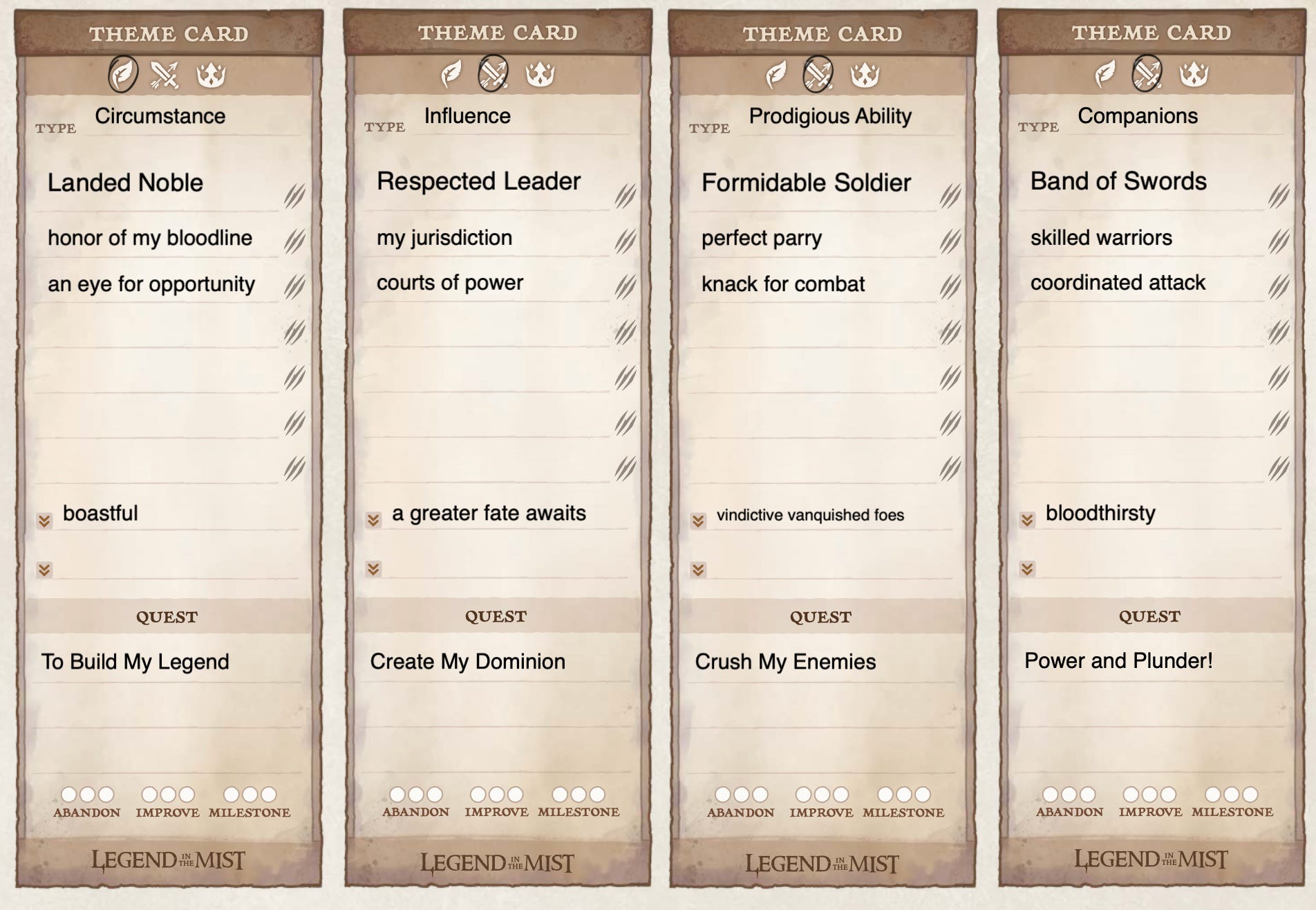
But built into the character are the seeds for his destruction — one that, if the player were willing to pursue that story, could lead to an Alexander-like figure who conquers a quarter of the known world in a matter of years, then dies either from some disease (or poisioning), or the betrayal of his ministers of state, jealous and resentful of his power. Or like Conan — sit on a throne with crown resting on a heavy brow. He got everything he wanted…and now realizes that there is nothing more, and what he got was not just his, but the troubles of his subjects, to content with.


Leave a Reply