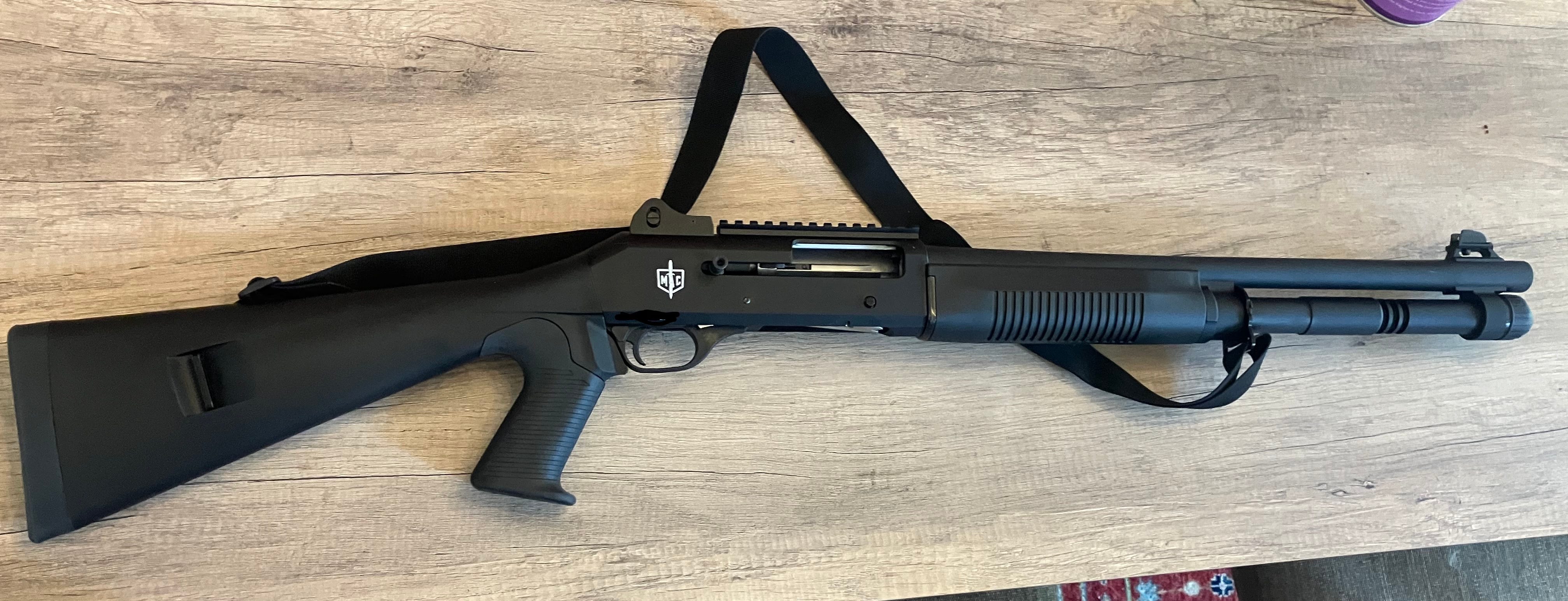
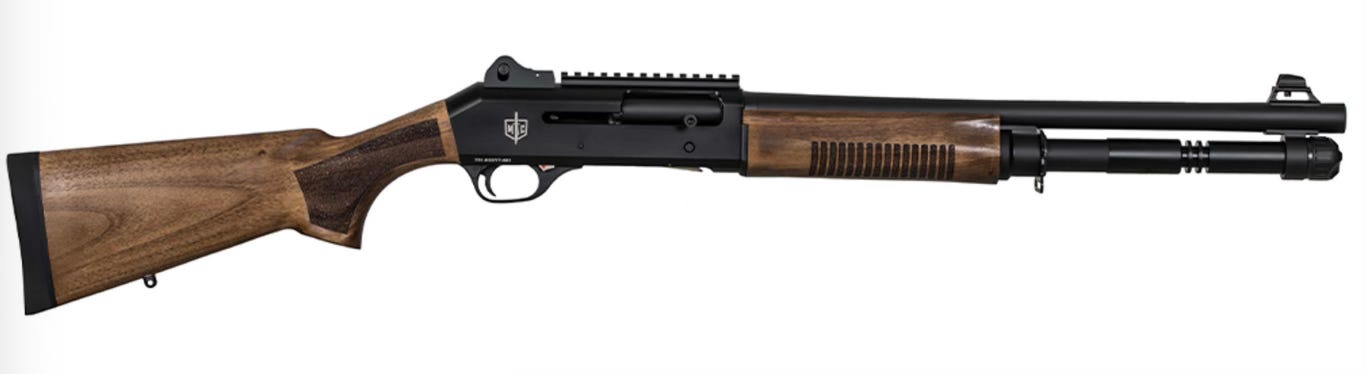
After the experience with the MAC2, I thought it would be interesting to see how the Military Armament Corporation’s knock-off of the Benelli M4 (known to the Marines as the M1014) compares. There happened to be a pair of these at the excellent Workhorse Armory here in Albuquerque — one with the walnut furniture, and a more traditional tacticool one. I went with the second.
Unlike the MAC2, which uses the inertia system of the M1/M2 series, the M4 utilizes the “auto-regulating gas-operated” (ARGO) system — it’s a short stroke piston system that supposedly self-cleans (bullshit!), and is supposed to be self-regulating to handle both light and heavy loads. More on that in a moment…
The MAC1014 (in this configuration) came with plastic stock and foregrips, and unlike the MAC2, there was actually a rear sling mount. The shotgun came with a MAC-branded sling, three choke tubes, tools to change said tubes. It uses the “ghost ring” sights — with a nice bright white dot on the front post, and the usual two white dots on the ring for very quick acquisition of the target. It also has a Picatinny rail on the receiver ahead of the read sight for optics. It comes with a 5 round tube — so six shots, total, but like the Benelli, can be modified with aftermarket parts for seven, either from MAC themselves or Benelli-compatible parts. Allegedly, the gun is 99% parts interchangeable.
I did a thorough cleaning, as I had with the other two MAC shotguns and saw none of the finish issues I had with the first MAC2 we tested. The weapon broke down easily and once cleaned and oiled, I took it out to the range the next morning.
This first trip was not the fifty shell shoulder torture of the MAC2; I only shot 30 shells, but could have easily done twice that. One of the supposed benefits of the ARGO system is lighter recoil, and that’s true. Even with older Super-X slugs, the recoil wasn’t worse than my little KS7 firing birdshot.
I kept it simple: all targets were at 20 yards. The ammo used was all Federal Premium and some older Winchester Super-X slugs. About that self-regulating thing with the gas system…nope. Maybe this is a break-in thing, but it really didn’t like the “Personal Defense” loads — 1145fps 00 buckshot. They shot phenomenally well: on point of aim, with a very tight group that had minimal spread (maybe four inches). So, just a good word in for the FliteControl packing for the Federal 00 buckshot; it’s fantastic! But in the MAC 1014, I had a failure to eject with every shell, and I purposefully spread these out with the slugs and heavier buckshot to see if the gun would loosen up a bit as I went on. Nope.
This was not an issue with the Federal Power-Shok buckshot, rated for 1350fps. Recoil was still quite light and I was able to annoy the guy next to me on the range but popping off six in rapid succession. The Power-Shok were nowhere as tight as the FliteControl ammunition, and the spread was about double at 20 yards, including a few over the shoulder of the silhouette. Next was the Federal Trueball slugs rated for 1300fps. These are stout, but I found them surprisingly pleasant to shoot from the 1014, and like the FliteControl — true to point of aim and light enough on the recoil I could drop the whole tube and stay in the nine ring. The older Super-X rifled slugs moving at 1600fps saw me drift a few inches to the right and up, but still in the eight and seven ring, due to recoil, which was noticeable — as was the report; much louder — but not unpleasant.
After the range trip, I broke the shotgun down and cleaned and inspected it. The gas pistons were dirty, but not outrageously so. The barrel was a bit dirty, but one pass had it clean. There was no damage to the finish, as with the original MAC2, and the shotgun went back together without issue. Probably the most annoying parts of the disassembly/reassembly are the bolt handle, which has to be rotated as you pull it out, or it’s not coming; and the two piece forearm, which requires a bit of finesse to get it back in. Nothing serious.
So is it worth it? At $370 before tax, this is an absolutely buy. It’s built like a tank; better than the MAC2, in my opinion, and the ARGO system makes shooting it fun without the shoulder pain. I’ll try some faster birdshot and see if it runs it, but my suggestion for self-defense ammo would be keep it over the 1200fps mark. Federal’s got a FliteControl wad in 00 buck running 1325fps…my suspicion is this would be spot on for home defense by minimizing stray pellets. (Yes, I really impressed with this stuff.)
Modiphius had dropped its first supplement for the second edition of Stark Trek Adventures — the Technical Manual is a 129 pages of material on the various gear of the Star Trek universe. From the universal translator to tricorders, alien weapons to phasers, starship systems like the warp drive to replicators, the book gives some insight into the history and working of the toys of Trek.
There’s new career events choices for character building in the first chapter, as well as some nice talents for characters and service histories for starships that lean into the technical and the weird of the universe. There’s also a new section on space “mines” and the various different types. For those Discovery-philes, there’s material on the spore drive, and the quantum slipstream, transwarp, and protostar systems from the more recent shows also are featured.
Chapter 2 covers the usual equipment that the characters will encounter — from personal gear to replicators and holography. One of the better things that turns up in the chapters, and probably one of the best reasons to buy the book, is the charts for gear compications. Complications are one of the more important, and from what I’ve experienced, one the worst understood, game mechanics in the 2d20 system.
Chapter 3 is an odd choice that hasn’t, to my mind, ever features in a Trek RPG — diplomatic equipment, doctrine, and the like. There’s a large chunk of verbiage on the universal translator, and quite a few charts on complications for diplomatic missions and the use of the universal translator. Chapter 4 goes into scientific equipment, but also has some nice encounter and complication ideas for away teams. Chapter 5, similarly, medical equipment. The material here is influenced heavily by Strange New Worlds and Discovery — and real life: there’s cybernetics, genetic augmentations, and it even has PIke’s chair mentioned. 1966 Trek and the medicine of The Next Generationwas advanced…except for places that should obviously been more so — Worf’s spinal injury, for instance. They could wire LaForge for sight, but not get around a spinal injury with cybernetics?
Chapter 6 deals with the transporter, heavily, and as it is one of the main McGuffins for all the series…good. There’s a section on computer technology from Enterprise to Picard, and a section on the engineering gear of the various eras, plus the complications charts and suggestions. Chapter 7 deals with weapons and armor: from the various hand-to-hand instruments of the various alien races to the various energy weapons, each with a little crypto-history lesson.
Chapter 8 rounds it out with starship systems, and here I think the complications tables for the various different things — from shield or engines, to artificial gravity — will be a big help in starship combat missions.
The layout is clean and in the same design as the 2nd Edition rulebook. This is a good thing, as the LCARS look of the 1st edition, while evocative of the TNG/DS9/VOY era, was a pain to read for most folks. This is clean, neat, easy to read. The artwork is suitably improved, as well. The artwork for the Trek line has always been on the good side, but they’ve been getting it right for the last series of sourcebooks and 2E. While right now, it’s only available on PDF, the pre-order for the physical book is available on the Modiphius website. I suspect they’ll drop it for GenCon, but if it’s the usual hardcover (and seems to be), their track record on physical quality is pretty good.
So is it worth it? At $50 buck on the website for a 129 page book, that’s a bit steep, in my opinion. Hell, the core book isn’t much more expensive for twice the page count and the 2E starter set is selling for $35 on the website. My suspicion is, once we get past GenCon and the release of the book, you’ll be able to find it for a more reasonable $25-30 online. Is it worth buying, yes; at $50…you be the judge.
The copyright for 2d20 system is Modiphius, 2019. STAR TREK and related marks and logos are trademarks of CBS Studios inc. All Rights Reserved and no infringement is intended.
The fantastic fellows at Motopia New Mexico recently picked up MV Augusta as one of their line of machines. They’ve always been pricey high-end, very exclusive sportbikes — or as long as I’ve known about them. They recently got themselves back under the control of the family that created the brand in 1945 and according to the Motopia boys, are very good about sharing profit with the dealers, something not many motorcycle brands do; it’s a very tight margin business that goes dead from about November to April. (Seriously…if you want a bike, don’t wait ‘til “riding season”. Help your local guys out by buying off season and getting in for service work during the winter months.)
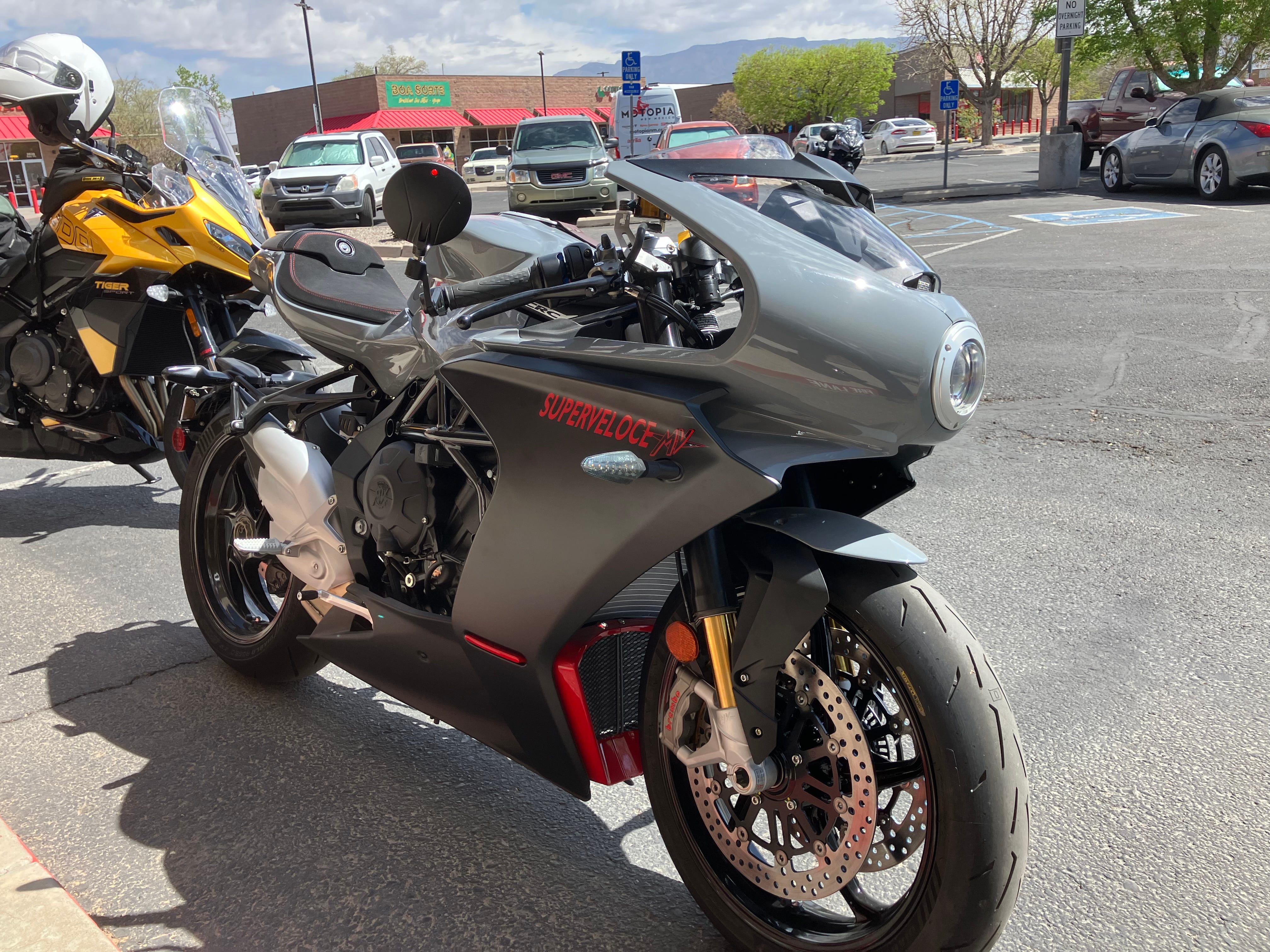
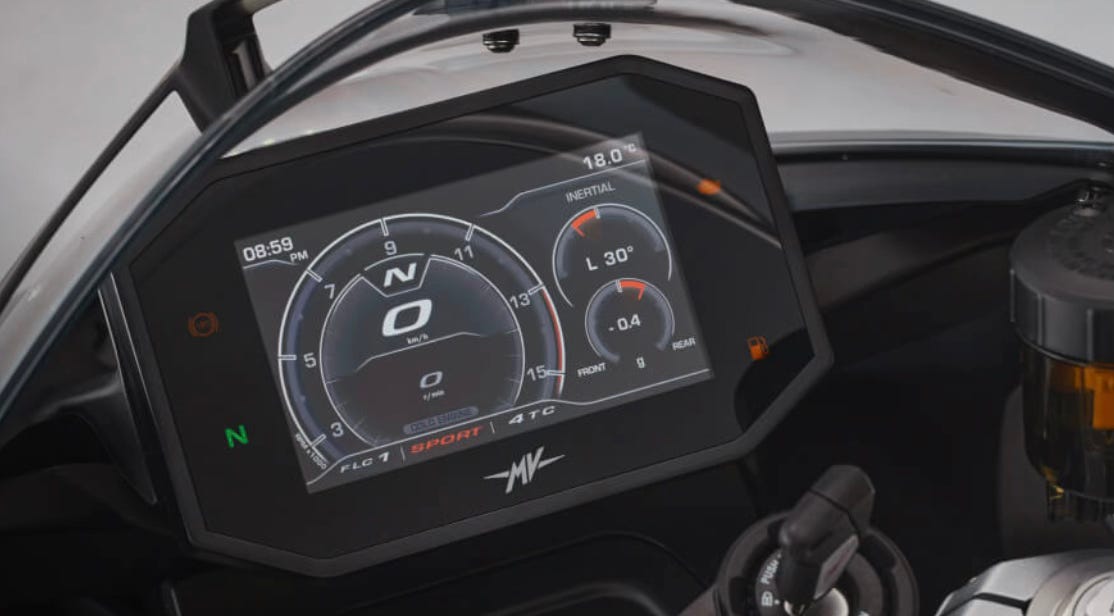
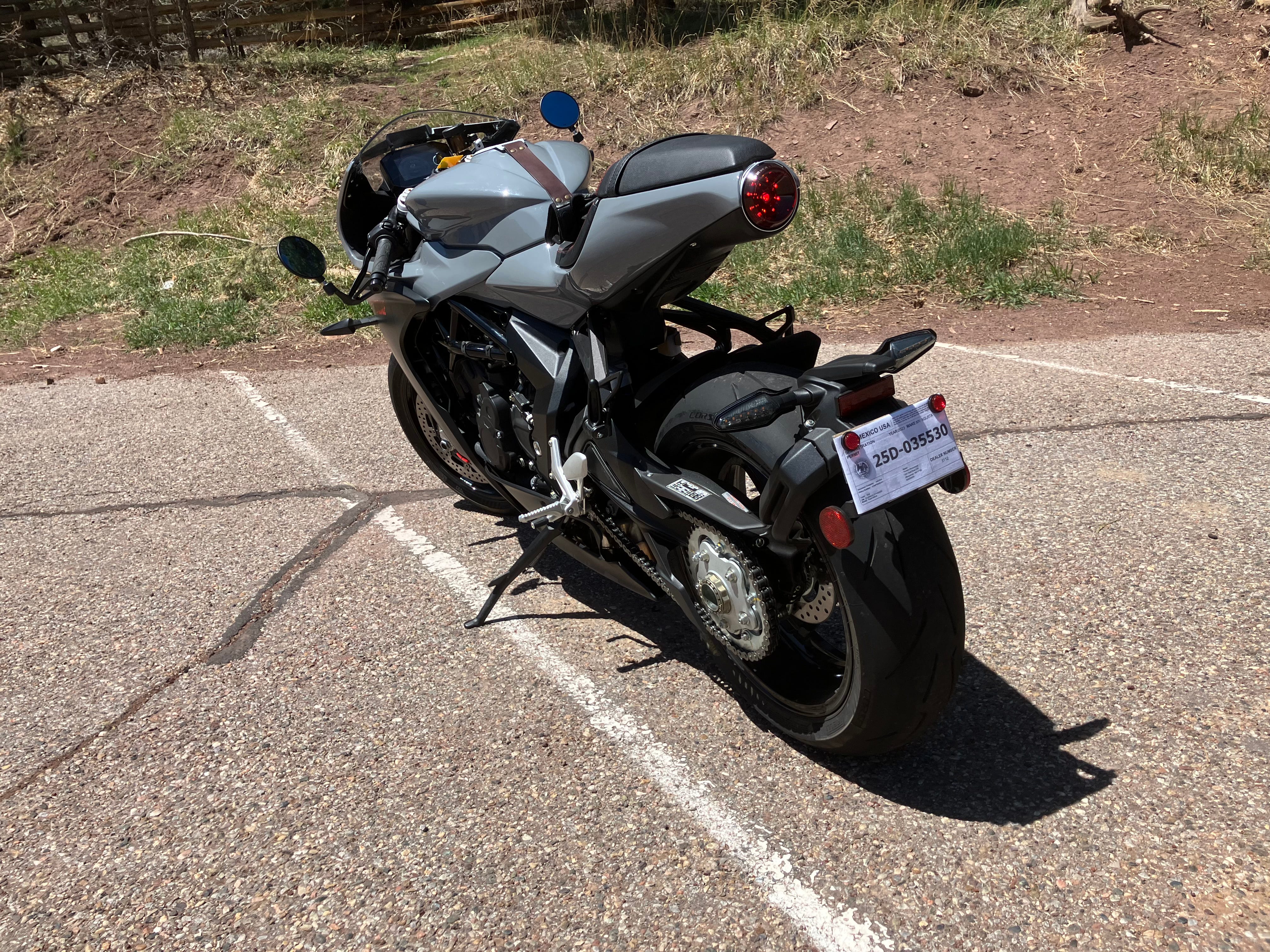
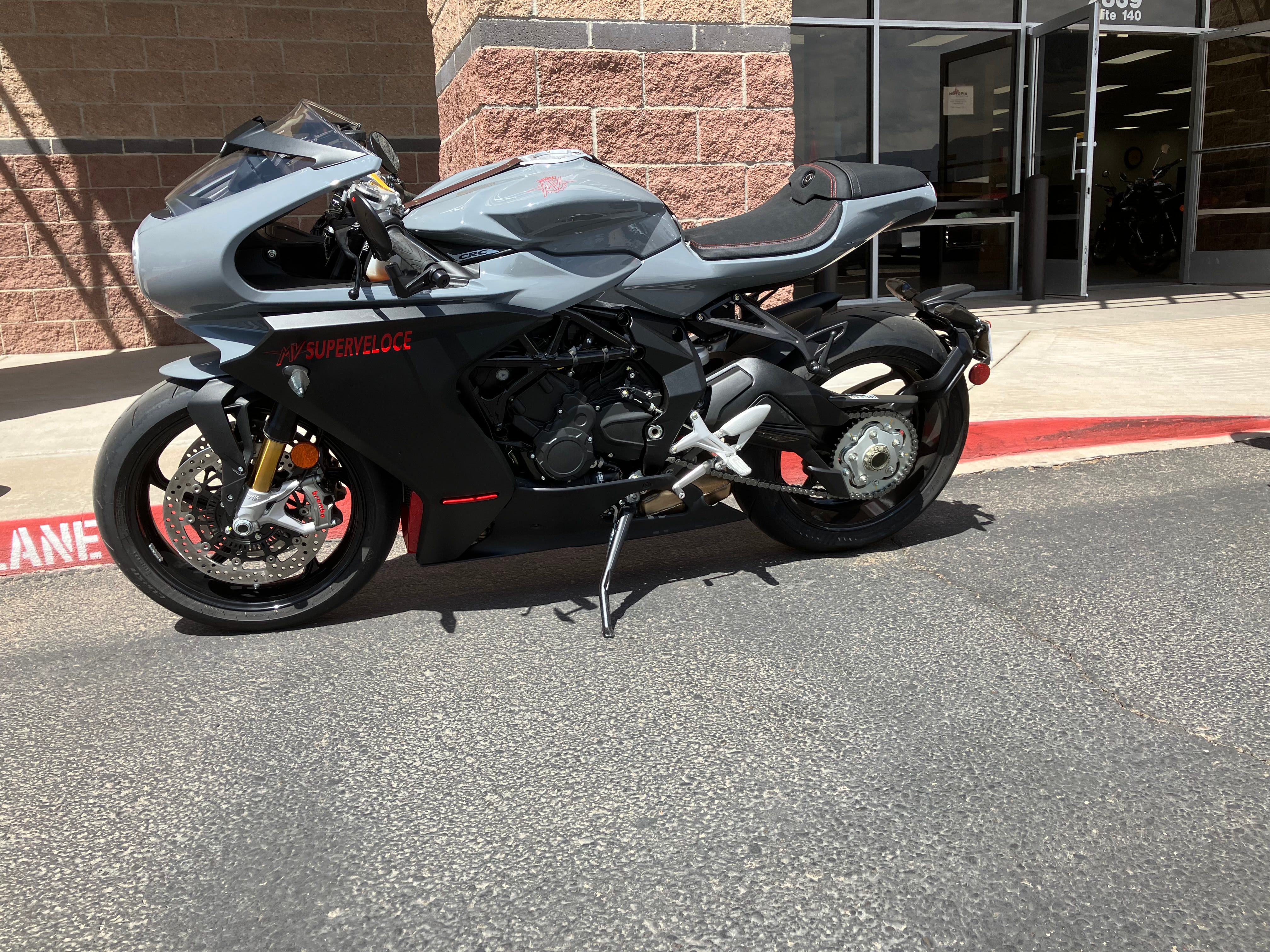
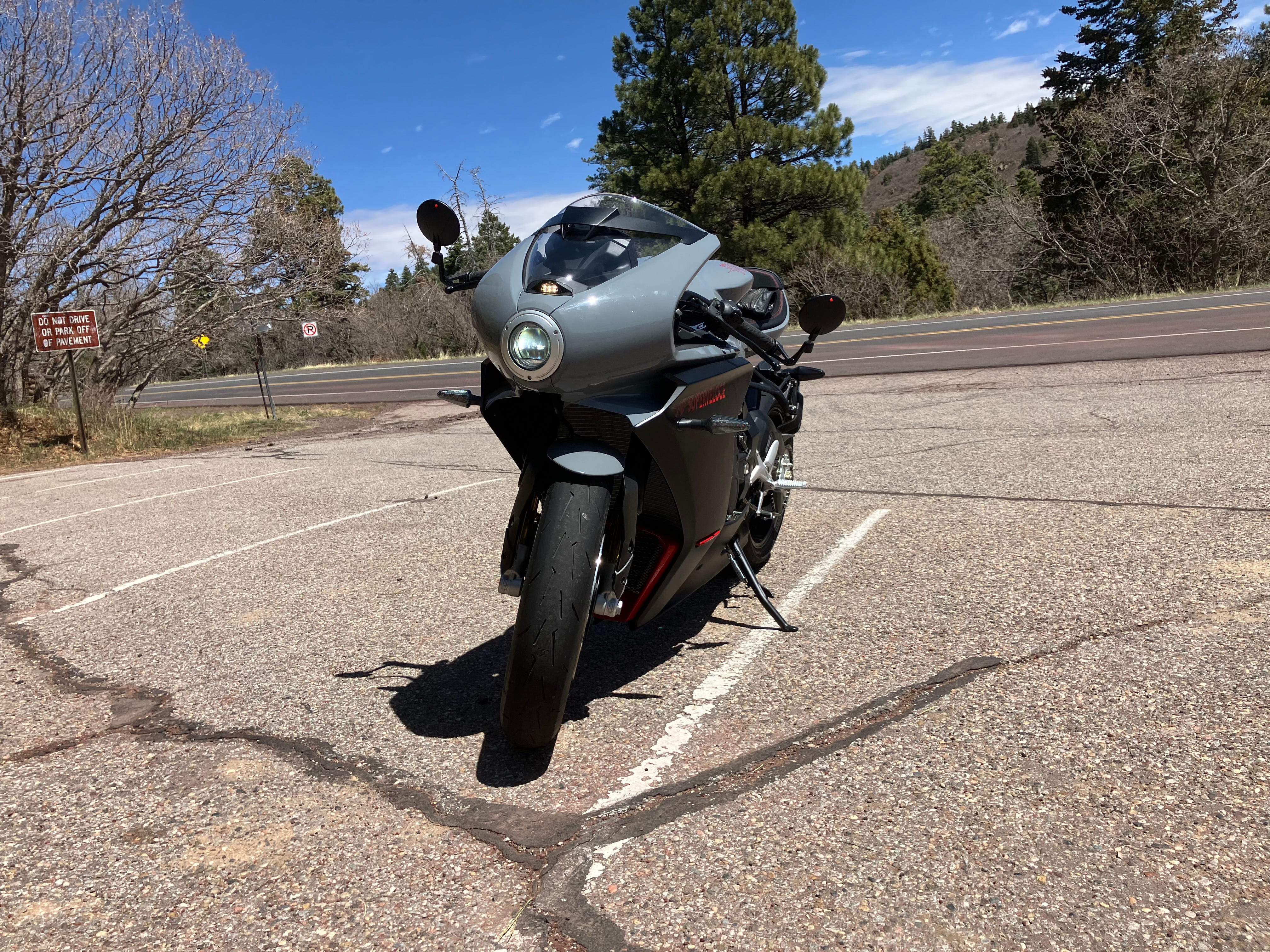
I’d seen these Superveloces a few times around town. They are simply stunning. From the torpedo tube/porthole front headlight to the matching singular tail light, there’s nothing on this bike that isn’t beautifully thought out. Every line, every curve cuts through the length of the bike. The triple exhaust with heat shielding (which actually works!) give a nice aggressive flair. The dash is the usual full-color iPad junk that everyone is doing now, but it’s well done and flipping through the menus is easy with a dedicated thumb switch. I didn’t take a pic of it, so here it is off their website…
The version I took out is the inline triple Superveloce. The mill turns out 147hp at the redline of 14,000rpm…which despite being very aggressive on the throttle during my test ride, I never got close to. Ripping it up or flagrantly breaking the local speed limit, I never got about 10k. It’s got a tenor exhaust tone and you can tell that the metals are most likely titanium and other lighter alloys in the engine noise. You can flip it through sport, race, rain, and “custom” modes. I just left it in the stock sport mode. It’s got their EAS 3.0 quick shift transmission. What does that mean? No damned clue, but it shifts fast — enough so the gear indicator lags slightly behind, which is no big deal at speed, but almost caught me stalling while not in neutral at a stop. It’s a six speed. Top end is somewhere around 150mph/240kph. I didn’t get there, but got close. The whole thing weighs in at about 380lbs. It’s light and the weight sits low.
Which is good, because the rider doesn’t sit in the bike — like a normal motorcycle or something like the Ducati Panigale. You perch on it, much like the old Ducati S4R and the lower center of gravity makes the vehicle feel much more planted. I was riding in 20mph winds with 35ish gusts; the bike was stable throughout the ride. The rear seat provides a good bolster that holds you in position. Sitting on it in the showroom, I suspected this would be a “15 minutes and you have to get off”-type sportbike, but I did a full hour on the MV and only the last ten minutes was I feeling any discomfort. Surprisingly, it wasn’t the wrists, which I suspected; it was the hips from the slightly cramped leg position and my elbows (no clue why).
My ride included some in-town traffic, interstate, small road sweepers and mountain twisties with a 2000’ elevation change. Around town, you’re not really getting out of third gear and the bike gets a bit warm, but wasn’t terrible. (It was a warn day, as well.) Getting onto the highway, I had a lot of traffic with a small gap that would allow me to get out into passing lanes, so I romped on the bike and got her from fifty to the ton in about two seconds or so in third gear. Once up to sixth, the bike was calm and quiet at 6000rpm. I got off and onto the small two lane highways that go around the back of the Sandia Mountains (studiously obeying the speed limits, of course) and was in fourth pretty much for the usual 50-60mph speeds. Once on the Crest Road that winds 13 miles and 4000’ in climb with 120 turns, including some sharp switchbacks, I really let the bike play.
While riding, the nose of the bike was just visible below, and provided a nice “artificial horizon” for some of the turns. I wasn’t doing race track style leans, but I did give it a fair amount of tip over at go to jail speeds. You didn’t need to do more than look down with your eyes to see the instrument panel and mirrors — which do vibrate a bit under power. It turns smoothly and well — easily on par with any other big name race bike out there.
On the run back into town, I had I-40 pretty much to myself for about three miles and put the spurs to the bike. Smooth and fast power delivery, minimum buzz on the handlebars (but a lot on the mirrors), and it rolled over the three digit mark with aplomb. For most people, there’s more than enough bike to keep you happy. I love triples for the fast torque (about 65 ft.-lbs. or 88nm) they provide and blipping and laying off the throttle for engine braking allowed very quick passes, speed drops, and coupled with the excellent suspension and dual front Brembo brakes, navigating traffic aggressively is a doddle.
I finished by ride with a simple “Wow!” It really is bloody marvelous.
There is a liter-bike version of the Superveloce with MV’s 4-cylinder they use in one of the Brutale models, but I haven’t had a chance to ride it yet. It seems a titch faster, but the specs on the website seem to be pretty much the same. For looks, the “98” limited version of this machine is stupefyingly beautiful is a deep burgundy with silver accents.
So is it worth it? At $24,500 MSRP plus set-up, this is a pricey machine for a cheap bugger like me, but for the Ducati/BMW/Aprilia crowd, I suspect this is fine. The workmanship is top notch — fit and finish is simply wonderful, the look is unlike the bug-headed monstrosities most sport bikes have become, and performance is more than adequate for the street hooligan or amateur racer. So, yes — it’s well worth it.

 The Black Campbell