I’m late to the game on this one, admittedly. I’d hear of these years back, btu had never seen one until a few days ago in my local gun store. The owner had picked one up at an estate sale and for $350 out the door, I had a new pistol with almost no wear.
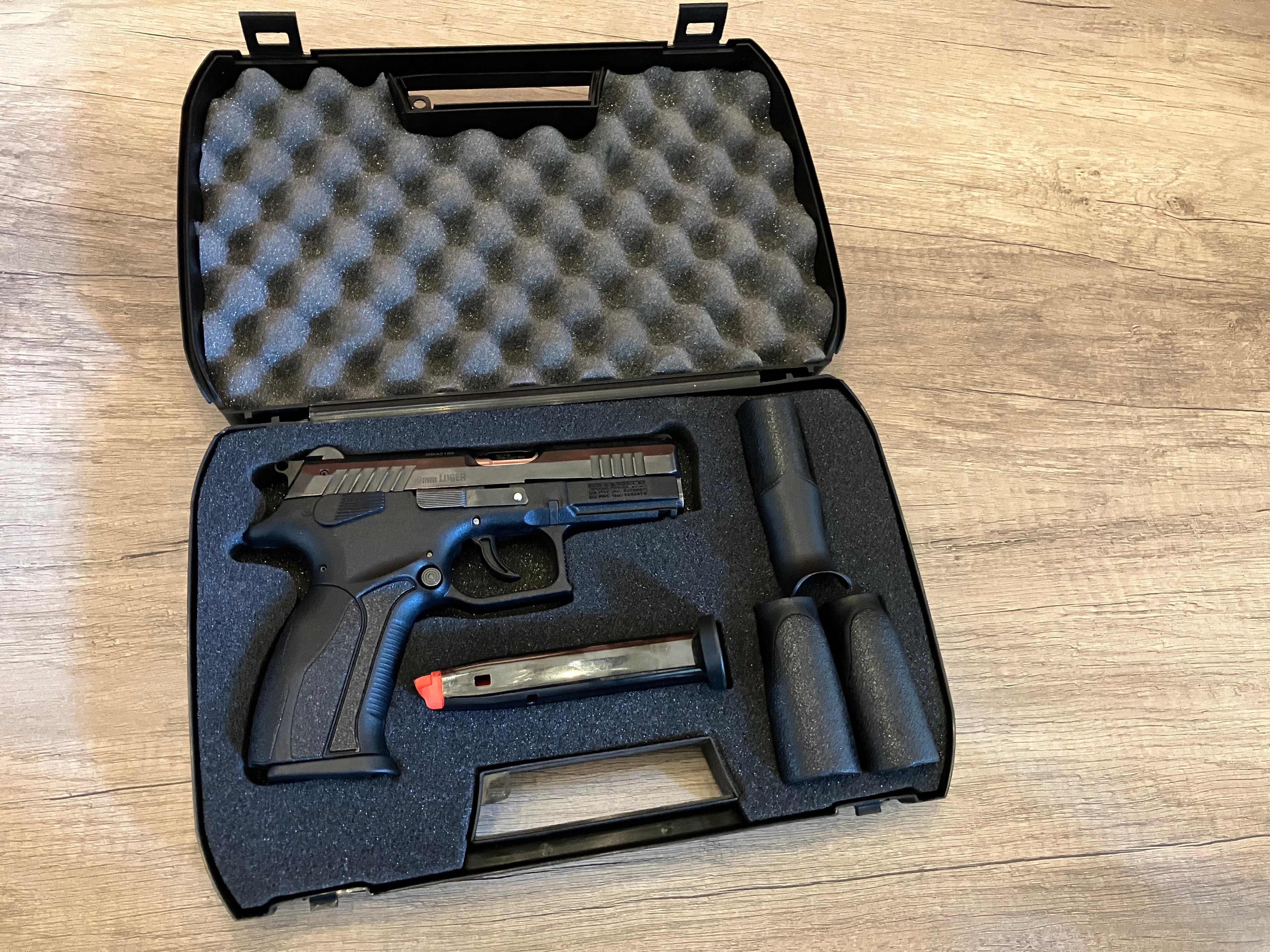
The chintzy black plastic case had the instruction manual, the three extra backstraps (which have to be prised loose with a flat-head screwdriver), and an extra mag. There was, in my case, also a 10-round California and other crappy state-compliant magazine.
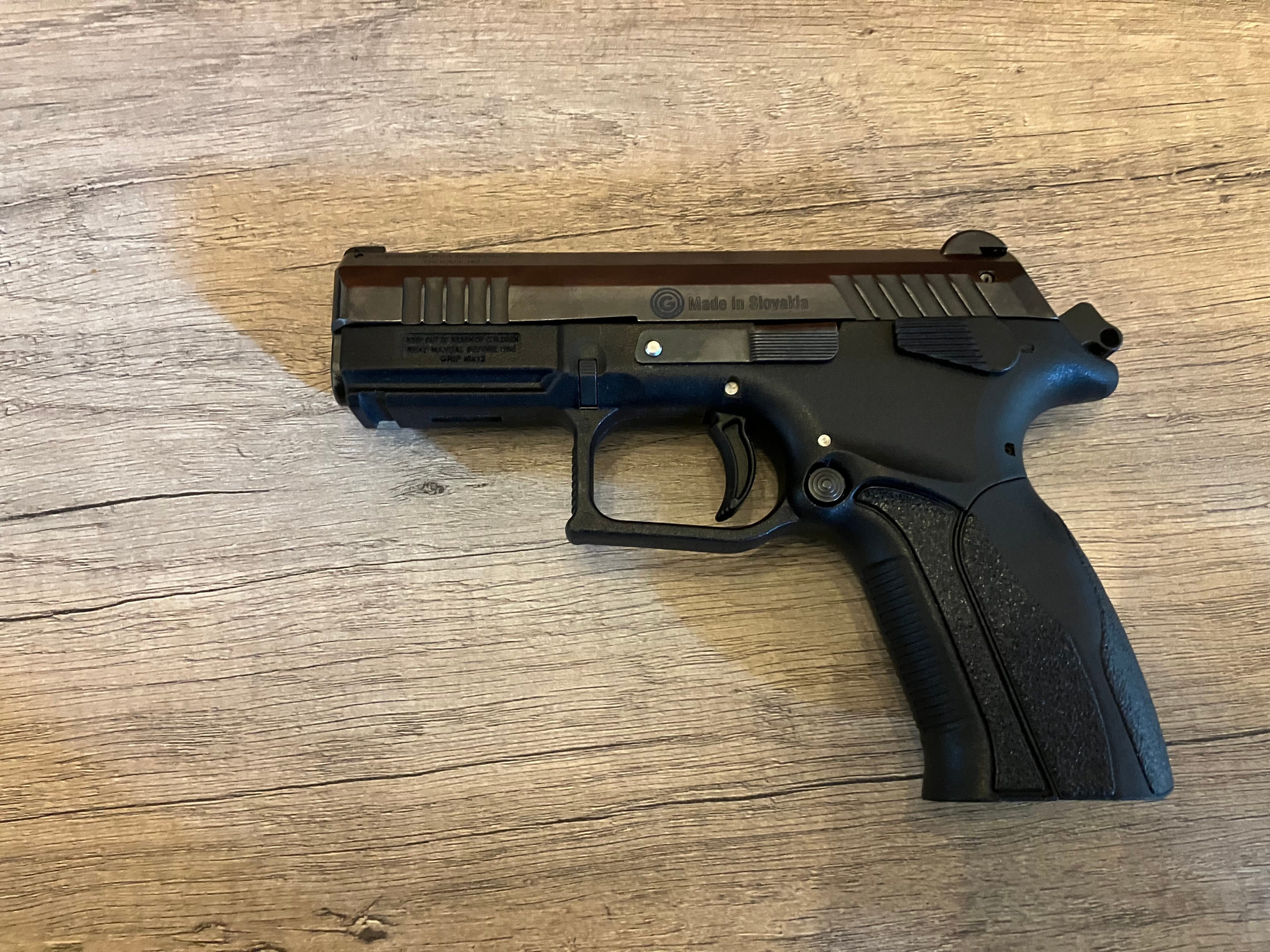
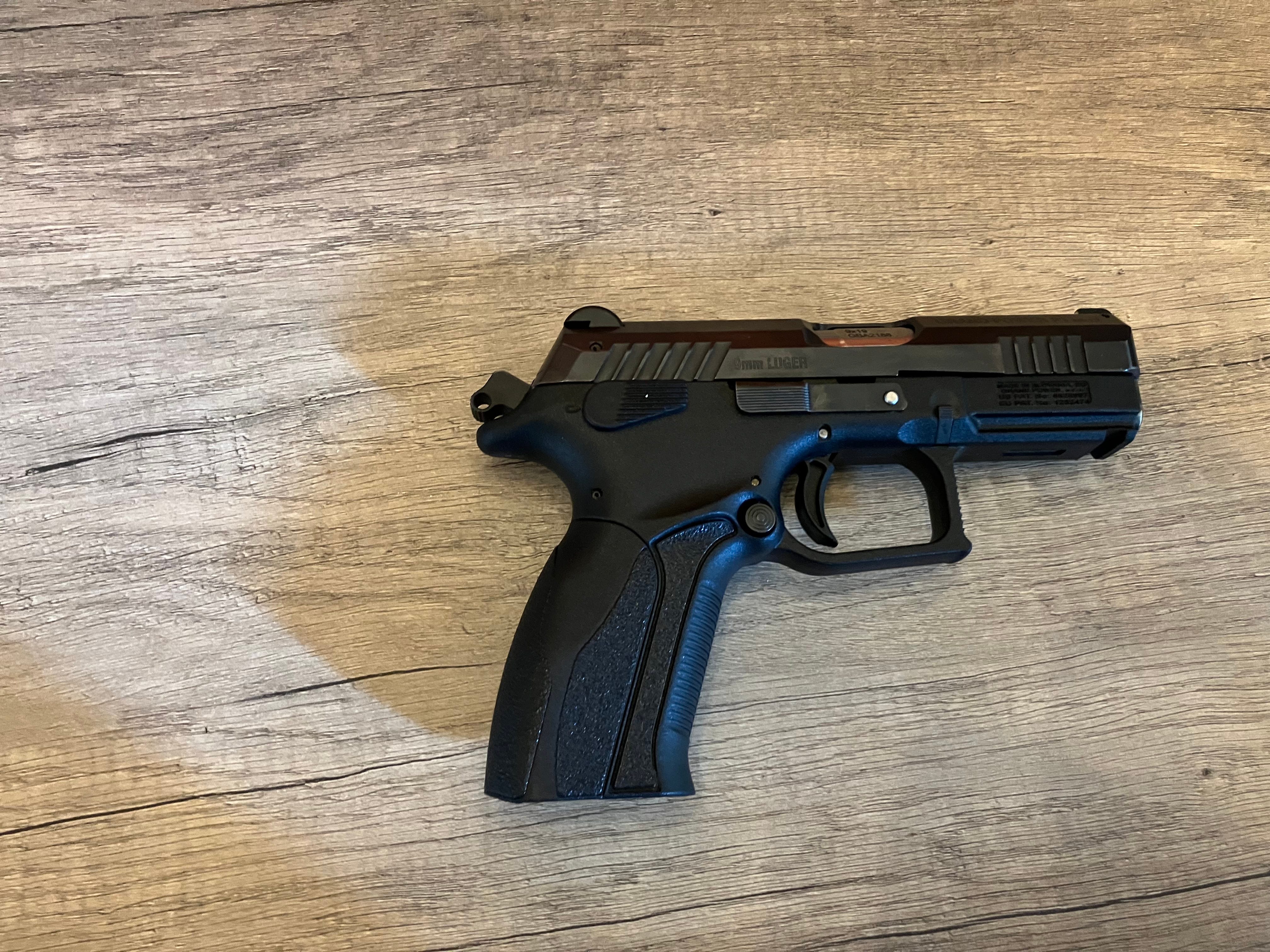
The Grand Power P1 Mk12 or K100 is a 15-shot 9x19mm double/single action pistol with a 4.3” barrel version of the Grand Power, giving it just shy of a 8” overall length, a 5.25” height from grip to top of frame, and it’s 1.4” wide. This puts it in the same general size as a commander length 2011, Glock 19, Walther PPQ, etc. It uses the rotating barrel lockup that allegedly reduces recoil and increases accuracy. Like the 2011 — it has a steel chassis inside the plastic frame and eliminated the frame flex you get on most polymer guns. (And which most people will likely not notice…) All the controls are ambidextrous — mag release, slide stop, and safety/decocking lever.
The trigger is plastic, has a bit of squish in single-action, but it breaks very neatly at eight pounds double-action, five on the single. The reset is short, fast, and audible. The pistol likes to shoot fast, but the grip texture is a bit mellow, so I found that faster strings saw the pistol shift a bit in my grip — throwing my later shots a bit left and low.
The accuracy is very good, and when taking my time it was drilling groups at 10 yards that created a single ragged hole. It looks to be sighted in for 15 yards with 124 grain ammo. I ran a couple of strings after I got used to it, swapping mag-for-mag with my Alpha Foxtrot S15 (one of the more accurate pistols I have, even with the 3.5” barrel), and the Grand Power shot nearly as well. Taking my time at 20 yards, unsupported, most of the 15 went in the 10 ring, with a few flyers in the 8 ring.
The ambi controls are, for a leftie, very welcome. I’m used to using my trigger finger to hit the mag release and hit the slide stop, and it took a few mags to train myself to use the right-side controls. The safety is interesting. When flicked up, the pistol is placed on safe; when pushed down, it will decock and can be left in the lower position — turning the pistol double-action only. My assumption is this feature was created for use by police units with DA requirement on their sidearms…otherwise, it’s stupid.
The rotating barrel is supposed to mitigate recoil. I noticed none of that, however, it is very consistent in point of aim. The barrel rotates on a large scalloped cam on the underside of the barrel that rides on a bearing underneath. The pistol functioned flawlessly through 500 rounds of Winchester, Scorpio, and cheap Federal ammo.
The system does make takedown a bit tricky. You pull the slide to the back and pull the disassembly tabs down (like a Glock), then lift the back of the slide to run forward. The barrel will fall clear easily. The guide rod for the recoil spring is fixed to the frame — an interesting choice. Cleaning is pretty straightforward, oil the contact surfaces, then reverse the order. This can be a big tricky — you have to keep the barrel in the forward position to seat properly and set the slide on the frameabout halfway back. You then need to lift the back of the slide a bit to clear the rails, pull it all the way back and pull down on the disassembly pins, then reseat it. It’s a bit tricky the first time or two, but once you’ve got it, it’s easy enough.
So is it worth it? At $350, this was a steal. At the original $500 pricing, it would have been, as well. If you’ve been thinking of the PX-4 Storm by Beretta, I’d suggest you hunt about online and find one of these: it looks better, it functions just as well, and you’ll probably get it for a good price. Grand Power and Stribog are both made by the same group in Slovakia, and the quality is there. Allegedly, one of the P1s had over 100,000 rounds through it without incident, but I’d take that with a bucket of salt. Magazines can be a bit tricky to find online, but I located a few with a half hour search, and their importer Global Ordinance also had some available.
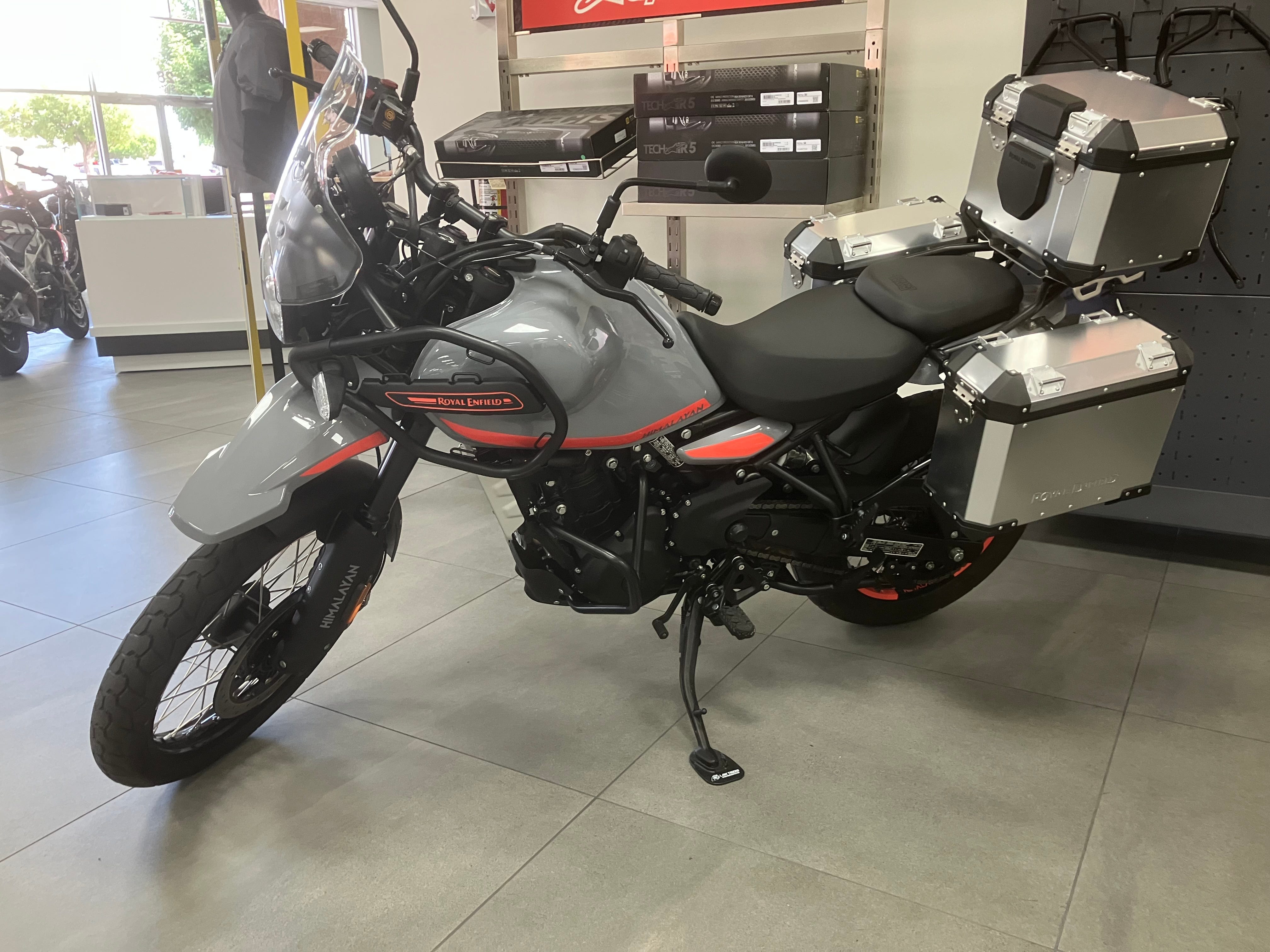
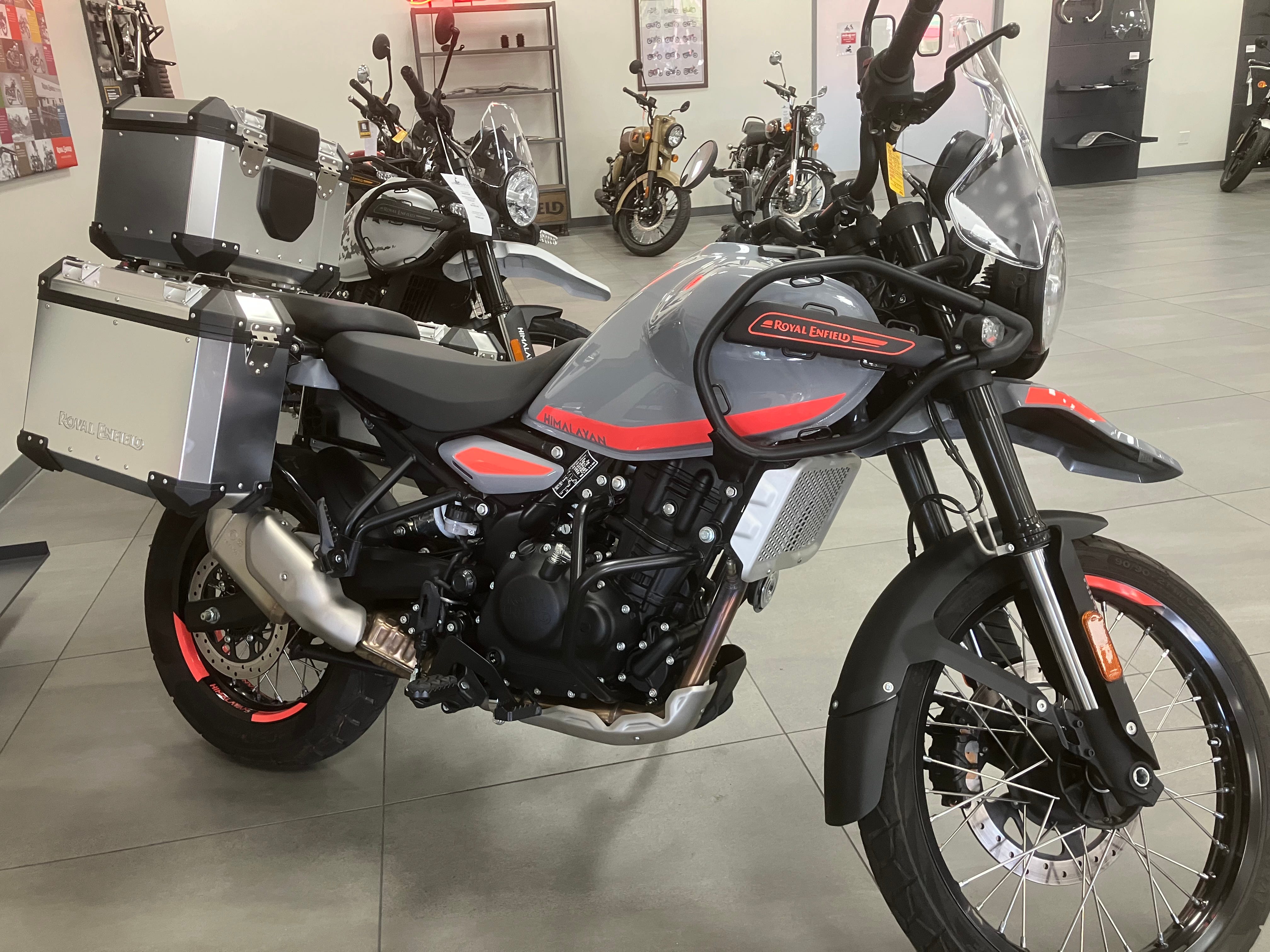
I was in for some new tires on my old Thruxton, so the local dealer — the excellent Motopia New Mexico — loaned me a Royal Enfield Himalayan to take around town for a day. If you’re looking for a Triumph, Aprilia or Guzzi, MV Augusta or Royal Enfield, hit them up. I’m sure they’ll ship and if you’re close enough, they’ll often run the bike out to you. Good guys; give ‘em business.
This isn’t my type of bike. I like a standard, old-school air-cooled twin like the Bonnevilles or the V7s. “Adventure” bikes don’t do it for me: they’re too tall and I hate the look. I rode the Moto Guzzi V85 and liked it well enough, but thought the Stelvio lacked character; the Aprilia Touareg is simple too bloody tall. This one? Comfortable, easy to foot at a stop. Even with the bags, it was fairly easy to wrangle my leg over it. Seat height is 31.5” — pretty standard height for a motorcycle these days.
This isn’t a powerhouse by any standard; it’s solid, reliable transportation that can go anywhere. I even took it through some rough dirt lots just to see how it did. Like all of the Enfields I’ve ridden that have been made in the last ten years or so, the balance is top-notch. It doesn’t feel heavy at all, weighing in at 439 lbs. With a single, water-cooled 450cc cylinder motor, it’s not fast, and it does not have that gearing that makes the 650 Interceptor punch above its weight in acceleration. The engine generates 40ish horsepower at 8000rpm and 40ish ft-lbs of torque. Quick enough for traffic, but not a rocket.
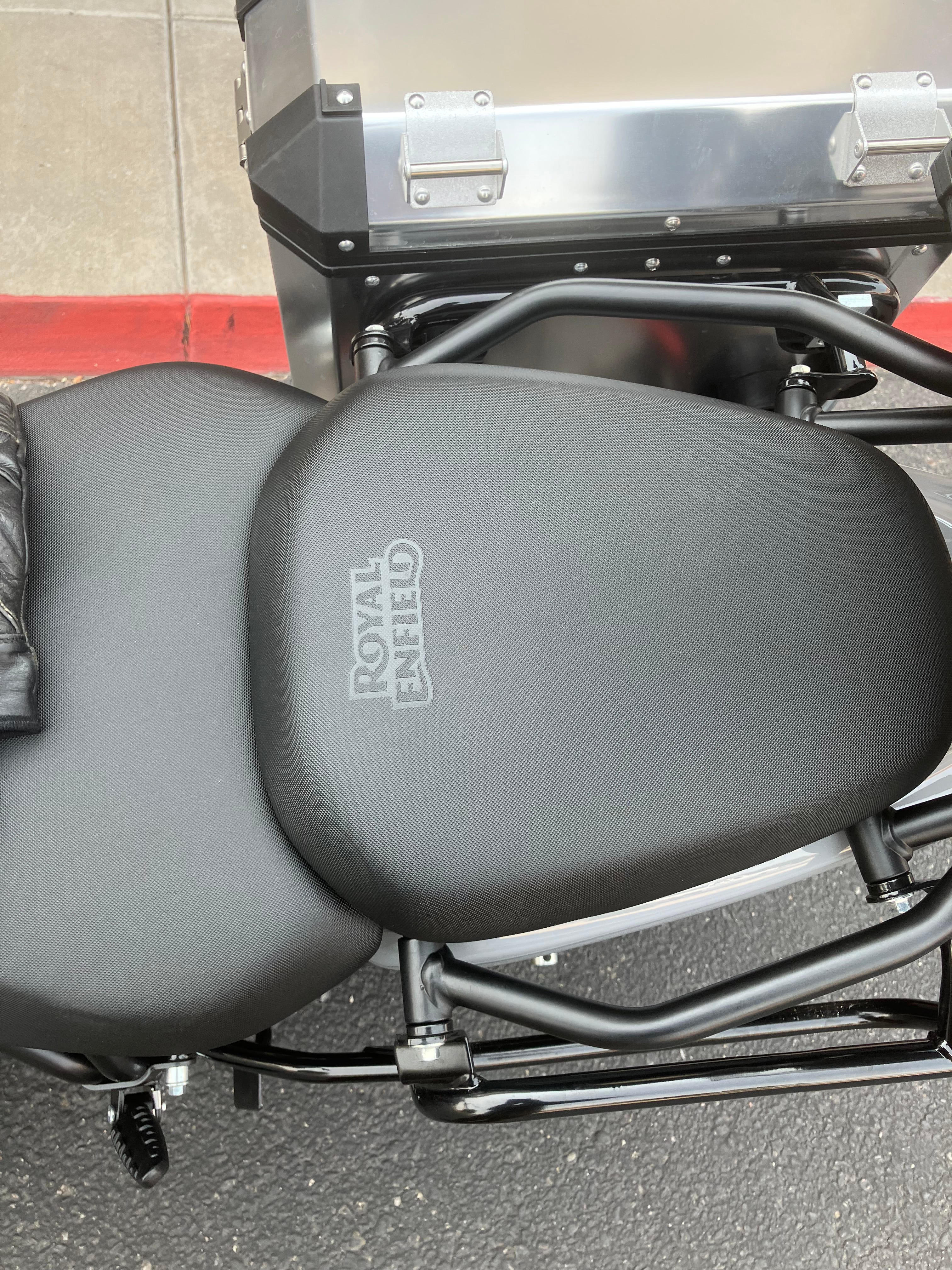
The saddle is very comfortable and has nice Royal Enfield branding embossing on it. The Showa suspension is workman-like and some of the rougher roads and the dirt lots were easy enough to traverse. The 21’ front and 17” rear give lots of stability and confidence when riding, and there is a tubeless rim version of the wheels.
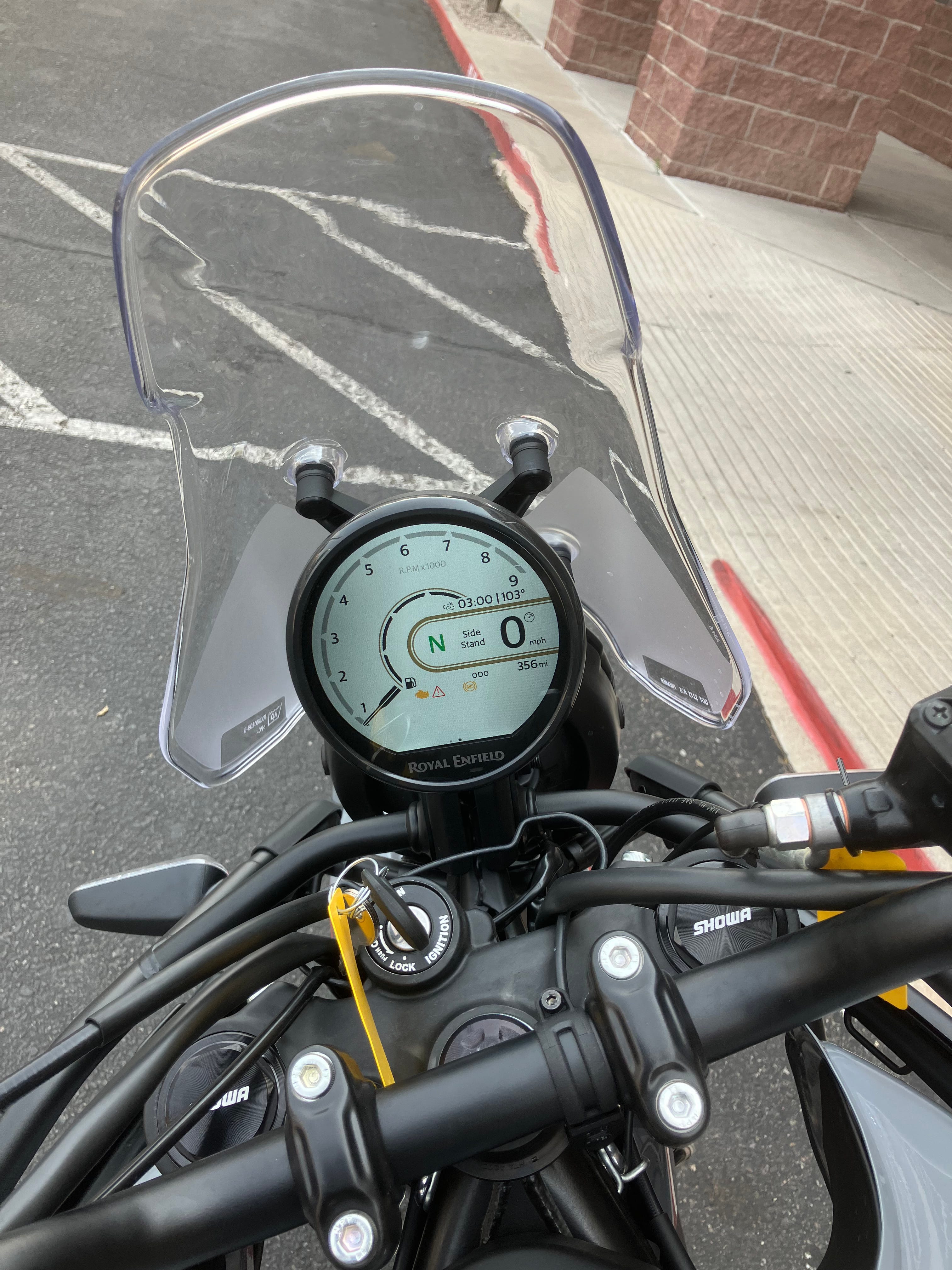
The modern amenities include a bright and very legible TFT display, and phone connectivity that allows maps and turn by turn direction as well as music control. I didn’t bother to test these features but the RE Tripper system was on a few of the 350s I’ve tested and it should work well. ABS is standard on the single rotor and there are four ride modes — again, I let it in the most docile of the stack.
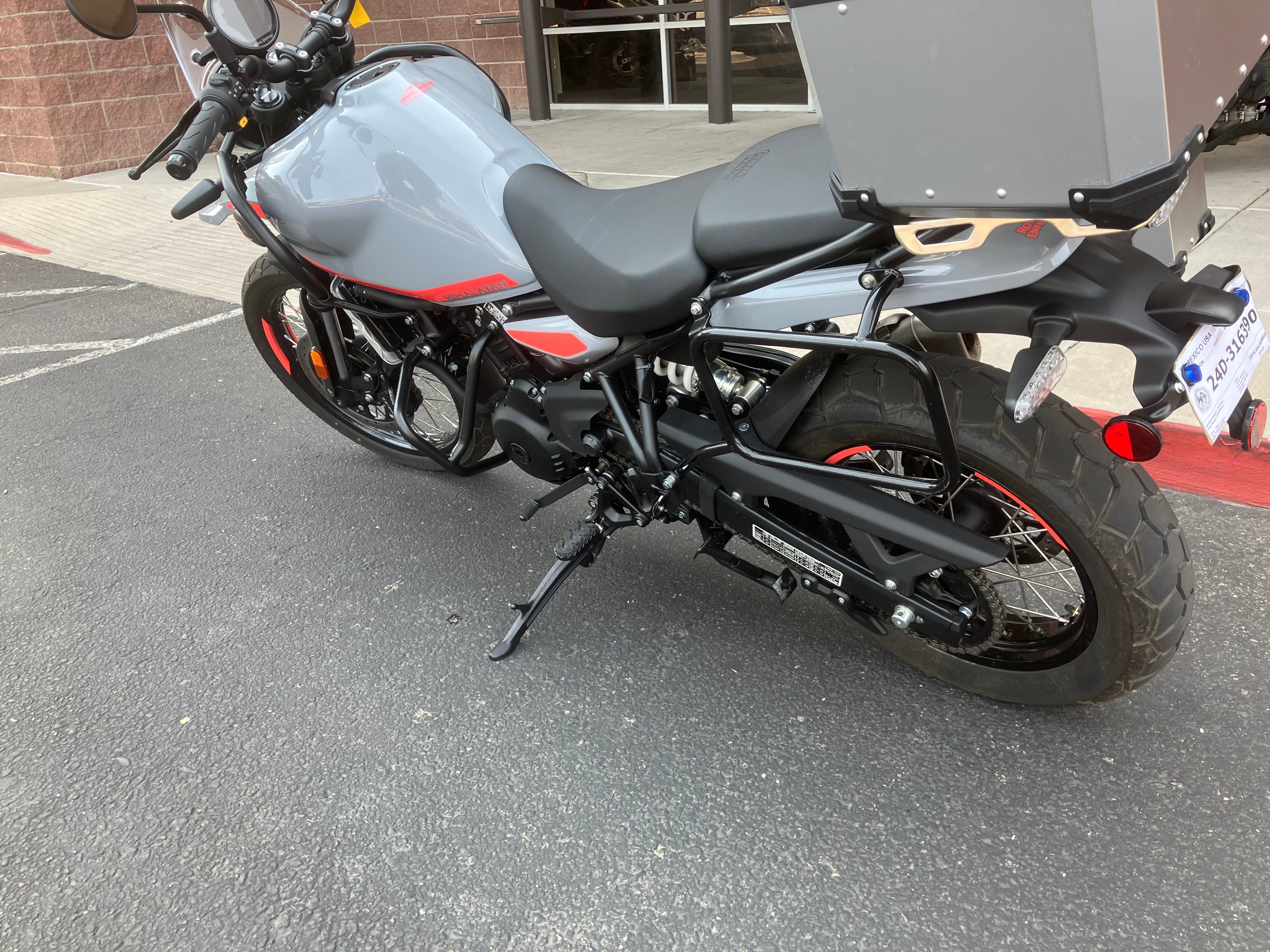
I took the one pannier off so the swingarm was visible…
So is it worth it? Like all the Enfields, it’s cheap. $6k MSRP and three year warranty, and the parts and labor for my Interceptor were delightful, compared to the water-cooled Triumph I had. If you like this style of bike and aren’t wedded to big power and bigger price, the Himalayan is an excellent choice for a working bike.
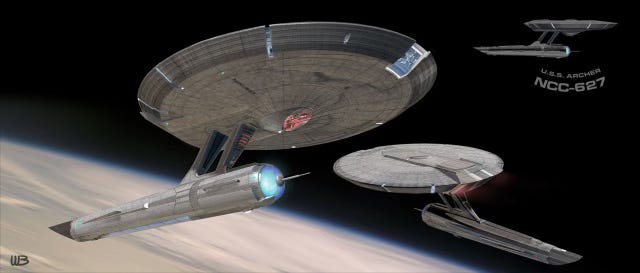
All the Franz Joseph fans from the ‘70s were in for a treat with the first episode of Strange New Worlds — the Saladin-class!
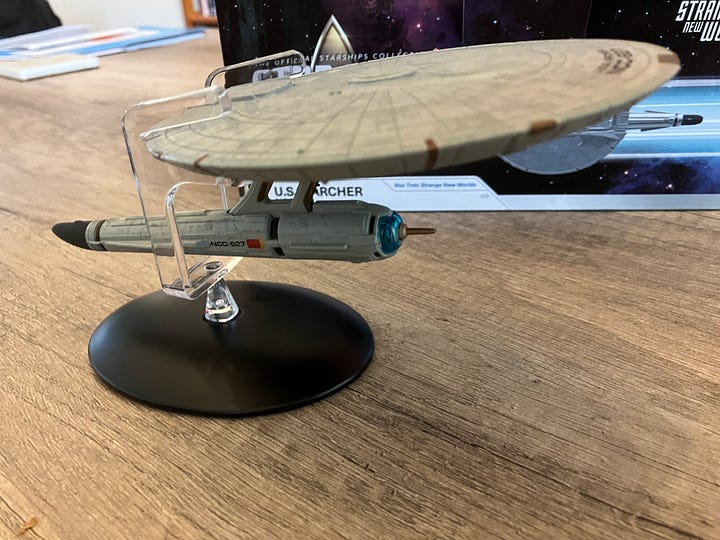
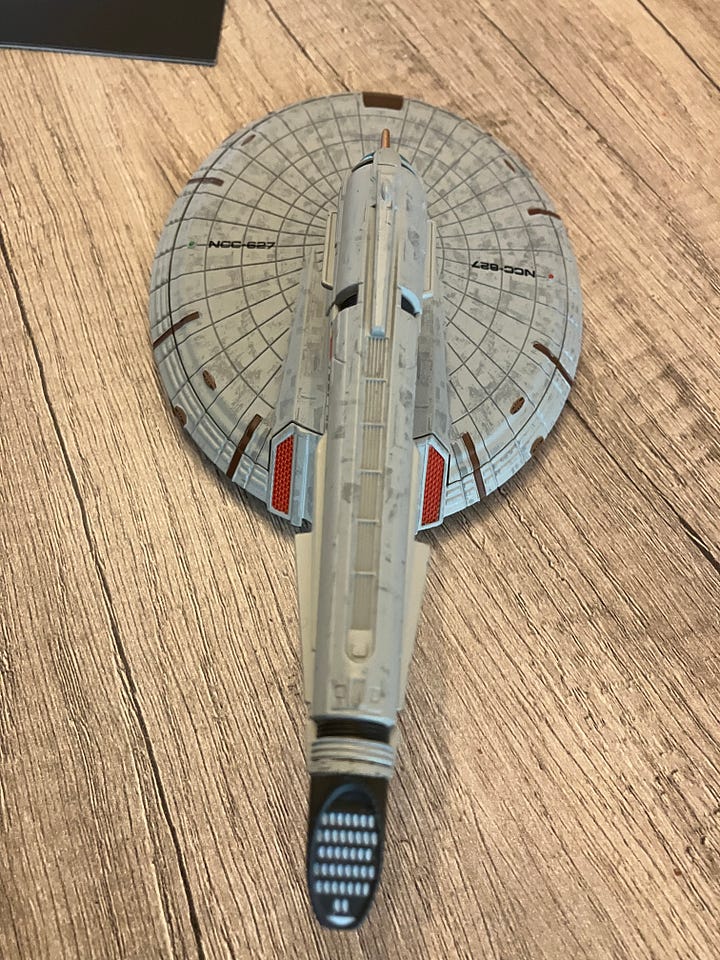
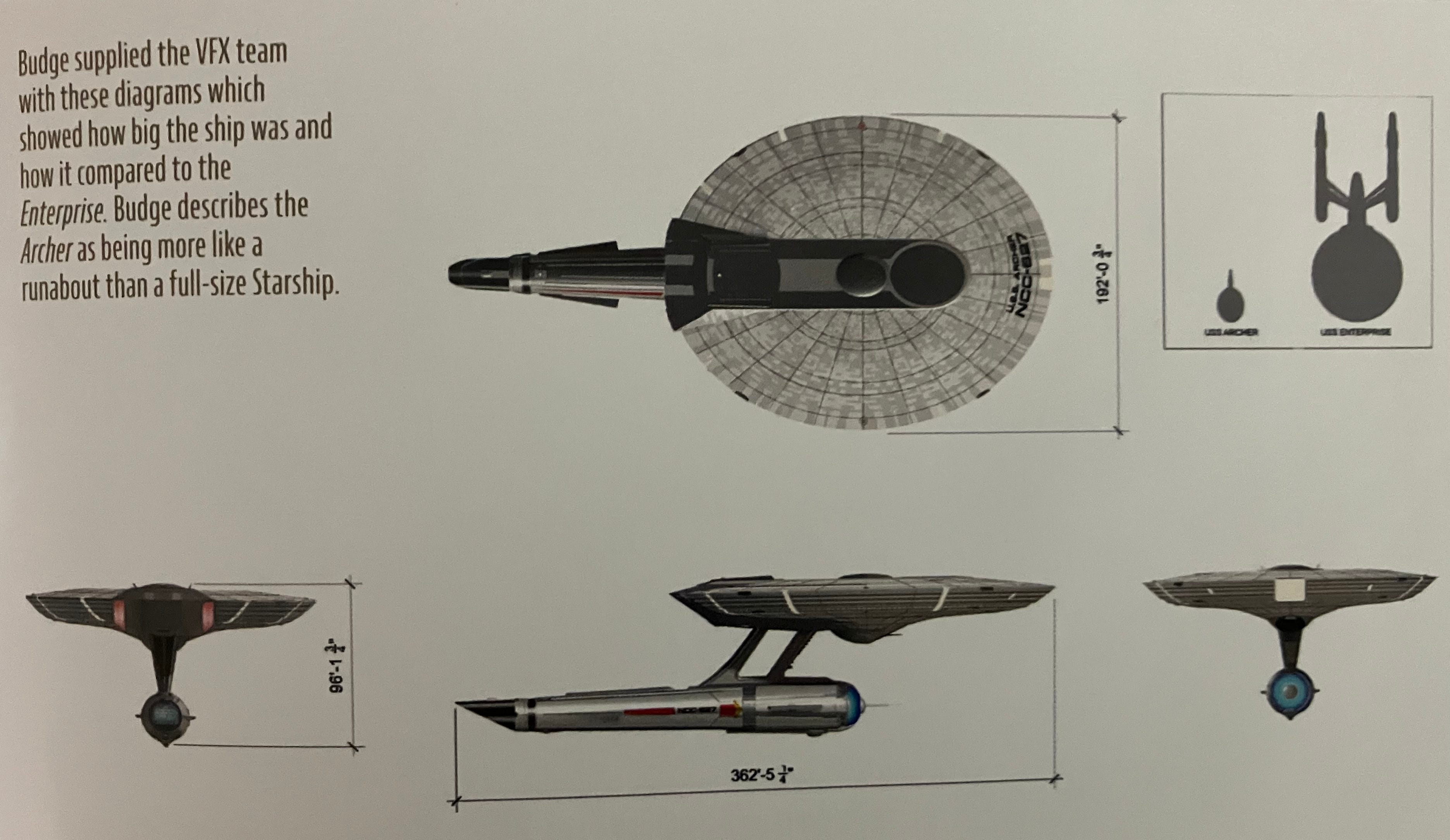
Nope…this is the Gral-class starship USS Archer, NCC-627. Fanhome dropped their latest model of the ship this month and the wee booklet that came with it describing the design process and thinking buffs out what we know about her: she’s small, has a crew of three, and is “more of a runabout than a starship”. There’s no mention of if it is armed, but if the Class C shuttlecraft had phasers, this mot likely does, as well — if only a bank or two.
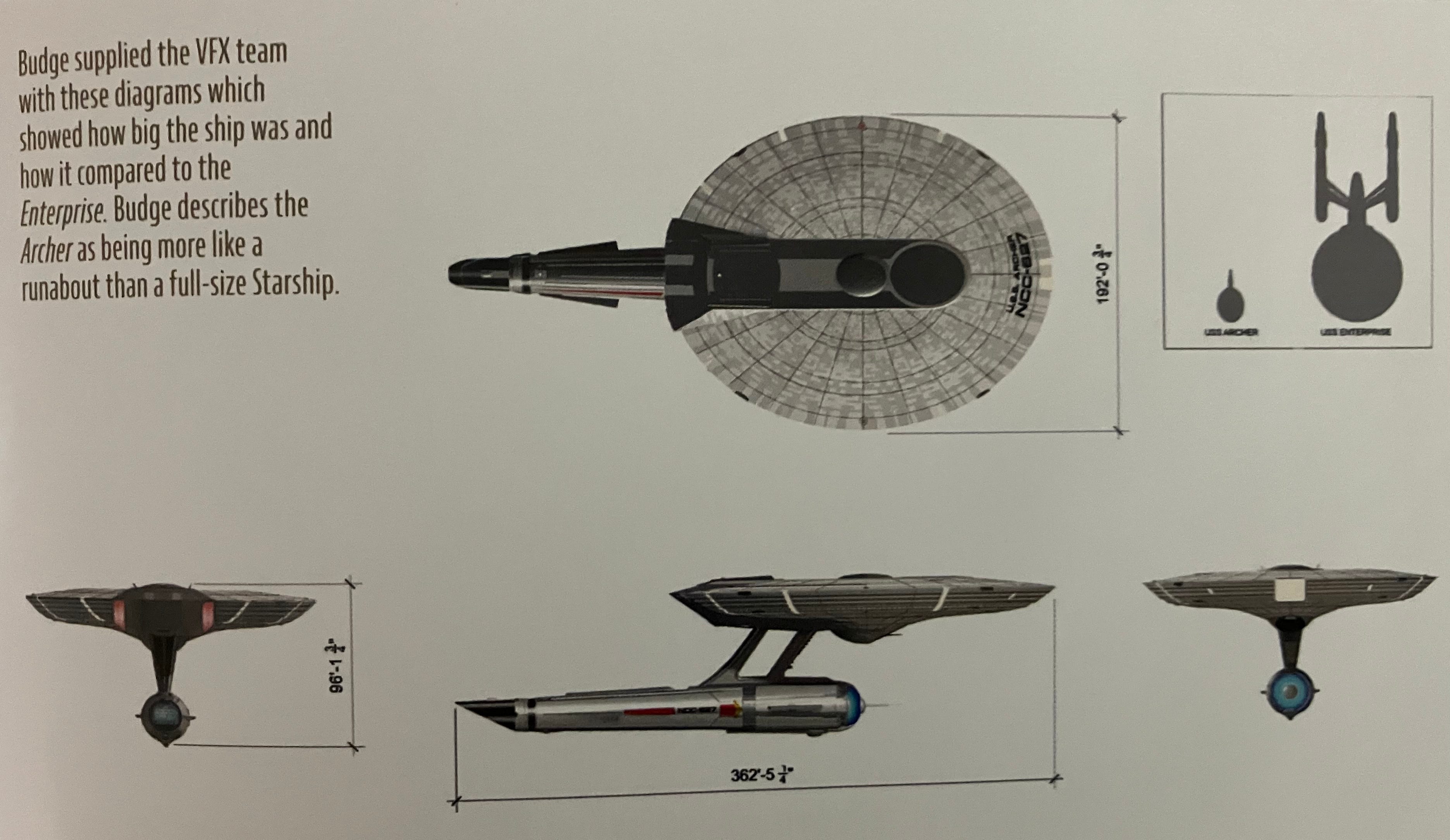
She’s described as 110.47m long, 58m on the beam (making the saucer 77ish meters from bow to stern), and a draught on the dish of 10ish meters. The guide claims one deck, but the thickness suggests there could be two. The bridge is supposed to be at the bow (so that’s a window), and the slits along the sides also windows. That makes it about the size of two super-yachts side-by-side…more than enough space for a standard crew of 25-50 by SNW standards (with Enterprise having a crew of 210.)
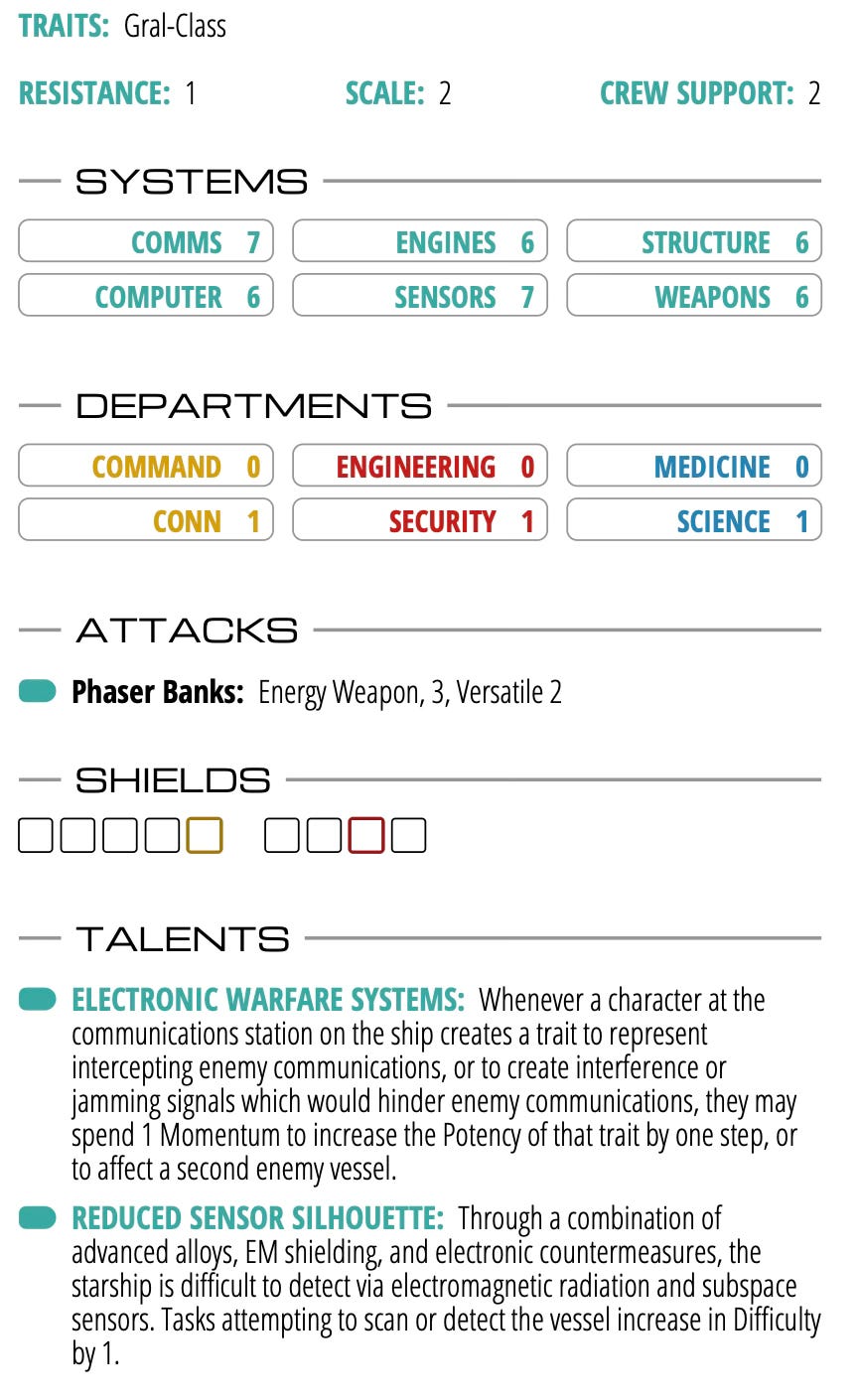
So here’s my take on the Gral — your lightyears may vary:
This build assumes these are used for covert missions in denied areas — either watching pre-warp alien cultures in secret or scouting the edges of the Neutral Zone. For our game, I’m assuming two decks, with most of the engineering areas in the space under the central raised section on the dorsal hull, and a crew of 25-30 standard, with the senior staff typically being lieutenant commanders.
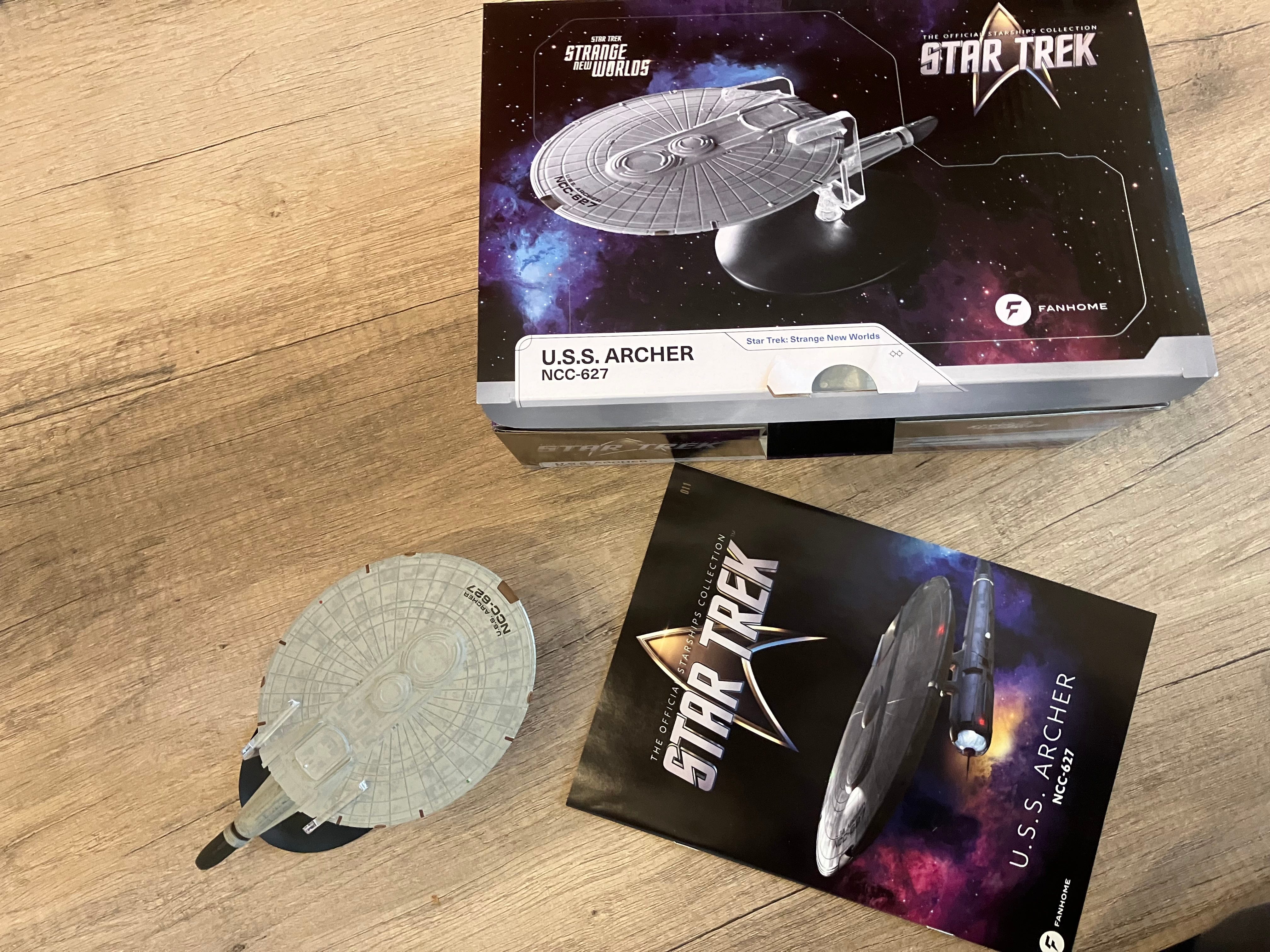
I’ve been remiss in getting some of the reviews for the new Fanhome ships. Meanwhile, the one I’ve been waiting for has arrived: the Gral-class USS Archer (NCC-627) that was featured in the first episode of Strange New Worlds. They’ve popped up in the background a few times, always at a distance — I suspected because they were a bit under-designed.
As with the rest of these models, the quality of the model is very good, although — as with the Eaglemoss models — the clear portion of the base really does need to be better designed; this one really doesn’t want to sit right in the bottom portion of the base.
The booklet on this is instructive. Archer was actually fairly heavily designed and went through a number of iterations before they reached the current look. I like the single nacelle with the antenna on the end; very The Cage-looking. The underside has more going on that the top — a break from other minor background ships designed for Discovery and Picard where the ventral portion often feels unfinished.
Archer is a Gral-Class scout that is described as “more of a runabout”, butat 110.47m long with a dish “58m” on the beam and about 77m long, this isn’t that small. That two decent-sized super-yachts side-by-side, and the dish looks to be about 10ish meters in draught — that’s enough for two decks, rather than the one the ship supposedly has. She is supposed to have a crew of three, although it could bit more. By my estimation, a standard complement of 25-30 would still have plenty of room, with all the necessary equipment (transporters, cargo, impulse and warp engines…)
Here’s a decent look at the size and the orthos of the ship:
So is it worth it? It’s an interesting design, although visually a bit bland. If you are looking to complete a collection of Disco/SNW vessels, I’d say get it.
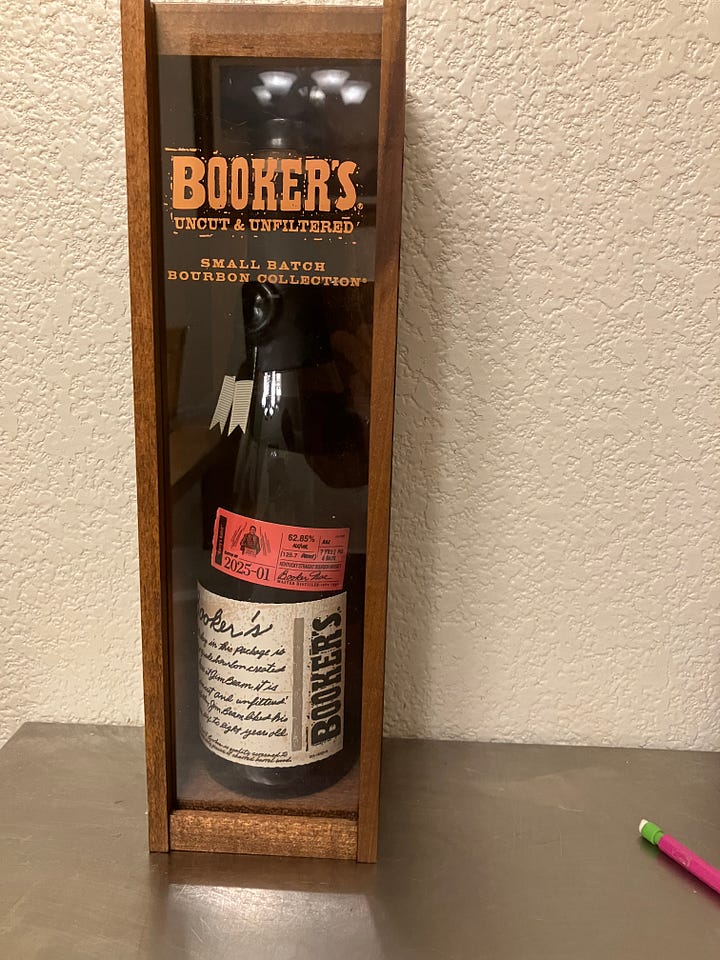
A couple of friends gifted me a bottle of the Bookers’ Batch 2025-01, a Kentucky Straight Bourbon, for my birthday this summer, and after a long week, I had a chance to enjoy this with a nice steak. The presentation is good: the bottle comes in a nice collector’s box of charred wood with the Bookers’ name on it and a plastiglass front panel. There’s a wee card in the package that tells the drinker this is named for Barry Berish, a former CEO of Beam that led the distillery through some dark days. On the back of the card is the master distiller’s (Fred Noe) notes, giving you the history of the batch — the percentages from what warehouses and floors. The whiskey is aged a bit over 7 years.
Good presentation; good bourbon.
On opening, it had a nice strong oakey smell, and the color is a nice reddish amber. In a nice Glencairn glass, straight, the flavor is powerfully smokey and hot; with just titch of soda water, it mellows to a strong, light vanilla flavor with strong smoke and a slightly sweet aftertaste. There’s a reason for the almost overwhelming taste, neat — the batch runs 125.7 proof (62.85% ABV).
So is it worth it? I did a quick check on price and at $99 or so, definitely. It’s on par with most higher end bourbons, and when cut a bit, many Scottish single malts. (That hurt to type…)

 The Black Campbell