I saw the pre-order for this pop up a few months back and thought “Neat!” but Master Replica was still a bit hard for me to trust after the implosion of Eaglemoss, and their stepping in to handle some of the properties. Still — I threw it on my wish list for Christmas and forgot about it.
The wife did not. And yesterday, my Insight Editions “Deckard’s Police Spinner Car” from Blade Runner 2049 (Yeah, I know, but it was in the movie for a few seconds before it got blown to hell.)
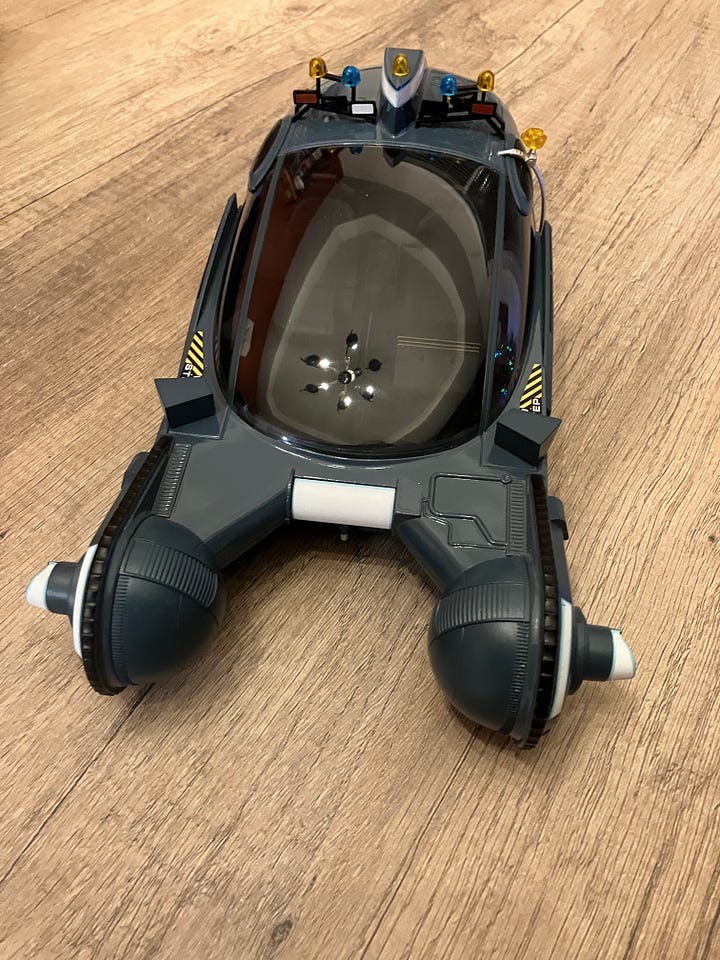
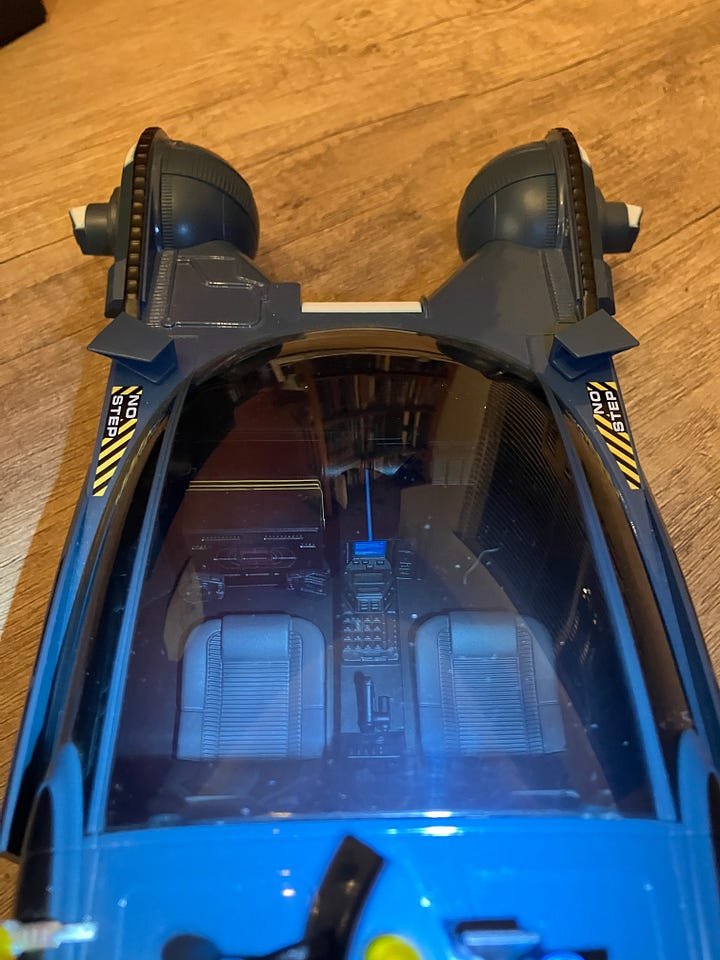
So, is it any good? In a word, yes. It’s a hefty die cast, and the detailing is excellent. I pulled up a few screencaps just to compare and other than a few niggling points Master Replicas did an outstanding job with this one. I had thought the forward wheel tracks were a touch small until I pulled the screen caps — they’re about right.
Fore and aft…
The undercarriage detailing is equally good, with police lights in the right places. The only niggle for the underside (that they did get right in the small model from the Blade Runner Collection box set a decade or so ago) is the undercarriage windows are reflective here.
Those two big shiny bits should be windows from the screencaps.
A minor gripe for me is the cockpit windows are a bit dark, so unless you are under excellent light, it’s difficult to see the interior detail — but it’s there. The vidphon screen in the center console, the control screen has red lettering and graphics in the dashboard. There’s also detailing between the seats. Those two panels in from of the police gumballs on the roof are also, I believe, supposed to be windows.
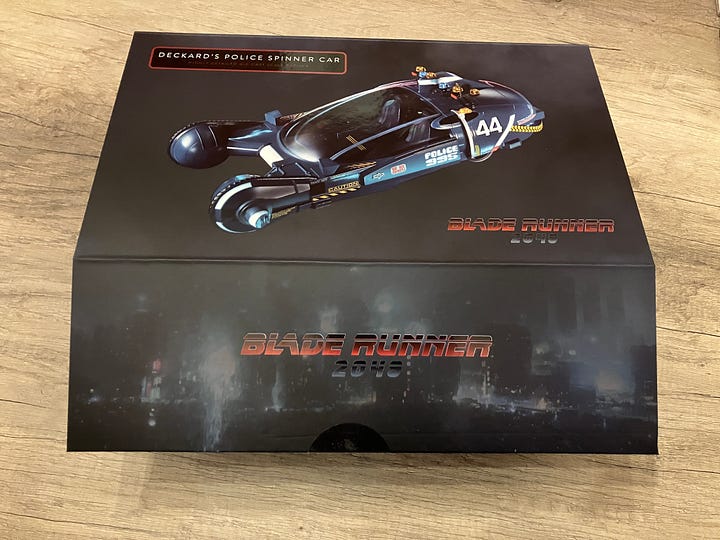
The packaging is very nice: heavy cardboard with satin finish, and inside heavy foam protects the model quite well. The car graphic and the Blade Runner titles are all raised. The box is decorated with subtle cityscapes all around the side panels. The lid is magnetically closed and the interior flap houses a very nice graphic, as well…
I’m a huge fan of the movies. The original became my favorite movie sitting in the theater opening night, and only cemented that position with the release of The Director’s Cut (although The Final Cut — or more appropriately directed at the producers’ meddling, The F*ck You Cut is my favorite version.) I was skeptical about Villeneue’s sequel until I saw it. In many ways, I found it more engaging than the original despite the run time.
So, is it worth the $150? Depends. Are you a massive fan that will have it sitting next to the 3D printed blasters from the movies? (Just put it there after taking the pictures.) Then yes. If you are a passing fan, the price might be a bit of a lift — but supposedly this is a limited run. The value should start climbing in three…two…one…
I jumped on the pre-order for the Alien RPG waaaay back when it first came out in 2019. My game group wound up running a campaign that — trading out with other games a few weeks here and there — ran for about two years or so. (And may be coming back to the rotation soon…)
When I saw the ads for the “evolved edition” last year I was less than interested. It seemed a touch early for a second edition, and there was still material (Building Better Worlds and the Heart of Darkness set) coming out…so why change? Two things come to mind for the why immediately. Inflation — the cost of producing books has shot up. Alien and Blade Runner use black page color, which is expensive (and, I think, a bit harder to read) and the release of Alien: Romulus and a desire by Free League, Fox, or both to do something that included the new material.
I’ve been reading a lot of chatter back and forth about the new edition, which everything from “it’s a cash grab” and “the new look sucks” to “this is great” and “I like the new rules for…” With the holidays coming up and my propensity for buying stuff I want before the wife can get me gifts for birthdays, holidays, etc. I decided to make this one of my Christmas asks, though I was more interested in the Spinner that Master Replica had coming out. (Which will have a review soon.)
So, the Alien Evolved Edition RPG arrived for Christmas, and after having a few passes through it to see what was different (or not), let’s start with the good. The binding is much better than the older books, partly because of the reduced page count — down about 60 pages from the original. (More on that in a moment…)
There’s been a few clarifications on the basic die mechanic (which is terribly simple), and some changes to combat (specifically armor), the panic rules, and the addition of solo play rules and an optional “lifepath” style character creation. There’s also more material from the movies, on the setting, and the word count is much more beefy than the original book — which at 380ish pages had maybe half that in actual material — and comes in at 311 pages. And definitely has more stuff in it. more on that in a moment.
The lifepath character creation is tucked in the appendix, also with the “Last Survivor” solo rules. You can roll (or honestly just use it as inspiration) events in the character’s life to help build out what you want to play. No, Traveler fans, you cannot die in character creation. It’s a nice addition, especially for players who don’t have a strong grounding in the setting and need a bit of help.
The solo rules are — as with most solo rules sets — a series of ideas and random event charts to help a person play an adventure if they don’t have anyone to play with. Star Trek Adventures did this very well with their Captain’s Log — which really is half-play/half- fan fic creation, as you are supposed to write your adventure out as a log entry. It’s a neat conceit. Doing something like that for Last Survivor could be a way to charge it up a bit.
The main changes are things like armor. It used to be you rolled a number of dice equal to the armor rating and successes negated attack successes. Simple, but it meant armor did bugger all, or essentially stopped an attack. In A:EE, the armor rating kills off that amount of damage. More simple and more intuitive. It will play better.
The new panic rules include a “stress response” chart for non-panic, you’re just stressed out situations. I’m feel personally vindicated on this one (and peeved, since it was one of the first things I modded for Alien back in 2020. The old stress/panic set up could spiral, and fast, with bad rolls even in non-threatening situations, so I cooked up a “stressed out” table. Now you have an official one. Panic, similarly, got tweaked a bit so that you can now have multiple panic responses, instead of regularly stepping up through them. The mechanic for it is new: roll a d6, add your stress level, but now you reduce it by your resolve rating. Less chance of a full blown freakout, but it does look like it could lead to lesser panic responses early. This was a complaint I’ve seen online and which could be easily tweaked to reduce panicking too early (especially for marine characters, who should handle danger better than a crew of a space tramp steamer or colonists.)
While I consider the following “good” about the new book, you might be of a different opinion. The layout…
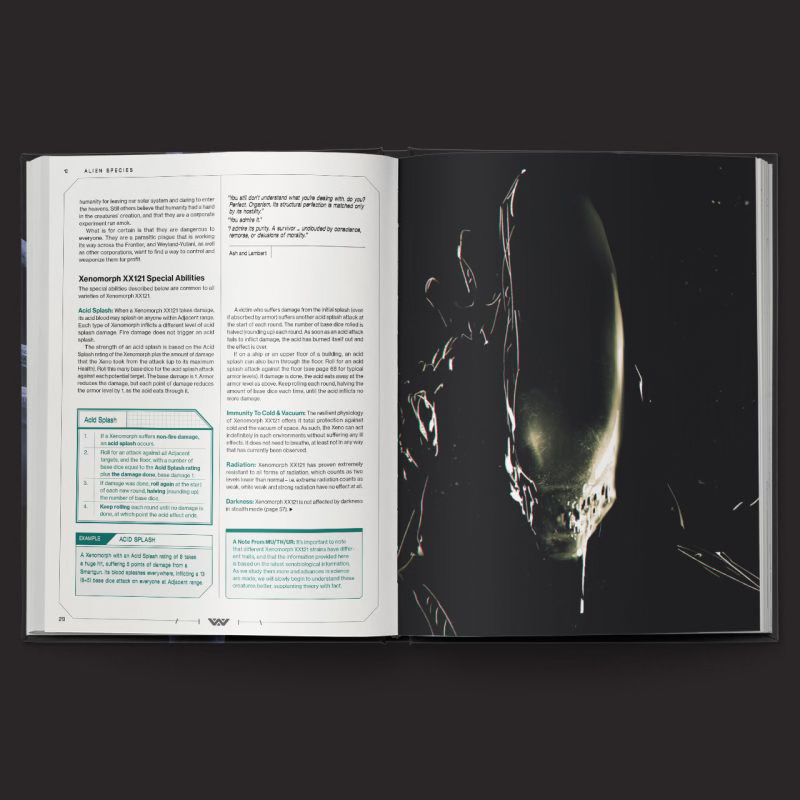
I get why some don’t like it. The original pages were black, with text boxes in a light green with black or dark green text, that while readable, meant that you got a lot less game but a more unified look with the artwork. And to be fair, the art was superb, atmospheric, and really leant to the enjoyment of the book. It was also very much Free League’s style at the time (as with the Tales from the Loop series of games and Blade Runner): half art book, half game book. The new layout — and I chose the above specifically as an example of this — loses a lot of that atmosphere for readability and a focus on the game mechanics and setting material. It’s much less pretty and less of an experience to read. It’s also much more useful from an information and usability standpoint. (It’s also probably much cheaper for Free League to print.)
Similarly, the gamemaster screen is more readable in the new format, with the player side showing art that looks like the circuity cubbyholes of MU/TH/UR’s vestibule in Nostromo, with the circuitry map on a screen in the middle. Looks nice, simple, but I think the original screen — on the player’s side — was better; the GM side is better in the new edition GM screen.
The bad? Not much. Some may complain about the inclusion of more material connected to Romulus — I like it. There’s more gear in the corebook, and even mundane stuff like water can have an impact, mechanically. All of this is, of course, something you can just ignore. That’s the nice thing about this edition; you can just use what you like and ignore the rest. The basic mechanics are the same: roll a number of dice equal to your ability and skill, set a 6 on one of them to succeed.
If anything, I’m a little disappointed they didn’t move to the die mechanic from Twilight: 2000 and Blade Runner. I like the different type of dice — but this system is basic to the point of utilitarian. It doesn’t get in the way. The stress/panic mechanic is still one of the best for urging the players to lean into the horror aspect of the game, instead of ignoring the impact that awful stuff happen ing around you has to a character.
So, is it worth it? At about $50-60 US for the core book, it’s a solid yes if you’ve wanted to get the Alien game and just haven’t. If you’re happy with the old version, it’s not a must — but after reading it, I’m happy I’ve got it, and I think it’s worth it for some of the extra gear, alternate rules, and added material from Romulus.
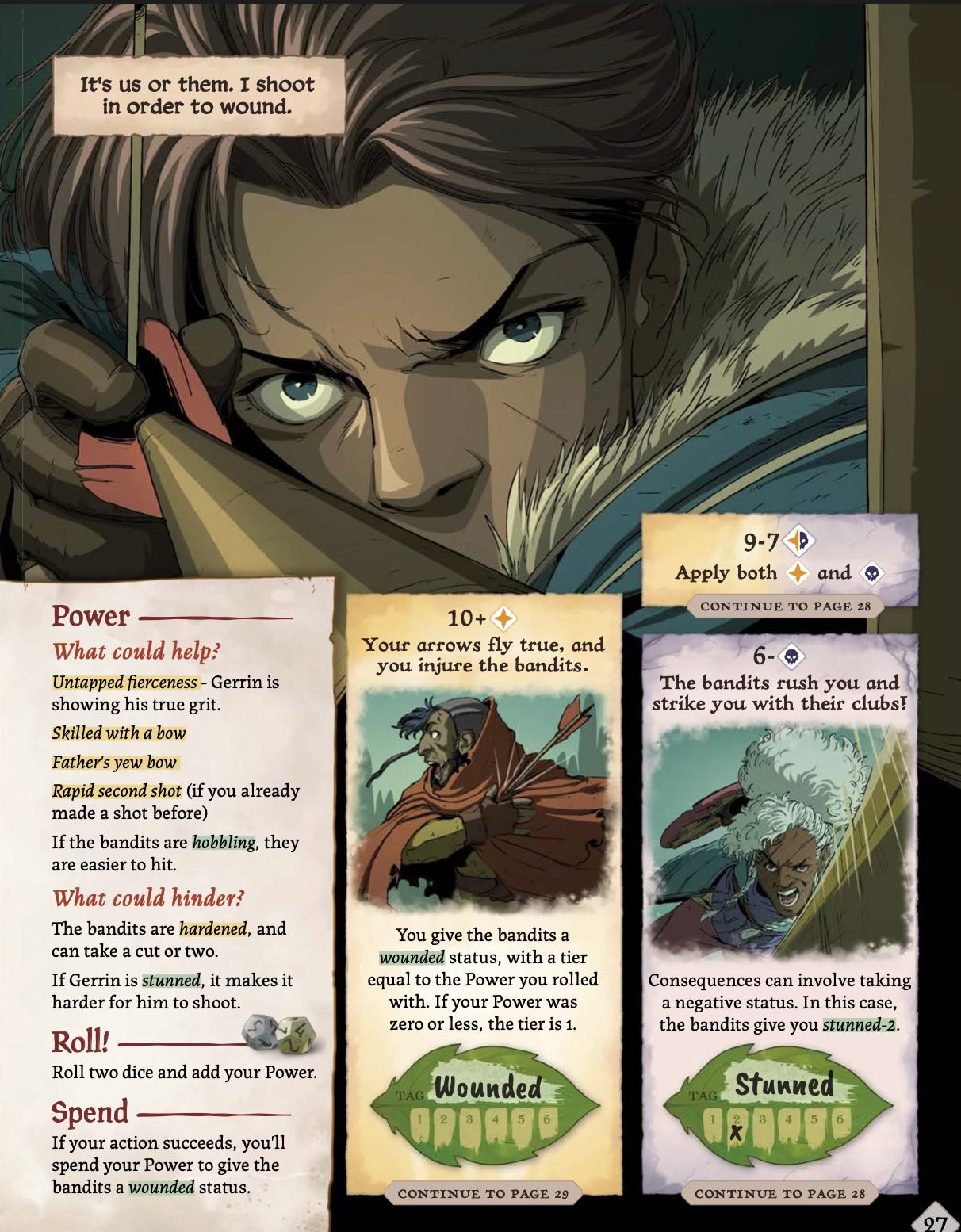
Normally, I wait until I have a physical copy for a review of a game, but Legend in the Mist is looking like a late spring/early summer timeframe for that. Kickstarted earlier this year, Sons of Oak promised “…[a] rustic fantasy tabletop RPG based on the acclaimed City of Mist.” It is essentially an engine similar to Powered by the Apocalypse, using “tags” to modify task rolls, rather than a plethora of modifiers. I was a little skeptical of the system — my experience with the PbtA games has been lackluster, but Sions of Oak give you the chance to try out the game with a comic book-style mini-adventure that plays like the old Create Your Own Adventure books of old — you chose an action, go to the appropriate page, and press on. It’s a novel way to teach the game, and the artwork..? The artwork is gorgeous. I must not have been alone in my assessment: the Kickstart pulled $855,000 or so. Pre-orders are still being taken and I went all in on the Ravenhome bundle.
The PDFs of the main books — both the core rulebook and Action Grimoire are already out, as is the PDF of the GM screen (which is actually useful!), as well as a few extra bits: a Halloween and Winter-themed short with creatures, etc, and a Dungeons & Dragons 5E conversion guide for the main character classes. If you preorder, you get these little “splatbooks”.
So first, the production values. Yes, I only have the PDFs to go by, for now, but these are gorgeous books. The artwork has a realistic animated film kind of look with multiple two page pieces that blend one into the other.
The title page…
You build a character by creating four “themes” — based on personality, your trade or job, background, etc. — and there are three “might” levels: origin, adventurer, and greatness, so you can play from rank amateur or average adventurer, to trained and skilled heros, to powerful heroes. You can choose from pre-existing themes like Artisan, or Prophetic Visions — there are “power tags” listed that give you a bump on your die rolls, depending on if they are applicable or not. You choose two and one weakness tag which might work against you in a scene. For instance, a Hunter might have a “Well Crafted Bow” and “Animal Lore”, with a weakness of “Ragged & Dirty”. You get four of these themes, plus a “backpack” for gear. There’s also a Fellowship Theme for group play explaining why you’re together.
You’re ready to go. Play is simple: the GM gives you a situation, you tell them what you want to do to respond and figure out which tags work for the scene (which might have it’s own tags like “Bandits!” or “Heavy Downpour” that take away from your roll. Roll 2d6 added together to give you the result. A 10+ gives a success and depending on the tags, you give a “status” to your opponents or you overcome whatever obstacle you were meeting. A 7-9 gives a success, but with a consequence — a negative status to you. Six or lower is a consequence and you failed. For instance, say you were climbing a cliffside and had “Strong as an Ox” and “Athletic” tags that were appropriate — that adds 2 to your roll. However, it’s raining and the rock is slick for a -1 to your test. You roll a 7 (+2 for your tags and -1 for the rain for an 8.) You make it up the cliff, but you might have a consequence of “Scrapped Up” or it you were on a time limit you might be “Behind Schedule”. Here’s an example from the comic:
The books has plenty of examples of situations and opponents — all approached in the same way, and the Action Grimoire adds to the number of scenarios your could borrow from on the fly as a gamemaster. I ran two nights of Legend in the Mist using a vague idea of an adventure, and used the core book and Grimoire to slap together encounters that ran quickly and well. Both groups thought the game rules were simple and quick to understand, although trying to figure if a tag was appropriate had a lot of trying to stretch the meaning of the tags. Spitballing statuses was a bit tricky the first time out, but once it clicks, the game is easy to run — even off of the PDFs and a two page cheatsheet you can get off the Sons of Oak website.
The core book is a double volume coming in at a hefty 496 pages in PDF format, the Action Grimoire is another 103. Even the 5E splatbook is 25 pages.
So, is it worth the $50 for the core book and $20 for the Grimoire? Yes…and unreservedly so. One thing I’ve always disliked about Dungeons & Dragons is the staggering amount of rules you have to sift through, especially regarding magic. None of that here — it’s a simple engine for play, leads to good character creation and role play. It’s also just beautiful to leaf through.
All the artwork here is 2025 copyright the Sons of Oak Game Studio. No infringement is intended — only a good ol’ word of mouth assist for a good product.
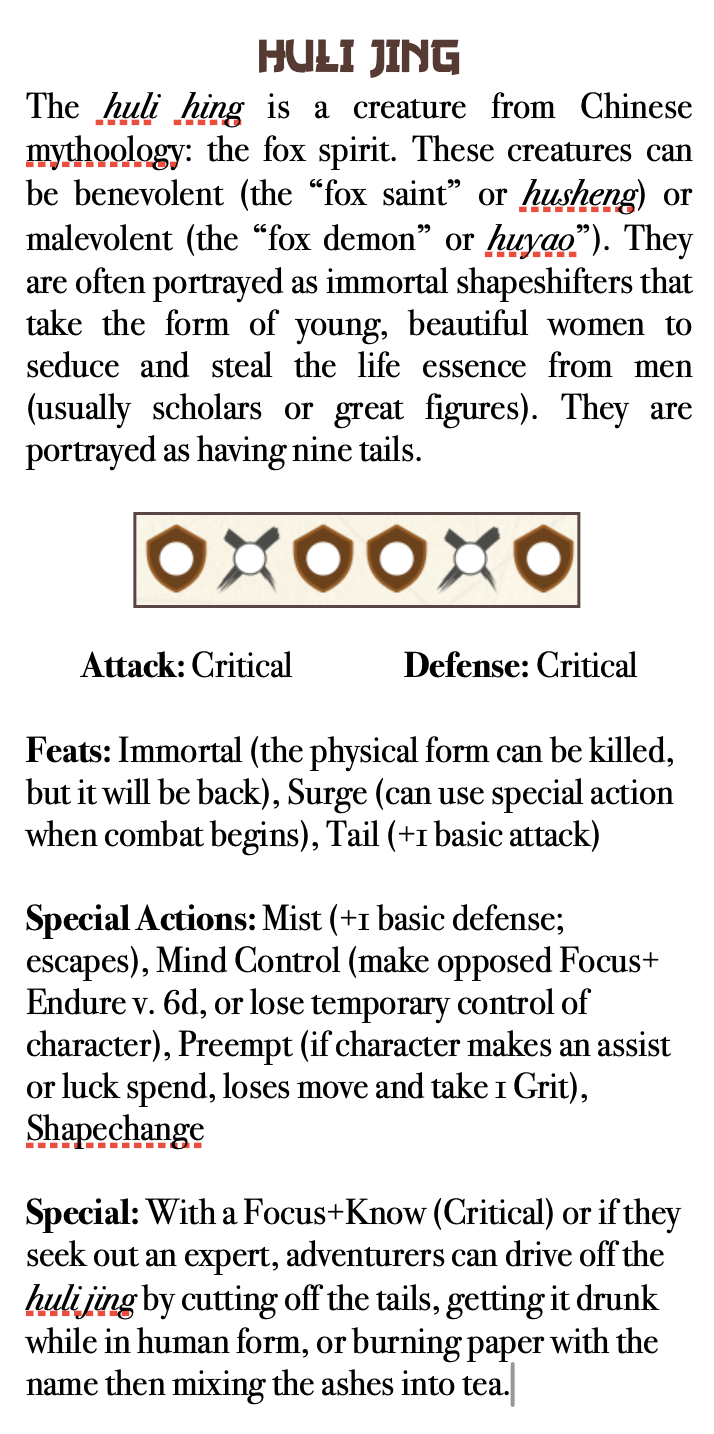
I’ve been running an Outgunned Adventure! campaign set in 1920s China. The most recent threat was a huli jing — a fox spirit. The creature is popular in Chinese, but also Korean, Japanese, and Vietnamese myth. These usually immortal creatures have nine tails in fox form and can shapeshift — usually into beautiful young women who seduce scholarly or important men to steal their knowledge and life essence. (You can guess how…) They can be driven off by catching them in fox form and cutting off their tails, or in human form by getting them drunk. Alternately, they can be driven off if you know the name by writing it on paper, burning the paper, and mixing the ashes in tea.
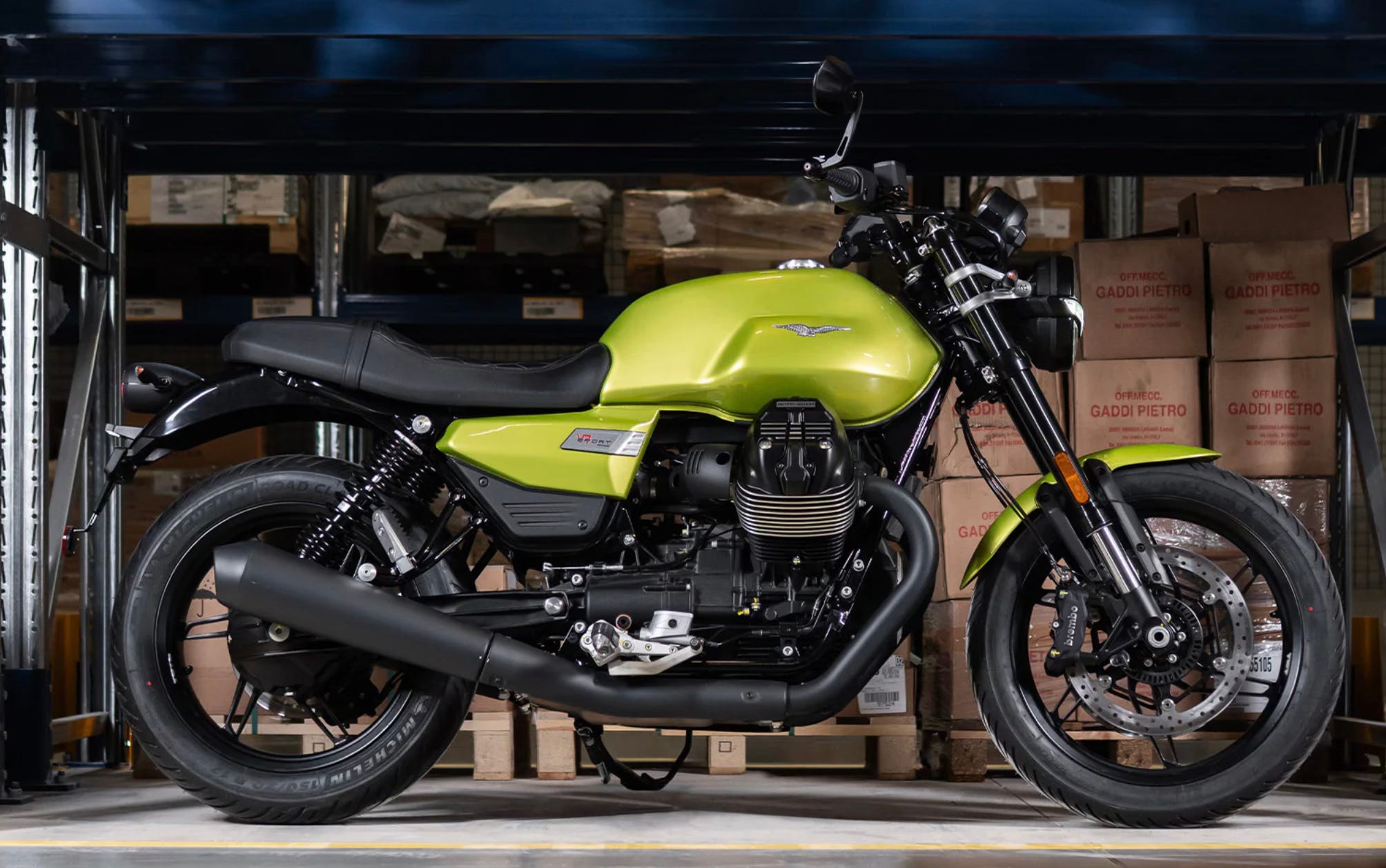
I’ve had a Moto Guzzi V7 Classic for a few years now, and on seeing the new V7 Sport I was a bit smitten. There’s something about the Verde Legnano finish — it’s not a color I especially like, but it evokes the ‘70s racers Guzzi used to field. I really dig the bevelled front on the side panels. It’s a small thing, but I find it catches the eye.
What’s new? Inverted folks. Dual front brakes. A nice throaty exhaust. Bar end mirrors. But the big change is the variable valve timing from the V-85.
I got a chance to ride one this weekend while my V7 was in the shop for maintenance. The good folks at Motopia New Mexico — probably the best dealer in the state for Triumphs, Guzzis andAprilias, Royal Enfield, and MV Augusta — led me bang around for an hour.
The VVT really smooths out the idle and and overall feel of the transverse twin. It doesn’t lose the character of the motor, but it is more refined. Power delivery is still fast through the shaft drive, but I did notice the rev limiter seemed to be kicking in a good 1000 RPM lower than on my Classic. I almost never hit the governor on my V7, no matter how hard I’m flogging in. I was regularly hitting it on the Sport. That said, it’s plenty quick for the non-sportbike crowd.
The saddle is incredibly comfortable. The V7 is a fantastic distance bike, but the saddle on this is superb. I may have to see if I can throw one on my Classic. With the 5.5 gallon tank, you can get about 300 miles out of a tank. You’d be able to stay in the saddle for that, if need be, without losing feeling.
The brakes? Great. The bike stops very well, now, and there’s none of the slight pull you get on the older ones.
The good news is that the all the things that make the V7 such a good platform haven’t changes. The inverted folks really didn’t seem to make it handle all that much better than the early V7s. The weight sits low and central, the frame contributes to exceptional balance, especially at very low speeds. The seating position is comfortable and conducive to long rides. It’s speedy enough to handle most traffic, but not fast enough to send you straight to jail, if you get stopped by the police.
The V7 Sport is a nice addition to the line, and improves on the Classic and Stone versions with a smoother engine and much improved braking, without losing what makes the V7 so attractive to those that want an old-school machine with modern conveniences.
I’m late to the game on this pistol. Stumbling onto a video about it, I hit the interwebz to see what all the fuss was about. The initial CDS9 is a beautiful thing — rich red G10 grips, dual-tone frame and slide, and in a size that was enticing. There wasn’t quite the hate online as you see for a lot of Kimber’s products — some on it earned, but a lot of it not. It’s also $1100ish dollars for a lot of features I really don’t value. A pistol like this, for me, is deep carry. No red dots. No threaded barrel. No rail. But it did have something my Alpha Foxtrot S15 didn’t have: ambi controls. (There’s really zero reason not to have full ambi controls on a pistol in 2025…)
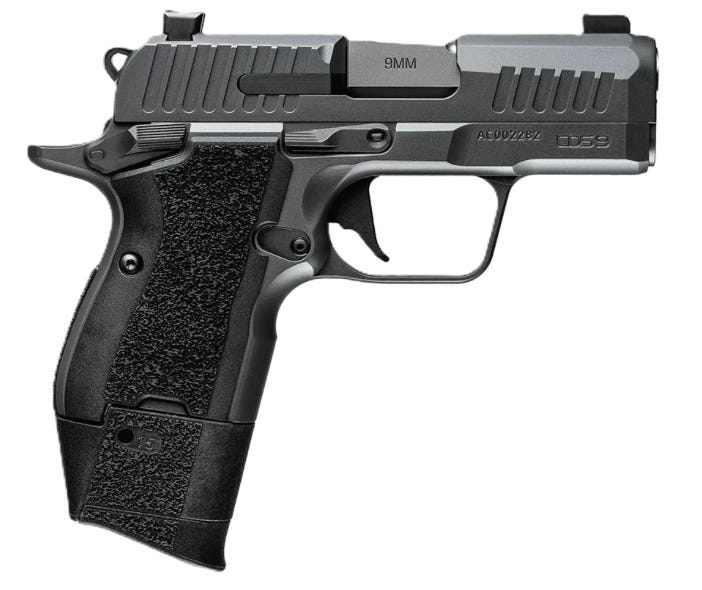
For guys like me, there’s the “Classic” version of the CDS9. No frills, just the necessary bells and whistles to make this a top-notch pocket gun. (Yes, there’s an optics ready version.) I decided to go for it.
The CDS9 with the 15-round magazine. Great for practice, less so for concealment.
You get a cardboard box with a nice, handbag-sized, two pistol range bag; a 13- and 15-round magazine; a CDS9 pistol, the usual lock and sticker, and an utterly useless “safety” booklet that doesn’t even include the disassembly and reassembly instructions. You have to use the QR code on the booklet to download the booklet. Stupid.
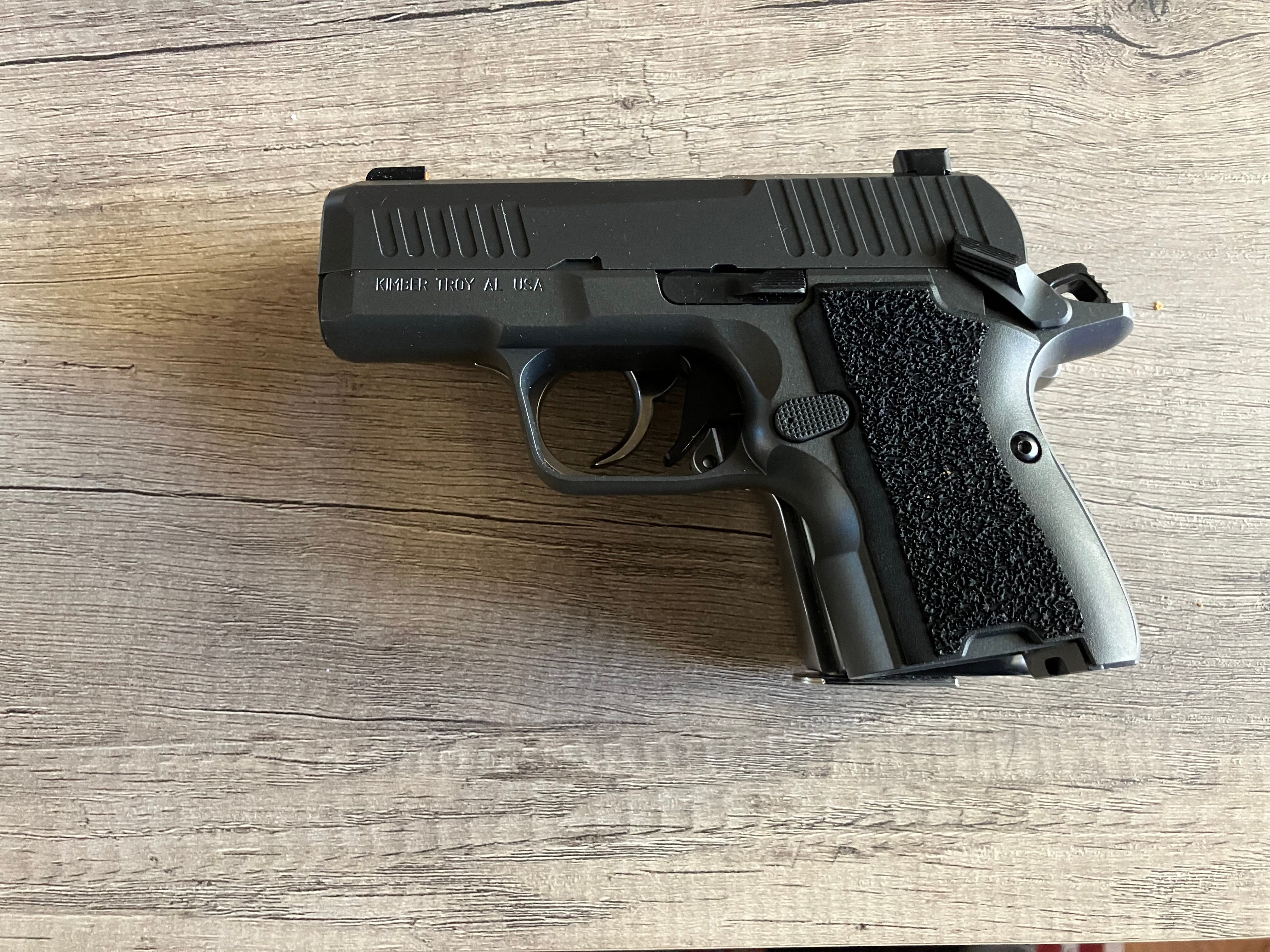
The gun has an aluminum frame and a stainless slide in the Kim-Pro II finish, and a stainless steel barrel. The finish is gorgeous and silky smooth in a neutral gray color. The grips (which can be changed out for the sexier G10s from the normal CDS9) are black polymer with a grip texture that doesn’t seem too bitey…until you start banging away. The texturing is also across the back of the pistol and really holds the pistol firmly in the hand. There’s a great undercut on the trigger guard and there was no impacting on the middle finger while shooting. The guard is also large and easily accommodated gloves. It has an external extractor that really chucks the spent shells and most importantly (for me) has an ambi safety and slide stop. The magazine release is swappable left to right.
I owned a Micro-9 from Kimber a few years back and wound up selling it because the trigger finger was caching the magazine release while shooting, dropping the magazine. Not ideal. The magazine release is much lower in profile, as is the safety and slide stop, and in 300 rounds on the first trip to the range, I did not experience an accidental release. The low-profile of the safety has been an issue for some online. I had no issues thumbing it on and off, even while drawing from the pocket of my jeans to shoot. Honestly, if that was a concern, the tail on the CDS9 is short enough you could carry hammer down and draw with your thumb on the hammer, cock it at presentation, and fire. I tried both with zero issues.
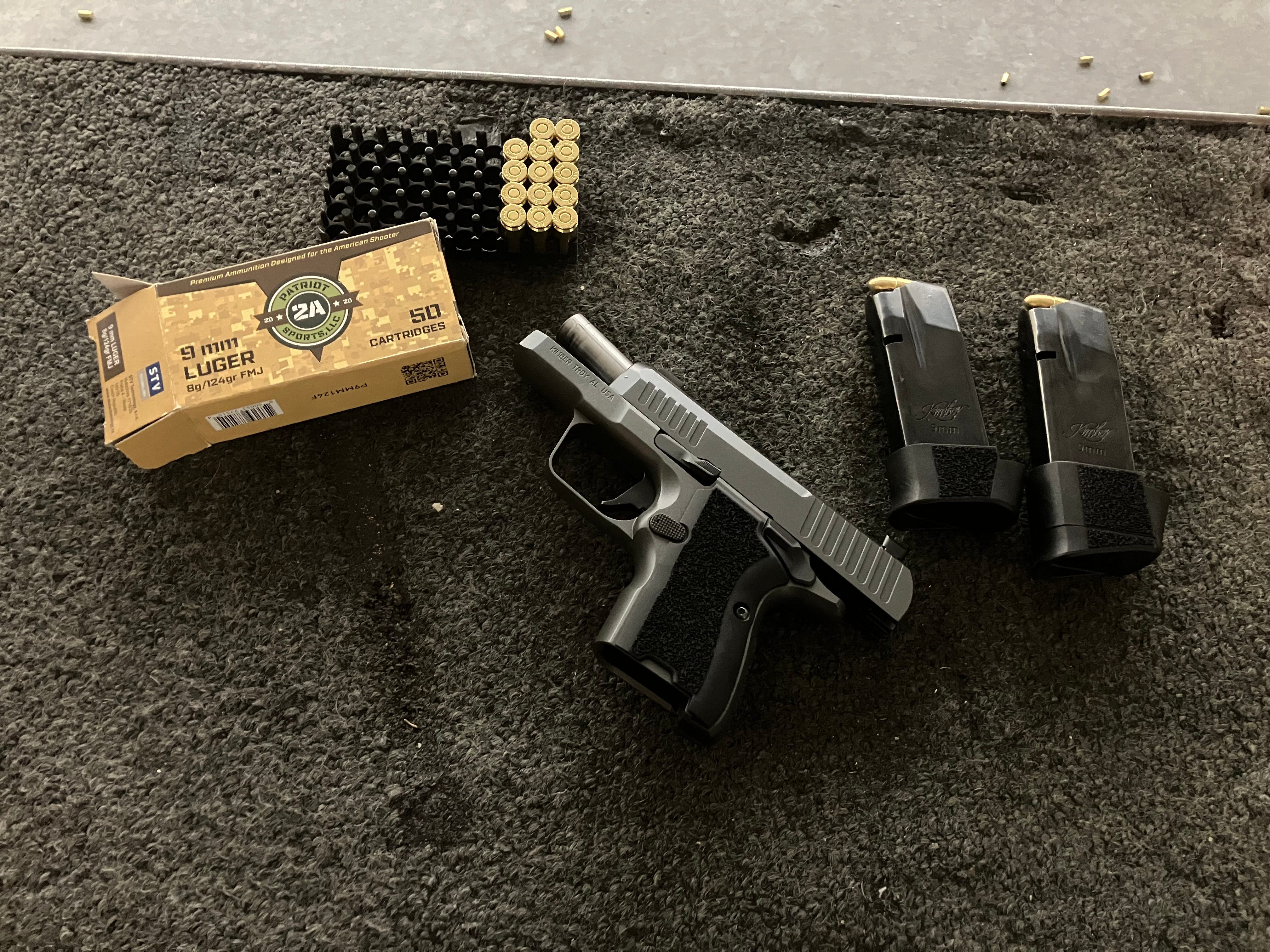
This is at the end of 300 rounds — a bit dirty, but not bad, at all.
Recoil with 124 grain Patriot Sports ammunition — not the top end STV offers, but still factory quality ammo — was reasonable for a lightweight pistol. I suspect with the shorter 10-round magazine, it would be “stout”. The pistol ran all 300 rounds without an issue save for two failures where the 15-round magazine locked open with a single round in the box. That’s not a pistol issue; that’s a magazine issue.
Not taking my time, accuracy was decent out to 15 yards with hits in the X or 9 ring. I fired a single mag at 25 yards and saw a two inch drop but solid groups inside three inches. It will run fast once you get used to the trigger, which has a nice 4 lb. consistent break. The trigger is flat faced but does have an upper pivot that isn’t noticeable while shooting, but I do think slowed me down when it needed a bit more let-out for the reset. It feels like an straight-back 1911 trigger; it’s not. While it shoots fast, it also seems like the recoil catches up to you a out six to seven rounds in — something a few commenters had pointed out in their reviews.
Take down and cleaning is pretty 1911-style, straightforward. The dual recoil spring assembly has one loose outer spring, the other is captured. It hooks onto the lug of the barrel cleanly and easily. The lug is CZ-style, not linked like a 1911, and I suspect that really helps with the reliability. The back of the slide was filthy inside, as was the area around the breech, but otherwise, the pistol was pretty clean.
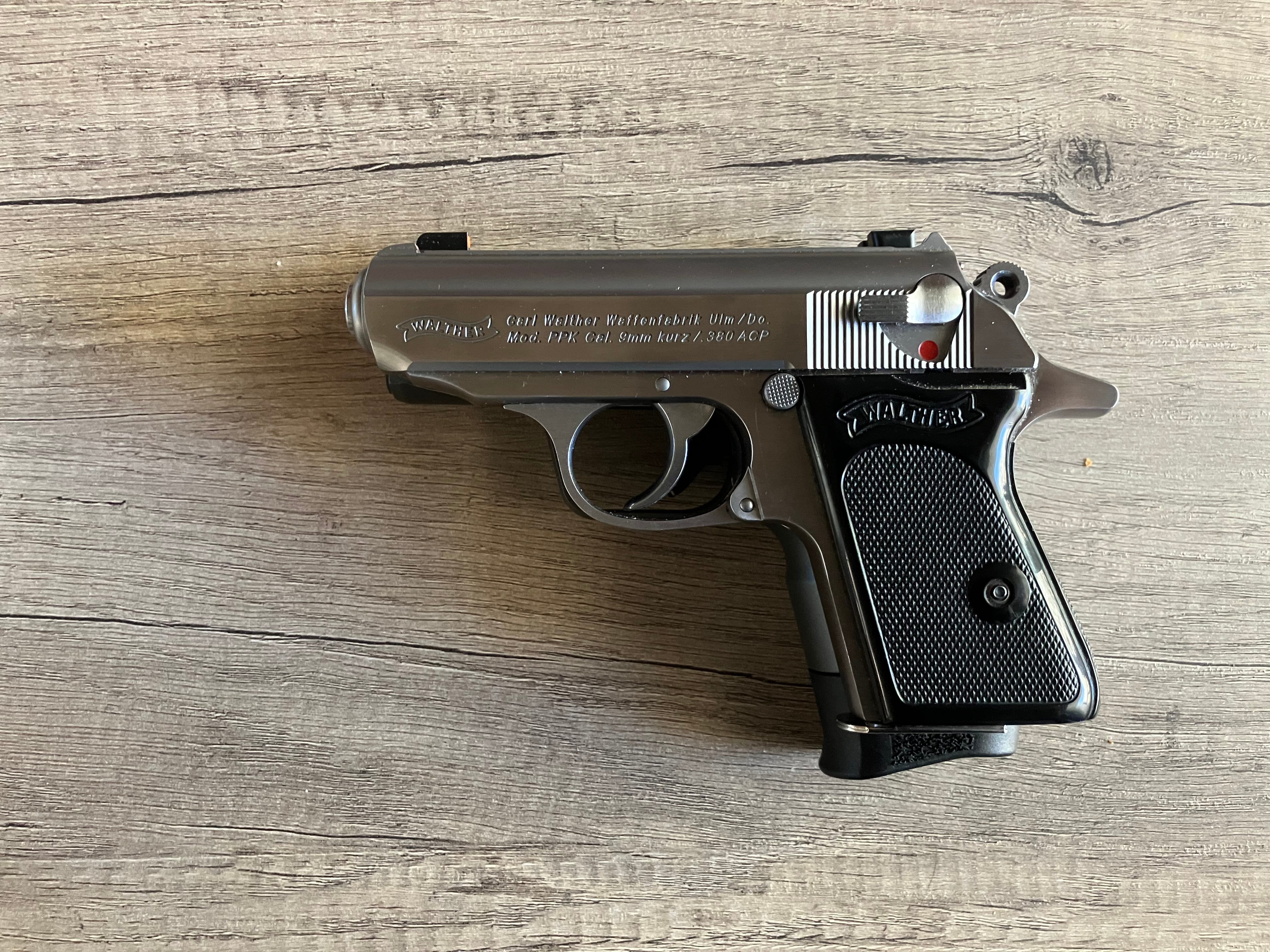
Since I was considering this as a possible replacement or companion carry piece for my Walther PPK, I thought I’d weigh them, empty and with a full magazine: Empty, the CDS comes in a hair over an ounce heavier than my Fort Smith-made .380 PPK; loaded they are 1.73 lbs (27.6 oz) for the Kimber, and 1.5 lbs (23.7 oz) for the PPK. Barely noticeable considering the payload difference. I suspect with the 10-round magazine, the loaded weights will be at close to parity.
Size-wise is where the Kimber easily overtakes the PPK:
So, is it worth it? At $750 as a street price, absolutely. The CDS9 is competing in an interesting niche of the firearm world and is up against the likes of the SIG-Sauer P238, or more accurately, the P365; or the Hellcat Pro and Micro. They’re all about the same size, but outside of the P238, these are all polymer frame weapons. The CDS9 feels more solid and the recoil is much less snappy than I’ve felt on the Hellcat.
If you prefer a hammer over striker-fired, if you prefer a metal-framed pistol, the CDS is definitely worth considering over the others above. Holster availability is a bit limited, although if you are going to be carrying in the pocket, the CDS fits the Galco Pocket Protector holster for the P365.




 The Black Campbell