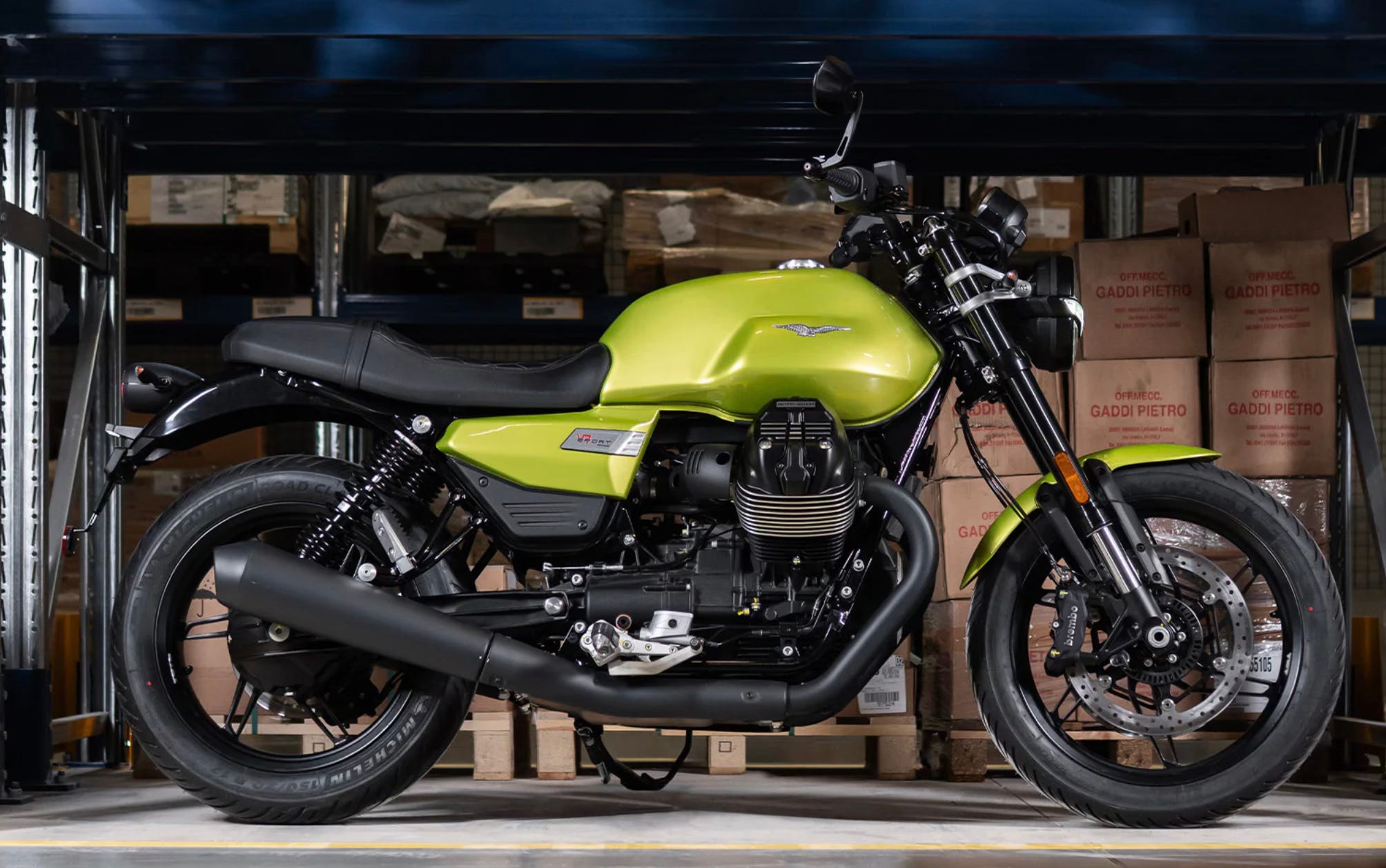
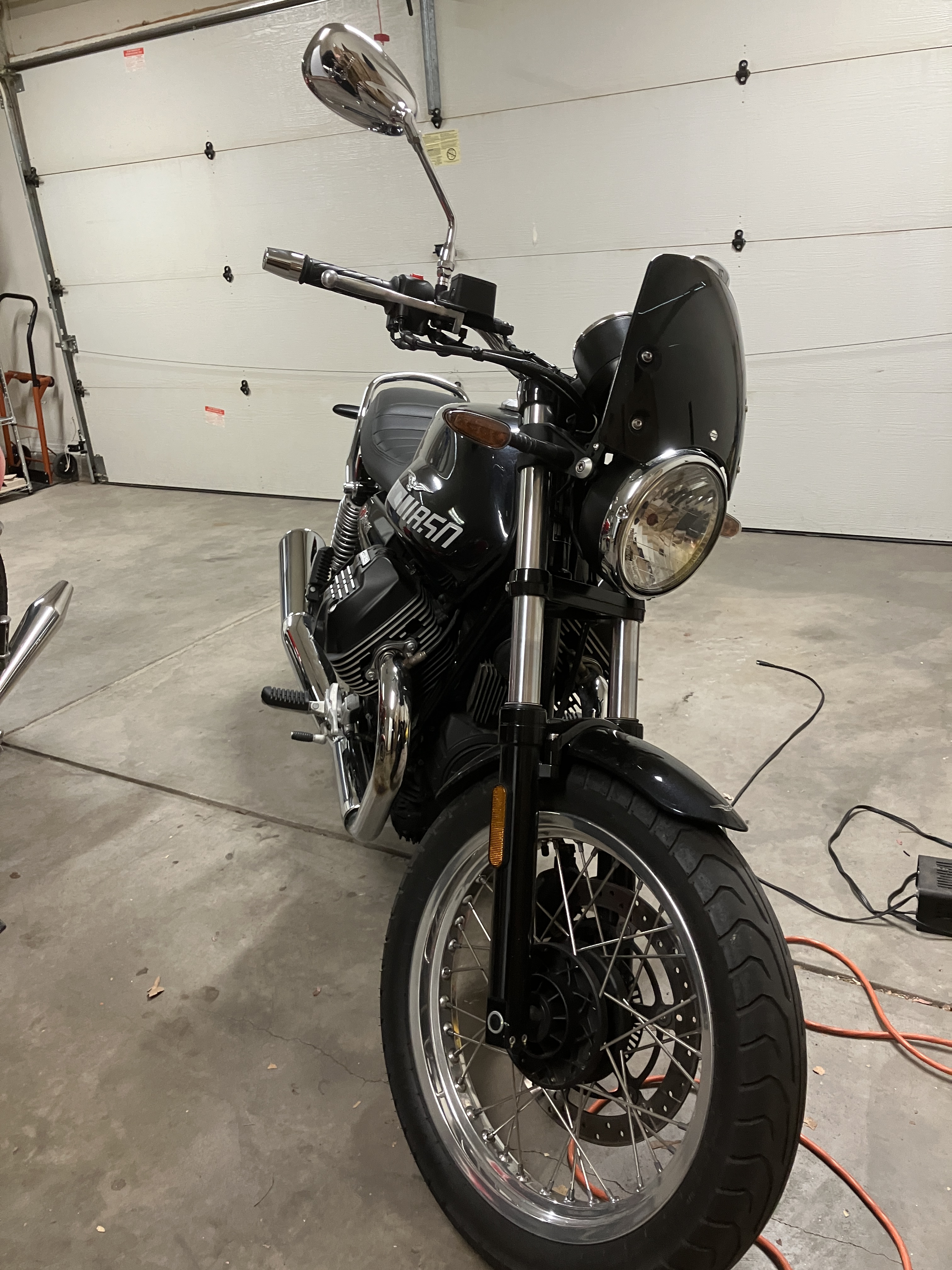
I’ve had a Moto Guzzi V7 Classic for a few years now, and on seeing the new V7 Sport I was a bit smitten. There’s something about the Verde Legnano finish — it’s not a color I especially like, but it evokes the ‘70s racers Guzzi used to field. I really dig the bevelled front on the side panels. It’s a small thing, but I find it catches the eye.
What’s new? Inverted folks. Dual front brakes. A nice throaty exhaust. Bar end mirrors. But the big change is the variable valve timing from the V-85.
I got a chance to ride one this weekend while my V7 was in the shop for maintenance. The good folks at Motopia New Mexico — probably the best dealer in the state for Triumphs, Guzzis andAprilias, Royal Enfield, and MV Augusta — led me bang around for an hour.
The VVT really smooths out the idle and and overall feel of the transverse twin. It doesn’t lose the character of the motor, but it is more refined. Power delivery is still fast through the shaft drive, but I did notice the rev limiter seemed to be kicking in a good 1000 RPM lower than on my Classic. I almost never hit the governor on my V7, no matter how hard I’m flogging in. I was regularly hitting it on the Sport. That said, it’s plenty quick for the non-sportbike crowd.
The saddle is incredibly comfortable. The V7 is a fantastic distance bike, but the saddle on this is superb. I may have to see if I can throw one on my Classic. With the 5.5 gallon tank, you can get about 300 miles out of a tank. You’d be able to stay in the saddle for that, if need be, without losing feeling.
The brakes? Great. The bike stops very well, now, and there’s none of the slight pull you get on the older ones.
The good news is that the all the things that make the V7 such a good platform haven’t changes. The inverted folks really didn’t seem to make it handle all that much better than the early V7s. The weight sits low and central, the frame contributes to exceptional balance, especially at very low speeds. The seating position is comfortable and conducive to long rides. It’s speedy enough to handle most traffic, but not fast enough to send you straight to jail, if you get stopped by the police.
The V7 Sport is a nice addition to the line, and improves on the Classic and Stone versions with a smoother engine and much improved braking, without losing what makes the V7 so attractive to those that want an old-school machine with modern conveniences.
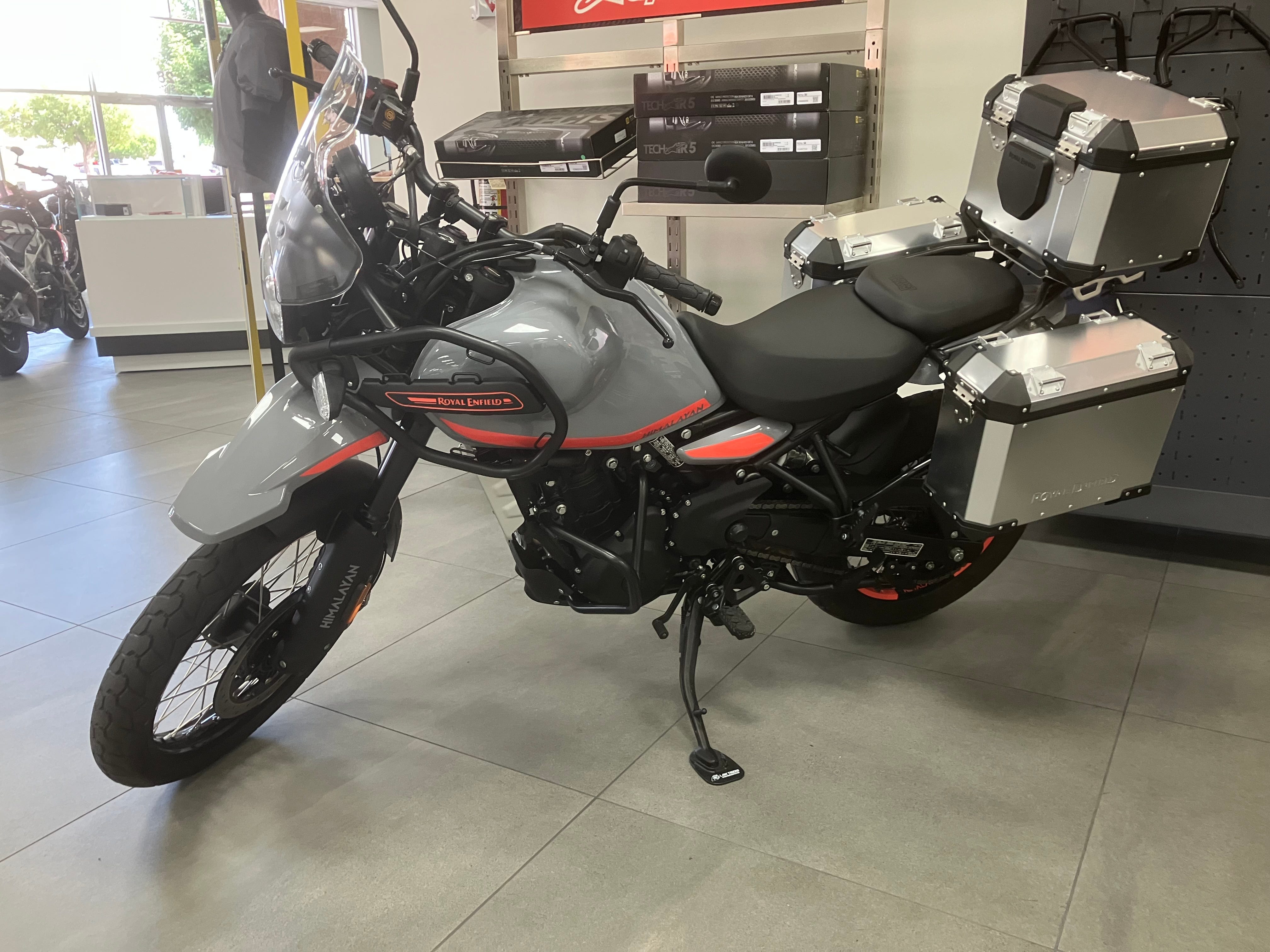
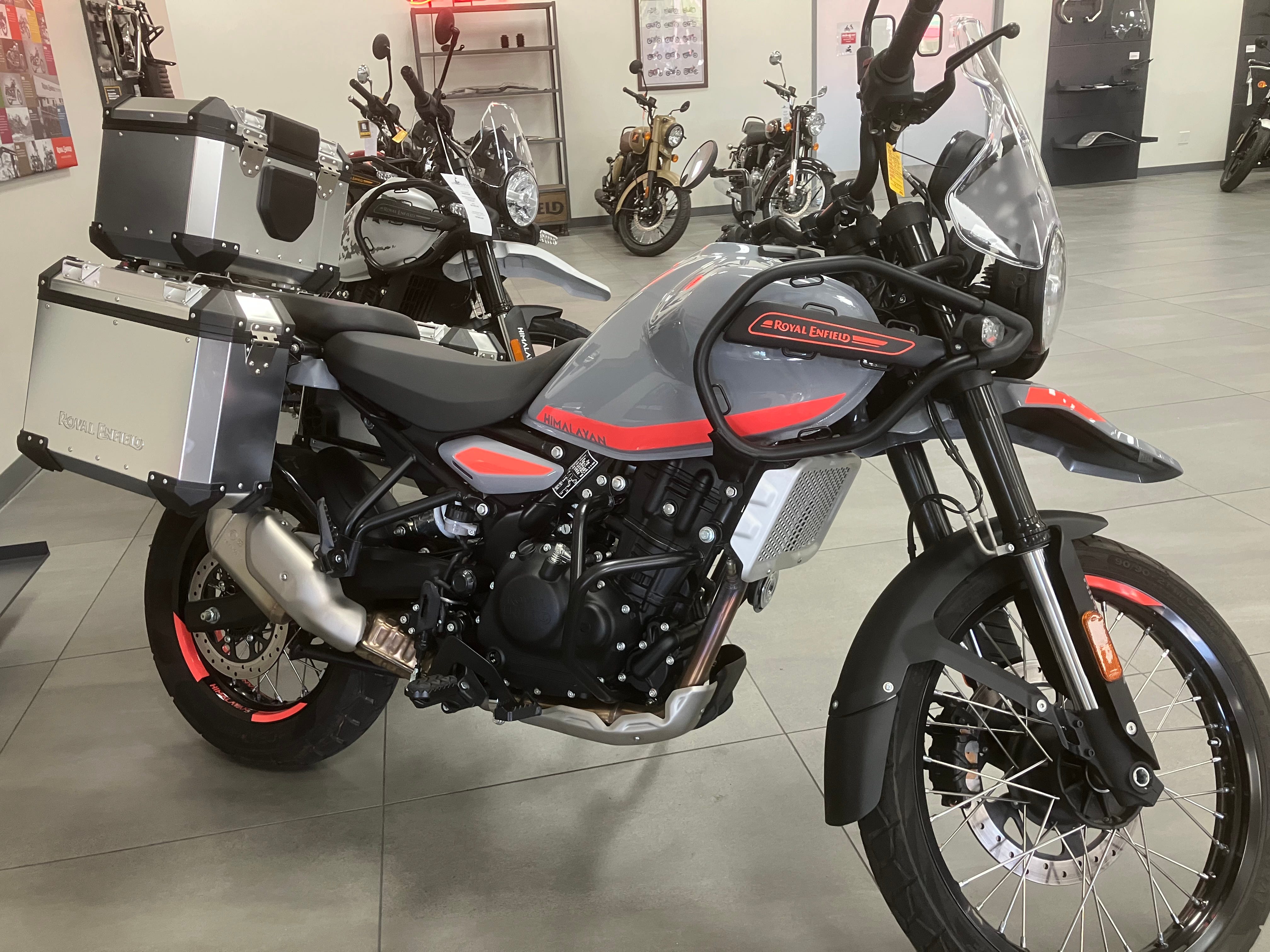
I was in for some new tires on my old Thruxton, so the local dealer — the excellent Motopia New Mexico — loaned me a Royal Enfield Himalayan to take around town for a day. If you’re looking for a Triumph, Aprilia or Guzzi, MV Augusta or Royal Enfield, hit them up. I’m sure they’ll ship and if you’re close enough, they’ll often run the bike out to you. Good guys; give ‘em business.
This isn’t my type of bike. I like a standard, old-school air-cooled twin like the Bonnevilles or the V7s. “Adventure” bikes don’t do it for me: they’re too tall and I hate the look. I rode the Moto Guzzi V85 and liked it well enough, but thought the Stelvio lacked character; the Aprilia Touareg is simple too bloody tall. This one? Comfortable, easy to foot at a stop. Even with the bags, it was fairly easy to wrangle my leg over it. Seat height is 31.5” — pretty standard height for a motorcycle these days.
This isn’t a powerhouse by any standard; it’s solid, reliable transportation that can go anywhere. I even took it through some rough dirt lots just to see how it did. Like all of the Enfields I’ve ridden that have been made in the last ten years or so, the balance is top-notch. It doesn’t feel heavy at all, weighing in at 439 lbs. With a single, water-cooled 450cc cylinder motor, it’s not fast, and it does not have that gearing that makes the 650 Interceptor punch above its weight in acceleration. The engine generates 40ish horsepower at 8000rpm and 40ish ft-lbs of torque. Quick enough for traffic, but not a rocket.
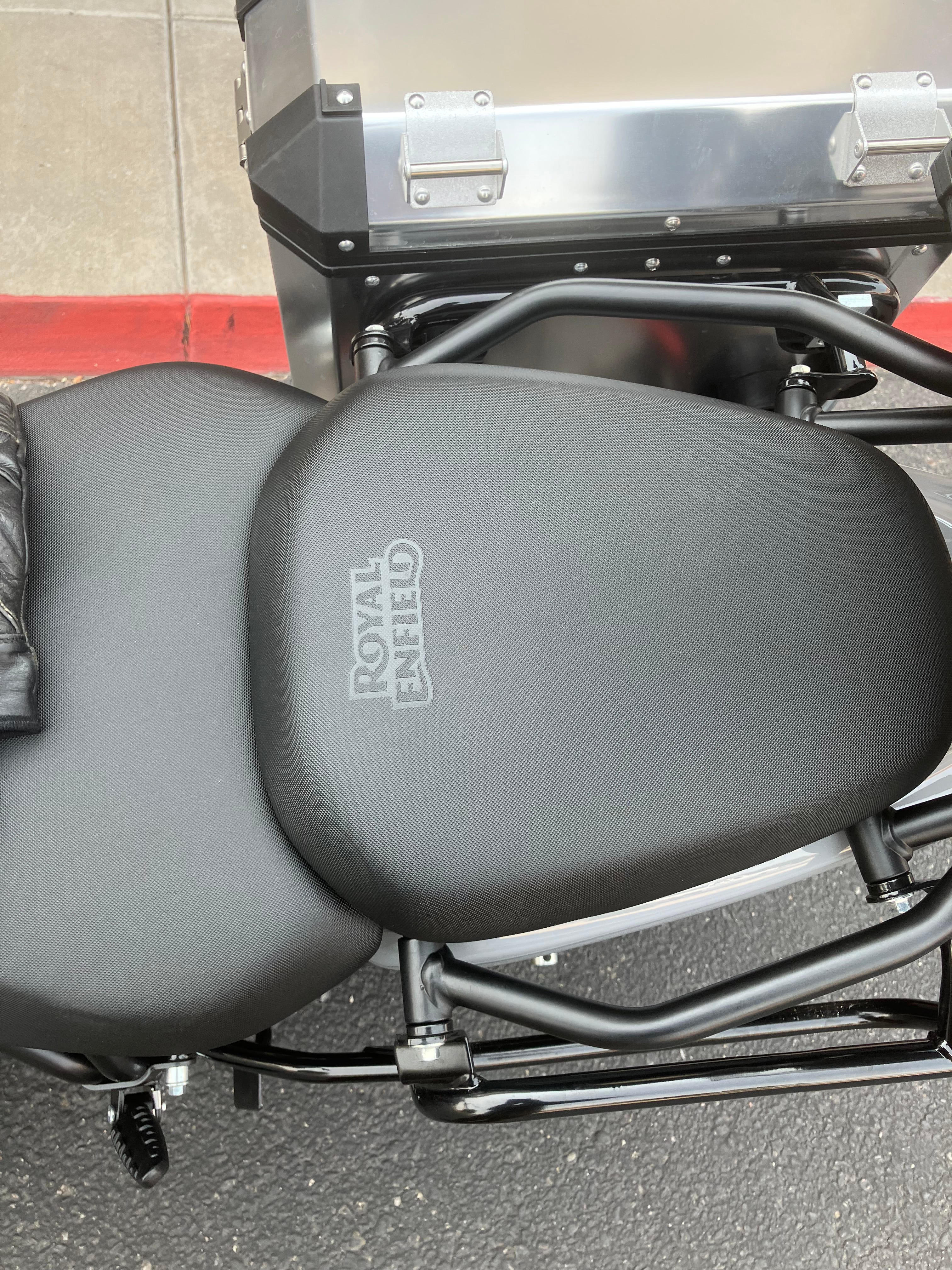
The saddle is very comfortable and has nice Royal Enfield branding embossing on it. The Showa suspension is workman-like and some of the rougher roads and the dirt lots were easy enough to traverse. The 21’ front and 17” rear give lots of stability and confidence when riding, and there is a tubeless rim version of the wheels.
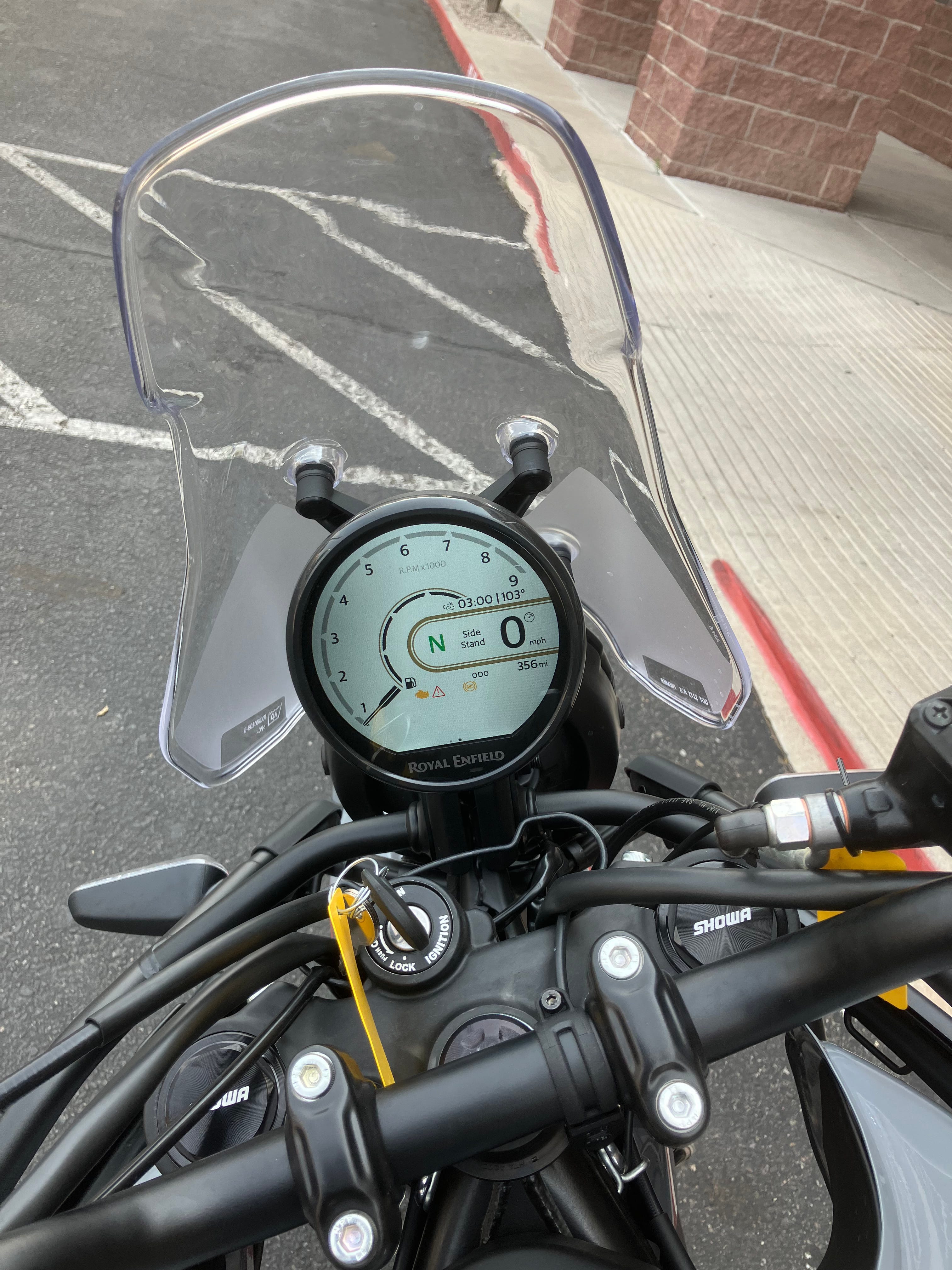
The modern amenities include a bright and very legible TFT display, and phone connectivity that allows maps and turn by turn direction as well as music control. I didn’t bother to test these features but the RE Tripper system was on a few of the 350s I’ve tested and it should work well. ABS is standard on the single rotor and there are four ride modes — again, I let it in the most docile of the stack.
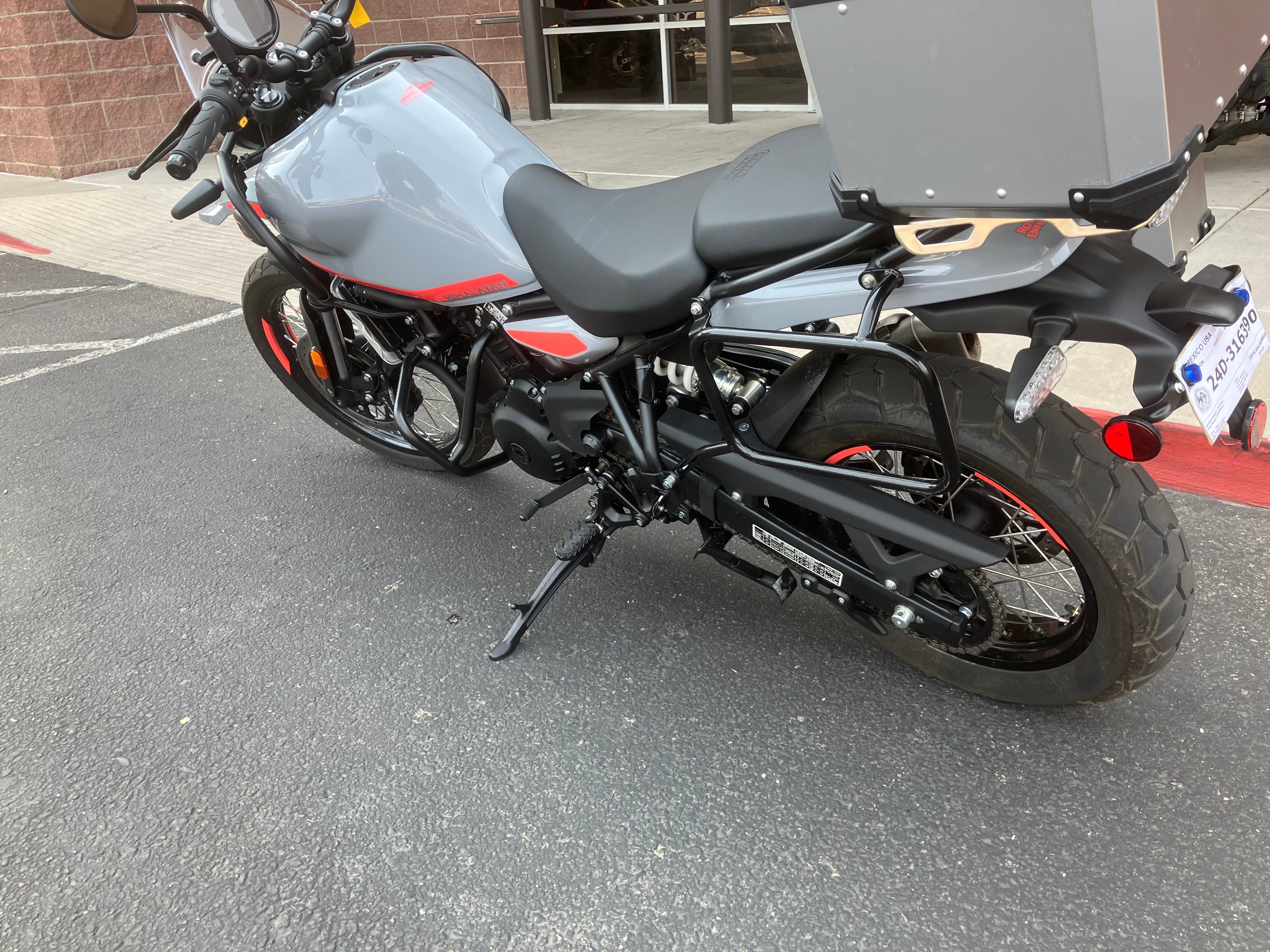
I took the one pannier off so the swingarm was visible…
So is it worth it? Like all the Enfields, it’s cheap. $6k MSRP and three year warranty, and the parts and labor for my Interceptor were delightful, compared to the water-cooled Triumph I had. If you like this style of bike and aren’t wedded to big power and bigger price, the Himalayan is an excellent choice for a working bike.
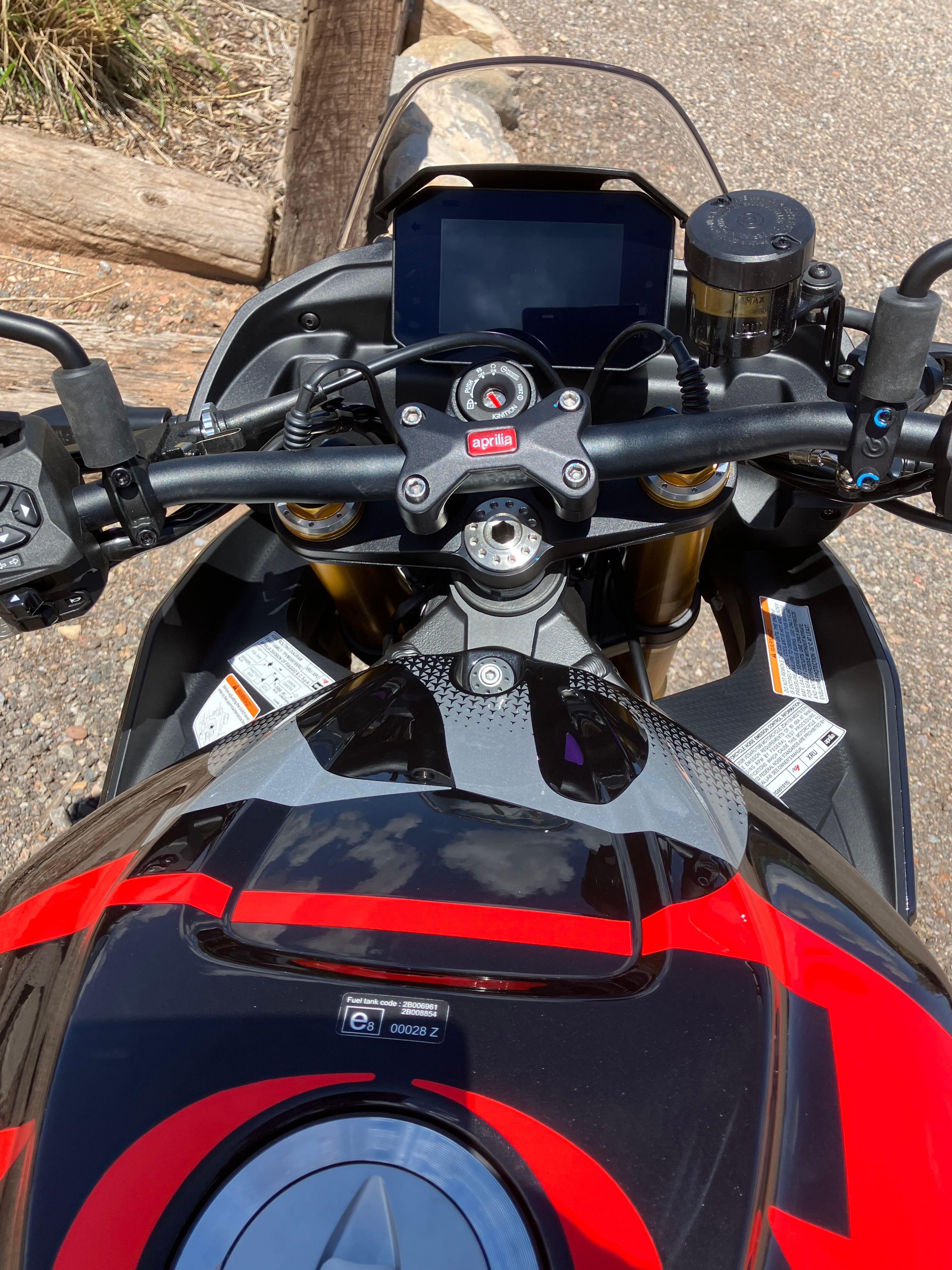
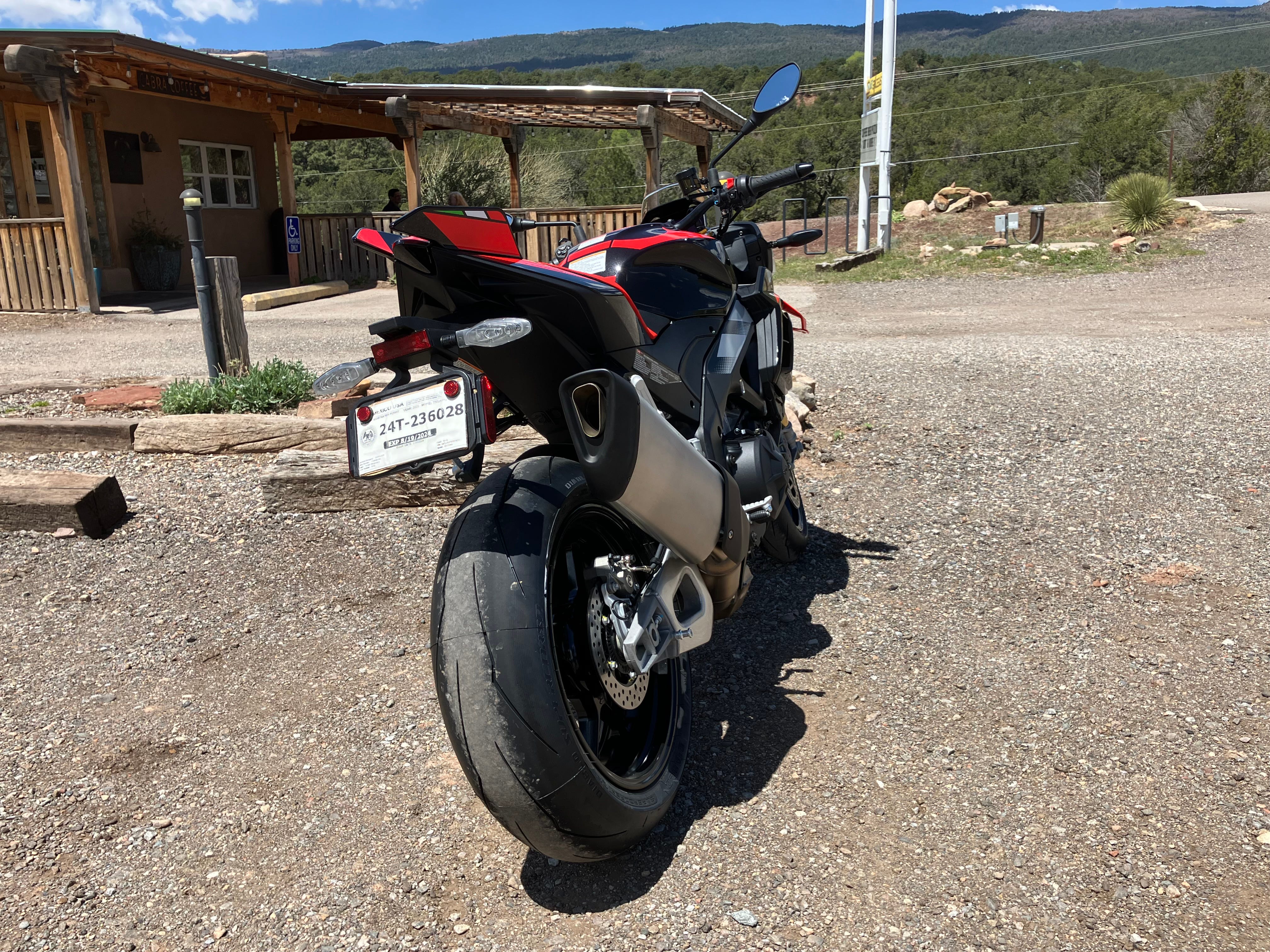
I started riding on a 50cc Aprilia Scarabeo scooter back in 2000. It was a great little machine for popping around town on the cheap. It was my gateway drug into motorcycles. I went through my sportbike phase while still pretty firmly a Triumph guy — I’ve owned the 955 Sprint RS, the 1050cc Speed Triple, the 675cc Street Triple, and I’ve ridden most of the Ducatis that have come out until the last few years. Fast forward — the excellent fellows at Motopia New Mexicorecently picked up the Moto Guzzi and Aprilia lines, as well as MV Augusta. I had to take my V7 in for it’s regular maintenance and was given the new Aprilia Tuono Factory V4 to “go play with it”.
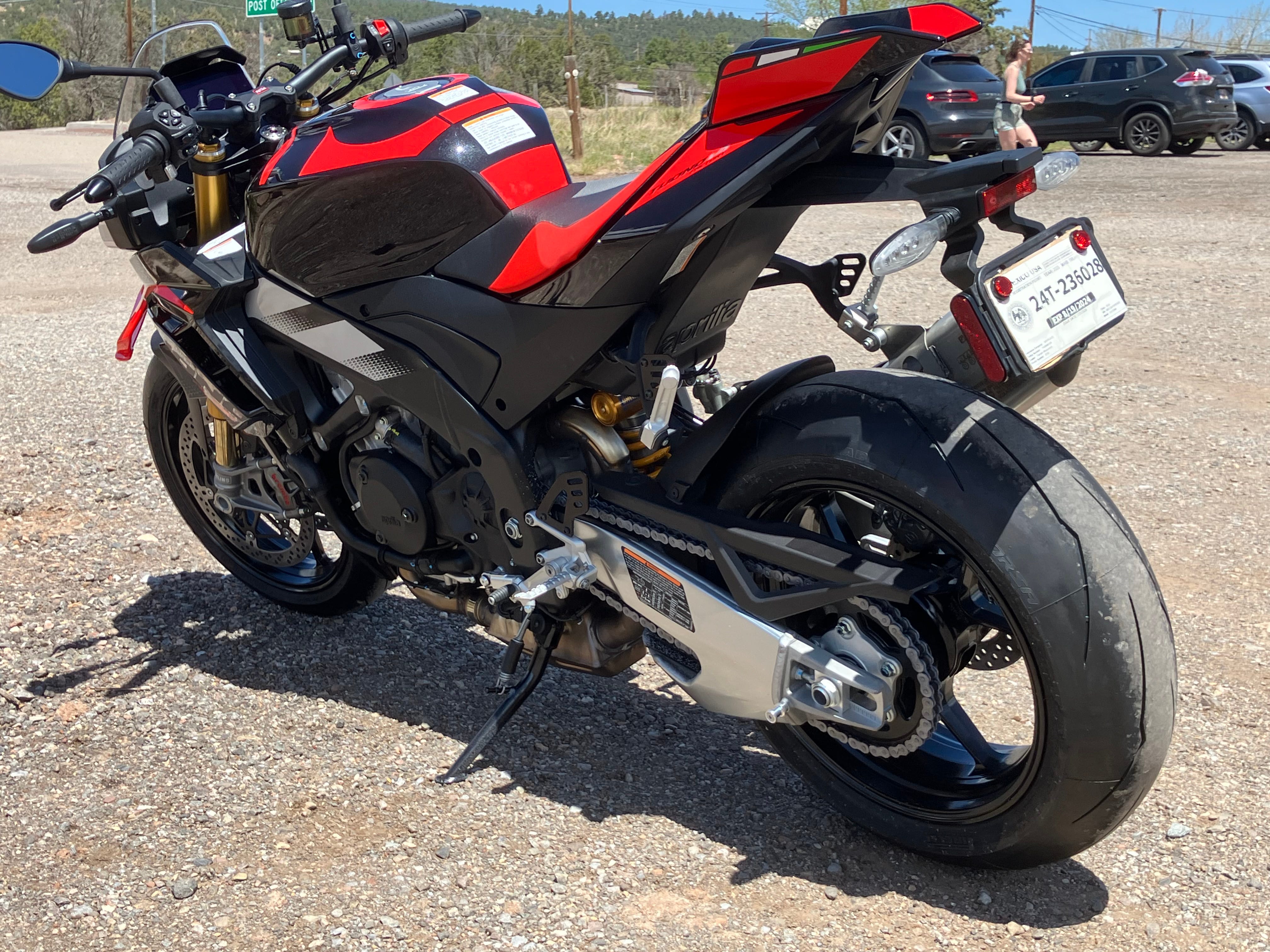
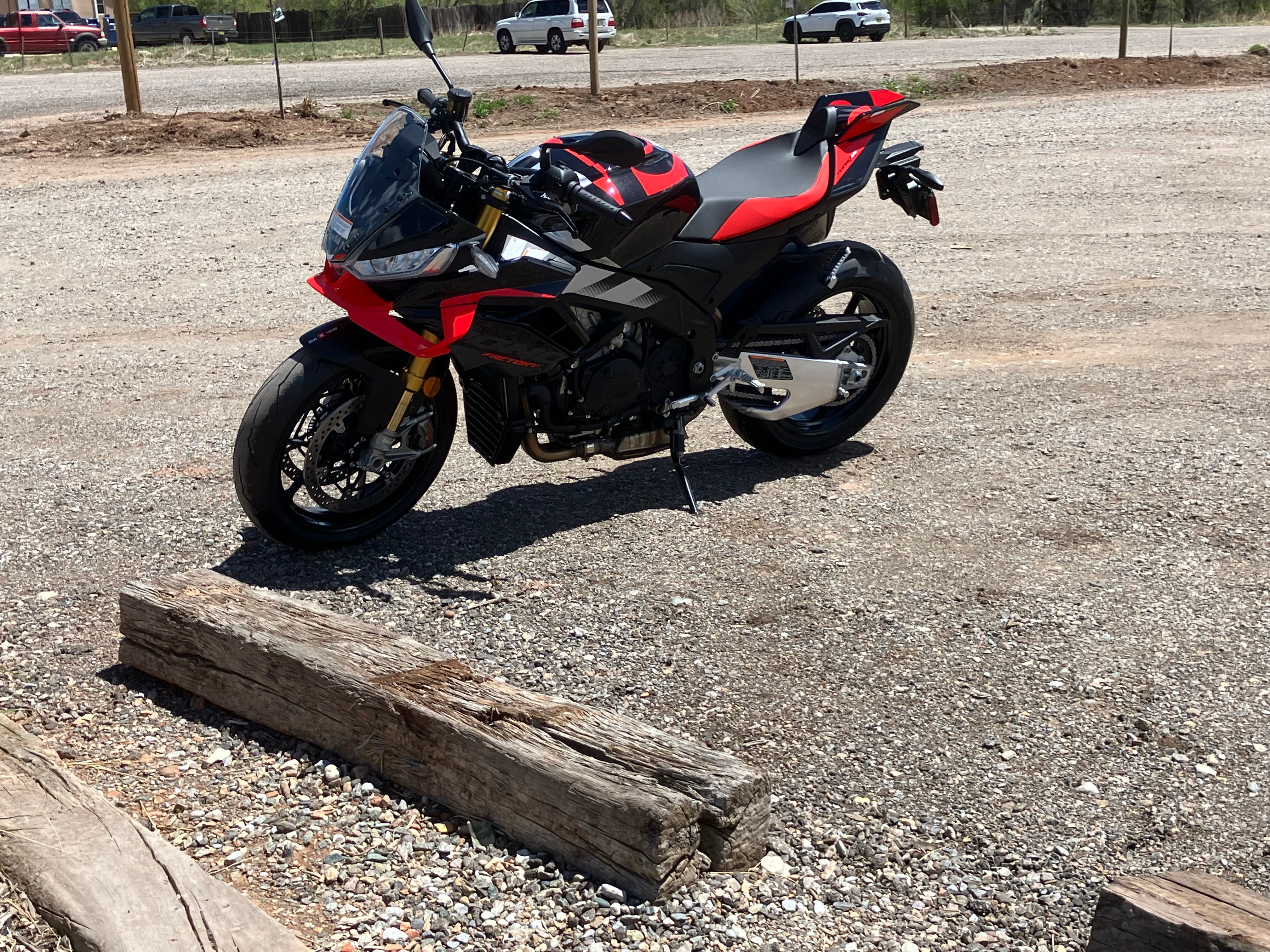
So for the next 24 hours, I got to ride the hell out of it. First off, styling and comfort: it’s Italian, it’s a sportbike. The form mirrors the function: it looks fast and nimble, and boy is it. The wing thingee (the technical term) on the front keeps the nose stable under speed. There’s a single-sided swingarm and single pipe. Chain access is easy. I love the little wings on the back, though I smacked my leg repeatedly when getting on. The mirrors have good visibility and don’t vibrate much when romping on the engine, the windscreen is very effective at pushing the blast off the rider.
I’ve always found the Ducatis, GSX-Rs and most other sport bikes uncomfortable. Your weight is on your wrist and I always feel like I’m perched on top of the things; just waiting to fall off. You sit in the bike with the Tuono, and the bar are comfortably high and wide, and allow for ease of maneuvering. An hour and a half carving up the mountain curves on the Aprilia was comfortable — no fatigue, no hot spots, no pain in the wrists or elbows.
It’s a technological marvel and successfully combines all the things I hate about modern motorcycles in a package that is easy to use. You have wheelie control, traction control, engine break control — the bike practically can ride itself. you can monitor it al on the full color dash, and the togle switch and controls for swapping between the modes and setting up the levels of these electronic aides is easier than I expected.
The suspension is ridiculously smart. It’s got rain, sport and track modes. I didn’t bother with the track mode; it was plenty fast in sport. It’s got an active damping control and wheelie control that I didn’t even notice, except once when getting on the highway. I had to slap the throttle to get past a car and felt the front climbing. Wheelie, for sure…except it just didn’t happen. I found the automatic suspension adjustments of the Öhlins Smart EC 2.0completely unobtrusive, though a friend who races quite a bit said it messed with his ability to manage the bike in turns. You can, allegedly, turn it off. But for most riders, this would possibly be a life-saver.
The V4 was something Honda created and made well, but Aprilia has perfected it. The 64º 1100cc V4 punches out 180hp and 89 ft-lbs of torque and is managed with a six-speed transmission that wants you to run it long. The motor doesn’t even wake up until 6000rpm. The power delivery is smile-inducingly fast, and the bike never feels like it is straining. On a run out to the backside of the mountain, I got the bike close to the redline in sixth. I though I was doing the ton — I was doing 60mph faster than that. The bike was rock steady. On the mountain twisties at altitudes of 7000 to 10,000 feet, the bike continued to deliver quickly and effortlessly. The quick shift was very useful coming into tight switchbacks — no changing the throttle or hitting the clutch; just shift.
I did notice that bobbling around town the bike got hot and fast, but once you had any speed over about 40mph, the heat washed off quickly. 177F was typical at highway speeds, and it got up to 220F in the hot sun. Pretty standard for a sport bike in traffic. I did also note there’s a flat spot on the fueling about 4000rpm where the motor starts to lag and surge — but my friend at Motopia pointed out I “should be riding it a lot harder than that.”
So is it worth it? It was selling out the door for $26,000 or so. That’s a lotta dough, but this is a top-end race bike…and it is a lot of bike. So, yes — it’s worth every penny (and ticket). I drifted out of my sportbike phase about a decade ago, but this is one of the single best bikes I’ve ever ridden — I’m including the Panigale in this — and it is almost enough to get me back into fast bikes. It’s just simply excellent.
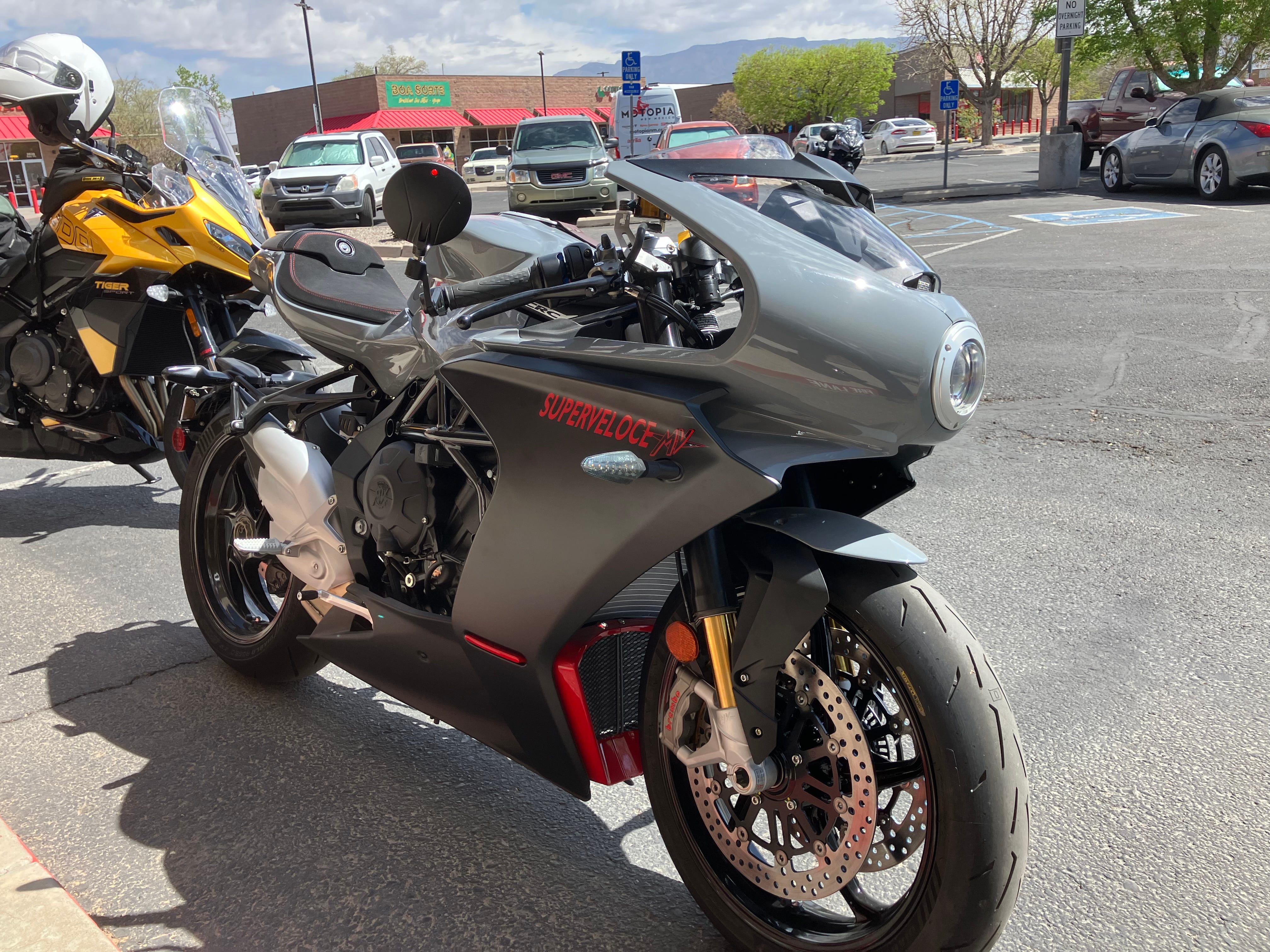
The fantastic fellows at Motopia New Mexico recently picked up MV Augusta as one of their line of machines. They’ve always been pricey high-end, very exclusive sportbikes — or as long as I’ve known about them. They recently got themselves back under the control of the family that created the brand in 1945 and according to the Motopia boys, are very good about sharing profit with the dealers, something not many motorcycle brands do; it’s a very tight margin business that goes dead from about November to April. (Seriously…if you want a bike, don’t wait ‘til “riding season”. Help your local guys out by buying off season and getting in for service work during the winter months.)
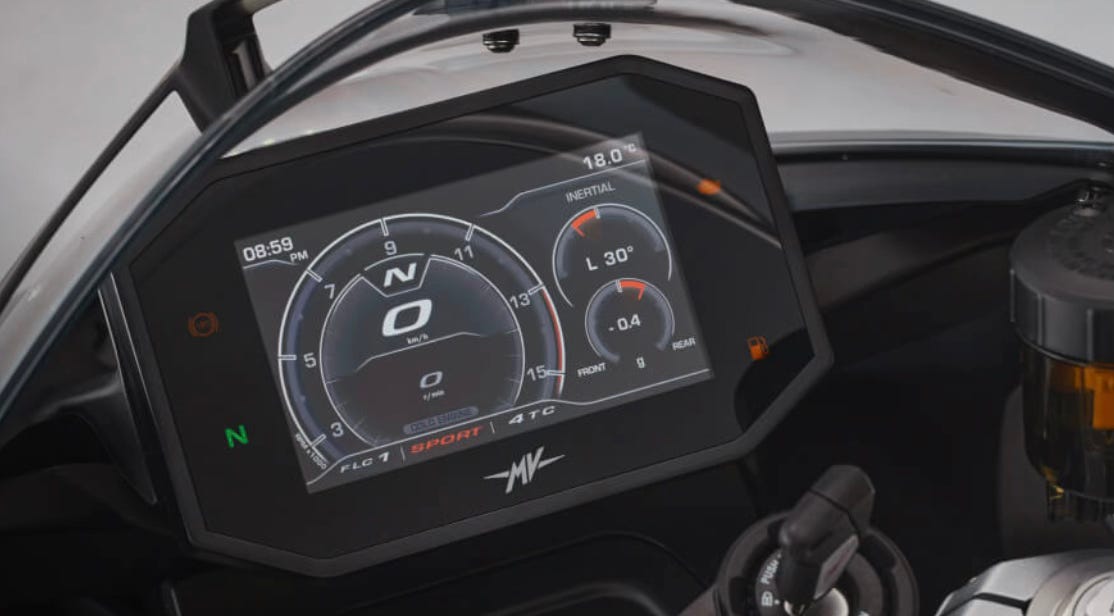
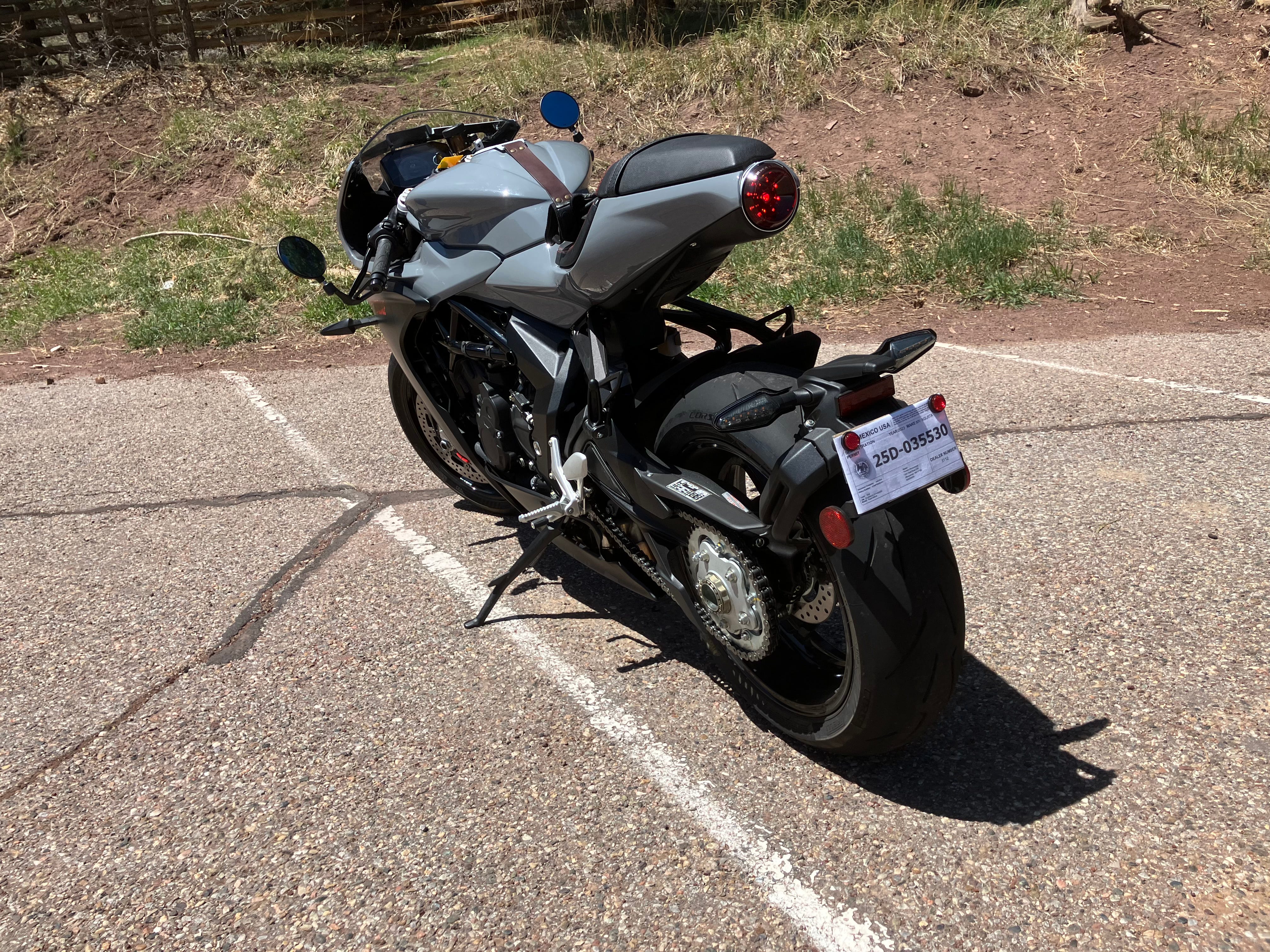
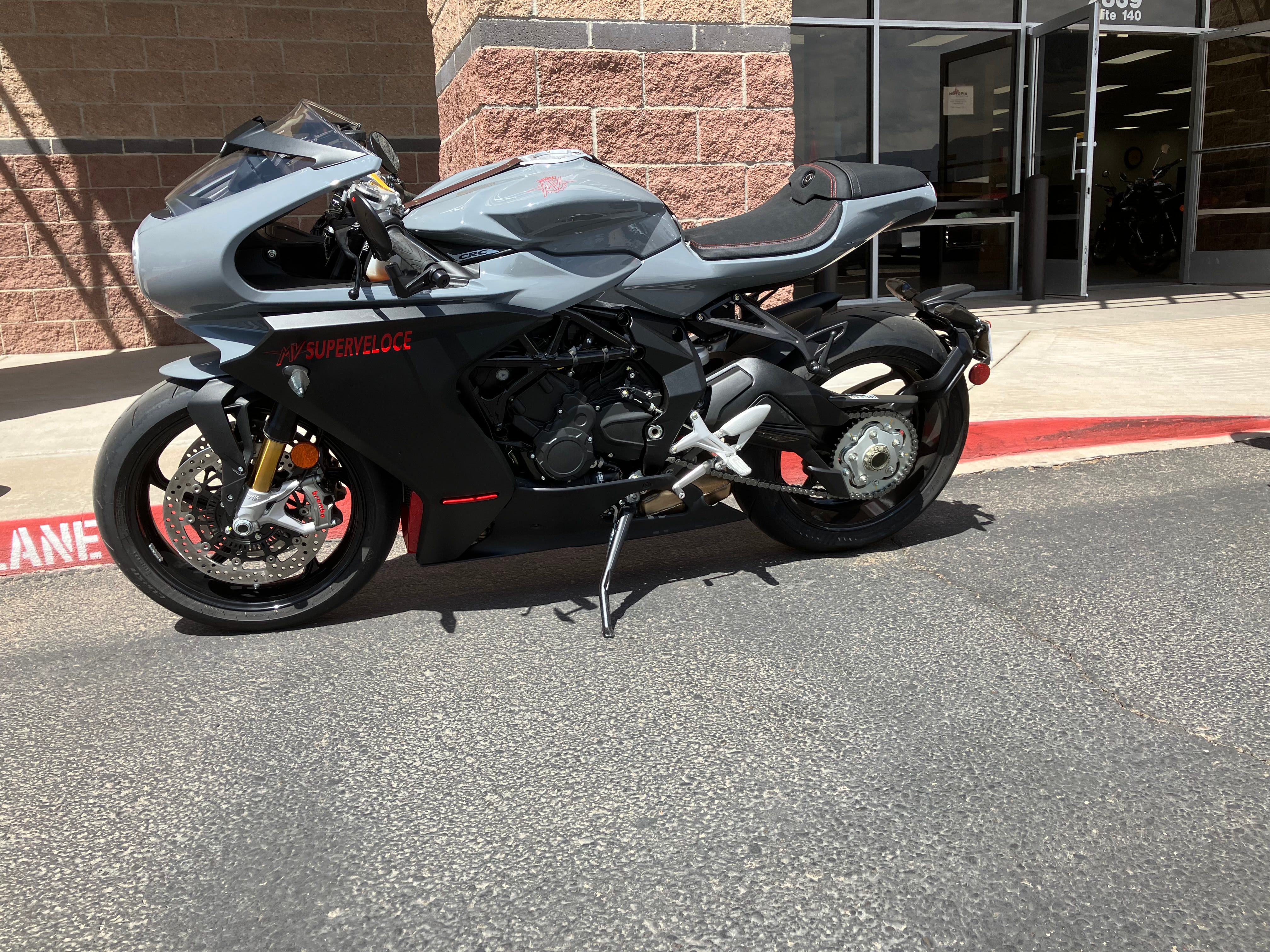
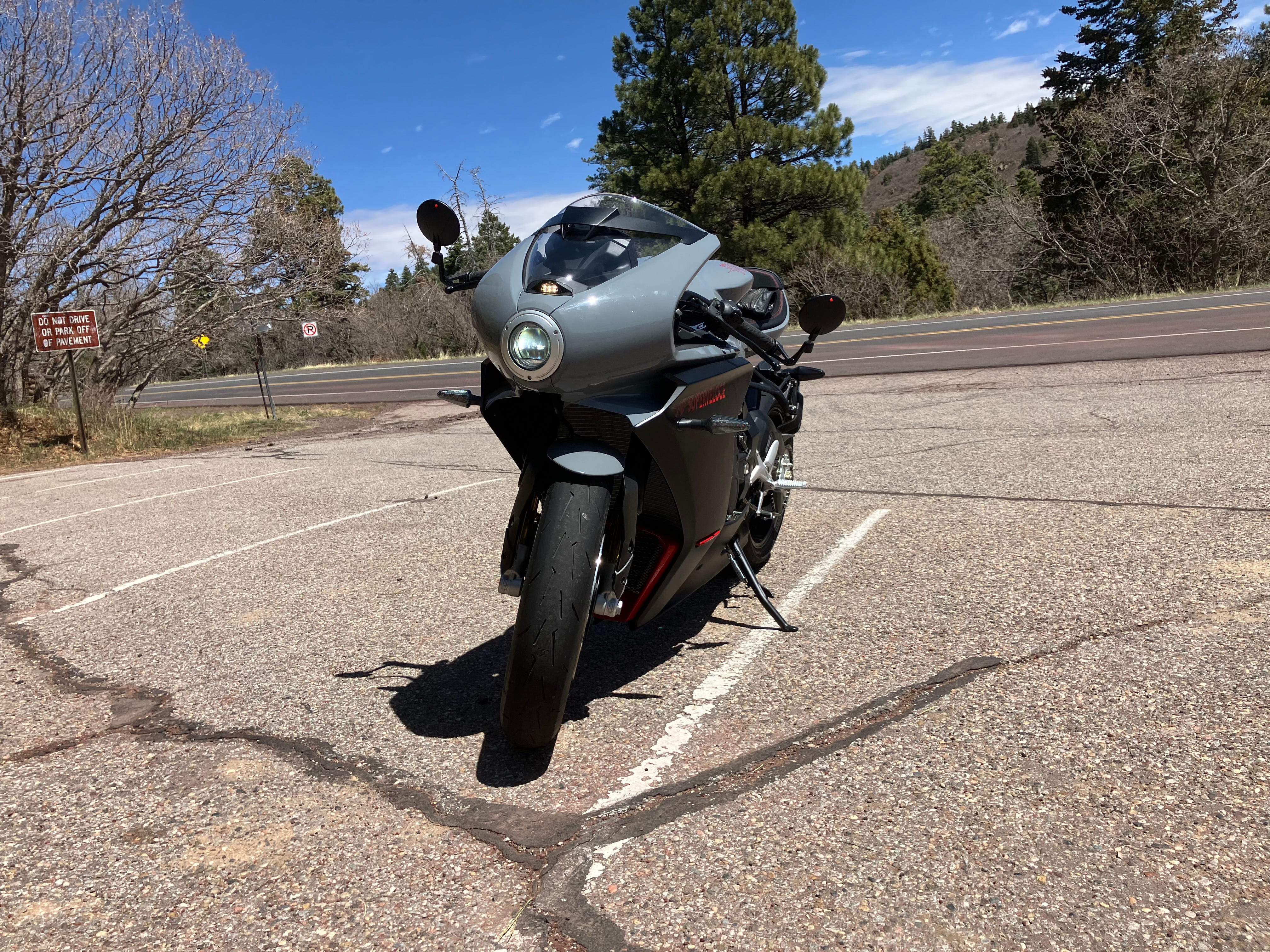
I’d seen these Superveloces a few times around town. They are simply stunning. From the torpedo tube/porthole front headlight to the matching singular tail light, there’s nothing on this bike that isn’t beautifully thought out. Every line, every curve cuts through the length of the bike. The triple exhaust with heat shielding (which actually works!) give a nice aggressive flair. The dash is the usual full-color iPad junk that everyone is doing now, but it’s well done and flipping through the menus is easy with a dedicated thumb switch. I didn’t take a pic of it, so here it is off their website…
The version I took out is the inline triple Superveloce. The mill turns out 147hp at the redline of 14,000rpm…which despite being very aggressive on the throttle during my test ride, I never got close to. Ripping it up or flagrantly breaking the local speed limit, I never got about 10k. It’s got a tenor exhaust tone and you can tell that the metals are most likely titanium and other lighter alloys in the engine noise. You can flip it through sport, race, rain, and “custom” modes. I just left it in the stock sport mode. It’s got their EAS 3.0 quick shift transmission. What does that mean? No damned clue, but it shifts fast — enough so the gear indicator lags slightly behind, which is no big deal at speed, but almost caught me stalling while not in neutral at a stop. It’s a six speed. Top end is somewhere around 150mph/240kph. I didn’t get there, but got close. The whole thing weighs in at about 380lbs. It’s light and the weight sits low.
Which is good, because the rider doesn’t sit in the bike — like a normal motorcycle or something like the Ducati Panigale. You perch on it, much like the old Ducati S4R and the lower center of gravity makes the vehicle feel much more planted. I was riding in 20mph winds with 35ish gusts; the bike was stable throughout the ride. The rear seat provides a good bolster that holds you in position. Sitting on it in the showroom, I suspected this would be a “15 minutes and you have to get off”-type sportbike, but I did a full hour on the MV and only the last ten minutes was I feeling any discomfort. Surprisingly, it wasn’t the wrists, which I suspected; it was the hips from the slightly cramped leg position and my elbows (no clue why).
My ride included some in-town traffic, interstate, small road sweepers and mountain twisties with a 2000’ elevation change. Around town, you’re not really getting out of third gear and the bike gets a bit warm, but wasn’t terrible. (It was a warn day, as well.) Getting onto the highway, I had a lot of traffic with a small gap that would allow me to get out into passing lanes, so I romped on the bike and got her from fifty to the ton in about two seconds or so in third gear. Once up to sixth, the bike was calm and quiet at 6000rpm. I got off and onto the small two lane highways that go around the back of the Sandia Mountains (studiously obeying the speed limits, of course) and was in fourth pretty much for the usual 50-60mph speeds. Once on the Crest Road that winds 13 miles and 4000’ in climb with 120 turns, including some sharp switchbacks, I really let the bike play.
While riding, the nose of the bike was just visible below, and provided a nice “artificial horizon” for some of the turns. I wasn’t doing race track style leans, but I did give it a fair amount of tip over at go to jail speeds. You didn’t need to do more than look down with your eyes to see the instrument panel and mirrors — which do vibrate a bit under power. It turns smoothly and well — easily on par with any other big name race bike out there.
On the run back into town, I had I-40 pretty much to myself for about three miles and put the spurs to the bike. Smooth and fast power delivery, minimum buzz on the handlebars (but a lot on the mirrors), and it rolled over the three digit mark with aplomb. For most people, there’s more than enough bike to keep you happy. I love triples for the fast torque (about 65 ft.-lbs. or 88nm) they provide and blipping and laying off the throttle for engine braking allowed very quick passes, speed drops, and coupled with the excellent suspension and dual front Brembo brakes, navigating traffic aggressively is a doddle.
I finished by ride with a simple “Wow!” It really is bloody marvelous.
There is a liter-bike version of the Superveloce with MV’s 4-cylinder they use in one of the Brutale models, but I haven’t had a chance to ride it yet. It seems a titch faster, but the specs on the website seem to be pretty much the same. For looks, the “98” limited version of this machine is stupefyingly beautiful is a deep burgundy with silver accents.
So is it worth it? At $24,500 MSRP plus set-up, this is a pricey machine for a cheap bugger like me, but for the Ducati/BMW/Aprilia crowd, I suspect this is fine. The workmanship is top notch — fit and finish is simply wonderful, the look is unlike the bug-headed monstrosities most sport bikes have become, and performance is more than adequate for the street hooligan or amateur racer. So, yes — it’s well worth it.
After seven months, 6000 miles, and a pretty cold commuting season this winter thanks to my car needing an engine rebuild, I’ve gotten to know the Guzzi pretty well. Here’s what I’ve learned:
Gas mileage is solidly good — on both the crappy “winter gas” and the less ethanol-challenged “summer gas”, I’ve been getting a reliable 54 mpg, regardless of style of riding. The motor and shaft drive work very well together to make it a quick machine — acceleration is very good for the displacement, power delivery is very smooth and linear, with a steady climb to redline. Speaking of — it’s not 6500rpm. It’s 7500rpm before the governor cut in on you. I’ve adjusted the shift light to a more appropriate 6000rpm. Top end still hasn’t been achieved, but she’s been up to 115mph in a highly aggressive pass and still was pulling. My guess is it will top out around 120-125mph.
The first oil change will alter the character dramatically. If the V7 is being a rough when you first get it, wait until that first oil change before you make any judgements; mine smoothed out dramatically and ran much better after the first 500 mile service. That said, the transmission is still pretty clonky compared to my old Triumph Thruxton or the Royal Enfield Interceptor (which is superlative), or even the BMW boxers, especially when you first fire it up. It usually takes a few blocks for the transmission to smooth out — most likely as the transmission oil gets circulated. I’ve also found occasionally it doesn’t want to drop into first when you first get ready to ride. Ease the clutch out just a hair and tap into first. No issues.
It’s cold-blooded. It really does like to limber up a bit before you take off. If you hop on and go at the start of the day, you’ll see the transmission material above.
It handles much better than you think. At parking lot speeds, it turns with grace. At high speeds, it tips in very well, but you need to scoot your ass or you’ll hit pegs. It doesn’t lose its footing in hard braking (but the nose does dip — progressive springs might be in order), and in high wind — and I mean 50 knot gusts with 30 sustained — it’s rock solid. (Side note — the new Royal Enfield Super Meteor is fantastic at handling wind.) Some of that is the excellent Dunlop AeroMax tires…which we don’t get in the States. It’s coming up on needed a rear at 6000 miles, and I’ll probably swap to the tire-of-choice for my 2010 Thruxton — the Shinko 712s. I suspect the bike is going to tip in much more aggressively.
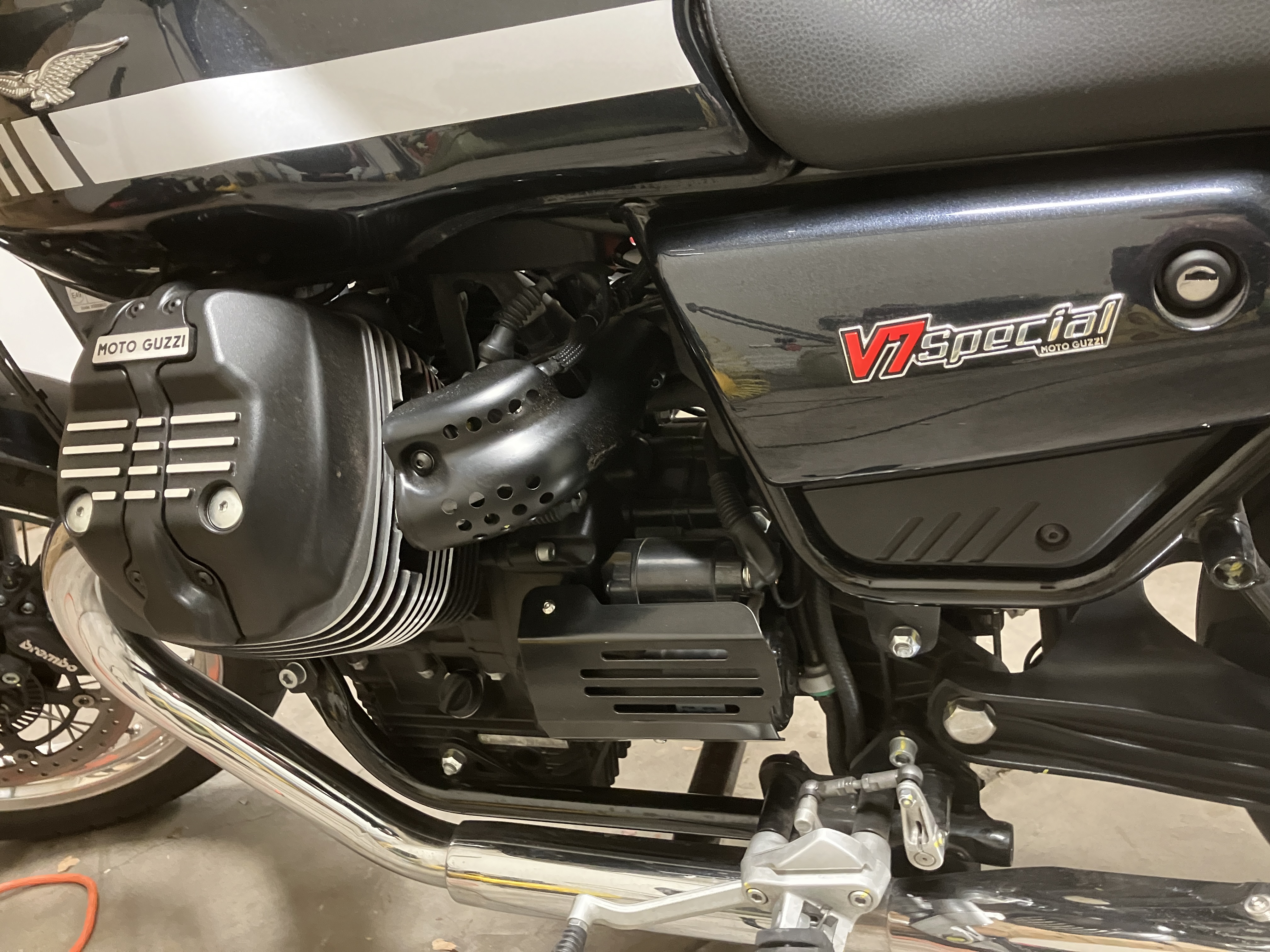
There’s more out there to mod the look or performance than you think, but you have to hunt a bit. I’ve thrown a Dart flyscreen on it, as well as changed the execrable plastic injector covers to the nice black aluminum ones from the Stone Special, then dumped the stupid, massive plastic starter cover for a sleek black metal one from BAAK. For performance parts, GuzziTech is the place to look. Their forums are a treasure trove of information.
The midnight blue bike — sorry, “gray stripe” — attracted dust like crazy. I’m constantly wiping it down.
Service time is much better than other bikes I’ve had. The 6000 mile service was about a third less than I expected, thanks to things being much easier to access and lower labor costs.
Accessories that are branded? Not so much. They’ve got a tee-shirt design or two and an “adventure” style motorcycle jacket, but that’s really it.
Overall, after half a year, I’ve gone from not being sure I made a mistake trading the excellent little Interceptor 650 for the V7, to really loving this machine. It’s solidly made, easy to maintain, good on gas, and pretty damned zippy for a standard-styled 850 twin. It blows the tires off the old Thruxton.
If you’re looking for a classic-looking motorcycle that not everyone has, you’re willing to put up with not a lot of clothing accessories, this is a solid choice. I’d actually take one of these over a 900 Bonneville any day.
Our local dealer, Motopia New Mexico, got in a bunch of test ride bikes from Piaggio Group and needed folks to put some miles on them, so of course, I graciously offered my services to wring out a brand new sport touring bike. Duh!
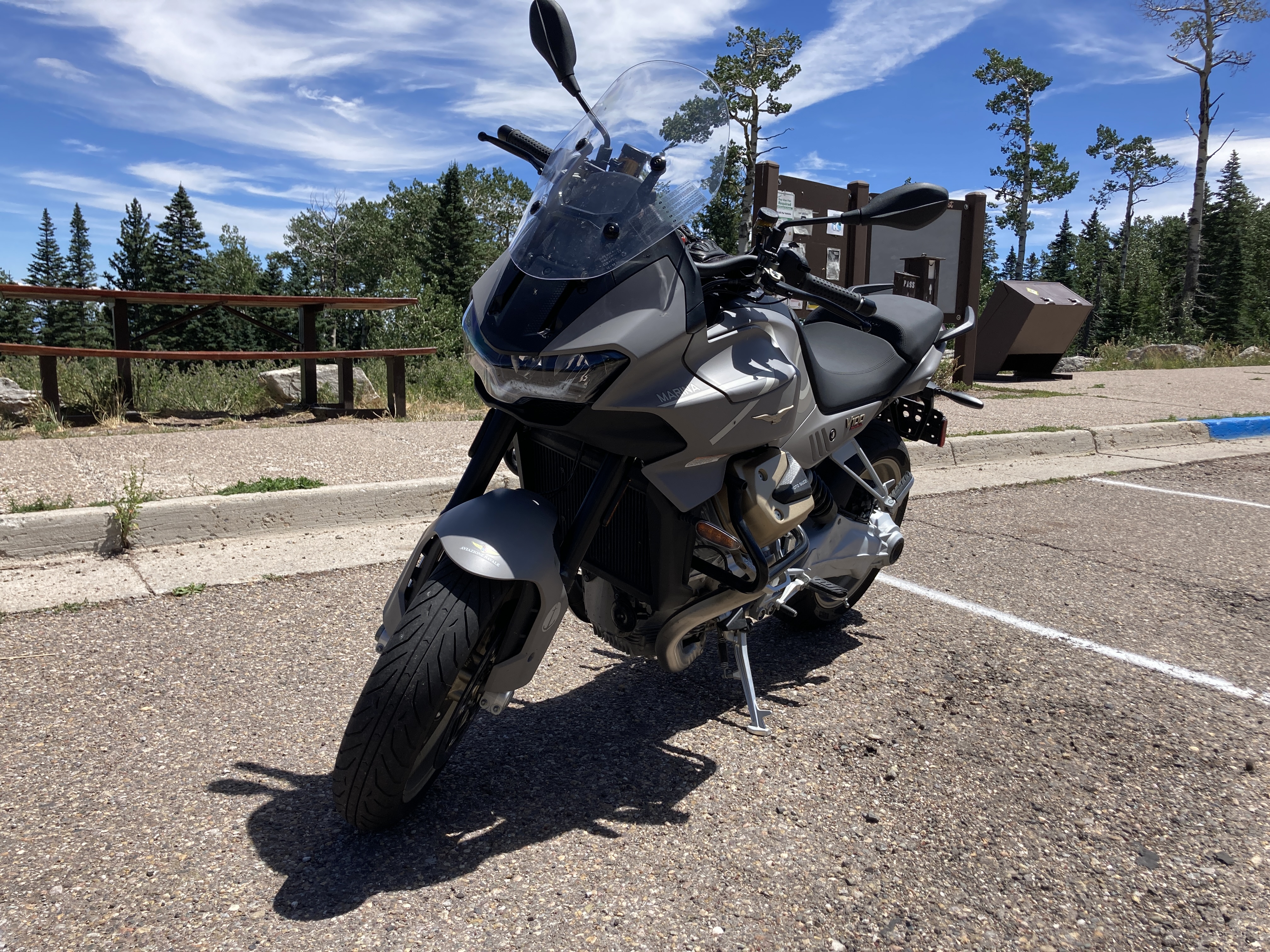
Enter the new Moto Guzzi V100 Mandello. It’s using a modified version of their usual transverse twin motor and shaft drive system that Guzzis have had for decades. In this case, the motor is a liter in capacity, but they’ve rotated the heads to make it easier to work on and to allow for greater air and exhaust flow. It’s water-cooled, as well. It turns out an advertised 115 horsepower and about 77 ft. lbs. of torque. There’s the usual traction control, ABS brakes, and a host of other electronic doo-dads that I didn’t play with, like an electronic windscreen you can raise and lower, the wee aerodynamic flaps on the sides for the “adaptive aerodynamics”
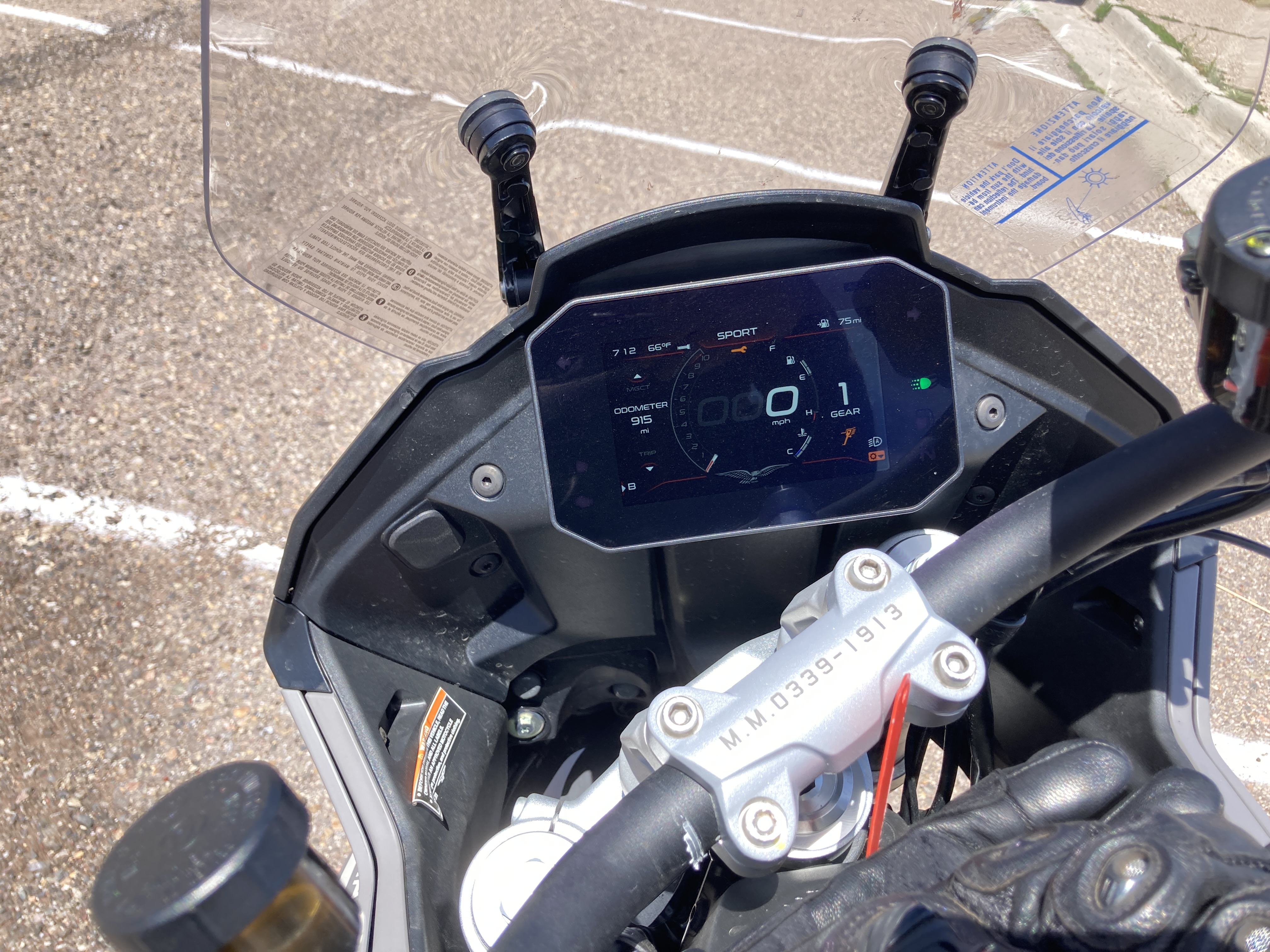
that they are very proud of, and more. It’s got one of those LED screens for instrumentation. It shows a lot of information and is very useful. I still hate it; I like my old school gauges. And get off my lawn. Here it is in all it’s glory.
With all that aside, how was it? It’s very comfortable. I spent just over an hour and 70 miles in the saddle, riding in heavy street traffic here in Albuquerque, on the interstate, secondary highways, and the challenging mountain twisties of Sandia Crest road. The saddle is superb — I’d easily put it against any other sport touring bike for comfort. It’s a wee bit tall for folks under a 32″ inseam, but I had no problems getting on and reaching the ground at stops; getting off was a bit more challenging. I kept catching on the hand/top box rails.
It’s very quick, and probably fast, as well. What do I mean by that? It gets up to speed fast. The shaft drive really moves the torque and getting on the highway was effortless. Like the V7, these things like run long in the gears or they get finicky until they are warmed up. The bike doesn’t really wake up until 4,000 rpm, and and doesn’t start to shine until 5,000. In a few blimps of the throttle in sixth gear, I was able to climb from 80 to 95mph in about 2 seconds. Not bad. Without hitting the redline, I got the machine up to 118mph indicated a few times and it was still pulling. I never hit the governor on the engine speed, but supposedly there is one. It also will bleed speed very quickly with engine braking.
The motor is smoother than any other Guzzi I’ve ridden. There’s a bit of the side to side that would similarly feel on a BMW boxer, but the quirkiness of the Guzzi motor is gone. At speed, it’s glass. The exhaust note is good — not too loud, but it’s got a nice growl to it.
It handles well. The weight is much higher than I’m used to with the V7 and the Enfields and similar classic styled bikes, but once I got used to it, I was turning with ease up and down the Crest road. Turns at speeds that would have scrapped hard bits on the V7 and even the Enfield Interceptor still had plenty of clearance. It’s nimble and stops well.
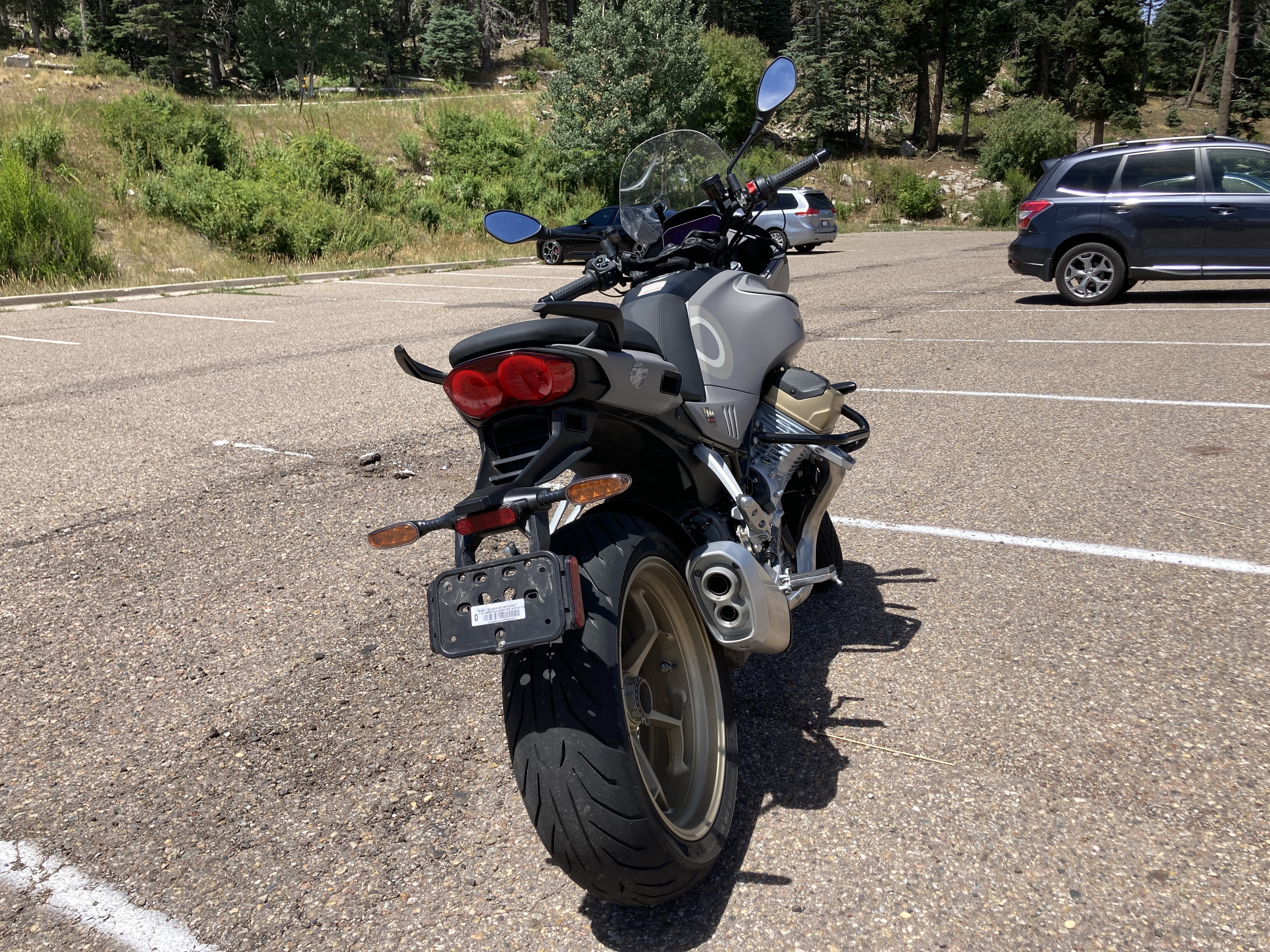
(You’ll note that the dealer forgot to put a temp tag on the bike…good thing I didn’t get in front of the one state trooper!)
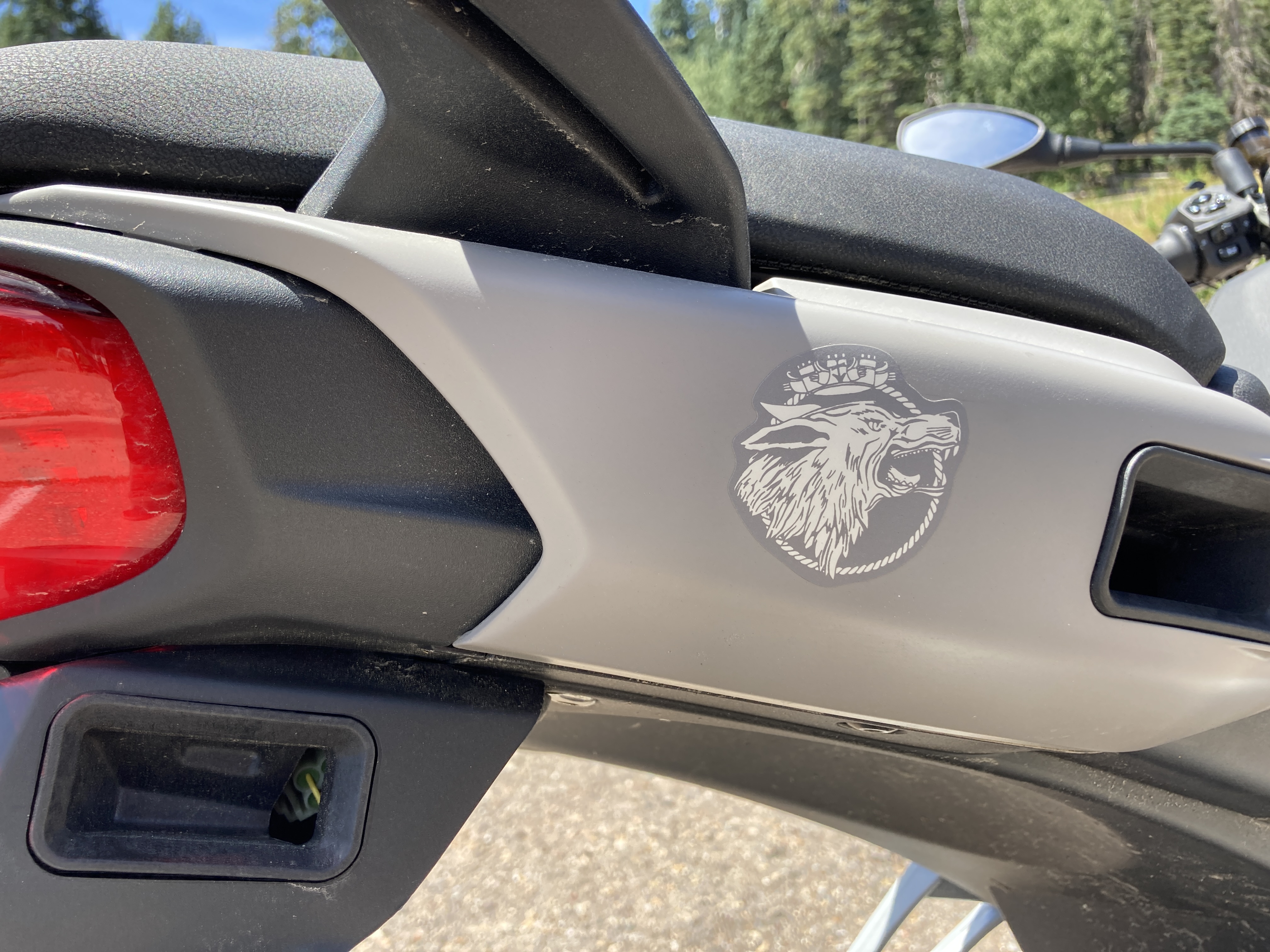
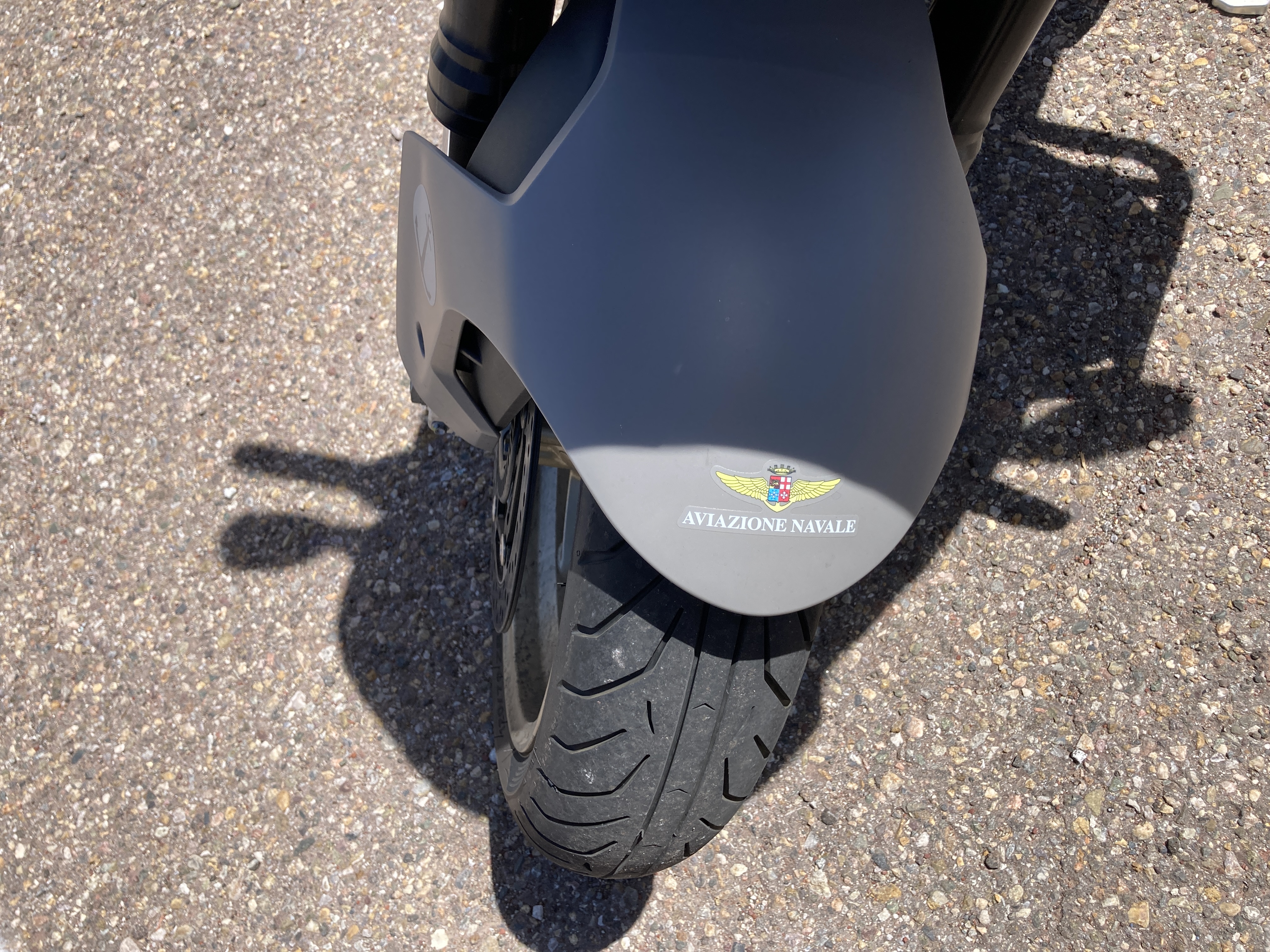
The V100s I’ve seen at the shop and on the road have superb paint, fit and finish. The one I got was the Marina edition — a tip of the hat to Italy’s marine aviation division. The bike looks good, although I think I’d get tired of this look, as compared to the white and green S version of the machine.
The downsides — and some of this might be because we were breaking these in to first service and they have been demo bikes, so they’ve not been treated the best: The gearbox is clunky — especially into first. When I would drop into gear out of neutral, the bike would lurch just a bit. Not a great feeling. Shifting was stiff, but it was similarly tight on my V7 and a friend’s V85, but after the first service and oil change, loosened up considerably. Most likely, this example hadn’t been the best cared for and would see similar changes in behavior with service. But with how good the motor and handling were, this was a glaring low point.
Another issue — and again, this could have been an issue with the demo bikes — the gear indicator would not show neutral. If you kicked up from first gear, it showed in first; if you kicked down from second, it showed in second. During my trip back into town and shot up through the gear getting onto I-40 and it showed sixth as being in fifth. I dropped a gear for a few seconds and shifted up and it indicated correctly. It might be a glitch in this one machine, but who knows? I have noticed that my V7 takes a whil to indicate correct gear once you release the clutch (while clutched it has a null reading.) Are these deal breakers? No — but if they are something across the line, hopefully the boys at Guzzi are working on a software fix.
Outside of that, it is overall a very, very good motorcycle. If I was looking for a sport touring bike with luggage and so forth, I think I’d probably lean toward the Mandello, even though the Japanese stuff is usually cheaper. Compared to the BMWs and Triumphs, I think this thing is a winner. It’s running about $15,000 — so if you’re a Triumph or BMW or Ducati guy, this thing is in your price range (or cheaper). If you’re a UJM guy, it’s going to be a bit rich.
After a few weeks of ownership, here’s a few things to know going into owning a Moto Guzzi V7.
1 — It makes noises like it’s haunted:
When it’s sitting after a ride moaning like the ghost of whateverthehell Ebenezer Scrooge’s late partner was called**, don’t worry; the gas tank’s just a bit overpressurized because you filled it to the top or it’s really hot out. You can just open the gas cap (slowly!) or leave it and terrorize your family when they go into the garage.
2 — It’s really cold-blooded:
When you take off from a cold start and the thing lugs in first and second gear like there’s something wrong, again — fairly normal. Kinda like driving a Ferrari 365GTB — until it’s warmed up a few blocks down the line, it’s best to run a little tall in the gearing. I find a block or two running in the 3k+ on the tachometer and it wakes up. (Addendum: Some of this is the fueling. Apparently, GuzziTech has a widget that will enrich the mix and get rid of a lot of the low end lag. The bitchy shifting, however, is completely an issue with the transmission oil needing to get moved around. That takes a few blocks, then she’s fine. SCR)
3 — No, you don’t have the peg clearance you think you do:
I’ve scuffed hard parts on this thing since the first test ride. I had to take the angle feelers off the bottom of the driver pegs because they were ground to point and were catching on my bloody pants. Hell, I went into a tight turn a gear higher than I tought I was and scrapped the kickstand (which protected the nice chrome pipes. Dial your suspension up a few notches and butt scoot like a professional racer or you’re gonna hit things. A least on the V7. (Addendum: After riding the bike for a while, I realized a major part of the issue is the engine never sounds like it’s straining — even redlined. I tend to ride by sound and compared to my 2010 Thruxton and 2020 Enfield Interceptor, the V7 sounds like it’s barely working. On the mountain twisties that had me hit the damned kickstand while folded against the pipe I did a quick check of my speedo…I was a good 10 mph faster than I thought I was. It’s got plenty of clearance…I’m just riding it like a lunatic! SCR)
4 — You’ve got incredible range on the thing:
My gas reserve comes on at 3.8 gallons on a 5.5 gallon tank. That’s a bit overly cautious to my mind. I usually get about 190 miles on that 3.8 gallons. That makes for a total range of around 300 miles. That’s cars with shitty gas mileage ranges. (Addemdum: It’s been getting a steady 54mpg on the “summer” gas here in New Mexico, and 50mpg on the ethanol-heavy “winter” gas. SCR)
Speaking of gas…
5 — It’ll drink anything, but stick with higher octanes:
It’s run fine at 6000′ in altitude and 90F degree weather on 85 octane but a regular diet is probably not Italian enough for it. Stick with higher octanes.
6 — Yes, people are going to want to talk to you:
…but they’re all going to be old dudes talking about when they had that Monza back in the ’80s and such. Be prepared for a plethora of questions on how reliable it is. It seems ever biker that’s never owned one thinks they’re shit because some guy told them once…and ever Guzzi owner says they’re bulletproof, except for the one time (or two, or three) when something (usually electrical) happened.
Like the modern Royal Enfields, everyone is judging the new Guzzis by horror stories from back when, let’s face it, every bike kinda sucked except for Honda.
( **For those who aren’t literarily inclined, it’s Jacob Marley.)
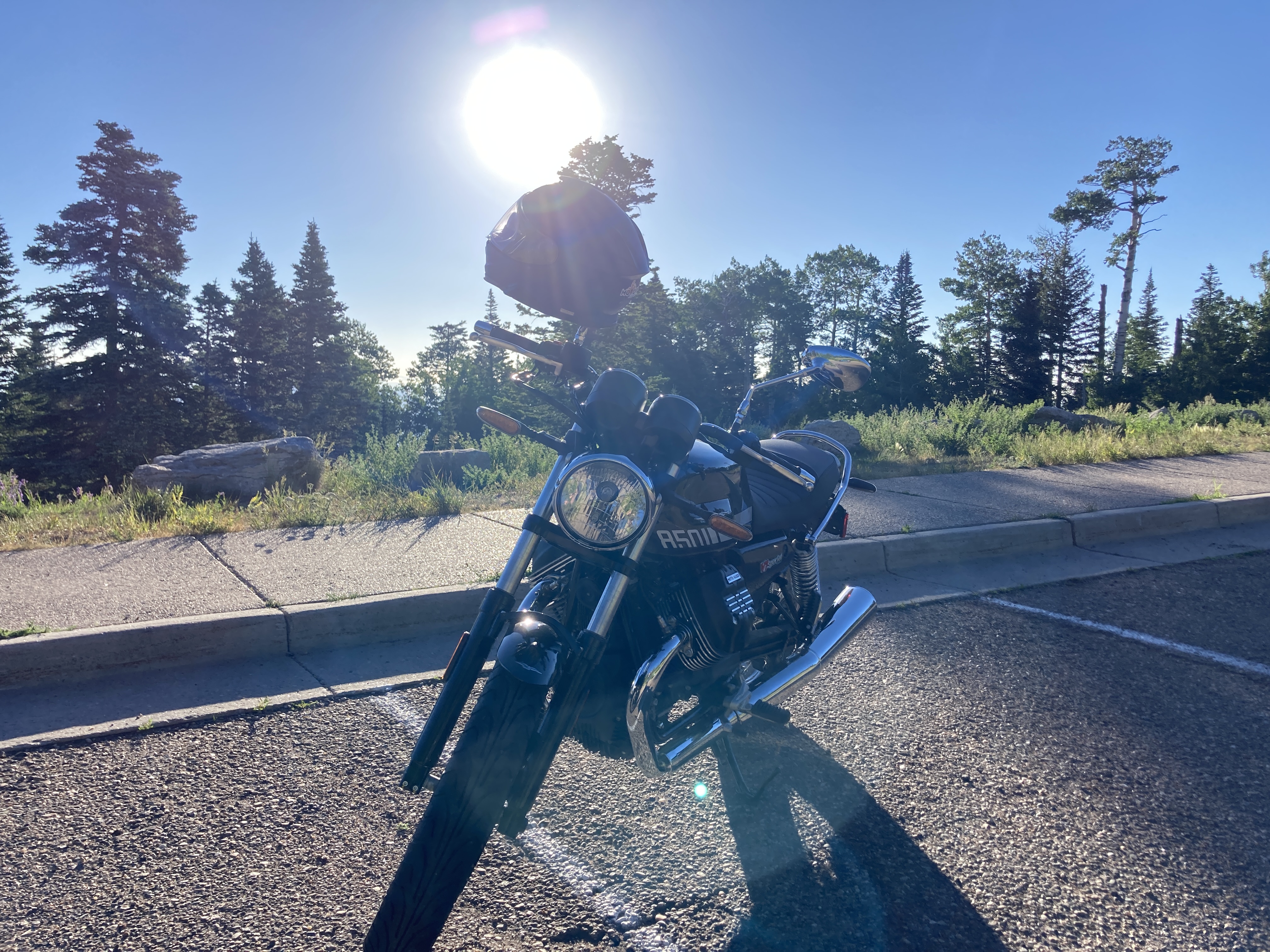
So…I did a thing. I had test ridden the new V7 Special ( the “gray stripe” color, as the catalogue calls it, but it’s a deep midnight blue metallic flake) a few times over the past few weeks. After decades of waiting for a Guzzi dealer to hit Albuquerque, we’ve finally got one in the shape of Motopia New Mexico. i’ve wanted a Guzzi, and specifically the V7, for quite a while…but the test rides were good, but the bike wasn’t speaking to me like the Royal Enfield 650 Interceptor had. Each ride, I found the bike excellent in build quality, a bit clunky on the transmission, lacked the ground clearance of the Enfield, but had superb power delivery and once moving, the V7 is incredibly smooth. While at the shop looking into another issue and to let my 12 year old daughter drool over the Aprilia RS660, I noticed the V7 Special was gone. Yay! Temptation removed, I could settle in to figure out what was next in the odyssey of my hopped-up Interceptor. Except, it was out of a test ride with a buddy of mine who has a habit of buying the bikes I’m interested in before I can.
Yes, it’s a silly pissing match sort of thing, but seeing him ride up with his wife on the back, I suspected he was (to her chagrin) going to go for it. While they were dickering about inside, I got the sales manager working up a deal for me on the bike. I literally bought it out from under him.
Within a week, I’d hit the first service and got the valves checked and the fluids changed for a $350 hit. But now I have a better idea of how the bike behaves and how it’s likely to as it breaks in.
So first the good stuff. The deal had a 1.9% finance rate. That’s low right now, so if you’re thinking of one of these, it’s a good time. The machine is well made, although I could do without all the yellow inspection marks all over the thing. I understand this allows you to see if bolts are backing out, but I’m not flying a C-130 here. It does something Triumph doesn’t anymore — it has a friggin’ tool kit. So did the Enfield. Time for Triumph to step it up a bit. For the prices they’re charging they’re getting a bit Scottish with the stuff that some might don’t matter. Like a damned tool kit. Tires are a standard size — 150/70-17 like most Bonnevilles and 100/90-18 up front. It’ll be a breeze to get rubber for it. I already checked and my favorite shoes for the Thruxton are available for it. (The Shinko 712s. Trust me on this one.)
As suspected, for long rides, this machine is a dream. I did several 60 mile days, taking the bike up to the top of Sandia Crest, a climb of 4000ish feet over 13 miles with 120 turns in about 15 minutes. That’s a bit slow for me when there’s no traffic; the ground clearance on the pegs was such that i was scrapping pegs on every damned turn until I had to start doing the racer-style butt scoot on the saddle to stop it. An adjustment to the rear shocks — it was on the lowest setting so I bumped it one and that sorted it out except for some of the turns with negative cambers. It did stiffen the ride a bit, so it’s not as plush, but the bike is handling very well. I went for a long haul with some friends on sport bikes who promptly went for triple digits on their machines. I stuck to a reasonable (for New Mexico) 85mph for most of the first half of the ride. The Guzzi soaked up all but the worst bumps, and even managed to negotiate a surprise 35mph turn that they really meant 35mph. I was well over that and the V7 went through the turn without murdering me. (Butt scooting to the rescue!)
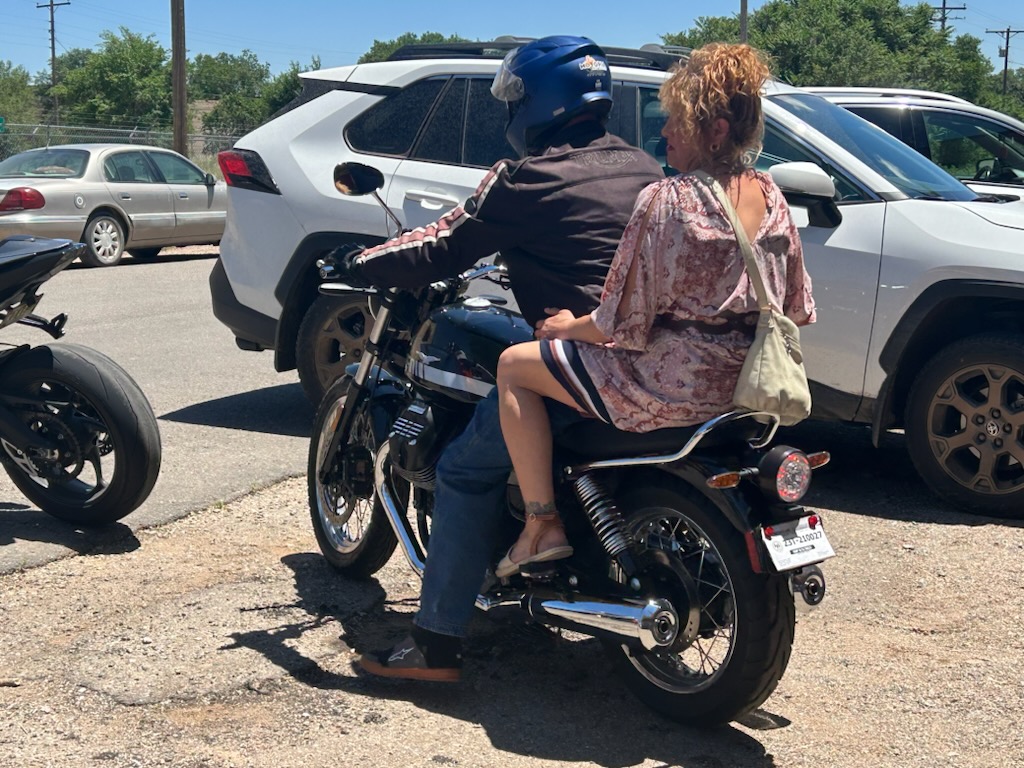
While stopped for lunch in a small town called Mountainair, we had an interesting encounter with the locals. A grandma in with her family for lunch followed the female rider we were with out to enthuse over the bikes, how she was a rider, and begging to get taken on a ride. The other guys were hoping to ignore her ’til we went away, but what the hell. Being nice to someone isn’t that much of an imposition. The shit that happens to you on a bike…
So I ran her around Mountainair for about 10 minutes. Hitting 70mph on the highway with no issues. The bike ride well with someone on pillion: it turns agreeably, stays very stable, and the passenger had plenty of room to handle acceleration. (No — she didn’t want a helmet.) I normally avoid passengers; the Guzzi is built for it. After Mountainair and my close encounter, we headed back to the city. It was about 100ºF and we were getting cooked, so we were moving at about 90 the whole way. No issues at all. The V7 is ready, eager even, to reach for the redline at 6500rpm. (It’s doing about 115 at that point). Vibration was at a minimum for the ride, saddle comfort was good enough I wasn’t tired or sore after about 3 hours in the seat plus lunch time. Over the course of the run, the motor felt like it really smoothed out in the 3000-3500rpm range, where it had been buzzy for the first 300 miles or so. Other reviewers have mentioned this and it seems to be a function of the bike needing to be run in some. After the oil change, the motor has been much smoother, shifting is better but still has a pretty audible clunk when up shifting. I suspect that will also get better over time.
The ranges and fuel mileage were a bit up and down during the first 600 miles. The bike was telling me I was getting 55-56mpg, but when I would fuel up, it was closer to 50mpg. (The Mountainair run was done at pretty high speeds, so that made sense.) Since the oil change, the fuel mileage is up dramatically — about what the bike has been claiming. I have noted that the low fuel light comes on at about 3.7 gallons, leaving about 1.8 gallons in reserve. That’s a hell of a reserve. The light comes on around 175 miles on the tank, although since the oil change I’ve put 195 miles on it and the light has not lit up as of this writing. I expect it should hit about 200 miles. So conservatively, the 5.5 gallon tank has 250 or so miles in it. That is exceptional and would allow for touring even in spots where gas stations get kinda think in the American Southwest.
Brakes are adequate. They’re a Brembo 4-pot on the front (only one side…) and a Brembo two-pot on the back. They work, and the rear quite well for slow speed on dirt, and the front feels good and aren’t too abrupt, but they’re not award winning. Fortunately, the engine braking on the motor with the shaft drive is very good. The suspension, once ticked up a step got much more firm and the handling — which is good and very neutral — improved.
Since the first service, I have seen an improvement in gas mileage and overall smoothness in operation. The gearbox appears to be a little more pliant, but it’s not the light and smooth flick of the Enfield or a modern Triumph. The motor is still characterful. It’s really hard to describe it; I imagine it’s feels a lot like an classic motorcycle. The mirrors are ugly but they work. There’s nasty DOT mandated stickers on the tank and the steering bridge that are on there. I found brushing the stickers with warm water and diskwashing detergent soaks and weakens them, and they come up easily with a softer object to scrape them up. I keep my fingernails short so I used a tire valve cap and lightly scraped them off with no damage to the finish. I’ve no idea how to get the yellow inspection marks off. They appear to be paint, not grease pencil. might try a light WD-40 rub. The beefy-looking transverse twin looks old-school and it is a breeze to get to almost everything. If you do you’re own maintenance, this is probably a good choice.
The down sides: I find it weird that a boutique-ish brand of bike doesn’t engage in branded gear, but outside of stuff for the V85 “adventure” bikes, there’s not much in the way of things like riding jackets, tee-shirts, nor is the accessory catalogue impressive: not much in the way of flyscreens, or aftermarket mirrors and pipes. They’re out there, but you have to hunt a bit. Agostini does pipes for the V7 including a nice shorty exhaust that would allow you to get into the wheel easier when servicing it. BAAK does a nice side cover replacement with small leather bags that are big enough for a hat and sunglasses, or the tool kit, if you don’t want to put it under the seat. I’m new to the Guzzisti thing, so I might just not be looking in the right places.
The V7 Special was an impulse buy, and a tough decision, surprisingly. I’ve wanted one for as long as I’ve been riding, and I’ve tried a few — the V7 750, the excellent Griso — but with the “two bikes to the garage” rule I’ve agreed to, it was lose by beloved 2010 Triumph Thruxton or the superb Enfield Interceptor to gain the Guzzi. Even after I’d dropped off the Enfield, I wasn’t sure I’d made the right choice…pretty much until the last day or two. The V7 Special is an excellent machine — well made, superbly comfortable, with a bit of tweaking on the suspension capable of getting a bit of the hooligan, and the range is phenomenal. Paint quality is exceptionally high — possibly the best I’ve seen on a motorcycle. It’s not the fastest thing out there, but it’ll crack the ton with gusto and it gets there plenty fast.
Overall, it feels a lot like a nicer, quirkier…well, Italian, Bonneville. It’s got 65hp and 54 ft-lbs. of torque that is channeled very quickly with the shaft drive and compared to the Bonneville 900s’ 60hp and 55 ft-lbs., they’re pretty evenly matched, though the power comes on lower in the rev range with the Guzzi. Having traded my Street Twin for the stock Enfield because the Indian-made bike was lighter, more maneuverable, and faster (both with acceleration and top speed), I suspect the Guzzi, which is about as fast off the line as the souped-up Interceptor but a bit slower on the top end will hang with but most likely pull away from a the Triumph Bonnies in a straight-up race.
So…is the V7 Special worth it? Hell, yes — especially if you can get it for the MSRP or close. The new Street Twin is MSRP $9900 (so assume $12ish out the door in the US) and the Guzzi is $8950 — a grand less for a nicer, faster bike from a more exclusive manufacturer. That said… the 650 Interceptor is a tight match for both those machines and comes in at $6149. If you’re a bit tight on cash and looking for a classic standard motorcycle, the Enfield is really hard to beat, but the Guzzi pulls it off with an undefinable style and “character” to the motor.
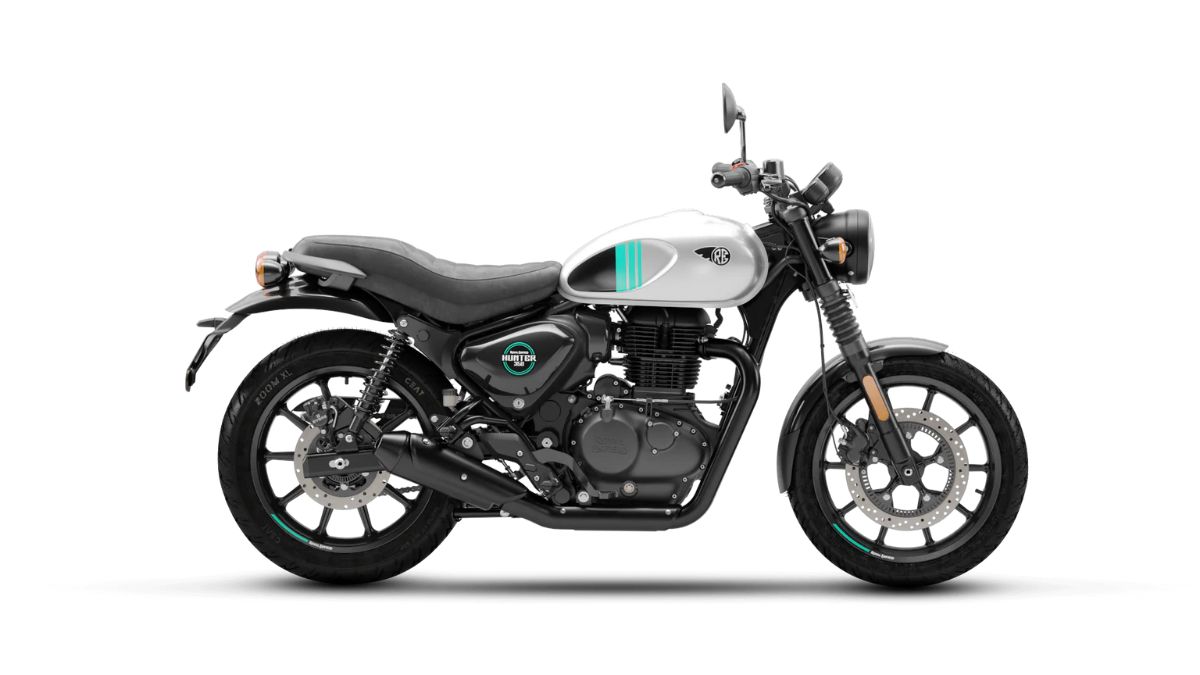
I guess that’s technically HNTR 350, or so it said on the side cover. While I was ordering up a rear tire for the Interceptor 650, I got a chance to hop on a Hunter 350 for a few minutes last week. This is the latest offering using the J-engine from Royal Enfield, who seem to be bringing out a new model every two days or so. Unlike the Classic, which evokes the 1940/50s messenger bikes, and the diminutive Meteor 350 cruiser — both of which I’ve ridden and really liked — the Hunter is more of a modern standard. It’s obviously targeted for new riders and commuters that don’t want anything too much, but something that is nippy in town and gets good gas mileage.
Well, this is it.
The bike is small, approachable, and not in any way intimidating. This is a perfect grab for the MSF courses, and for beginners. Seat height is supposedly 31.1″ but it felt lower; I have a 32″ inseam and I was firmly footed. The saddle is comfortable, if a bit soft for my taste. It’s light — 400 pounds topped off. It runs on tubeless tires and cast 17″ wheels, which makes this thing very nimble. I’m reminded of my old Buell Blast, minus the jumpy “thumper” character of that bike. The engine is smooth, sounds decent for what it is (but the Classic sounds better), and it’s not going to scare you with acceleration. It’s not slow, but it’s really not fast. The build quality is on par with anything the other companies are putting out in the cheap simply transport range, and it slightly better than the Enfield 650s.
The J-type engine turns out 20hp at the top end and 20ish ft/lbs of torque at the mid-range. I got up to 60mph on a surface street quick enough for the traffic. I didn’t hit the highway, but it’s supposedly a bit taller on power than the Meteor and Classic, and those both hit 70mph reliably (and 75mph on most level or downhill runs). It you don’t live out in the American Southwest, you’re probably good for most highway/dual carriageway/whatever you call it roads.
Around town, this thing was fun. It was quick enough to scoot from lights, but it wasn’t going to be winning any races against a lead-footed minivan mom. I got up to fourth gear fast, but only used fifth once. It turns very well and it confidence inspiring. The ride isn’t plush, but it’s not jarring; it’s perfect for commuting and maybe some fun time in the twisties out of town, but a long run might have that soft seat causing some discomfort. The brakes are good enough for what the Hunter is. They’ll stop you, but you’re unlikely to be pulling off stoppies at the lights. The lights are LED and the headlamp a halogen — something the bigger 650s don’t get (or didn’t — I haven’t looked at the new ones, recently.)
The gauge is a simple single unit with analog for the speedometer, LED fuel gauge, gear indicator, and odometer. It was visible in full sunlight without issue.
So is it worth it? At an MSRP of $3,999 (so let’s face it, the dealers are gonna stiff you to the tune of $5000ish) yes. If you want a little pop-around bike that gets almost 100mpg, looks good, and is fun to ride without giving you the urge to murder yourself at high speed, this is an excellent machine. If you’re a beginner, it’s an excellent machine that you will probably outgrow in a year or two. Otherwise, you might want to look at the similarly cheap 650 series. They’re superb all-around machines that you can mod the hell out of and no outgrow.
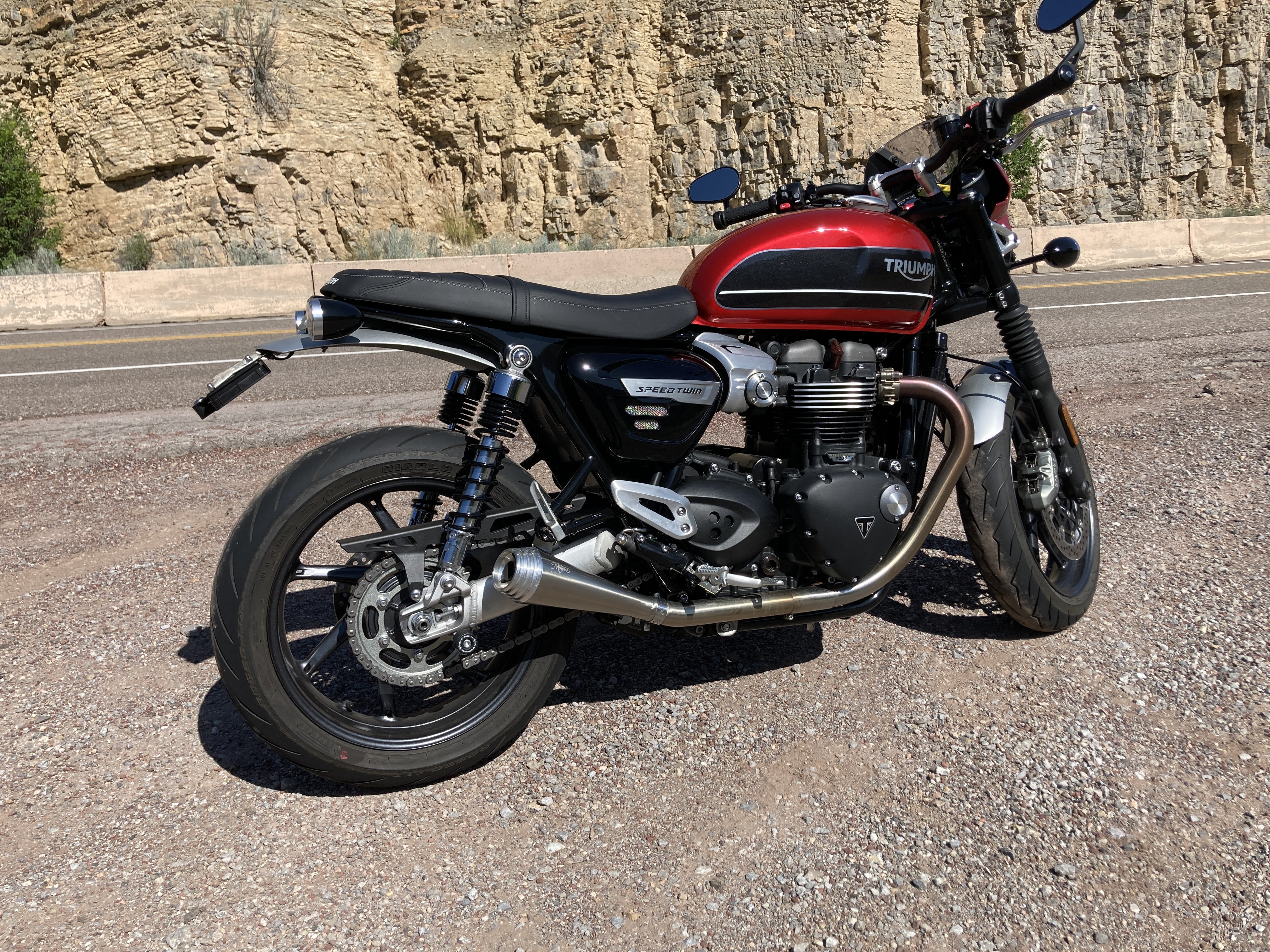
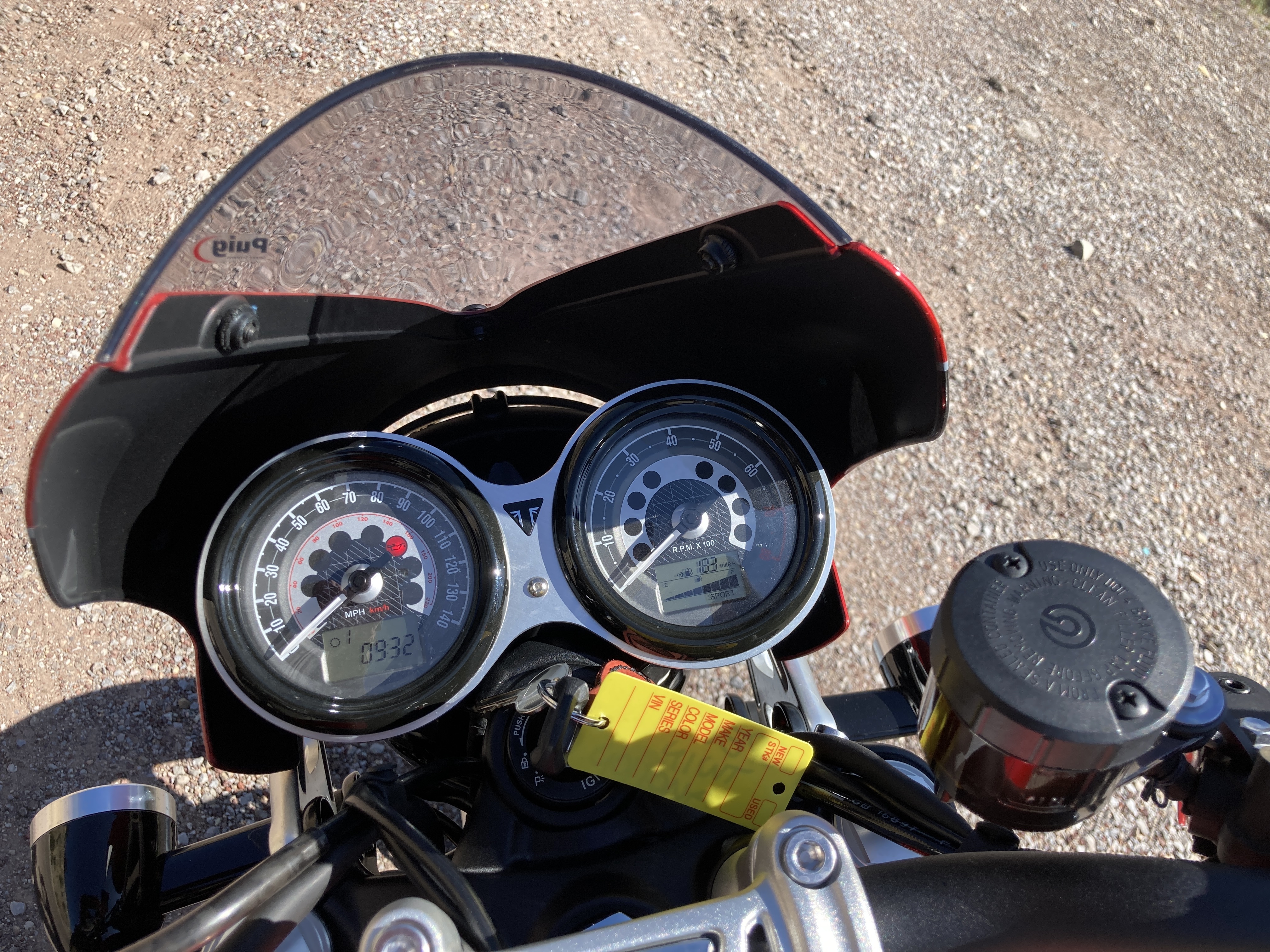
While my old 2010 Thruxton was in for her 48k service, my local dealer loaned me a Speed Twin he had taken in and which is due for the auction block. The nice red and black Speed Twin came with gorgeous wee Motone pipes and a Puig flyscreen as it’s only modifications.
Naturally, I took it out for a ride this morning to see how it fared. This included a long sweepers on NM South 14 and a jaunt up the Sandia Crest Road, with its myriad twists and turns, and an altitude climb from 6500 to 10,660 feet.
First off — the power on the 1200 Bonneville twin motor is very good. Even in sixth gear at 80mph, a blip of the throttle for a pass got me to the ton in second of two. Engine breaking is solid, as well. The motor never feels stressed, even at close to the redline of 7000rpm. The speedometer’s 140 is enthusiastic; at just under redline, the bike was doing 120mph. Even with the altitude changes, the motor never faltered. Power comes on smooth and very linearly. That said, going downhill sees the bike stumble and look for its power. If you aren’t on the throttle past a certain point, the electronic-controlled throttle has to search a bit for what its supposed to be doing. I had a similar experience with my 2018 Street Cup. It’s annoying, but it’s not a deal breaker.
Fuel usage was indicated at 51.9mpg, and when I topped it off I did a quick check with my phone’s calculator and came up with 52mpg…so just about spot on. That’s pretty decent for a 1200cc motor, but Triumph (and everyone) now run their bikes waaaaay too lean to meet the ridiculous Euro5 standards. It also has the result of making the bike run on the hot side. It was in the low 50s on the top of Sandia Crest, yet the fan for the motor kicked on near the top of the climb, and came on once or twice while doddling along at 50mph.
The gearbox is pure modern Triumph. They excel at this. The shifting is clear, quiet, and nary a false neutral to be had. They really do make the best transmissions out there, right now. My Royal Enfield is similarly easy to use, but false neutrals can occur if you don’t kick it enough. The clutch is effortless.
Handling is also very, very good. The bike runs on a pair of 17″ wheels that throw the Speed Twin into the corners, but still inspires confidence. Tire widths are fairly thin — 120 up front, 160 in the rear — and this also helps the bike feel good in the turns. It transitions well in the chicanes, and feels planted. (Tires on this were the Pirelli Diablo Rosso IIIs. Hopefully, they’re not like the Pirelli Sportcomps on the 900 Bonneville line, which get a lot less impressive in the wet….or mildly damp.)
The ride is good. Not too plush, not to teeth rattling. I spent most of my time on the Speed Twin in sport mode, but road mode didn’t seem to make the ride any more pliant. I didn’t bother with rain mode. It’s not the luxurious ride of the Moto Guzzi V7, but it’s comfortable enough for an hour and a half in the saddle. If anything, the only thing that dings the ride quality is the motor. It’s smooth and quiet, but over 4500 rpm, the bars get a bit buzzy — especially the left side. The Puig flyscreen wasn’t my cup of tea. It looks okay, but it channeled air straight onto my shoulders in turns, and even tucked, it was buffeting my helmet.
Looks-wise, this bike is beautiful. I like the classic styling a lot more than cruisers or sportbikes, and the Speed Twin hits all the right queues for nostalgia, yet keeps some modern aesthetic. Build quality is top-notch. I love the brushed aluminum fenders and accenting on the side covers (which should be color matched to the tank — come on, Triumph!) and the instrument cluster is one of the best looking out there.
The Triumph Speed Twin comes in at $12,500 MSRP, so with the inevitable dealer mark up, you’re probably looking at $14k out the door. Is it worth it? Maybe taking inflation into a account, but I’m a little more tight-fisted than some. After Triumph moved production to Thailand — then raised their prices — I was pretty disappointed with the brand. They’ve got that “gouge you for everything” quality that BMW and Ducati have, now. Would I buy one for about $10-12k? Absolutely, yes. The power and handling are fantastics on the Speed Twin, but $14k is a touch much for me. Your mileage, as always, may vary.




 The Black Campbell