Roleplaying Games


This week, one of our gamers informed me as we were packing up to leave that one of his LARPs was looking to reschedule…and they wanted the night we were gaming with said friend.  Ordinarily, we’ll shift nights if someone has a work, school, or travel commitment — it’s no big deal — but to be told “Hey, I want to play in this game…can all of your guy rearrange your scedules for me?” left me a bit miffed.  Still, we were able to work it out.

But for a day or two, I found myself slightly angry and depressed over the possibility of losing a good gamer due to the scheduling issue.  That got me thinking about an earlier posting about managing no shows.  In essence, I needed to heed my own advice:  Don’t take it personally, try to accommodate the most number of the group, and press on.

It also brought up an interesting issue for gamers:  all gaming groups break up.  you might not lose everyone, but sooner or later, someone moves away, has a new schedule, gets divorced, gets a job, has a kid…and you lose a gamer or more.  It’s especially traumatic if the one leaving is the GM — the guy/gal that has been telling your stories for months or years.  The story ends (often unfinished, in my experience…)

It shouldn’t be a big deal; after all, it’s just a game.  But it’s not always the case.  Like that movie or TV series you love to watch, or that book series that you buy every volume of, the storylines of your game can get into your psyche and become something you are viscerally connected to.  (Think of how many people were upset at the cancelling of Firefly, or were truly honked off because The Sopranos or Lost, or Battlestar Galactica didn’t end like they thought it should.)  Stories enrich your life and give you something to talk about other than politics or who’s doing what with whom, or what the weather is like —  especially as the characters and plot are something you are directly involved in, not a passive observer.

It hurts when a character you truly enjoyed is lost, but if you lost the whole universe, as well — right in the middle of the story — there can be a sense of loss, of things left undone.  Yes, it’s kind of stupid — it’s a game.  But it happens nonetheless.  Also, there’s the need to find another gaming group (or another hobby…), and that can be jarring if one particular day is set aside for a certain thing, be it a favorite show, a game, working out, girls’ night out.  A change can throw everything into a tailspin.

But as Solonon was told (or King Attar, if you buy into the saying being a Persian one): This too shall pass.

There’s nothing more iconic for a retro-future or pulp game than the addition of airships to the skies of your universe.  These elegant giants are romantic and nostalgic — a macro for setting the scene.  (Although I have seen some complain (fairly, I think) over on io9.com that they are a lazy means to set your movie/book/campaign apart from reality.)

A key to using airships is to realize the realities of dirigibles.  They are massive, yet very fragile.  Gunfire is unlikely to do a lot to them, but they don’t provide much cover from fire if you’re inside.  Incendiary bullets, if the ship is running hydrogen as lifting gas = bad f@#$ing day.  But a helium buoyant vessel is unlikely to be taken down by machinegun fire.  Bullet holes simply do not allow enough of the lifting gas to escape to disable the craft quickly.

Airships are somewhat susceptible to weather.  USS Shenandoah was destroyed when she ran into a double squall line over Ohio and was tossed up and down at  rates of climb much higher than her ability to valve gas and relieve pressure on her balonets (the bags holding the gas.)  She broke up, but most of the crew survived and free ballooned the two halves of the ship to the ground.  The year before, she had been torn off her mast by a hurricane and survived the experience with minimal damage.

The use of hydrogen was seen as a major issue for the airship, but most of the German commercial vessels saw no troubles due to the use of the explosive gas; they had extensive regulations for not running through storms that would create strain on the gas bas or create static on the hull (ignored in the case of Hindenburg), they did not allow smoking (save for a special room in the same airship.)  Hindenburg actually landed on the chimney of a house in Brazil in her first season of operation.  A lit one.  The ship didn’t explode.  Graf Zeppelin never had issues with fire.  Neither did R.100 –a British airship that ran flawlessly for several seasons.

Americans had no troubles with hydrogen.  They were a major manufacturer of helium, and US dirigibles floated on the noble gas.  (It was, however, expensive – $150/ cu ft. compared to $1/ cu. ft. of hydrogen…hence why the Navy got cheap and halved the number of values on Shenandoah, ultimately leading to her destruction.)   American airships were hampered  by other technologies.  These vessels were more practical, early on, than an airplane, and their development outpaced the instrumentation and design philosophies that would have made them safer.  Barometric altimeters gave incorrect altitude readings, and in the case of USS Akron accounted for the destruction of the ship when it flew into a storm — lower pressure gave a false higher altitude reading and the vessel, while trying to climb had no altimeter at her tail — at 900 or so feet long, the tail was much closer to the ocean and the ship foundered when she took on water at the tail.  Her sister, Macon, was destroyed because Goodyear hadn’t thought to run the tail through in a single cruciform, as the Zeppelin Company did.  In a high crosswind, the tail became a big airfoil and tore off.  The ship might have survived that, but the control lines to the rudder tore the lifting gas bags at the aft and the ship dropped like a stone.

Here is the major issue of the zeppelin:  weight.  Like all aircraft, they have limitations in how much the can carry.  Granted, they carry tons of material, but rain on the hull can reduce her lifting capacity by a ton or two.  Hitting the ocean with your tail increases the weight of the ship dramatically.

The British had terrible luck with their airship program from a combination of government micromanagement of design and construction (R.101), but they also had a cadre of commanders that did not understand the airship was not a ship.  It wasn’t made of wood or steel and mishandling them could do catastrophic damage (sort of like the difference between your crumple zone enabled automobile and old steel cars…  One of their commanders had a propensity for running their airships up onto their moorings too quickly and damaging them…but he was aristocracy and his connections kept him at the conn.)

Here are some excellent resources for learning about airships, how they handle, their strengths and weaknesses:

Pretty much anything airship historian Douglass Robinson wrote, but specifically “Up Ship” for the US Naval airship project and Graf Zeppelin and Hindenburg for the later German vessels, and The Zeppelin in Combat (which is concerned with WWI vessels, but gives an idea of the problems of airship combat.)

Smith’s The Airships Akron and Macon (US Naval Press) is excellent, as is Althoff’s USS Los Angeles.  Archbold’s Hindenburg: An Illustrated History is a lovely coffee table book that is good for allowing the players to get the feel for these craft.  Higham’s The British Rigid Airship is another excellent resource on the entirety of the UK Airship Scheme.

Online, The Airship Heritage Trust has a nice website on the British program, with some pages on the German and American ships.  The University of Colorado has a site here.  US Naval airships are discussed here and here.  The US Navy has more on them at their historical site (search airship.)

To play or not to play…music, that is.  Over the years, I’ve tried to incorporate music into the gaming experience.  For me, it started with having a bit of mood music on in the background while playing — appropriately bombastic classical for fantasy campaigns, James Bond themes for espionage or action games.  The ambient soundtrack could create a certain mood, but more often than not it didn’t really effect play.

With the airing of Miami Vice in the 1980s, I was influenced by the use of key musical numbers to enhance moments on the screen, and I attempted to emulate that with the use of “game soundtracks” — bringing in music for key scenes.  It kind of worked; it kind of didn’t.  One:  the use of music was a tip off to players that something was coming up — an emotionally important scene, a car chase, a shootout.  It lessened surprise.  Partly, I think it didn’t work well because of the nature of the delivery at the time:  cassettes.  They were slow to activate, with clunky devices to produce the soundtrack.  It also was just one more thing to tote around with you.

Eventually, I went back to the ambient mood music for a while, and while it didn’t necessarily distract (but could), it didn’t really add anything.  DVDs didn’t solve the problem of queuing up the soundtrack elements, but once I started to run games off of a laptop, the opportunity to use .mp3 files queued properly to create music for key moments was possible and much easier.

The problem remains that you have to stop what you’re doing — however briefly — to set up the appropriate clip, stop it when done.  And you still tip off the players that something is about to happen.  Now, I usually use a music clip as a “title sequence” — something to get people’s attention and let them know we’re starting play.

While I’m not against use of music to create a soundtrack for a game session, I’ve just never found it that effective.

Something I’ve always done when describing a scene is make noises. I describe the gunfight with a fairly descent representation of what they are hearing (well, as good as you can do with limited vocal talent…I’m not the guy from the Police Academy movies.) I’ve making a rumbling sound for a scene with a spaceship fly by (preferably accompanied by a miniature being presented) gives the players a bit more verisimilitude than just describing it as a “thunderous rumble”. A .45 auto has a deeper, less sharp crack than 9mm…you can replicate that.

Think of it as less writing a collaborative novel and more like a comic book, or a movie. A “THUD!” or “ffffffwunk!” is better than “He hits you…you take 3 points…”

Making noises improves your storytelling in another way…it requires a level of abandon. You throw yourself into the telling — doing whatever it takes to enjoy yourself, as much as entertain the players. It’s more fun for you, and for the players, as well; a happy GM is much more open to the fun of a game, than one who considers it an art (it is), a science (nope), or looks at it as a craftsman or a professional. When I’m writing up an adventure, I come at it from a writer’s perspective: I research, I grind out material…but when it’s time to play it’s time to PLAY!

Fabio Pastori gives us a little coolness for the Hollow Earth Expedition crowd. Hits the comic stands on August 15.

Here’s a quote from an NPC in our Battlestar Galactica game describing the difference between the sea and space to an Aquarian rook…

“The sea is like Poseidon…by turns giving and kind,then angry and aggressive; at some point, it will try to kill you. Space is like Hades: cold, uncaring and terribly patient. It won’t hunt you, but it won’t help you. It just waits for you to screw up…then it quietly helps you on your way.”

It’s pretty simple:  players’ characters are the heroes.  They’re the ones that in a movie or a TV show would have their names in the credits.  But for a game, book, show, movie to be interesting, there have to be people outside of your few players to interact with.  The supporting cast…the NPCs.

Some beginning GMs are loathe to include NPCs in the party (assuming fantasy here) as it takes away from the players having to do things.  In fantasy, you can get away with this fairly easily — the advnetures are often rural or remote in nature and there aren’t a lot of people you have to deal with outside of the requisite monsters.  They are the busty girl that brings you your drinks at the obligatory “meet at the inn” sequence, or perhaps a villain monster.

Some games, however, have settings that necessitate more interaction with NPCs.  An urban setting with bring you up against merchants, thieves, drunks, other service and crafts people.  You can get by in “cut sequences” — where the action can be glossed over with some subtle description, “the barmaid provides you with a barely contained surly manner, slapping down dishes of food, nearly spilling your ale…but there’s a frazzled quality to her grumpiness that suggest fatigue.  She could be overworked, she might have been accosted by some adventure hungry tits like you guys…”  You haven’t done much, but it gives the players a sense of reality.  After all, how much interaction do you have with your waitresses at Denny’s?

Occasionally, this kind of thumbnail character catches some players’ interest.  a few jocular lines from a mechanic have them chuckling, and suddenly, he’s their go to guy on all things mechanical…  Now you need a name and a very basic outline of the guy’s personality.  This is that fellow you don’t know really well, but you talk cars, or guns, or politics with when he’s around…but you don’t know the name of his wife, or daughter, or where (or if) he goes to church.

Some genres will bring you into more contact with NPCs, but some will necessitate that NPCs act not as scene dressing or your villain, but as your support, as well.  In campaigns centering on the military, or intelligence work, or even criminal work (and, let’s face it, what is most dungeon crawling..?), you’re characters aren’t always going to have the requisite skills.  Or they’re part of a group where they might have backup coming to save their asses in a pinch.  They build or supply your equipment.  They do the stuff you can’t.

These NPCs might not need to be fleshed out beyond a basic personality and background — as with the mechanic aforementioned.  All you might know is SGT Biggs likes his scotch expensive, smokes a lot, and bitches about having to carry the Beretta 9mm (“We should go back to the .45, man!)  He drives a truck and has a girlfriend no one has met.  He’s good as a field medic.  That’s all you might really need to know.  Hell, most of the people in the military I knew, this was about the extent of who they were to me.  Extras.

You hold these guys in reserve.  Your team is tasked with an extraction of bad guy #1 from his base of operations in Colombia.  SGT Biggs is tasked as your backup, his guys holding open your egress route and providing cover for your escape.  However, in a pinch, he and his guys can swoop in to aid you, should you need.  Some basic stats might be needed, if you want to roll for these guys.  They’re still the bit players…but even the bit players occasionally get to save the day.

The commandos in black rollneck sweaters with camo on their faces do fastrope into the volcano to save James Bond’s bac0n.  they don’t get to capture/kill the bad guy, per se…but they play a role.  The geeky hacker might be the only thing that gets you out of the building you’re ripping off (but no one played geeky hacker boy).  Don’t be ashamed to have NPCs do stuff that is needed:  help bail out the characters if they get in too deep, provide vital bits of information, provide the skills your characters are lacking (that native guide leading your intrepid explorers up the Amazon and who is the only one that can talk to the natives…)

Even having an NPC command your ship in Star Trek or Battlestar Galactica is a good idea.  the characters have a certain latitude of behavior when they aren’t the big shot that can get everyone killed.  It allows them to do their shtick, and allows the GM to keep the game on track through fiat…Captain Pike is giving the orders, knows the mission parameters, keeps you guys from wandering too far afield.  But you get to find out how the monster works.  (Just remember the phrase, “Captain! AAAAAH!!!!)

When I started running a Galactica campaign, I realized that key to giving the players the right jolt — which the series never really gave you — was what the characters had lost.  Everything — sure; that explains the stress, the bad decisions, and the drama.  People don’t function well under intense stress and they make stupid mistakes and decisions.  To give the players that same sense of loss their characters felt, it was necessary to set the scene properly — give them wives, and husbands, and lovers, children and friends.  Pet dogs.  Favorite diners, cars, people they knew just as “that guy I chat with at the news stand on Fridays…”

Things that define your life and things people miss when a bunch of pissed-off robots scatter their ashes over a wide area.

The trick here is to decide exactly how much focus you need on the NPCs.  Can you get away with a cardboard cutout?  Do they need a name or are they “Dude #1” in the end credits?  Give them a simple quirk or thing to stand out — a tic, an accent (works quickly and well), a type of sword/gun/whatever, the asshole that wants to drag you in their Camaro/fast spaceship.  Build on that if the NPC catches the players’ attention.  (Think of how many bit players grab fans’ imaginations, and they get promoted into minor or major characters? [SGT Harriman in Stargate SG-1 and Helo in Battlestar Galactica, for instance.])

You don’t have to have the name and a detailed background on everyone in your hamlet, town, ship…but you should be ready to roll with it when some NPC suddenly outshines the others.

Important to note:  you (the GM) are going to have your favorites, as well.  Some will rise to the position of major characters in their own right.  We had a starship commander in a Star Trek game that just snagged my imagination and I loved bring the character back frequently as a foil or friend.  She was often the person in charge…but the characters were the ones doing the work.  Generals, captains…they tend to be too busy to research this, build that widget, command the small away mission.

Resist the urge to have your favorite NPC be the hero all the time.  But occasionally, you can give them their moment in the sun, and the players — if they like the character — won’t mind; if they don’t, you can use it to create some dramatic tension and give them a shot to take said NPC down a peg or two.

With the completion of this “issue” of Gorilla Ace! here’s an adventure seed for GMs:

The characters are on their way to Canada from the UK, and are traveling by airship, R.100.  The trick is to set up the environment well — the cargo they can’t take into their room is winched up into the cargo bay, including a beautiful sporty car (I used a red SS100 Jaguar.)  Going up the mooring mast elevator and the wee gangway into the ship, the interior with the bulging gas bags in their secured netting, the guy wires, the aluminum girders, wires, water and fuel tanks — all exposed around the crew catwalk that runs the length of the ship; the tight tramp-steamer like interior with the promenades on either side, and the carpeted, drawing room like main lounge.  No flames, no guns, no lighters, cigarettes or flammable stuff.  It’s a three day trip to Canada, with part of the first day over England and Ireland, the whole of the second over the North Atlantic, and the last day is mostly over Canada.

Over dinner, introduce a few of the characters — Captain Booth, who has commanded the ship for x-number of seasons (she started running in 1930, and in our campaign, she was still flying in 1936); the stewards Howdett and Savage, there’s James Gaddes — an MP of the Canadian government ( a snobby man); Claude Rennie, a banker with the new central bank (Bank of Canada established in 1934) and his traveling companion — a gold-digging Irish actress named Irene Tennant; John Forster, an insurance guy for Quebec Assurance Associates.

In the middle of the second day, a crewman goes missing for his shift.  They search the ship and find the man crammed into the boot or interior of the car.  He’s been bludgeoned to death with a claw hammer from a nearby common tool kit.  At some point you should describe the collection of baggage, all tarped and tied down, and a large safe welded to one of the support girders.  (This is where weaponry, valuables, flammables are kept.)

The investigation should give a doctor or cop a chance to assess the forensic evidence — he was hit from behind, most likely by a claw hammer.  When they find it, it will have some blood and tissue on it.  they can’t run fingerprints, but can hold it for the RCMP when they get into Montreal.  Invertviewing the crew and passengers should present a few red herrings, and there is a time constraint.  They will arrive in Montreal in 28 hours.  They can interview people during the evening — most of the crew were solidly neutral about the crewman, some didn’t like him, some did, but not with any strength…certainly not enough to kill him.

The passengers didn’t even know him, and the GM should try to lead the players astray a bit, to think that maybe it was some kind of attempt to hurt Gaddes?  Embarrass him?  Something?  If they are successful, they should twig there’s something not right about Forster, but they can’t put their finger on it.  At some point, hopefully, they’ll think to investigate the cargo manifest.  The list is fairly accurate for weight (important on a flying vessel), and basic descriptions of stuff and who it belongs to.  There’s a cryptic note next to a 20 lbs cargo for Mr. Rennie in the safe…the captain will have to be called about it and Mr. Rennie summoned to observe if they succeed in getting the captain to check the safe (a big and modern one — of course, uncrackable!)

Two satchels of 10 lbs. each…and inside, just paper.  Which makes Rennie lose his mind!  He’s in trouble — inside the satchels were $1 million Canadian in treasury-issued bearer bonds, borrowed from the UK to shore up the Canadian economy!  The bonds have been replaced with blank paper!

They will have to search for the money, but will not find it (it’s hidden between the top of the passenger decks and the gas bag above.)  If they search Forster’s two stored steamer trunks, they’ll find fake passports, money, a pistol, and other items to identify himself as eight different people.  The other has a parachute…

They will be searching through most of the night.  In the early morning, they’ve passed over Newfoundland, and Forster will get ready to make his big escape with his cohort in crime, a wireless man in the crew (the actual murderer who killed the crewman after he found Forster cracking the safe.)  A chase through the rigging inside the ship ensues (or did in our game) and a good denouement is a fight on the top of the airship (the safest place to jump from the ship is the tail section, behind the engines.)  There is a guide wire along the top with d-clipped safety lines and harnesses.  Go for broke.

At the end of our game “season”, the crews of Pleiades group had found the Home of the Gods, Kobol.  They arrived a little over two months after Galactica had blown through on their way to Earth, and the only sign of their passing (initially) was a debris field around the planet.  After besting a Cylon basestar there to guard the planet, we ended with the ships in orbit and preparing to go to the surface to look for clues to Galactica‘s course, the nature of the gods, etc.

With the return of one of our players from Scotland, we’re about to fire the campaign back up.  So now I have to turn my attention to Kobol, and what exactly there is to find there.  Unlike the TV show, Kobol is not simply a stepping stone to Earth.  Our characters will find that they have another path, that they are not following the Scrolls of Pythia, but rather the Scrolls of Sybil (even more hazily defined than the Pythian myths in the show!  Gotta leave wiggle room!)

So Kobol is a place not just of exposition for their course, it is a place that holds its own secrets and meanings, and reasons for being there for our crew.

So — Kobol was an advanced planet.  They had the ability to launch massive spacecraft to go colonize the 12 worlds.  It was at least as advanced as the Colonies were, themselves.  That means advanced construction materials and techniques.  So unlike the Kobol of the screen — there are more than a few damaged Doric columns to identify the place; there are ruins galore across the face of the planet.

The City of the Gods — Olympus — is mostly destroyed, partly due to war (the Blaze), and partly due to 2000 years of natural erosion and damage.  While concrete and other porous building materials are susceptible to damage from the elements, there are a number of ancient ruins — untended for centuries — here on Earth that have survived, often damaged or worse.  The best locations for material to stand the test of time are dry and relatively stable climates where the change of temperatures and a minimum moisture do not tear up the structures (the Pyramids, the Parthenon, Petra), while places far north are much more likely to have been destroyed by a combination of weathering and dramatic changes in climate.

Olympus is built on a marshy patch of ground in a wet, cool climate (it’s almost like it was shot in British Columbia!) and most of the place has eroded away to nothing…but depending on the materials used, there could be elements of buildings left standing:  girders (if made of a material that resists corrosion), hard stone walls, even evidence of roads, which might have been used by animals in the intervening millennium.  Evidence of technology is possible, as well — ceramics and some plastics are extremely resistant to the elements and flora.

For my Kobol, there will be at least 13 major cities — each being the home to a patron Lord of Kobol, each with its own unique elements to represent the lord of the city.  Thousands of other cities, and even more towns had dotted Kobol, in my take on the world, but much of that has being reduced to nothing by time.  Of the 13 cities, only a few are anything near explorable, and those are all, conveniently in desert or semi-arid climates.  (I’m still working on this; consider this a thought exercise, if you will…)

Olympus, City of the Gods:  this was the “capital” of Kobol, and the meeting place of the Lords.  Destroyed by war and time, there is little to see here (unless you count mystic visions.)

Heraion:  Near to Olympus, Heraion was centered in one of the breadbaskets of the world, in a richly forested valley (although from the air, the old patterns from agriculture and land division is seen as a strange patchwork design in the growth.)  The city is mostly destroyed, like Olympus.

Corinth:  A seaside city, this was once a center of commerce.  The place has been half destroyed by an earthquake and flood, but parts of the town still stand in the waters of a sheltered bay.

Aresium:  A desert town on a large river near a ocean bay, it is one of the better preserved ones.  Damage to the outlying buildings facing the desert are blackened and scorched, and have mostly collapsed.  Toward the river and bay, the town is surprisingly intact — roofs collapsed, but many of the walls stand, there are statures to the god of war, and there are the remnants of vehicles in the roads.  The harbor has collapsed, but the remains of a lighthouse are visible under water, along with an entire neighborhood of buildings.  Over a slight mountain range, there is evidence of a massive explosion — a nuclear weapon or meteor strike.

Etna/Vulcanium:  On a large volcanic island not far from Aresium are the remains of another town.  The metal superstructures of buildings are twisted and eroded by the sea air, but the walls, roads, and the substructures of the buildings are remarkably intact.  From the air, it is obviously an industrial center — and a large one (think Yokohama).  At least part of the town shoud have been buried in an old lava flow (because it’s great theater!)  On a nearby spit of land, there is evidence of more towns, mines, places to supply Etna with it’s raw materials.  It would be an excellent place to find an underground factory of immense proportions with a number of fantastical devices — like golden female robots.  This would be the Forge of Hephaestus.

Athenaeum:  This could be a city, mostly destroyed, with a recoverable data (with extreme difficulty) in an archive or library.

The point would be to show the Lords of Kobol really did exist, and throw some (incomplete) light onto their divinity (or not if you’re following the new show).  It could give insight into the “all of this has happened before…” motif, and allow the characters to find ancient technology that might not be usable, but might be copyable.

Or you could have the whole place wiped clean by the wrath of god (just make sure to use that Denholm Elliot accent, “wroth” when you say it.)

How ’bout some game content..?

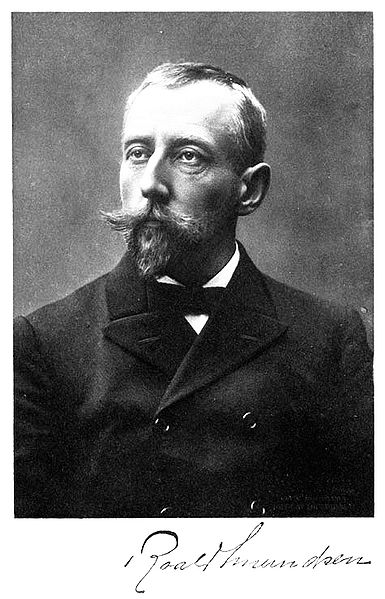
This Norwegian explorer turns up in the core book of the Hollow Earth Expedition game — but the writers decided to turn the great man into a hulking action hero.  He wasn’t hulking, first off, and he was in his 50s when he disappeared.  So here is my take on Roald Amundsen — polar explorer:

ROALD AMUNDSEN
Archetype: Explorer

Motivation: Escape

Date of Birth: 16 July 1872 (Age 64, physical, 59)
Nationality: Norwegian

ATTRIBUTES:  Body: 2   Dexterity: 3   Strength: 2   Charisma: 2   Intelligence: 4   Willpower: 4

Size: 0   Move: 5   Initiative: 7   Perception: 8   Defense: 5   Stun: 2   Health: 6

SKILLS:  Academics (general): 5, Athletics: 5, Brawl: 4, Diplomacy (Leadership): 4 (5), Firearms (Rifles): 6 (7), Investigation (Search): 6 (7), Linguistics: 7, Medicine: 5, Melee: 4, Pilot (Boats, Plane): 6/4, Science (Geography): 5 (6), Stealth: 5, Survival: 8

LANGUAGES: Norwegian (native), English, French, German, Spanish

RESOURCES & TALENTS:  Artifact 2: Latham 47.02 seaplane; Followers 2: Leif Detrichson, pilot from Latham 47.02; Iron Will

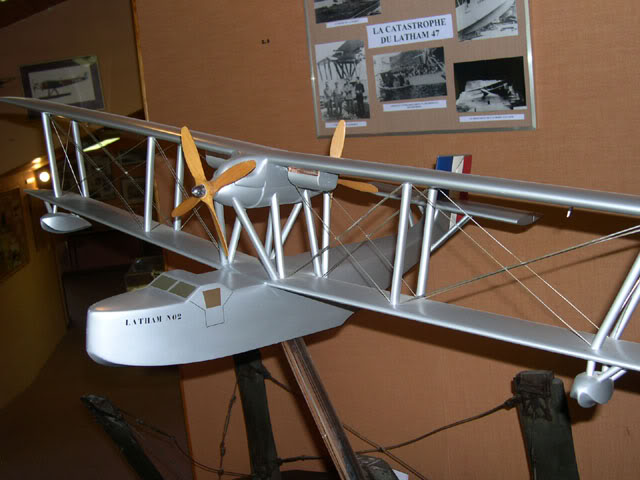
And his plane…the Latham 47, number 2.

This twin engined seaplane was constructed in France by Societe Latham & Cie for Amundsen specifically.  He would use the vehicle to attempt the rescue of Umberto Nobile’s failed expedition to the North Pole.  Lost while looking for Nobile, most of the world thinks the great polar explorer dead, but in actuality, his plane and crew were sucked into the Interior World through the North Polar Entrance and have been seeking a way out of the Hollow Earth for eight years (for them, it has seemed only about three.)

LATHAM 47.02

Size: 4   Def: 4   Struc: 12   Speed: 106   Range: 900 mi   Ceiling: 16,000′   Han: 0   Crew: 6   Pass: 4   Cost: n/a

The Latham 47.02 has seen better days.  she was damaged in the entry to the Hollow Earth, has run out of fuel and been hard landed on the water.  Her pontoons are patched, as has her canvas hull, the engines have been run on sustandard fuels and the vehicle requires a CRAFT/MECHANICS 2 test just to fly each time.  Specially rigged fuel bladders have halved the cargo load of the vessel to about 500 lbs. with crew, but give the plane a range of 1500 miles.

(Note the same dual engine nacelle style as R.100 — a pusher propeller in the back, a puller in the front…)

« Previous PageNext Page »