Science Fiction


So, this dropped on my email list yesterday (Thursday) morning — Modiphius has hit us with another sourcebook for 2nd Edition Star Trek Adventures. This time, it’s the Species Sourcebook — the one I actually was hoping they would do. The PDF was already available with the physical book on pre-order and most likely due in about two to three months. This has been the production tempo thus over the last year for the line.
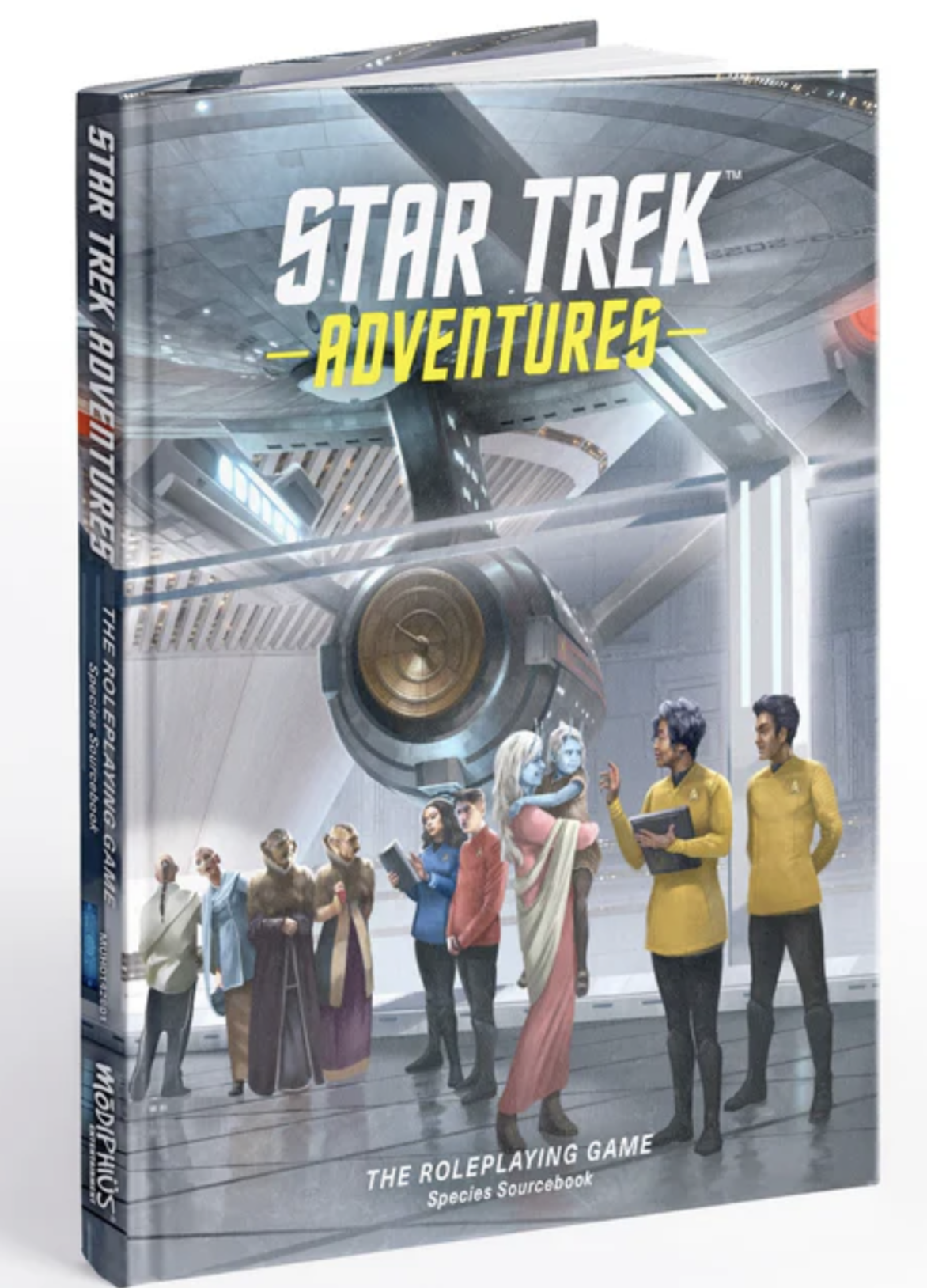
The artwork is consistent with the rest of the sourcebooks, with Paolo Puggioni — who gave us the excellent cover for the 23rd Century sourcebook — replacing Rodrigo Gonzalez Toledo on cover duties. The interior of the cover on this one is the first to not have some form of useful material — a map, uniform guide, or timeline, but the art is still quite nice. Unlike prior sourcebooks, we do see a fair amount of recycled artwork: the Barzan and Betelgeusans from The Federation-Klingon War Tactical Guide, Caitains, Efrosians, and Bolians from first edition works, just to name a few. Most of the pieces are good and yes, why spend for more art when you’ve got stuff right there?

So what do we get in the book?
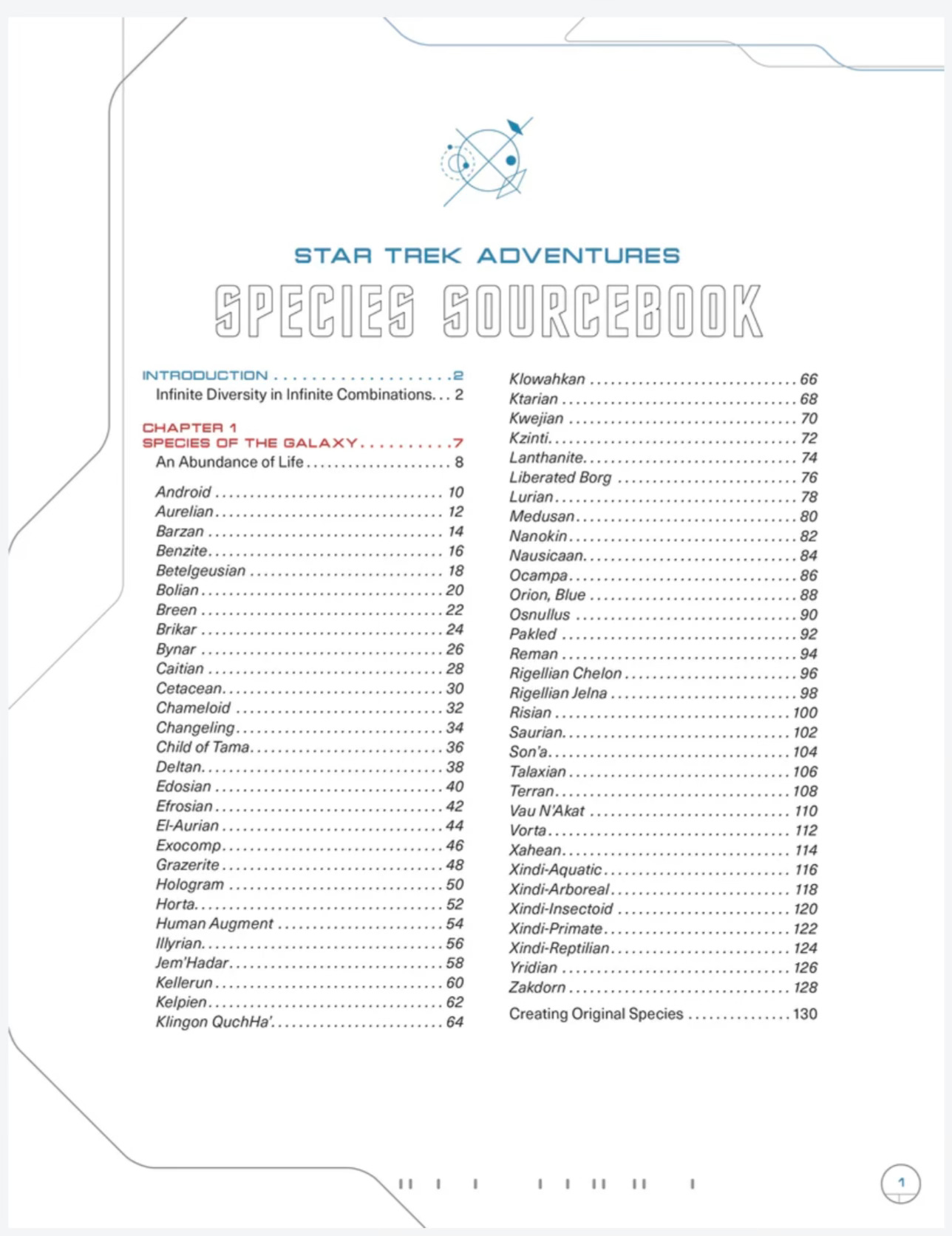
There’s a nice spread across the various shows and movies, and a few of these were originally included in the first edition, but didn’t make the cut for the core book in the latest iteration. A few are variations on a theme, but we do get Terrans for you Mirror Universe fans. There’s a heavy representation from the animated series — both TAS and Lower Decks, as well as Prodigy: Edosian, Aurelians, and Caitians, but I was especially amused by the Blue Orion (Or-ee-ons!) and Kzinti. There are some obvious choices: Deltans, Augments, Xindi, Klepians, Vorta and Jem’Hadar… The chameloid was an interesting addition, but the lack of Ariolo, Arcadians, and Coridanites from the same sourcebook as the Betelgeusan was curious. I did like the “human” Klingons from the original show being included.

I actually used the Medusans that very evening at Nerd Night™, and the Terrans will be useful very soon.

So, is it worth it? At 133 pages, it’s right in the ballpark for the current run of splatbooks for STA2, and while $60 is a touch much, in my opinion, for this particular book — it’s definitely worth it. I’m already seeing this one as a high use resource for the game. 

The copyright for 2d20 system is Modiphius, 2019. STAR TREK and related marks and logos are trademarks of CBS Studios inc. All Rights Reserved and no infringement is intended.
The third release for Star Trek Adventures is The 23rd Century Campaign Guide. This one (as with the new Species Sourcebook) kinda crept up on me. One thing Modiphius is doing well — and that Free League has been seriously falling down on with it’s Blade Runner and Alen lines — is dropping pre-orders once their material is ready to go…not making you wait a year for them to get it cleared by their licensors. Kudos to Jim Johnson for managing this line extremely well.

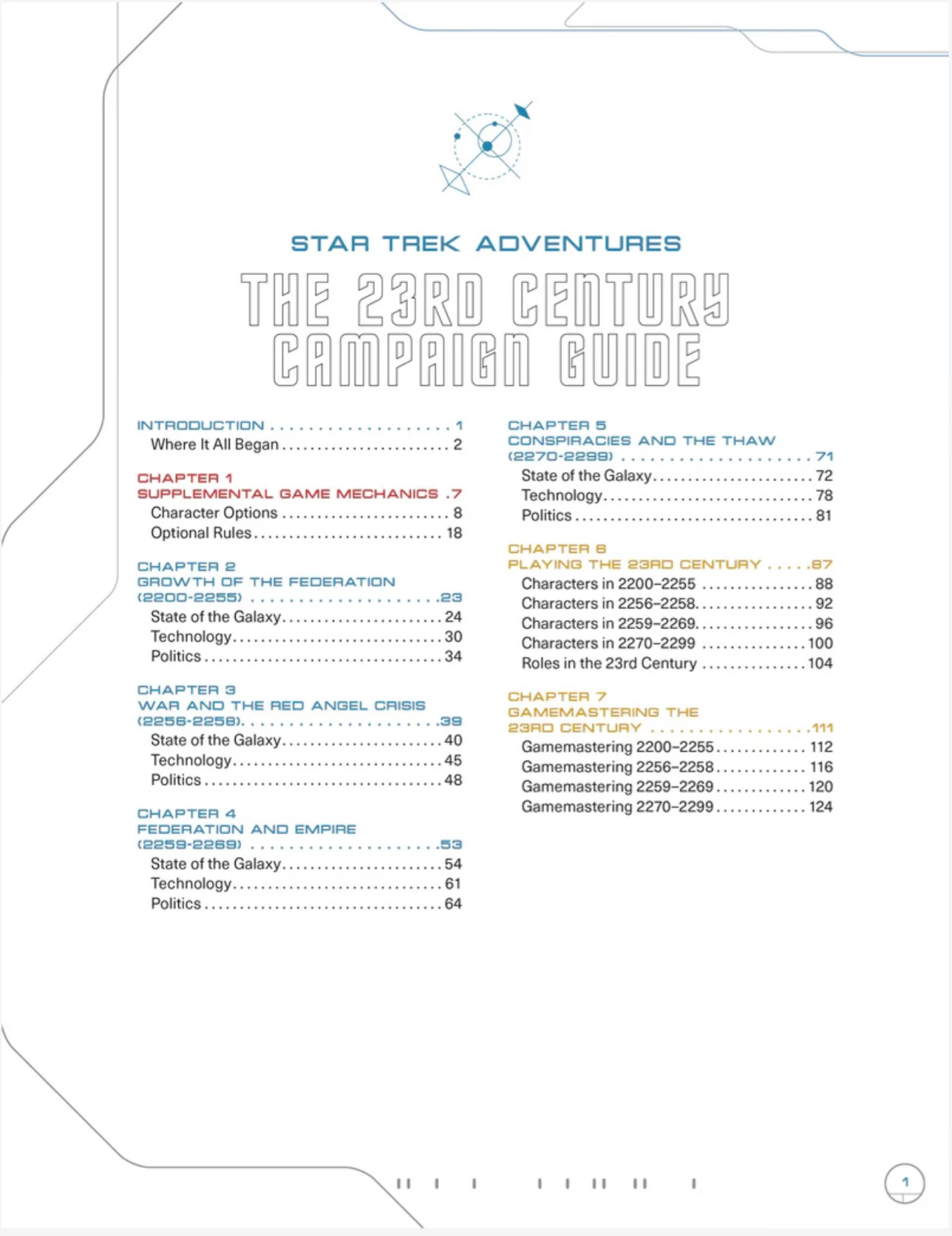
The guide provides a nice overview of the entire century — not just the events of Discovery through the old show movies. The chapters give a political and technological overview of the pre-Disco era (starting from the end of the Enterprise era), and they also focus a few pages on how each of the major polities are affected — the Federation, the Klingon and Romulan empires, the Cardassian Union, and the Orion Syndicate. The chapters are broken into the pre-Discovery period, the Disco/Strange New Worlds period, the Old Series, and the movie period. For those who have only a passing knowledge of the setting (especially the pre-Discovery and the original movies), this a fast entry into the 23rd Century. There is also a latter chapter on creating characters specific to the era, including suggested focuses, traits, and values. For those GMs with players who are unfamiliar with these period settings, this can help create characters consistent to the goings-on around them. It also ties neatly with the first chapter, which provides new lifepath options for having grown up on a species homeworld different from your own, a new civilian profession (free trader), and specific high-impact events from the various shows and movies. Was your character present for the V’Ger incident, or at the Khitomer Accords? Now you can have that as a specific event in character creation. The first chapter also has updated rules on scars, fatigue, and trauma borrowed from  The Federation-Klingon War sourcebook for first edition. A final chapter gives tips for plotting adventures during the various series’ settings.

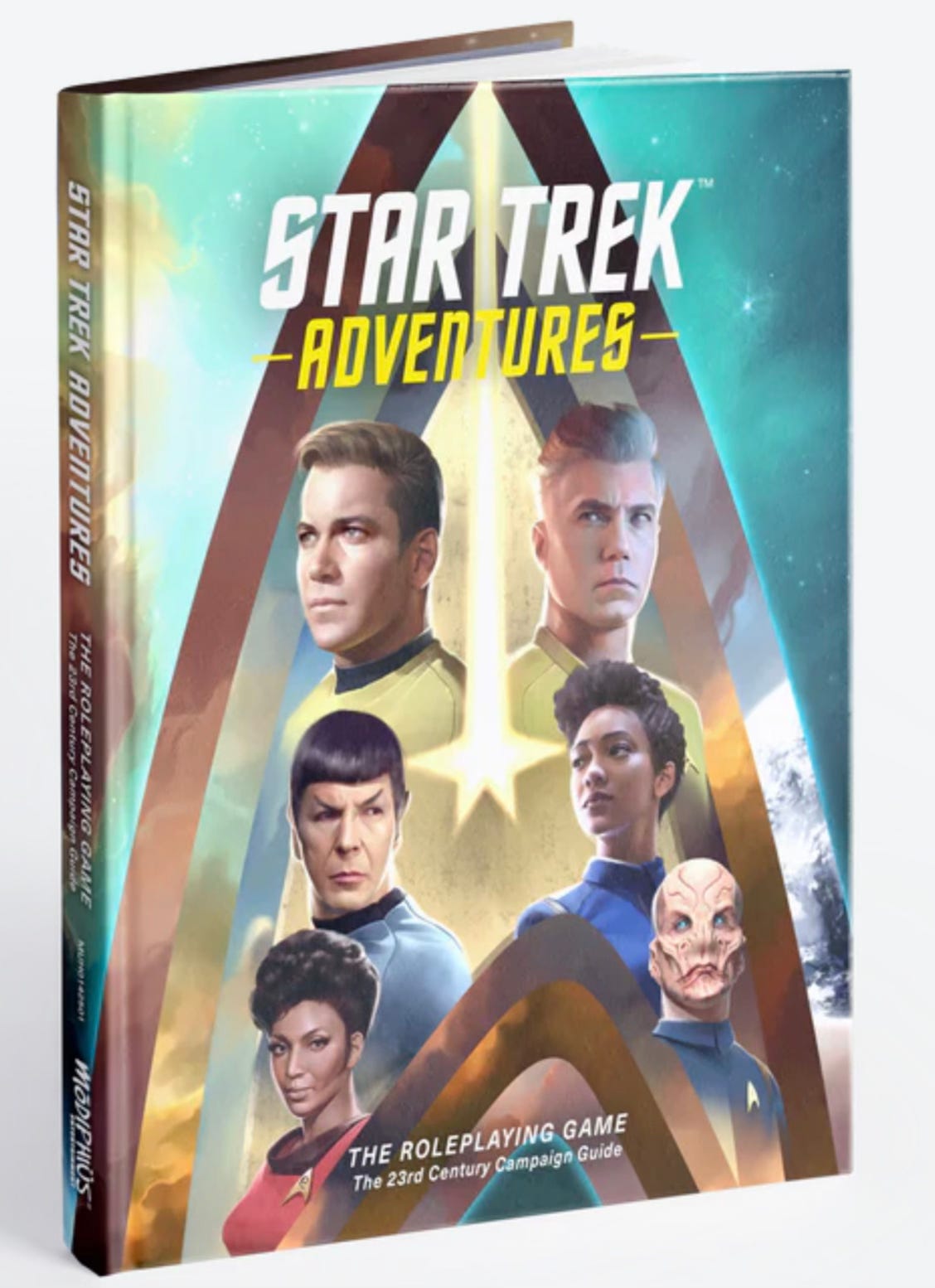
Artwork remains solidly good to very good, and Paolo Puggioni’s cover deserves a special shout-out. There’s a frontpiece on the inside over with the various uniforms of the period — much of it cribbed from other earlies books in the first and second editions, and the backpiece has a timeline for the “Prime” and “Terran” (read Mirror) Universes, as well as the execrable J.J. Abrams “Kelvan” timeline.

So, is it worth it? At 129 pages, $60 might be a bit hefty if you’re a confirmed Trekkie or just hit up the Memory Alpha site for information. I’m not certain how much use I’ll get out of this, but it is a good-looking book and well made, with plenty of useable game mechanics and ideas to launch off of. If cost is a problem and you don’t mind using the cheaper PDFs for reference — that’s definitely worth it.

The copyright for 2d20 system is Modiphius, 2019. STAR TREK and related marks and logos are trademarks of CBS Studios inc. All Rights Reserved and no infringement is intended.
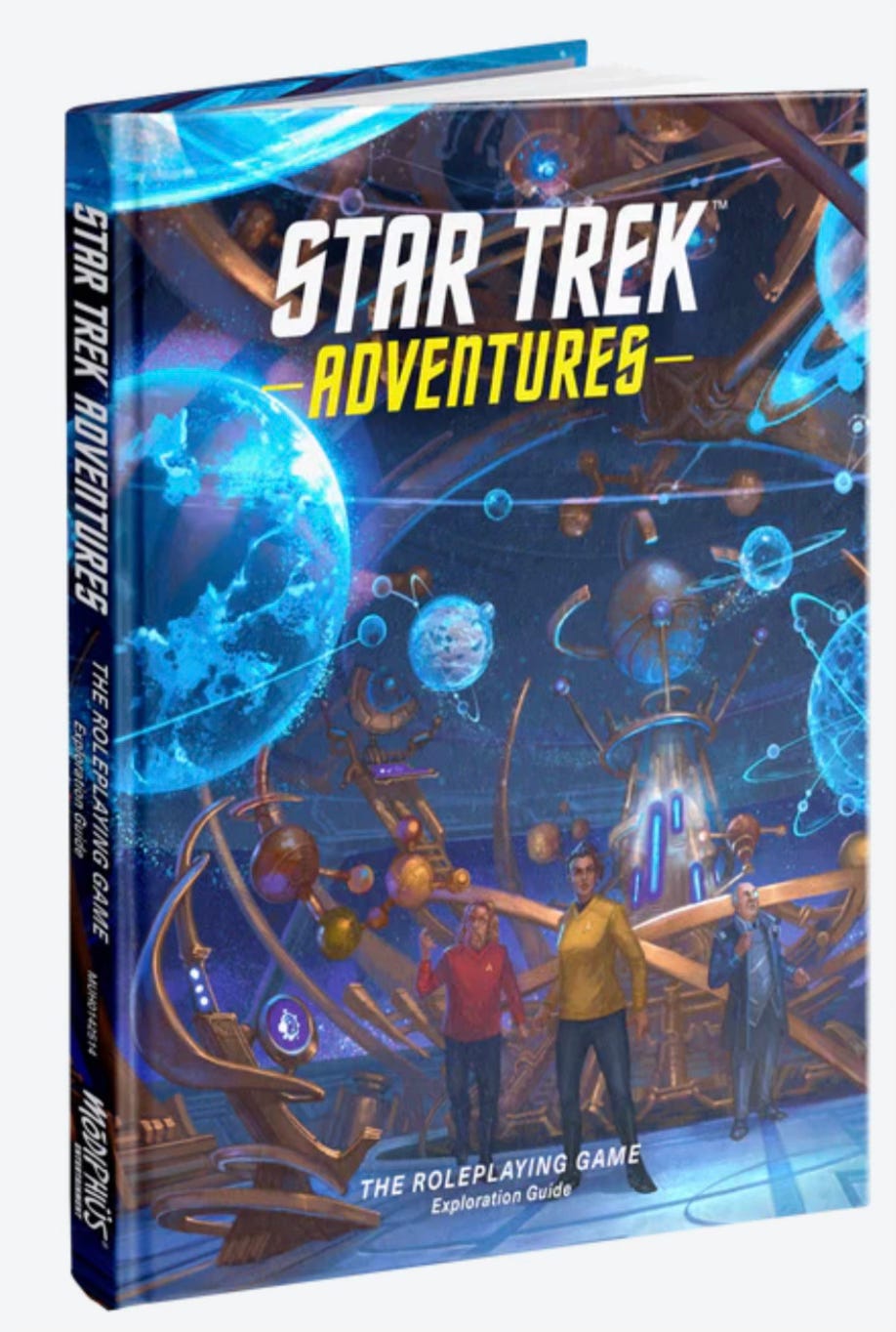
Modiphius has been on a roll with their Star Trek Adventures line since brining out the 2nd Edition rules set. Over the last year, there’s been four sourcebooks that have dropped. We already looked at the Technical Manual released in April 2025, which was followed by the Exploration Guide in October, then the 23rd Century Sourcebook around Christmas time, and the PDF for the Species Sourcebook just dropped yesterday.

The Exploration Guide feels like it was peeled off from the Technical Manual, and feels like these could have been a single book. As it is, as 144 pages it’s a nice size to peruse or do a quick reference. The production values are good, and have been consistent across the 2nd Edition line, so far. It comes with a smallish folding map with Alpha and Beta Quadrants, c. 2259 on one side, and a 2401 version on the reverse. They are the same maps as seen in the frontpiece and backpiece the inner cover of the book. The maps are nice enough, but a bit small, compared to the old setting map that 1st Edition had from the old Geoffrey Mandel Star Charts book, and isn’t as easy to reference. The 25th Century map is especially mutes and hard to reference at the table.

The layout is consistent with the new look of 2nd Edition: bright, clean, and easy to read. Like the Technical Manual, the artwork is all new — I didn’t notice a reuse of prior artwork from first Edition or even the new core book. The cover is by the same artist as the prior book, and the artists used look to be the same. It gives a consistent flavor from the core book, to these two sourcebooks.

There’s new lifepaths, the Independent Archeologist and the Outpost Researcher, and about a dozen new career events, new talents, and the addition of civilian awards you can buy with advancement. It’s a new civilian focus that cuts throughout the book. The other chapters cover sector design, star and system design, and planetary design for your setting. I banged out a couple of worlds and systems — and it works well. Prior to this, I had been using the system creation rules from the Alien RPG’s Building Better Worlds sourcebook, with tweaks. The last chapter deals with specific biomes — ocean, jungle, etc. — and how to design specific features, plant and animal life. There’s also encounter tables for those that was random encounters.

So, is it worth it? The guide is pretty useful for putting together material for your game — especially if you are planning a campaign in a particular region (hence the sector design), and is a good follow-up to the Technical Manual. At 144 pages, it feels a bit thin for the $60ish bucks for the hardcover book, but if you are like me and prefer to work out of a physical resource, then yes — it’s worth it…maybe more so than the Technical Manual. If you’re good with PDF, the price point is certainly more forgiving.

The copyright for 2d20 system is Modiphius, 2019. STAR TREK and related marks and logos are trademarks of CBS Studios inc. All Rights Reserved and no infringement is intended.
I saw the pre-order for this pop up a few months back and thought “Neat!” but Master Replica was still a bit hard for me to trust after the implosion of Eaglemoss, and their stepping in to handle some of the properties. Still — I threw it on my wish list for Christmas and forgot about it.

The wife did not. And yesterday, my Insight Editions “Deckard’s Police Spinner Car” from Blade Runner 2049 (Yeah, I know, but it was in the movie for a few seconds before it got blown to hell.)

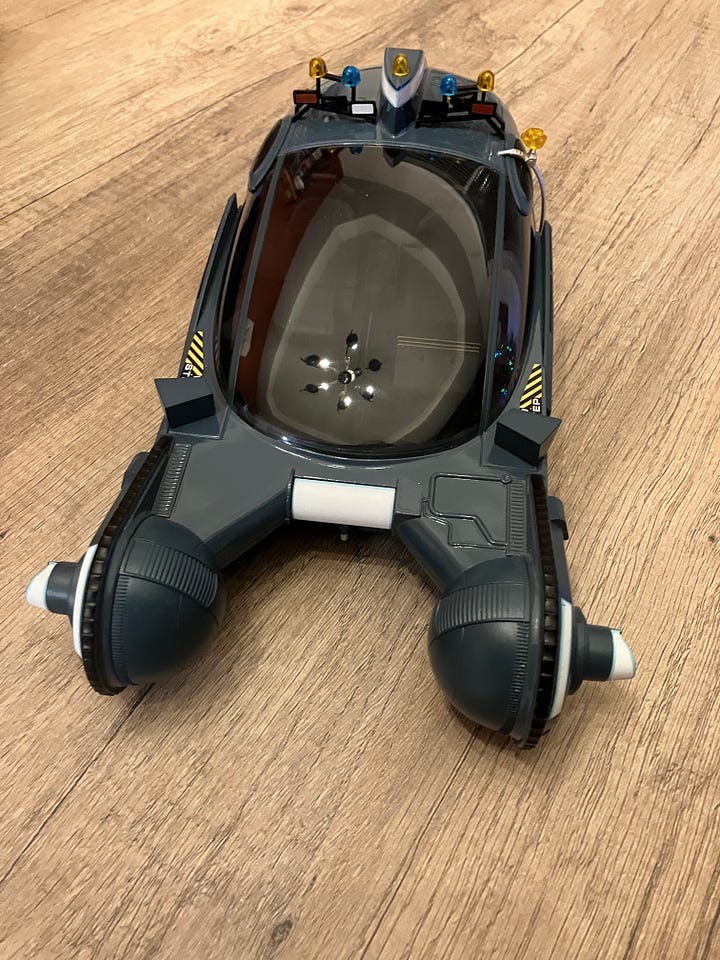
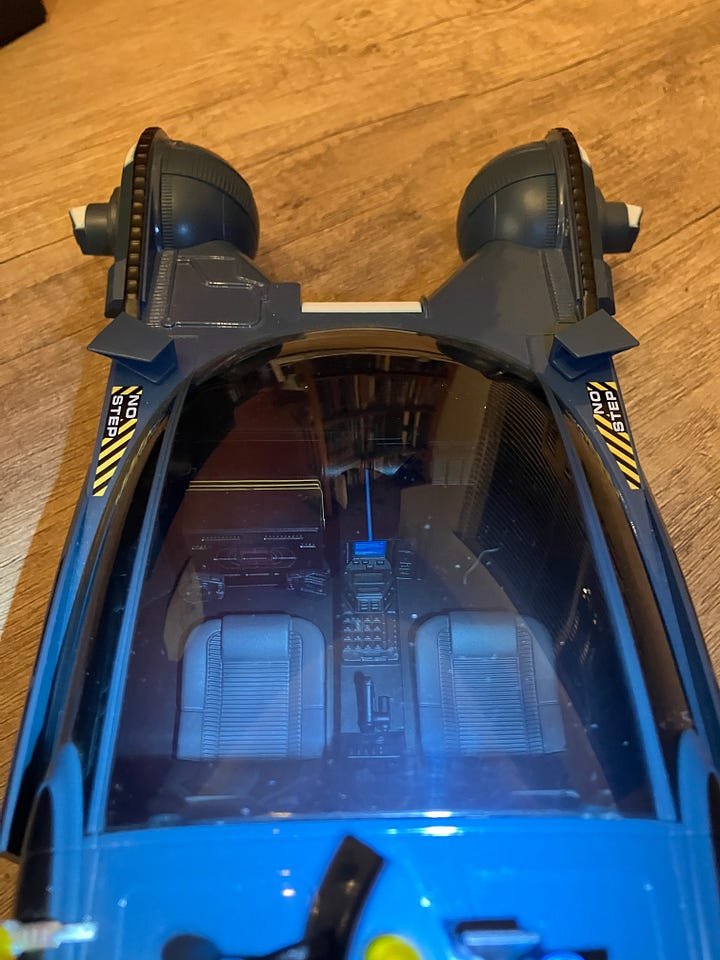
So, is it any good? In a word, yes. It’s a hefty die cast, and the detailing is excellent. I pulled up a few screencaps just to compare and other than a few niggling points Master Replicas did an outstanding job with this one. I had thought the forward wheel tracks were a touch small until I pulled the screen caps — they’re about right. 

Fore and aft…

The undercarriage detailing is equally good, with police lights in the right places. The only niggle for the underside (that they did get right in the small model from the Blade Runner Collection box set a decade or so ago) is the undercarriage windows are reflective here.

Those two big shiny bits should be windows from the screencaps.

A minor gripe for me is the cockpit windows are a bit dark, so unless you are under excellent light, it’s difficult to see the interior detail — but it’s there. The vidphon screen in the center console, the control screen has red lettering and graphics in the dashboard. There’s also detailing between the seats. Those two panels in from of the police gumballs on the roof are also, I believe, supposed to be windows.

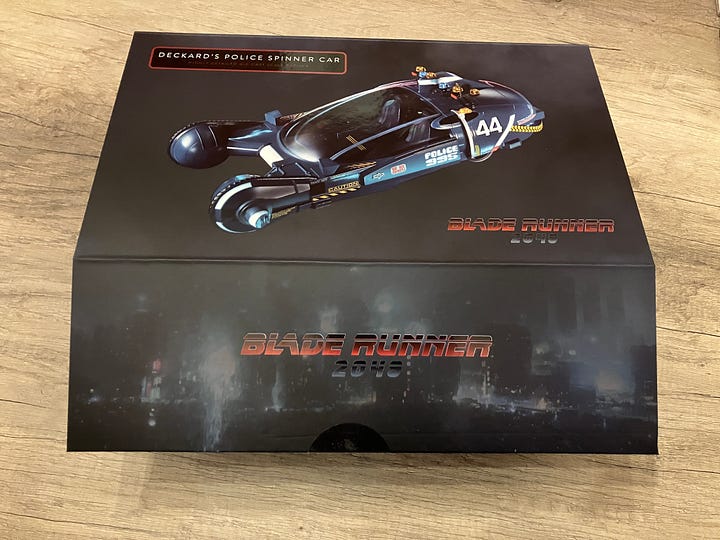
The packaging is very nice: heavy cardboard with satin finish, and inside heavy foam protects the model quite well. The car graphic and the Blade Runner titles are all raised. The box is decorated with subtle cityscapes all around the side panels. The lid is magnetically closed and the interior flap houses a very nice graphic, as well…

I’m a huge fan of the movies. The original became my favorite movie sitting in the theater opening night, and only cemented that position with the release of The Director’s Cut (although The Final Cut — or more appropriately directed at the producers’ meddling, The F*ck You Cut is my favorite version.) I was skeptical about Villeneue’s sequel until I saw it. In many ways, I found it more engaging than the original despite the run time.

So, is it worth the $150? Depends. Are you a massive fan that will have it sitting next to the 3D printed blasters from the movies? (Just put it there after taking the pictures.) Then yes. If you are a passing fan, the price might be a bit of a lift — but supposedly this is a limited run. The value should start climbing in three…two…one…

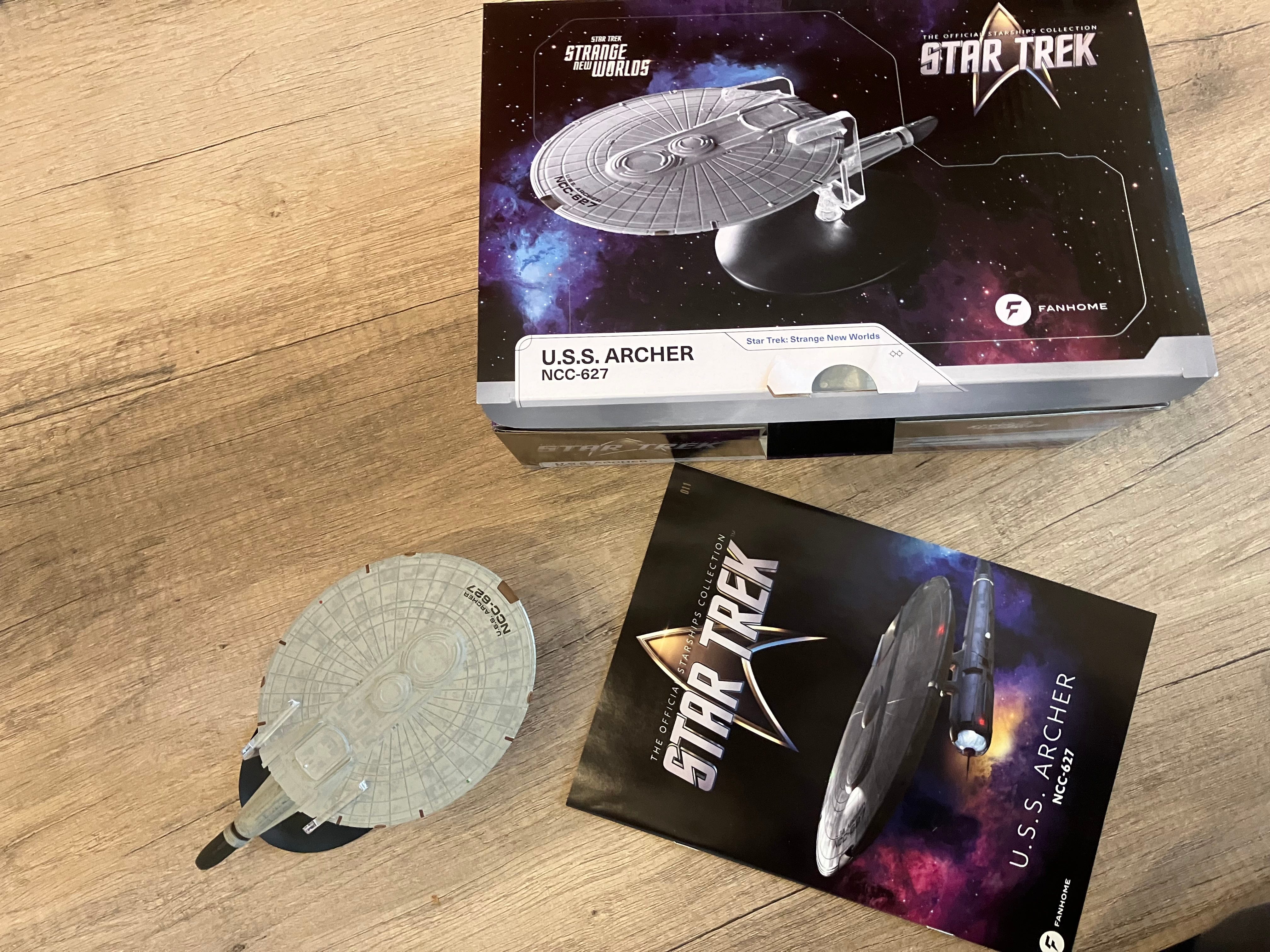
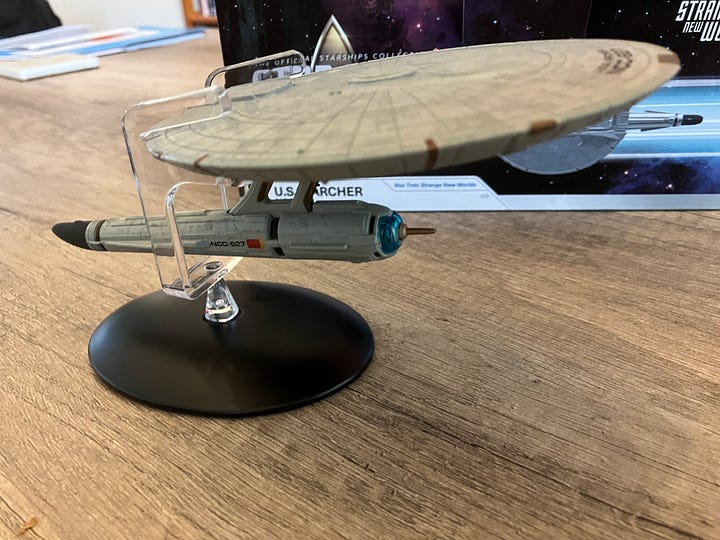
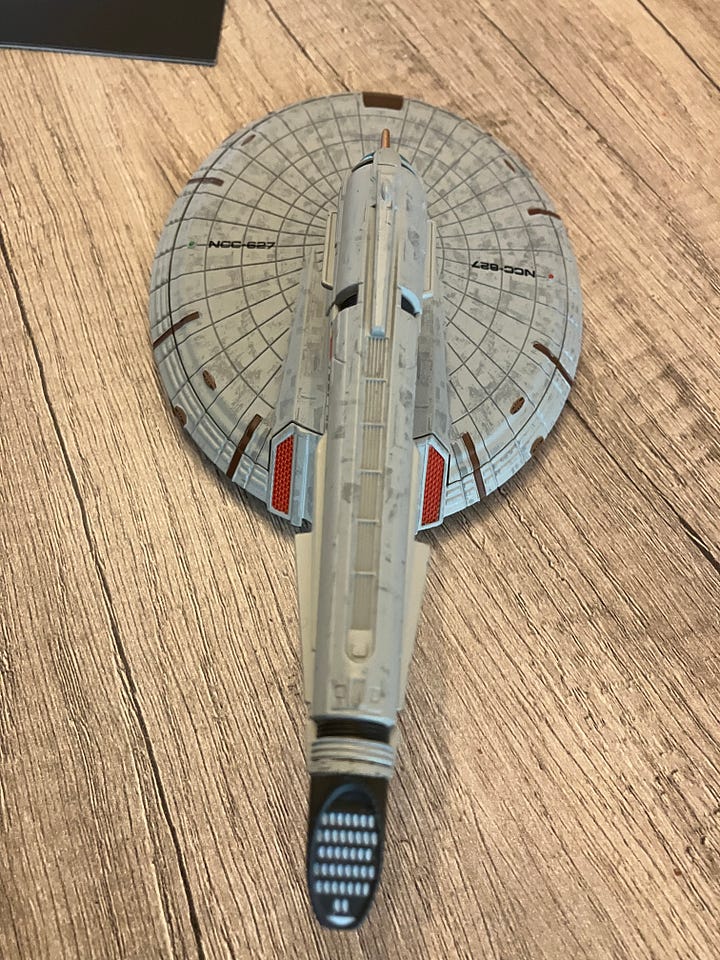
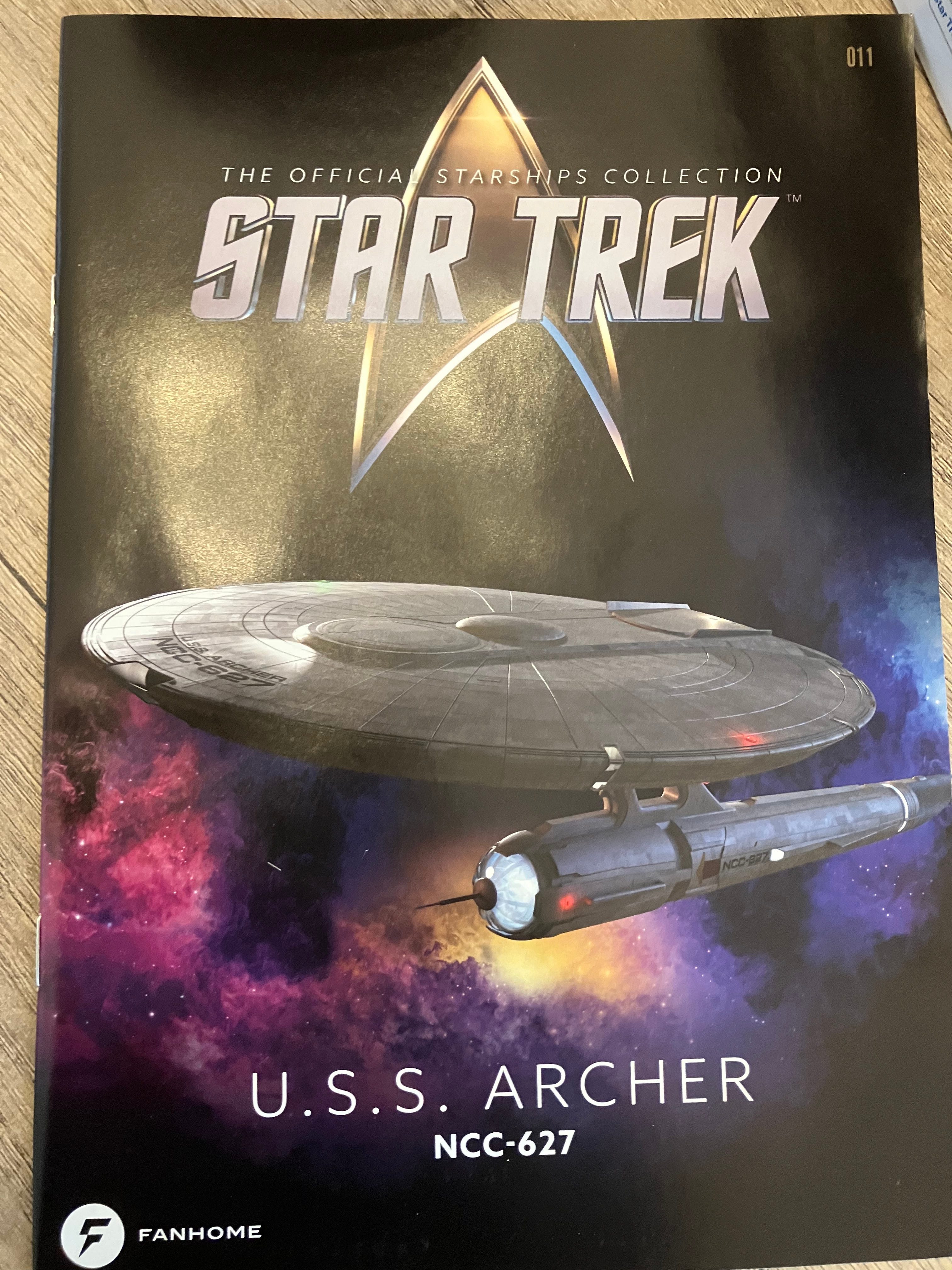
I’ve been remiss in getting some of the reviews for the new Fanhome ships. Meanwhile, the one I’ve been waiting for has arrived: the Gral-class USS Archer (NCC-627) that was featured in the first episode of Strange New Worlds. They’ve popped up in the background a few times, always at a distance — I suspected because they were a bit under-designed.

As with the rest of these models, the quality of the model is very good, although — as with the Eaglemoss models — the clear portion of the base really does need to be better designed; this one really doesn’t want to sit right in the bottom portion of the base.

The booklet on this is instructive. Archer was actually fairly heavily designed and went through a number of iterations before they reached the current look. I like the single nacelle with the antenna on the end; very The Cage-looking. The underside has more going on that the top — a break from other minor background ships designed for Discovery and Picard where the ventral portion often feels unfinished. 

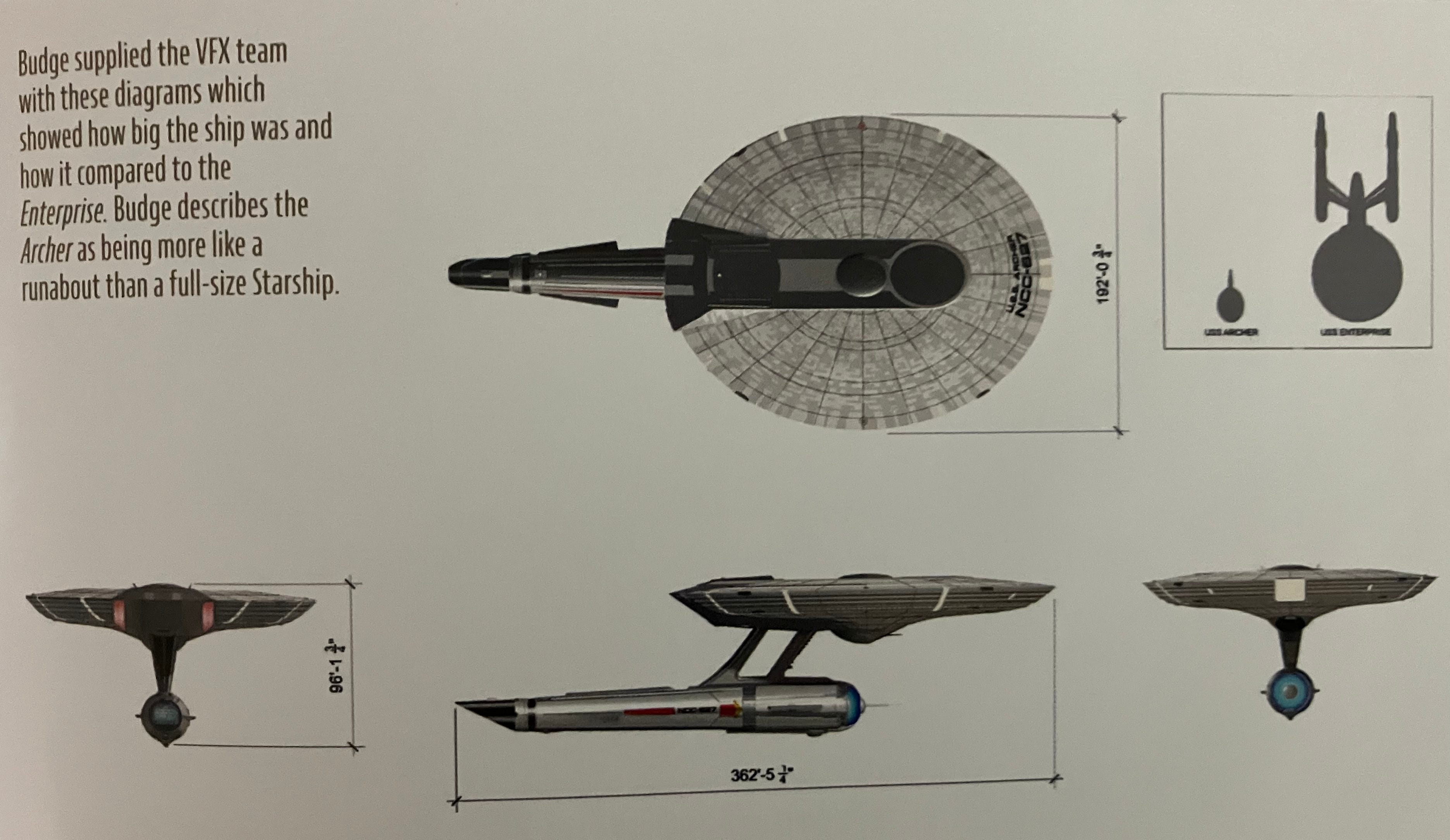
Archer is a Gral-Class scout that is described as “more of a runabout, butat 110.47m long with a dish “58m” on the beam and about 77m long, this isn’t that small. That two decent-sized super-yachts side-by-side, and the dish looks to be about 10ish meters in draught — that’s enough for two decks, rather than the one the ship supposedly has. She is supposed to have a crew of three, although it could bit more. By my estimation, a standard complement of 25-30 would still have plenty of room, with all the necessary equipment (transporters, cargo, impulse and warp engines…)

Here’s a decent look at the size and the orthos of the ship:

So is it worth it? It’s an interesting design, although visually a bit bland. If you are looking to complete a collection of Disco/SNW vessels, I’d say get it.

STAR TREK and related marks and logos are trademarks of CBS Studios inc., and Fanhome is ©2025 DeAgostini Publishing Sp.A. All Rights Reserved and no infringement is intended.

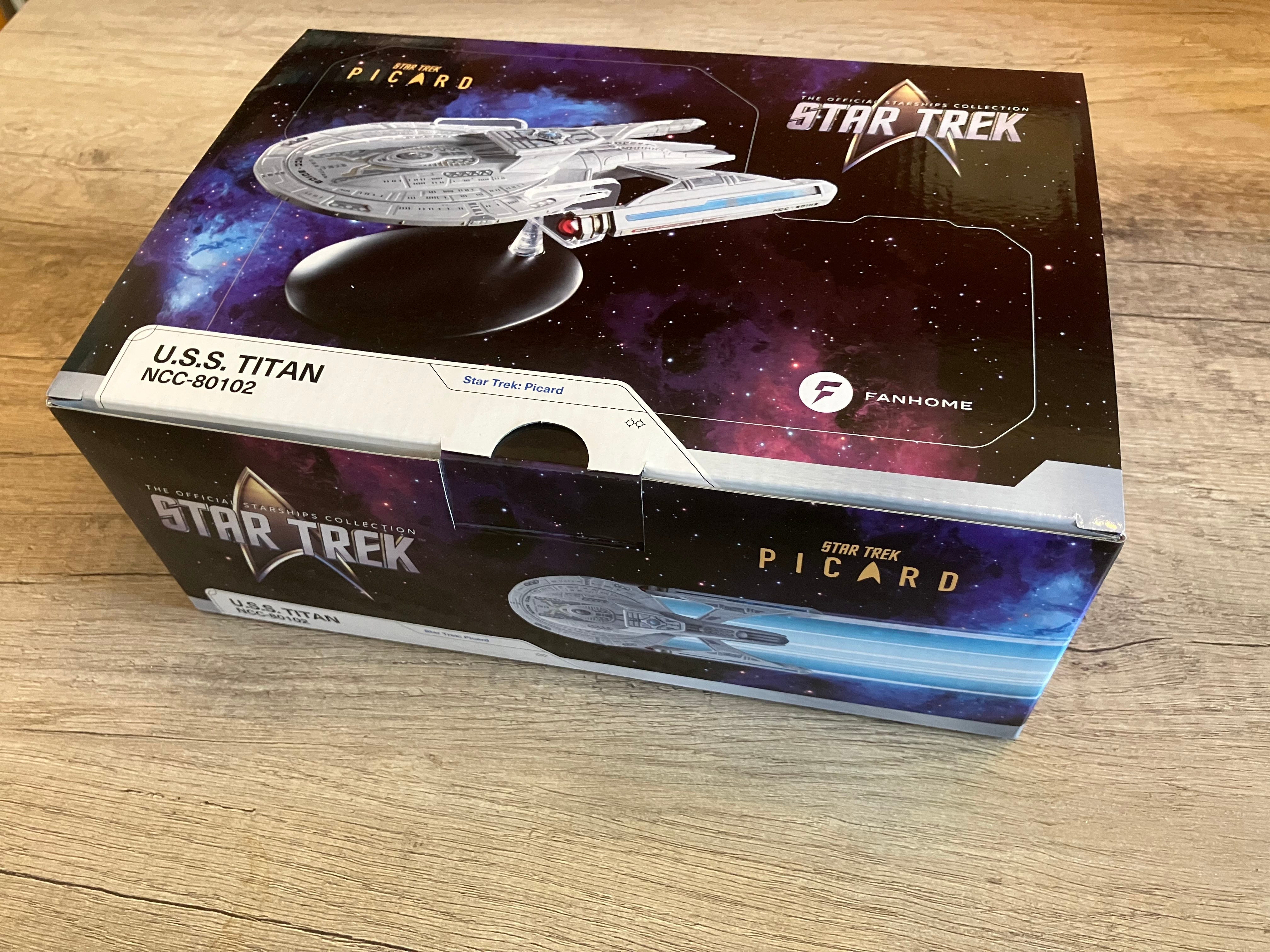
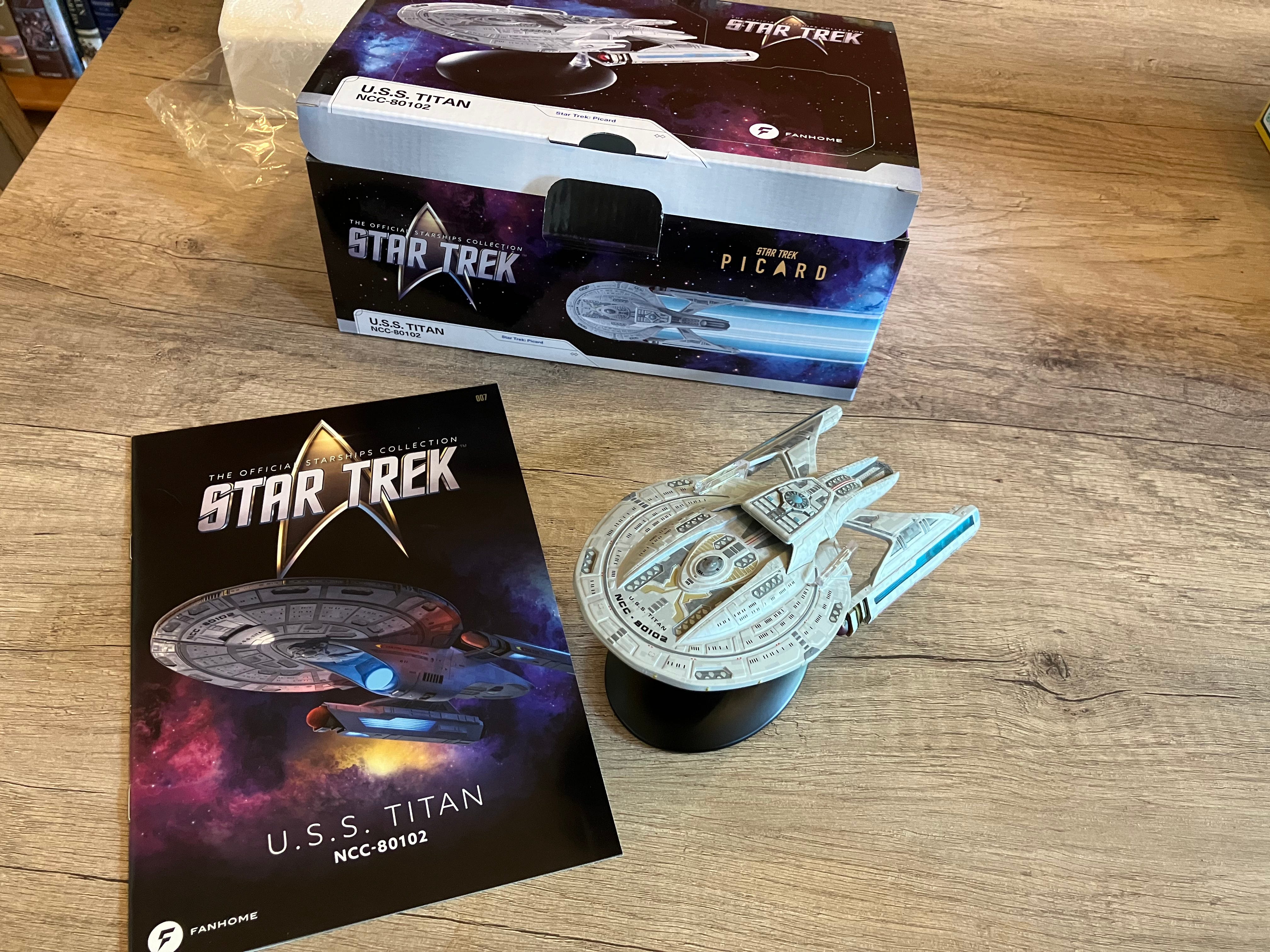
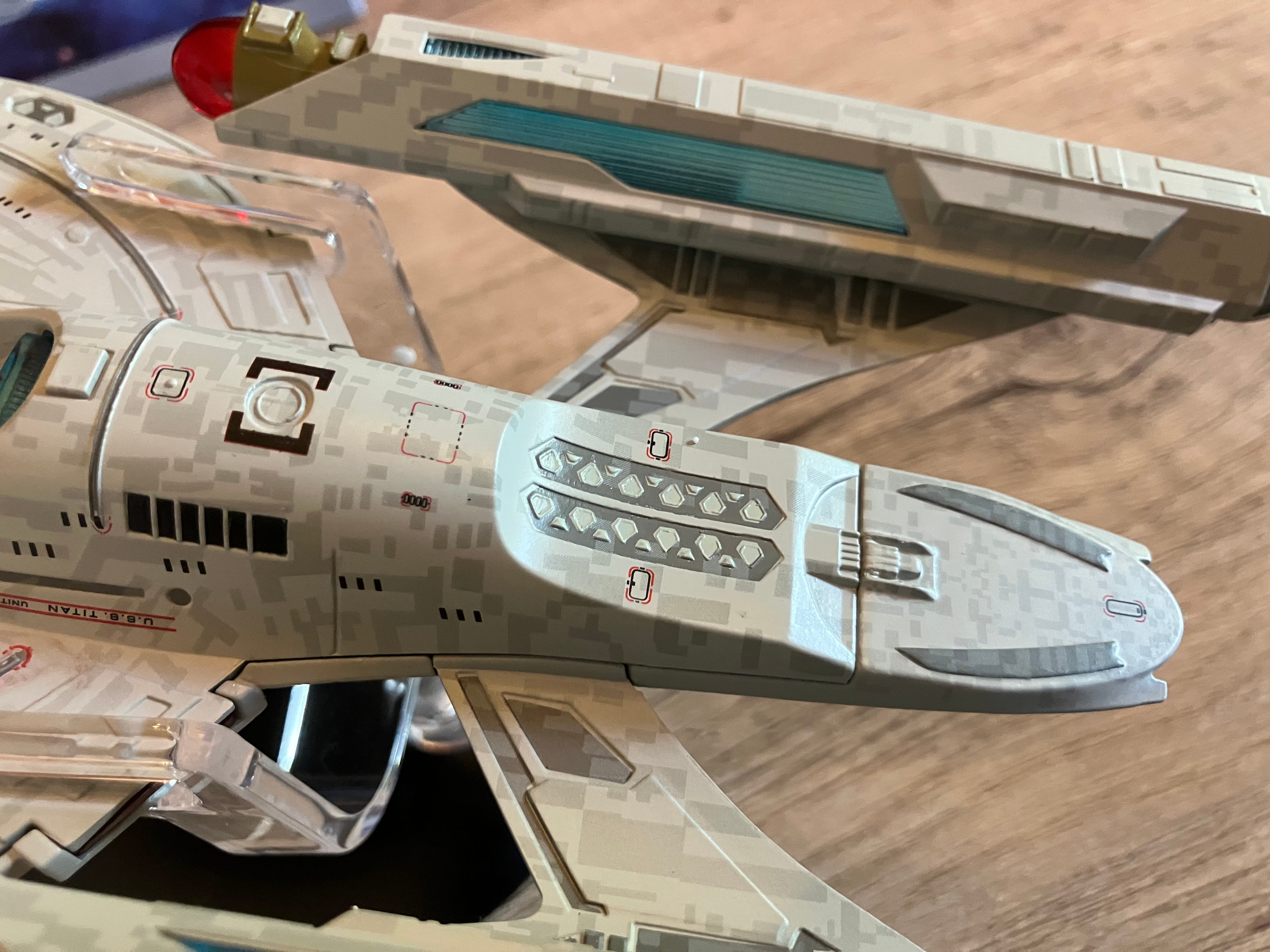
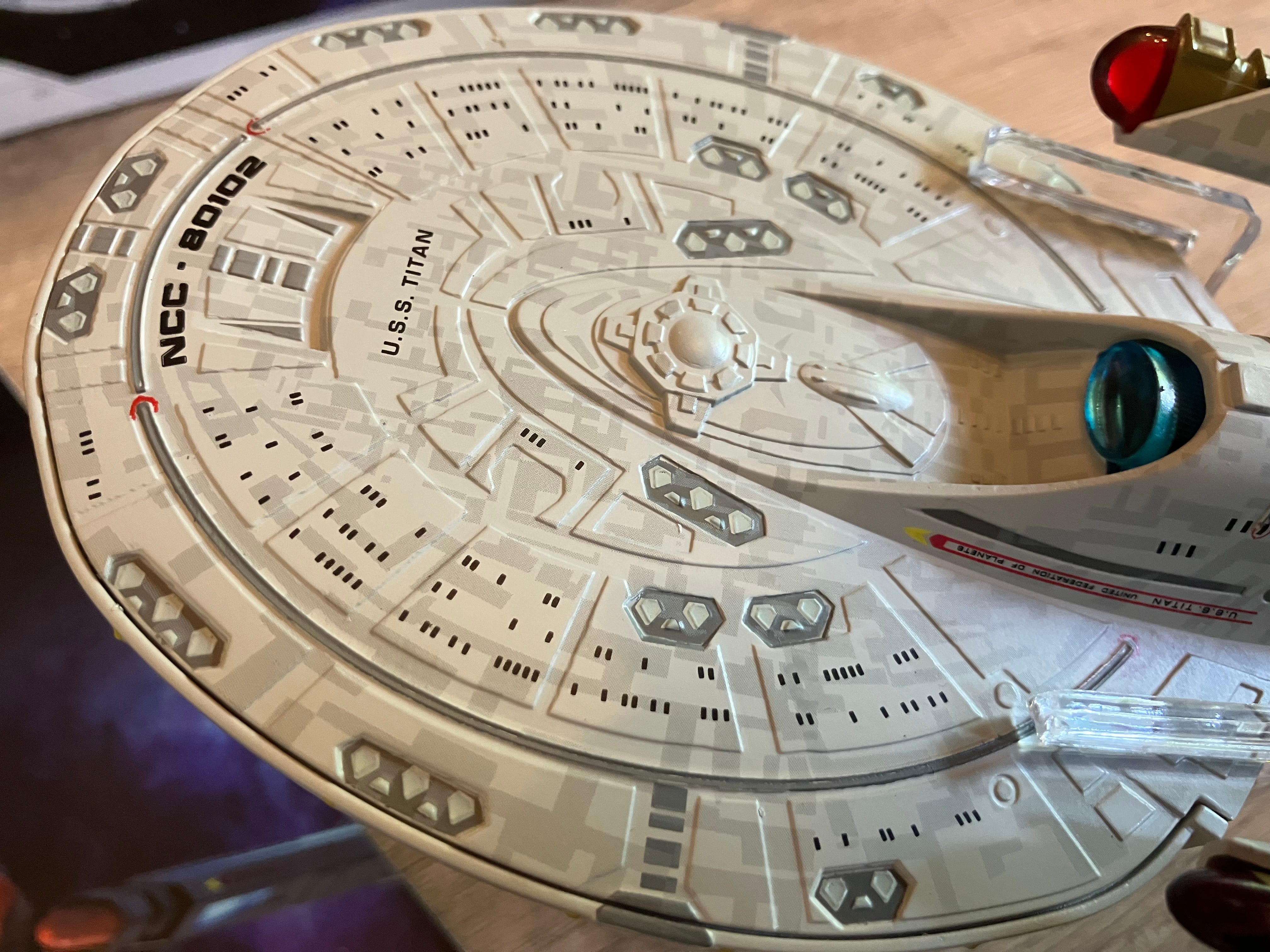
Riker’s ship has warped in from FanHome. I wasn’t real jazzed up for this one, (Ba-dum-bump…) but now that it’s here, I’m really liking FanHome’s model of Titan. I was worried it was going to be more cartoony — in keeping with the aesthetic of Lower Decks, but no, it’s a pretty good model. As with the other FanHome products, presentation is a cut above the old Eaglemoss. Box, booklet, all have better graphic design and look good.

There have been definite improvements for the subscription service. The change of shipper has smoothed out some of the kinks from the beginning of these releases, and my models have been coming in, like clockwork, on the last estimated day for delivery, or one after. So far, I’ve had no damaged boxes of models.

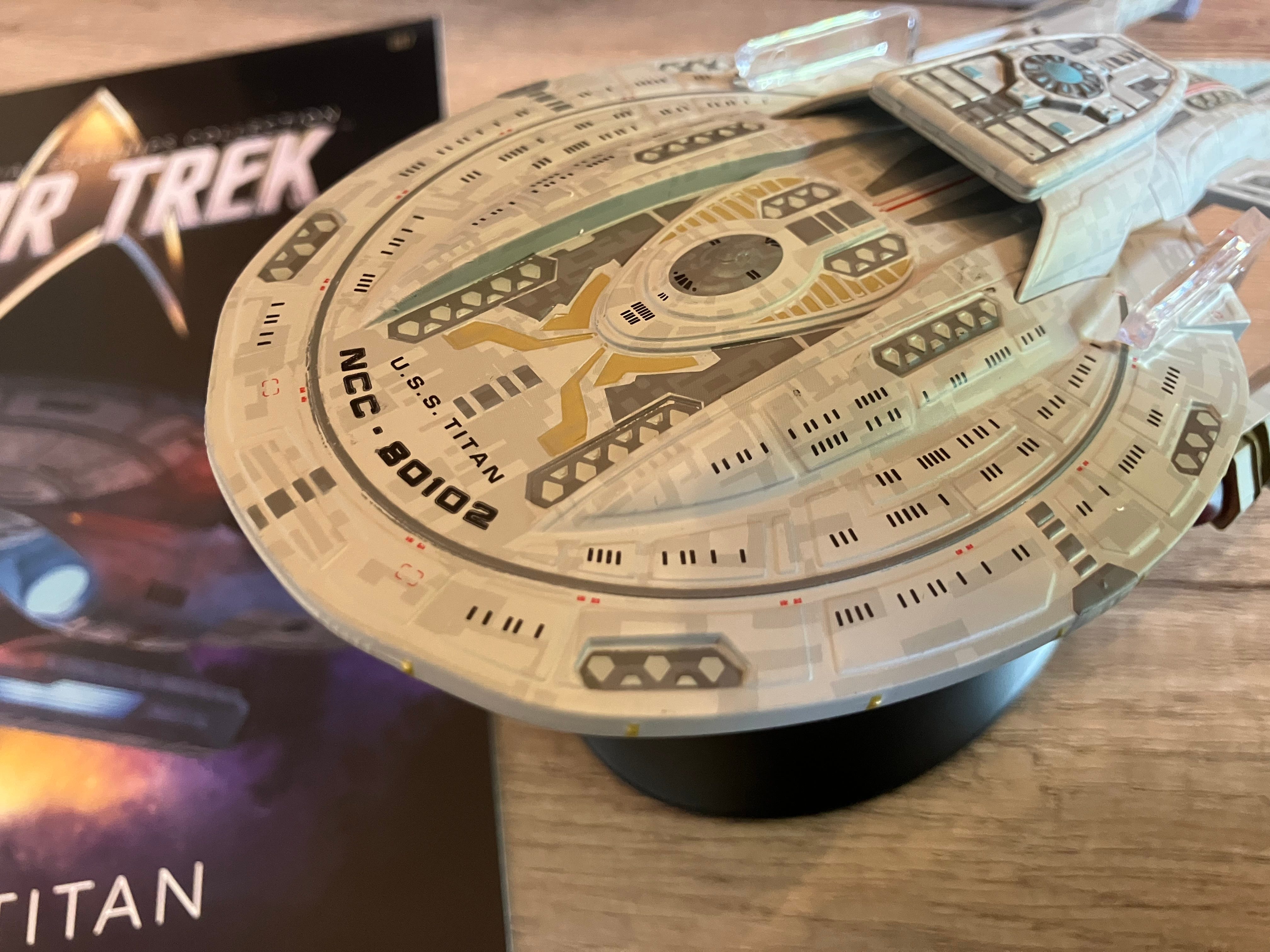
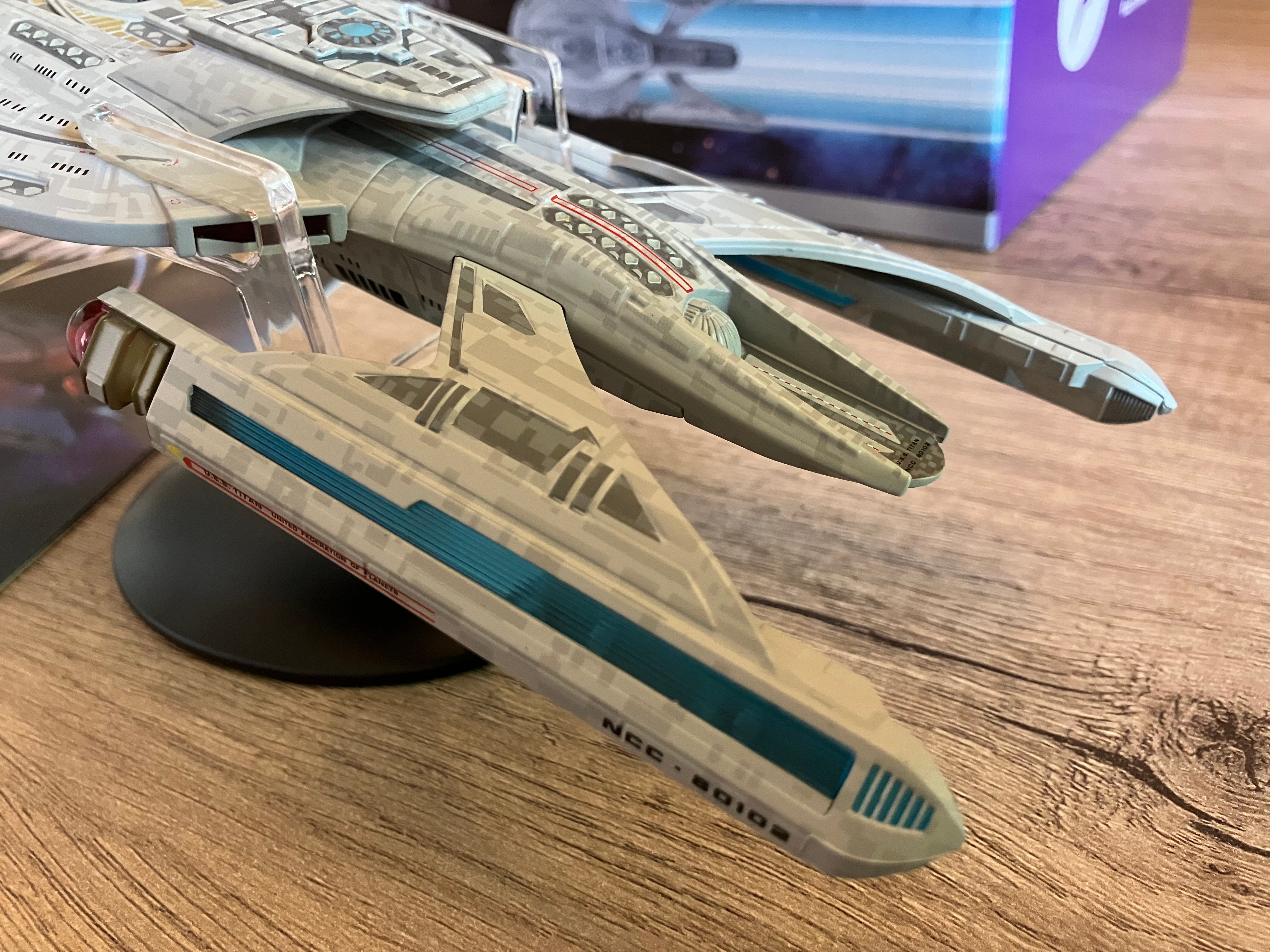
Titan has that TNG movie period aesthetic — the nacelles are similar to the look of the Akira-class, and the saucer section has similar queues from the period. The quality of the model’s paint job and detailing are very good — I think they did a better job on this than the preceding models, though it does seem to have more plastic and less die-cast in this particular release.

The lifeboats, the emitters are all nicely visceral. The windows seem to mostly line up, and the aztec paint job is good. This model did not skimp where most do — the underside is equally well done.

Hathces, docking ports, warp core hatches — all painted with warning lines. Other than the seam on the underside of the tail, it all looks good.

They really did a nice job with this one. So if you like the TNG movie period vessels, this is definitely worth getting.

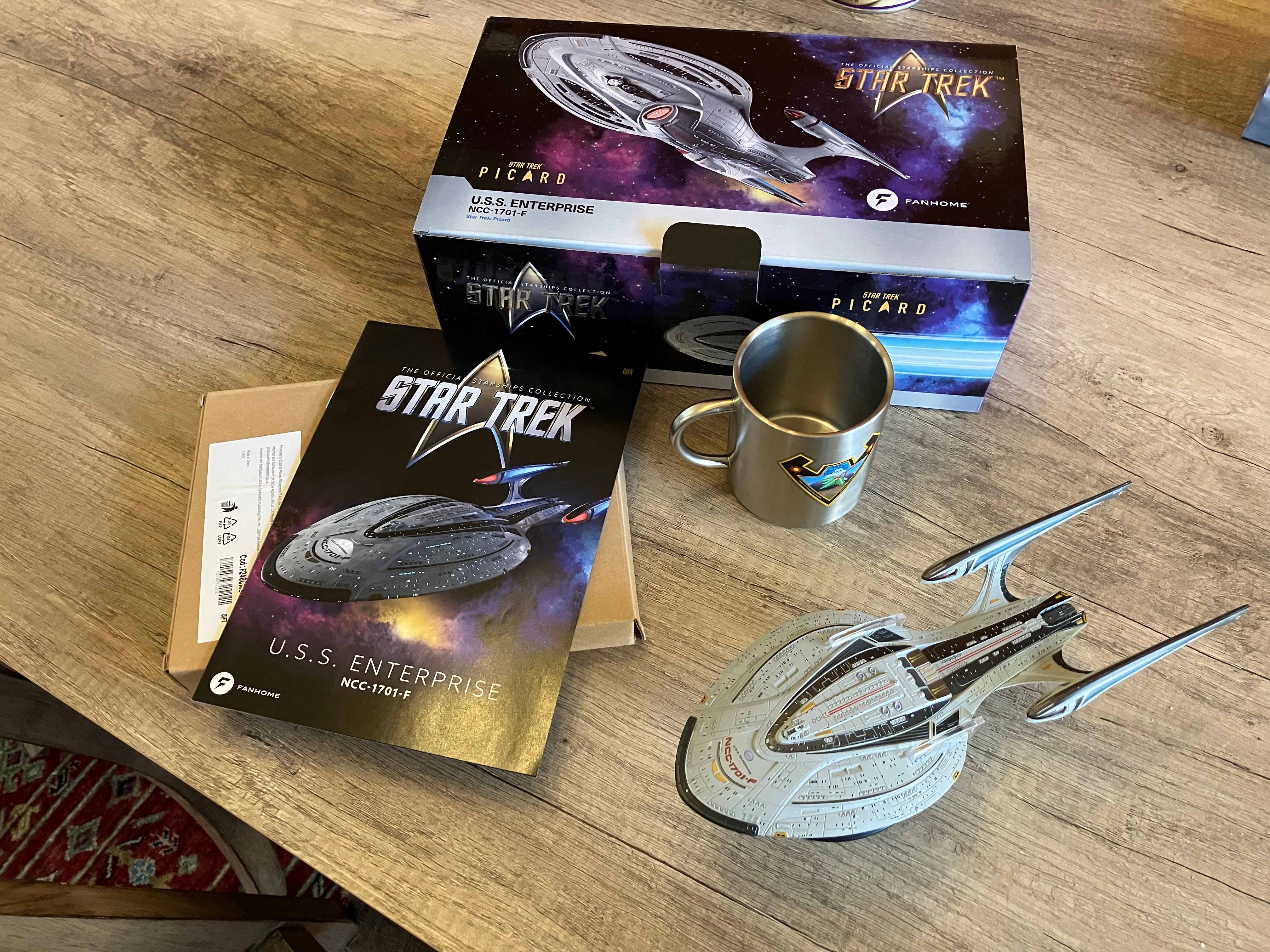
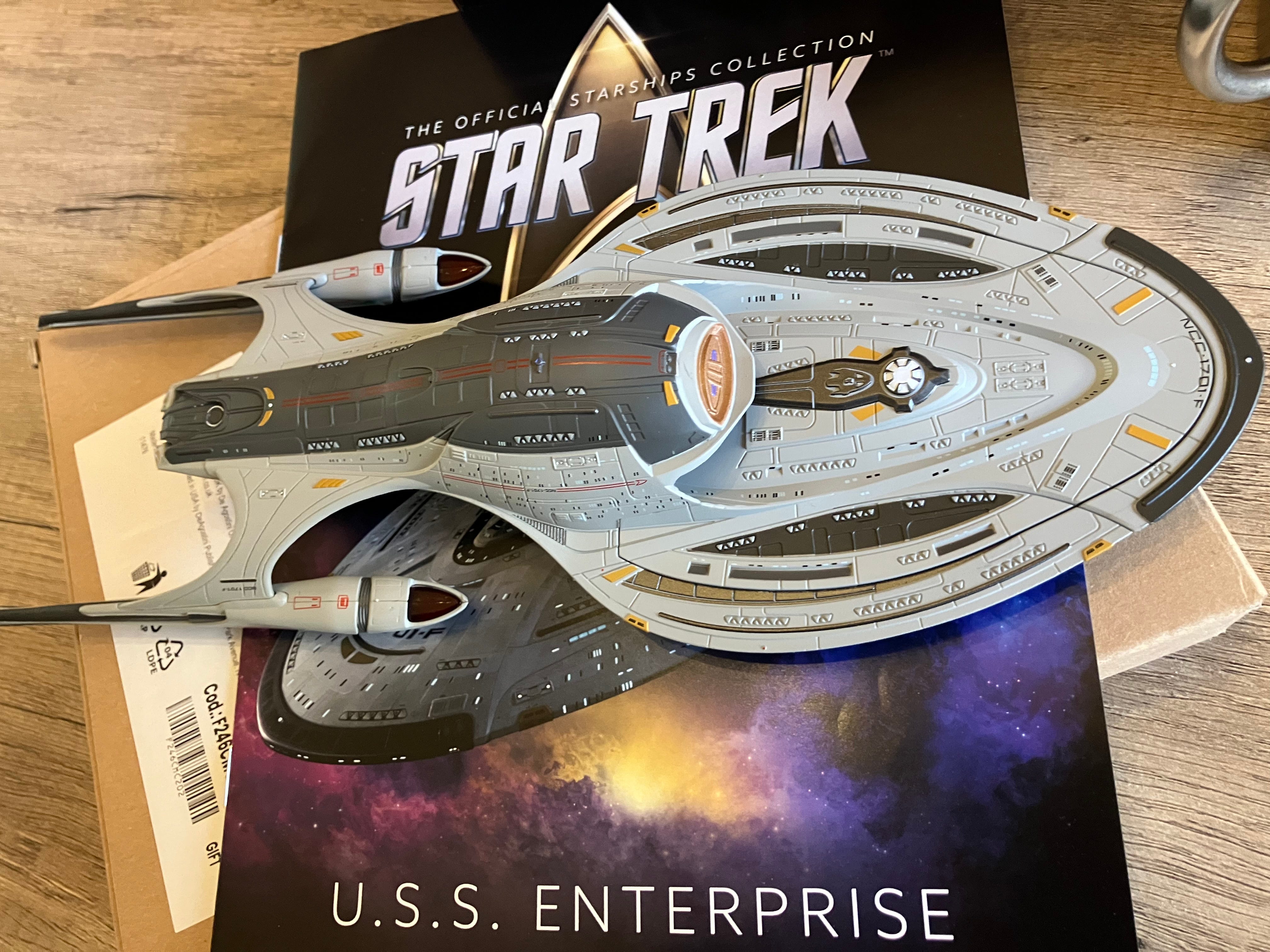
The latest from FanHome’s Starships Collection got delivered yesterday. I’ll admit, I didn’t have much interest in this one. Not being a player of Star Trek Online, I didn’t know anything about this particular ship. Its appearance in the third season of Picardwas my first exposure to the Odyssey-class Enterprise-F.

The packaging continues to be much better than the old Eaglemoss stuff: colorful and eye-catching, and this model is their first XL edition. To indicate this, the box has raised embossing for the Star Trek name. The packing is the typical styrofoam set up of the Eaglemoss models. The booklet on the design of the craft and its appearances is tucked in the box, following the lead of what Eaglemoss was doing with the later releases, rather than the large format from the older ships. (I prefer the smaller booklet.)

This shipment included two free extras for the subscribers: a raktejino mug and a master systems display of USS Titan-A. The display is tucked between two thick slabs of plexiglass, and it’s tiny — about the same size as the booklet (it’s in the cardboard box under the booklet in the picture). The mug is small — an 8 oz., I think, and yes — Colombia is misspelled. But since it’s free stuff, I don’t really care.

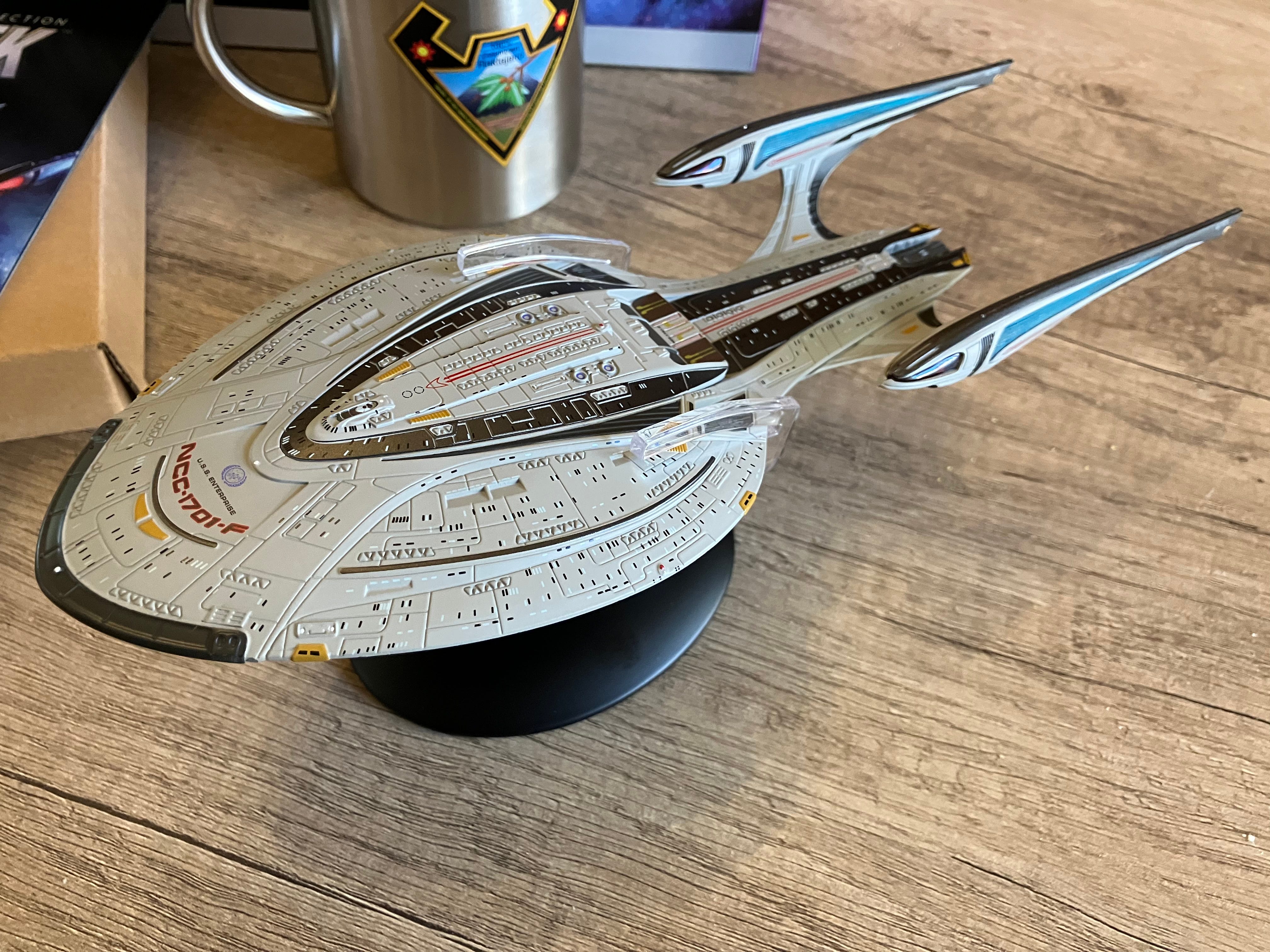
Enterprise herself is gorgeous. I’ll admit — I’m not a fan of this design. It’s squarely in the “negative space” period of design, with ships having open space in places that, frankly, don’t make much sense. In this case, the Enterprise has two thin “necks” holding the saucer section to the secondary hull. The nacelles look better than the Akira-era and the Picard-era nacelles, though; I like ‘em. The ship is supposed to be huge — 1600m stem to stern, with an embarked Aquarius-class runabout tucked where the aft shuttlebay usually is. 

Despite all these niggles, the model is gorgeous, with only a few points that collector have been noting. The impulse drives are not painted red on the nacelles nor the saucer. The Aquarius is painted dark, with minimal detailing. Outside of that, they’ve done a good job with the window placement and decals. I particularly like the UFP seal above the name of the ship. This seems appropriate as in-canon, these are massive diplomatic-focused vessels.

Like Stargazer, seeing the vessel in person is a different experience than on the screen. I wasn’t particularly impressed with Stargazer when it showed in season two of Picard, but the model won me over. I still hate the negative space fascination John Eaves has, but “the F” is much more attractive when you can rotate it and appreciate it from various angles.

FanHome’s off to a great start, in my opinion, with this collection. So is this Enterpriseworth it? It you’re a completist, it you like your starships “looking all Sovereign-y”, as Mariner Beckett put it, if you like the STO ships — yes. If you’re not a fan of the newer Trek, it might not appeal at $90ish. I’ll admit, this is one that will probably get shelved and sold later, unlike Titan and Stargazer. I’m hoping for a focus on Strange New Worlds ships — I’d like to see the new Gorn craft, or maybe a TOS-styled Miranda

With four months of deliveries under the belt, I figure it’s time to address a few things outside the quality of the models. There’s quite a few folks that are grousing about the shipping of the models. (But that’s what the internet is for, yes?) The third shipment, in particular, looked to have been kludged up for a lot of the subscribers — however, I would point out that coincided with the holiday mailing rush and a fairly impressive set of storms through the center of the country.

Here in the States, shipping is being handled by OSM (One Stop Mailing) — a pretty big concern in shipping, it seems. They’re doing the pass off to the post service for the final delivery, but it looks like they handle pickup from FanHome in the US. Normally, a bulk service like this aggregates as many shipments as it can, which is probably why we see a lag time from pickup to when the packages seem to start moving through the system. That said, my shipments have been coming in a consistent four days after the estimated delivery dates (between the 12th and 17th of the month) on the FanHome website. There’s usually a hold up on the package tracking between Kansas City and the next stop, Glendale Heights in Illinois. Partly, this might be OSM aggregating packages, but I suspect that there’s some kind of update issue — USPS is notoriously bad at allowing you to track packages in its system, and KC is one of the more problematic postal hubs in the country — so I think the lag between KC and the next step is more a sorting and tracking issue than the shipments just sitting somewhere. But I could also be full of $h!t.

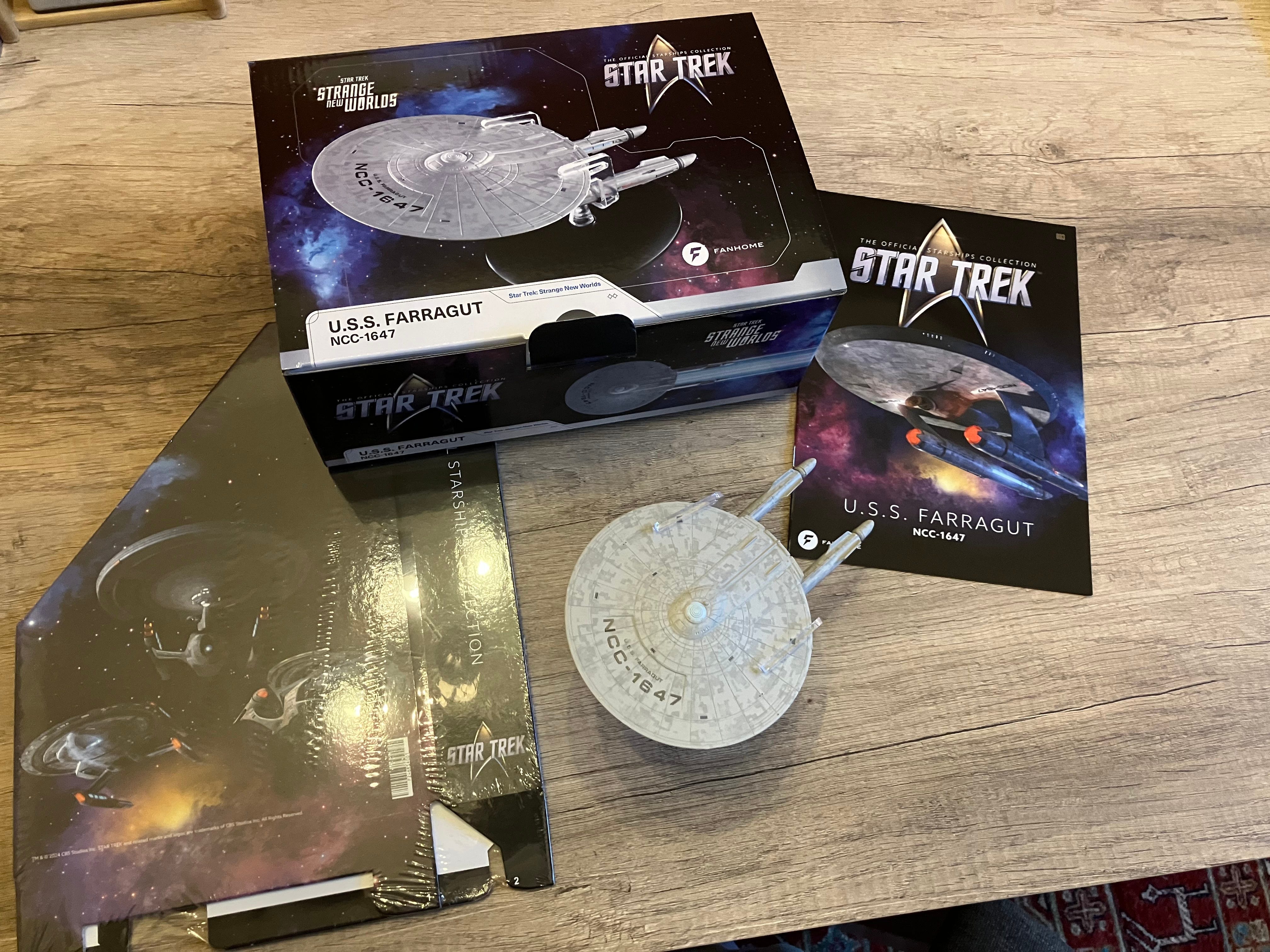
So far, Fanhome has been doing right by me on their starship collection. I didn’t suffer through the Christmas time lag on the second model like some folks did. According to the US Fanhome guys, there was a missorting and the models are (as of this writing) on their way. The third drop was the one I was waiting for: the new USS Farragut from Strange New Worlds. I’ve been digging the Discovery/Strange New Worlds aesthetic for the outside of the ships, and I was hoping this one would be up to snuff.

It arrived a few days later than the supposed January 16th, but the weather’s been crap and there was Martin Luther King day. Starfleet don’t ship on MLK day, apparently.

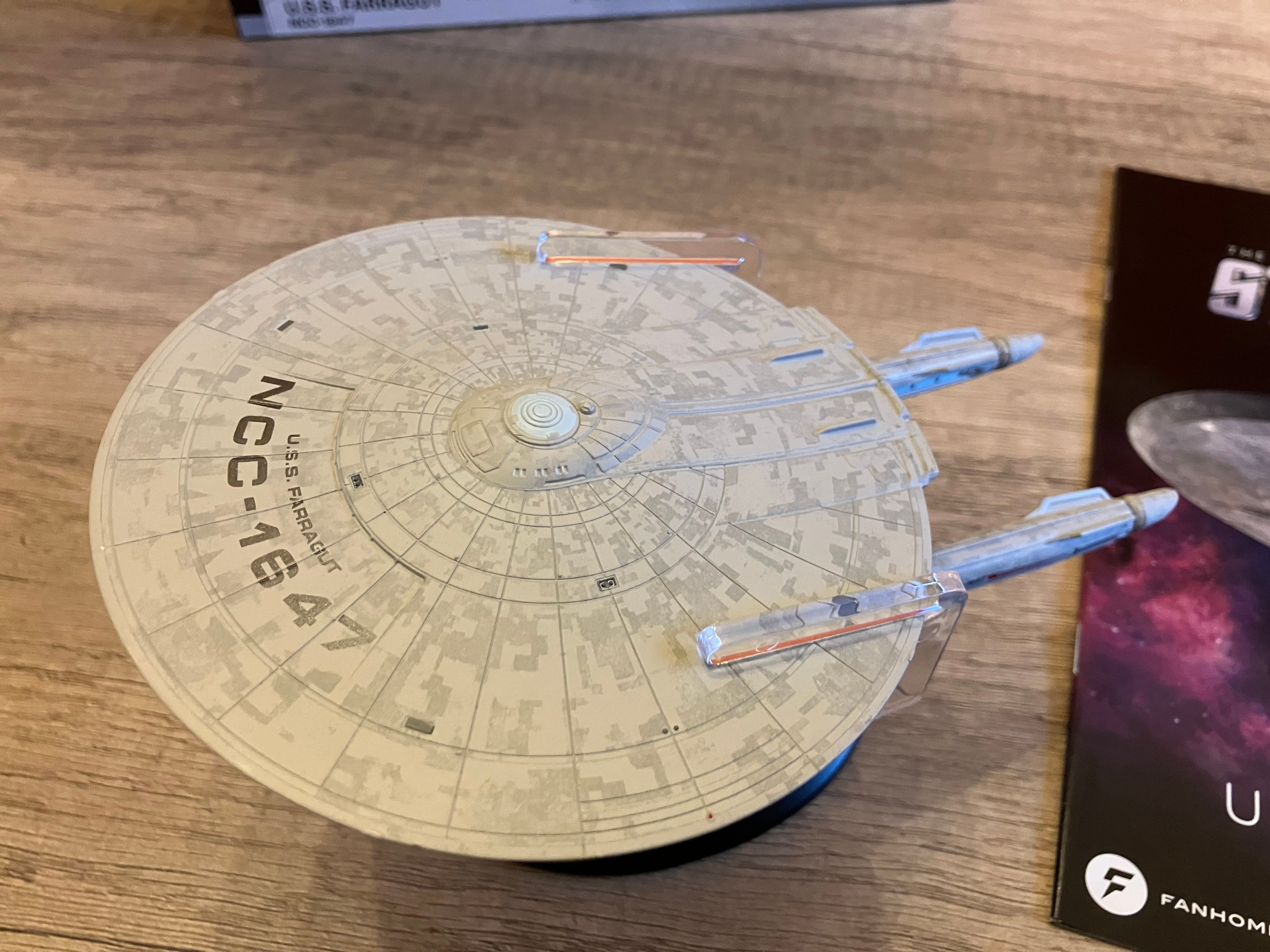
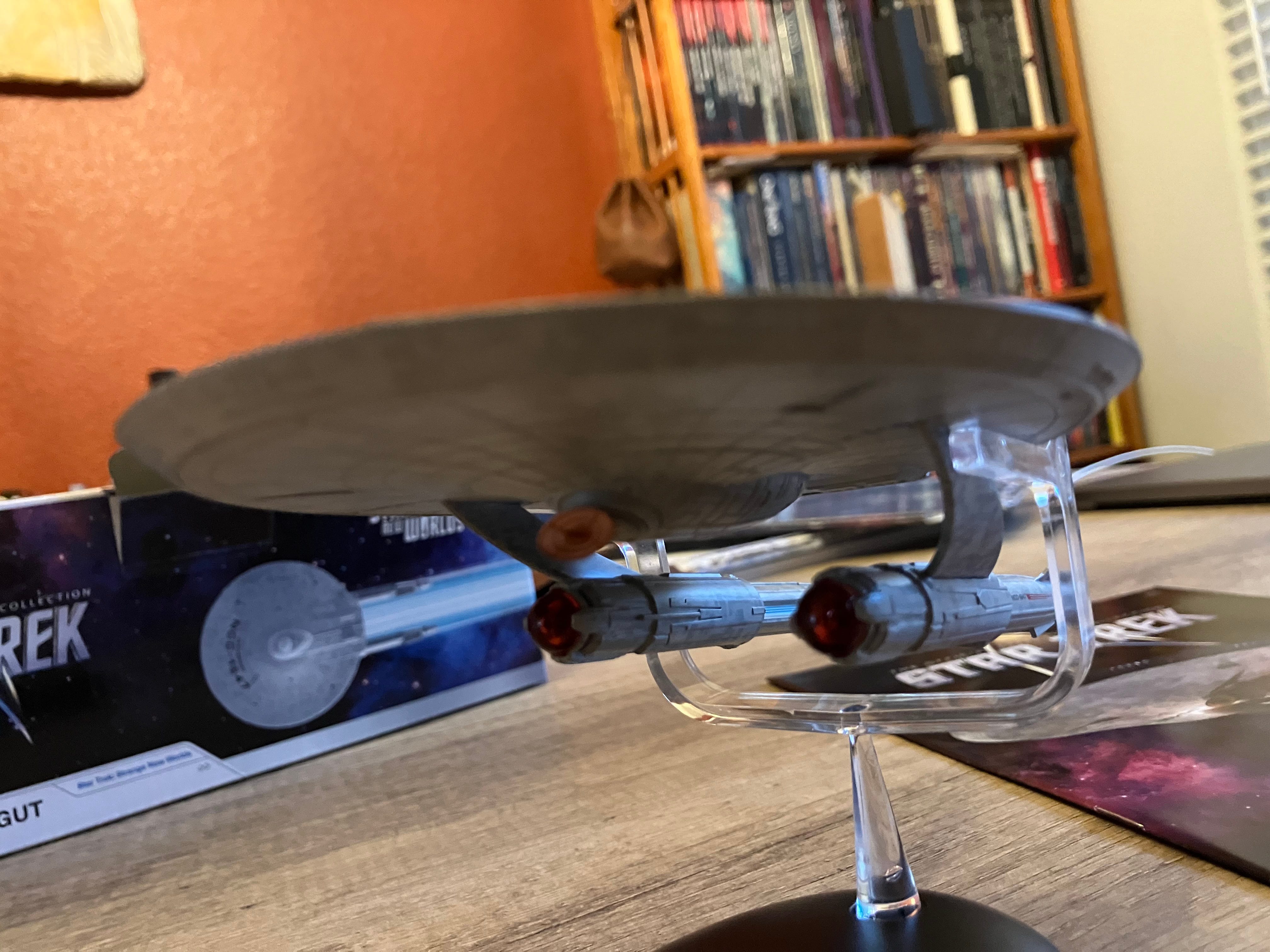
As with the others, the presentation is solid. The boxes for this set are so much more eye-catching that the bland Eaglemoss ones. It comes in the usual foam packaging with a booklet presenting notes on the show’s design work for the craft. The model is solid, the stand is the best of the three, so far, and the detailing is good and matches that of the Eaglemoss SNW Enterprise well. Though this is not their XL version, the size of the model is almost to scale with Pike’s Enterprise. Side by side, the saucers look the same but are a hair different.

It also came with a sleeve box for the booklets. It will not fit the large magazines from the Eaglemoss collection, but does the smaller booklets from the Disco collection. 

So is it worth it? If you are a completist, if you like the ship — yes.

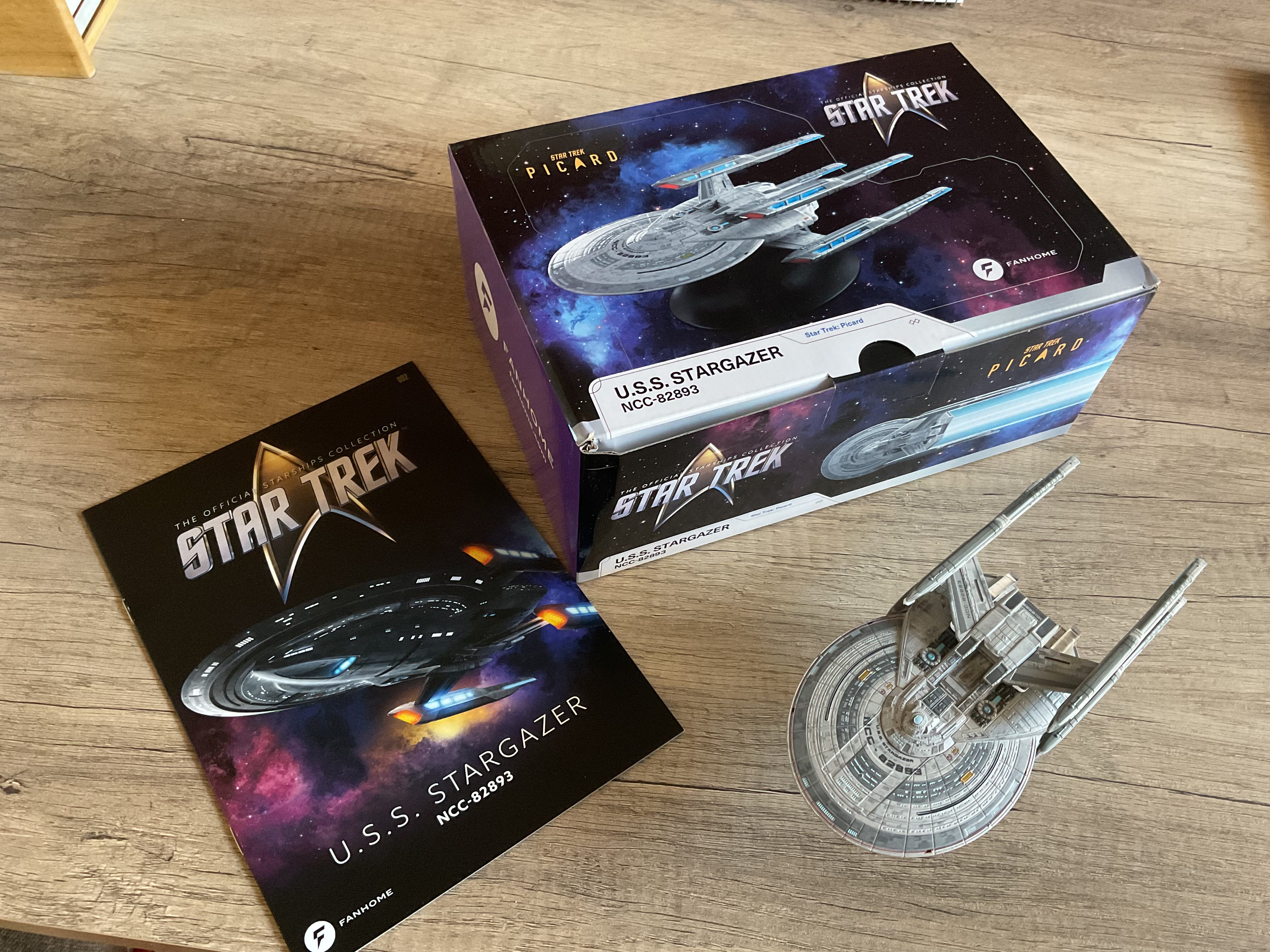
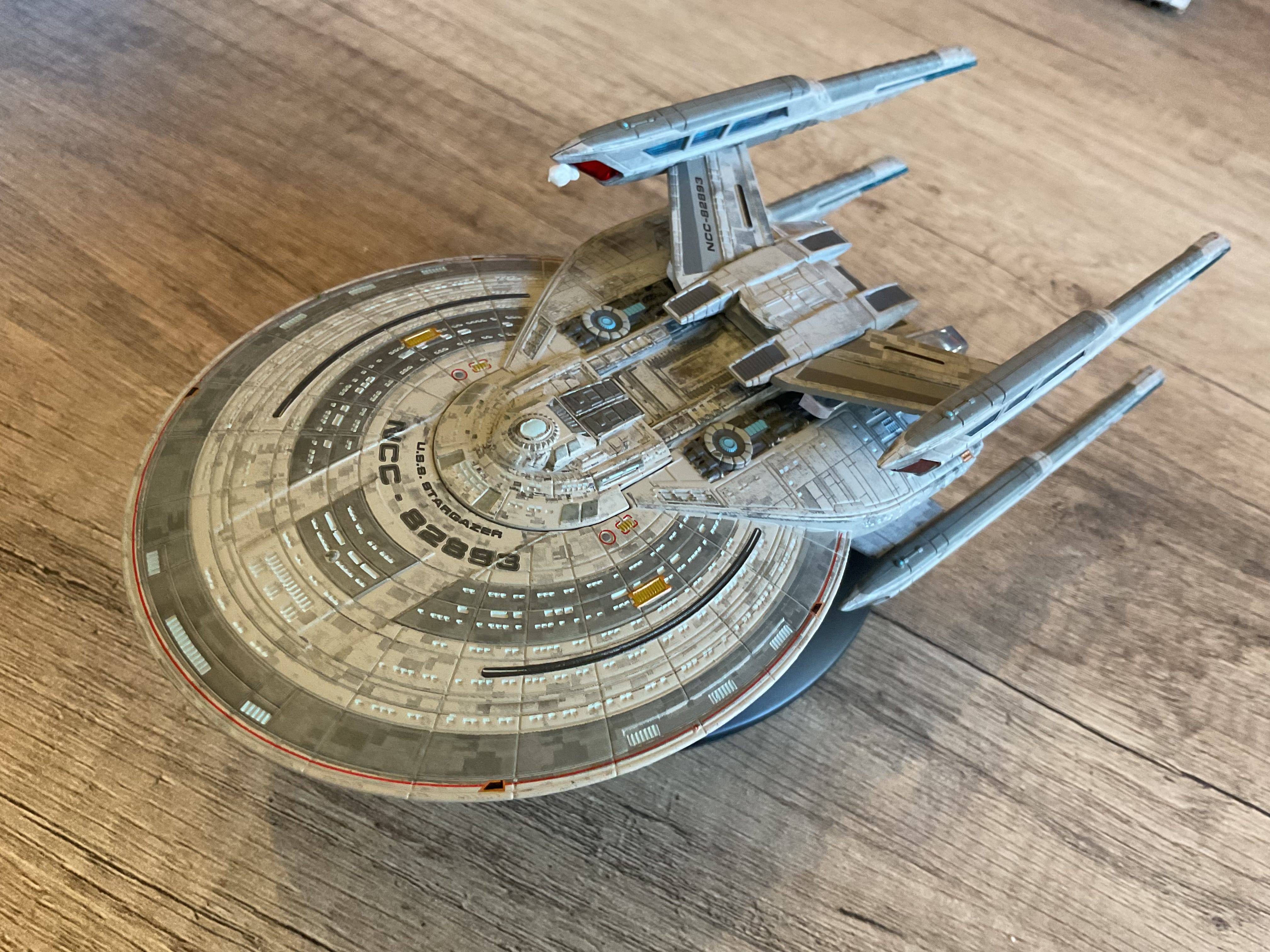
The latest drop from FanHome did not disappoint. Even though I’m not much on the look of a lot of the 25th Century ships but Stargazer (Sagan-class) is well executed. It arrived about a week late thanks to the holiday season (and to much online bitching), but again — the packaging is much better than the bland blue of Eaglemoss, similar packing, the usual booklet on the design, history, and appearance of the ship with good quality gloss paper.

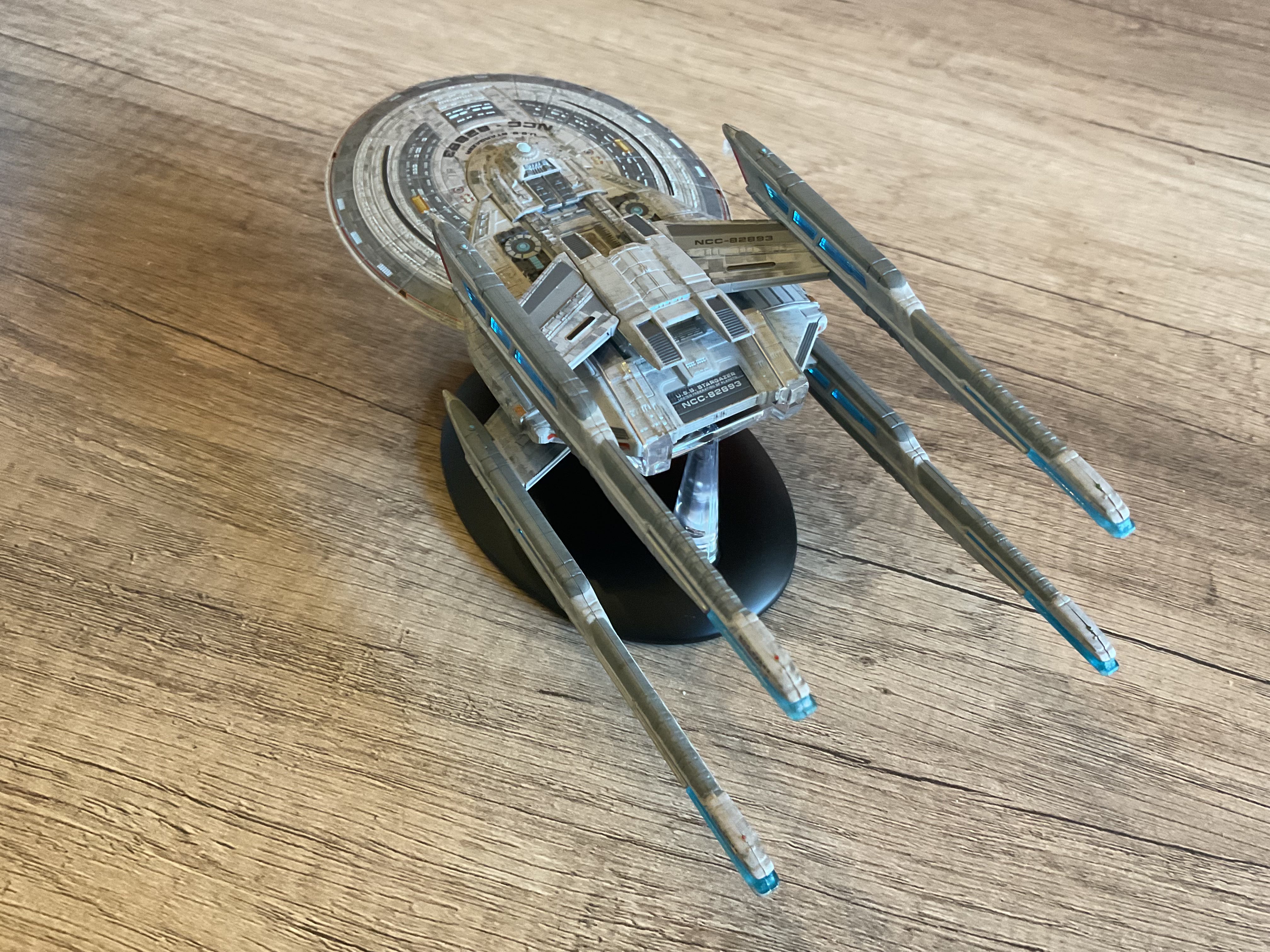
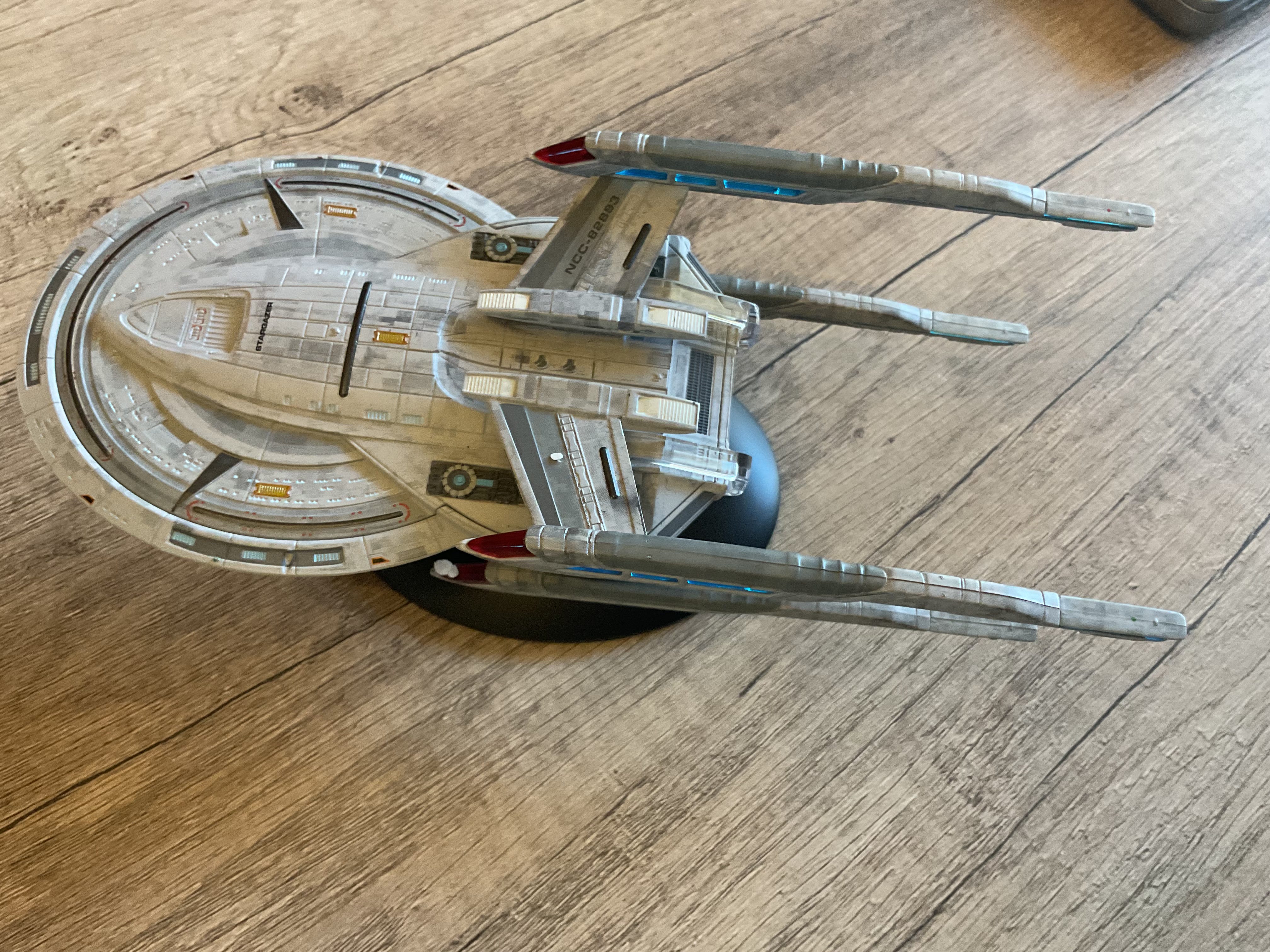
The model itself is well detailed, but in the mold and the paint job. The portholes really pop on this thing, for some reason (I think because they’re a light blue rather than white.) 

There’s a bit more detail on the undersides of this and Titan from last month than Eaglemoss often would do on the Discovery period ships, so that’s a plus.

Overall, I’ve been pretty impressed with the model quality and presentation so fan. Can’t wait to see a Strange New Worlds ship to compare with the previous Pike Enterprise: next month: Farragut

Is it worth it? If you’ve been collecting Trek ships from the previous manufacturer and are a completist, absolutely. If this was a ship that really sang to you, yes. Price should be $65 w/ shipping. The subscription knocks off $10 and shipping. Allegedly, you can cancel the ones you don’t want, but I’ve yet to test that with FanHome (although Eaglemoss did it for my Galactica subscription, no questions.)

I kept hearing about this project and saw some of the initial cryptic videos coming out of OTOY, a group connected to the Roddenberry estate, it seems, that have been doing archival work on Star Trek. Here we get to the heart of why the original show worked so well — characters. Friendship.

9. STAR TREK and related marks and logos are trademarks of CBS Studios inc. All Rights Reserved and no infringement is intended.

Next Page »