Our Hollow Earth Expedition campaign, titled Gorilla Ace! for the eponymous character has been chugging along nicely since we first started joking with the idea of a lead character who was a gorilla and a pilot. We are now nine “issues” into the campaign and it shows no signs of stopping…

Here’s a brief list of the adventures, which one might turn into seeds for your own pulp-style campaign:

1: “Gorilla Ace and the Island of Terror!”  It’s June 1936, and WWI fly ace Rowland Cabot and his wife Jackie Jin Dr. Robert Stanford, a wealthy and connected doctor track down his missing medical school mentor. What they find on Ferrnando Po is a ppantation of slaves beg used by the evil Dr. Wasserman of the SS Medical corps as human guinea pigs — blending man and animal. During their escape, Cabot is accidentally dosed with formula that turns him into a giant gorilla man!

2: “Gorilla Ace and the Sky Pirates!”   On their way to England from Fernando Po, the team encounters a strange air vessel (think the SHIELD helicarriers and you’re close) committing piracy in the Straits of Gibraltar. They aid the Royal Navy in tracking the vessel to it’s secret base in Morocco, where they attempt to board and destroy the ship. (They wound up capturing it and bringing it into port.)

3: “Gorilla Ace and Perils of Celebrity”.   Now world famous, the team travels to London, only to have attempt by Nazi agents to kidnap him for study right off their ocean liner while at a stop in Bordeaux. On arrival in London, they are the toast of the town, but have to watch for British Union of Fascist agents tracking their every move.

4: “Gorilla Ace and the Attack of the Radio Men!”   Large robots spouting socialist rhetoric attack a gathering of the London aristocrats — including King Edward VIII — requiring the team and the Special Branch to thwart the robotic monstrosities. They track the fantastical contraptions’ heat Ray eye to a Swiss optician and learn of the figure behind the Radio Men…the infamous former NKVD agent “the Phantom”, hunted by his Stalinist enemies, and MI5 alike. Ended with a cliffhanger attack using a bomb in a special television set communicator…

5: “Gorilla Ace and the Lair of the Phantom!”  Gorilla Ace and his team discover the radio frequency controlling the Radio Men and track it to a warehouse in the East India Dockyards. Mayhem ensues when they run into more robotic giants and mooks on “hoop cycles”, leading to a chase on the vehicles through the London Underground. Jackie discovers the lair and learns of the Phantom’s plans to attack the British aristocracy at the heart during a speech in Parliament by the king to commemorate the upcoming 1936 Summer Olympics. James Bond style raid by Gorilla Ace and the Special Branch and the Phantom escapes.

6: “Gorilla Ace and the Hampstead Horror!”  The team are approached by a famed physicist and occultist looking for the secret of the radium engines the Radio Men used and that Dex Vincetti — the team’s mechanic has cracked. Dex and his notes are snagged up by zombies, leading to a meeting with MI6 occultist and agent Aleister Crowley (the crazy music thing is mostly an act to cover his espionage activities.). In a raid on the physicist’s home, they have to rescue Dex and stop a group of rich, idiotic occultists using a small radium-powered engine to heighten their mystic powers and open a gate to another dimension! Strange Chthulu-like critters are stopped from entering our world when they — of course — reverse the polarity.

7: “Gorilla Ace and Murder on the R100!” The team is traveling home on the airship R100 when a member of the crew is found murdered and stuffed in a Canadian official’s car. The investigation turns up a missing bag of money from the cargo hold safe with $1 million Canadian missing. They have to stop the murderer (a ship radio operator) and the thief from escaping via parachute over Newfoundland coastline.  Ends with a chase through the interior of the ship and on the top of the hull.

8:  “Gorilla Ace at the National Air Races!”  September 1936 and the Gorilla Ace Flying Circus has entered into several of the contests.  Jackie Cabot flies the Women’s Air Derby from Los Angeles (Grand Central Airport in Glendale) to Cincinati (pot was $4000.)  There’s the 10 mile, 10 lap Thompson Cup speed races ($9000 that year.) and lastly, the Bendix Cup, a grueling 2300 mile endurance course with a $7000 pot at the end.)

9:  “Gorilla Ace and the Simian Menace!”  Gorilla Ace and company are attacked by real dogfighters while shooting the dogfighting stunts of the new Gorilla Ace! movie serials.  Their attackers chase them over the streets of Burbank and the 300 yard long, 100 yard wide fake African jungle for the aerial shots (while being filmed!), using their wits to outsmart their opponents.  (Wound up with all three bad guy planes down and GA!’s SEV3 destroyed.)   Later, after a wrap party at the Trocadero with other RKO stars like Fred Astair, Errol Flynn, and guys like Howard Hughes, they find their home ransacked, and at their hangar Dex and his notebooks are missing.  They find Dr. Stanford has been held hostage while thugs and LAPD detectives search his Laurel Canyon home for his notes on Gorilla Ace and his transformation.  They later have to get Dex and his notes back in a fight on top of a Los Angeles monument.  (Haven’t finished this one, yet, so don’t want to release spoilers…players read the blog.)

Still to come!

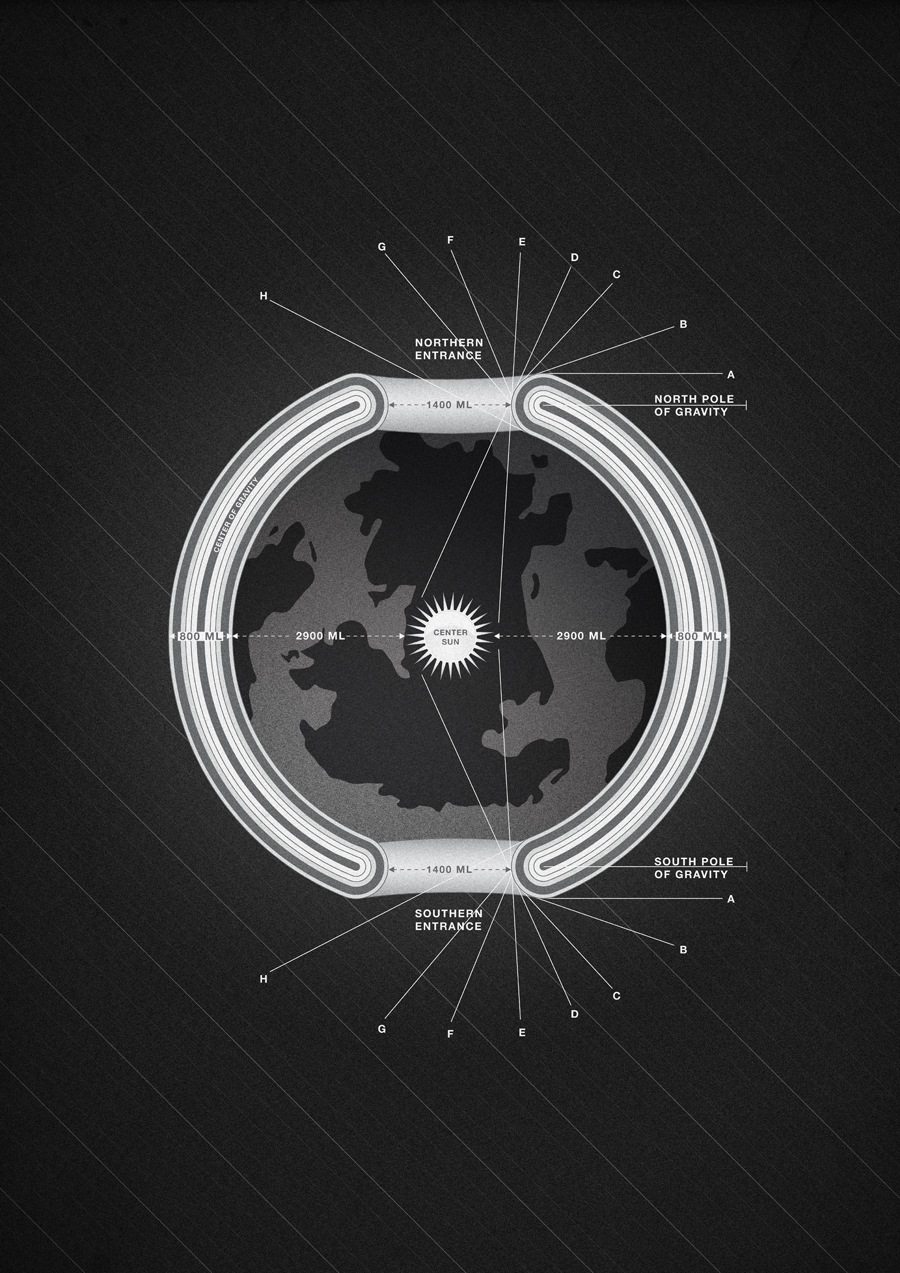
10:  “Gorilla Ace and the Thing from Inside the Earth!”  An earthquake unleashes an ancient horror on Los Angeles and only the Gorilla Ace Flying Circus can save the day!  The GAFC joins up with an elite group of scientists and inventors fighting weird dangers to the world.  (Will include Nikola Tesla, possibly an “Atomic Robo”-like character, Howard Hughes, Dr. Henry Jones Jr., and others…  Going for a 1930s Dr. Savage meets Buckaroo Banzai flavor.)

11:  “Gorilla Ace and the Werewolf of Manhattan!”…that’s all I have for it, so far.

12.  “Gorilla Ace over China!”  A mission to supply the American volunteers in China goes awry.  Possilby introducing a Jake Cutter-esque character.
This is a problem I’ve been wrestling with from about 2000 on — not hearing loss; my hearing’s as acute as ever — it’s the crappy mixing of sound that movie makers are giving us.  Foley guys are getting very creative with the digital sound effects, and yes, they’re cool — but let’s face it, you don’t hear people’s eyelashes swooshing through the air…not even Lady Gaga’s.  And the sound mixers — not only are the special effects too bloody loud, so is the incidental music.  It doesn’t get my blood flowing when there’s a rousing overture played at 200 decibels…it works better if you’re not bleeding from the ears.

Also, what is with male actors and not enunciating? Speak the hell up, guys! Important dialog should not be something you need to wait for the DVD release and close captioning to catch.  It was shit when Brando did it, it’s shit when all the trendy actors do it.  Part of acting?  Getting the lines across.  It’s not mysterious or brooding; it’s f#@$ing annoying.  You don’t have to backbench it like Patrick McGoohan used to (hey, Pat…the mike is three feet over your head; dial it back to five [or is that Six?]…), but don’t assume we’ve all got bat-like hearing, Christian Bale.

It’s particularly bad in the summertime, when I’ve got the swamp cooler and fan going to keep my desert-placed house down to a reasonable temperature; the white noise of the fan is usually right at the frequency of the average male voice.  The crappy sound mixing doesn’t help matters.

Den of Geek is complaining about the same thing.

Well…not really.  But they’ve got arms and can walk.

Here’s a piece from Michael Paukner.  There’s some beautiful stuff at his site.

Forget Microsoft — they might have liked to play by Edisonian rules in the computer market, but for truly scary “evil empire”-style practices, one has to give it to Apple. The Boys from Cupertino have a penchant for control-freak attitudes, something that shouldn’t be entirely surprising to those who know the engineering mindset.

It’s a mindset that was absorbed into a lot of early Progressive thought — Taylorism, Fordism, scientific management…  At heart, Apple wants to put out a product that is better than the rest, and to do that, they have to control the use of the devices.  Like all adherents of scientific management, planning has to come at the expense of freedom; you can’t solve complex problems by democratic means — few individuals will agree on how to solve a problem — it has to be done by fiat.  For efficiency’s sake.

Hence their 1980s annoying system of requiring their computers to be serviced only by Apple authorized dealers, and their reluctance, until they were practically irrelevant outside of the smug, elitist “I’ve got a Mac!” crowd, to move toward a more open architecture that could be modified by the user, and to allow for competing software platforms like Office to compete with their Mac-based word processor/database/presentation/spreadsheet suite (which, while quite good, is pretty much useless if you’re not talking to Mac-only users…otherwise, you export the vile as a .pdf or .doc file.  This is the definition of “lose” in the software market.)

With their adoption of PC-style interchangeability, the ability to use Windows programs, Apple managed to keep themselves from disappearing, but it was the success of their hardware — and ultimately, Apple has always been about pushing hardware; their commitment to software is dodgy, at best — Apple has returned to form.

The success of the iPod brought with it their obsessive need to control access to material to put on the wee devices.  For several years, if you didn’t go through iTunes (a format that doesn’t play well with other MP3 players), you were hosed as a iPod user.  It was only when the MP3 player market caught up that iPods started allowing the use of formats outside of iTunes.

The iPhone and iPad brought Apple into the forefront of the smartphone market and boosted them from elitist underdog to smug frontman.  The iPhone is a wonderous invention — it really is — but Apple’s continued refusal to entertain opening hte device to other service networks seriously hampers the users.  PArtly this is due to development agreements with AT&T over the microSIM card tehcnology, partly, it’s Apple being Apple.  They trapped their customers into a deal with AT&T with the iPad, as well, but it’s not about choice.

When you buy Apple, you buy into the Apple corporate philosophy.  Much like the Progressivism that coopted Taylorist thoughts for its own use, you don’t get to pick and choose which elements of Progressivism (or Applism) you want — it’s all or nothing.

Network issues aside, the Apple App Store is another example of the Apple need to control content, not just use of their products; it’s already established that programs that have a political bent unappreciated by Cupertino have a habit of getting deleted — like the iSlam app which was pulled, while Christian-slamming software remains there for download.  (This is one of the reasons for linking Applism to Progressivism…)  The iBooks app will read .pdfs not, sure…but you can’t simply download them to read on your iPhone or iPad.  You can’t look at Flash animation on the iPhone or iPad because Apple doesn’t trust their functionality; it’s not up to you, should you want to view the myriad sites using Flash…you will view only HTML5 sites.  And you will like it.  (Now don’t get me wrong, Shockwave is a disaster, as far as I’m concerned — it crashes Chrome and Firefox with alarming regularity, and often requires a restart of the computer if you want to, say, listen to music, as it hijacks your Windows media players.  But I want the option to go to those sites.)

Apple mirrors Progressivism in that it coopts the terms of the argument from its opponents.  Progressivism uses freedom and choice a lot, but that’s incompatible with planning; Apple uses functionality (Bestest electronic devices evah!), user options (thousands of apps at the App Store!), and support…but these are ephemeral.  While Microsoft and PC manufacturers are not enthusiastic about Open Source — the realm of the true computer geek, where Linux rules the roost and thousands of programs are manipulated by their users for the benefit of others — their equipment and software are often compatible with these iAnarchists.

As with Progressivism, Apple brooks no apostasy.  Recent concerns about the functionality of the iPhone4 have been met with hostility and derision from the Boys of Cupertino (“You’re holding the phone wrong!”)  Discussions of the problem amongst Apple junkies is not tolerated, nor are these issues directly addressed by the company (it’s the user…it’s the program for the signal strength…it’s not us!)  Instead of talking to their customers, and trying to find some kind of solution (like, say, Windows eventually did with Windows 7 after they realized that Vista was a big turd in the operating system punchbowl), Apple excises threads on the subject from their support website.

This is, in short, no way to run a business.  There is a happy medium.  Apple could openly and honestly address problems, but that would relinquish a certain amount of control of the situation to their customer base, and would make them look less competent than the image they have through total control of content, delivery, and use.

Make no mistake: I love my iPad.  Enough I even looked at the MacBook for about 2 minutes — then realize I could get more performance from a PC for half the price.  And it would require me to get cozier with the Apple corporate philosophy, and I just can’t do that.

Eventually, the rest of the market will catch up to the iPad.  It’s already happening with the Android phones — Google, while it has a lot of shady practices, as well, is more firmly on the side of the Open Source types (electronic libertarians, if you will.)  Once there is choice in the tablet/slate/ whateverthehellwe’recallingthem market, Apple will see a serious chunk of their market share erode.

Why..?  ’cause we already bought the damned thing; we’d like to be able to use our device as we see fit.

UPDATE:  Cult of Mac is reporting that public relations experts are convinced that Apple will have to bite the pomme-flavored bullet and recall the iPhone 4.

Hayao Miyazaki may make pretty flicks with heart-warming and trendy enviro-messages, but he’s the equivalent of that crotchety old man on your street that thinks that crazy rock ‘n’ roll music is destroying the country’s youth. Miyazaki went full Luddite in an interview regarding the iPad (which this post was written on…)

“For me, there is no feeling of admiration or no excitement whatsoever,” Miyazaki said about the iPad. “It’s disgusting. On trains, the number of those people doing that strange masturbation-like gesture is multiplying.”

Hayao, if that finger flicking is your idea of spanking it, I thing I’ve figured out why you’re so bloody touchy…

A friend of mine is gearing up to run a Dr. Who campaign, using the new rules set from Cubicle 9. One of the rules bits he liked was their set up for Time Lord regeneration, where the appearance and abilities are randomly selected. It’s a good idea, in keeping with the show.

I had another idea that dovetails with this: randomly select a member of the gaming group to take over the role of the Doctor (or whatever Time Lord) and have them be the new “actor” for the series.

Whatever you do, do not upgrade Trillian for your iPad. The new “upgrade” means the program will not operate; it will crash on opening. Great job, Cerulean….

UPDATE: They must have gotten hammered by the Trillian users, because there is a “regression” update that fixes the crash problem.

Recently, I ran the 1936 National Air Races for our Gorilla Ace! pulp campaign.  HEX has some fairly crunchy rules for chase sequences in Secrets of the Surface World, pg. 145 (sidebar), which is essentially what a race is.  The problem I found with the SOSW rules are that they cut into the flow of a cinematic/comic book action sequence — you have to take the base combat speed, add the base speed in feet of the vehicle times the number of successes.  It’s not complex, but it requires a sudden jump into math, and that can throw the players out of the moment.

I decided to run the races differently.  One of the races was the Thompson Cup — a 10 mile course through pylons at different altitudes (but usually quite low to the ground) with 10 laps total…I had the characters roll for each lap — their PILOT sill plus the Handling of the aircraft.  They were competing against some of the best pilots in the world, so I used the average assuming the pilots they were racing had a Dexterity 4, Pilot 4, and a +2 Handling:  they had to beat a 5 per lap to lead the race.

Any successes were added to their next lap test — so if one pilot got a +2 success (a 7), they added that +2 dice to their next test.  If they missed the test by two, then had a -2 dice to their test.  There was also a lower success point that, if missed, meant they lost control of the vehicle (a PILOT 2 in this case and totally arbitrary…)  Another thing I added was a reliability test for the vehicles at the beginning — race planes are testy beasts and the characters’ mechanic had to run a test at the beginning of the race.  A failure would mean some kind of mechanic issue that would put the character out of the race.

This systems moved fast and kept the excitement of a fast moving race.

For the Bendix Cup — a transcontinental race — the length of the contest was such that running all 15 hours or so would also not work.  For an endurance/ navigation based race, I set up legs for the trip — in this case, New York to Cincinati, Cincinati to St. Louis, St. Louis to Midland Texas, Texas to Los Angeles.  Each leg requires a MECHANICS test v. 2 — a failure results in an incident where the pilot would have to put the plane down safely and would be out of the race; the other test was a navigation test that the pilot (and if they had a navigator a joint test) vs. 2 during the day, 3 at night.

Modifiers for the distance test are different:  Handling isn’t an issue, speed is.  So in this case, I took the average speed of a racing plane (about 250mph) and gave a +1 die bonus for each 25 mph over the average, -1 die for each 25mph under the average.  The number of successes adds to the next leg’s test and the success is cumulative.  During a leg where they had to stop for fuel (usually about ever 900 miles) they would lose -2 die due to the time on the ground.

I think these guidelines can work to aid in a fast paced chase sequence, as well.  The chased car escapes once the die benefits are either higher that the pursuit car’s driver skill rating (for instance, a mook chasing you with a faster car [assume a +1 die bonus], a +2 handling, and skill rating of 6 for a total of 9 [average 4+] is lost when the die benefit from your successes is higher than 4+).  Another option would be to give the bonus from successes to a DRIVE test to do some maneuver that would hide the vehicle from the pursuer — park behind a building, make an unexpected turn into an alley, take it off-road and park behind a convenient copse of trees — with a contested DRIVE (pursued) vs. PERCEPTION (pursuer) test.  If they don’t see you, you lost them.

I’ve been getting increasingly weird signal loss in my house on my wifi network.  I downloaded the freeware inSSIDer to scan the freqs around my house and found about eight different wifi transmitters (including mine) all broadcasting on Channel 6.  To try and clear the signal, I dropped the router to another lower channel — suddenly, clear, stable signal.

Might not work for you, but it did for me.  Most wifi routers are running at 2.5GHz, and there’s a few channels to choose from — 1-6, and 11 are most common; most are set to Channel 6 as their default.  The 5GHz wifi routers have a whole wheelbarrow more signals, but the theory should hold there, too.