Roleplaying Games


A few of these are written up in Secrets of the Surface World, but there are no pictures of them.  Since their stats are fairly similar, a lot of the reason for choosing one over the other is the look of the piece.  does it match the look of the character?  Does it aid in the character background (for instance, a Yugoslavian partisan might carry a Nagant 7.62mm revolver [Soviet stuff sold to them] or a Luger or Walther P-38 taken off of a German officer…)

Chamelot Delvigne or MAS 1873 11mm

The MAS1873 was the French standard from 1873 until 1889 and used an underpowered 11mm round.  While the gun was out of service after that, the Italians used a revolver based on it — the Bodeo Model 1889 10.35mm.  Italians nicknamed the piece the coscia d’agnello (leg of lamb.)  It was produced until 1925 and was still in service during WWII.  It was a six-shot revolver that was loaded and unloaded through a side gate, like the famed single-actions of the American West.

Dam: 3L   Str: 2   Rng: 50′   Cap: 6 (r)   Rate: M   Spd: A   Cost: $10   Wt:2.5 lb

Nagant M1895 7.62x38mm

This revolver was unusual in that the cylinder moved forward when cocked to create a gas seal and reduce the loss of power when the round was fired.  Sweden, Norway, and Greece also fielded these weapons as standard issue police and military weapons.  Like the Bodeo, it was loaded through a side gate, due to the nature of the gas-lock system.  This made for a slower reload time than the break-top Webley or the side load of the Colt and S&W revolvers.  The 7.62x38R round is about the same power as the .32ACP.
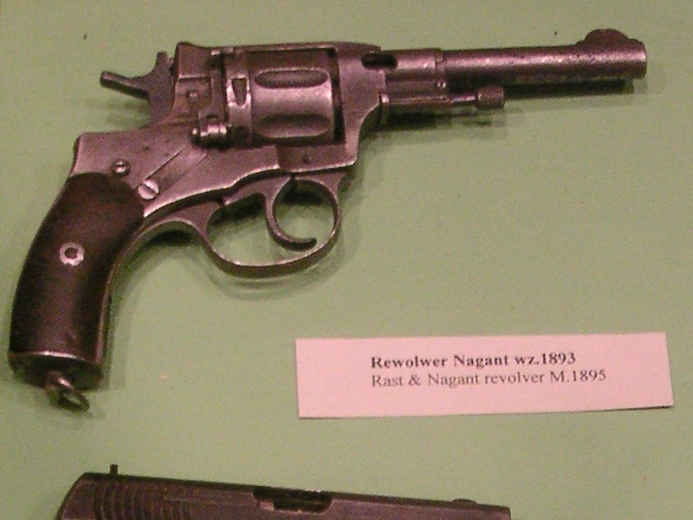
Dam: 2L   Str: 2   Rng: 50′   Cap: 6(r)   Rate: M   Spd: A   Cost: $15   Wt: 2 lbs

The following is a correction to the damage of the Webley revolver as written up in SOSW.   The .455 Webley round is a nice beast — I have one of the MK VI reovlers in the original caliber — but it’s a short-box cartridge.    While it throws a heavy 266 gr bullet (conical and soft, so it mashes and makes a mess) it is only moving at 650fps…about 200fps slower than the 230gr .45ACP.  The book has it doing a damage of 4L.  This is wrong.  It should do the same 3L as .45ACP.

Webley Mark VI .455
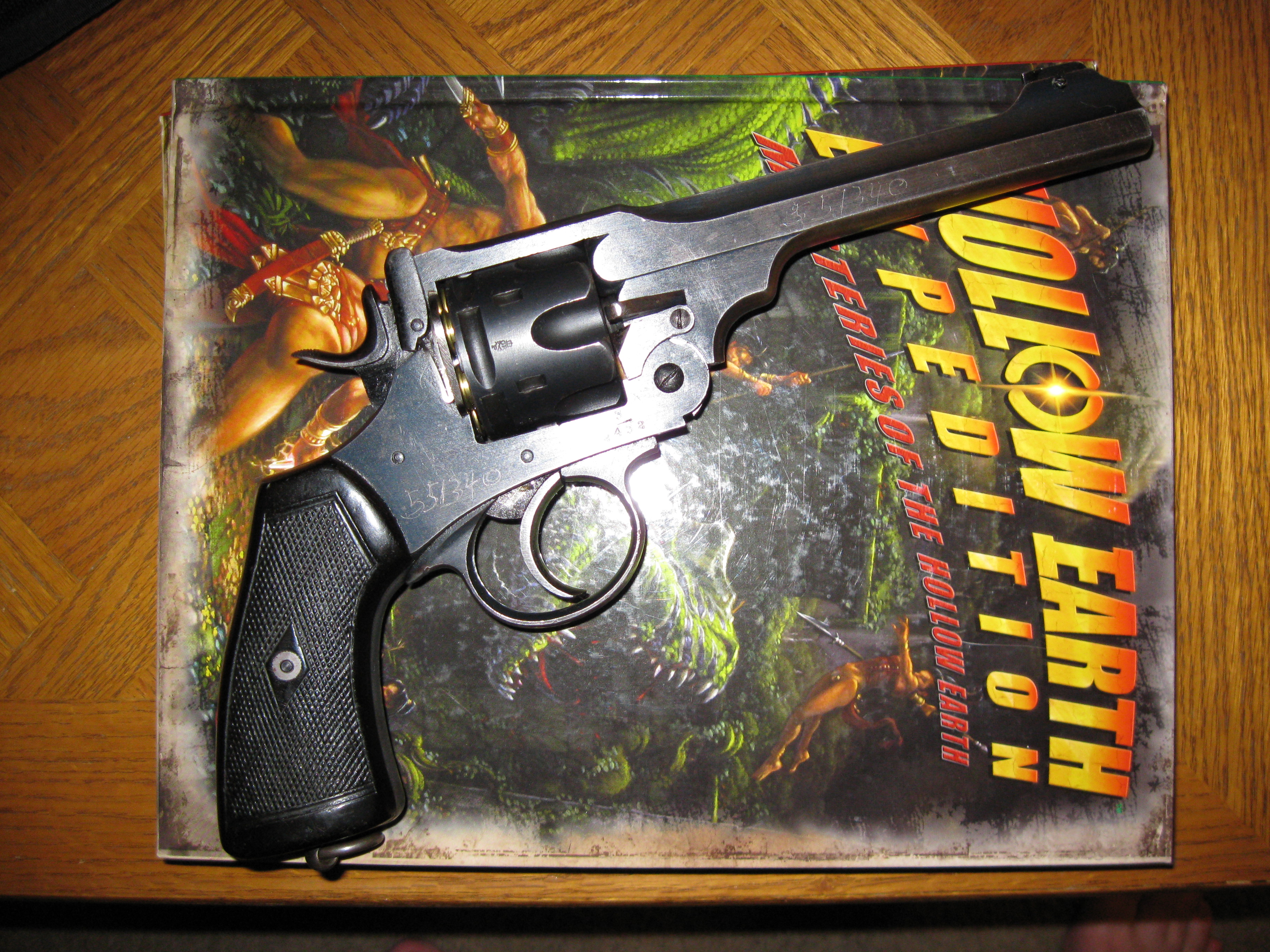
Here’s my standard-issue Webley .455, “Grandpa.”  This one has been converted to .45ACP and requires the rounds to be held in “moon clips” that hold the 6 rounds steady in the chamber.  My .455 looks the same, but I didn’t want to bust into the safe to get it out.

Smaller, and more popular with police and colonial constables was the Mark III .38 S&W (or .380 revolver) Webley.  It’s a six-shit, break top revolver like the .455, but uses a slow, weak .38 round.  It’s extremely pleasant to shoot, with little kick, and surprisingly good range.
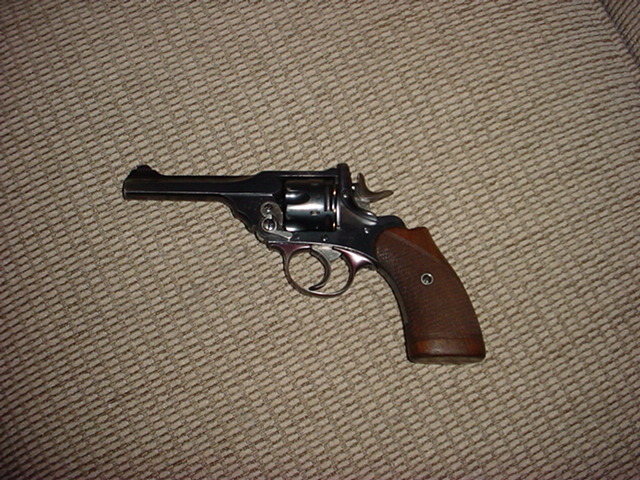
This is my Webley Mk III (the first gun I ever bought) in .38S&W.  It’s lightweight, with a hair trigger in single action.  I’ve hit a man-sized target at 150 yards with it.  this particular one was pressed in 1897 for the Singapore Constabulatory, according to Webley’s records.  (Yes, they’re still around!  They make airguns, now…)

Dam: 2L   Str: 2   Rng: 50′   Cap: 6(r)   Rate: M   Spd: A   Cost: $12   Wt: 1.5 lb.

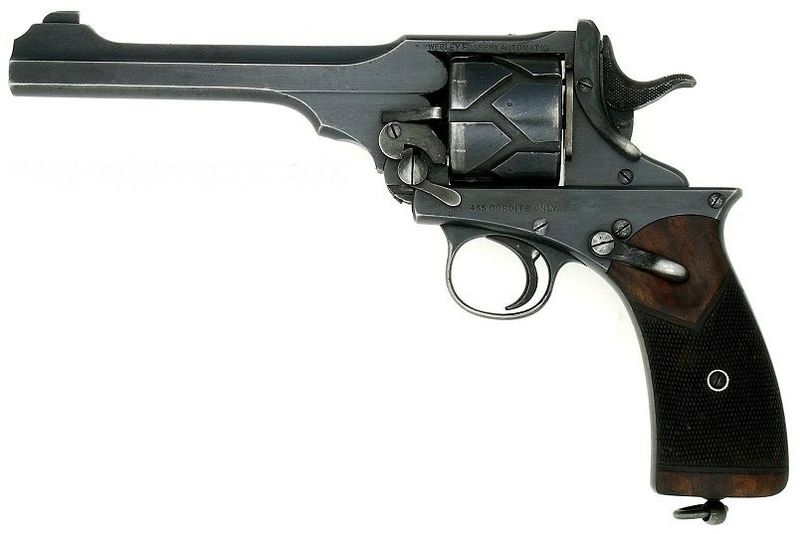
And the Webley-Fosbury — an odd attempt in 1915 to make a semi-automatic revolver.  The strange zig-zag grooves in the cylinder were to actuate the “semiautomatic” feature.  Pull the trigger — BANG! — the recoil would move the barrel/cylinder assembly back, cocking the gun and setting it up for the next shot in single action.  Great idea, awful execution.  they were finicky and prone to malfunction.  Fortunately…you just cocked the thing like a normal revolver and fired it.  Another plus, it’s one of the few revolvers with a safety catch.
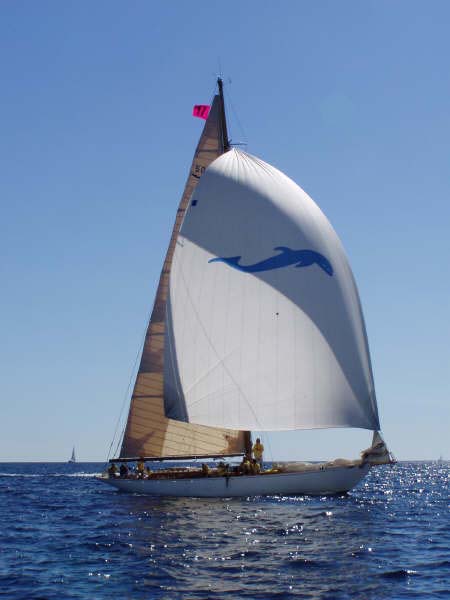
It was mentioned in passing this last episode that Artemis Campbell was in the market for a large sail yacht, something she could live on when getting away from business in the Adriatic.

Ariel is a Bermuda-rigged sail yacht 60′ in length designed by Andre Mauric for French businessman Paul Blanchet in 1940.  Because of the war, the boat was scuttled in Marseilles harbor to keep the Germans from breaking er up for the 13 tons of lead in her keel.  She was refloated in 1947 and bought by Artemis Campbell, notorious smuggling queen of the Adriatic.

Length: 18.35m   Beam: 3.99m   Draught: 2.6m   Mast Height: 23m

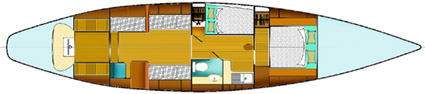
Accommodations include 2 cabins, a saloon with 2 more bunks, a skipper’s bunk aft w/ shower and washroom, cockpit dining table and galley, BBQ on after deck and dining table on foredeck, deck shower with potable water.  Equipped with radio and a wind direction and boat speed meter, an electric windlass and 100′ chain, 4 winches in the cockpit, and 7 on the mast and boom, as well as a 50hp motor with 300 gallons of petrol.

Hollow Earth Expedition statistics:

Size: 8   Def: 6   Str: 18   Spd:  20   Han: -2   Crew: 2   Pass: 6   Cost: $15,000

Ever since the multi-touch, multi-user Surface tables were being shown about by Microsoft, the techno-geeky gamer in me has been lusting after my perfect gaming table.  Apparently, I’m not the only one...

For me, it’s the idea of having the ability to have multiple dice programs, character sheets, notepads for all the players right on the table top.  Need a map?  flick it out onto the surface for everyone to expand, mark-up, whatever…

It’s a dream I have.

Predator drone: $4.5 million…simple Windows shareware: $26…knowing when the Americans are gonna nuke your sandy butthole: priceless!

Iraqi-based terrorists were able to intercept video from the Predator drones on laptops, using data-leeching software and a small sat dish for a measly $26. You simply scan for the packet IDs and transponder codes, and HEY! Predator TV!  I wonder if any of the wunderkind out of Huachuca could, maybe, encrypt the data.

This is another example of how communications and computer technology is serious threat to the power of nations around the world (and also incredibly liberating to the individual.) I find myself torn on this one. While I really want us to eradicate the bad guys, I have to respect their ingenuity.

It also should give espionage gamers a good idea for the next time their GM throws a RPV at them.  You might not be able to hack the vehicle and take charge, but if it’s signaling the base unit, you should be able to tap the feed.  And maybe they’re not encrypted because there’s an issue at the base unit…how many people have turned off their router security because their laptop won’t link up with their home netowkr and they don’t have time to debug it?

Military missions are often time-sensitive.  Can’t get the drone up fast enough with the encryption on?  Have a team out there that needs cover?  Have a lieutenant that’s worried his FITREP is going to look like crap if you don’t get that bird aloft rightnowsoldier! ?

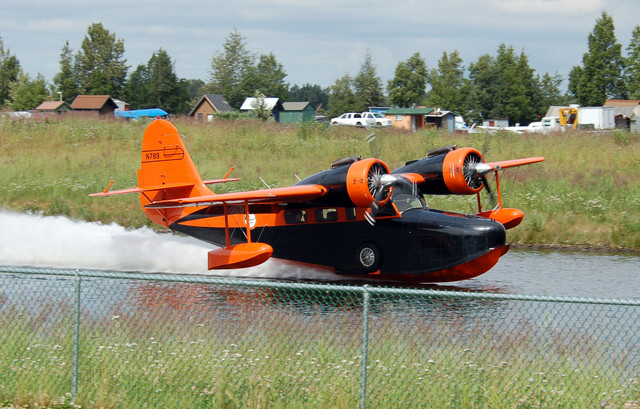
Keeping on the Tales of the Gold Monkey theme from the other day, here’s a new plane for those expeditions out there:  the 1937 Grumman G-21 Goose!

The Goose was designed to fit the needs of wealthy Long Islanders that needed transport to and from the Big Apple quickly.  The aircraft proved to be versatile and tough, and capable of heavy modifications.  It would serve as a military scout craft in World War II, and 60 of the 345 Geese made still ply the air today.

The Goose was a modern monoplane — the wings situated at the top of the fuselage, which was made of high-strength aluminum.  They were originally powered by twin 450hp, nine-cylinder Pratt & Whitney R-985 radial motors.  The hull was designed for water landings, and this seaplane had hand cranked landing gear.  Some of the craft had a hatch in the nose, which could remain open in flight for ventilation.  The aircraft’s shallow draught, seaplane configuation and landing gear, and later ice rigger modifications on the pontoons and undercarriage (on some) allowed the Goose to go just about anywhere.

1937 G-21 GRUMMAN GOOSE

Size:  4   Def: 4   Str: 8   Spd: 184mph   Rng: 1050mi   Ceiling: 21,000   Han: 0   Crew: 2   Pass: 8   Cost: $7000

A little update:  There is a company making the Goose anew, with improved motors, etc.

For James Bond: 007 — Helmet and armor jackets reduce Wound Level taken by the rider in a crash by one.  Full-racing suits lower injuries by 3 wound level.

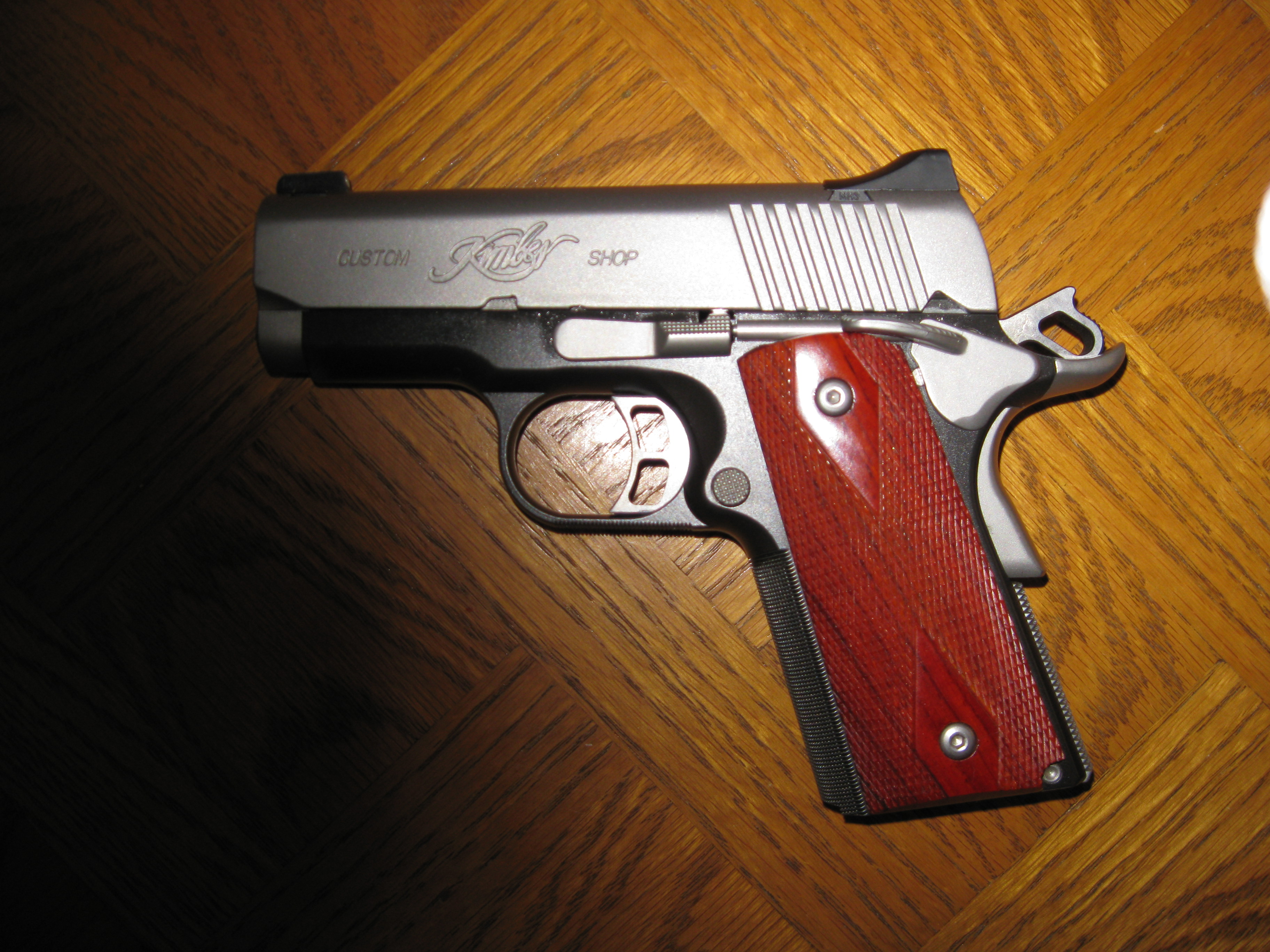
Since I had a chance to fire the new pistol today, I figured I might as well gin up some numbers for James Bond: 007.  Here’s the Kimber Ultra CDP II…

KIMBER CDP II ULTRA 9mm

PM: +1   S/R: 2   AMMO: 8   DC: F   CLOS: 0-3   LONG: 7-12   CON: -2   JAM: 98+   DR: +1   RL: 1

GAME INFORMATION:  The Ultra CDP II’s Meprolight night sights remove the ease factor penalty.  .40S&W and .45acp versions of the gun have much stouter recoil and lose the performance modifier, but have a Close range of 0-4 and Long of 8-14.

The Battlestar Galactica game naturally lends itself to mass-combat, if only due to the large number of fighters in any combat between capital vessels.  In our campaign, we’ve had three capital ships on either side, plus masses of fighters.  Instead of judging combat by caveat, some fights should have that element of danger that randomness gives…

To that end, I cobbled together a set of mass combat for BSG RPG:

1.  Whereas personal combat takes place in 6-second increments, mass combat takes place in at least 1 minute increments.  All capital ships are a single unit, with fighters represented by flight, squadron, or wing.

2.  At Capital range, all capital ships are an EASY target and cannot maneuver to avoid fire.  Point defense systems may conduct an opposed test against incoming fire to stop missile and kinetic weapons, as well as attack fighter craft that close to skirmish range.  At ranges before Capital, ships can also attempt to maneuver to make targeting more difficult by presenting a smaller target or better angle to slough off attacks.  This requires a HARD AGL+PILOT/CAPITAL SHIP.  A success allows the to add the ship’s AGL to the EASY difficulty, and at Long Dradis, the test acts as an opposed test to the enemy’s roll to hit.

3.  Another way to stop incoming missile fire is to jam the guidance systems of the weapon.  EW raptors can attempt to better the defense test of the capital ship with an INT+TECHNICAL ENGINEERING/ ELECTRONIC WARFARE.  The higher roll is the difficulty for the missile attack.

4.  Fighters and raptors act in groups to be ore effective.  Fighters are grouped into flights, squadrons, and wings – each is considered a single “capital level” unit in mass combat and do damage at the spacecraft-scale.

Flights consist of 1-11 fighters.    They can take twice the damage of the number of vessels in the flight.  Every two hits, lose a fighter (never a player character ship, though!)  Flights only do basic damage from a successful hit on a vessel.  Squadrons consist of 12-24 craft.  They gain d2W to a unit (be it a capital ship or a fighter unit.)  Wings consist of 2 or more squadrons (48+ fighters) and gain a d4W to any damage rendered.  Whenever a unit takes enough damage to drop below the minimum size, then lose their damage bonus.

5.  In fleet level combat, initiative is decided by an opposed INT+PERCEPTION/ TACTICS  of the commanders.  (For a fleet, this is the admiral; for a ship, the commander; for a fighter wing or what have you, the CAG.)  [We allow the CAG to roll separately of the admiral/commander, but the latter can do an indirect combined test with the CAG to gain initiative.]

6.  Combat takes place as with character level combat:  winners of initiative go first, then the force with the lower initiative.  On board the capital ships, the commander can aid any number of tests going on with an ALE+LEADERSHIP test.  Other characters can conduct tests they are assigned (a gunnery officer or executive officer might be handling the ship’s cannons or the point defense.)  Each test give a -1 step on the attribute.  (So a gunnery officer might be handling a gunnery salvo with a d8 Alertness and a d8 Heavy Weapons/Ship Cannons, then conduct point defense with a d6 Alertness and a d8 Heavy Weapons/Ship Cannons.)  This also counts for the leadership tests the commander might be rolling.  (Ordering a gunnery salvo, directing damage control, and aiding the CAG in conducting the fight — the last to tests would each lose a -1 shift to the attribute test.)  Engineers or deck crew can conduct damage control — fixing stun damage, or doing jury rigging on wounds.

Fighter units are commanded either by the player character leading a flight or squadron, and any non-PC led unit is commanded by the CAG.  The character rolls an opposed test vs. their opponents (usually an AGL+PILOT/VIPER) and vice-versa.

7.  Players in mass combat:  during the combat actions, you can “zoom in” on individual characters doing their thing — the fighter pilot in one tough dogfight, the engineer trying to stop the tylium lines from catching fire and blowing the ship sky-high, or the marines fighting Cylons boarding the ship.  Every ten rounds, zoom back out to handle the fleet-level stuff.

Granted, these aren’t well fleshed out, nor are they comprehensive, but they worked as a good framework for capital-ship level combat in the last few games we’ve had.

There is a debate going on in the Cortex System RPG boards over Strength as a dump stat for characters.  Agility is more important for scoring a hit on an opponent, Vitality more important for survivability.  Strength winds up often being the stat that gets short shrift.  One of the ideas to make strength more important in Cortex is to have it effect melee and hand-to-hand damage.

In the Cortex system, weapons damage is usually represented by the basic damage done by an attack with the weapons damage added (ex. Bill swings a knife at Jim.  Bill’s attack is and Agility of d6 and a skill in Melee Combat of d4 v. Jim’s Agility of d6 and Atheltics (he’s dodging) of d4.  Bill gets lucky and rolls a 9, while Jim rolls a 4…that’s 5 points basic damage, which is broken into 3 stun/2 wound.  He then rolls a d4W for the knife and gets a 2W — total:  4 wound, 3 stun…)

Here’s the rub:  Bill’s a friggin’ monster with a d10 Strength.  Shouldn’t the knife do more damage?  Certainly if it’s a cinematic-styled game, it should.  There are a few ideas floating around on the Cortex System RPG boards, suggesting an average between the knife damage and the strength of the character (in this case, it would be a d6 [rounding down].)  Another is to roll the strength and weapons damage and average that.  (Ex. On a d4W Bill rolls a 2, and for his strength a 7:  average of 11 is 6, rounding down.)

I am suggesting that the d10 Strength would be the damage roll for the weapon, but it would be Basic damage…thus the increased impact of the strength only amplifies, but does not replace, the weapon’s wound capabilities.  (Ex.  Bill had the 5 points basic for his initial impact split into 3S and 2W.   He rolls his strength-based damage of d10B and gets a 6.  That is split down the middle for 6 stun and 5 wound.  It’s a serious wound, but not immediately fatal to Jim with his 12 Life Points.)

As for hand-to-hand combat, I often allow the characters to choose Agility or Strength in HTH Combat.  While not entirely realistic in the ability to strike a blow, it captures the “big action hero” punch/kick styles for the movies.  Schwartzeneggar was never very fast in his punches, for instance, but on impact, they were impressive in their effects (on screen, at least.)

A long, long time ago in a city far, far away…oops:  wrong allusion!  Back when I was but a young lad in the 1980s (OK…not so young), FASA brought out their Star Trek roleplaying game.  The opportunity to play in a universe I liked spurred me to pick up the material and attempt to run a game.  It was a prime example of how a clunky system can interfere with play.

I didn’t bother with a Trek campaign until 1999, when I picked up Last Unicorn’s excellent RPG system.  There were a few things in LUG Trek that were annoying — having to buy different core books for each series, for instance.  LUG died a quick death, as many new independents in the RPG do, but many of the people found their way to Decipher to rebuild Star Trek as an RPG.

The system is stable and easy to learn and play.  It has root in both LUG Trek and d20, in that the system steals from both liberally, but the main mechanic is a 2d6 roll, with modifiers added from attributes, or from skill levels (also modified by attributes.)  It feels like d20, tweaked to actually give you a probability curve instead of the flat line of a single die.

The Player’s Guide has the character creation rules and basics of the system scattered about in the Skills chapter and the appendix.  you could conceivably play Star Trek with just the PG, but the Narrator’s Guide is pretty essential for more crunch and the rules on starships and combat between them.

One of the big complaints about the PG was the chapter layout.  After an introduction and a small chapter on the history of the series and movies, character creation rules were split into various chapters that required a bit of paging around to write up a character.  If I recall, the first few characters took an average 45 minutes to do up.  Within a few tries, I had the creation time down to 20 minutes.  I found the creation process fun:  there’s enough variation in the process that you can craft a personality with some precision.

1) Pick your species, 2) pick your profession (starship command officer, soldier, diplomat, what have you…)  This section feels cribbed from d20 — race and class, and should be familiar enough to d20 players to be immediately accessible.  While  I despise the race/class/level combination, it is palatable in this game due to the iconic nature of the characters.  Multi-classing (changing professions) is simple enough and the prerequisites aren’t too intrusive.

Next you pick attributes through either a point-based system, or roll ’em up.  I prefer the former.  Racial modifiers apply.  Move on to skill and trait packages based on your background and profession.  Professions give you abilities, much as in D&D 3rd edition that stack on each other, as well as traits to benefit the character.  Modify as you will with flaws.  Report for duty.  You can add “advancements” to create more experienced characters.  Once again, it feels d20-ish, but not enough for the d20 haters (of which I will admit I am one) to kvetch too much.  There are even “elite” professions that extend the list of abilities.

The Narrator’s Guide gives the GM more advanced rules, some corrections to weapons damages, etc.  It includes examples of starships, and rules for making your own (improved upon in Starships.)  There’s the usual chapters on the universe, how to run Trek effectively.  The system is a bit quirky on combat, most notably on damage.  Characters have different levels of damage that give them negative modifiers for each level of damage.  Each level they can take a certain number of damage (hit) points.  This makes hand-to-hand and melee combat a long, drawn out affair.  As with D&D, you’re characters can slug it out for a long time without real danger, at first, of getting really hurt.  Phasers are a whole ‘nother matter.  As with onscreen examples, a phaser set to kill is a really dangerous animal.  Most settings just kill you dead and leave a bit of ash.

I tried tweaking the combat rules to make HTH and melee combat a bit more dangerous and phasers less so…with little real success.  Starship combat is well executed, and gives the right feel.  Shields are terribly important, don’t necessarily stop damage from getting through in a fight, but do mitigate some of it.  Effects on systems are felt as the ship gets pasted.  It’s the best part of the system, for me — there’s crunch to the combat rules, but it’s not too restrictive and allows for role playing in the midst of combat; each player’s character can have something to do, be it fly the ship, fire the weapons, give orders, or jury rig repairs.

The books are gorgeous to look at.  They are hard cover with heavy-weight paper, full color and lots of screen captures from across the span of the franchise.  And there weren’t a wealth of typos.  This was one of the first RPG lines to go high-end on production values (following LUG before it) and high-price (one of the line’s downfalls, along with shoddy support from Decipher.)

The Player’s Guide is a necessity for using the Decipher system, and had it been bundled with the Narrator’s Guide, it would have been better at the release of the game.  Now, you can buy both books online used.  If you are going to buy Decipher Star Trek, make sure you get both books.  You can get by without Aliens and Starships, but I found those books an excellent buy, as well.  Creatures not so much.

Style: 5 out  of 5, Substance: 4 out of 5.  If you want to play Star Trek, you could do a lot worse than this system.  It’s still one of my favorites.


« Previous PageNext Page »