Roleplaying Games


There’s a new campaign running in our Saturday game.  It started out just as a toss-off but might be building into the bones of a real long-term game.  I wanted to do a post-WWII espionage game, set just after the war, when Europe is still mostly under Allied military jurisdiction.

It was a period of intense criminal activity:  smuggling, spying, prostitution, materials theft from the militaries.  Germany and Austria are split between the US, UK, and USSR; Trieste is cut into two zones, one of US control, one under the UK, but with Yugoslavian partisan influence.  The Balkans are either turning to Soviet-style government (Albania, Bulgaria, and Yugoslavia), or resisting this move (Greece, Hungary, and Turkey.)

In other words, a prime period for a role playing campaign.  The period lends itself to everything from post-war espionage, to classical criminal opportunism, to super-science, post-war pulp fiction.

I started off with a character for the wife, a Modesty Blaze-inspired Greek partisan-turned-smuggler.  She moved guns, ammo, food, and other sundries past the British fleet in the Adriatic and ionian Seas, and the Greek laws (who imposed, at the time, a 100% tariff on foreign goods!)  She is pitted against heroin smugglers, Greek communists, Greek Security Battalions (most of which were fascist-allied, but were “rehabilitated” after the war ended.)  She is joined by her crew of partisan cut-throats, led by her Irish-American wheelman, Adonis-like twins with little in the way of moral compasses, an Italian that defected during the war.

They were working for the partisans and British SOE during the war, and tool around in their Italian MAS (Motoscafo Armato Silurante) providing weapons to anti-communist, or communist forces, or doing the odd bit of spying for the British.

The flavor of our campaign, so far is down and dirty, realistic, but with a touch of the early James Bond/Modesty Blaze pulp spy fiction.  For the game, I’ve been using Hollow Earth Expedition because it’s easier to cobble together the guns, cars, and other equipment of the period (mostly, it’s still pre-war cars, boats, etc.) than it would be in, say James Bond or Spycraft, but just about any modern-setting game system should do the trick for this kind of game.

This is a slightly older product than Big Damn Heroes, which was already reviewed here.  It is a supplement for the Serenity RPG by Margaret Weis Games.  While it was touched up by Cam Banks, Jamie Chambers, and the usual collection of brown-coated rogues at MWG, the book was written by Lynn Blackson (who did the ship designs, and also did so on the Cortex RPG boards online), and Jason Durall.

The book, like the Adventures book, is a softcover, well bound, with black & white and grayscale printing internally.  The art is all good quality for the gaming industry by Lindsay Archer, and the ship designs presented were built with CG (I think I recall Lynn using Blender, but I could be wrong…)

The book is broken into two parts, Book 1 Guns & Gear — a general store of new and improved…well, guns and gear for the game.  Book 2 Ships and Crew provides art and stats for 26 new vessels (and crew for a few of them.)

Book 1 is probably the part I found most useful, which surprised me…I was sure it was going to be the ships.  There’s the general store with food and clothes, to religious icons, camo paint, to ships’s papers.   There’s an armory of hand weapons and guns from pistols to machineguns, specialized ammunition and weapons modifications (scopes, suppressors, etc.)  The techshop includes computers and other tech (including Niska’s torture spider!), drugs, and robots.  Most importantly, there’s a section on cybernetics.  Lastly, there’s a laundry list of services — from companions to lawyers, and the like.   Included is a section on livestock. (Not for service!  Get your mind out of the gutter…)

I think the inclusion of cybernetics is particularly useful.  Firefly never got a long enough run to give us a good look at the universe Whedon was creating, but the glimpses of the core worlds suggested that the technology in the Core was dramatically more advanced than the worlds Mal Reynolds and his crew visited.  It also allows the GM to give the ‘Verse a more science-fictiony accent to the Western ambiance.

Book 2 gives us ships.  There’s an Alliance cruiser, and their landing vehicles for tanks and troops seen in the pilot (the real one, not The Train Job.)  In addition to a few liners and freighters, there’s a special operations corvette and an industrial skyplex.  Several of the ships provided are meant to give the GM and players a ship and crew ready-made for pick up adventures or as NPCs.

Lastly in this section there are new weapons and ship traits.  They feel a bit tacked on, as if there were more they might have wanted to add, but ran long on the page count for the product.

Overall, Six-Shooters & Spaceships is a handy equipment guide for the players and GM of a Serenity game, but compared to the original core book or BDH that followed it, it’s a bit underwhelming.  There’s a lot of crunch in it, no doubt, but the softcover and grayscale make it the least appealing of the sourcebooks, thus far.

Still:  Style 3 out of 5, Substance 4 out of 5.  It’s worth it, if you’re running Serenity and this one is better in print than PDF, since they cost about the same.

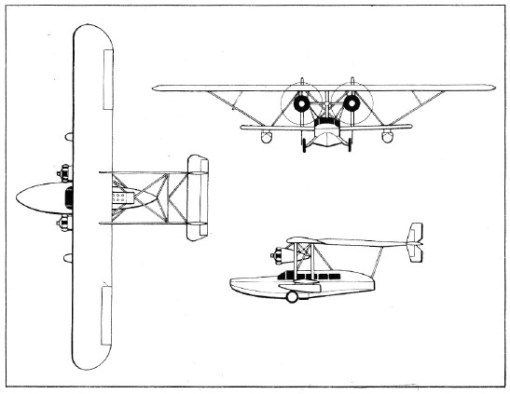
This flying boat was  premiered in 1928 and became known as the “Explorer’s Air Yacht” for it’s reliability and ability to go just about anywhere.  It was a popular plane with Pan Am, which had Charles Lindbergh in an S-38 for his exploration of South America.  Howard Hughes was going to use one for an aerial circumnavigation of the globe.

The flying boat features the same boat hull fuselage suspended by trellising from the wing and tail structure of the S-34 and S-36, but can carry ten passengers, and has stronger Pratt & Witney R-1340 Wasp engines turning out 400hp each.

sikorsky_s-38a_1

Sikorsky S-38 seaplane

Size: 8   Def: 4   Str: 8   Speed: 120   Ceiling: 16,000′   Rng: 750 mi.   Hand: -2   Crew: 2   Pass: 10

After a two year hiatus, our Tuesday Hollow Earth Expedition game is back on!  For the triumphant return, we redesigned the characters to bring them more in line with how they had been played with first time around.  Often, this meant tweaking the flaws.  Here are a few new ones that seemed fun enough to share:

Look at This! The character gains a style point when fixated on a find of some sort and takes a -2 to PERCEPTION tests to notice (or can just ignore) whatever’s going on around him.  This was coupled with the absent minded flaw in our aging archeologist character.  the goal was to replicate the movie scientist fixating on something or other while the hero’s getting his ass kicked in the background.

For the hero — a NY playboy with the depth of a Hallmark card, in addition to impulsive and overconfident, we’ve got…

Not in the Face! He’s vain & gains a style point when his vanity causes trouble.  Will try to guard the moneymaker in a fight.

Sucker for a Dame: Earn a style point when women lead you around by the nose.

I loaned the boxed set from a friend a few months back and was glancing through it again tonight.  First impressions:  the production value is quite good.  The art is consistently average to good quality, the paper stock is nice and the binding solid, the layout is crisp and easy to read.  This is the same for all three books.

Dungeon Master’s Guide:  As with Star Wars Saga Edition, the new D&D strips the complexity down and returns the game to its original wargame with a touch of role playing roots.  The system is simple and hasn’t truly changed in 30 years:  roll a d20, add mods, beat an armor class to hit (or for skill checks a difficulty rating)  The DM Guide deals not with the mechanics themselves, but instead is mostly oriented toward how to run an adventure, judge combat, etc. — the nuts and bolts of running a game.  This is mirrored in the chapter headings like, “How to be a DM”, “Running the Game”, which deal primarily with narration style, pacing, the roles of the DM and players.  Much of the rest of the book gives tips and tools for building adventures, monster encounters, creating campaigns, and the setting of D&D.

Players Handbook:  The PH has the rules for creating characters, using their spells, feats, and skills, as well as the main combat rules.  It is the actual core book for the D&D 4e rules.  Looking through it, I was transported back to the old days of dungeon crawling.  Some things have changed, but not much.  The races are mostly the same.  there’s the dwarf, elf, human, halfling — all the standbys cribbed from Tolkein, as well as the Tiefling (a demonic race), Eladrin, and Dragonborn.  The classes — fighter, cleric, ranger, and wizard — are still there with a few more added.  Class “paths” are there to customize your character’s feats and skills.

Feats can be thought of a schtick, or more like bonuses you would get in a video game as you level up.  That’s the feel that 4th edition best captures to me:  it’s World of Warcraft-style play returned from the PS3 to the tabletop.  Skills now give you a +5 bonus if you have them, nothing if you don’t; it’s a nought/one scenario — you’ve got the skill or you don’t.  modifiers come from your level and feats.  (It’s the same for Star Wars.)

The combat chapters deal with the usual mechanics of initiative, hitting, damaging, but much of the rule set is designed around the use of miniatures.  Ranges for things are measured in squares, not measures of distance, that best fits the wargame feel of old D&D, while adding elements that capture the video game vibe.  This may sound like a complaint, but it’s not necessarily.  From the standpoint of trying to keep the game fresh and draw in a new generation of players not looking for angsty storytelling or the amateur theatrics of a LARP.   Overall, this new system is stripped down and designed to do what it needs to for the setting:  allow you to rumble with monsters in dungeons, and get experience and treasure for it.

The last book in the set is the Monster Manual, which has a collection of critters for you to encounter, and turn to go in your quest to level up, gain swag, and have fun.  There’s some new stuff in there, and a lot of the old standbys.

Style:  4 out of 5; Substance: 4 out of 5.

NOW…having been fair to the venerable old line, I’ll toss my two cents.  I stopped playing D&D way back in 1983.  Nothing wrong with a little dungeon crawl, but I found myself drifting into more story & character oriented games like James Bond (a better system than Top Secret [aka D&D with guns…].)  I’ve never really gone back to fantasy, simply because I’m not much on the kill the monster/get the treasure gaming.

If you’re into heavy characterization and role playing, look at Exalted or another fantasy-based game.  But if you’re looking to just have some fun bashing monster skulls and collecting gold and magical toys…this is your game!

Here’s a few nifty vehicles that players have chosen for their characters.  First, the 1939 Alfa-Romeo 6C Super Sport Corsa…

1939_AlfaRomeo_6C2500SSCorsa3This is the competizione version of the 6C.  It has a 2500cc inline-6 motor designed by Bruno Treviso that produces 125hp.  The body is aluminum, built by Touring in Milan.

Size: 2   Def: 6   Str: 7   Spd: 125 mph   Rng: 190 mi   Han: +1   Crew: 1   Pass: 1   Cost: $4500

And here’s the 1938 Aston-Martin 2-Litre Speed Type C.

39_Aston_martin_Type-C_Speed_Model_DV_05-Amelia_06

Size: 2   Def: 6   Str: 7   Spd: 110 mph   Rng: 150 mi   Han:  +1   Crew: 1   Pass: 1   Cost:  $4000

Here’s a little something for the Eclipse Phase crowd:  there’s an interesting conversation on a fascistic version of transhumanism at Charles Stross’ website.

I picked up the Battlestar Galactica RPG more for the space-combat rules than anything a few years back.  I liked the show, but was — like many who have bought the game — unsure how to fit a campaign into the existing canon of the new show.  Here are a few ideas, some mine, some cribbed from around the gaming blogosphere:

1.  Another rag-tag fleet:  this is the option I went with.  There is a lot of chaos and confusion during the attack.  Galactica is operating primarily in the area of Caprica during the War, and they have limited intelligence on what’s going on during the miniseries.  The fog of war is thick.  They were unaware of Pegasus and vice-versa for almost a year, series time.  It’s understandable there could be whole battlestar groups out there who got to the fight too late, or were in some way incapacitated for the day or so between the fight starting and the rag-tag fleet bugging out.

2.  Post-apocalyptic ground campaign:  the Cylons bug out at day 280.  you just have to make it to that point before this could be a game solely about survival, with a few groups of humans fighting over the scraps of civilization, technology, food, etc.  Bleak, but doable.  We had a ground group in our campaign that eventually gets rescued by the surviving fleet, but they not only fought Cylons, but other panicked and hungry humans, there was a Road Warrior-esque series of car chase/fights, and some creepy exploration of abandoned cities.  There’s plenty to make of this setting, post war.

3.  Break canon.  Do it your way.  Next time I take a crack at this setting, I’m putting the colonies in differing star systems, just to make it more interesting.  I’ll allow the players to take on the lead characters.  After, the Cycle of Pythia just keeps a-rollin’.

4.  Put them in the fleet and do civilian survival adventures.  Black market troubles.  Maybe a private eye type character running around the fleet trying to solve mysteries or help people a la Ed Woodward’s The Equalizer.  You can find ways to have real adventures that matter, without having to climb into a viper.

My big suggestion:  start the campaign a few months to years before the attacks.  When doing character creation, give them families and friends, and use them! I created a whole neighborhood in Caprica City they lived in, had several of the players either working together as colonial marshals of law enforcement types.  They had adventures that were separate of the coming attacks, and an assortment of family troubles, one had a kid, there were things going on to make the world, the Colonies REAL.

Then in the middle of one adventure, the Cylons hit.  One minute they’re pursuing escaped felons in the mountains outside of Caprica City, the next there are mushroom clouds going up over the city.  they lost those friends and family members, their homes, their cars (one was mourning her dog.)  And it allowed them an in to the feelings and actions of the people in the show that some of the viewers didn’t have, because we don’t really see life before the attacks until the final few episodes.

Surprisingly, this campaign seems to have some real legs for my group.  It’s worth a shot if you have people into the show and the post-apocalyptic genre.

Just a few notes on the Q2 Manual that is posting on the James Bond: 007 RPG page:

Holsters!  In the original game rules, drawing a weapongive a -2 modifier to your initiative tests.  There are a few holsters in the original Q Manual that mitigate some of this (the Berns Martin, for instance…)

There are a lot of “tactical” and “competition” holsters on the market, right now, that are designed to speed the weapon into an engagement.  I’ve found that for concealment and speed, an in-the-pants holster where the gun is held by pressure from the belt and body holds the weapon well enough for most daily activities, but can be drawn very quickly.  Holsters like the Bern-Martin Speed Classic use this idea, but with either a spring, or an elastic band to create reliable pressure of the weapon so it doesn’t fall out of the holster under combat conditions.

An open holster like this should reduce the draw modifier, if the gun can be gotten to without having to fumble through heavy clothing.  (I would suggest eliminating the draw penalty if the holster is immediately accessable, -1 to initiative if you have to shift a jacket or coat out of the way.)

Another holster that is popular with law enforcement (and which I use) is the Blackhawk SERPA CQC.  This is a kydex holster where the weapon is retained by a catch around the trigger guard, holding the weapon very securely (I took a tumble down a hill a few back and the SERPA held my FN57 in place with no problem.)  when drawing, your finger hits the button, you draw the gun, and your finger lands on the weapon naturally at the top of the trigger well.

The SERPA CQC also eliminates the draw modifier for initiative rolls if the holster is accessable, -1 is under a jacket or coat.  (The SERPA can be rigged up as a shoulder holster, or a drop tactical leg holster with Blackhawk’s modular holster systems.  It’s available for most major weapons systems [Glock, H&K, 1911 variants, etc.] )

Deep cover holsters — ankle holsters, belly bands, etc. are usually designed to hide a weapon well under clothing.  They give a -1EF to Perception tests to spot the gun, but are usually positioned in such a way that fast access and drawing of the weapon is unlikely.  They give a total -3 to the initiative test in combat.

A better tactic for getting to a weapon holstered like this is to distract or wait for the enemy to shift their attention, then do a Stealth test to draw the weapon without being noticed.

A few years back, a member of my gaming klatch bought Hollow Earth Expedition.  I was impressed with the high production values:  good paper, solid hard-back binding, and art that did not — in any way — suck.  The system seemed simple and solid, but it took me another year before I finally had him pick up the main book and Secrets of the Surface World at GenCon.  My copy of MOHE is also a GenCon release, signed and number 124.

Since then, I’ve become an enthusiastic “expedition member.”  The system has it’s share of quirks, but is still one of the better sets of mechanics for pulp-style gaming:  simple, fast, and designed to not get in the way of the fun.  It’s good enough I’m running a post-WWII espionage campaign using it, instead of my favored James Bond: 007 rules form the ’80s.  I’ll be using it for an upcoming Victorian steampunk campaign.

Mysteries of the Hollow Earth finally gets around to giving the GM and players a guide to the interior world that was so hazily glossed over in the core book.  (Secrets of the Surface World is oriented toward pulp adventure in…you got it! the surface world of the 1930s.)  Like the other products from Exile Games, this one was worth the wait.  The binding is a strong, hardback with top notch artwork.  The interior is on heavy stock, gloss paper, with a very readable font, clear layout, and fantastic B&W artwork (save for the character archetypes pages, which are in color.)  This is the same as it was for all the other HEX products.  Unlike many other game companies, you’re hard pressed to find a typo or a major typesetting error.  (I’m looking at you, Mongoose!)

For style, it’s hard to beat Exile Games.  5 out of 5.  Enthusiastically.

Substance:  also chock full!  The book is 204 pages of material and a few pages of full-color adverts at the back.  (Including one for Revelations of Mars, their next sourcebook for HEX.)  It starts with the obligatory scene-setting short fiction and a one page introduction.

Chapter 1: New archetypes and motivations for characters.  I will admit our group tends to gloss over this aspect of character creation, but it will be useful for most players and GMs.  There are new talents for the characters — these are “shtick” for the characters to play to — from things like “beast rider” or “escape artist” to more Beastman-based (more on this) traits like “echolocation” or “sharp claws.”  There are also new flaws.  Many of the traits and flaws are specific to the races of the Hollow Earth.

There are rules for character templates, allowing the GM to design new races/species by building a package of attribute bonuses and negatives, natural advantages and flaws (as with claws and primitive, for panthermen.)  Among the new character templates for characters are Apemen, Gillmen (fish men), Greenmen (nymphs, is about the closest I can quickly describe), Hawkmen (ready made if you were thinking about a Flash Gordon-esque campaign…and I was.), Lizardmen, Molemen, and Panthermen.

The sample character archetypes include Amazons, Hawkmen, Panthermen, a blunderbuss-weilding Apeman scientist, a Titan berserker, and a beastman (a la Tarzan.)

Chapter 2:  supernatural powers are de rigeur in pulp.  Secrets of the Surface World gave us necromancy and other sorcerous powers, Mysteries of the Hollow Earth gives us new sorcery rituals that are appropriate to the setting:  shamanism for controlling nature and animals, and alchemy — including rules for gathering the elements for spells, and rules for creating living creatures through alchemy.    Beware the Jaguar Gargoyle of El Dorado!

Chapter 3:  Natives!  This chapter gives an overview of the native races and groups of the Hollow Earth and tips for playing them.  There are Amazons, based out of their city of Themiscyra.  I will admit a soft spot for the ol’ warrior women of Greek myth, so I was happy to see them here.  There are cannibals (of course!)  Cargo Cultists who worship the vessels and goods that get transported to the Hollow Earth.  Neanderthals.  Noble Savages, Pirates…  Then there are the Titans and the Vril-ya:  the former are giants based on the Greek proto-gods; the Vril-ya are the technologically advanced descendants (or servants?) of the Atlanteans.  I have my own ideas for how to link and use these two groups, but that’s not important…

Chapter 4: This deals with the beastmen of the Hollow Earth.  You could rip this chunk out, scrub it up properly, and you would have the beginnings of a good Flash Gordon campaign.  It deals with the various half-man/half-beast races and their cultures.

Chapter 5:  This is an overview of the environment of the Hollow Earth, from getting into the HE, to getting out alive.  The interior world suffers from strange time distortion, allowing the GM to have the characters adventure for years in the HE and still have only a few days pass on the surface…or decades.  There are interesting locales from the Aerie of the Hawkmen, to Atlantis, to El Dorado and Shangri-la, to the lair of the Molemen and the piratical Blood Bay.

It short, if you want it to be there, the Hollow Earth can be home to anything you want.

Chapter 6:  This is the bestiary.  There are dinosaurs and prehistorical critters, as well as giant [insert bug/spider/critter] that would of course exist in the Hollow Earth.  There is also a much-needed section with real world animals.

Lastly, there is a sample adventure:  The Fate of Atlantis.  I rarely do more than glance at these modules, since I tend to to use them, but it is well plotted out and designed for a fast introduction into the world of the Hollow Earth.

Substance:  5 out of 5.

If you’ve gotten the idea that I am enthusiastically recommending Hollow Earth Expedition and its supplements, you would be correct.  The system is very flexible, allows for fast, fun gaming without getting bogged down in rolling dice and mathematics.  The setting is fun and allows just about any kind of story types.

Buy it.
« Previous PageNext Page »