Roleplaying Games


There’s always poker chips for giving out plot points.  This is apparently the suggestion for Deadlands.  For Battlestar Galactica, I intend to use the myriad of spent 5.7x28mm casings I have from my P90 and FiveSeven handgun (the platform for the colonials’ pistols.)

I tried it out last night for our Hollow Earth Expedition game (although it really should have been .45acp) and the players seemed to love it!

Most of the game systems I’ve enjoyed over the years have had a little fudge factor built into them to get the player around the cold, hard curve of probability.  Some of my players have the preternatural ability to roll crappy….all the time.  The one player it doesn’t matter if it’s dice, his HP scientific calculator programmed to do random rolls, or a dice program on his PDA…luck dumps in his pie.  Usually at the worst time.

My first encounter with “hero points” was the James Bond: 007 system from the early ’80s.  This allowed you to skew the result of a roll, or lower damage taken (in a system that could be especially deadly, I might add.)  DC Heroes, the Cortex system, Hollow Earth Expedition, Savage Worlds, and many others now utilize this “get out of death” feature.  Figuring out how to award and use them, however, is occasionally tricky for new players and GMs.

A few recent incidents in our play has given me a few new insights to awarding and using points.  So I’m passing the savings on to you, faithful (or feckless) readers…  (I’m going to just use the term “plot points, for simplicity sake.)

Player-awarded plot points:  a lot of GMs are iffy about ceding some power to the players.  I’m finding increasingly, it aids in the fun when players can say “he should get a point for that!” as they did last night.  A crusty old pilot character snapped off a completely period-appropriate, and totally sexist, comment to the female character.  Brilliantly done, I might add.  That was the response from everyone.  So I awarded a point.  When players think another player is worthy, it’s usually because what they did is worth the award.  (I rarely respond to a player saying “I deserve a plot point…”)

I award the points for good roleplaying on the spot.  And fantastic ideas they come up with.  Or setting appropriate maneuvers like “I want to leap off the wing of our Catalina and into the Amazon canoe, while shooting at the monster.  Can I do that?”  Hell, yes!

A bit more R-rated, I had a guy playing a playboy character who wanted to make sure his “equipment” was up to snuff.  Can I give a point to be well-hung?  Absolutely.  And I gave him a point last night for rescuing an Amazon at great risk to himself…all so he could help her onto a canoe, by grabbing her ass.  Appropriate for the character.  Have a point.  His girlfriend got pissed and cut him off for the night, causing him other troubles and making the group a bit less cohesive.  Point to her; completely in character.

In Battlestar Galactica, one player had a Cylon involved with another main character who spent most of his plot points to get her pregnant.  Why?  The Cylons are trying to breed.  Also, it’s giong to cause lots of trouble for both characters in the now to distant future.

Give points out liberally.  If the players think it’s a great idea, and you think it’s going to up the ante on fun, go for it.  It gets the players to use their flaws and character design for something other than beating up the monsters or bad guys, and make play more fun all around.  They should sped them liberally, too, to make the best of their character schitcks, be they something as shallow as “looking awesome.”

Another use I recently found for plot points.  Sometimes, there’s something in the script that really needs to happen.  You don’t want to railroad the characters, but you really want to now have to rewrite things on the fly.  Last weekend, I had a spy game going where the players were really short handed, had captured and questioned the major henchman, and had to stage a raid where they could only leave one guy to watch him.  It would have to be an NPC.  We all know where this is going — I need the baddie to escape and draw the players to the big final action sequence.

They know this, but they want to 1) knock him out, 2) coup de grace him, 3) formulate some other idea that will take 20 minutes of game time to plan/explain.  So I offered them all a plot point to just get on with it, leave him with the NPC, and let things proceed apace.  One of the player’s later responses:  the GM bribed us to let the bad guy get away.

Bribe them.  “It’s not railroading if they agree,” as Uncle Bear says.
This started as a toss-off, but now one of my players has not only talked me into letting him play it, but he’ll be the “lead” in the serial:  Rowland Cabot (Brian Blessed) is a Welsh flying ace who finds his brain/mind transferred into the body of a gorilla by a mad scientist, thus becoming…

GORILLA ACE!

I am now very excited about this campaign…

Just a quick note to suggest The Unit DVDs as a place to get some ideas for espionage or military-based games.  There are only four seasons, so with a little creative shopping (or who knows…you might find ’em on these interwebs!) you should be able to get the whole set for cheapish.

I’ve shot through the first season and found it a good source for adventures for my next James Bond-ish campaign.

There’s a new campaign running in our Saturday game.  It started out just as a toss-off but might be building into the bones of a real long-term game.  I wanted to do a post-WWII espionage game, set just after the war, when Europe is still mostly under Allied military jurisdiction.

It was a period of intense criminal activity:  smuggling, spying, prostitution, materials theft from the militaries.  Germany and Austria are split between the US, UK, and USSR; Trieste is cut into two zones, one of US control, one under the UK, but with Yugoslavian partisan influence.  The Balkans are either turning to Soviet-style government (Albania, Bulgaria, and Yugoslavia), or resisting this move (Greece, Hungary, and Turkey.)

In other words, a prime period for a role playing campaign.  The period lends itself to everything from post-war espionage, to classical criminal opportunism, to super-science, post-war pulp fiction.

I started off with a character for the wife, a Modesty Blaze-inspired Greek partisan-turned-smuggler.  She moved guns, ammo, food, and other sundries past the British fleet in the Adriatic and ionian Seas, and the Greek laws (who imposed, at the time, a 100% tariff on foreign goods!)  She is pitted against heroin smugglers, Greek communists, Greek Security Battalions (most of which were fascist-allied, but were “rehabilitated” after the war ended.)  She is joined by her crew of partisan cut-throats, led by her Irish-American wheelman, Adonis-like twins with little in the way of moral compasses, an Italian that defected during the war.

They were working for the partisans and British SOE during the war, and tool around in their Italian MAS (Motoscafo Armato Silurante) providing weapons to anti-communist, or communist forces, or doing the odd bit of spying for the British.

The flavor of our campaign, so far is down and dirty, realistic, but with a touch of the early James Bond/Modesty Blaze pulp spy fiction.  For the game, I’ve been using Hollow Earth Expedition because it’s easier to cobble together the guns, cars, and other equipment of the period (mostly, it’s still pre-war cars, boats, etc.) than it would be in, say James Bond or Spycraft, but just about any modern-setting game system should do the trick for this kind of game.

This is a slightly older product than Big Damn Heroes, which was already reviewed here.  It is a supplement for the Serenity RPG by Margaret Weis Games.  While it was touched up by Cam Banks, Jamie Chambers, and the usual collection of brown-coated rogues at MWG, the book was written by Lynn Blackson (who did the ship designs, and also did so on the Cortex RPG boards online), and Jason Durall.

The book, like the Adventures book, is a softcover, well bound, with black & white and grayscale printing internally.  The art is all good quality for the gaming industry by Lindsay Archer, and the ship designs presented were built with CG (I think I recall Lynn using Blender, but I could be wrong…)

The book is broken into two parts, Book 1 Guns & Gear — a general store of new and improved…well, guns and gear for the game.  Book 2 Ships and Crew provides art and stats for 26 new vessels (and crew for a few of them.)

Book 1 is probably the part I found most useful, which surprised me…I was sure it was going to be the ships.  There’s the general store with food and clothes, to religious icons, camo paint, to ships’s papers.   There’s an armory of hand weapons and guns from pistols to machineguns, specialized ammunition and weapons modifications (scopes, suppressors, etc.)  The techshop includes computers and other tech (including Niska’s torture spider!), drugs, and robots.  Most importantly, there’s a section on cybernetics.  Lastly, there’s a laundry list of services — from companions to lawyers, and the like.   Included is a section on livestock. (Not for service!  Get your mind out of the gutter…)

I think the inclusion of cybernetics is particularly useful.  Firefly never got a long enough run to give us a good look at the universe Whedon was creating, but the glimpses of the core worlds suggested that the technology in the Core was dramatically more advanced than the worlds Mal Reynolds and his crew visited.  It also allows the GM to give the ‘Verse a more science-fictiony accent to the Western ambiance.

Book 2 gives us ships.  There’s an Alliance cruiser, and their landing vehicles for tanks and troops seen in the pilot (the real one, not The Train Job.)  In addition to a few liners and freighters, there’s a special operations corvette and an industrial skyplex.  Several of the ships provided are meant to give the GM and players a ship and crew ready-made for pick up adventures or as NPCs.

Lastly in this section there are new weapons and ship traits.  They feel a bit tacked on, as if there were more they might have wanted to add, but ran long on the page count for the product.

Overall, Six-Shooters & Spaceships is a handy equipment guide for the players and GM of a Serenity game, but compared to the original core book or BDH that followed it, it’s a bit underwhelming.  There’s a lot of crunch in it, no doubt, but the softcover and grayscale make it the least appealing of the sourcebooks, thus far.

Still:  Style 3 out of 5, Substance 4 out of 5.  It’s worth it, if you’re running Serenity and this one is better in print than PDF, since they cost about the same.

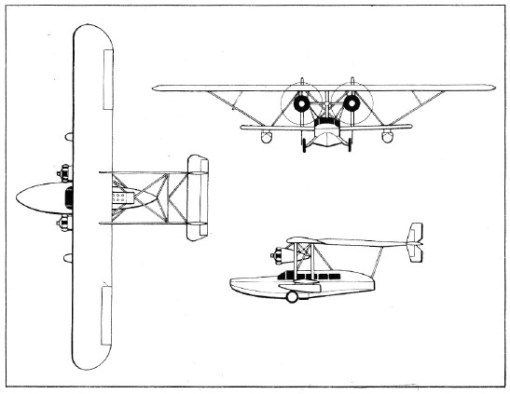
This flying boat was  premiered in 1928 and became known as the “Explorer’s Air Yacht” for it’s reliability and ability to go just about anywhere.  It was a popular plane with Pan Am, which had Charles Lindbergh in an S-38 for his exploration of South America.  Howard Hughes was going to use one for an aerial circumnavigation of the globe.

The flying boat features the same boat hull fuselage suspended by trellising from the wing and tail structure of the S-34 and S-36, but can carry ten passengers, and has stronger Pratt & Witney R-1340 Wasp engines turning out 400hp each.

sikorsky_s-38a_1

Sikorsky S-38 seaplane

Size: 8   Def: 4   Str: 8   Speed: 120   Ceiling: 16,000′   Rng: 750 mi.   Hand: -2   Crew: 2   Pass: 10

After a two year hiatus, our Tuesday Hollow Earth Expedition game is back on!  For the triumphant return, we redesigned the characters to bring them more in line with how they had been played with first time around.  Often, this meant tweaking the flaws.  Here are a few new ones that seemed fun enough to share:

Look at This! The character gains a style point when fixated on a find of some sort and takes a -2 to PERCEPTION tests to notice (or can just ignore) whatever’s going on around him.  This was coupled with the absent minded flaw in our aging archeologist character.  the goal was to replicate the movie scientist fixating on something or other while the hero’s getting his ass kicked in the background.

For the hero — a NY playboy with the depth of a Hallmark card, in addition to impulsive and overconfident, we’ve got…

Not in the Face! He’s vain & gains a style point when his vanity causes trouble.  Will try to guard the moneymaker in a fight.

Sucker for a Dame: Earn a style point when women lead you around by the nose.

I loaned the boxed set from a friend a few months back and was glancing through it again tonight.  First impressions:  the production value is quite good.  The art is consistently average to good quality, the paper stock is nice and the binding solid, the layout is crisp and easy to read.  This is the same for all three books.

Dungeon Master’s Guide:  As with Star Wars Saga Edition, the new D&D strips the complexity down and returns the game to its original wargame with a touch of role playing roots.  The system is simple and hasn’t truly changed in 30 years:  roll a d20, add mods, beat an armor class to hit (or for skill checks a difficulty rating)  The DM Guide deals not with the mechanics themselves, but instead is mostly oriented toward how to run an adventure, judge combat, etc. — the nuts and bolts of running a game.  This is mirrored in the chapter headings like, “How to be a DM”, “Running the Game”, which deal primarily with narration style, pacing, the roles of the DM and players.  Much of the rest of the book gives tips and tools for building adventures, monster encounters, creating campaigns, and the setting of D&D.

Players Handbook:  The PH has the rules for creating characters, using their spells, feats, and skills, as well as the main combat rules.  It is the actual core book for the D&D 4e rules.  Looking through it, I was transported back to the old days of dungeon crawling.  Some things have changed, but not much.  The races are mostly the same.  there’s the dwarf, elf, human, halfling — all the standbys cribbed from Tolkein, as well as the Tiefling (a demonic race), Eladrin, and Dragonborn.  The classes — fighter, cleric, ranger, and wizard — are still there with a few more added.  Class “paths” are there to customize your character’s feats and skills.

Feats can be thought of a schtick, or more like bonuses you would get in a video game as you level up.  That’s the feel that 4th edition best captures to me:  it’s World of Warcraft-style play returned from the PS3 to the tabletop.  Skills now give you a +5 bonus if you have them, nothing if you don’t; it’s a nought/one scenario — you’ve got the skill or you don’t.  modifiers come from your level and feats.  (It’s the same for Star Wars.)

The combat chapters deal with the usual mechanics of initiative, hitting, damaging, but much of the rule set is designed around the use of miniatures.  Ranges for things are measured in squares, not measures of distance, that best fits the wargame feel of old D&D, while adding elements that capture the video game vibe.  This may sound like a complaint, but it’s not necessarily.  From the standpoint of trying to keep the game fresh and draw in a new generation of players not looking for angsty storytelling or the amateur theatrics of a LARP.   Overall, this new system is stripped down and designed to do what it needs to for the setting:  allow you to rumble with monsters in dungeons, and get experience and treasure for it.

The last book in the set is the Monster Manual, which has a collection of critters for you to encounter, and turn to go in your quest to level up, gain swag, and have fun.  There’s some new stuff in there, and a lot of the old standbys.

Style:  4 out of 5; Substance: 4 out of 5.

NOW…having been fair to the venerable old line, I’ll toss my two cents.  I stopped playing D&D way back in 1983.  Nothing wrong with a little dungeon crawl, but I found myself drifting into more story & character oriented games like James Bond (a better system than Top Secret [aka D&D with guns…].)  I’ve never really gone back to fantasy, simply because I’m not much on the kill the monster/get the treasure gaming.

If you’re into heavy characterization and role playing, look at Exalted or another fantasy-based game.  But if you’re looking to just have some fun bashing monster skulls and collecting gold and magical toys…this is your game!

Here’s a few nifty vehicles that players have chosen for their characters.  First, the 1939 Alfa-Romeo 6C Super Sport Corsa…

1939_AlfaRomeo_6C2500SSCorsa3This is the competizione version of the 6C.  It has a 2500cc inline-6 motor designed by Bruno Treviso that produces 125hp.  The body is aluminum, built by Touring in Milan.

Size: 2   Def: 6   Str: 7   Spd: 125 mph   Rng: 190 mi   Han: +1   Crew: 1   Pass: 1   Cost: $4500

And here’s the 1938 Aston-Martin 2-Litre Speed Type C.

39_Aston_martin_Type-C_Speed_Model_DV_05-Amelia_06

Size: 2   Def: 6   Str: 7   Spd: 110 mph   Rng: 150 mi   Han:  +1   Crew: 1   Pass: 1   Cost:  $4000

« Previous PageNext Page »