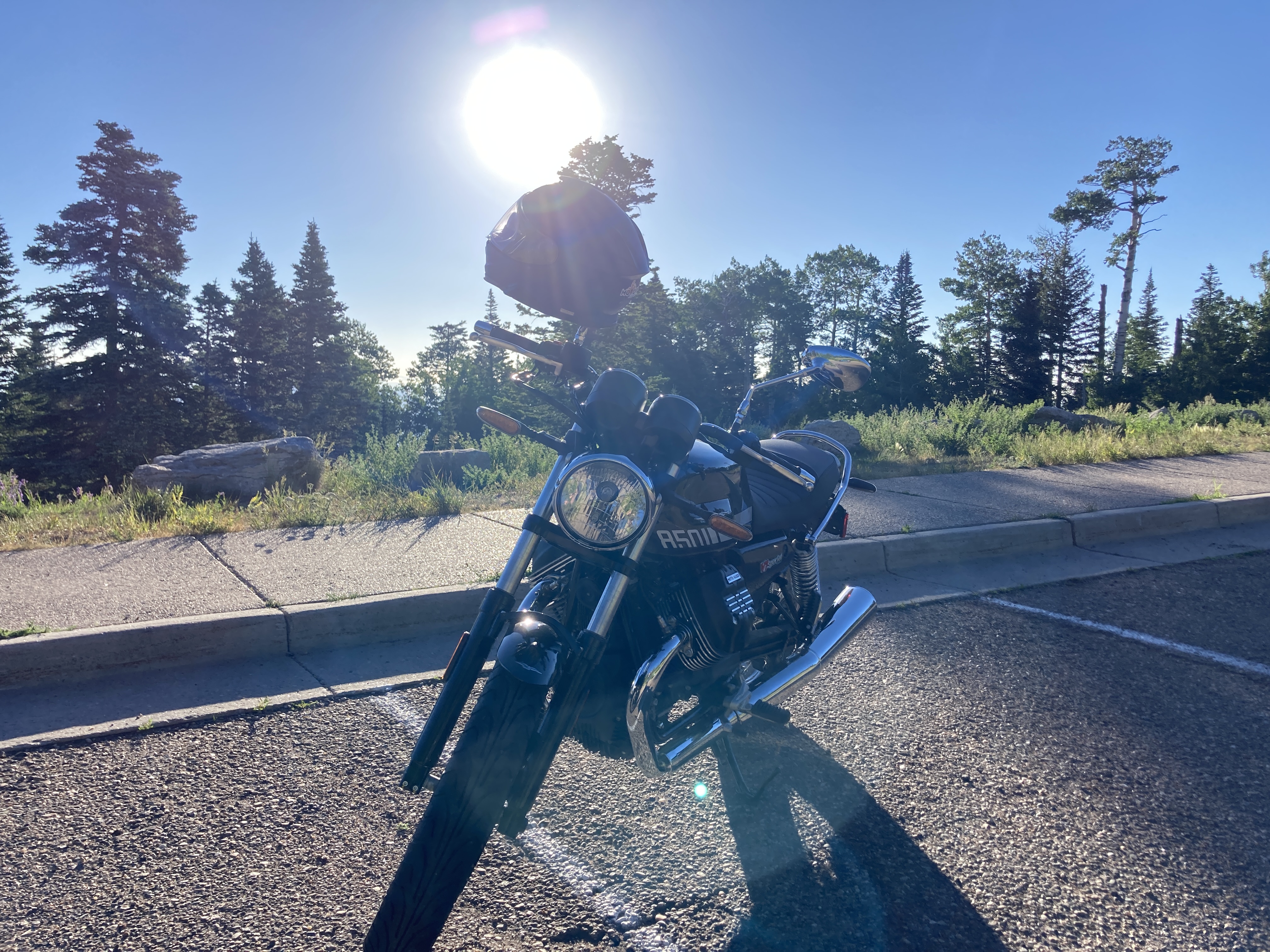
After a few weeks of ownership, here’s a few things to know going into owning a Moto Guzzi V7.
1 — It makes noises like it’s haunted:
When it’s sitting after a ride moaning like the ghost of whateverthehell Ebenezer Scrooge’s late partner was called**, don’t worry; the gas tank’s just a bit overpressurized because you filled it to the top or it’s really hot out. You can just open the gas cap (slowly!) or leave it and terrorize your family when they go into the garage.
2 — It’s really cold-blooded:
When you take off from a cold start and the thing lugs in first and second gear like there’s something wrong, again — fairly normal. Kinda like driving a Ferrari 365GTB — until it’s warmed up a few blocks down the line, it’s best to run a little tall in the gearing. I find a block or two running in the 3k+ on the tachometer and it wakes up. (Addendum: Some of this is the fueling. Apparently, GuzziTech has a widget that will enrich the mix and get rid of a lot of the low end lag. The bitchy shifting, however, is completely an issue with the transmission oil needing to get moved around. That takes a few blocks, then she’s fine. SCR)
3 — No, you don’t have the peg clearance you think you do:
I’ve scuffed hard parts on this thing since the first test ride. I had to take the angle feelers off the bottom of the driver pegs because they were ground to point and were catching on my bloody pants. Hell, I went into a tight turn a gear higher than I tought I was and scrapped the kickstand (which protected the nice chrome pipes. Dial your suspension up a few notches and butt scoot like a professional racer or you’re gonna hit things. A least on the V7. (Addendum: After riding the bike for a while, I realized a major part of the issue is the engine never sounds like it’s straining — even redlined. I tend to ride by sound and compared to my 2010 Thruxton and 2020 Enfield Interceptor, the V7 sounds like it’s barely working. On the mountain twisties that had me hit the damned kickstand while folded against the pipe I did a quick check of my speedo…I was a good 10 mph faster than I thought I was. It’s got plenty of clearance…I’m just riding it like a lunatic! SCR)
4 — You’ve got incredible range on the thing:
My gas reserve comes on at 3.8 gallons on a 5.5 gallon tank. That’s a bit overly cautious to my mind. I usually get about 190 miles on that 3.8 gallons. That makes for a total range of around 300 miles. That’s cars with shitty gas mileage ranges. (Addemdum: It’s been getting a steady 54mpg on the “summer” gas here in New Mexico, and 50mpg on the ethanol-heavy “winter” gas. SCR)
Speaking of gas…
5 — It’ll drink anything, but stick with higher octanes:
It’s run fine at 6000′ in altitude and 90F degree weather on 85 octane but a regular diet is probably not Italian enough for it. Stick with higher octanes.
6 — Yes, people are going to want to talk to you:
…but they’re all going to be old dudes talking about when they had that Monza back in the ’80s and such. Be prepared for a plethora of questions on how reliable it is. It seems ever biker that’s never owned one thinks they’re shit because some guy told them once…and ever Guzzi owner says they’re bulletproof, except for the one time (or two, or three) when something (usually electrical) happened.
Like the modern Royal Enfields, everyone is judging the new Guzzis by horror stories from back when, let’s face it, every bike kinda sucked except for Honda.
( **For those who aren’t literarily inclined, it’s Jacob Marley.)
So…I did a thing. I had test ridden the new V7 Special ( the “gray stripe” color, as the catalogue calls it, but it’s a deep midnight blue metallic flake) a few times over the past few weeks. After decades of waiting for a Guzzi dealer to hit Albuquerque, we’ve finally got one in the shape of Motopia New Mexico. i’ve wanted a Guzzi, and specifically the V7, for quite a while…but the test rides were good, but the bike wasn’t speaking to me like the Royal Enfield 650 Interceptor had. Each ride, I found the bike excellent in build quality, a bit clunky on the transmission, lacked the ground clearance of the Enfield, but had superb power delivery and once moving, the V7 is incredibly smooth. While at the shop looking into another issue and to let my 12 year old daughter drool over the Aprilia RS660, I noticed the V7 Special was gone. Yay! Temptation removed, I could settle in to figure out what was next in the odyssey of my hopped-up Interceptor. Except, it was out of a test ride with a buddy of mine who has a habit of buying the bikes I’m interested in before I can.
Yes, it’s a silly pissing match sort of thing, but seeing him ride up with his wife on the back, I suspected he was (to her chagrin) going to go for it. While they were dickering about inside, I got the sales manager working up a deal for me on the bike. I literally bought it out from under him.
Within a week, I’d hit the first service and got the valves checked and the fluids changed for a $350 hit. But now I have a better idea of how the bike behaves and how it’s likely to as it breaks in.
So first the good stuff. The deal had a 1.9% finance rate. That’s low right now, so if you’re thinking of one of these, it’s a good time. The machine is well made, although I could do without all the yellow inspection marks all over the thing. I understand this allows you to see if bolts are backing out, but I’m not flying a C-130 here. It does something Triumph doesn’t anymore — it has a friggin’ tool kit. So did the Enfield. Time for Triumph to step it up a bit. For the prices they’re charging they’re getting a bit Scottish with the stuff that some might don’t matter. Like a damned tool kit. Tires are a standard size — 150/70-17 like most Bonnevilles and 100/90-18 up front. It’ll be a breeze to get rubber for it. I already checked and my favorite shoes for the Thruxton are available for it. (The Shinko 712s. Trust me on this one.)
As suspected, for long rides, this machine is a dream. I did several 60 mile days, taking the bike up to the top of Sandia Crest, a climb of 4000ish feet over 13 miles with 120 turns in about 15 minutes. That’s a bit slow for me when there’s no traffic; the ground clearance on the pegs was such that i was scrapping pegs on every damned turn until I had to start doing the racer-style butt scoot on the saddle to stop it. An adjustment to the rear shocks — it was on the lowest setting so I bumped it one and that sorted it out except for some of the turns with negative cambers. It did stiffen the ride a bit, so it’s not as plush, but the bike is handling very well. I went for a long haul with some friends on sport bikes who promptly went for triple digits on their machines. I stuck to a reasonable (for New Mexico) 85mph for most of the first half of the ride. The Guzzi soaked up all but the worst bumps, and even managed to negotiate a surprise 35mph turn that they really meant 35mph. I was well over that and the V7 went through the turn without murdering me. (Butt scooting to the rescue!)
While stopped for lunch in a small town called Mountainair, we had an interesting encounter with the locals. A grandma in with her family for lunch followed the female rider we were with out to enthuse over the bikes, how she was a rider, and begging to get taken on a ride. The other guys were hoping to ignore her ’til we went away, but what the hell. Being nice to someone isn’t that much of an imposition. The shit that happens to you on a bike…
So I ran her around Mountainair for about 10 minutes. Hitting 70mph on the highway with no issues. The bike ride well with someone on pillion: it turns agreeably, stays very stable, and the passenger had plenty of room to handle acceleration. (No — she didn’t want a helmet.) I normally avoid passengers; the Guzzi is built for it. After Mountainair and my close encounter, we headed back to the city. It was about 100ºF and we were getting cooked, so we were moving at about 90 the whole way. No issues at all. The V7 is ready, eager even, to reach for the redline at 6500rpm. (It’s doing about 115 at that point). Vibration was at a minimum for the ride, saddle comfort was good enough I wasn’t tired or sore after about 3 hours in the seat plus lunch time. Over the course of the run, the motor felt like it really smoothed out in the 3000-3500rpm range, where it had been buzzy for the first 300 miles or so. Other reviewers have mentioned this and it seems to be a function of the bike needing to be run in some. After the oil change, the motor has been much smoother, shifting is better but still has a pretty audible clunk when up shifting. I suspect that will also get better over time.
The ranges and fuel mileage were a bit up and down during the first 600 miles. The bike was telling me I was getting 55-56mpg, but when I would fuel up, it was closer to 50mpg. (The Mountainair run was done at pretty high speeds, so that made sense.) Since the oil change, the fuel mileage is up dramatically — about what the bike has been claiming. I have noted that the low fuel light comes on at about 3.7 gallons, leaving about 1.8 gallons in reserve. That’s a hell of a reserve. The light comes on around 175 miles on the tank, although since the oil change I’ve put 195 miles on it and the light has not lit up as of this writing. I expect it should hit about 200 miles. So conservatively, the 5.5 gallon tank has 250 or so miles in it. That is exceptional and would allow for touring even in spots where gas stations get kinda think in the American Southwest.
Brakes are adequate. They’re a Brembo 4-pot on the front (only one side…) and a Brembo two-pot on the back. They work, and the rear quite well for slow speed on dirt, and the front feels good and aren’t too abrupt, but they’re not award winning. Fortunately, the engine braking on the motor with the shaft drive is very good. The suspension, once ticked up a step got much more firm and the handling — which is good and very neutral — improved.
Since the first service, I have seen an improvement in gas mileage and overall smoothness in operation. The gearbox appears to be a little more pliant, but it’s not the light and smooth flick of the Enfield or a modern Triumph. The motor is still characterful. It’s really hard to describe it; I imagine it’s feels a lot like an classic motorcycle. The mirrors are ugly but they work. There’s nasty DOT mandated stickers on the tank and the steering bridge that are on there. I found brushing the stickers with warm water and diskwashing detergent soaks and weakens them, and they come up easily with a softer object to scrape them up. I keep my fingernails short so I used a tire valve cap and lightly scraped them off with no damage to the finish. I’ve no idea how to get the yellow inspection marks off. They appear to be paint, not grease pencil. might try a light WD-40 rub. The beefy-looking transverse twin looks old-school and it is a breeze to get to almost everything. If you do you’re own maintenance, this is probably a good choice.
The down sides: I find it weird that a boutique-ish brand of bike doesn’t engage in branded gear, but outside of stuff for the V85 “adventure” bikes, there’s not much in the way of things like riding jackets, tee-shirts, nor is the accessory catalogue impressive: not much in the way of flyscreens, or aftermarket mirrors and pipes. They’re out there, but you have to hunt a bit. Agostini does pipes for the V7 including a nice shorty exhaust that would allow you to get into the wheel easier when servicing it. BAAK does a nice side cover replacement with small leather bags that are big enough for a hat and sunglasses, or the tool kit, if you don’t want to put it under the seat. I’m new to the Guzzisti thing, so I might just not be looking in the right places.
The V7 Special was an impulse buy, and a tough decision, surprisingly. I’ve wanted one for as long as I’ve been riding, and I’ve tried a few — the V7 750, the excellent Griso — but with the “two bikes to the garage” rule I’ve agreed to, it was lose by beloved 2010 Triumph Thruxton or the superb Enfield Interceptor to gain the Guzzi. Even after I’d dropped off the Enfield, I wasn’t sure I’d made the right choice…pretty much until the last day or two. The V7 Special is an excellent machine — well made, superbly comfortable, with a bit of tweaking on the suspension capable of getting a bit of the hooligan, and the range is phenomenal. Paint quality is exceptionally high — possibly the best I’ve seen on a motorcycle. It’s not the fastest thing out there, but it’ll crack the ton with gusto and it gets there plenty fast.
Overall, it feels a lot like a nicer, quirkier…well, Italian, Bonneville. It’s got 65hp and 54 ft-lbs. of torque that is channeled very quickly with the shaft drive and compared to the Bonneville 900s’ 60hp and 55 ft-lbs., they’re pretty evenly matched, though the power comes on lower in the rev range with the Guzzi. Having traded my Street Twin for the stock Enfield because the Indian-made bike was lighter, more maneuverable, and faster (both with acceleration and top speed), I suspect the Guzzi, which is about as fast off the line as the souped-up Interceptor but a bit slower on the top end will hang with but most likely pull away from a the Triumph Bonnies in a straight-up race.
So…is the V7 Special worth it? Hell, yes — especially if you can get it for the MSRP or close. The new Street Twin is MSRP $9900 (so assume $12ish out the door in the US) and the Guzzi is $8950 — a grand less for a nicer, faster bike from a more exclusive manufacturer. That said… the 650 Interceptor is a tight match for both those machines and comes in at $6149. If you’re a bit tight on cash and looking for a classic standard motorcycle, the Enfield is really hard to beat, but the Guzzi pulls it off with an undefinable style and “character” to the motor.
I love my Apple MacBook Air with the M1 chip. It is easily the best laptop I’ve owned…until today. The M1 Air is still one of the faster small laptops you can get. It’s light, there’s no fans to distract, and it will go all day long. The screen is good and sound as well. The downside to all of this thin, light beauty: you get exactly two Thunderbolt ports, and tough s#!t if you want more. You have to buy an external dock to get USB or HDMI or SDXC card support For the most part, that’s not an issue, but I use the laptop at my workplace (a high school) and sometimes I want to show a movie or pull something up that isn’t on the Google crapps that we use at the school. Oh, gee — I forgot the dock, so no HDMI connection. It’s a small thing, but it was enough that when i realized my gear was three years old it might be time to upgrade. (It’s not really necessary, that Air is still plenty fast and has plenty of battery life.)
Enter the MacBook Pro 14″. I looked at the new Airs and they’re nice but not enough to get me off the old 13″ Air. The Pros, on the other hand had three things to attract: the standard machine had twice the SSD (512 GB) and RAM (16 GB), it had an HDMI and SDXC card port, two Thunderbolt ports that honestly should have been left out for a USB port, but the big one — the MagSafe power cable. This was a great thing in the old Intel MacBooks and getting rid of it (and I understand the power and data thing of Thunderbolt — yes, it’s good) was a mistake, as anyone who trips over their cord and pulls their $1000 machine off a table or desk and attest to.
Performance: It’s fast. I transferred the whole of my old Air in under 40 minutes using the Thunderbolt cable. Audio and video playback is fast and smooth, even over the internet. The M2 Pro chip is supposed to have a 10-core CPU and 16 core GPU with a 16 core Neural Engine — that’s for the spec-happy folks. For those that don’t do the technospeak: it’s really, really fast for most things. I did a couple of quick page layouts and mock-ups through Adobe and had no slow down. A bunch of open tabs in Safari and a couple of open documents in Pages, and running a movie — no slow down. It’s good.
It’s got the new WiFi6, but my network doesn’t; when you fire up a new MacBook Pro, you might have issues connecting where it shows you are online in the icon in the top bar, but keep getting a “you’re not connected to the internet” warning. Apparently, it doesn’t figure this out on its own. It can run up to two external displays, plays Video in HDR, ProRes and Dolby; the sound is great and will do Dolby Plus. The trackpad is quick and responsive, the keyboard is quiet and on par with the old Air for comfort and response. I did find the higher front end took some getting used to, but I do seem to type better.
Other than the annoying bezel cut on the top of the screen for the 1080p Facetime camera, the screen is big and bright. The colors are amazing — I pulled up the 2008 Speed Racer to get an idea of how it handled color and wow! does it do color. (Apple’s claiming a billion colors.) It’s a Liquid Retina XDR display with 3024-by-1964 resolution, and a claimed peak 1600 nits brightness in HDR. Sound is good and delivered by two speakers on either side of the keyboard. I think this is where the M2 Pro really shines.
The size isn’t radically larger than the Air — about the same thickness as the back edge of the Air, but all over; it doesn’t taper at 0.6 inches. The width is a good half inch or so wider at 12.3″, and it’s a bit deeper at 8.7 inches. It weighs in at a claimed 3.5 pounds — about a half pound more than the Air. I carry my laptop to work and back on a motorcycle most days; I like light. This is noticeably heavier. It’s not some POS HP laptop my workplace would saddle me with, however. With the dock, power cables and other stuff i would carry with the Air, it probably came out to about the same weight.
So, is it worth it? On the fence on this one. I like having the HDMI and SDXC access — I use it. The lack of USB is disappointing. The rest of the machine is fantastic, but compared to the excellent MacBook Air 13″ with the M1 chip — is it twice the machine for twice the cost? No. It’s a great laptop, no doubt, but I think Apple’s pricing is a bit…enthusiastic. If you’re looking for a workaday computer — grab an M1 MacBook Air; if you need something with a bit of firepower, however, and between desktop publishing and other data-pushing I do, the Pro is probably a better choice.
(Update: I’ve had the MacBook Pro for a few days now and the experience has been steadily better. The annoying bezel for the camera tends to fade into the background if you are concentrating on your work, but man — it’s ugly. And on a laptop this good-looking that stands out. I’ve dragged it around with me on the motorcycle and it’s not noticeably more heavy than the Air was. The battery life is excellent, but Zoom meetings eat! the battery. I was losing 10% of the battery per hour while teaching an online class, although the students did comment that the camera was giving a much better picture…I’m not sure that was a good thing for the poor wretches to see. Watching movies, working on the internet and in Pages and Adobe eat the power at a much more reasonable speed. I’m down about 10% over two hours or so of work, so the claimed 18 hour battery time seems about right. The Magsafe power box loaded up the battery from 20% to full in about an hour and a half. That means the quick charge and the battery life are about on par with the MacBook Air, which seems reasonable, even with the increase in computational firepower. I still think it’s about $300 too expensive, but it’s a good machine.)
I had to bow out of this last year due to the school year schedule and other issues, but Black Campbell will take part this year (by writing all of the posts this month and scheduling them for next month.
After a two year hiatus to recover from shenanigans at my day job, COVID nonsense, and the other assorted issues, including serious burnout, we will be starting to release new material by the end of the year for Ubiquity, but also system-agnostic adventures.
While I covered this in the posting on Fallout, the RPG, it bears repeating that my initial experience with the 2d20 system was pretty bad. Our group at the time had been on the playtesting for John Carter, but the initial rules information sent to us was pretty badly written to the point that we really had no bloody clue what was going on. After playing Fallout, however, and having read the (much better written) rules, i felt comfortable with taking 2d20 off of my “no way in hell” list.
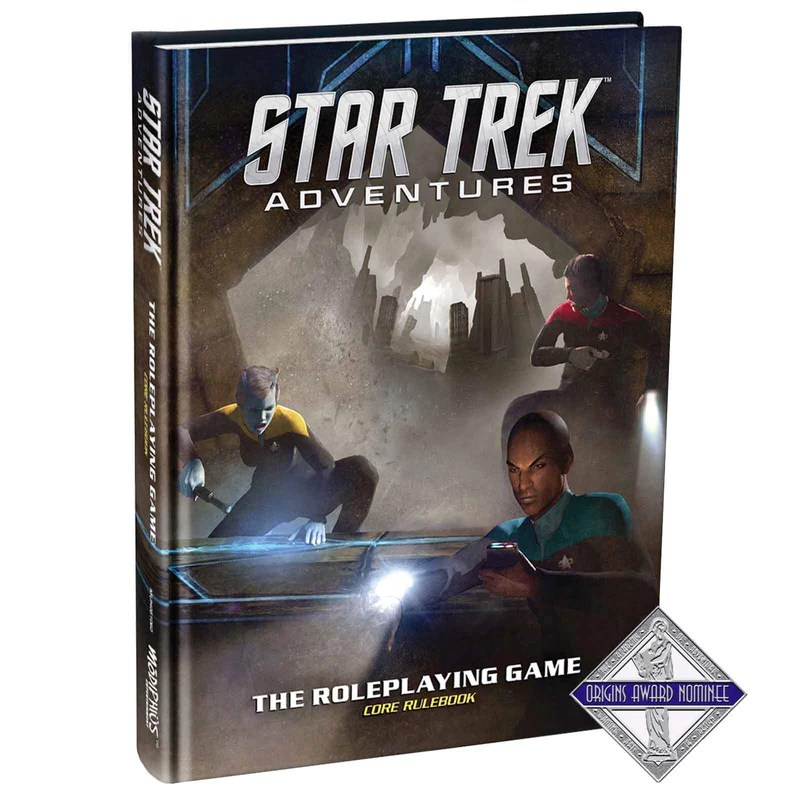
I had run a Star Trek campaign back in the summer/fall of 2019 following the excellent second season of Discovery. I had initially been on the fence with the series — I liked some of what they did, and eventually came around to the gothy version of the Klingons they had introduced — or at least the aesthetic of the ships — but it was when they brought in Anson Mount’s terrific Captain Pike that they had me. I grabbed up the old Decipher Trek books and got the group into a game set during that season.
I did use the Disco version of the Klingons mixed with the movie period, kept their ships, and off we went with ten adventures set aboard USS Fearless, a Walker-class ship once commanded by Captain Garth (before the going nuts.) The Decipher rules are relatively simple, although they are obviously an attempt to mesh the superior rules set of Last Unicorn’s Trek with the dictats from Decipher. Starship combat is pretty clunky and wargame-y. That’s good for some but it can be a hard transition from roleplaying to board gaming.
So now, after dropping a bit of dosh on the Modiphius storefront, I have the Corebook bundle (w/pretty much all of the PDFs), the GM screen, the Disco sourcebook, and the Utopia Planitia Guide…plus the geeky dice. Needs the geeky dice, we do.
The basics: roll 2d20 and get under the combo of your attribute+discipline (skill); if you get under the skill, you get an extra success. The attributes are Control, Daring, Fitness, Insight, Presence, and Reason. There’s a bit of overlap between dexterity and willpower in control, but the rest are pretty straightforward. The disciplines are where the feel of the shows is well recreated: Command, Conn (basically anything tech operation related), Engineering, Security, Science, and Medicine. You have six focuses — specialities acquired in character creation, four values — short blurbs that aid with roleplaying and get some game currency (more in a minute). There’s also traits, but those are usually lumped up in your species.
Like other 2d20 games, there is a game currency for tweaking things — momentum — which you can spend to get extra d20s to roll on a test, allow you to reduce the time of an action, take additional actions, or add extra damage. These are communal and meant to be spent. Where the writers messed up, in my opinion, was naming momentum “threat” when the GM gets…momentum. It’s an unnecessary difference that can be confusing to the new gamer. Or even those that know what they’re looking at. Much like Luck in Fallout, Star Trek Adventures isn’t done with the in-game currency; there’s also “determination”, which you get from playing your character correctly. You can gain them by allowing the GM to use a value against you, and spending them allows you to reroll dice or gain another d20, or take an advantage on something. All this could have been done with momentum. A second game currency seems a bit fiddly.
Starship combat is better pot together than previous Star Trek games. There’s an attempt to keep the roleplaying going during ship-to-ship engagements, with each officer’s actions playing off of each other. Here, the engineer and operations officers are very important because to pull off maneuvers requires power — as in the shows — and these characters’ main job is to replenish and manage power when they aren’t fixing stuff that’s been shot up. It’s the first Trek game that’s really given ops guys and engineers something more to do than jury rig things in the fight.
Another inspired bit is the “supporter characters” option. Is your character not present in a scene? Maybe one of his subordinates was. There’s a thumbnail character you create and control if they’re part of your team, department, whatever.
The material for STA is pretty expansive, already, and they have overcome the dreaded “Klingon supplement” problem. (Ever damned Trek RPG seemed to fold as soon as a Klingon guide was announced or published.) There’s quadrant guides, there’s series guides for Discovery and Lower Decks, there’s guides to the departments, adventure modules, and of course…the Klingon core book and campaign. I figure we’re going to get a Picard guide pretty soon. There’s miniatures, there’s department-colored d20s with d6s for damage with the Starfleet arrowhead as a 6.
So is it worth it? Modiphius tends to be a bit pricey compared to some of the game companies, but at $50ish depending on where you look, the main book is reasonably priced, and the GM screen and kit is actually really good — almost essential. I think the Utopia Planitia guide is also a good buy for the wealth of ships it provides at $30ish. If you’re a Trek fan and gamer, and you want to take a spin in the best known sci-fi franchise, it’s worth it. I’d see if you could get the corebook and PDF bundle I got, which was most of the damned products for about $110. If you’re piece-mealing it, it’s going to get more expensive.
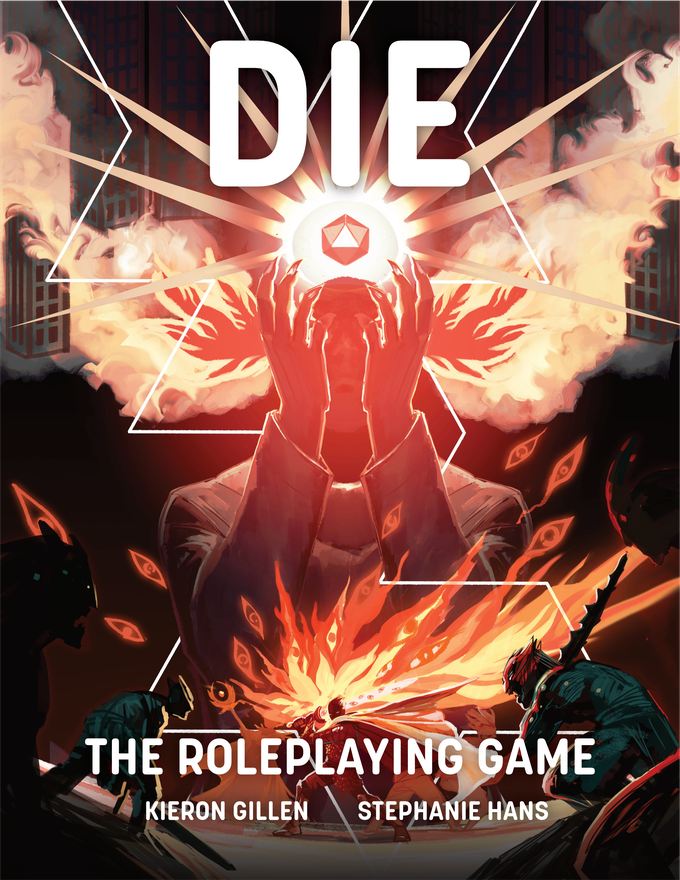
This has rolled across my Kickstarter feed a while back: DIE the Roleplaying Game. The conceit is one we’ve all seen — players of a game get sucked into the “real” thing. I’ve run a couple of mini-campaigns using this idea in the past, but this looked like it was attempting to get a lot more meta about it. Written by Kieron Gillen, a British comic book writer, and Stephanie Hans, a French comics artist, it was a tie-in to a comic series…or maybe the comic was a tie-in to the game. Either way, while you don’t need to have read the comic (and I hadn’t when we kicked the tires on the game last week, I have now).
The rules are really light with influences from several other light weight systems. The basic mechanics are a dice pool — roll the number of die equal to your attribute, plus or minus dice for various advantages and disadvantages, to do what you want. A success is scored on a 4 or higher; a 6 also gives access to a special effect. The rules beyond that are tied to whatever class you play, and these are roughly analogous to Dungeons & Dragons classes, but with a twist — or maybe perversion is a better word.
Before you get to your characters, or “paragons”, you create your players. This involves a session zero where you all decide the backstories and desires, disappointments, etc. of your player, and the connections between them all. The players then create their paragons. This actually was an interesting stage as paragons that would have been perfect for some of the gaming group were not chosen, and paragons perfect for the players were taken.
There are six classes and the game is really set up to be played by six or fewer players. You can have two playing the same class, but that isn’t recommended. There’s the dictator –the bard as monster; you can control people and their emotions with “the Voice”. In the comic, this is used to horrific and tragic effect. It tied synergistically to the Emotion Knight. In the comic, one of the characters is a “Grief Knight” powered by his sadness; the Dictator in the comic powers him up with the Voice…but it’s a pretty awful thing to do. There’s the fool, who is the rogue analogue. So long as they are being foolish, they are pretty much untouchable. Their friends? That’s another issue. There’s the neo — a cyberpunk “wizard” if you will that is powered by “fair gold” — which is found in the “Fallen”, the game’s zombie/orc/bad guys you can kill without remorse (until you know their backstory…) There’s the Godbinder, a cleric who cuts deals with gods for some pretty damned powerful effects…but that debt has to get paid. Lastly, there’s the Master, which goes to the gamemaster; they are a player, after all. The Master is the wizard — he can bend and break the rules, but only so far before the power of DIE — a 20-sided world with different settings per facet — come calling.
(Since I was the GM, I took the Master, of course. My player was the not-great looking buy charismatic drama geek raised by a single mom with all sisters, and who has a tendency to play only female characters. His master is a soft-core leather fetish redhead…of course.) Each of the classes has their own special die — a d4 for the Dictator, d6 for the Fool and so on up to the Master with the d20.
The conceit is that you are either coming back together after a time from your last being together to play a game, but we tweaked that to the “last big game of the summer before we go to college”. You get sucked into the game and then the fun (or horror) begins. The basic premise is that the players wouldn’t necessarily want to go into the game. In the comic, the friends get sucked back to DIE after having barely survived it in their youth. The setting is supposed to be dark fantasy, but you can go light or REALLY dark (see the comics, of which there are four graphic novels.)
Our setting, we decided together was based on the stuff the players all did in the ’90s (we set the game in 1995), so we leaned into a Shadowrun-kind of campaign. The dictator is very much straight out of a White Wolf Vampire game, the Ecstasy Knight is armored up like a low rent Batman, the Fool is a dual pistol wielding street samurai, and the Master…well, I mentioned that.) Following the arrival in a knockoff Night City, they get attacked by Fallen (again, a suggested start for the game), and in the fray, the Master gets spirited away.
Afterward, they find out at their favorite bar from the games they had played, that the world is now in terrible danger and is starting to fall apart. They have a choice to make to save DIE and its inhabitants — they must all agree to play the game, or to leave the game…but they’re short a member.
That’s where we left it last week and we’re picking it up at Nerd Night this week.
It’s an interesting setting and depending on the group you have to play, this could be either light fun that has a dark underside, or a straight-up horror, “oh, shit!” quality to it. The system and its pretenses are interesting, and I could see this being a game to roll through on a semi-regular basis.
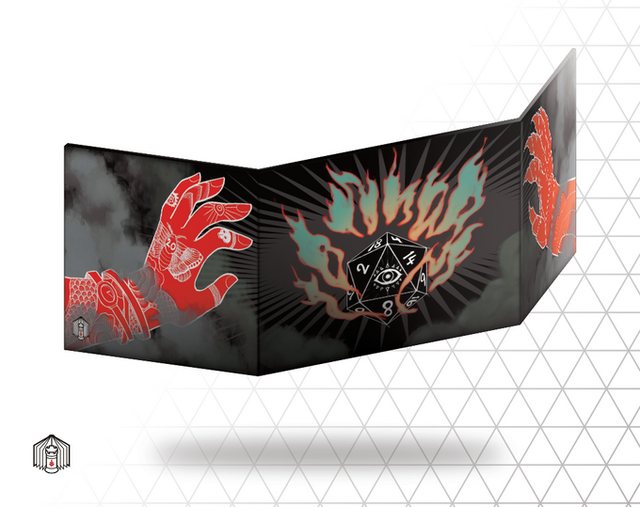
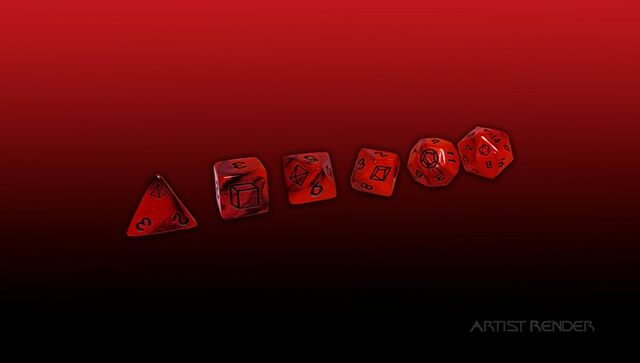
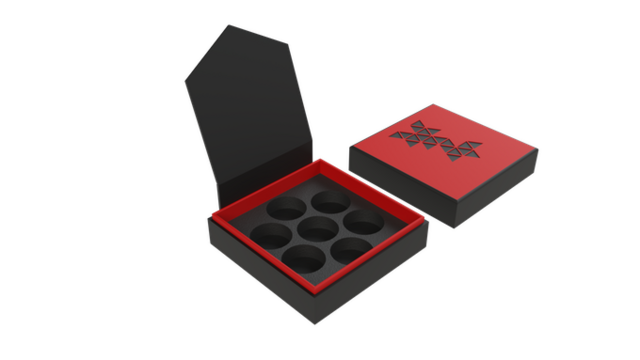
To the physical aspects of the game. Hans’ artwork is superb and provides a good sense of what the flavor of the game is supposed to be. There’s bits and pieces from the comic book, but for the most part, the imagery is taken from the sample characters that were used by the authors and their playtesters. It’s well written and understands that needs of getting the rules right and making them easily comprehensible, and the artistic end where you’re setting up the world for the players. The book is hardcover and well-bound; there’s no slop here — it’s high quality. The GM screen is equally good — heavy stock with cool but not distracting artwork on the player side. There’s the basics for the rules on the GM side, but…well, there’s not a lot there. Lastly, it came with a nice heavy cardstock dice box with a magnetic clasp. Inside six red polyhedrons with the top number an image of the die type. Yes, they’re cool. And since everyone get one specifically for their character, they stand out from the d6 die pool, and are supposed to.
This was the first new game in a while that my game group got really excited for, and we had a blast with the player/character, initial introduction session. The game is available through the link above and the comics are available on Amazon or a decent local comic store. (That’s where I got mine.)
So is it worth it? To get the book and all the attendant dice, etc. will set you back £90 or about $100. The quality of the artwork, the production values on the book and attendant materials, is well worth it. If the setting intrigues, do it. I feel I got my money’s worth, and I’m even going to pop for the Fair Gold I hadn’t added on during the Kickstarter.
As for the comics — they are very well done. The writing is a bit forced at the start, but once the plot gets rolling, it’s got a nice flow, the characters are rich and well-written, and the story gets progressively more involved and interesting. I’ll stop there as there’s tons of spoilers. The whole series set me back $60 and was more than worth it. Hell, I may have to have a look at The Wicked + The Divine.
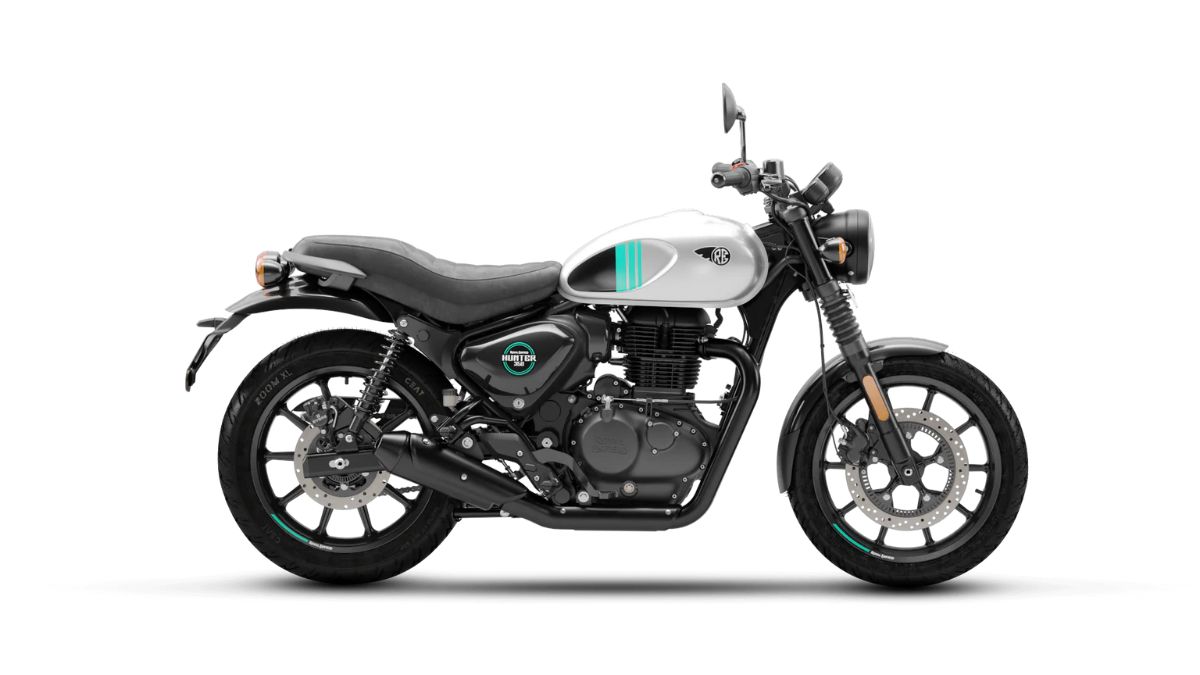
I guess that’s technically HNTR 350, or so it said on the side cover. While I was ordering up a rear tire for the Interceptor 650, I got a chance to hop on a Hunter 350 for a few minutes last week. This is the latest offering using the J-engine from Royal Enfield, who seem to be bringing out a new model every two days or so. Unlike the Classic, which evokes the 1940/50s messenger bikes, and the diminutive Meteor 350 cruiser — both of which I’ve ridden and really liked — the Hunter is more of a modern standard. It’s obviously targeted for new riders and commuters that don’t want anything too much, but something that is nippy in town and gets good gas mileage.
Well, this is it.
The bike is small, approachable, and not in any way intimidating. This is a perfect grab for the MSF courses, and for beginners. Seat height is supposedly 31.1″ but it felt lower; I have a 32″ inseam and I was firmly footed. The saddle is comfortable, if a bit soft for my taste. It’s light — 400 pounds topped off. It runs on tubeless tires and cast 17″ wheels, which makes this thing very nimble. I’m reminded of my old Buell Blast, minus the jumpy “thumper” character of that bike. The engine is smooth, sounds decent for what it is (but the Classic sounds better), and it’s not going to scare you with acceleration. It’s not slow, but it’s really not fast. The build quality is on par with anything the other companies are putting out in the cheap simply transport range, and it slightly better than the Enfield 650s.
The J-type engine turns out 20hp at the top end and 20ish ft/lbs of torque at the mid-range. I got up to 60mph on a surface street quick enough for the traffic. I didn’t hit the highway, but it’s supposedly a bit taller on power than the Meteor and Classic, and those both hit 70mph reliably (and 75mph on most level or downhill runs). It you don’t live out in the American Southwest, you’re probably good for most highway/dual carriageway/whatever you call it roads.
Around town, this thing was fun. It was quick enough to scoot from lights, but it wasn’t going to be winning any races against a lead-footed minivan mom. I got up to fourth gear fast, but only used fifth once. It turns very well and it confidence inspiring. The ride isn’t plush, but it’s not jarring; it’s perfect for commuting and maybe some fun time in the twisties out of town, but a long run might have that soft seat causing some discomfort. The brakes are good enough for what the Hunter is. They’ll stop you, but you’re unlikely to be pulling off stoppies at the lights. The lights are LED and the headlamp a halogen — something the bigger 650s don’t get (or didn’t — I haven’t looked at the new ones, recently.)
The gauge is a simple single unit with analog for the speedometer, LED fuel gauge, gear indicator, and odometer. It was visible in full sunlight without issue.
So is it worth it? At an MSRP of $3,999 (so let’s face it, the dealers are gonna stiff you to the tune of $5000ish) yes. If you want a little pop-around bike that gets almost 100mpg, looks good, and is fun to ride without giving you the urge to murder yourself at high speed, this is an excellent machine. If you’re a beginner, it’s an excellent machine that you will probably outgrow in a year or two. Otherwise, you might want to look at the similarly cheap 650 series. They’re superb all-around machines that you can mod the hell out of and no outgrow.
First, the backstory: Here in New Mexico, our concealed carry requirements are a bit mental. It’s obvious that the people that wrote them don’t know a ton about guns and how they work. There’s a qualification that needs to be done every two years, but the renewal is every four. Mostly, this is to make the instructors money, although I’ll admit maybe shooting your firearm once every two years is a real minimum. (In the military and police, quals were once a year…that seemed, even then, a bit long of an interval.) Oh, you do this at seven yards. You can practically hit someone with the weapon itself at seven yards. The real issue, however, is in addition to having to qualify for a revolver and semi-auto separately (okay — the manual of arms is different enough that basic handling might be an issue for some; but they’re still a point and click interface) and in the “largest caliber you plan to carry”. They’re looking at the number. Not if, say, 10mm is a whole lot more recoil than .45ACP, or .357 magnum is a bit more tricky to use for some than .38 special — no. Number big — that’s important. So that means that while I prefer a 10mm to most cartridges, I have to qualify with a .45 to basically carry whatever the hell I want.
Well, I guess technically I should be doing that with .50 calibers, but no.
That means once every two years I have to dust off my .455 Webley and borrow a .45ACP from someone. It’s stupid. I decided I’d rather have a cheap .45 I could make good enough hits at spitting range. In the local gun store, the excellent Right to Bear Arms, they had a few .45s. I’d been dickering about over buying one all summer, so far. There was a used Springfield Armory XD9 for about $400, then there was a no-name Turkish 1911 for about the same.
Enter the Tisas 1911A1 Service pistol. This is a seriously no-frills pistol. Old-school Colt Series 70 with no ambi-safety, a GI hammer and tang. No memory ledge on the mainspring grip safety. No real sights — they’re black, they’re small, but they work. The frame and slide forged carbon steel with a really good Cerakote finish in “basic black, sans pearls”; the barrel is cold hammer forged and bright silver. There’s no full-length guide rod nonsense here. Just the old style spring cap fitted into a bushing. It comes with two 8-round magazines, which puts Tisas way ahead of most stingy 1911 manufacturers, where you get one magazine and shut the hell up. Black plastic grips finish the package, though I’m tempted to throw a few shekels Tisas’ way for the wood grips with the US emblazoned on them.
In the shop the trigger was 1911 good, but not top of the line 1911 good; so better than most other pistols out of the box. It breaks at about 5 lbs but feels lighter, has a bit of takeup to the wall, and a crisp release. The reset is short and audible. You can feel a bit of movement in the grip safety as the mainspring moves, but I’ve felt that in high end guns, as well. Not a deal breaker. The slide runs smoothly and it’s sprung tightly. The hammer felt like it was scraping a bit against the frame, but there’s no indications of wear. I snapped it up today and headed out to the range with 100 rounds of Blazer Brass in 230 grain. No cleaning. No oiling. Let’s see how this POS fares.
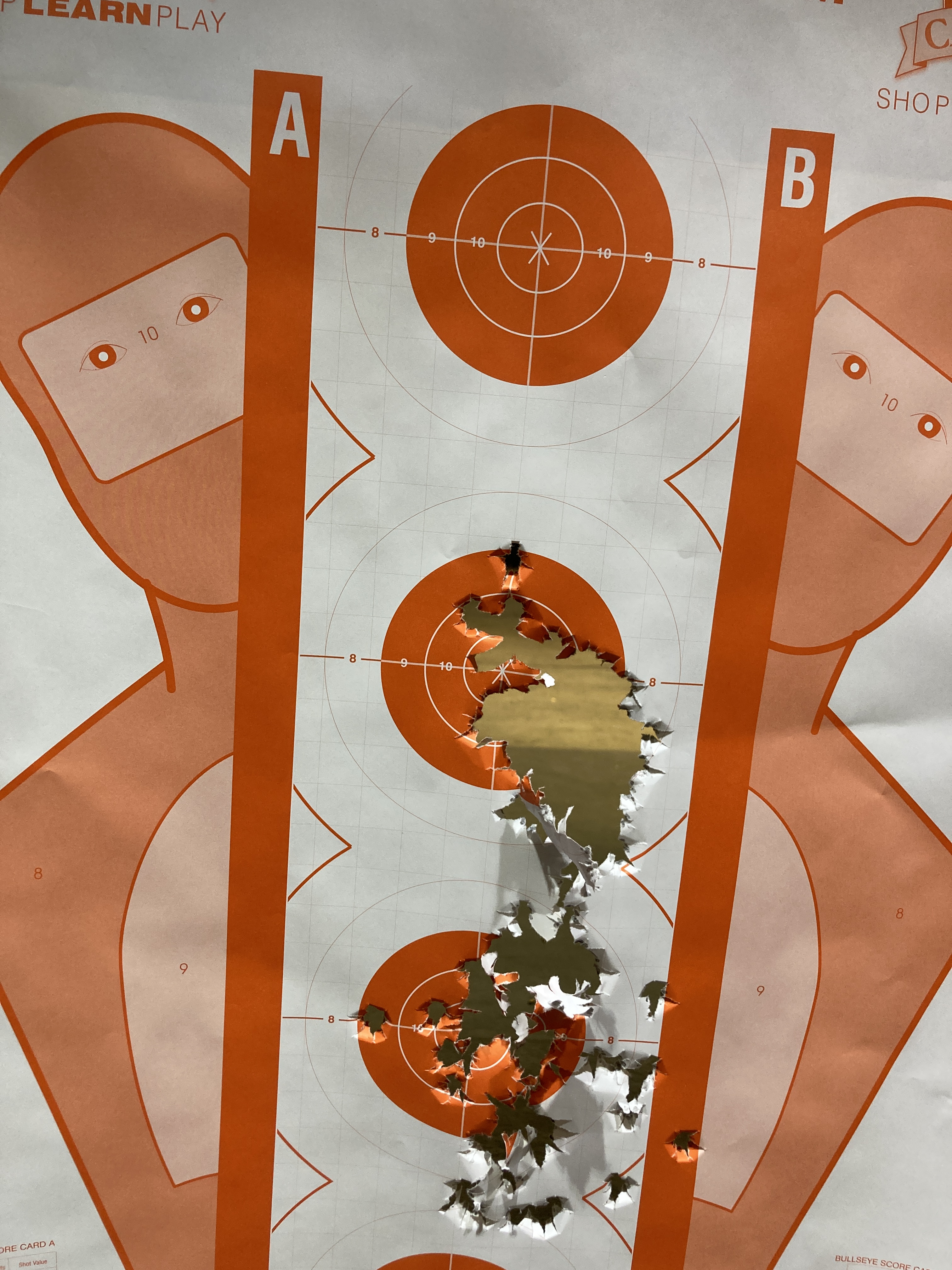
Out of the box, without any of the usual care I would give a pistol before it’s first time out, I had four failures to go into battery; the shell just hung up a bit going into the pipe. It only happened on one of the magazines, and did not occur on the second. At 10 yards, I did the bottom group with the first box of ammunition. The initial right and low was due to my grip which was a bit off from shooting the Prodigy. A slight wriggle on the grip and most of it was in the orange. The upper group was the second box, with a bit of trailing down in the last magazine or two. That’s pretty good for a $400 Turkish pistol.
Even better, after getting it home and cleaning the thing, the finish in the high abrasion areas was completely unblemished save for the usual spots on the firing pin block. The Cerakote held up along the slide rails and the locking lugs; something a lot of pistols don’t pull off in a similar round count. (I seriously think the coating is better than on my Kimber Camp Guard, which at 2000 rounds is showing it’s age.) Function was smooth, save for the sense the hammer is still scraping a bit, but I’m not seeing indications of it. I may just be looking for something to bitch about.
The Tisas 1911 is imported by SDS out of Tennessee, which also handles Spandau and Tokarev. Allegedly, their own engineers go out to the plant in Turkey to oversee some of the development. I’ve heard rumors that Girsan and Tisas basically come off the same lines, but I don’t know if that’s true. In addition to coming with an extra magazine (and well done, Tisas!), the 1911 comes with a pretty nice hard case, the usual owners manual and other “by stuff” paperwork, a patch rod and brush, a bushing tool and a good trigger lock. It’s actually a solidly good presentation for a surprisingly good pistol.
The next outing, now that it’s been treated properly, we’ll see how it does and I’ll append this post. But for now: is it worth it? For the price, you cannot beat this. It’s a solid 1911 and as good as most I had in the 1990s for about the same price as in the 1990s. When a comparable Rock Island or badly finished Springfield GI is $650ish, the Tisas is better finished and in the ballpark on build quality and accuracy. Do it.
(Update: With a cleaning and decent lube job, the Tisas functioned flawlessly the second time out. Accuracy was excellent for a cheap-ass pistol with the old, barely-there sights; and good for a 1911…meaning better than a lot of the polymer framed guns out there. All of my issues were due to the extra magazine. I didn’t use it, and that seemed to mitigate the issues. I suspect I could have just shot it dirty with that magazine only and had the same results. The wear on the finish, again, is very, very minimal. I’m truly impressed with the Ceracoting on the gun. With a decent magazine, this is easily an acceptable carry weapon, if you don’t mind a full-size service pistol. With this second run, I have to redouble my recommendation: at $400, you cannot beat this if you’re looking for an entry 1911.)
Recently, I’ve been given an exceedingly rare reprieve from running the game(s) when one of the players wanted to kick the tires on Fallout, the 2d20-driven RPG by Modiphius. He had done either the pre-order or Kickstarter on the game and got the GECK box set, with includes all of the GM bundle, some cool Nuka-Cola bottle caps to use for AP (more on that in a minute), maps, etc., etc…
I will admit to being less than enthusiastic about trying the game. I haven’t played any of the video games, although they look quite interesting. The rest of the players all have experience with them. Our group, years ago, had been on the playtesting for the 2d20 John Carter game and had been thoroughly put off by the overly complicated rules — made worse by terrible writing of the same. (Therein lies one of the great issues of RPG writing. You need creative writers to make the settings and other elements interesting, but you need the technical writer to do the actual rules descriptions. They’re seriously different skill sets.) We essentially could not figure out what the hell we were doing — and that was six people, two of them game writers. Because of that, I’ve avoided 2d20 like the plague. Back to present: We ran the basic adventure presented in the box set, and said player-now-GM put together a few more episodes, so I’m reviewing after a good month or two of playing the game.
The basic mechanics are simple: roll 2d20 and try to get under the combination of attribute (here called S.P.E.C.I.A.Ls — a call back to the video game. So shooting a gun would be Small Gun (for hand weapons)+Agility to give you the number to roll under. If you get under the skill, it’s two successes. If that skill is also “tagged”, you get an extra success. For many tests, your difficulty is measured from a zero on up. Zeros are an automatic success, but rolling to get extra successes is a good idea. If a difficulty is two, you need two successes to pull it off, and so on. In opposed tests, whoever gets the highest number of successes wins. Any extra successes generate Action Points — represented in the GECK edition by the Nuka-Cola bottlecaps. (It’s fun flicking these things back and forth with the GM.) If you role a 20, some complication occurs.
Now that wasn’t so hard, was it?
Action Points allow you extra d20s to roll on a test, allow you to reduce the time of an action, take additional actions, or add extra damage. These are communal and meant to be spent. You make them back pretty quickly, so hoarding them is actually pretty useless. The GM also gets AP equal to the number of players involved in the game and can use them for similar effects. Still pretty simple.
But…there is also an attribute called Luck, and this generates Luck Points that are used for re-rolling damage or a d20, changing your position in the turn order, or adding an aspect to the scene. You regain these by looking at some trinket of importance to you, finishing a mission/quest, or a milestone (if using milestones instead of experience points for advancement.) The use of a second game currency is — in my opinion confusing and redundant. It would have been better to keep one or the other. Since Luck is an attribute in the video games, as well; combining them into Luck might have made it just a bit less cumbersome.
Combat feels very old school. There’s a die for hit location. There’s armor for physical, energy, and radiation for each body section. (I’m assuming this parallels combat in the video games…) Radiation exposure can rob you of Hit Points until you get access to the right treatment (Radaway, rightaway!) Actions are broken into major and minor actions and you get one each unless spending AP. When you hit, you roll d6s that have blank faces (zero damage), a bullet hole (1 or 2 damage depending on the number of holes, and the smiling Vault Boy character, which gives you damage and activates any special feature of the weapon used. It felt a bit mechanical to me, but also the guy running hasn’t GM’d in a long time, so that might be an artifact of him learning the rules and sticking to them.
A lot of the book is dedicated to the environment and how to move around, scavenge, map, and otherwise survive in the Wasteland near Boston, as well as setting up shelter or a town. Again, I’m assuming this parallels a lot of the elements of the latter Fallout games — and the other players have confirmed this. There’s a lot of resource management here. You take effects from hunger, thirst, and other conditions, so finding safe food is important.
The book is packed with material from Fallout 4‘a Boston setting, and the artwork is gorgeous. The print books included are well done — handsome, good paper, and well bound (the core book), or stapled in magazine form. The dice are well crafted, as are the bottle caps (at least in this edition) and the PDFs that came with the bundle have all the materials in file sizes that won’t blow up your printer.
Having played for a few weeks, I now have a good handle on the 2d20 rules. They’re not bad. Not my favorite, to be sure, but fully serviceable. In fact, I even went ahead and bought the core bundle for Star Trek Adventures based off of the experience — but that’s another review for another day.
So is it worth it? If you are a fan of the Fallout series and a gamer — yes. If you have someone to run it that knows the universe and the tone the game is looking for — yes. Otherwise, I’d pass on this one. Modiphius tends to be a bit on the spendy side for RPGs.
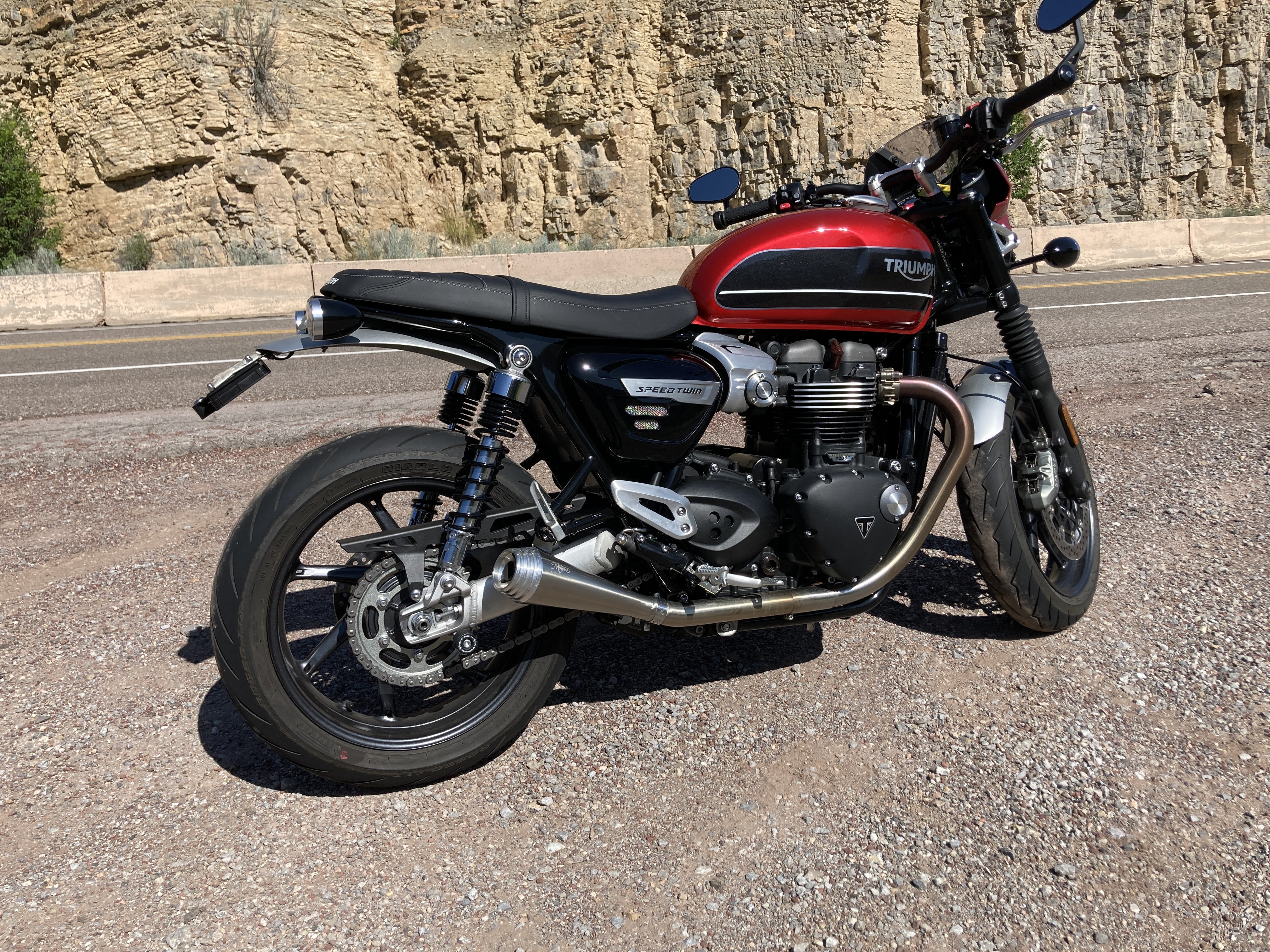
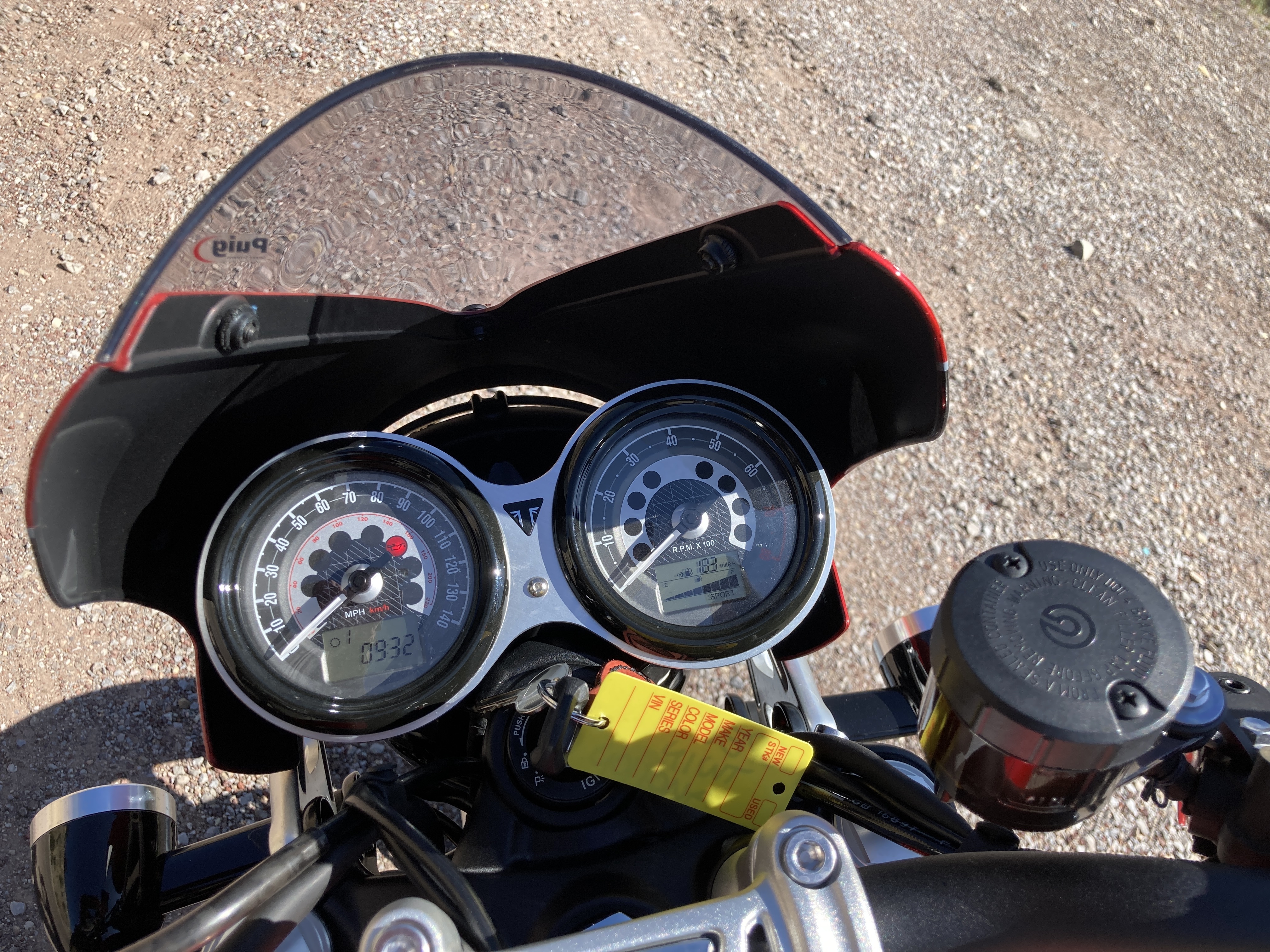
While my old 2010 Thruxton was in for her 48k service, my local dealer loaned me a Speed Twin he had taken in and which is due for the auction block. The nice red and black Speed Twin came with gorgeous wee Motone pipes and a Puig flyscreen as it’s only modifications.
Naturally, I took it out for a ride this morning to see how it fared. This included a long sweepers on NM South 14 and a jaunt up the Sandia Crest Road, with its myriad twists and turns, and an altitude climb from 6500 to 10,660 feet.
First off — the power on the 1200 Bonneville twin motor is very good. Even in sixth gear at 80mph, a blip of the throttle for a pass got me to the ton in second of two. Engine breaking is solid, as well. The motor never feels stressed, even at close to the redline of 7000rpm. The speedometer’s 140 is enthusiastic; at just under redline, the bike was doing 120mph. Even with the altitude changes, the motor never faltered. Power comes on smooth and very linearly. That said, going downhill sees the bike stumble and look for its power. If you aren’t on the throttle past a certain point, the electronic-controlled throttle has to search a bit for what its supposed to be doing. I had a similar experience with my 2018 Street Cup. It’s annoying, but it’s not a deal breaker.
Fuel usage was indicated at 51.9mpg, and when I topped it off I did a quick check with my phone’s calculator and came up with 52mpg…so just about spot on. That’s pretty decent for a 1200cc motor, but Triumph (and everyone) now run their bikes waaaaay too lean to meet the ridiculous Euro5 standards. It also has the result of making the bike run on the hot side. It was in the low 50s on the top of Sandia Crest, yet the fan for the motor kicked on near the top of the climb, and came on once or twice while doddling along at 50mph.
The gearbox is pure modern Triumph. They excel at this. The shifting is clear, quiet, and nary a false neutral to be had. They really do make the best transmissions out there, right now. My Royal Enfield is similarly easy to use, but false neutrals can occur if you don’t kick it enough. The clutch is effortless.
Handling is also very, very good. The bike runs on a pair of 17″ wheels that throw the Speed Twin into the corners, but still inspires confidence. Tire widths are fairly thin — 120 up front, 160 in the rear — and this also helps the bike feel good in the turns. It transitions well in the chicanes, and feels planted. (Tires on this were the Pirelli Diablo Rosso IIIs. Hopefully, they’re not like the Pirelli Sportcomps on the 900 Bonneville line, which get a lot less impressive in the wet….or mildly damp.)
The ride is good. Not too plush, not to teeth rattling. I spent most of my time on the Speed Twin in sport mode, but road mode didn’t seem to make the ride any more pliant. I didn’t bother with rain mode. It’s not the luxurious ride of the Moto Guzzi V7, but it’s comfortable enough for an hour and a half in the saddle. If anything, the only thing that dings the ride quality is the motor. It’s smooth and quiet, but over 4500 rpm, the bars get a bit buzzy — especially the left side. The Puig flyscreen wasn’t my cup of tea. It looks okay, but it channeled air straight onto my shoulders in turns, and even tucked, it was buffeting my helmet.
Looks-wise, this bike is beautiful. I like the classic styling a lot more than cruisers or sportbikes, and the Speed Twin hits all the right queues for nostalgia, yet keeps some modern aesthetic. Build quality is top-notch. I love the brushed aluminum fenders and accenting on the side covers (which should be color matched to the tank — come on, Triumph!) and the instrument cluster is one of the best looking out there.
The Triumph Speed Twin comes in at $12,500 MSRP, so with the inevitable dealer mark up, you’re probably looking at $14k out the door. Is it worth it? Maybe taking inflation into a account, but I’m a little more tight-fisted than some. After Triumph moved production to Thailand — then raised their prices — I was pretty disappointed with the brand. They’ve got that “gouge you for everything” quality that BMW and Ducati have, now. Would I buy one for about $10-12k? Absolutely, yes. The power and handling are fantastics on the Speed Twin, but $14k is a touch much for me. Your mileage, as always, may vary.








 The Black Campbell