Our local dealer, Motopia New Mexico, got in a bunch of test ride bikes from Piaggio Group and needed folks to put some miles on them, so of course, I graciously offered my services to wring out a brand new sport touring bike. Duh!

Enter the new Moto Guzzi V100 Mandello. It’s using a modified version of their usual transverse twin motor and shaft drive system that Guzzis have had for decades. In this case, the motor is a liter in capacity, but they’ve rotated the heads to make it easier to work on and to allow for greater air and exhaust flow. It’s water-cooled, as well. It turns out an advertised 115 horsepower and about 77 ft. lbs. of torque. There’s the usual traction control, ABS brakes, and a host of other electronic doo-dads that I didn’t play with, like an electronic windscreen you can raise and lower, the wee aerodynamic flaps on the sides for the “adaptive aerodynamics”

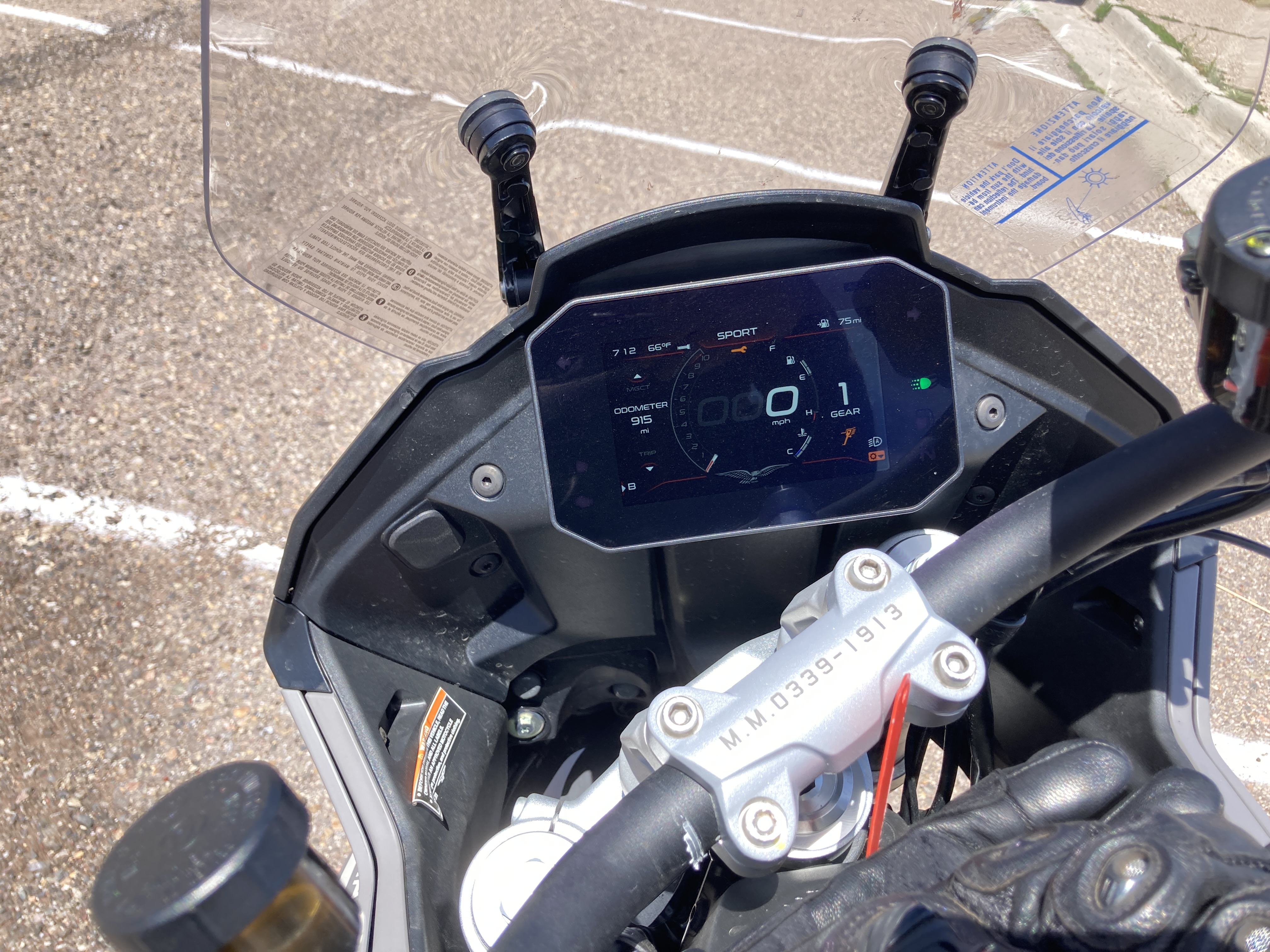
that they are very proud of, and more. It’s got one of those LED screens for instrumentation. It shows a lot of information and is very useful. I still hate it; I like my old school gauges. And get off my lawn. Here it is in all it’s glory.
With all that aside, how was it? It’s very comfortable. I spent just over an hour and 70 miles in the saddle, riding in heavy street traffic here in Albuquerque, on the interstate, secondary highways, and the challenging mountain twisties of Sandia Crest road. The saddle is superb — I’d easily put it against any other sport touring bike for comfort. It’s a wee bit tall for folks under a 32″ inseam, but I had no problems getting on and reaching the ground at stops; getting off was a bit more challenging. I kept catching on the hand/top box rails.

It’s very quick, and probably fast, as well. What do I mean by that? It gets up to speed fast. The shaft drive really moves the torque and getting on the highway was effortless. Like the V7, these things like run long in the gears or they get finicky until they are warmed up. The bike doesn’t really wake up until 4,000 rpm, and and doesn’t start to shine until 5,000. In a few blimps of the throttle in sixth gear, I was able to climb from 80 to 95mph in about 2 seconds. Not bad. Without hitting the redline, I got the machine up to 118mph indicated a few times and it was still pulling. I never hit the governor on the engine speed, but supposedly there is one. It also will bleed speed very quickly with engine braking.

The motor is smoother than any other Guzzi I’ve ridden. There’s a bit of the side to side that would similarly feel on a BMW boxer, but the quirkiness of the Guzzi motor is gone. At speed, it’s glass. The exhaust note is good — not too loud, but it’s got a nice growl to it.

It handles well. The weight is much higher than I’m used to with the V7 and the Enfields and similar classic styled bikes, but once I got used to it, I was turning with ease up and down the Crest road. Turns at speeds that would have scrapped hard bits on the V7 and even the Enfield Interceptor still had plenty of clearance. It’s nimble and stops well.

(You’ll note that the dealer forgot to put a temp tag on the bike…good thing I didn’t get in front of the one state trooper!)

The V100s I’ve seen at the shop and on the road have superb paint, fit and finish. The one I got was the Marina edition — a tip of the hat to Italy’s marine aviation division. The bike looks good, although I think I’d get tired of this look, as compared to the white and green S version of the machine.


The downsides — and some of this might be because we were breaking these in to first service and they have been demo bikes, so they’ve not been treated the best: The gearbox is clunky — especially into first. When I would drop into gear out of neutral, the bike would lurch just a bit. Not a great feeling. Shifting was stiff, but it was similarly tight on my V7 and a friend’s V85, but after the first service and oil change, loosened up considerably. Most likely, this example hadn’t been the best cared for and would see similar changes in behavior with service. But with how good the motor and handling were, this was a glaring low point.

Another issue — and again, this could have been an issue with the demo bikes — the gear indicator would not show neutral. If you kicked up from first gear, it showed in first; if you kicked down from second, it showed in second. During my trip back into town and shot up through the gear getting onto I-40 and it showed sixth as being in fifth. I dropped a gear for a few seconds and shifted up and it indicated correctly. It might be a glitch in this one machine, but who knows? I have noticed that my V7 takes a whil to indicate correct gear once you release the clutch (while clutched it has a null reading.) Are these deal breakers? No — but if they are something across the line, hopefully the boys at Guzzi are working on a software fix.

Outside of that, it is overall a very, very good motorcycle. If I was looking for a sport touring bike with luggage and so forth, I think I’d probably lean toward the Mandello, even though the Japanese stuff is usually cheaper. Compared to the BMWs and Triumphs, I think this thing is a winner. It’s running about $15,000 — so if you’re a Triumph or BMW or Ducati guy, this thing is in your price range (or cheaper). If you’re a UJM guy, it’s going to be a bit rich.
This prompt again outs my shaky geek credentials. I know there are a lot of games that have tie-in novels, comics, movies, etc. There’s stuff for Dungeons & Dragons and other RPGs, but for the most part, I’m usually focused on my take on that particular property, so I don’t really tend to buy those things. That said — and this particular game keeps coming up — I did rather enjoy the run of DIE the comic, which was developed and published at the same time as the creative team were working on the RPG. The run of the comic is over, so you should be able to get a hold of these at your local comic store or via Comicology or Amazon, or whatever. I suggest the LCS — they probably are still reeling from shutting the planet down.

The comic follows the adventures of a group of friends who got together to play a mysterious new roleplaying game in the ’90s as high school students and subsequently got transported to an alternate world based on RPGs, Tolkein’s experiences in World War I, HG Wells’ fascination with wargaming, the writings of the Bronte kids, and of course, Lovecraft. (As one does…) This world is a 20-sided die, with each facet containing a world (although there’s more to it), and over two years, they existed there before finally escaping — minus the GM who was caught in this other world. They come back to their hometown 15 years later and when their friend’s blood-covered (and magic) d20 is delivered to them, they find themselves trying to decide if they should destroy it. Too late, they are pulled back into DIE, where as their characters, they must figure out what’s going on. The comic deals with the emotional and other issues of the players as they deal with a world that feeds on their emotions and actions — good, bad, or indifferent.

It’s pretty good and worth grabbing the four volumes of graphic novels.

The other obvious one is Dungeons & Dragons; Honor Among Thieves which was a surprisingly good, and just flat out fun! movie. I took my daughter to see it and about half way through realized it was the most fun I’d had at a movie in a long time. And the fat dragon — well done.

Otherwise, without that, I would have to go with one of the properties that a roleplaying game was based on — a sort of inverse tie-in — and then there are so many: Babylon 5, Alien, Star Trek, Star Wars, Firefly, Battlestar Galactica (the good one), and so on… If we’re allowing for that then the hands-down winner for me is Blade Runner. I saw the original in the theater opening night as a teen and was simply blown away by the look and feel, the moral ambiguity, and Rutger Hauer’s amazing performance. I know some purists prefer the original release, but I felt the “director’s cut” improved the movie dramatically by removing the quasi-happy ending, the listless narration, and the addition of the dream sequence that throws an awful lot into question — some of which the newer sequel dodged.

Something a lot of people seem to miss. Gaff makes origami figured to suit the personality of the replicant they are dealing with — the stick figure man for Leon, the unicorn for Deckard (if he is, indeed, a replicant)…and the chicken for Captain Bryant. For me, that one bit begs the question: how many people were actually replicants and didn’t know it? Never went off the reservation and lived out their short lives not knowing?

The Denis Villaneue sequel is excellent, and I think from a standpoint of story and pacing, character and acting, and hitting the emotional and moral elements of the original, it far surpasses the original. (But I could be full of shit.) That said, the world created by Ridley Scott was so unique at the time that it inspired a host of manga, anime, and science fiction films’ look. Ghost in the Shell and Akira owe much to Blade Runner, as do other sci-fi animes (and curiously, to two smaller films — Streets of Fire and the very strange Trouble in Mind (which has one of my all-time favorite villains, Hilly Blue, a gangster played by Divine [out of drag]).

So — tell me what I’m missing out there? Is there a tie-in I absolutely need to see/read?

This is probably unusual for most gamers, but I don’t really have a favorite set of dice. I’ll use pretty much whatever is at hand, and since I run a lot of the games using my laptop, I often just use a dice-rolling app like Dice by PCCalc on the MacBook Air. This app works well for me as you can set up strange sided dice, like d5s and d7s — which are useful if you play Lex Arcana with it’s strange dice mechanic. It allows for Fate dice, as well.

However, there is a new trend in games of having bits and bobs to go along with it — especially stuff on Kickstarter where stretch goals usually include some form of card deck and dice. Of those specialty dice, the ones from Broken Compass were pretty neat — with faces reading N, W, E, S, and a compass face. You don’t really need numbers in a game of (essentially) Yahtze, where you are looking for matches. The red and black ones from DIE are neat in that the highest face has a graphic representation of the type of die you’re using. The facehugger dice for Alien were cool, and helped craft a mood — but necessary? Not so much. I particularly liked the specialty dice for Avatar Legends, which have the sigils of the various elements on the 6 face.

Are any of these necessary? No — but they are fun and help set the mood.

This is a tough one. I’m perpetual GM for most of the games I’ve played, so I never have just one character; I get to play a bunch of them. Over time, there are a few that stood out, however:

There was the hill Martian that joined the crew of a cloudship in our Space:1889 game, and who became attached to the Texan gunslinger that was being played by one of the other gamers. A generally well rounded character that has a touch of the modern “strong female character” to her. she’d be more nuanced this time around.

There was Athena — the sentient starship from our early aughties Star Trek game, and who was fun for her frustrations with her crew. One of the Treknobabble things was FTL switching for their computers. I decided that she knew the answer to questions that would be asked…but causality meant she had to wait until the question was asked to respond. If they didn’t ask it, the answer would simply dissipate in her mind. She was protective and funny, with a snarky side.

There was the troll in our Rome-based D&D game that the current game group started in. Stupid, violent, but with a weird sense of honor and morals, he was convinced with a spectacular roll by the monk to stop their fight and listen to the word of God. In a later campaign with different characters a few decades later, he turned up as a lay priest in England, where his graps of the Bible and the Ten Commandments were horribly misunderstood and he went about grifting the local passersby using the bridge by his Church with massive tolls “for God.” He was probably one of the most popular with the gaming group.

Recently, I’m rather fond of our story mcGuffin in Alien, an android named Stella. An older model that’s had her mind moved from one body to another, and has possibly been witness to some really awful stuff. She was the android with the group in the original run of the Chariots of the Gods adventure that Free League put out (and I tweaked), and she has been the impetus for adventures for a few groups now. I’ve been trying to keep her in the vein of David from Prometheus — is she sentient? Isn’t she? Does she have real feelings or is it all artifice? Does it matter?

Weirdly, now that I’m playing a single character in Fallout…I don’t think it’s as interesting as the various ones I’ve had to cough up out of nowhere and breathe life into on the fly.

There’s a couple of ways this one can be taken: the smartest game (either run or the smartest players…) or the smartest setting/genre, or the smartest rules set…

I’ll go with the middle one first. The smartest game I’ve ever played was is probably the one we’re trying out now — DIE the RPG. The meta-quality of playing characters who are themselves dragged into a game and playing their characters isn’t a new idea, but the system and the setting are designed to play with the foibles and issues of the characters as the world of DIE seeks to “feed” on their hopes and desires, fears and pain. It’s also the first game to explicitly have the GM be a character/player in the game that I can think of — the world is crafted by that player’s issues. It’s an interesting aspect that can really be fun for the GM.

The smartest game as in the storyline, players’ actions, etc. has got to be the Battlestar Galactica campaign I ran for years. Running a game in an established property is tricky, especially one where the story is has already been told and has it’s own heroes — think Babylon 5, for instance, that was tricky to create a story that allowed the players to have real impact when Sheridan and the others are running around deciding the fate of the galaxy, of Star Wars — where you’re not going to get to destroy the Death Star or take out the emperor; or even Star Trek, to a point.

You can take this question two ways — a game you don’t get to play, period; or a game you don’t get to play, but run as GM. I’ll take both:

The first: We pretty much play most of the games on the shelf that I want to play. We tend to try and rotate the game and system on a regular basis to keep people from getting bored. That said, I would love to run Jovian Chronicles using some rules set that isn’t the monstrously awful Silhouette system. I’ve thought of porting it over to Cortex (the Battlestar Galactica version), but it just never quite gets there.

The second: Since I’m forever GM for most of my life, there’s a bunch I’d just like to play a character. That’s been a delight in Fallout, concentrating on one character (two if I’m playing for an absent player), but I think I’d really like to simply play in either Blade Runner or James Bond:007 (or any other espionage setting). I suspect, however, due to experience in both those venues, I’d be a pain in the ass to run for.

Does chess or Parcheesi or Go count? Probably not.

The oldest RPG I’ve played was pretty new at the time — the original Dungeons & Dragons boxed set. The one where you didn’t even have die, but had to cut out chits and shake them in a cup. The rules were fairly simple, especially compared to the encyclopedias you need now just to know all the bits your characters do.

The oldest game we still play is Space: 1889, although I’m running the old setting with the new, lite Broken Compass rules. The oldest rules set we used up until about 2010 was the James Bond:007 RPG. It’s still worth a look.

Well, a lot of the stuff that has come in recently was Kickstarter between last year and the end of 2020, so the RPG bought this year was Mödiphiüs’ Star Trek Adventures, reviewed here. I had run a Star Trek game a few years ago, but I used the old Decipher system that had powered our long-running campaign of the early aughties. (A friend was a Trekkie, Enterprise was showing, I figured why not?)

Fast forward to this year. One of the other players has been running Fallout for us (review here) and the 2d20 system that had been so damned awful in playtesting years ago, was much better laid out and explained than when we were trying to struggle through the unedited playtest material for John Carter. I had popped for the PDF of the game a few years back never intending to play it, but maybe mine it for ideas at some point. After playing in Fallout, I had a pretty good sense of how the system worked, and what rules were a bit to wargame-y and would get conveniently ignored in a Trek game.

So I bought the Corebook bundle (comes with the PDFs for pretty much all the books expect Lower Decks and the Klingon supplement), a GM screen (which comes with an excellent set of starship combat sheets to aid players in what they can do when the photons start flying), and the Discovery-period sourcebook (more for the Strange New Worlds ties.) The goal is a “season 2” of the campaign we played a while back, using the 2d20 engine.

This post will also cover the Most Recent Game Bought post for tomorrow.

This was long enough ago I honestly don’t quite remember. I’ve been playing — starting with the box set of Dungeons & Dragons I got from Hess’ department store in…’78? ’79? maybe? Long enough that it was “dungeon master”, not gamemaster. I know it took a long time to find someone who wanted to play. There was a distant cousin I wound up running the game for, and there was an older guy who was running D&D at the local library, but I don’t remember his name, but I remember he didn’t make it very exciting; it was very rules oriented.

Once I had an actually group of friends playing by 1980, we played a lot — and I was usually the GM’d. We cycled through a lot of games — all the TSR offerings, then hit on James Bond:007, which was my favorite system until about a decade ago. It’s still damned good.

In college, others would take over running games, but they usually would last a few episodes then hand it off to me because they were busy or just didn’t have the time.

The only one that really sticks is the redheaded giant dude, totally spectrum, who ran Dungeons & Dragons for the group for about most of a session before we started working on peeling out the good gamers for our own group. This guy was stunningly misogynistic — after going through his 80 page bible on his game world, he gave us our characters, making sure the singular female got the cleric…who was mute. Better yet, he made sure his wife was getting us drinks and food. He had played once at our place and while stretching, he knocked the glass light cover off the kitchen ceiling. Shatter. Did he offer to clean up? Nope — he expected my then-wife to.

Then there was the goth Christian who ran Call of Chthulu — more on him later…

I decided to hedge my bets on this one and give the first RPG played with my daughter, and with the gaming group, this year. That gives me a chance to talk about two games!

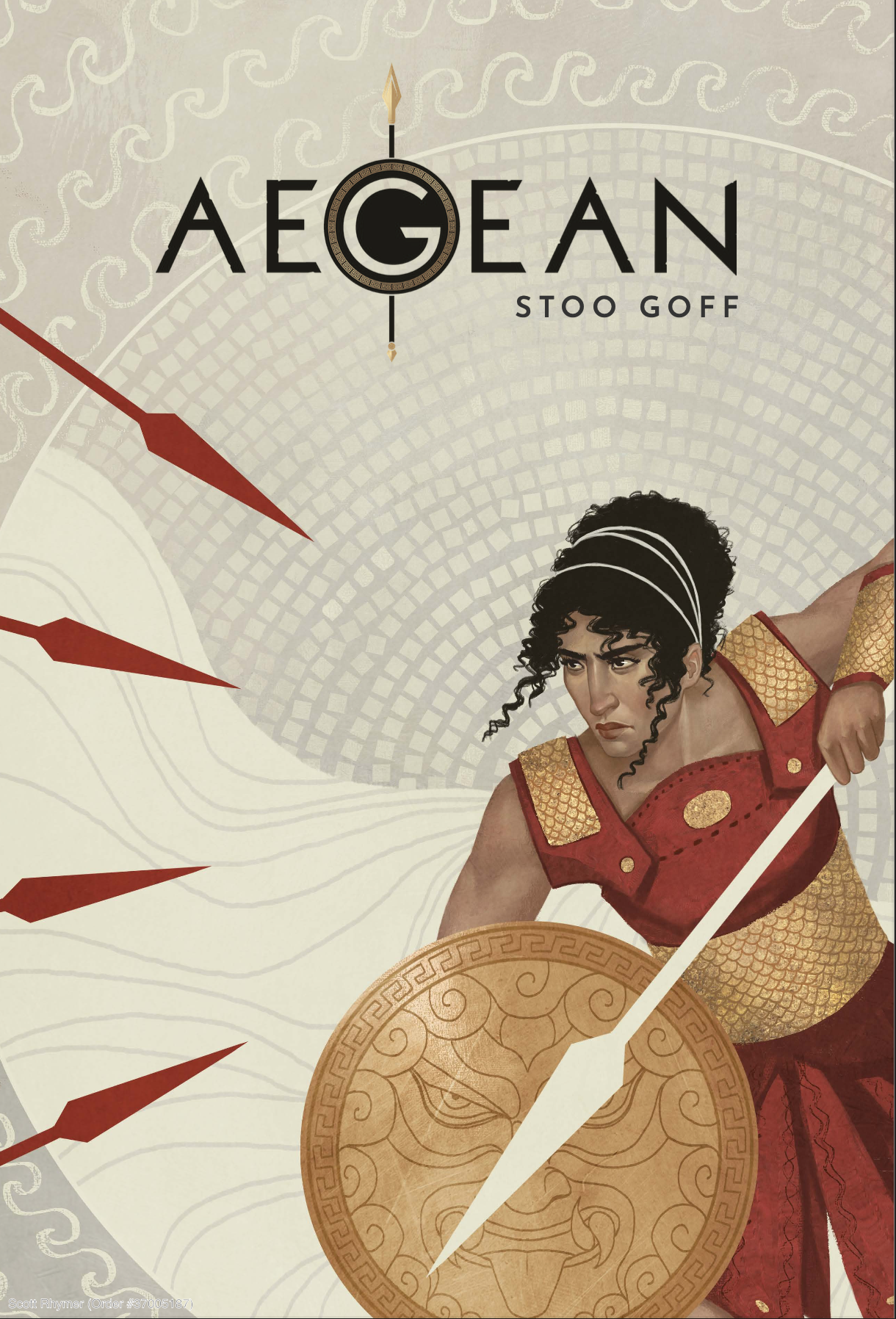
The first is the game I was playing with my daughter (and later the wife jumped in, as well): Aegean. This is a rules lite RPG set in ancient and mythic Greece. The players can be normal folks or demi-gods, and the there’s a couple of expansions that came along as stretch goals on the Kickstarter which ended way back in October of 2021, and which was supposed to be on backers’ doorsteps in Summer of 2022. Of course, between shutting the f***ing planet down and the attendant issues that caused, while the PDF has been in hand for a while, the printed materials (as of this writing) are still vaporware.

The system is simple — you have five attributes and fifteen of skills. To do something, add the appropriate skill and attribute and roll that number of ten-sided dice. Eights and above are successes, with 10 allowing you to activate a feat on your weapon, bank Resolve (their luck/story/hero point mechanic), give a success to a companion, or “invoke the fates”. It’s a pretty standard mechanic, especially for d6 games. It’s light, fast, and works. The character can embark on adventures from monster killing (a pretty common hero thing, even in Greek myth), to competing in contests at city games, to help to build up one’s polis — the city you are from. Players work together to create a basic polis and can get elected into the government.

Overall, the system is tight, there’s enough material to work with, and fans of the myths should be able to craft story arcs with ease. The production values, based off of the PDFs is very simple. Layouts are single column, block paragraph with easy to read typefaces. Art is at a minimum in the core book and teh follow-on Book of Heroes and Book of Empire — which I still haven’t had a chance to look through, as they came in which we were kicking the tires on other games systems at the time.

Aegean can still be pre-ordered at Kickstarter, and at DriveThruRPG. I should have gone with the print-on-demand version; proof for the print version were only spotted in April, so I’m expecting this to take another few months to see.

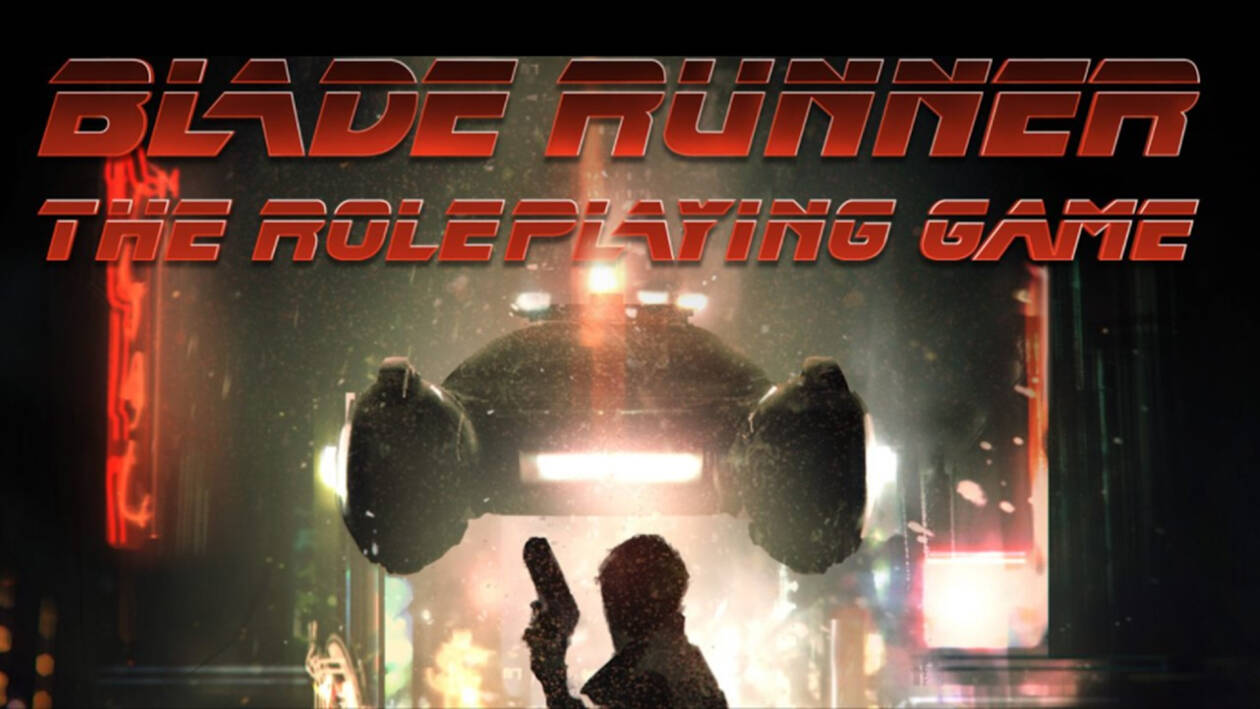
The other “first” for the game group was Free League’s Blade Runner. I love police procedurals and espionage adventures. Always did. Hell, they directed me into my former field of endeavor, before I got into teaching. Set in the rain-soaked, neon-lit, dystopian future of the movies, the game has the characters playing the eponymous police assassins. You can play a human or a replicant. I promptly ignored the need to be Rep-Detect and several of the characters are in other divisions of LAPD: a Robbery-Homicide detective (who caught the murder that started our campaign), a Special Investigations Service detective (they’ve got an…interesting history), and a pair of Blade Runners — an older experienced one with a dark secret, and a new Nexus 9.

The system is the Mutant Year Zero system, well the “2.0 version” I guess you might call it. Rather than rolling all d6s, the the characters roll between a d4 (really a d6 is the lowest for characters) up to a d12 depending on their attribute and their skill. A 6 or higher is a success, and a 10 or higher is a double success. (That sounds familiar…doesn’t it?) After having played Alien, where a wheelbarrow of die could seemingly not get you a success, this version of the MY0 engine (and which also powers Twilight:2000) seems to guarantee more consistent results for higher levels. It good enough I’ve been considering converting Alien over to the newer version — something Free League should seriously consider.

I’ve been enamored with the admitted-awful future of Blade Runner since I sat as a teen in the theater and watched it opening night. It still is a draw and I will admit this is the most I’ve enjoyed running a game since my five-year long epic Battlestar Galactica game ended.

Both games are good and worth a look. Aegean will set you back $25 on DriveThruRPG, Blade Runner more than that from Free League.