THX-1138 meets Slient Running…but coller, I suspect. It’s an African made sci-fi film.
21 June, 2010
Dr. Ferenc Szasz, fixture here at the University of New Mexico, a mentor and friend, and member of my dissertation committee passed away this weekend of leukemia. He was a gentleman — kind, generous, and patient — and he will be missed.
He is survived by his wife, Margaret Connell-Szasz and his daughter — both teaching at UNM, as well. I wish them the best.
16 June, 2010
Hollow Earth Expedition: Roald Amundsen
Posted by blackcampbell under Roleplaying Games[4] Comments
How ’bout some game content..?
This Norwegian explorer turns up in the core book of the Hollow Earth Expedition game — but the writers decided to turn the great man into a hulking action hero. He wasn’t hulking, first off, and he was in his 50s when he disappeared. So here is my take on Roald Amundsen — polar explorer:
ROALD AMUNDSEN
Archetype: Explorer
Motivation: Escape
Date of Birth: 16 July 1872 (Age 64, physical, 59)
Nationality: Norwegian
ATTRIBUTES: Body: 2 Dexterity: 3 Strength: 2 Charisma: 2 Intelligence: 4 Willpower: 4
Size: 0 Move: 5 Initiative: 7 Perception: 8 Defense: 5 Stun: 2 Health: 6
SKILLS: Academics (general): 5, Athletics: 5, Brawl: 4, Diplomacy (Leadership): 4 (5), Firearms (Rifles): 6 (7), Investigation (Search): 6 (7), Linguistics: 7, Medicine: 5, Melee: 4, Pilot (Boats, Plane): 6/4, Science (Geography): 5 (6), Stealth: 5, Survival: 8
LANGUAGES: Norwegian (native), English, French, German, Spanish
RESOURCES & TALENTS: Artifact 2: Latham 47.02 seaplane; Followers 2: Leif Detrichson, pilot from Latham 47.02; Iron Will
And his plane…the Latham 47, number 2.
This twin engined seaplane was constructed in France by Societe Latham & Cie for Amundsen specifically. He would use the vehicle to attempt the rescue of Umberto Nobile’s failed expedition to the North Pole. Lost while looking for Nobile, most of the world thinks the great polar explorer dead, but in actuality, his plane and crew were sucked into the Interior World through the North Polar Entrance and have been seeking a way out of the Hollow Earth for eight years (for them, it has seemed only about three.)
LATHAM 47.02
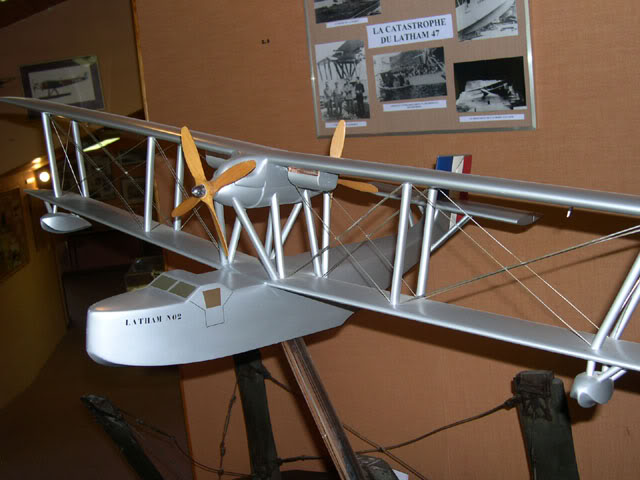
Size: 4 Def: 4 Struc: 12 Speed: 106 Range: 900 mi Ceiling: 16,000′ Han: 0 Crew: 6 Pass: 4 Cost: n/a
The Latham 47.02 has seen better days. she was damaged in the entry to the Hollow Earth, has run out of fuel and been hard landed on the water. Her pontoons are patched, as has her canvas hull, the engines have been run on sustandard fuels and the vehicle requires a CRAFT/MECHANICS 2 test just to fly each time. Specially rigged fuel bladders have halved the cargo load of the vessel to about 500 lbs. with crew, but give the plane a range of 1500 miles.
(Note the same dual engine nacelle style as R.100 — a pusher propeller in the back, a puller in the front…)
16 June, 2010
Sigh…you know, you’d have thought, by now, that Apple would have learned it’s bloody lesson: stop forcing your customers to go to AT&T! First, they “lose” a bunch of iPad customers’ data to Goatse Security hackers (including stuff from government people that should damned well know better than to be doing things on an unsecured network…), now they can’t even keep their network afloat to take pre-orders for the iPhone 4.
Maybe looking into unlocking the iPhone and the iPad wpould be a good idea, Apple, because AT&T’s networks seem a bit…crappy…to me. I was an AT&T customer back 6 years ago. For a few years before that, they were a fantastic phone service. Then they teamed up with Cingular and turned to unadulterated $#!t. And they haven’t improved — especially if you want to make a phone call — that I’ve seen. Apparently, in some cities, the strain on the bandwidth from the Apple devices alone is killing service for customers in New York and San Francisco.
But the Jobs, apparently, can’t be bothered to give his customers freedom (as witnessed by the crappy content of the iBooks store — I’m downloading Guttenberg stuff on the iBooks store; I’m spending money where I can get the books I want…from Amazon’s Kindle on the iPad app. Then there’s the Flash issue: thanks for making half the web content unavailable to me Uncle Steve. (This, by the way, is why — until the iPad — I’ve avoided Apple products. I have their corporate culture.)
15 June, 2010
Quick Review: Desolation Road
Posted by blackcampbell under Books | Tags: Ian McDonald |Leave a Comment
I’ve been cracking the books quite a bit these days for the dissertation, but managed to squeeze in a bit of pleasure reading this week. Specifically, Desolation Road, a science fiction novel by Ian McDonald (his “Indian” sci-fi, River of Gods and Cyberabad Days are excellent!) set in an undisclosed time on a terraformed Mars.
Told in a series of vignettes or episodes, the novel follows the founding by a desert wanderer at an oasis in the middle of nowhere, along the railroad tracks, and the subsequent development of the town by vagabonds and on-the-run criminals, downed pilots, and homesteaders. The novel has a peculiar voice and a mystic quality to it that reminds me of William Faulkner or John Steinbeck in how the events of one story impact the others, but are still separate from them.
The language is beautiful, one of McDonald’s strongest qualities in his novels, and has a mythic, timeless feel to the prose. The episodic nature makes it an easy read in short doses, at the beach or on the kludge. I highly recommend it.
13 June, 2010
Test from the iPad… Vishnu says “hi!”
13 June, 2010
Apple iPad 32GB Wifi+3G: Two Weeks On…
Posted by blackcampbell under Science Fiction, TechnologyLeave a Comment
Here was my initial impression of the new iPad. So now I’ve had the thing for two weeks, and have been using the hell out of it. Not what I expected to do; I figured it would be a cute toy I’d use occasionally, but I’m finding that for quick internet and email checks, I prefer to use the iPad over my laptop. For certain things, the laptop is much easier and faster — using WordPress for one. The software WordPress has out for the iPad is atrocious: it was impossible for me to upload content, the ability to choose categories, etc. was nil, and in Safari, it was worse — requiring me to go to HTML to do any work. It was barely workable. And Apple won’t allow Flash, so some sites are useless to the user.
However…battery life has proven to be staggeringly good. I’ve squeezed 17 hours out of it (with 7% left) with the screen always at half brightness, and the wifi running much of the time. I turned off the 3G, since I’m not subscribed to see if I can eek out a bit more.
Sound and video quality is very good for the 9″ screen. I downlaoded a few hours of Cato Institute talks from iTunes for free and that sucked up 2gb only. Loaded a few movies for a trip would be nothing. I’ve downloaded a few dozen free Gutenberg Project books from iBooks, the Craig Ferguson bio (well worth a read), a sci fi novel. From Kindle I stocked up on a bunch of stuff on the Progressive era and libertarianism. Total of 38 books, 3 hours of movies, 300 pics, and about 400 songs, and a bunch of free apps…I’ve still got 26.3GB left.
Apps: I found free chess, checkers, go, poker, blackjack, solitaire, and Need for Speed (but no free backgammon! Damn!) All work well, and NFS has been like crack to me. I am however, enjoying running my Aston Martin DB9R through the streets at breakneck pace. I’ve got a weather app, word processor that I’ve done up a nice resume, some RPG adventures, and works on dissertation notes while out and about. Occasionally, the memory (I think it’s .5GB RAM) will fill and the machine will kick you out to the main menu. But I haven’t lost work when it does, so I’m okay with it. It’s still less twitchy than my Palm Tungsten C could get.
Typing on the iPad can be a pain if you’re doing heavy typing. The dockable or wireless keyboard is eventually a must if you’re using this as a road warrior machine. But I find the screen keyboard works well for quick missives and some light work. the auto spell check is a pain in the ass, if you’re not paying attention and has a habit of swapping word on you, if you stop paying attention. It’s easy to miss the space bar and hit the frame around the usable face. Otherwise, I find it easier to use than most thumb keyboards. Funnily, typing one handed while holding the iPad is easier than doing the traditional two handed hunt and peck.
I bought the dock adapters for USB gear and SD cards. It pulled the phots from my camera card immediately without issues. I haven’t tried the USB adapter yet. I haven’t tried the earphones yet, so I can’t comment on the sound quality on headphones yet. Apple does need to add the ability to use SD cards through the adapter for extra storage.
Verdict hasn’t changed — this thing is slicker than snot, looks incredible (although a strongly suggest the Apple cover or an aftermarket case or you’ll scratch the hell out of the pretty aluminum body and the face. Yes, it gets fingerprints on it; I have a wee microfiber wipe I keep with it to occasionally clean the screen. It is sexy and I’ve already convinced two friends they need one,.
Functionality: this is a good on the road machine. The wifi is solid, connects easily (save in my house, where I suspect the router is dying after 6 years), and I haven’t tried the 3G, yet. (I intend to while in Scotland, but that looks like it might be an adventure in itself, as I might need to swap out my Micro SIM card for one by Vodaphone, O2, or Orange once I hit Edinburgh. On that Apple gets a big fail — enough with the AT&T shit!) Music selections from the iPod program will play while you are doing other things, I found out by accident the other day.
Typing email, surfing the net, doing spreadsheets in Numbers, or docs in Pages (it will import and export .pdf and .doc), getting directions — it’s very easy and with 3G, would be more so, I suspect. (Although I hear AT&T’s networks are seriously clogged from iPhone usage in places like San Fran and LA.) Watching TV or movies, listening to music — all easy.
Now…as a gaming machine. It’s great for driver games thanks to the accelerometers, but as an RPG device: you can have your .pdfs of books and characters it. There’s no multitasking (yet, but iPhone4 has it, so the iPad will soon enough) so you need to swap between files, but it does remember where you were last in a book. iBook will have native pdf capability in a few weeks, but there are plenty of free pdf readers. There’s Diceshaker — a free die program for RPGs that will do any of the standard and a few non-standard die rolls. Put the program icons next to each other, it’s as simple as hitting the home button and tapping the appropriate button and you can swap back and forth. Have all your characters, dice, rules, etc… with you, plus internet capability for answering obscure questions. I was able to use the iPad as a picture and map device for the players tonight, to give them an idea of the interior layout and look of a British airship from the 1930s.
Is it useful as a gamer tool? Oh, yeah.
12 June, 2010
Murder on the R.100
Posted by blackcampbell under Roleplaying Games | Tags: hollow earth expedition |[4] Comments
Started a new Gorilla Ace! adventure this evening: Murder on the R.100. I wanted to do something different after a swath of superscience pulp advnetures, followed by the Chthulu-y one shot for the minor players on Wednesday. I decided on something period and pulp-appropriate: a murder mystery.
It started out simply enough as a teaser for an upcoming adventure, but I liked the setting — and found enough info on it — that I wanted to use it. What to do on an airship..? R.100, for those not into all things dirigible, was one of the last rigid-hull airships constructed by the British in 1929/1930. She was constructed by the Vickers Company and the Airship Guarantee Company — designed by Neville Shute of On the Beach fame. While Vickers was building her, the Air Ministry constructed R.101 — the goal was to prove that government could exploit air travel better than the private sector.
R.100 ran multiple seasons to Canada and back with a flawless service record. R.101 suffered massive cost overruns, design flaws, construction snafus, and n her maiden flight to India went into the Normandy soil like a flaming lawn dart. In response to being proven wrong, the Air Ministry canned the whole lighter-than-air project.
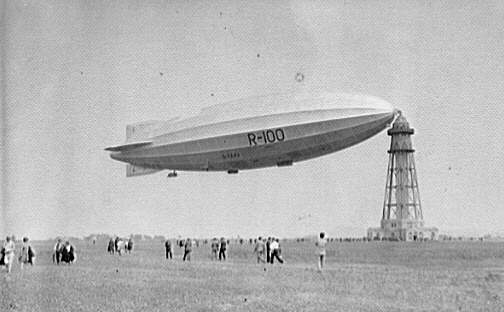
But that doesn’t work for my pulp game set in 1936! In our universe, Vickers convinced the Air Ministry to continue the Imperial Ariship Scheme, but they are the sole operators. R.101 did burn, but R.102 has been a success, and R.103 is soon to launch and replace the aging R.100.
(The US Navy program saw the loss of USS Akron under mysterious circumstances [it will turn up eventually], and USS Macon didn’t suffer her catastrophic failure. USS Miami just launched.)
Some Hollow Earth Expedition stats:
Length: 719′ Diameter (largest): 133′ Gas Volume: 5.2 million cubic ft. Usable Lift: 54 tons Range: 4500 miles. Ceiling: 15,000′ (usually flew at 2-5000′)
Size: 16 Def: 2 Struc: 18 Speed: 85 Handling: -2 Crew: 37 Passengers: 50 Cost: $2.5 million or so…
Traits: Gas Bag — it’s bloody big and bullets go right through it without doing much. First 2L are simply swallowed to empty space.
(In our version, R.100 has flown for seven years and her engines were upgraded form Rolls-Royce Condor IIIBs to Kestrals — lighter and more powerful for a top speed of 90 and 56 tons of usable lift.)
We set up the environment — the strange tramp steamer-like quality of the passenger area (nowhere as luxurious as Hindenburg), the open, airy quality of the ship, the poker games and communal dining lounge, and the relaxed, romantic atmosphere of the promenade decks with their large windows looking down on the Atlantic. It’s roughly a 3 day trip from Cardington sheds in England to Montreal’s docking tower. Most of the passengers are Canadian government and British business types.
Then one of the crewmen goes missing, and the search is on through the cramped catwalks, girders, exposed equipment of the interior of the hull, and even had a walk along the top of the hull during one sequence on a guide wire and harnesses for the riggers (for fixing damage to the canvas.) Eventually the missing man found bludgeoned to death and hidden in the button-up passenger compartment of a Canadian MPs SS100 Jaguar! Who killed him, and why?
I haven’t finished the adventure and players read the blog so I’ll not spoiler it, but it’s a decent set up for a game…
Here’s more on R.100 and her sister ships.
 The Black Campbell