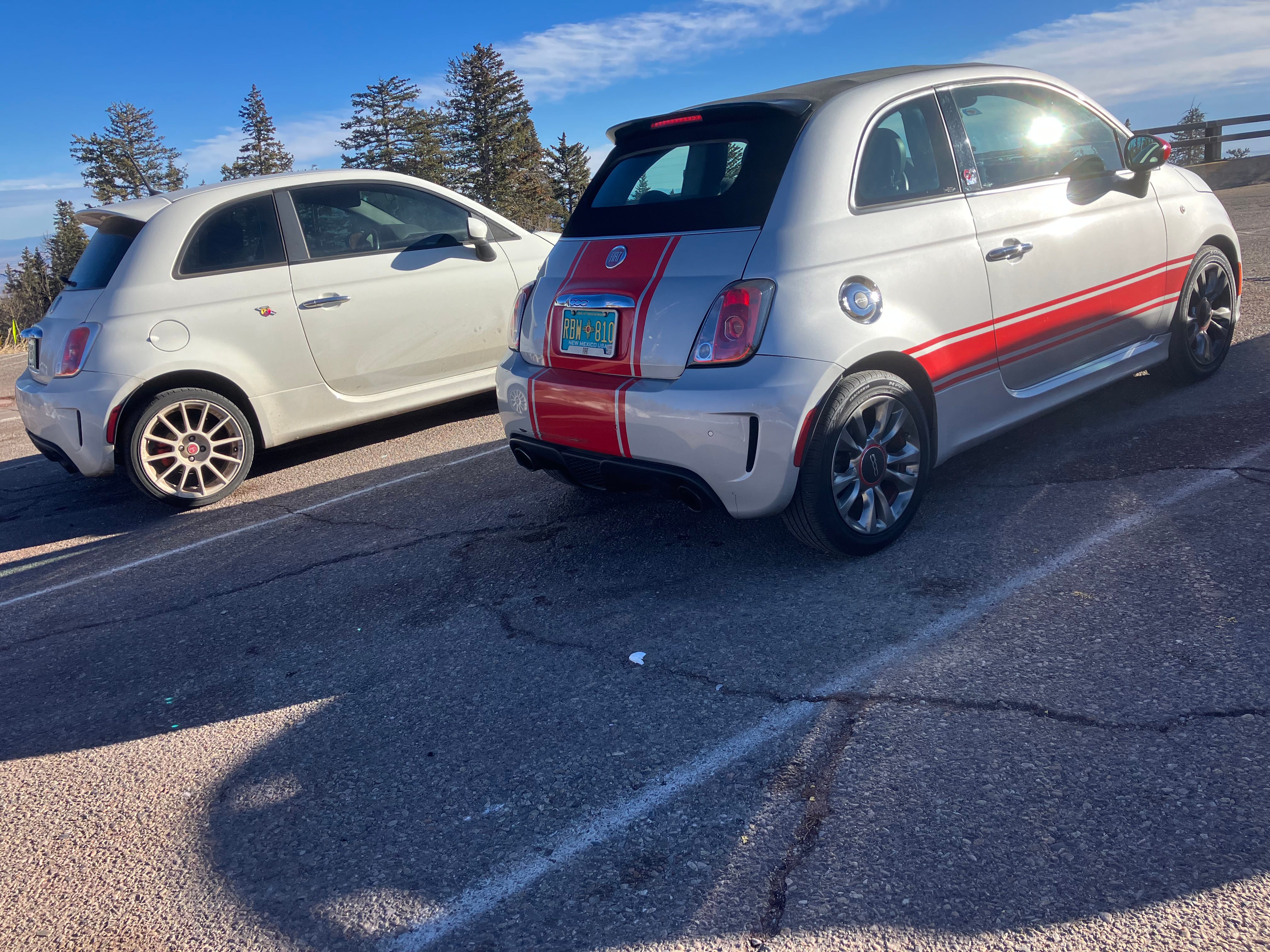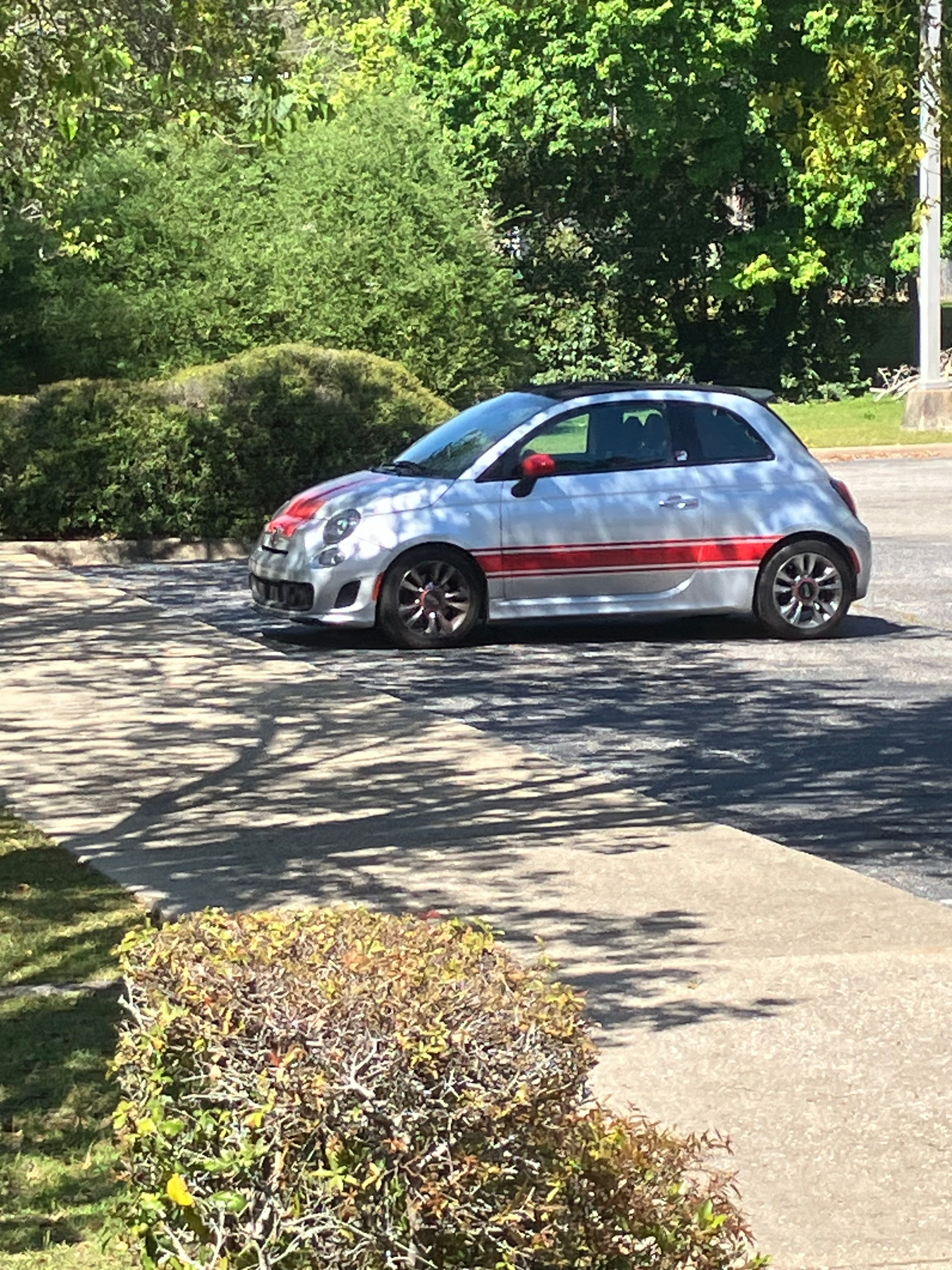
About five years ago, I bought my buddy’s 2014 Abarth 500. It’s the GQ Edition, so it’s got just about every doo-dad they had for the 500 at the time. Convertable — well, “cabriolet”, it’s got heated seats, satellite radio/CD/and bluetooth for the phone. Leather seats and they’re comfortable. It handles incredibly well, taking twisties like a motorcycle. I did get rid of the low-profile tires for slightly taller ones, taking the bite out of its ride. It is, simply, the most comfortable, best handling car I’ve owned. It’s light and the turbo 1.4 MultiAir gives her, in the Abarth tune, about 160ish horsepower. It’s done very well in dusting everything from a WRX or Alfa Guilla, to a RAM 1500 that was intent on trying to race me for some reason. The main reason is the car is light — 2300ish pounds. Gas milage is about 30mpg around town, but jumps to 33 mpg in sport mode. Turn the stability control “half” off and the clutch response is much, much better than in standard road mode (where it’s pretty awful). Turn it all the way off and it’s a go-kart.

It’s been a reliable, excellent little car for much of that. I had an issue with a blown exhaust valve on cylinder one last year that required a rebuild, but since then she’s been solid, once more. Even with the cylinder down, the damned thing still ran. Once fixed, I ran into a problem that 2014 model Abarths have — the catalytic converter is only listed up to 2013. No one wants to order one for you and install it. So I bought a 200 cell cat from TMC in Northern Ireland. It does make the O2 sensor throw a code intermittently, but it runs without issue.

A family issue came up back in Pennsylvania a few months back, so what better time to give the car a real shakedown during the daughter’s spring break. We added a side trip to Florida to visit more family because what could possibly go wrong with an 11 year old Fiat with 80,000 miles on it during a 5000 mile road trip?

(Here she is in Texas, before the bugs hit.)

We took off from Albuquerque early on a Thursday to miss the massive wind storms that would hit the next day in Texas and Oklahoma, and drove 15 hours to Tennessee without issue. Gas mileage was 37-40 mpg. Once we got below 2000 ft. the check engine code for the rear O2 sensor cleared. 

The next day, we were on the road in the late morning for the last leg to Pennsylvania. We dodged a couple of serious wrecks in Tennessee — where apparently everyone thinks it’s NASCAR on the road — and saw a drop in MPG to bout 30-32 through the Smokey Mountains. We hit Pennsylvania by nine in the evening and threw a code and had the engine shudder a bit. The number four piston was coding. When I started her, it ran a bit rough but still got us 2 hours into our destination. Total distance, 2100ish miles

The spark plugs had cooked, with the number 4 having blown off the electrode hook. I got the plugs changed and had the car sounded. No issues. It drove fine for the next few days, and then we started our leg to Tallahassee — about a 1000 miles. All good until Charlotte — where between it and Columbia, the interstate turned into a parking lot for two hours. Same code. Shit. We still had five hours to drive. The car, despite this, wasn’t running especially rough, loud, but gas mileage dropped to 28ish mpg. Despite all this, it got us to our destination.

Another shop and it was what I suspected, the plugs had mostly killed the number 4 coil. One coil pack later, we were back on the road the next day. The final run home to Albuquerque saw no codes (other than the P0440 because I hadn’t closed the gas cap properly during a fuel stop) and she ran flawlessly with a steady elevation change to 6000 ft. for the pass into town. At about 4000’, the rear O2 sensor alerted again. But with two 12 hour days on the return leg, the car got us in safely.

Coils and plugs — fairly standard wear and tear, especially at her mileage. Despite this failures, the car never stopped running (well, even) and got us where we needed to go. We were averaging 12 hour days in the car when we were traveling between destinations and absolutely not speeding, at all — nuh, uh! — yet until the last day, I didn’t really feel any physical fatigue from sitting in the car. The daughter felt fine with her seat reclined and sleeping. The A/C blew cold the whole trip. No other issues.

Not too bad. So, the lessons I learned: 1) 5000 miles is a long way to drive in 11 days. 2) Other than general wear issues, the Abarth 500 is a pretty damned reliable car. 3) When stuck on little Georgia back roads because Apple Maps decided we needed to go on a scenic tour of nowhere, this car can rip up a winding backwoods road like it thinks it’s a Ferrari. (It’s not….)

You can find these things pretty cheap now. They’re definitely worth it for a cheap, fun ride.

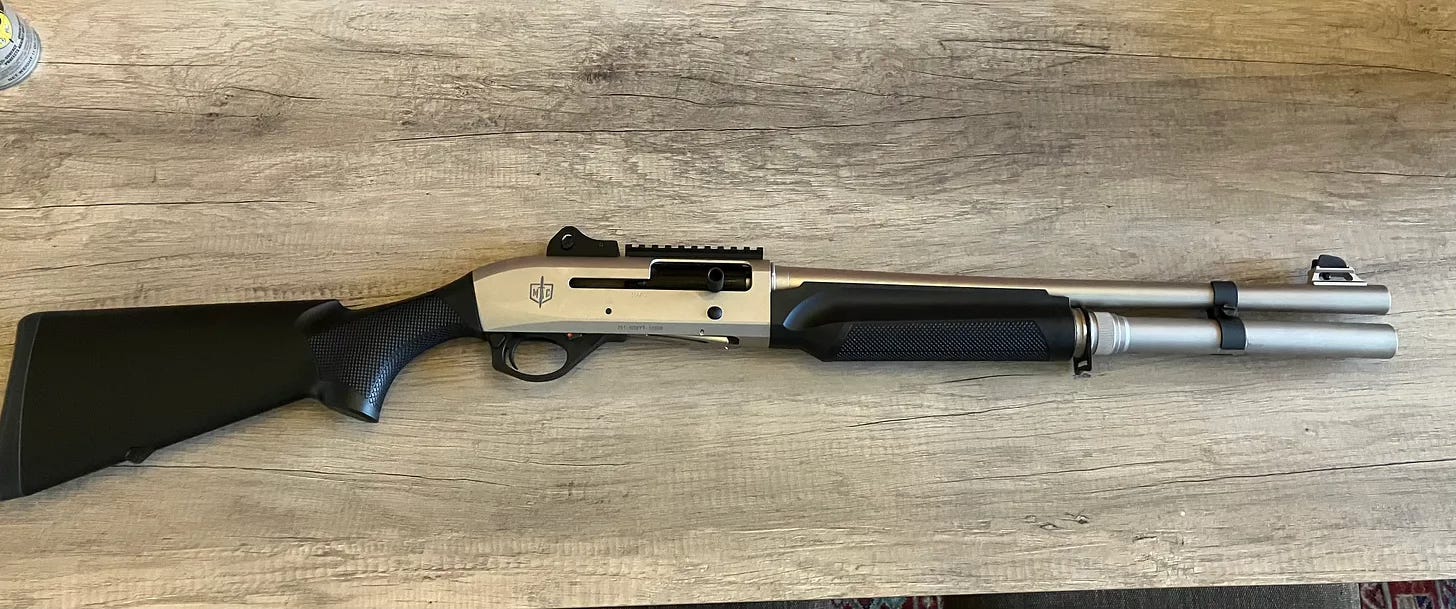
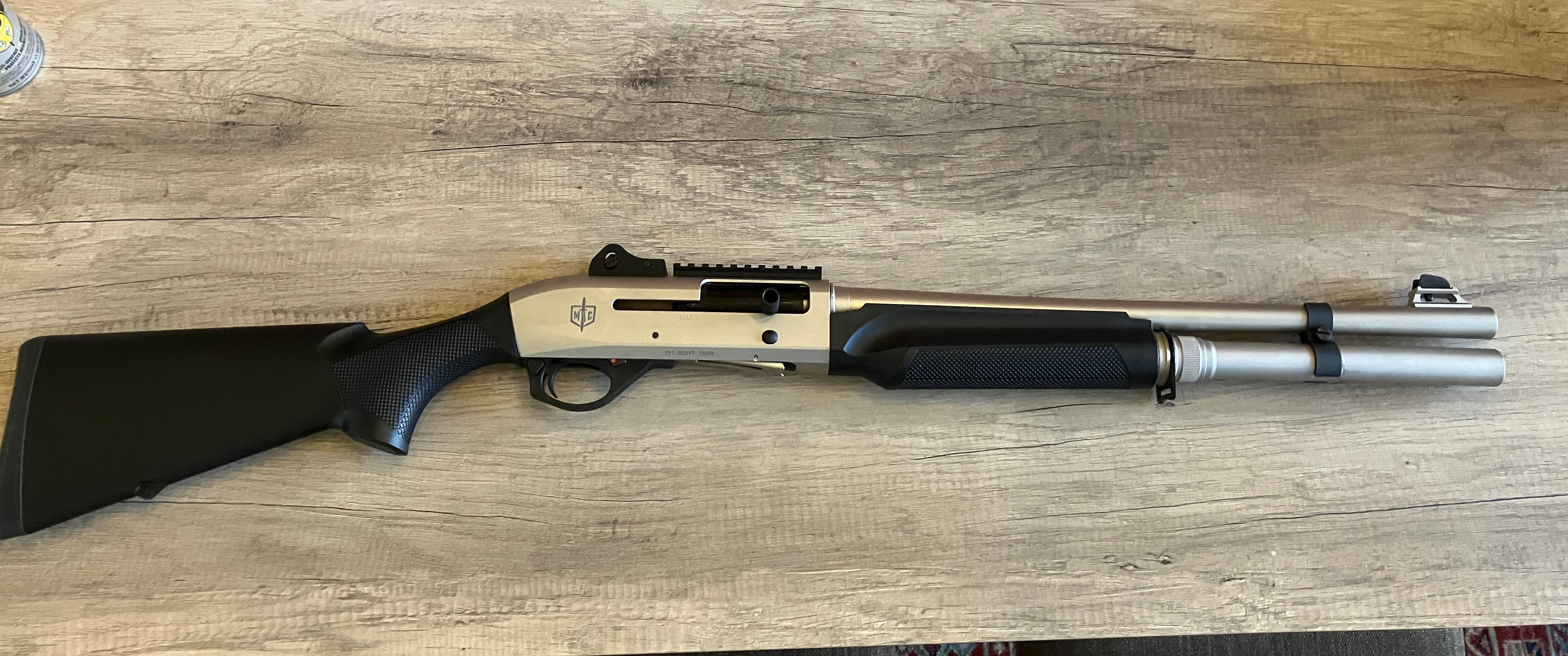
So, I bought a MAC 2 shotgun about a month back and had a… not great experience with it. After sending in the pictures taken upon cleaning it after the first use, I was contacted by Reyes for SDS customer service in Knoxville within a day of sending the email with the complaint. When I called her, I forgot about time zones and such and got in touch with them only 15 minutes before close for the weekend. She informed me that the tech guys had looked over the pics and yes — that was not normal and send the gun back. Before clocking out for the day, she had my waybill emailed to me with the instructions on returning it.

FedEx took a week to get it back to SDS, during which time I was on a roadtrip that would have allowed me to just drop the damned thing off about the same time. But the turnaround was 72 hours. I had a replacement MAC2 by Monday. Same model and finish. Noted remarked that the damage was mostly the bead-blast style coating flaking from wear. Not good, but not actual structural damage, save that seen on the bolt face. Still — good response from SDS: their customer service is solid, the tech guys didn’t cheap me out like I was expecting, and once I get this out to shoot, hopefully, I’ll have a better experience.

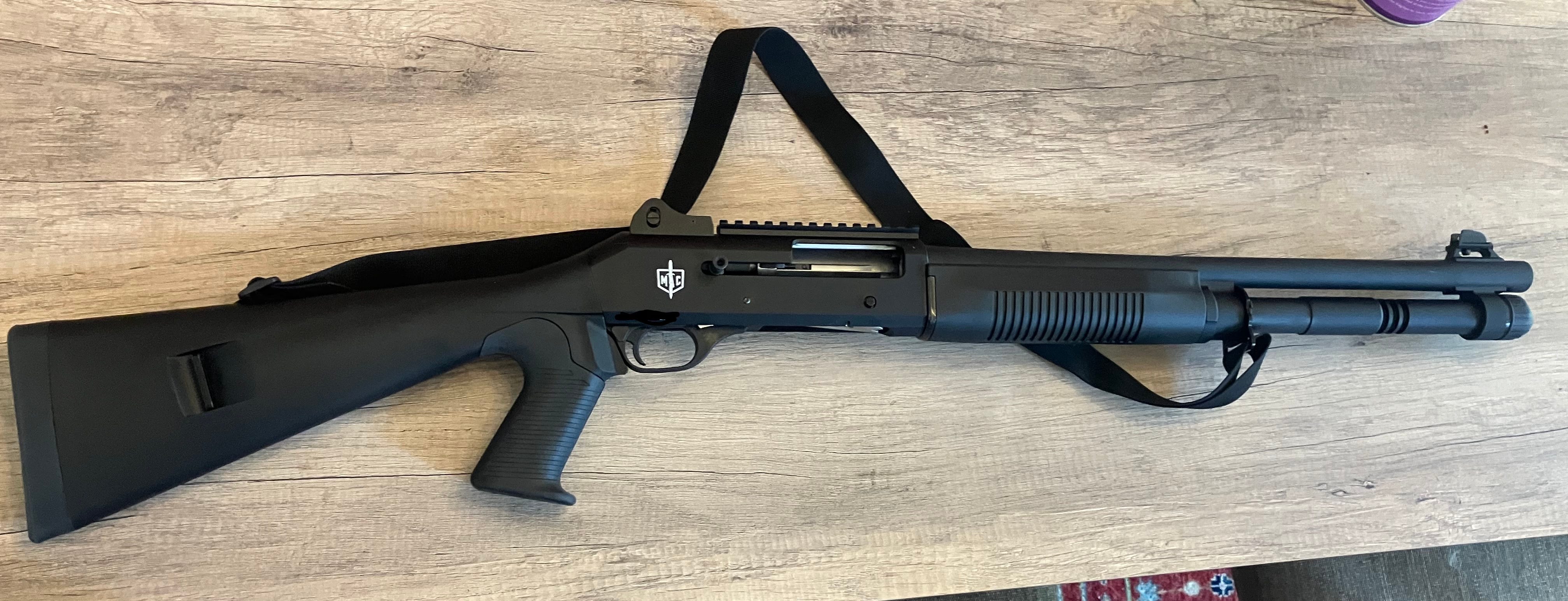
I’m not really a shotgun guy. I don’t find twelve gauge all that much fun to shoot, but I always had one. I’ve owned a few semiautomatic shotguns, including the original Benelli M1 Super 90. I noticed a knock-off of the Benelli M2 by Military Armament Corporation at the gun store the other day. The price was hard to resist (sub $400), so I didn’t.

Now, I’ve heard a lot about the quality of Turkish shotguns being as bad as some of their handguns (Tisas) are good. But at $400, I figure if it’s even halfway to the Benelli, it would be worth it.

So how good is it? Wrong question. How bad is it?

First, the good stuff: It actually comes with chokes, something Benellis I’ve bought don’t, plus the tools to adjust the chokes, the sights, the angle and distance of the stock. It’s got adjustable ghost ring sights, a rail for optics, and is very pointable and light. It looks good, and at first pass, the action runs well and smoothly.

I got the M2 home last week, and broke it down, cleaned and lubed it. I noted a few aluminum shavings here and there — probably missed in the cleaning phase of the production. I took it out for a run today (Monday). I put a total of only 50 shells through it (plus another 30 in a Kel Tec KS7). It’s pretty light at six and a half pounds, and you feel the stouter stuff after a few boxes.

The M2 uses the time-tested Benelli inertial recoil system, so it should run some of the lighter stuff that the ARGO system wouldn’t. In this case, I started with some Norma reduced recoil buckshot. Out of 20 rounds, I had a single failure to eject. Not a bas start. I tried a couple of shorty Aguilas, anticipating they wouldn’t cycle. I was correct. Back to Norma Performance buckshot for 20 rounds. The Turkenelli ran them without issue, save for one failure to eject. Again, for the first time out, now awful. Hornady Black buckshot ran like a top save for one failure to fire that looked to be the round. (It was three years old.) Ten rounds of slug with no malfunctions. All 2 3/4rds, no magnums.

Accuracy was decent, though the reduced recoil shot about two inches high at 15 yards. It was spot on with the Black and slug. While the shorties didn’t cycle, they did pattern spot on at point of aim.

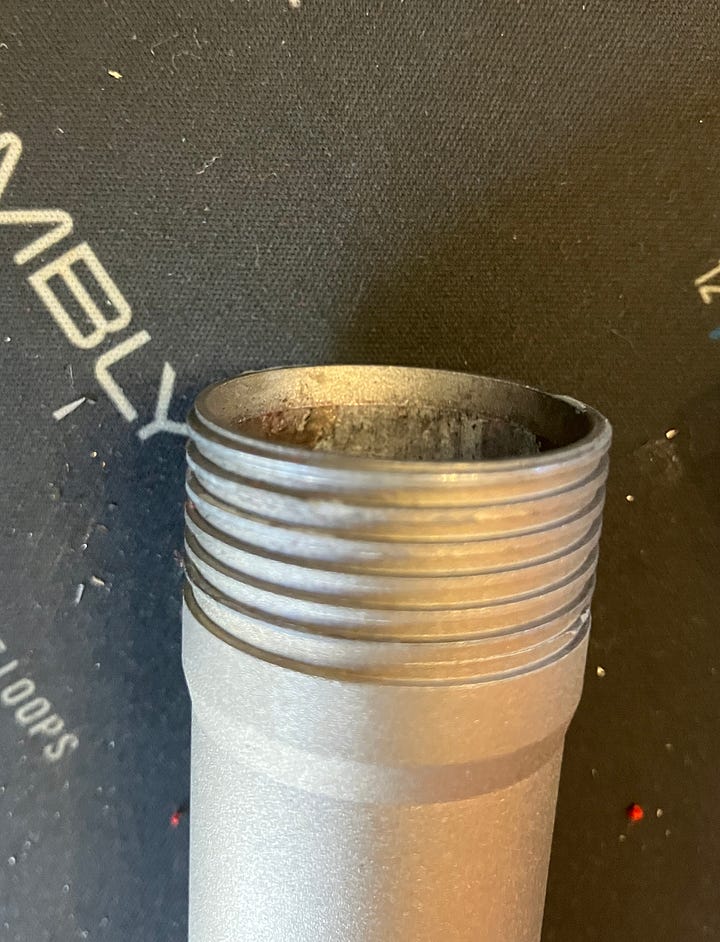
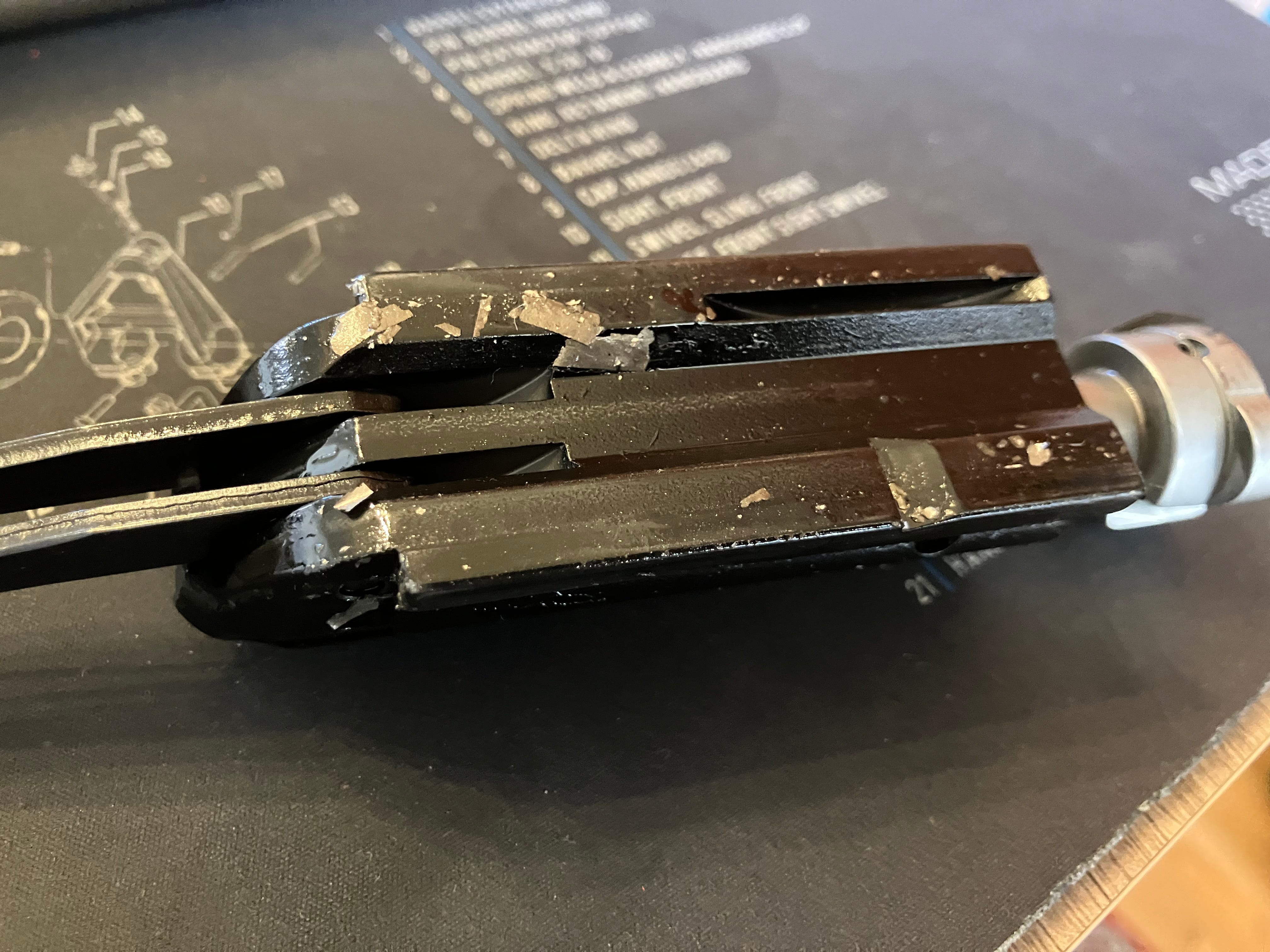
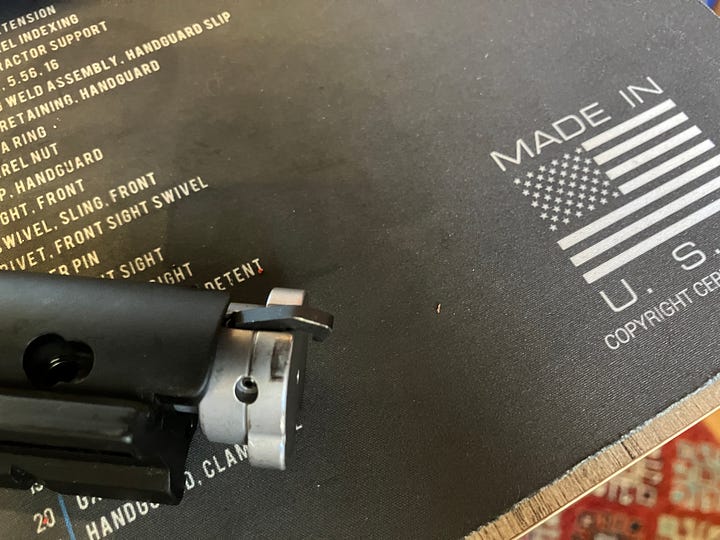
So far, so good. As usual, when I got home, I started cleaning the weapons, starting with the MAC 2. First thing I noted was that the magazine tube really didn’t want to unscrew. I also noticed a bunch of aluminum shavings from the threads and there was some damage from the brace that holds the mag tube and barrel. It had worked it’s way forward a bit during firing.

I don’t mean a few shavings like you’d find from having not cleaned the area…

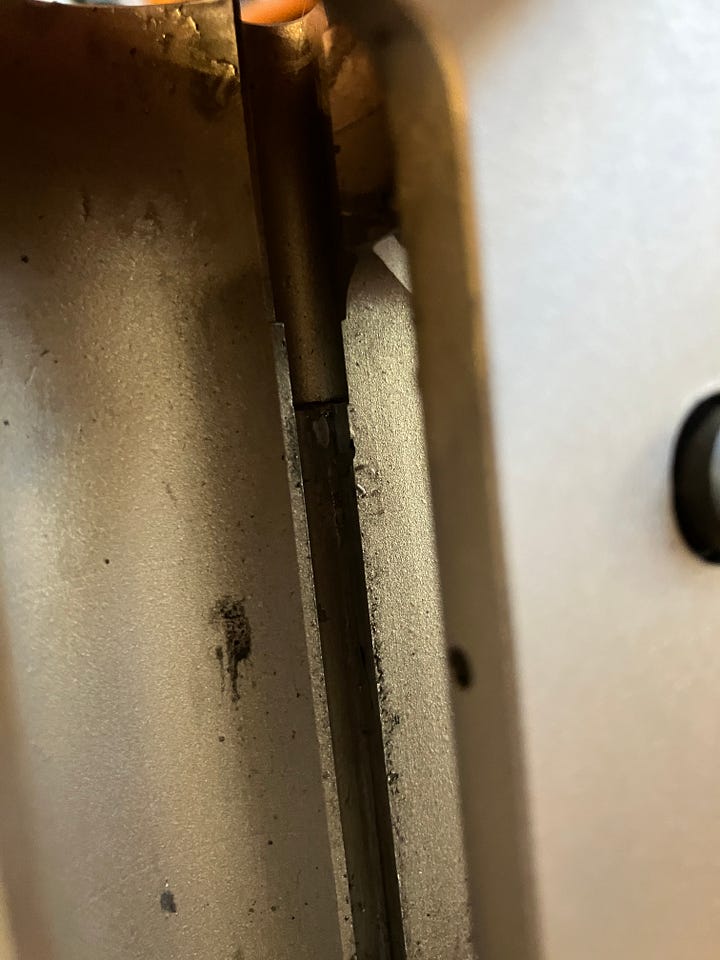
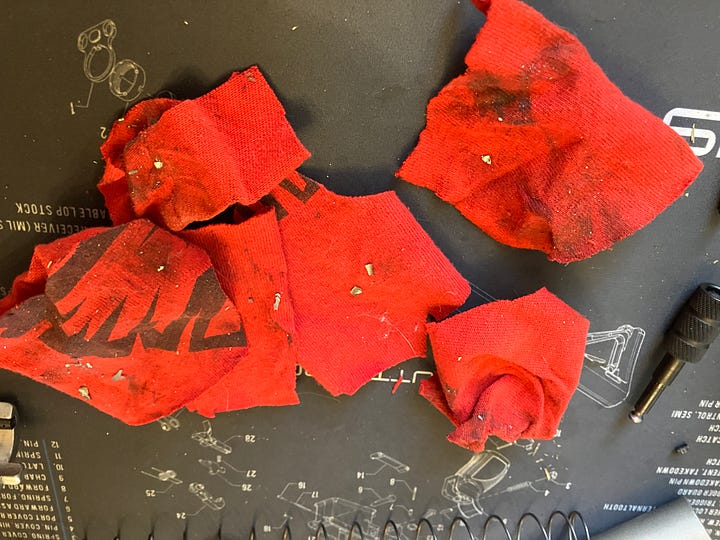
This is just from the magazine tube being unscrewed. But wait, there’s more. I pulled the tube and dismounted the barrel. Here’s the front of the receiver:

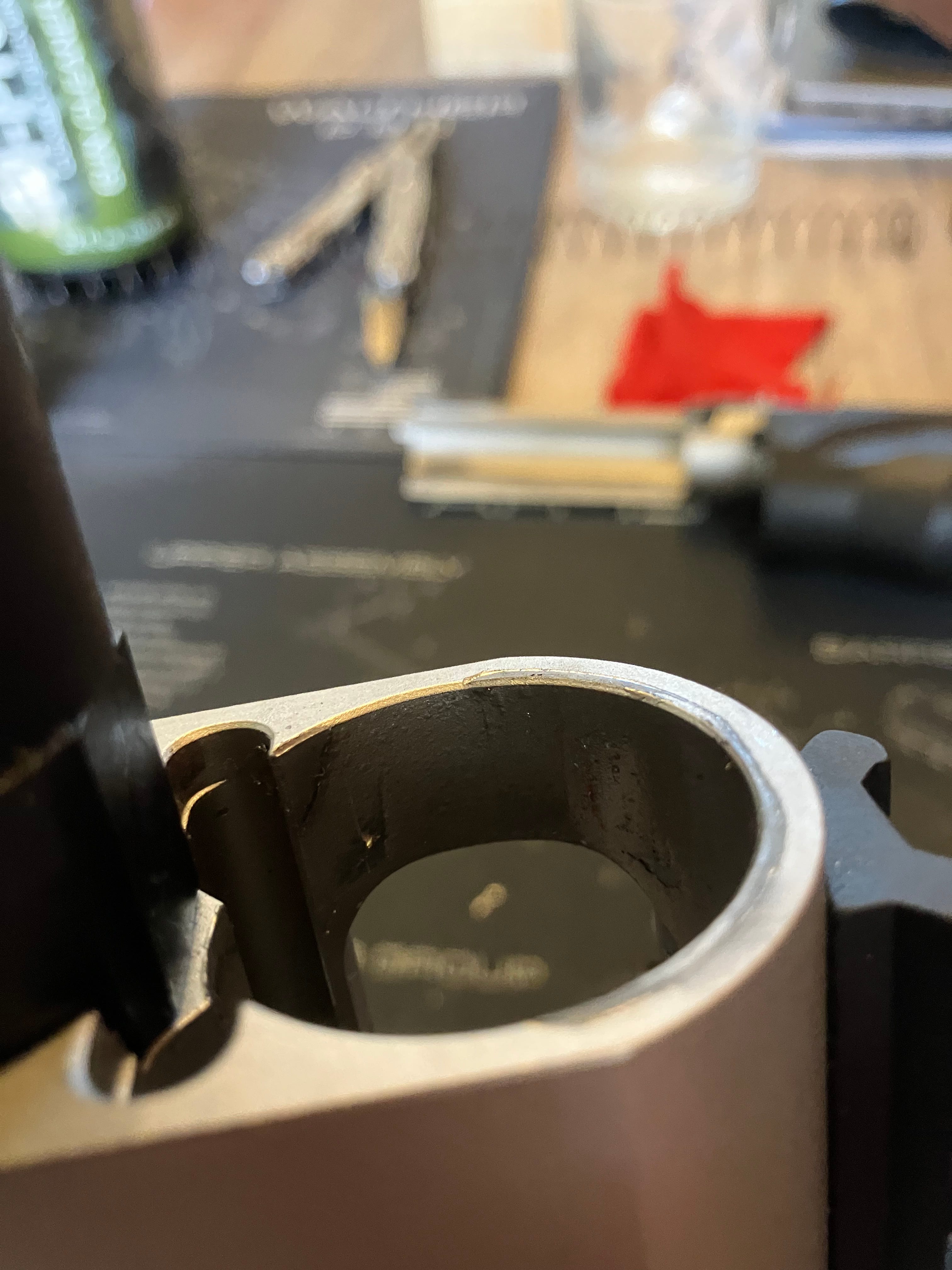
Note not just the impact damage where it meets the barrel; look inside the receiver there. But we’re just getting started, Dear Reader. I pulled the bolt and took it down. Here’s the bolt:

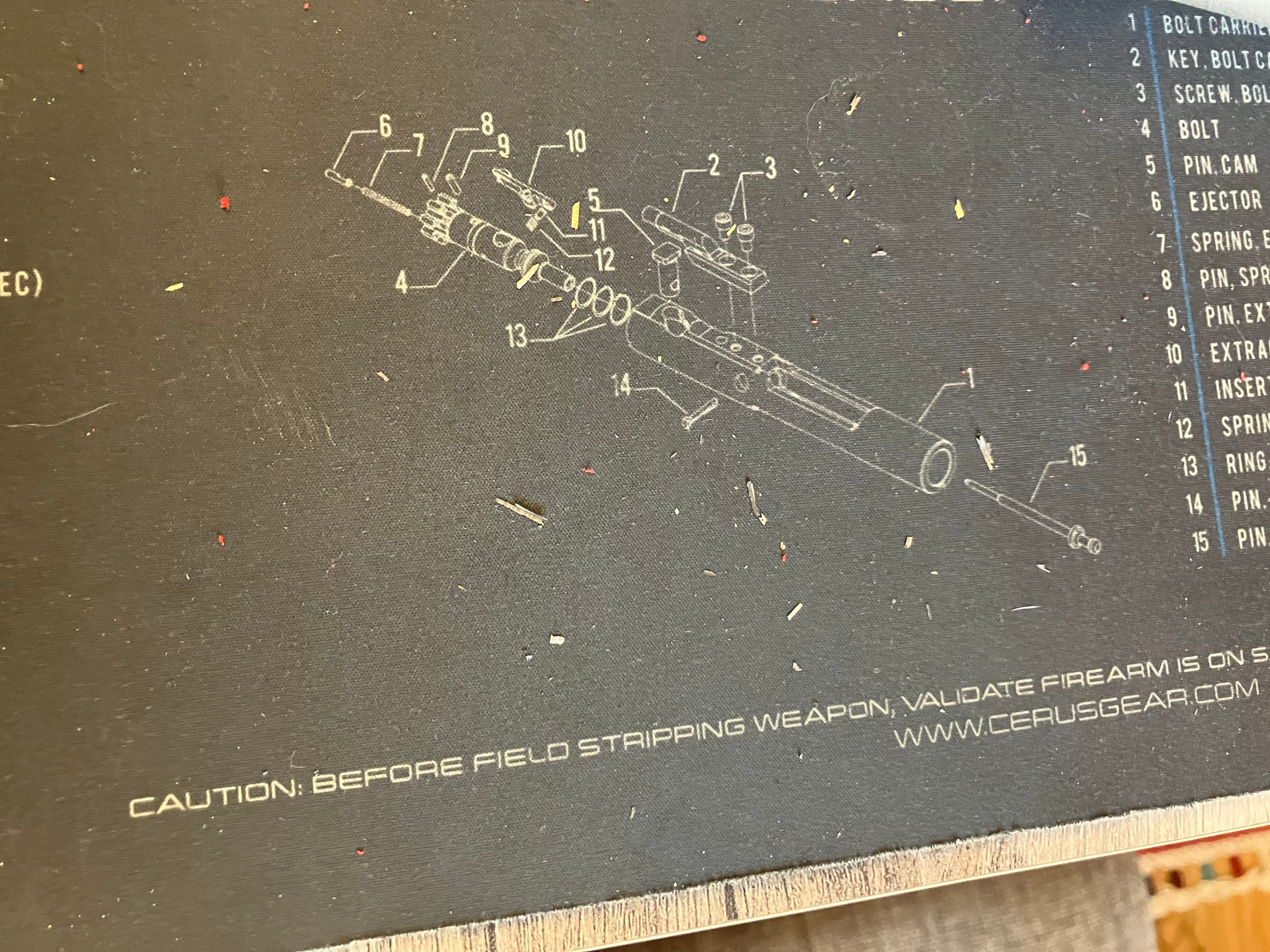
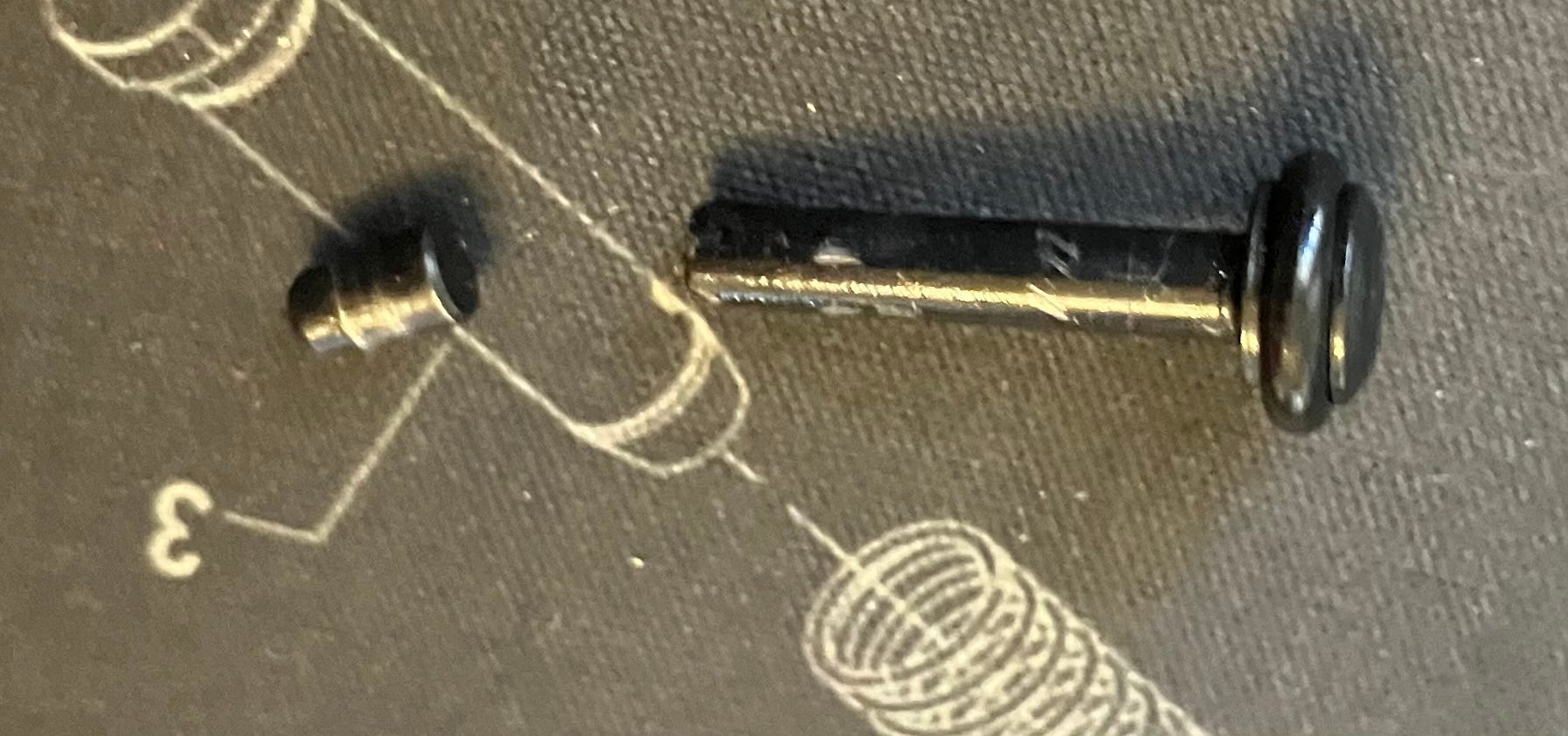
Aluminum shavings. I popped the trigger assembly, using the firing pin retaining pin, as they instructed. That was a mistake:

Nice. And before you say anything, yes — you could do this with the Benelli and not break stuff. With the trigger guard off, the real fun started. There were aluminum shavings and damage everywhere. Remember, this is only 50 shells, nothing hot; in fact, half of it was reduced recoil.

No — that’s not dirt. How’d the bolt look? It was scuffed at the front of the face.

After half an hour of cleaning I had a nice collection of metal filings and had to go over the cleaning mat twice just to get rid of the bits. I even vacuumed the floor under my seat. And once I was done and oiled the weapon…? More shavings.

That’s after I cleaned the hell out of the gun. There was still more.

Aluminum, admittedly, seems a bit of a bad choice for a 12 gauge, but I’ve seen it from other manufacturers. None of their stuff spontaneously shed aluminum, like Arianna Grande losing weight. And again — 50 rounds of normal factory ammunition.

So is it worth it? NO. Not just no, hell no. Steer away from this. I can only imagine how they’ve messed up the ARGO system in their 1014s. Yes, it’s sub-$400, but you can get a Maverick, which won’t shred itself with normal operation. Hell, my cheap Kel Tec has hundreds of rounds through it and even eats shorty shells: no failures.

I have a warranty claim into MAC for the firing pin retaining pin and a request to replace the weapon. Will I fire this thing again? Unlikely. If it’s shedding metal, it’s going to fail somewhere.

Update: I reached out to SDS in Tennessee the same day as this occurred, and I will give them this — their customer service folks are on it. They confirmed that this is not a normal event and that the weapon needs to be replaced. The lady on the CS line was very helpful, especially as I got in touch with them right at the end of their work day.

More as events unfold…

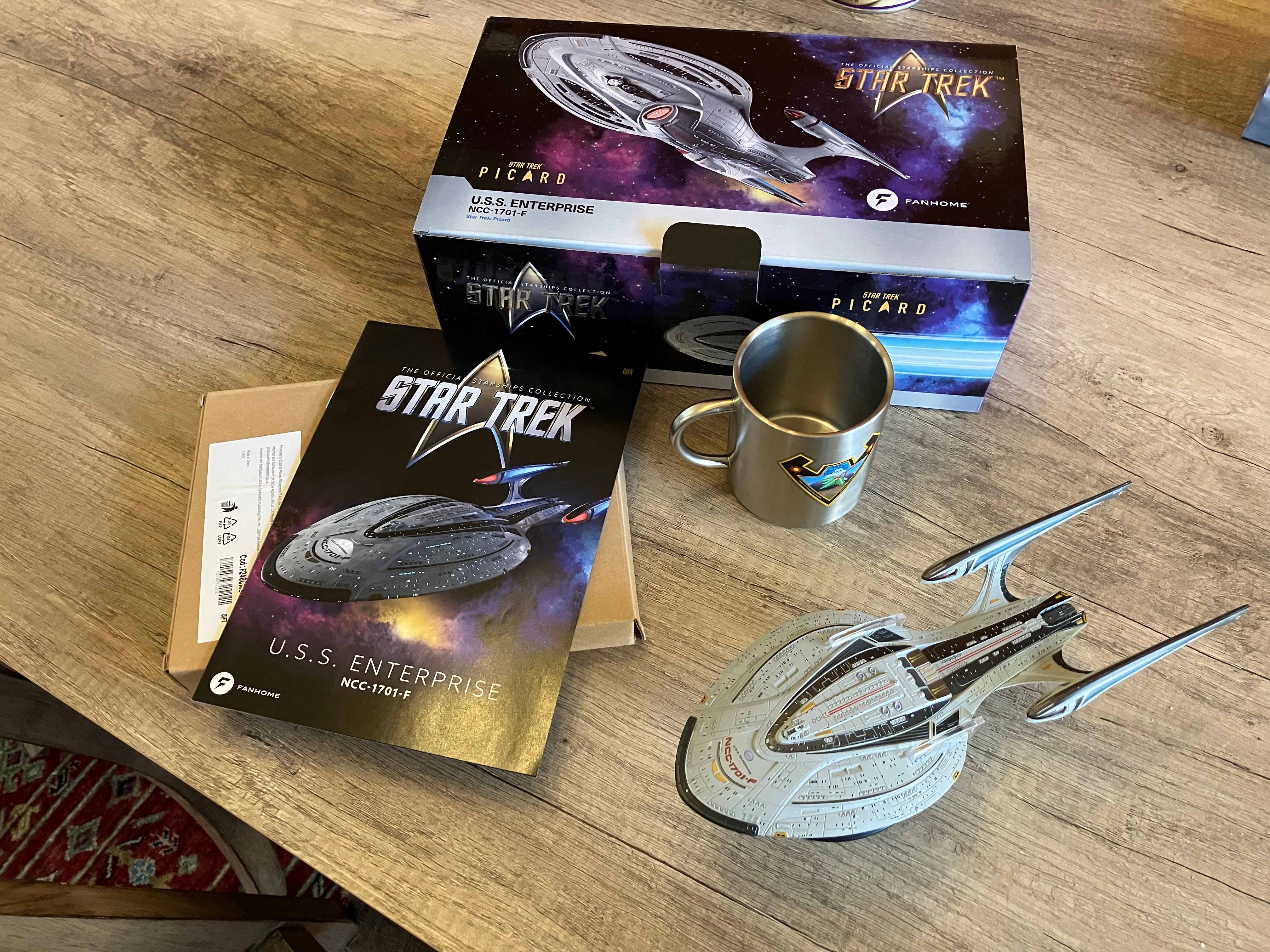
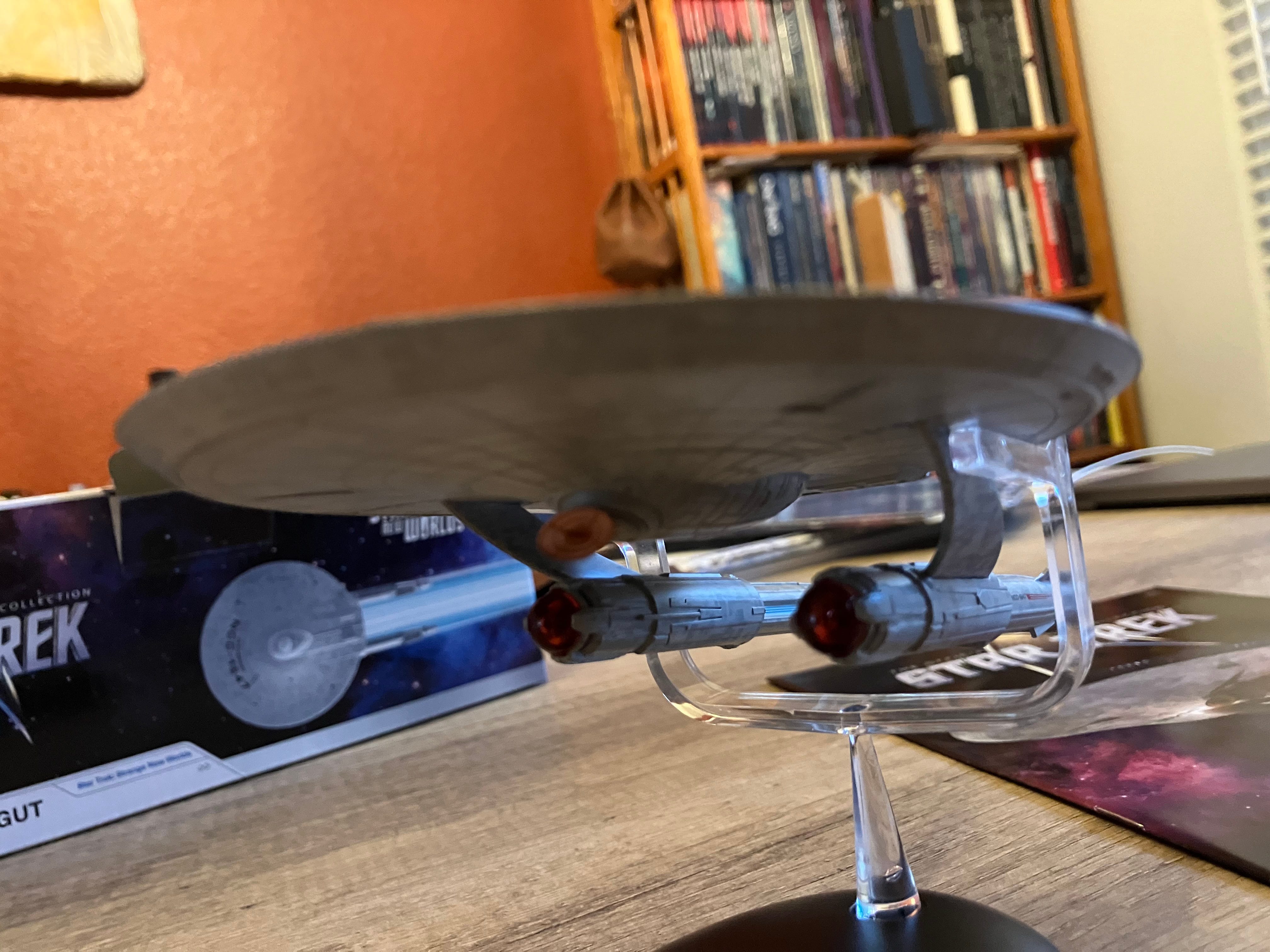
The latest from FanHome’s Starships Collection got delivered yesterday. I’ll admit, I didn’t have much interest in this one. Not being a player of Star Trek Online, I didn’t know anything about this particular ship. Its appearance in the third season of Picardwas my first exposure to the Odyssey-class Enterprise-F.

The packaging continues to be much better than the old Eaglemoss stuff: colorful and eye-catching, and this model is their first XL edition. To indicate this, the box has raised embossing for the Star Trek name. The packing is the typical styrofoam set up of the Eaglemoss models. The booklet on the design of the craft and its appearances is tucked in the box, following the lead of what Eaglemoss was doing with the later releases, rather than the large format from the older ships. (I prefer the smaller booklet.)

This shipment included two free extras for the subscribers: a raktejino mug and a master systems display of USS Titan-A. The display is tucked between two thick slabs of plexiglass, and it’s tiny — about the same size as the booklet (it’s in the cardboard box under the booklet in the picture). The mug is small — an 8 oz., I think, and yes — Colombia is misspelled. But since it’s free stuff, I don’t really care.

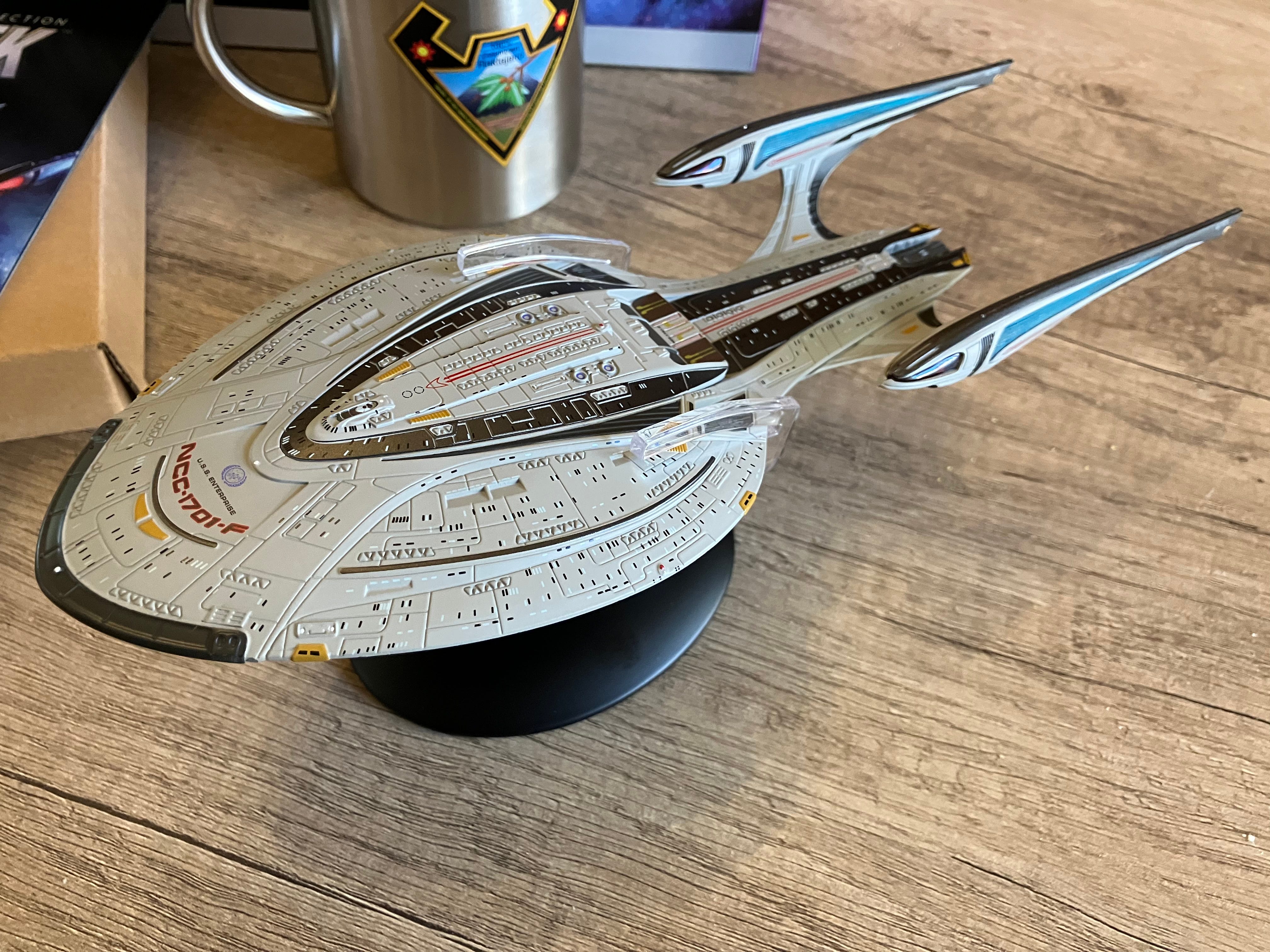
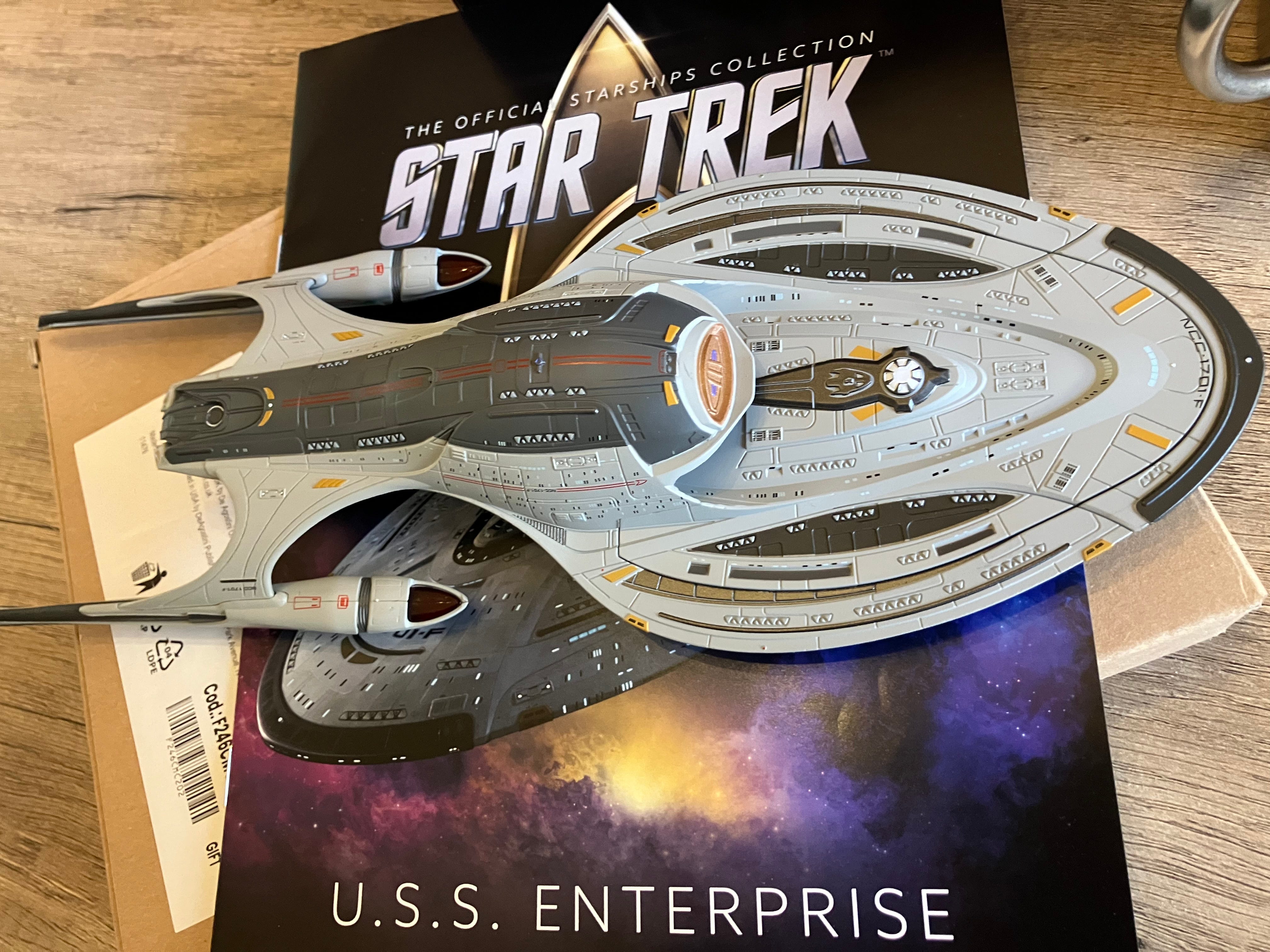
Enterprise herself is gorgeous. I’ll admit — I’m not a fan of this design. It’s squarely in the “negative space” period of design, with ships having open space in places that, frankly, don’t make much sense. In this case, the Enterprise has two thin “necks” holding the saucer section to the secondary hull. The nacelles look better than the Akira-era and the Picard-era nacelles, though; I like ‘em. The ship is supposed to be huge — 1600m stem to stern, with an embarked Aquarius-class runabout tucked where the aft shuttlebay usually is. 

Despite all these niggles, the model is gorgeous, with only a few points that collector have been noting. The impulse drives are not painted red on the nacelles nor the saucer. The Aquarius is painted dark, with minimal detailing. Outside of that, they’ve done a good job with the window placement and decals. I particularly like the UFP seal above the name of the ship. This seems appropriate as in-canon, these are massive diplomatic-focused vessels.

Like Stargazer, seeing the vessel in person is a different experience than on the screen. I wasn’t particularly impressed with Stargazer when it showed in season two of Picard, but the model won me over. I still hate the negative space fascination John Eaves has, but “the F” is much more attractive when you can rotate it and appreciate it from various angles.

FanHome’s off to a great start, in my opinion, with this collection. So is this Enterpriseworth it? It you’re a completist, it you like your starships “looking all Sovereign-y”, as Mariner Beckett put it, if you like the STO ships — yes. If you’re not a fan of the newer Trek, it might not appeal at $90ish. I’ll admit, this is one that will probably get shelved and sold later, unlike Titan and Stargazer. I’m hoping for a focus on Strange New Worlds ships — I’d like to see the new Gorn craft, or maybe a TOS-styled Miranda

With four months of deliveries under the belt, I figure it’s time to address a few things outside the quality of the models. There’s quite a few folks that are grousing about the shipping of the models. (But that’s what the internet is for, yes?) The third shipment, in particular, looked to have been kludged up for a lot of the subscribers — however, I would point out that coincided with the holiday mailing rush and a fairly impressive set of storms through the center of the country.

Here in the States, shipping is being handled by OSM (One Stop Mailing) — a pretty big concern in shipping, it seems. They’re doing the pass off to the post service for the final delivery, but it looks like they handle pickup from FanHome in the US. Normally, a bulk service like this aggregates as many shipments as it can, which is probably why we see a lag time from pickup to when the packages seem to start moving through the system. That said, my shipments have been coming in a consistent four days after the estimated delivery dates (between the 12th and 17th of the month) on the FanHome website. There’s usually a hold up on the package tracking between Kansas City and the next stop, Glendale Heights in Illinois. Partly, this might be OSM aggregating packages, but I suspect that there’s some kind of update issue — USPS is notoriously bad at allowing you to track packages in its system, and KC is one of the more problematic postal hubs in the country — so I think the lag between KC and the next step is more a sorting and tracking issue than the shipments just sitting somewhere. But I could also be full of $h!t.

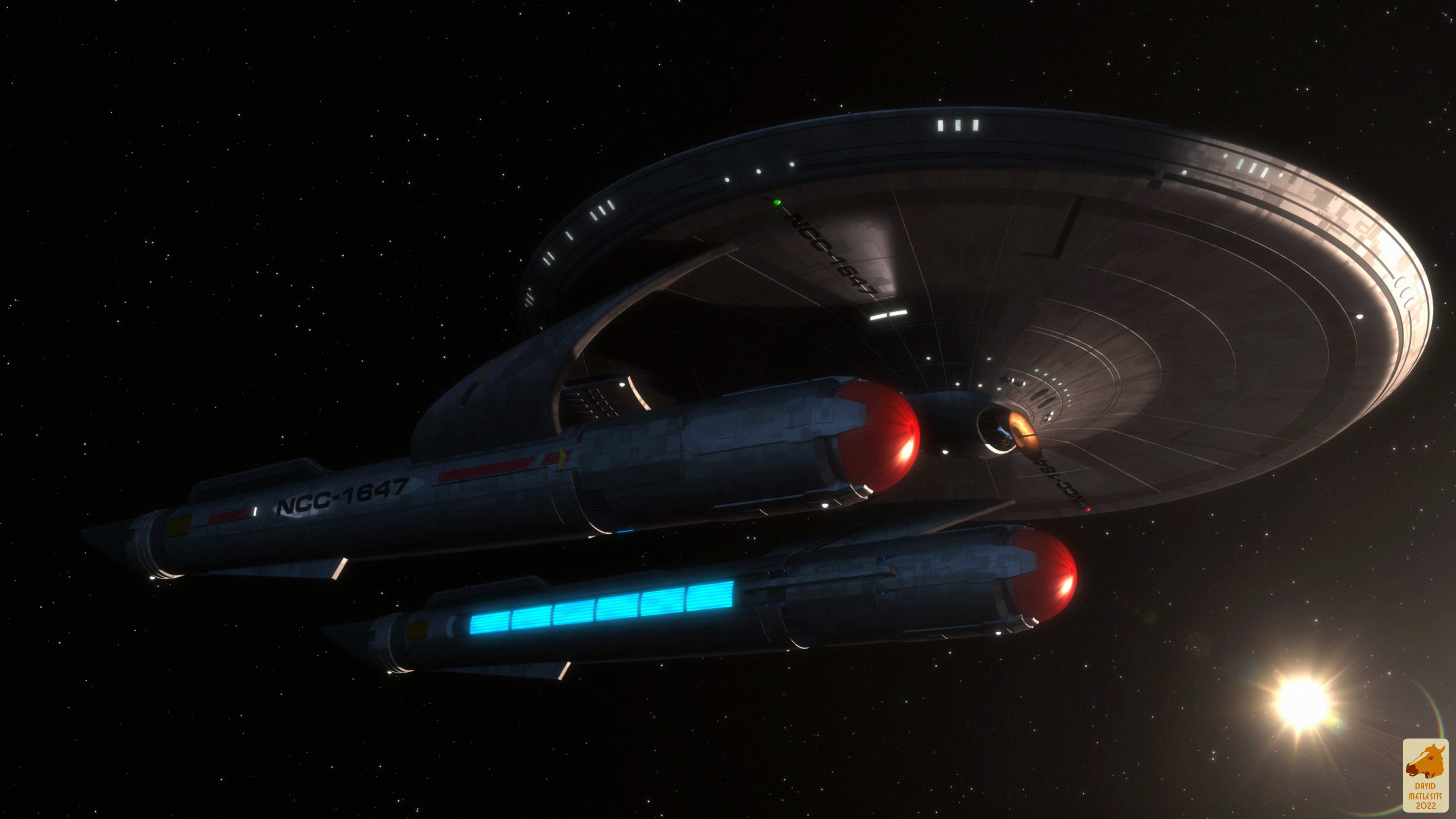
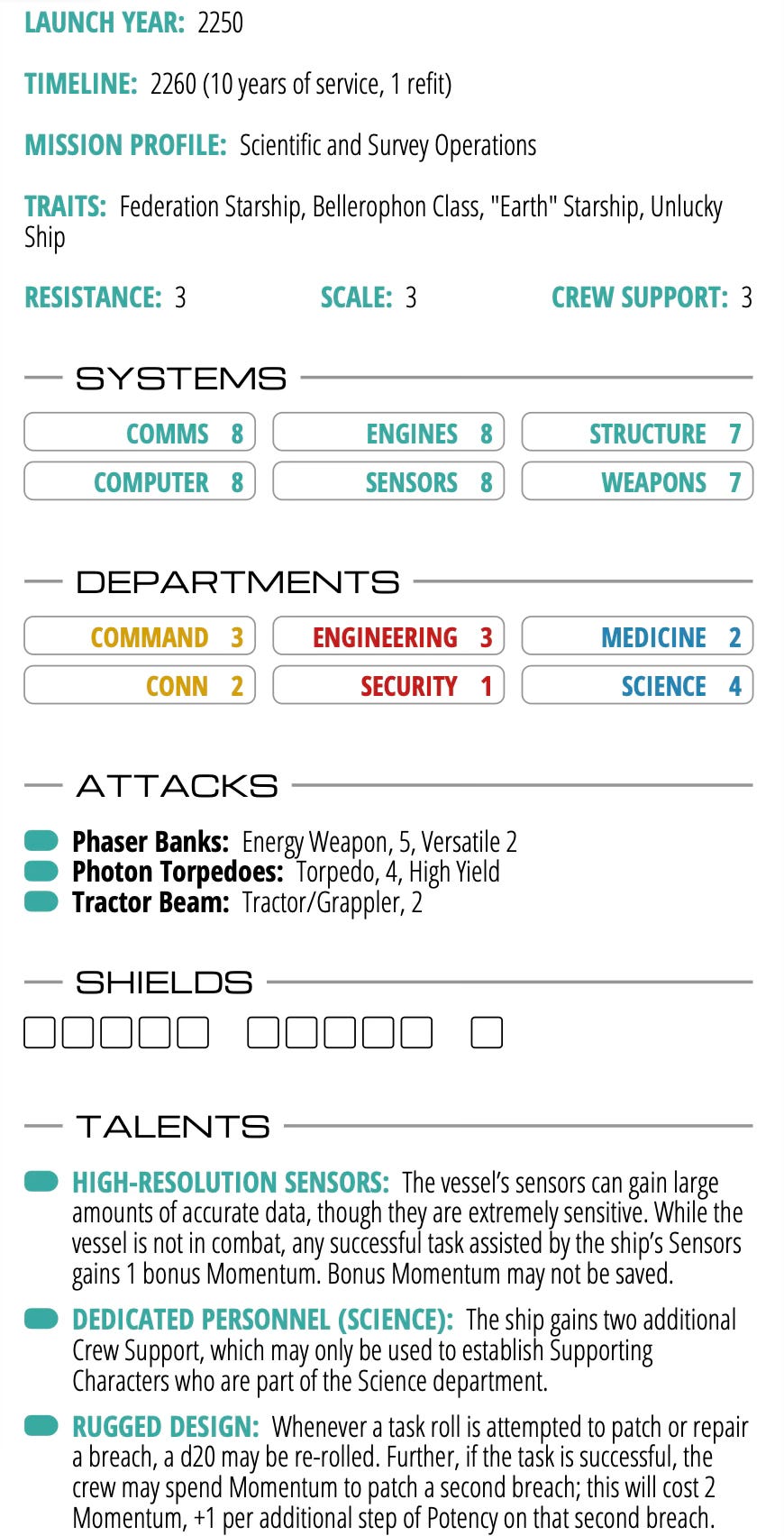
Here’s my 2nd Edition take on the Bellerophon-class U.S.S. Farragut, N.C.C. – 1647. I’ve noticed the general consensus on the internet is that she is considered an “Unlucky Ship”, so I put that in as a trait. Following the suggestion in the Core Rulebook, I also added “Earth” ship — as that was the main crew complement of the vessel. Also assume it most likely would have had a few years service and a single refit by the time we see it in Strange New Worlds.

Image is copyright of David Metlesits (thefirstfleet) over on DeviantArt. The copyright for 2d20 system is Modiphius, 2019. STAR TREK and related marks and logos are trademarks of CBS Studios inc. All Rights Reserved and no infringement is intended.

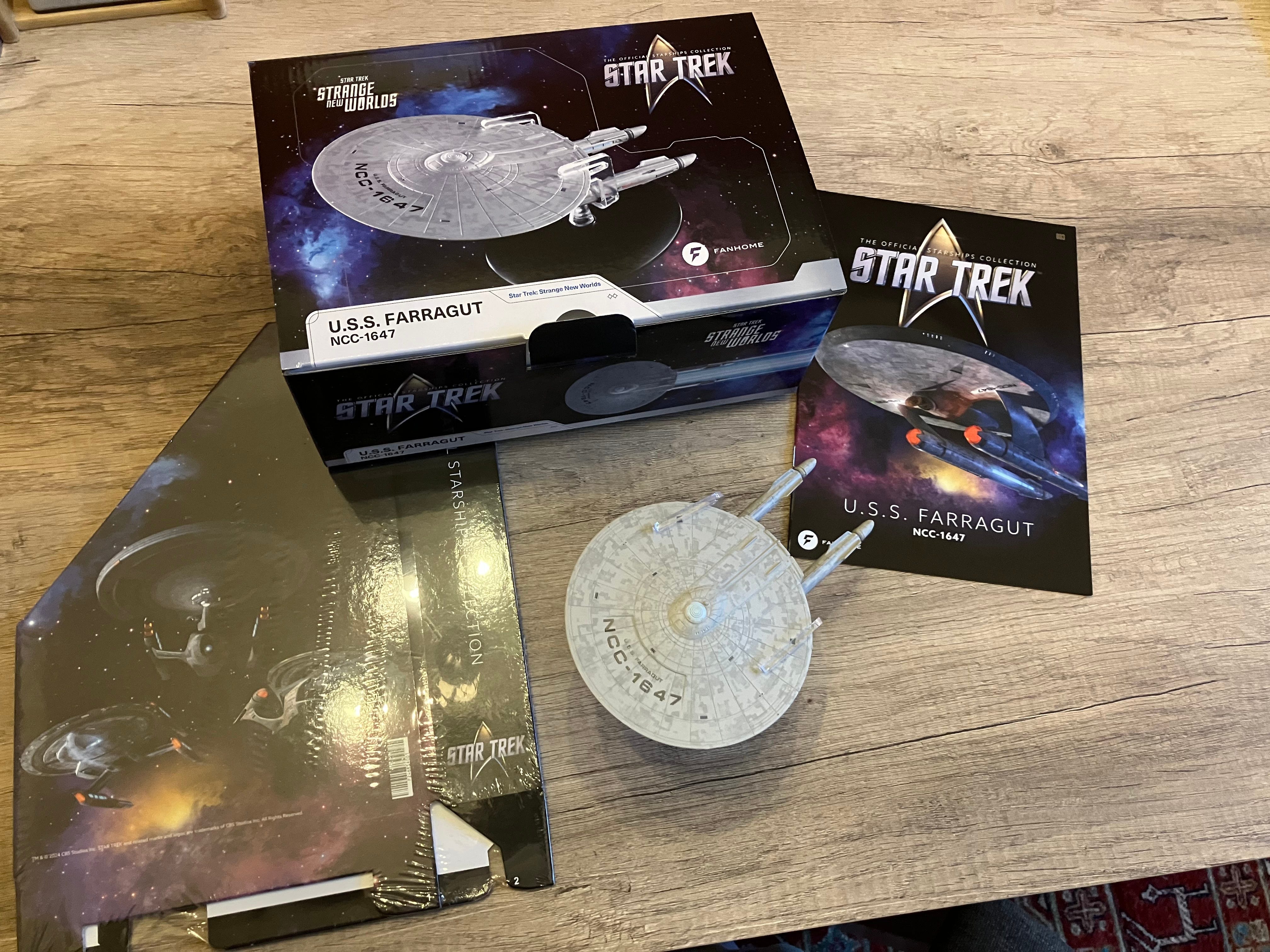
So far, Fanhome has been doing right by me on their starship collection. I didn’t suffer through the Christmas time lag on the second model like some folks did. According to the US Fanhome guys, there was a missorting and the models are (as of this writing) on their way. The third drop was the one I was waiting for: the new USS Farragut from Strange New Worlds. I’ve been digging the Discovery/Strange New Worlds aesthetic for the outside of the ships, and I was hoping this one would be up to snuff.

It arrived a few days later than the supposed January 16th, but the weather’s been crap and there was Martin Luther King day. Starfleet don’t ship on MLK day, apparently.

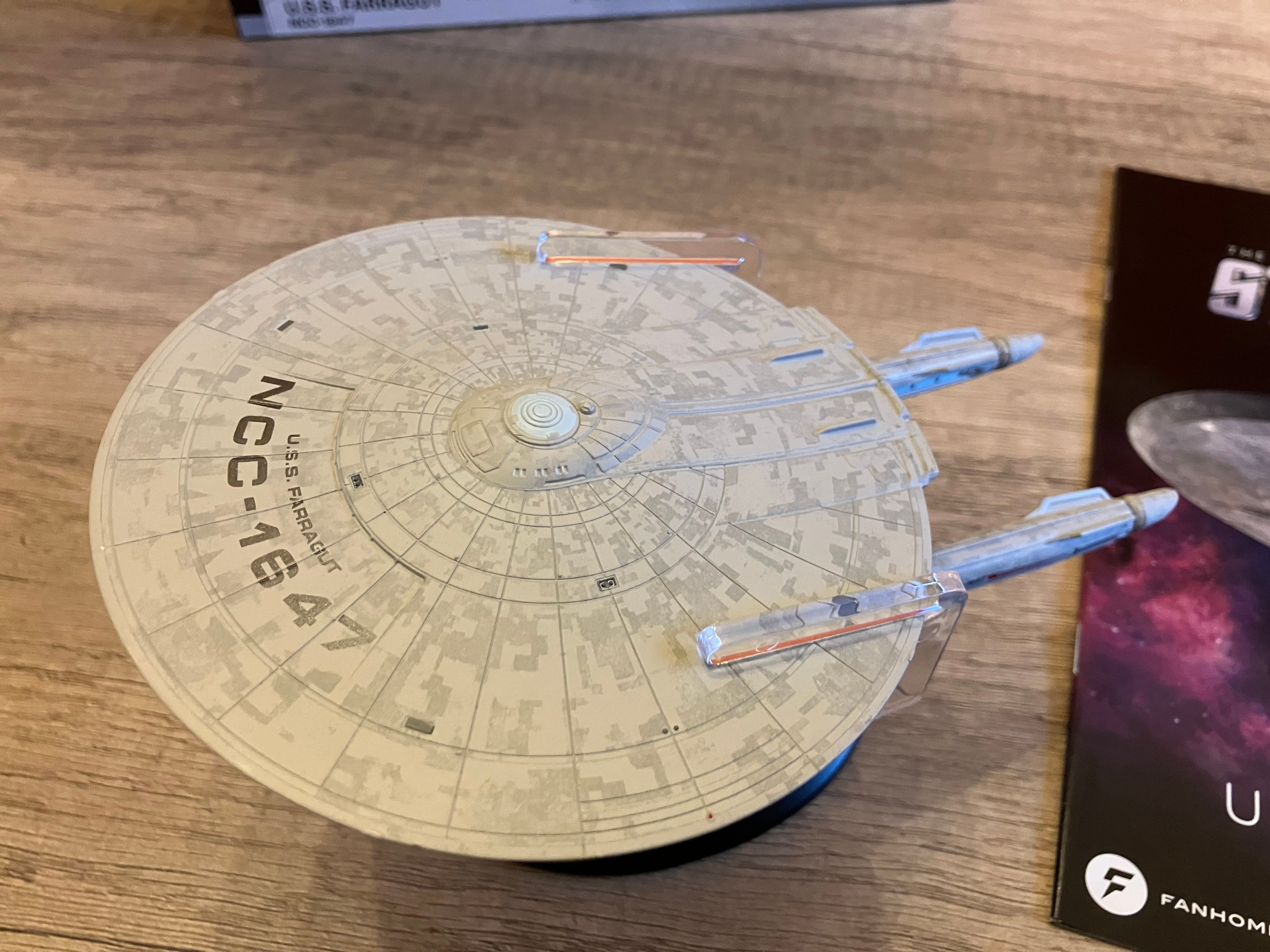
As with the others, the presentation is solid. The boxes for this set are so much more eye-catching that the bland Eaglemoss ones. It comes in the usual foam packaging with a booklet presenting notes on the show’s design work for the craft. The model is solid, the stand is the best of the three, so far, and the detailing is good and matches that of the Eaglemoss SNW Enterprise well. Though this is not their XL version, the size of the model is almost to scale with Pike’s Enterprise. Side by side, the saucers look the same but are a hair different.

It also came with a sleeve box for the booklets. It will not fit the large magazines from the Eaglemoss collection, but does the smaller booklets from the Disco collection. 

So is it worth it? If you are a completist, if you like the ship — yes.

The latest drop from FanHome did not disappoint. Even though I’m not much on the look of a lot of the 25th Century ships but Stargazer (Sagan-class) is well executed. It arrived about a week late thanks to the holiday season (and to much online bitching), but again — the packaging is much better than the bland blue of Eaglemoss, similar packing, the usual booklet on the design, history, and appearance of the ship with good quality gloss paper.

The model itself is well detailed, but in the mold and the paint job. The portholes really pop on this thing, for some reason (I think because they’re a light blue rather than white.) 

There’s a bit more detail on the undersides of this and Titan from last month than Eaglemoss often would do on the Discovery period ships, so that’s a plus.

Overall, I’ve been pretty impressed with the model quality and presentation so fan. Can’t wait to see a Strange New Worlds ship to compare with the previous Pike Enterprise: next month: Farragut

Is it worth it? If you’ve been collecting Trek ships from the previous manufacturer and are a completist, absolutely. If this was a ship that really sang to you, yes. Price should be $65 w/ shipping. The subscription knocks off $10 and shipping. Allegedly, you can cancel the ones you don’t want, but I’ve yet to test that with FanHome (although Eaglemoss did it for my Galactica subscription, no questions.)

MISSION BRIEFS: Search and Rescue

  • Suggested Era: Star Trek: Nemesis
  • Spotlight Characters: Security and Science officers

SYNOPSIS

The ship is doing a routine patrol along the Romulan Neutral Zone when they receive a distress signal from Nimbus III.

OPENING LOG ENTRY

Captain’s Log, Stardate 56844.1: We are on a routine patrol along the Romulan Neutral Zone, close to the Nimbus system — the “Planet of Galactic Peace” — whose purpose is to allow the major powers of the Quadrant to meet and hash out their differences peaceably. In reality it is a sort of civilian Starbase 80 — a dumping ground for failed and disgraced diplomats. It is located in the Neutral Zone, and is the only point where Federation, Romulan, and Klingon ships may enter the zone. 

MAJOR BEATS

1) Distress Call

The ship will monitor some kind of high energy discharges only a few light hours away in the Romulan Neutral Zone. A successful scan of the area will reveal two Romulan warbirds duking it out. Both are in violation of treaty, but what are they doing fighting each other? As they watch, the Valdore-class warbird is destroyed by the older, larger D’Deridex, which quickly cloaks and disappears. A successful scan, difficulty 4 will reveal that just before the destruction of the warbird, there was a vessel launched and which quickly cloaked (for 2MP, they can determine it was a small scout ship, their equivalent of a runabout.)

They will pick up a faint signal a little while later. It’s the scout vessel, currently in the Nimbus system. “…need assistance… attacked by warbird {static] and ship destroyed… Have to get word to the high command… coup d’etat… Trying to make Nimbus III but losing control…” They will lose the signal, but not before the ship is spotted near Nimbus III, entering the atmosphere much too quickly.

Fortunately, they are authorized to enter the zone in a tight corridor of space to get to Nimbus III. A difficulty 2 navigation test should get them there in an hour or so.

2) Planet of Galactic Peace

A review of their records will show the Romulan ambassador is Shir’el — a diplomat that had worked to bring the Romulans into the Dominion War after the assassination of Senator Vreenak. The UFP Vincent Lorentz — a human from Centauri who had some personal issues that made him unsuitable for higher office. The Klingon ambassador is a former captain, Balek, who lost his attack wing during the war and has been parked on Nimbus III in disgrace. the world itself is mostly desert, although the settlers conned into coming to Nimbus with the promise of opportunity have managed to wrestle portions of it into (barely) arable land. The capital is Paradise City, and they will hear from any officials they contact that the scout ship never made it.

If they contacted the Romulan ambassador, he will relate that the scout ship must have gone down somewhere on the planet and that they will find it. Their assistance is not required. The Federation diplomat, however, will encourage them to find the ship and rescue the crew.

On arrival, they can start scanning for the ship. The helmsman can assist with a successful difficulty 1 test to set up a Polar Orbit scene trait that will aid in a more quick and efficient scan. This can be run as an extended test. Once they have found it, the wreck is near a small town of farms near an outcropping of rocky hills (that are absolutely not the Vasquez Rocks). The wreck is mostly intact, but there’s no life signs. 

The mission directives are thus: 1) find and rescue the crew, 2) gather any intelligence regarding their claim of a coup d’etat — a coup against whom? 

3) The Wreck

The scout ship is badly damaged — it looks like when their mothership blew up, the scout was hit with debris that eventually caused a lost of power and control systems. The computer core has been destroyed with a disruptor. Why? Before they can ask, a ground vehicle with a team of Romulans will arrive — and they are not friendly disposed. The leader Senek is looking for the crew, as well, and is highly suspicious of their presence.

Searching the area for life signs — there’s some small critters and plant life tenaciously digging into the dead soil of the planet. A difficulty 3 will find the Romulans from the scout ship, two life signs, hiding (of course) in a cave in the rocks. Work together with the Romulans or try to beat them to the crew?

4) Friend or Foe?

The crew are Tal Shi’ar officers who are hiding out from their people. Subcommander Valera and Lieutenant Tala had tried to reach the Federation ambassador, but their ship was barely under their control. Why not go to their ambassador? The reason is simple: they don’t know who to trust; they were attacked by Commander Suran of the warbird Triere. He’s one of the main commanders in the region. 

If the characters had worked with the Romulans to find the crew, this is where the double cross happens and the Romulans attack!

They had uncovered one of the Tal Shi’ar’s research centers was experimenting with a danger weapon: a small thalaron radiation projector. Thalaron radiation can disrupt biological functions quickly and disastrously. These projectors had been built for some of their people who were concerned about the thawing relations with the Federation following the Dominion War, and are looking to murder the Praetor Hiren!

If the characters worked alone and beat the Romulans to the cave and the scout ship’s crew, they’ll arrive just in time for a fight.

5) Calling in the Cavalry

Once back on their ship, they can attempt to contact a Romulan commander that Valera trusts: Commander Donatra of the warbird Valdore. They will receive word that she is on her way, but at that moment Commander Suran’s D’Deridexuncloaks! He will demand the return of the scout’s crew or he will destroy their ship.

If a fight ensues, let it run until one side or the other is in real trouble. At that point, Valdore will arrive and Donatra will warn Suran off. She will take the Tal Shi’ar officers into her protection. They’ve done a real service; they made have just stopped a Romulan civil war.

CONCLUSION

The crew, several days later, will receive the news that a coup d’etat has occurred on Romulus and that a new Praetor, Shinzon, has ascended to rule. the rumor is some kind of biogenic weapon was used to kill much of the Romulan Senate! He has already offered to open talks with the Federation, and USS Enterprise under Captain Picard is on route to Romulus.

The copyright for 2d20 system is Modiphius, 2019. STAR TREK and related marks and logos are trademarks of CBS Studios inc. All Rights Reserved and no infringement is intended.

So…you can use your Promotion Points in the Blade Runner RPG, but what exactly are those awards and medals? Here’s a list of real (and a few imagined for the Blade Runnersetting) for your characters to spend PP on.

Los Angeles Police Department Awards and Decorations

The awards and medals are not presented in their order of precedence when displaced on an officer’s uniform.

Awards for Bravery

Medal of Valor: Given for individual acts of bravery above and beyond the call of duty, this medal is awarded by the Board of Police Commissioners and the Chief of Police, and is the highest award in the department. It was first presented in 1925 and is awarded at a yearly banquet for the medal’s recipients.

Preservation of Life Medal: This medal may be awarded to an officer who has distinguished himself or herself by employing exceptional tactics and exercising sound judgment, beyond the normal demands of duty, to preserve the life of another during a volatile or dangerous encounter while protecting the safety and security of the public or fellow officers.

Police Medal: Awarded for individual acts of bravery in the line of duty (though not above and beyond the call).

Purple Heart: Awarded to officers who sustain traumatic injury due to suspect action in the line of duty. May also be awarded posthumously when officer dies due to suspect’s actions.

Police Star: An award for bravery performed with exceptional judgment and/or utilization of tactics to defuse dangerous situations.

Police Lifesaving Medal: Given for bravery in the act of rescuing or attempting to rescue a fellow officer or other person in imminent danger.

Awards for Service

Police Distinguished Service Medal: The Distinguished Service Medal is the department’s highest award for service and may be awarded to officers or other employees who distinguish themselves by performing exceptional service in a duty of great responsibility or of critical importance to law enforcement.

Police Meritorious Service Medal: This medal is awarded to employees who distinguish themselves by performing exception service in a position of of great responsibility or critical importance to law enforcement, but to a lesser degree than required for the Distinguished Service Medal.

Police Meritorious Achievement Medal: Primarily a civilian award, given for either sustained, long-term, noteworthy achievement or a single significant, noteworthy achievement in the administrative, clerical, or craft duties.

Police Commission Distinguished Service Medal: This medal is given for exceptional performance in service to the LAPD in stressful or emergency situations with good judgment or bravery.

Police Commission Integrity Medal: Awarded for actions of exemplary integrity, requiring personal character, fortitude or moral courage.

Community Policing Medal: This medal is given to personnel who have solved a significant community problem, included the community in the problem solving process, and/or showing a commitment to the department’s community policing philosophy.

Human Relations Medal: Awarded to officers who have shown compassion and gone above and beyond the call of duty in their response to their fellow human beings.

Unit Citations

(These are typically authorized for uniform wear while serving with the unit.)

Police Commission Unit Citation: The highest unit award, this citation is given to an organization unit of the department for bravery or outstanding service by its members functioning as a team.

Police Meritorious Unit Citation: Awarded to an organizational unit of the department for bravery or outstanding service by its members, but to a lesser degree than the Commission Unit Citation.

Commendations

Commendation Ribbon: The ribbon is authorized for wear after the employee has received 40 minor or major commendations or citizen letters. After 80 such commendations, a bronze oak leaf is worn on the ribbon. After 120 commendations, the bronze oak leaf is replaced with a silver star. after 160 commendations, the silver star is replaced by a gold star.

Patrol Service Ribbon: The ribbon is authorized for wear after 5 years of patrol services as an officer, sergeant, or lieutenant. After 10 years, a bronze oak leaf is worn on the ribbon. After 15 years, the leaf is replaced by a silver star, and after 20 years, with a gold star.

Detective Service Ribbon: This ribbon is authorized after 5 years with investigative units as a detective or lieutenant. As with the Patrol Service Ribbon, the bronze oak leaf device is worn on the ribbon after 10 years, a silver star after 15, and gold star after 20 years.

Replicant Detection Ribbon: The ribbon is authorized for wear 5 years with investigative units as a detective or lieutenant and is noted for its metal knife device on detective’s ribbon (hence the nickname “blade runner”). The bronze knife device is replace with a silver blade on the ribbon after 10 years, a gold blade after 15, and gold star after 20 years.

Reserve Service Ribbon: Awarded for 4000 hours of service as a reserve officer.

Event Awards

1984 Summer Olympics Ribbon: Given to any officer who saw service during the period of the Olympic Games in 1984.

1987 Papal Visit Ribbon: Given to any officer who saw service during the period of the Papal visit in 1987.

1992 Civil Disturbance Ribbon: Given to any officer who saw service during the period of the riots of 1992.

1994 Earthquake Ribbon: Given to any officer who saw service during the period of Jan 17-18, 1994.

2000 Democratic National Convention Ribbon: Given to any officer who saw service during the period of the 2000 Democratic National Convention.

2010 Replicant Rebellion Ribbon: Given to officers who saw service during the events of the 2010 Nexus 5 rebellion.

2022 Blackout Ribbon: Given to any officer who saw service during the period of the Blackout in 2022.

Qualification Ribbons

Urban Police Rifle Cadre Ribbon: Given to any officer who is qualified to use a police urban rifle.

Shotgun Slug Ammunition Cadre Ribbon: Given to any officer who is qualified to use a shotgun with slug ammunition.

Voight-Kampf Testing Ribbon: Officers must have qualified with use of the Voight-Kampf Detection Device.

Aerial Vehicle Ribbon: Officer must have passed classroom and solo flight testing for use of dpartmental aerial vehicles.

Distinguished Expert Marksman Badge: Officers must score 2310 out of 2400in a consecutive six-month period in voluntary bonus qualification shoots held each month. (Characters must have a B or higher in both Agility and Firearms, gives 1 chiyen per session.)

Expert Marksman Badge: Offices must score 380 out of a possible 400 in voluntary qualification shoots held each month. (Characters must have a B in either Agility and Firearms, gives 1 chiyen per session. does not stack with DEM Badge.)

Sharpshooter Marksman Badge: Offices must score 340 out of a possible 400 in voluntary qualification shoots held each month. (Characters must have a C or higher in both Agility and Firearms.)

Marksmanship Badge: Offices must score 300 out of a possible 400 in voluntary qualification shoots held each month. (Characters must have a C in either Agility and Firearms.)

I kept hearing about this project and saw some of the initial cryptic videos coming out of OTOY, a group connected to the Roddenberry estate, it seems, that have been doing archival work on Star Trek. Here we get to the heart of why the original show worked so well — characters. Friendship.

9. STAR TREK and related marks and logos are trademarks of CBS Studios inc. All Rights Reserved and no infringement is intended.