We’ve finally had a chance to finish our A/B test of Firefly and Serenity. The original idea was to run the exact same adventure and characters one after the other and do a comparison for those who might be interested, as well as to assess which rules set might be preferred by the group.

The mission (game seed idea, kids!): The characters get hired by Zeo Genomics, a biotech company out of Silverhold to do a bit of corporate espionage — steal a bunch of newtech bio-engingeered organ replacements from Advanced Humanics on Ariel, and get them to Silverhold. Through a bit of sci-fi technobabble, it’s not feasible to transport them in a cooler for the 10 day trip or so; they are going to be bootlegging these organs in a donor body (ala War Stories). The characters played were a former Alliance colonel and his sergeant, and a hacker. The doctor and pilot characters that were also made were later played as secondaries after the first two of the characters were incapacitated.

There was a bit of negotiating with the sponsor, then getting the team together on Ariel. Much of this happens in the “blackout zones” — areas where war damage or simple urban decay has sections of cities or whole towns off the grid. (Think Detroit…) There is a healthy underground movement(s) in the area, and the characters get the team together, including a med student in his last year of residency and up to his ass in drug and gambling debt.

They planned the raid on the hospital/research center, execute it with some issues of guards discovering them and a car chase involving a Tachikoma-like smart tank, followed by betrayal by the man that was supposed to get his guts scooped out ratting them out. Big firefight in the back-alley hospital they were to do the operation, massive destruction, then a desperate attempt to get out of the zone.

We wound up cutting the adventure in half and running the first half in Serenity (Classic Cortex), and the second half in Cortex+ Firefly. Afterward, we sent about half an hour or so comparing notes and dissecting the experience. Much of the talk centered on certain aspects that are common to Fate and similar products (of which Firefly bears close resemblance.)

K was the one most on the fence over which system he preferred. Our familiarity with old Cortex was, he thought, a major reason to find in favor of the older mechanics; we’re used to them. He found the dice pool mechanics fun — and I think this is one of the major draws to Cortex+ is the dice pool with multiple types (as compared to Fate’s -/0/+ d6s.) It’s fun to throw the bones. He also thought the ability to pick up assets and complications on the fly was enjoyable, and describing them was part of the fun. (During our big fight, we had things like Hemmed In d6, and Burning Building d10, and Stun Grenades Suck d6. The characters used skills test to have Defensible Position d6, and hero points to have Explosives d8, and the like…)

M found the basic mechanics were quickly overwhelmed by the sheer number of things you could do with plot points, and the subsequent increase in complexity due to assets and complications to be an impediment to play. The flexibility that these mechanics give Cortex+ is, to his mind, both a draw and a bug. However, he liked the ability to chose to take a d4 distinction and gain a plot point vs. rolling a d8 to be an excellent way to keep the points flowing back and forth. However, he found the larger dice pools made the mechanic of the GM buying fumbles or botches with plot points to defeat the purpose of big dice pools.

“You roll five dice and get a big success, but then you have to count one or two 1s and got through the buying complications thing…”

He thought that the character design with the generalized attributes and everyone having at least d4 skill was more applicable to small groups, where having overlap between skill sets compensates for characters that are highly specialized, but thought in larger groups, this would dilute the utility of a single character.

His big complaint was that complications and assets quick cancel each other out, or stack to lead to a “death spiral” where characters are injured or so hampered by complications that they are finally crushed under the weight of them and can do nothing. Yes, you could choose to concede a scene or get “taken out”, but that seems not to be the natural impulse of players I’ve encountered.

J found the simpler rules of Serenity to be easier to manage for the player, and the asset/complications of the older system, along with the wider array of attributes allowed for a much more tailored and nuanced character. He did like the speed with which the plot points were gained and spend (something echoed by M) and found it less awkward than some of the free from rules of Marvel Heroic Roleplaying. Being a mathematician, he was looking at the utility of the assets and complications, and how they play out. Rolling five or six dice to choose two or three, he pointed out, did not create great statistical variation, and M — based on this — wondered if the bookkeeping required to track all the various complications and assets gave a better return than just rolling fewer dice and letting the GM set difficulties based on the scenario.

Some of these thoughts mirrored mine. I find the number of assets and complications that can get added to a scene ned to be limited. I chose to step up complications, rather than create new ones for the sake of easier bookkeeping. There’s a certain draw to having a metric for what’s happening in a scene (oh, this is a d6 hazard! cool!) but I found it sometimes made me feel I had to take the complication into account, even when the story felt like it should be flowing a different way. The let the chips fall type GMs would think this is the way it should play, but sometimes, there’s a movement to a scene that tells you where it should go. That’s the difference, I suppose, between a referee and a storyteller-style GM.

I also found that tracking the fails and botches from 1s to get annoying. If you are rolling enough dice, it’s bound to happen, and if your rolled spectacularly well, it seems unfair to slap a complication or bank one against the players. I do like rolling a bunch of dice, and think that — in moderation — the asset/complications of Fate/Cortex+ can be a cool addition to a game, but I get the feeling that this mechanic (especially when the players are setting the asset or complication) is more appropriate to beginner GMs or those gamers who like a more collaborative experience.

Frankly, I think too many cooks spoil the soup. Case in point, nearly every Hollywood movie or collaborative book series with a bunch of writers sucks. The more there are, the worse it is.

So, in the end, what was the verdict? K thought the game had potential and wanted to try it again, but grudgingly leaned toward Serenity (with the asset/complications rules from Battlestar Galactica [or Cortex 1.1]) over Firefly. My position was similar — I really want to like the game, and I think if we limit some of the use of the moving parts it will flow better — but i lean toward Classic Cortex, as well. M was in the old Cortex box from the jump, and while he liked select things Firefly was doing, he thought these could be effectively ported over to Serenity. J was also in the old Cortex docket. Unanimous, Serenity (caveat, with the 1.1 version asset/complications rules) wins over Firefly.

That said, the game has got good mechanics and would do well mated to the right setting. My mind immediately jumps to Star Trek, where all the characters are ludicrously cross-trained (“Quick, counsellor, drive this big f#$%ing spaceship!”) and the Firefly skills system of everyone gets at least a d4 models that well…but I’m less convinced that works well for the ‘Verse. The book is also beautiful and has a wealth of show information that might help a GM, and is worth it for that.


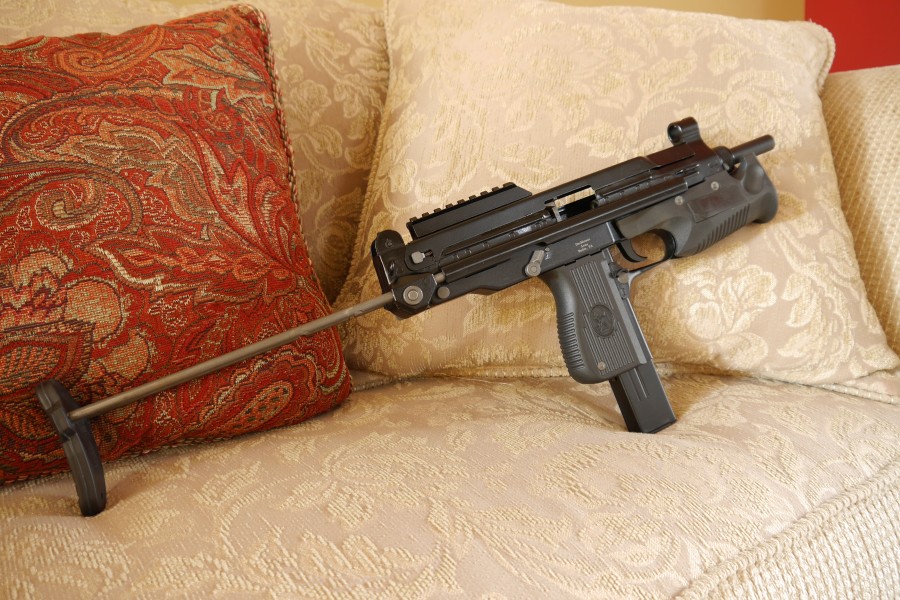
PM-06 9mm Submachinegun

P1090343-900x600


pm-06

The Polish-made PM-06 is a 9mm submachinegun that uses selective fire from a closed bolt, and has a collapsible stock. Low recoil and controllability make the weapon an excellent one for urban operations.

PM: +1   S/R: 2   AMMO: 25   DC: F   CLOS: 0-10   LONG: 40-60   CON: +3   JAM: 98+   DRAW: -2   RL: 2 COST: Game Information: Gain a +1PM when the shoulder stock is extended. The next set of statistics are for full-auto:

PM: 0   S/R: 6   AMMO: 25   DC: H   CLOS: 0-10   LONG: 40-60   CON: +3   JAM: 96+   DRAW: -2   RL; 2


Here’s a few things to aid GMs with their james Bond: 007 campaign:

One of the things dropped to the public from the Edward Snowden leaks was the Advanced Network Technology catalogue.

It was an election day (primaries) in New Mexico this week, so I figured I’d throw out a poll or two. The first is to satisfy my curiosity — what are people playing these days? Throw up a comment if your fave isn’t here, or you have a specific variant.


One of the things that I’ve always liked about the old James Bond RPG rules set, and to a lesser extent Cortex, is that the quality of the success translates into how well damage is rendered on an opponent. In the JB:007 game, the quality result is checked against the damage class of the weapon and there’s the damage done. In Cortex, the quality of the result gives you basic damage — 1/2 in stun and 1/2 in wound, but then there’s the additional roll of the weapon’s damage — this can give anything from a disappointing 1 up to the max of the die in wound.

It’s the one issue in Cortex’s combat mechanics that has always bugged me. Bang! I do 3S and 3W on my .45 pistol with a d6W and….oh. One. The second bit of random chance just seems to fly against the point of the basic damage based on quality. Granted, an extraordinary success lends the attacker certain benefits if the target doesn’t make their endurance test (or in the case of mooks, I just call it an incapacitate.)

I have two suggestions to improve the way combat is handled in Cortex:

1) Weapons and damage — In the case of damage, I suggest the player be allowed to  “take the average” — if a pistol has a d6W (and most do), the weapon normally does three. With an extraordinary success, it does the max for the die, in this example six. (Ex. Ted (d6 Agility+d4 Guns with a result of 10) shoots Steve (dodging with a d6 Agility and d6 Athletics with a disappointing 7 result.) He does 1 stun from basic damage, and 4 wound. Had he gotten an extraordinary (say, Steve only got a 3), it would have been 4 stun, 9 wound.

This should speed combat and reduce some of the chance of combat. I would still allow them to roll damage if they were feeling lucky, but it might be a good option for the GM running a big, complex fight to cut down on rolling and paperwork.

2) Always roll Endurance when taking a hit. Sometimes, you get hit and while it doesn’t do any real physical damage, it knocks the snot out of you. I like to have the players test against Endurance equal to an injury they sustain in combat. They took 2 stun, 2 wound? Beat a 4, otherwise be stunned for a number of rounds equal to how much to missed. On an extraordinary success, stick to the rules on pg. 94 of the Cortex core book — wounds start d2 Bleeding per turn of strenuous activity or 10 minutes otherwise; stun and you’re knocked out; basic damage, you’ve taken some kind of debilitating injury.

As always, feel free to completely ignore these suggestions.

Here’s a selection of the characters created for the A/B test of Serenity vs. Firefly RPGs. I think we’re going to start with the Serenity version first, since it’s the one we know, then hit Firefly.

Colonel Atticus Wynn

40 years old, he was born on Persephone to a good, somewhat well-off gentry family that supported Unification. He was a graduate student in politics and history with a promising future in local government when the war hit. He was an officer in the 901st Scout Brigade (Persephone) and rose to the rank of colonel by the end of the war. He was known for his lead from the front style and for speed and tenacity in his operations. By the war’s end, he had moved up to commanding the brigade. 

   While skilled in social niceties, which had helped his career, he was increasingly horrified by the treatment of the Independents by the general command, and made a few impolitic statements that dead-ended his career in the military, and have hampered him since the war. Most of this is due to the animosity of then-General Lao — now the minister of security for the Alliance.

   His family is led by Sir Trevor Wynn, and his family were one of the original investors in Persephone. While his father has not disowned him, he has had to scale back his expectations until the issues with Lao have been resolved.

Attributes:  Agility:d6, Strength:d8, Vitality:d8, Alertness:d8, Intelligence:d8, Willpower:d10; Life Points:20

Assets: Fightin’ Type: d6, Friends in High Places d4, Military Rank d4, Patient d4 (homebrew asset, adds to Discipline, Tactics), Tough as Nails d4

Complications: Branded d4, Credo d4 (loyalty to men, never leave a man behind), Deadly Enemy d4, Things Don’t go Smooth: d4

Skills: Animal Handling d4, Athletics d6, Covert d6 (Stealth d8), Discipline d6 (Leadership d8), Guns d6, Heavy Weapons d4, Influence d6, Knowledge d4, Perception d6, Planetary Vehicles d4, Survival d6, Unarmed Combat d6

…and the Firefly version…

AttributesMental: d8, Physical: d8, Social: d8

SkillsCraft d4, Drive d4, Fight (Dirty) d8, Fix d4, Fly d4, Focus d6, Influence (Leadership) d8, Knowledge (Politics) d8, Labor d4, Move d6, Notice d6, Operate d4, Perform d4, Shoot d8, Sneak d6, Survive d8, Throw d4, Treat d4, Trick d6

DistinctionsMercenary Leader d8 —  Gain 1PP when rolling d4 instead of d8. Lead from the Front: Spend 1PP to loan Influence die to his subordinate on any task.

Vet of the Unification War d8 —  Gain 1PP when rolling d4 instead of d8. War Stories: Can shift up an Asset or Complication if it is related to his service.

Smooth Talker d8 —  Gain 1PP when rolling d4 instead of d8.

Signature AssetsStealth Suit d8, Alliance G-36 w/ GL d8, Family Ties d6 —  (Spend 1PP to create a contact asset for a scene.)

Next up —

Michael Sands

Sands was conscripted straight out of school into the Unification War; his family was not wealthy enough to pay for a surrogate, like those rich people… He shipped out from DeSantis on Ariel as a rifleman in the 509th Infantry. After a particularly nasty battle with the Browncoats on Persephone, he was transferred to the 901st Scout Brigade under then Captain Wynn. The more fast and loose command structure got rid of much of the nonsense that made the military so unbearable, and by the end of the war, Sands couldn’t really think of anything else he wanted to do.

   Downsized out of the military as a sergeant with several commendations for valor and combat, he found he was having a hard time adjusting to life as a civilian. He got into security, then into the protection racket with some questionable folks in the blackout zone on the edge of Molina. He was nicked by the security service for assault and spend six months in the Charleston minimum security and labor prison facility.

Attributes:  Agility: d8 Strength: d10, Vitality: d10, Alertness: d8, Intelligence: d6, Willpower: d6; Life Points:18

AssetsFriends in Low Places d4, Intimidatin’ Manner d4, Steady Calm d4, Tough As Nails d4

Complications:  Criminal d4, Chip on His Shoulder d4, Loyal d4

Skills:  Athletics d6, Covert d6, Discipline d4, Guns d6 (Rifles d8), Heavy Weapons d6, Influence d4, Linguist d4, Melee Combat d6, Perception d4, Planetary Vehicles d4, Survival d6, Unarmed Combat d6 (Brawling d10)

…in Firefly 

Attributes:  Mental: d8, Physical: d10, Social: d6

Skills:  Craft d6, Drive d4, Fight d10, Fix d6, Fly d4, Focus d4, Influence d4, Knowledge d4, Labor (Lift/Carry) d6, Move d6, Notice (sight) d6, Operate d4, Perform d4, Shoot (rifle) d10, Sneak (Stealth) d6, Survive d6, Throw d6, Treat d4, Trick d6

Distinctions:  Friends in Low Places d8 (You come from dirt, you’re friends are dirt…) — Gain 1PP when rolling d4 instead of d8. 

Vet of the Unification War d8 (Alliance gave you skills, tell you not to use ‘em…) —  Gain 1PP when rolling d4 instead of d8. Fightin’ Type: Spend 1PP to double or step up fight or shoot.

Living in the Cracks d8 (You what you have to to get by…) — Gain 1PP when rolling d4 instead of d8. Fell Off a Truck: Step up/create a social complication for a d8 Asset.

Signature Assets:  Streetsweeper 12gd8 (Step up die for auto fire, but weapon is empty next turn.); One d6 asset to define.

…lastly,

Jun Li

A native of Jiangyin, she is the eldest daughter of two to a shop owner and his wife in Jiang Shan. She joined the Independents out of a sense of duty to keep her world free and was a gunboat navigator and pilot with the 12th Assault Fleet out of Silverhold. She was captured during the Battle of Red Sun and was interred at Camp Robison under horrible conditions. She suffered infection from the terrible sanitary conditions and had to have her legs amputated. She has a set of prosthetic legs of middling quality, but is still traumatized by the events. She is now a contract pilot for whoever will hire her.

AttributesAgility: d8, Strength: d4, Vitality: d6, Alertness: d10, Intelligence: d10, Willpower: d10; Life Points:16

Assets:  If It Moves, I Can Fly It d6  (Adds to Pilot & Planet. Vehicles. Can spend 1PP like it was 3PP.)

Complications:  Amputee d4, Prejudice, Alliance d4, Traumatic Flashbacks d4

Skills:  Athletics d4, Craft d6, Discipline d4, Influence d6, Mech Engineering d6, Perception d6, Pilot d6 (Blockade Runner d8, Navigation d10), Planetary Vehicles d6, Survival d6, Tech Engineering d6, Unarmed Combat d6 (Brawling d10)

…and in Firefly

Attributes:  Mental: d10, Physical: d6, Social: d8

Skills:  Craft d6, Drive (Cars) d10, Fight d4, Fix d10, Fly (Navigation) d10, Focus d4, Influence (Placate) d6, Knowledge d4, Labor d6, Move d4, Notice d6, Operate (Sensors)  d10, Perform d4, Shoot d4, Sneak d4, Survive d4, Throw d4, Treat d6, Trick d4

Distinctions:  If It Moves… d8  (Doesn’t matter what it is, if it moves, you can fly/drive it…) — Gain 1PP when rolling d4 instead of d8. Push the Envelope: Roll d4 to gain a Big Damn Hero d8 next round.

Prisoner of War d8 (I was in Camp Robison…) — Gain 1PP when rolling d4 instead of d8. Kept My Humanity: Spend 1PP to step up a die loaned for a task or when treating someone.

Amputee d8 (…that where I lost my legs…) — Gain 1PP when rolling d4 instead of d8.

Signature Assets:  Part of Me d8 (1PP steps down a complications on her vehicle.); Asset d6 to be defined

The distinctions on this last one were all customized to try and emulate the Serenity version…
I’ve got an e-copy of the Firefly RPG from Margaret Weiss Productions, and next week I’m planning to run a one-shot with the system. After that, we’re going to run the same adventure and characters in the old Serenity rules (with a slight modification — we’re using what I’ll call Cortex 1.1, using the Assets and Complications rules from Battlestar Galactica and Supernatural.)

However, I can give an initial report on the character creation for both systems, having put together six pre-gens for the one-shot.

1) Speed of character creation: I’ve been using Cortex 1.1 for six years of so for various games, so I’ve reached the point I can slap together a pretty nuanced character in about 10 minutes, tops. After getting used to how the writers laid out the character creation in the Firefly corebook, I was able to put together a reasonable version of the Cortex 1.1 characters in about the same time. It’d give the slight edge to the Cortex+ version here.

2) Closeness to concept: One of the reasons classic Cortex has become my favorite system is the ability to really craft a characters mechanics to match the concept. There’s six attributes — the physical: agility, strength, vitality; and the mental: alertness, intelligence, and willpower. Assets and complications give a die to the character or the GM, respectively, when they come into play. Usually, if I bring a complication into play, the player gets a plot point. Skills and their specializations are well-defined. These all are defined from d2 (weak!) to as high as 2d12 — but usually you will be between d4 and d12.

Firefly‘s Cortex+ has three attributes: physical, mental, and social and the characters get to assign a d6, d8, or d10 to the attributes. You can even them out to d8s across the boards, if you like. Assets and complications are replaced by the Fate-inspired Distinctions. You get three at d8, and  may add up to two triggers (ex., a Veteran of the Unification War distinction might allow you Fightin’ Type or War Stories with certain mechanical benefits.) All characters have the same skill list and at least a d4 in all of them. Each of the distinctions gives you a linked skill that you gain a die step.

For instance: Colonel Atticus Wynn is a veteran of the Alliance military who has fallen on hard times. He crossed the wrong politician or military figure during the war and has found himself unable to capitalize on his service. In the Serenity rules, he’s got the Branded, Deadly Enemy, and Things Don’t Go Smooth complications, with Fightin’ Type, Friends in High Places, Natural Leader, Military Rank, and Tough as Nails for assets. He’s well defined.

In the Cortex+ version, I had to really work to balance the distinctions in a way that emulated the complications and assets. I created one called Mercenary Leader based on Ship Captain. He has a Lead from the Front trigger that allows him to spend plot points on his subordinates. He’s a Veteran of the Unification War with the War Stories trigger allowing him to step up assets or complications from the war. He’s got Smooth Talker, as well, since he was build in Cortex 1.1 with good influence and social skills. The three distinctions left him with good Fight and Shoot skills, and lesser Influence, Knowledge, Move, and Survival skills that were improved with the nine points given to tweak the skills. He added two specializations and took two d8 Signature Assets — a stealth suit and an Alliance assault rifle.

The difference between the character builds was subtle in this character. I had to create distinctions or signature assets to get close to the classic Cortex build on a few characters, but overall I was able to get close to a match, mechanically, for the characters. A few of the character templates were close enough to tweak and make them work — there’s quite a few of these templates to use to get yourself into play quickly. However, there’s a lack of detail to the Cortex+ assets, it can be hard to get distinctions to model the detail of the asset/complications, and the specializations are a bit free-form. If the players want the character design to help them play the character, I lean slightly toward classic Cortex for the ability to tailor a character in detail.

So for speed of character creation, there’s almost no difference in how quick you can put together a character (unless you choose to tweak a template — then Firefly is the clear winner here.) As to creating a detailed character, classic Cortex does a better job, but not by much.

So, we finally had a chance to play another session of our pulp campaign I’ve titled Thrilling Action Stories! after a two week hiatus to visit family in various parts of the country.* We had started off the campaign with the McGuffin — a death jade that apparently belonged to the first sovereign emperor of China — which was used in a summoning to better effect than was expected. The host of the summoning was temporarily taken over by the spirit of the emperor, but this was interrupted by the arrival of a bunch of black-clad martial arts types that killed the possessed man and stole the jade.

Fights and car chases ensued, and the characters eventually did a bit of sleuthing that led them to a warehouse in Limehouse (the Chinese district at the time of the game, 1936.) With the aid of a rival gang, they were able last night to raid the warehouse. There was a quick bit of wushu vs. gun play action and the heroes discovered the major henchman of the piece — a captain of the Si-Fan Triad named “Terrible Blade.” After a bit of chop-socky, they pursued the villain into the damp, dank catacombs below the warehouse, where the villain released a trio of black-skinned, pale eyed “Creature from the Black Lagoon”-style monsters.

The heroes destroyed the monsters by using a convenient barrel of gasoline used for the hoopcycles from the aforementioned car chase and a few well-placed shots from a Mauser .30 to blow the critters (and, very nearly, themselves) to kingdom come. Another chase sequence led to the capture of the jade.

After a night in jail and the intervention of MI5 and the Colonial Office, the characters have been hired to return the jade to the Nationalist government in Nanking — more to get them out of London and put to bed any talk of amphibian monsters, possessed academics, and Chinese gang activity.