I jumped on the pre-order for the Alien RPG waaaay back when it first came out in 2019. My game group wound up running a campaign that — trading out with other games a few weeks here and there — ran for about two years or so. (And may be coming back to the rotation soon…)
When I saw the ads for the “evolved edition” last year I was less than interested. It seemed a touch early for a second edition, and there was still material (Building Better Worlds and the Heart of Darkness set) coming out…so why change? Two things come to mind for the why immediately. Inflation — the cost of producing books has shot up. Alien and Blade Runner use black page color, which is expensive (and, I think, a bit harder to read) and the release of Alien: Romulus and a desire by Free League, Fox, or both to do something that included the new material.
I’ve been reading a lot of chatter back and forth about the new edition, which everything from “it’s a cash grab” and “the new look sucks” to “this is great” and “I like the new rules for…” With the holidays coming up and my propensity for buying stuff I want before the wife can get me gifts for birthdays, holidays, etc. I decided to make this one of my Christmas asks, though I was more interested in the Spinner that Master Replica had coming out. (Which will have a review soon.)
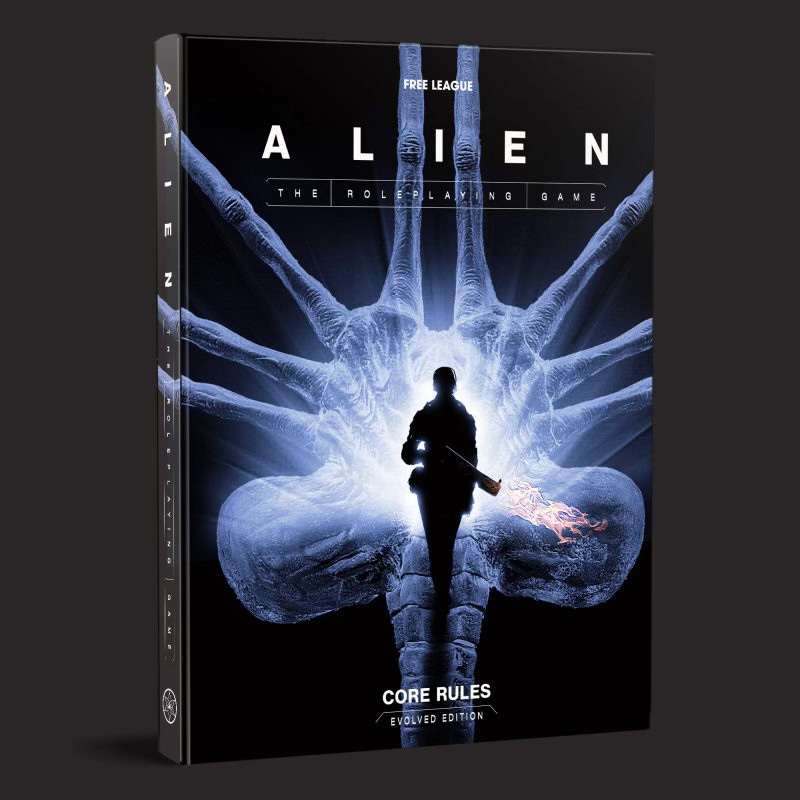
So, the Alien Evolved Edition RPG arrived for Christmas, and after having a few passes through it to see what was different (or not), let’s start with the good. The binding is much better than the older books, partly because of the reduced page count — down about 60 pages from the original. (More on that in a moment…)
There’s been a few clarifications on the basic die mechanic (which is terribly simple), and some changes to combat (specifically armor), the panic rules, and the addition of solo play rules and an optional “lifepath” style character creation. There’s also more material from the movies, on the setting, and the word count is much more beefy than the original book — which at 380ish pages had maybe half that in actual material — and comes in at 311 pages. And definitely has more stuff in it. more on that in a moment.
The lifepath character creation is tucked in the appendix, also with the “Last Survivor” solo rules. You can roll (or honestly just use it as inspiration) events in the character’s life to help build out what you want to play. No, Traveler fans, you cannot die in character creation. It’s a nice addition, especially for players who don’t have a strong grounding in the setting and need a bit of help.
The solo rules are — as with most solo rules sets — a series of ideas and random event charts to help a person play an adventure if they don’t have anyone to play with. Star Trek Adventures did this very well with their Captain’s Log — which really is half-play/half- fan fic creation, as you are supposed to write your adventure out as a log entry. It’s a neat conceit. Doing something like that for Last Survivor could be a way to charge it up a bit.
The main changes are things like armor. It used to be you rolled a number of dice equal to the armor rating and successes negated attack successes. Simple, but it meant armor did bugger all, or essentially stopped an attack. In A:EE, the armor rating kills off that amount of damage. More simple and more intuitive. It will play better.
The new panic rules include a “stress response” chart for non-panic, you’re just stressed out situations. I’m feel personally vindicated on this one (and peeved, since it was one of the first things I modded for Alien back in 2020. The old stress/panic set up could spiral, and fast, with bad rolls even in non-threatening situations, so I cooked up a “stressed out” table. Now you have an official one. Panic, similarly, got tweaked a bit so that you can now have multiple panic responses, instead of regularly stepping up through them. The mechanic for it is new: roll a d6, add your stress level, but now you reduce it by your resolve rating. Less chance of a full blown freakout, but it does look like it could lead to lesser panic responses early. This was a complaint I’ve seen online and which could be easily tweaked to reduce panicking too early (especially for marine characters, who should handle danger better than a crew of a space tramp steamer or colonists.)
While I consider the following “good” about the new book, you might be of a different opinion. The layout…
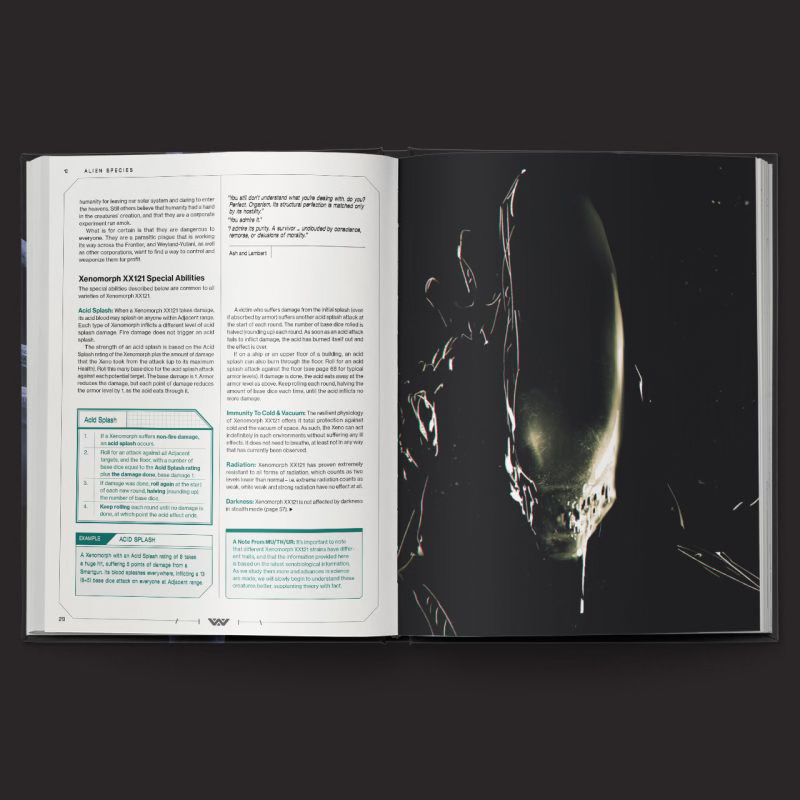
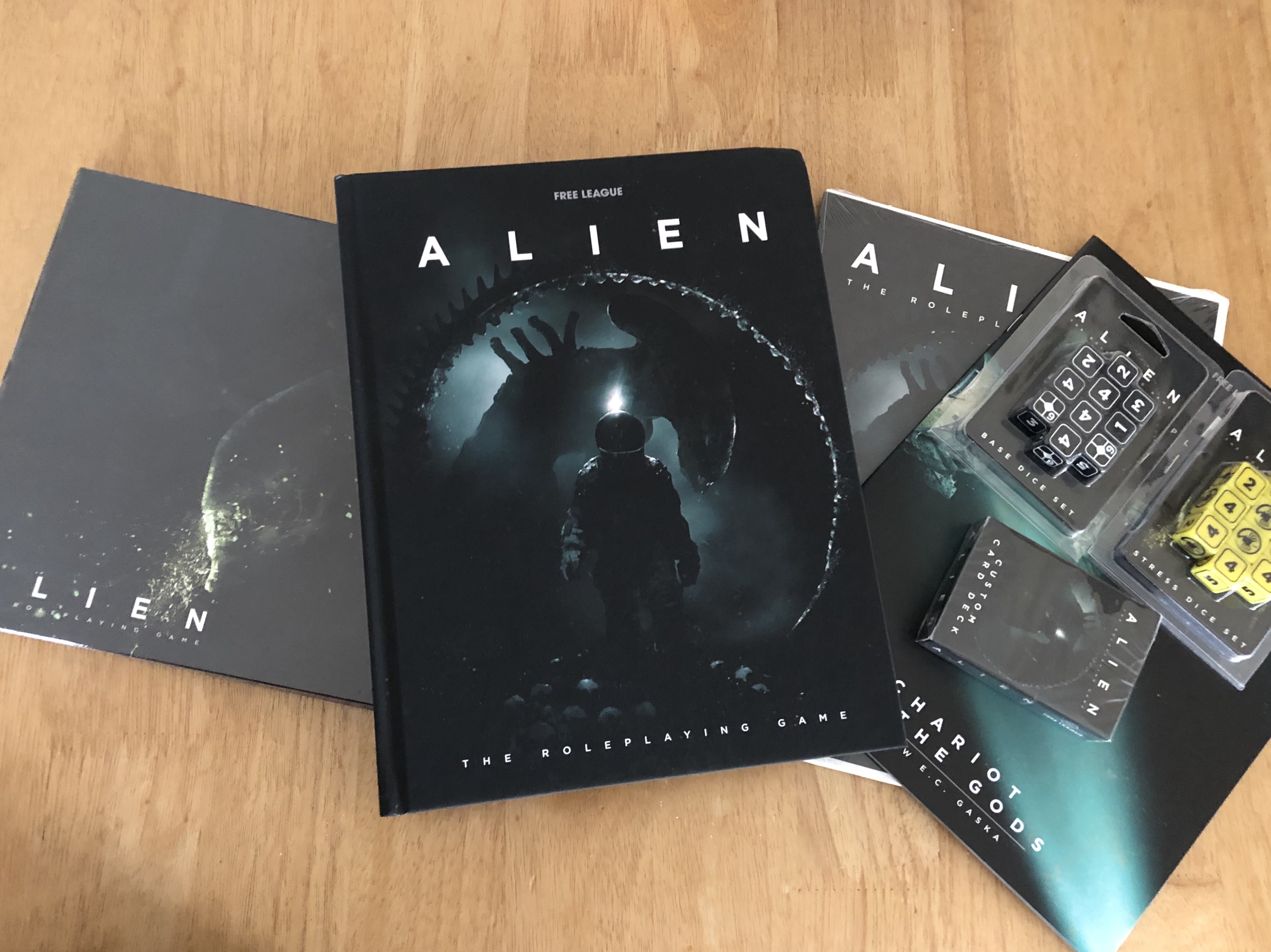
I get why some don’t like it. The original pages were black, with text boxes in a light green with black or dark green text, that while readable, meant that you got a lot less game but a more unified look with the artwork. And to be fair, the art was superb, atmospheric, and really leant to the enjoyment of the book. It was also very much Free League’s style at the time (as with the Tales from the Loop series of games and Blade Runner): half art book, half game book. The new layout — and I chose the above specifically as an example of this — loses a lot of that atmosphere for readability and a focus on the game mechanics and setting material. It’s much less pretty and less of an experience to read. It’s also much more useful from an information and usability standpoint. (It’s also probably much cheaper for Free League to print.)
Similarly, the gamemaster screen is more readable in the new format, with the player side showing art that looks like the circuity cubbyholes of MU/TH/UR’s vestibule in Nostromo, with the circuitry map on a screen in the middle. Looks nice, simple, but I think the original screen — on the player’s side — was better; the GM side is better in the new edition GM screen.
The bad? Not much. Some may complain about the inclusion of more material connected to Romulus — I like it. There’s more gear in the corebook, and even mundane stuff like water can have an impact, mechanically. All of this is, of course, something you can just ignore. That’s the nice thing about this edition; you can just use what you like and ignore the rest. The basic mechanics are the same: roll a number of dice equal to your ability and skill, set a 6 on one of them to succeed.
If anything, I’m a little disappointed they didn’t move to the die mechanic from Twilight: 2000 and Blade Runner. I like the different type of dice — but this system is basic to the point of utilitarian. It doesn’t get in the way. The stress/panic mechanic is still one of the best for urging the players to lean into the horror aspect of the game, instead of ignoring the impact that awful stuff happen ing around you has to a character.
So, is it worth it? At about $50-60 US for the core book, it’s a solid yes if you’ve wanted to get the Alien game and just haven’t. If you’re happy with the old version, it’s not a must — but after reading it, I’m happy I’ve got it, and I think it’s worth it for some of the extra gear, alternate rules, and added material from Romulus.
 The Black Campbell