General Ramblings


Easily the best thing about Star Trek: Discovery has been their willingness to throw caution to the wind on designing starship. Even more than the (at the time) eye-popping redesign for Enterprise-D in The Next GenerationDiscovery has not been shy about pissing off fans and swinging for the aesthetic fences. One of the cooler vessels of the 3rd Season of Discovery is the Angelou-class starship. Described by Ensign Tilly as “a flying rainforest”.

It’s obviously gigantic. A toroidal shape, it looks like the ventral side is the “ship” — the portions with crew areas, life support and gravitational creation, and the like. There is a forward (?) area on the left side of the image above. Is that the command areas? Crew quarters? Deflector dish or is this the back section with an engine? There is a “bridge” over the biodome that takes up much of the ship’s interior space. Judging from the vessel, it’s a good ten decks or more. Essentially, the Angelou-class is part spaceship/part space station. The central area around the donut hole would be massive — 50ish decks top to bottom. Include the biodome itself, you’re probably talking living space that would rival or exceed that of Spacedock One. 

That puts it well above the starship framewrok, I think, so I wrote it up as a starbase and tweaked here and there.

ANGELOU-CLASS

Launch Year: Sometime in the 30-31st Century

Overview: With the Federation at the height of its power, stretching across the Alpha and Beta Quadrants and even poking it’s head into the Gamma and Delta Quadrants, as well as exploring outside the edges of the galaxy, there seemed a need for a dedicated, long-ranger vessel that could travel for century or more. Additionally, the size of the Federation meant that colonial enterprises were more and more risky and the supply chain grew. The Angelou-class was the answer to these needs: a vessel that could park well outside of Federation space, set up colonies, over generations, if needed; or which could make the trip to the nearby Magellanic Clouds…or further.

Capabilities: These massive generational agro-ships were not the fastest thing ever fielded by Starfleet, but the large agricultural dome allowed for any biosphere to be recreated and transported to a new planet for terraforming efforts, or to provide food, recreation, and life support material for previously unimaginably long excursions into the unknown. More a mobile starbase than a starship, the Angelou represented the Federation at its most imaginative, more hopeful, and most arrogant.

Refits & Variants: The Angelou-class was designed to massive replicator facilities that would allow the crew to modify and improve upon the craft while in service.

Suggested Mission Profiles: Colonial Support, Multirole Explorer, Science and Survey Operations.

Naming Conventions: While only a few of these craft were produced, and only one of these vessels is known to have survived the Burn, it is possible that others may still be out there, beyond the rim of the galaxy…

Notable Examples: U.S.S. Maathai, N.C.C.-325023

Traits: Federation Starship, Angelou-Class, Aging Relic, Agro-Ship, Generation Vessel

Scale: 15  Resistance: 15  Crew Support: 18  Shields: 30

Systems: Comms: 15, Computer 15, Engines 11, Sensors: 15, Structure: 13, Weapons: 12

Departments: Command 03, Conn 01, Engineering 03, Security 02, Medical 06, Science 06

Attacks:

  • Phaser Arrays: Energy Weapon, Damage 9, Versatile
  • Photon Torpedoes: Torpedo, Damage 5, High Yield
  • Quantum Torpedoes: Torpedo, Damage 6, Calibration, High Yield
  • Tractor Beams: Tractor/Grappler 8

Talents:

  • Advanced Emergency Holographic Crew: The ship hasseveral holographic supporting characters equal to half the ship’sComputers score (round up); their appearance and personality aredetermined when the ship is created, though the supporting charactershave a species trait of Hologram. These can be activated or deactivated asa minor action, and they do not require any Crew Support to appear. They cannot operate outside of the ship, and they do not improve when introduced in subsequent adventures. However, if any character advances are used to improve these supporting characters, all thesupporting characters granted by this talent receive the advance.
  • Advanced Medical Ward/Sickbay: he ship gains theAdvanced Medical Ward or Advanced Sickbay trait, which applies to alltasks relat- ed to medicine and biology performed within the ward orsickbay, and stacks with the normal benefits of being in sickbay. This traitis lost if the ship’s Computers system is disabled. In addition, the shipreceives one additional Crew Support, which may only be used tointroduce supporting characters from the Medical department.
  • Advanced Research Facilities: The vessel is equipped withadditional laboratories and long-term research facilities. Whenever acharacter aboard the ship succeeds at a task to perform research, andthey are assisted by the ship’s Computers + Science, they may ask twoadditional questions, as if they had spent Momentum to ObtainInformation.
  • Dedicated Personnel, Science: The ship gains two additionalCrew Support, which may only be used to establish SupportingCharacters who are part of the Science department.
  • Dual Environment: The vessel has several dedicated areas for differing atmospheric and other life support requirements.

Special Rules:

Larger Crew: The ship’s Crew Support is increased by 1.

The copyright for 2d20 system is Modiphius, 2019. STAR TREK and related marks and logos, and images are trademarks of CBS Studios inc. All Rights Reserved and no infringement is intended.
It’s just getting started, so there’s not a ton of the material that’s here just now, but I’m starting to port over the more popular stuff from this site to there. Come join us.

We’ve got the main page where everything new shows, but it’s also now broken into pages for games and geeky stuff, movies and entertainment (reviews and the like), firearms, and motor sports — this set up allows the fans of certain content and maybe not others to exclude those and get what you want.

I got a chance to shoot one of these this past week. I traded time with a guy at the local range — a few mags on his S15 for a few mags on my Prodigy. There’s one of these in my local gun store and having handled it, it seems surprisingly good quality for a 1911 from a company I’ve never heard of, and which has a few surprising features.

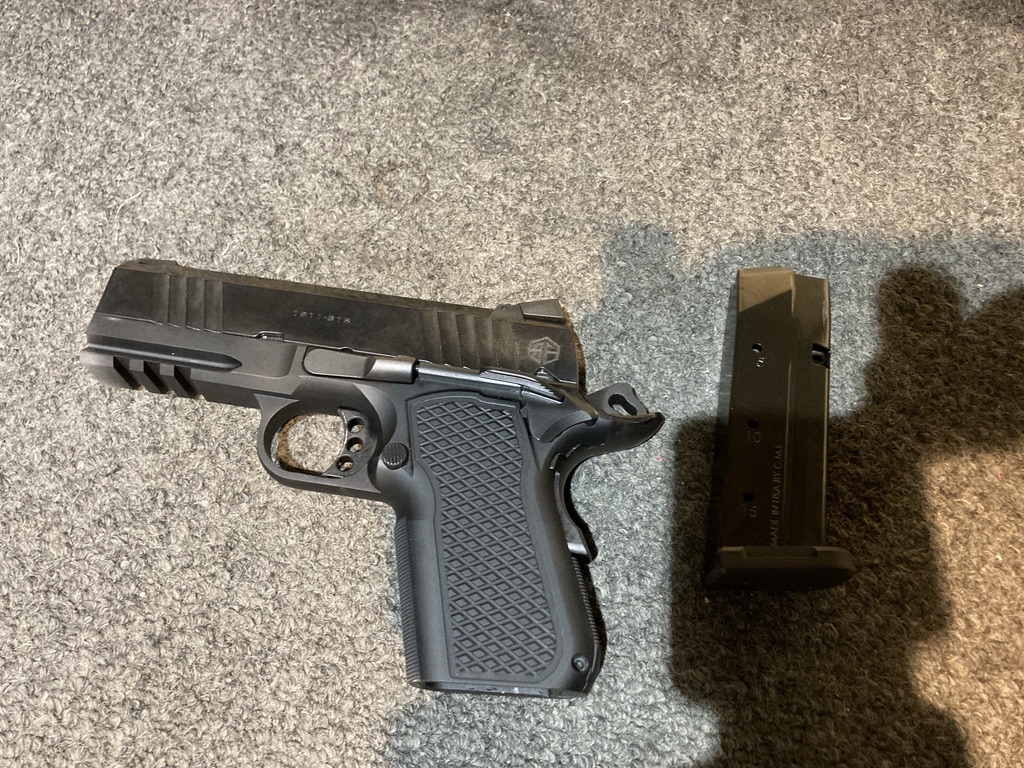
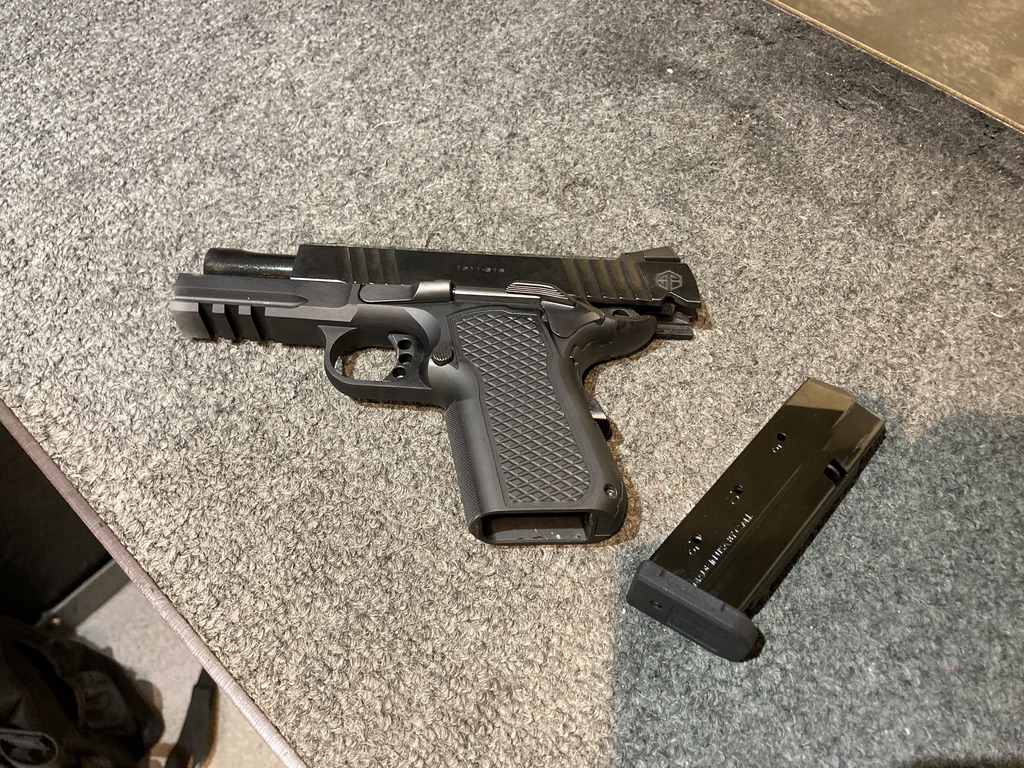
The company is based in Georgia but is owned by a South Korean company. Their 1911s seem to be pretty popular based off of the YouTube videos I’ve perused, and the S15 has garnered some love. So, at the gun store I noted this: it has a great finish — a glossy, absolutely glass-like finish that makes the slide run very easily. Markings are minimalist. The top is forged steel, the lower is T6 aluminum and thinner than most 1911s. The grips are part of the receiver and not separate pieces which seems to be key to keeping the width small. The trigger is mid-line 1911 good, which means better than nearly all striker fired pistols, and better than most stock 1911s. There’s no play in the slide or the barrel lockup. The bull barrel is crowned and also finished in the same DLC (diamond-like carbon) coating the slide has. All the usual 1911 goodies are here — grip safety, a beavertail to protect the hand, a bobtail to aid in concealment, and a small rail on the 3.25″ barrel. Novak sights are adjustable and won’t impress all but I like them. No cut for an optic which might make some balk, but it like it. It has a flat top to the slide making it perfect for perspective shooting.

But the big draw for some is the use of the Shield Arms S15 magazine. Chambered in 9mm, the S15 has a 15 round capacity. It will also use Glockl 48x 10 round magazines without a hiccup, if you’re in a shit state that limits your ammunition capacity.

Here it is on the bench…

How did it shoot? Flawlessly. The guy had alonst a 1000 rounds through it without issue and I fired a box of 124 grain without no problems at all. Recoil is very mild and the slide speed is fast enough to you’re back on target almost immediately. It threw the shells consistently slightly forward and about two yards.

Taking my time, I got one 2″ ragged hole at 15 yards. Drawing and point shooting, I still put all of the metal into the 10 ring at 10 yards save for two flyers. It is very very good.

Drawbacks: There’s no ambi-safety and we’re well past time when this should be standard on any 1911 over the $800 range. Hell, Tisas and Girsan throw them on most of their 1911s, but Kimber, Springfield, and others just can’t seem to grasp the “economy of scale” argument. There’s no optic cut for you gotta have a red dot guys.

One trip isn’t enough to adequately rate a gun, but first impressions? It looks great, shoots accurately, and seems (at least from a sample of one) to be pretty damned reliable. For the $1200ish price tag, it just might be worth it as a CCW.

I think I’m going to have to go with Space Opera — a truly terrible set of mechanics for a sci-fi game. I think we got through a session before throwing in the towel. Another that’s obscure today, but was supposed to be SPI’s answer to GDW’s Traveler was Universe. I mentioned it in another RPGaDay post — I don’t remember much about it other than it was percentage-based, I think, and there’s was some cool stuff to it — but the coolest bit was the tremendous star map that came with the game.

I also tried The Morrow Project, a post-apocalyptic game with terrible rules for combat that were so damned table and dice roll oriented that a single gunshot could take minutes just to figure out what happened. I seem to remember that you figured the trajectory of the bullet, cut of the knife, whatever through the victim and what that did to their stats as well as general health. I might be wrong, on some of that but it played like a forensics examination.

Humor, like horror, is hard to do in a game. Trying to “make it funny”, like trying to “make it scary” often comes off as forced and artificial. It’s only recently I’ve started getting the hang of the horror part of running a game, thanks mostly to having looked at Dungeons & Dragons, when I started running it, and realizing that the fantasy end is often played up to the detriment of the fact your character are going up against “shit that would turn you white!” to quote Winston Zedimore in Ghostbusters. I came at D&D fresh by wanting to make the monsters terrifying, not just a stat bloc to be reckoned with. Alien came later and even still getting the body horror is a bit difficult. (Weirdly, a one-off adventure in our Star Trek game a few years ago was more effective — probably because you don’t expect terrifying monsters in Star Trek.

Humor sort of naturally flows from gaming, especially if you’ve got a good group where everyone’s sense of humor meshes. There’s noting worse that the uptight scold or the truly weird bugger whose funny is dramatically different from everyone else’s.

There are a couple of games that were angled toward humor. There was the West End Games’ Ghostbusters RPG, which sought to make the setting and the humor the point of the game, but you can really develop rules for “being funny”. Similarly, there was Paranoia — another West End Games production. (I forgot how much they put out in the ’80s and ’90s!) Paranoia was supposed to be a tongue in cheek dystopia where your character was a clone who got killed off on a pretty regular basis thanks to their stupidity and the disfunction of the authoritarian, Computer-run city. I played Paranoia a few times, even with a good GM, and it just…didn’t click. It’s aiming for a Brazil quality of humor, and it either winds up being a “Who cares? Let’s see how stupid I can die” humor. (Weirdly, now, I’m thinking you run Paranoia seriously — as a god-awful dystopia and just let the humor evolve naturally.)

Still, there must be some kind of market for humor RPGs, there’s a “comedy RPG” page on DriveThruRPG.

You can take this question two ways — a game you don’t get to play, period; or a game you don’t get to play, but run as GM. I’ll take both:

The first: We pretty much play most of the games on the shelf that I want to play. We tend to try and rotate the game and system on a regular basis to keep people from getting bored. That said, I would love to run Jovian Chronicles using some rules set that isn’t the monstrously awful Silhouette system. I’ve thought of porting it over to Cortex (the Battlestar Galactica version), but it just never quite gets there.

The second: Since I’m forever GM for most of my life, there’s a bunch I’d just like to play a character. That’s been a delight in Fallout, concentrating on one character (two if I’m playing for an absent player), but I think I’d really like to simply play in either Blade Runner or James Bond:007 (or any other espionage setting). I suspect, however, due to experience in both those venues, I’d be a pain in the ass to run for.

You see the memes on social media, you’ve heard the jokes about how — to be true to the experience of the game Dungeons & Dragons: Honor Among Theives should have ended about halfway through and the audience should have to wait through repeated re-schedulings to see the end. It’s funny. It’s also true.

Having been gaming for about 40 (man, I’m old!) years, one thing that has set my groups apart is that everyone usually commits to being there once a week. (Some groups, for a while, were meeting two to three times a week. We had no life.) That doesn’t mean that people canceled out for illness, or a special event, or what have you; but that the remainder of the group met to do something while that player was out. Sometimes it’s a board game night. Sometimes it’s movie night. Sometimes a cook-out or something social but not gaming. (Invite the significant others and family!)

So, I’ve been particularly lucky that this hobby has been a consistent and comforting norm throughout much of my life — even during my military service. International pandemic? Fuck that — it’s nerd night Thursday!

However, this summer has seen the steady encroachment of “other things” into nerd night. Work trips — unavoidable, yes; but there’s been a lot of them as every workplace seems to think they’ve got to “make up for time lost” wasting your time at conferences. Vacations — understandable. Vacationing over the last few years, unless you went to Florida (where the freedom is), was a bust. You want to make up for lost time. It got to the point where at least one of the group was out every single damned week of the summer.

We have a few techniques we use to get around the “X is gone this week” — someone else plays the missing person’s character if they are essential (or can’t just disappear for a time); the GM can run them although I’ve always found this can get tricky if the character gets killed (or you have to obviously fudge it); you can play a different game. We tend to rotate what we play on a semi-regular basis, so there’s usually a game and plot waiting where we can do a one-shot or add the missing player back in later.

Keep the momentum and the schedule going.

This is important for very simple human behavior reasons. Once something (or someone) slides out of a priority for a person, they tend to sideline it. As time goes on, it gets easier to replace that commitment with something or someone else novel. Eventually, you stop showing up. Friendships and hobbies, like any habit, survive on repetition. Break that chain and it’s harder and harder to weld it back together.

In our case, the last three to four months of vacation/work travel/illness has led to one of the core players — one that’s been consistent for 18 years (!) — to be out. A lot. The most recent call out is instructive. He’s off to GenCon last week, had work travel in the first week of August, but he was in this week…until a last minute call out to go to a concert. This is what I mean. Normally, it wouldn’t be a big deal, but after having screwed up the group and our scheduling most of the summer, this last minute call-out between call-outs is what I mean. It’s easier. Hey, come on, it’s no big deal; I’ve only canceled on you guys most of the summer.

And he’s right: it’s not a big deal. It’s a hobby, not a job…but it’s also friendships that have obviously become less important over time. The socializing outside of gaming for this one has been steadily on the decline to the point I still invite him and his significant other…but more to be polite. I know they’re not coming. (I’ve heard this a lot more from other friends talking about their interactions with their friends and families over the last three years. The global lockdowns destroyed a lot of people’s social lives.)

A few weeks before this last minute blow-off, I’d even asked if he wanted to quit or take a break (which is the same thing…) and was told “no, I’ve just been busy…” Well, we’re all busy. I work two jobs most of the year, am a parent with a spouse that needs attention, as well; and I have other friends and hobbies. I prioritize the game because I prioritize the people. I could go motorcycle or shoot with buddies. I could write more. I have a bunch of stuff to do, but I like my friends and this is our main (but not only) bond.

This is one of the reasons why game groups need to be friends. If you don’t see each other outside of the game — there’s really nothing there. Without that connection, things will inevitably draw a group apart. When you have that, the consistency flows; when you don’t…

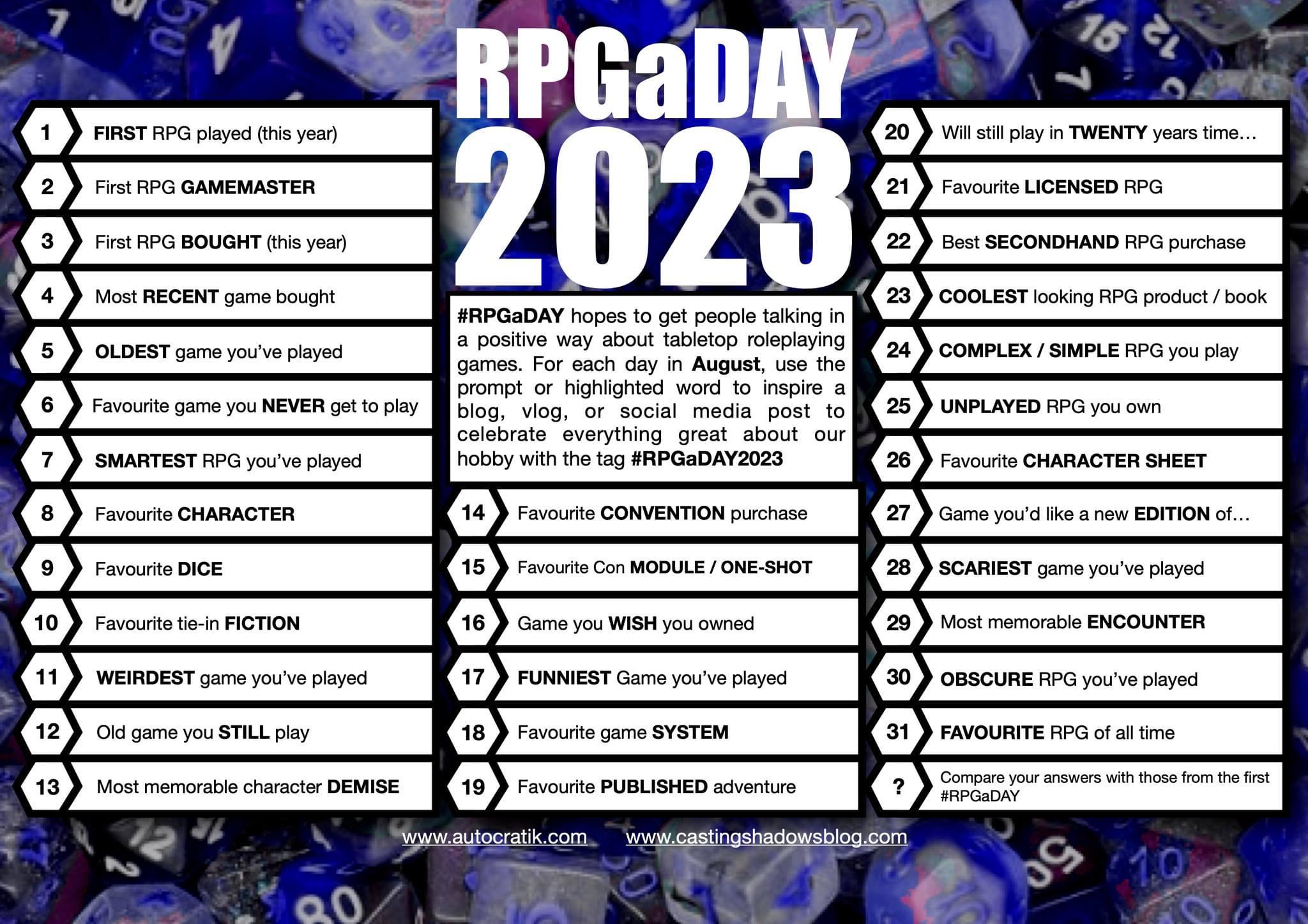
I was writing the posts for RPGaDay this year in July, since inevitably I’m overtaken by events in August. It’s the start of the school year, so the day job kicks in, and the kiddo needs picked up and other school-related nonsense ensues. I’ll get a few poss in then not finish. No so this year; they’re all written and ready to drop.

One thing that struck me looking over it and a few of the RPGaDay posts from prior years is the remarkable consistency I’ve seen in certain related questions. My opinion of the “best game ever” or versions of that question always seems to go with the old James Bond:007 RPG or MWP’s Cortex. They’re different beasts: the former is a bit busy on the rules front, with levels of difficulty ranging across a wide spectrum, quality of roll ties into how well you do (which winds up being great for damage dealt), whereas Cortex is pretty lightweight, with just enough “crunch” for older-school gamers. Where both excel (Cortex moreso) was an attempt to use the uses to push roleplaying. For JB:007, it was the weaknesses system; for Cortex, the combination of abilities and weaknesses. As any first year English or film major should be able to tell you (if they graduated before about 2000), the weaknesses of a character is what makes them interesting. Supermen (and Marvelous women) are boring as dried shit. People who are flawed, weaker than their opponents but rise to the occasion, who fail but get back up — they’re the interesting ones.

I’ve noticed that I don’t mind complexity of rules when it’s necessary (JB:007), but despise it when it’s not (D&D and and to a certain extent Modiphius’ 2d20). I like simplicity, but sometimes games can get so minimalist that you lose something (Alien, by Free League and the three skills/attribute, which Broken Compass, a current favorite, also does. In the case of BC, however, TwoLittleMice seems to have realized this might have been a bit constrained and have gone to four skills per attributes. Madness!

I’m also hoping to find time to pump out reviews of Aegean, by Stoo Goff; Avatar Legends by Magpie Games, and Blacksad, based on the excellent noir anthropomorphic comics.

I had to bow out of this last year due to the school year schedule and other issues, but Black Campbell will take part this year (by writing all of the posts this month and scheduling them for next month.

After a two year hiatus to recover from shenanigans at my day job, COVID nonsense, and the other assorted issues, including serious burnout, we will be starting to release new material by the end of the year for Ubiquity, but also system-agnostic adventures.

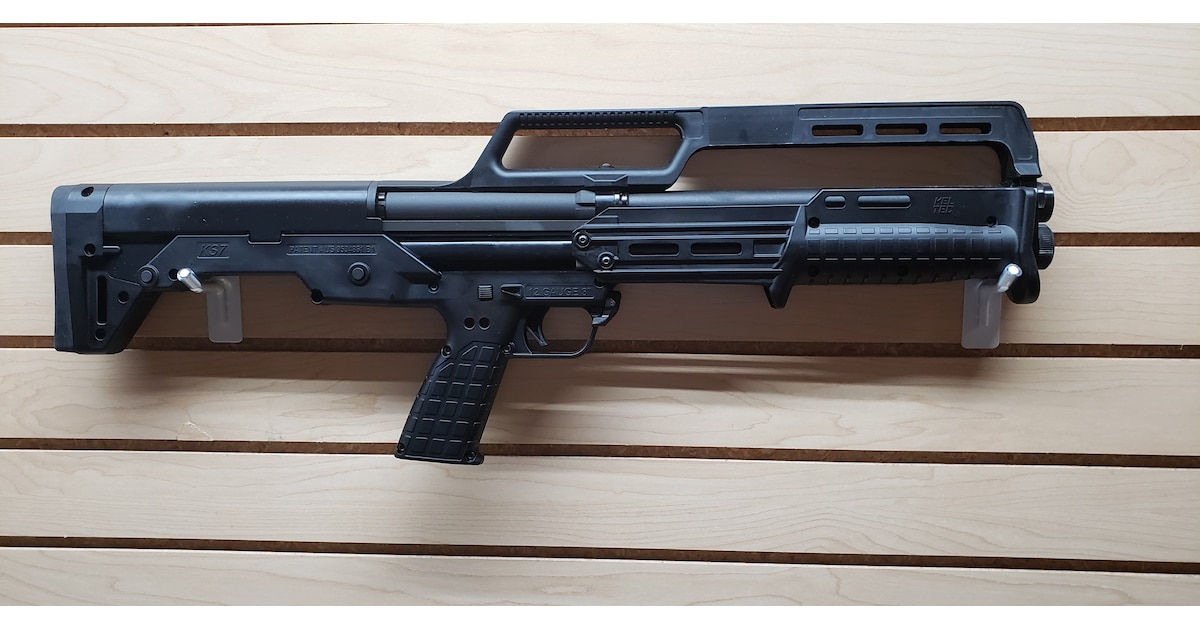
This was totally an impulse buy. The price was good, I’ve had good experience with Kel-Tec’s P32 and P3AT pistols, and they are nothing if unafraid to innovate. I had been intrigued by their KSG shotgun when it first came out, but the price is way too high for a guy who maybe takes his scattergun out once a year to make sure it still works. I’ve got a Benelli pump-gun that works beautifully and does a good job of moderating the recoil of 12 gauge, but it’s long and heavy; not a great combo for clearing a house in the middle of the night after your wife wakes you up because she “heard something”. The KS7 is anything but that.

The KS7 is a bullpup 12 gauge shotgun with a 7+1 tube that can take 3″ shells. The looks seems to be a love it/hate it scenario; I like it — it looks like I should be fighting aliens or Cylons or something. It’s short: 26″ from stem to stern and light: 6 lbs empty. This translates into a tight package that is perfect for indoor engagements. It’s easy to run the pump action, maneuver through doorways and intersections in hallways, etc. The green fiber-optic sight is triangular and really visible, and sits in a gutter in the carry handle, which I found caught the eye and made target acquisition quick and painless. Would that shooting it were painless…the low weight mitigates none of the recoil. The KS7 is teeth-rattlingly mean to fire.

The barrel, tube, and guts are made of good steel, but the carry handle, pump, handle/firing group, and the buttstock are plastic. It doesn’t feel as cheap as it should; the action is smooth and locks up tight. The trigger is a little long, but isn’t awful; for a bullpup, it’s excellent. The controls are simple: crossbolt safety, action release at the top of the trigger guard which is handy for clearing the weapon. Loading the KS7 is a bit of a pain. There’s a metal catch that is just slightly in the way when pushing shells into the tube and you can catch you finger on it. I’ve found holding the weapon with the firing hand nearly upside down to push shells in is the best way to go. You’re not going to be doing John Wick combat reloads with the KS7.

Takedown is simple. Push the two pins holding the control group out (there’s a nice pair of holes at the top of the grip to stow them if you’re out in the field), and pull the assembly down and off. Remove the butt, then move the action back and take out the bolt assembly. Simple. You’re rarely going to have to take it down further than that. Putting it back together is the reverse, though getting the bolt to sit properly to allow you to close the action requires you to do a bit a finagling.

So how did it do on the range? I put five through it the day I got it at an indoor range since I had read some things about issues with failures to eject or feed — the action needed to be really wracked hard. I suspect these folks did what I did: ran it dry out of the box. I had two fails to fire and eject. Not happy. I took it home and cleaned and oiled it up at the friction points. that weekend, I took it out to the desert to see how it would do.

First, it’s brutal to shoot. The Estate 2 3/4″ buckshot went through fine, and the Winchester likewise, but the PMC Bernecke slugs gave us two failures to fire from hard primers (we think). The Winchester rifled slug went through without issue. Accuracy out to about 30 yards was solid, with hits on 2 liter bottles with the green triangle centered on target. When shooting, the action unlocks and moves aft like it’s trying to help you cycle it. My friend described it as “like a Winchester 1300”. Shells eject downward, so it’s an ambidextrous shotgun. I was pleased to see that ejecting shells didn’t leave residue all over my jacket, something my FN P-90 was fond of doing. Of the rounds fired, we had two primer issues, but otherwise the weapon functioned flawlessly. (So, clean and lube the thing before you go play.)

I talked with a friend in Arkansas that has one of these. He’s former a former SP for the Air Force, and has been running Aguila minishells through his without and adapter and without issue. These might be a good compromise for those who want to use this thing as a home defense gun. (Although under stress, I doubt you’re going to notice the recoil so much.) Also, the carry handle/aiming rail seems to a point of contention for some folks. You can apparently swap it with the KSG rail. There’s a bunch of M-LOK holes all over the thing for riging a sling, laser, light, or whatever.

So is it worth the MSRP of about $550? A few years ago, when pandemic gun buying frenzies and the following Bidenflation wasn’t an issue, I’d have said it was too high. My Benelli Nova ran me $300 out the door, and a $50 tube extender got her up to the same 7+1. Now? It’s worth the price. This would be an excellent house or truck gun. Hell, you could backpack this thing without much issue and still have a goodly number of shells to handle wildlife.

Next Page »