Roleplaying Games


It’s pretty simple:  players’ characters are the heroes.  They’re the ones that in a movie or a TV show would have their names in the credits.  But for a game, book, show, movie to be interesting, there have to be people outside of your few players to interact with.  The supporting cast…the NPCs.

Some beginning GMs are loathe to include NPCs in the party (assuming fantasy here) as it takes away from the players having to do things.  In fantasy, you can get away with this fairly easily — the advnetures are often rural or remote in nature and there aren’t a lot of people you have to deal with outside of the requisite monsters.  They are the busty girl that brings you your drinks at the obligatory “meet at the inn” sequence, or perhaps a villain monster.

Some games, however, have settings that necessitate more interaction with NPCs.  An urban setting with bring you up against merchants, thieves, drunks, other service and crafts people.  You can get by in “cut sequences” — where the action can be glossed over with some subtle description, “the barmaid provides you with a barely contained surly manner, slapping down dishes of food, nearly spilling your ale…but there’s a frazzled quality to her grumpiness that suggest fatigue.  She could be overworked, she might have been accosted by some adventure hungry tits like you guys…”  You haven’t done much, but it gives the players a sense of reality.  After all, how much interaction do you have with your waitresses at Denny’s?

Occasionally, this kind of thumbnail character catches some players’ interest.  a few jocular lines from a mechanic have them chuckling, and suddenly, he’s their go to guy on all things mechanical…  Now you need a name and a very basic outline of the guy’s personality.  This is that fellow you don’t know really well, but you talk cars, or guns, or politics with when he’s around…but you don’t know the name of his wife, or daughter, or where (or if) he goes to church.

Some genres will bring you into more contact with NPCs, but some will necessitate that NPCs act not as scene dressing or your villain, but as your support, as well.  In campaigns centering on the military, or intelligence work, or even criminal work (and, let’s face it, what is most dungeon crawling..?), you’re characters aren’t always going to have the requisite skills.  Or they’re part of a group where they might have backup coming to save their asses in a pinch.  They build or supply your equipment.  They do the stuff you can’t.

These NPCs might not need to be fleshed out beyond a basic personality and background — as with the mechanic aforementioned.  All you might know is SGT Biggs likes his scotch expensive, smokes a lot, and bitches about having to carry the Beretta 9mm (“We should go back to the .45, man!)  He drives a truck and has a girlfriend no one has met.  He’s good as a field medic.  That’s all you might really need to know.  Hell, most of the people in the military I knew, this was about the extent of who they were to me.  Extras.

You hold these guys in reserve.  Your team is tasked with an extraction of bad guy #1 from his base of operations in Colombia.  SGT Biggs is tasked as your backup, his guys holding open your egress route and providing cover for your escape.  However, in a pinch, he and his guys can swoop in to aid you, should you need.  Some basic stats might be needed, if you want to roll for these guys.  They’re still the bit players…but even the bit players occasionally get to save the day.

The commandos in black rollneck sweaters with camo on their faces do fastrope into the volcano to save James Bond’s bac0n.  they don’t get to capture/kill the bad guy, per se…but they play a role.  The geeky hacker might be the only thing that gets you out of the building you’re ripping off (but no one played geeky hacker boy).  Don’t be ashamed to have NPCs do stuff that is needed:  help bail out the characters if they get in too deep, provide vital bits of information, provide the skills your characters are lacking (that native guide leading your intrepid explorers up the Amazon and who is the only one that can talk to the natives…)

Even having an NPC command your ship in Star Trek or Battlestar Galactica is a good idea.  the characters have a certain latitude of behavior when they aren’t the big shot that can get everyone killed.  It allows them to do their shtick, and allows the GM to keep the game on track through fiat…Captain Pike is giving the orders, knows the mission parameters, keeps you guys from wandering too far afield.  But you get to find out how the monster works.  (Just remember the phrase, “Captain! AAAAAH!!!!)

When I started running a Galactica campaign, I realized that key to giving the players the right jolt — which the series never really gave you — was what the characters had lost.  Everything — sure; that explains the stress, the bad decisions, and the drama.  People don’t function well under intense stress and they make stupid mistakes and decisions.  To give the players that same sense of loss their characters felt, it was necessary to set the scene properly — give them wives, and husbands, and lovers, children and friends.  Pet dogs.  Favorite diners, cars, people they knew just as “that guy I chat with at the news stand on Fridays…”

Things that define your life and things people miss when a bunch of pissed-off robots scatter their ashes over a wide area.

The trick here is to decide exactly how much focus you need on the NPCs.  Can you get away with a cardboard cutout?  Do they need a name or are they “Dude #1” in the end credits?  Give them a simple quirk or thing to stand out — a tic, an accent (works quickly and well), a type of sword/gun/whatever, the asshole that wants to drag you in their Camaro/fast spaceship.  Build on that if the NPC catches the players’ attention.  (Think of how many bit players grab fans’ imaginations, and they get promoted into minor or major characters? [SGT Harriman in Stargate SG-1 and Helo in Battlestar Galactica, for instance.])

You don’t have to have the name and a detailed background on everyone in your hamlet, town, ship…but you should be ready to roll with it when some NPC suddenly outshines the others.

Important to note:  you (the GM) are going to have your favorites, as well.  Some will rise to the position of major characters in their own right.  We had a starship commander in a Star Trek game that just snagged my imagination and I loved bring the character back frequently as a foil or friend.  She was often the person in charge…but the characters were the ones doing the work.  Generals, captains…they tend to be too busy to research this, build that widget, command the small away mission.

Resist the urge to have your favorite NPC be the hero all the time.  But occasionally, you can give them their moment in the sun, and the players — if they like the character — won’t mind; if they don’t, you can use it to create some dramatic tension and give them a shot to take said NPC down a peg or two.
With the completion of this “issue” of Gorilla Ace! here’s an adventure seed for GMs:

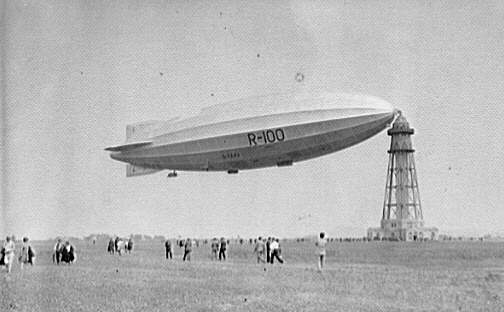
The characters are on their way to Canada from the UK, and are traveling by airship, R.100.  The trick is to set up the environment well — the cargo they can’t take into their room is winched up into the cargo bay, including a beautiful sporty car (I used a red SS100 Jaguar.)  Going up the mooring mast elevator and the wee gangway into the ship, the interior with the bulging gas bags in their secured netting, the guy wires, the aluminum girders, wires, water and fuel tanks — all exposed around the crew catwalk that runs the length of the ship; the tight tramp-steamer like interior with the promenades on either side, and the carpeted, drawing room like main lounge.  No flames, no guns, no lighters, cigarettes or flammable stuff.  It’s a three day trip to Canada, with part of the first day over England and Ireland, the whole of the second over the North Atlantic, and the last day is mostly over Canada.

Over dinner, introduce a few of the characters — Captain Booth, who has commanded the ship for x-number of seasons (she started running in 1930, and in our campaign, she was still flying in 1936); the stewards Howdett and Savage, there’s James Gaddes — an MP of the Canadian government ( a snobby man); Claude Rennie, a banker with the new central bank (Bank of Canada established in 1934) and his traveling companion — a gold-digging Irish actress named Irene Tennant; John Forster, an insurance guy for Quebec Assurance Associates.

In the middle of the second day, a crewman goes missing for his shift.  They search the ship and find the man crammed into the boot or interior of the car.  He’s been bludgeoned to death with a claw hammer from a nearby common tool kit.  At some point you should describe the collection of baggage, all tarped and tied down, and a large safe welded to one of the support girders.  (This is where weaponry, valuables, flammables are kept.)

The investigation should give a doctor or cop a chance to assess the forensic evidence — he was hit from behind, most likely by a claw hammer.  When they find it, it will have some blood and tissue on it.  they can’t run fingerprints, but can hold it for the RCMP when they get into Montreal.  Invertviewing the crew and passengers should present a few red herrings, and there is a time constraint.  They will arrive in Montreal in 28 hours.  They can interview people during the evening — most of the crew were solidly neutral about the crewman, some didn’t like him, some did, but not with any strength…certainly not enough to kill him.

The passengers didn’t even know him, and the GM should try to lead the players astray a bit, to think that maybe it was some kind of attempt to hurt Gaddes?  Embarrass him?  Something?  If they are successful, they should twig there’s something not right about Forster, but they can’t put their finger on it.  At some point, hopefully, they’ll think to investigate the cargo manifest.  The list is fairly accurate for weight (important on a flying vessel), and basic descriptions of stuff and who it belongs to.  There’s a cryptic note next to a 20 lbs cargo for Mr. Rennie in the safe…the captain will have to be called about it and Mr. Rennie summoned to observe if they succeed in getting the captain to check the safe (a big and modern one — of course, uncrackable!)

Two satchels of 10 lbs. each…and inside, just paper.  Which makes Rennie lose his mind!  He’s in trouble — inside the satchels were $1 million Canadian in treasury-issued bearer bonds, borrowed from the UK to shore up the Canadian economy!  The bonds have been replaced with blank paper!

They will have to search for the money, but will not find it (it’s hidden between the top of the passenger decks and the gas bag above.)  If they search Forster’s two stored steamer trunks, they’ll find fake passports, money, a pistol, and other items to identify himself as eight different people.  The other has a parachute…

They will be searching through most of the night.  In the early morning, they’ve passed over Newfoundland, and Forster will get ready to make his big escape with his cohort in crime, a wireless man in the crew (the actual murderer who killed the crewman after he found Forster cracking the safe.)  A chase through the rigging inside the ship ensues (or did in our game) and a good denouement is a fight on the top of the airship (the safest place to jump from the ship is the tail section, behind the engines.)  There is a guide wire along the top with d-clipped safety lines and harnesses.  Go for broke.

At the end of our game “season”, the crews of Pleiades group had found the Home of the Gods, Kobol.  They arrived a little over two months after Galactica had blown through on their way to Earth, and the only sign of their passing (initially) was a debris field around the planet.  After besting a Cylon basestar there to guard the planet, we ended with the ships in orbit and preparing to go to the surface to look for clues to Galactica‘s course, the nature of the gods, etc.

With the return of one of our players from Scotland, we’re about to fire the campaign back up.  So now I have to turn my attention to Kobol, and what exactly there is to find there.  Unlike the TV show, Kobol is not simply a stepping stone to Earth.  Our characters will find that they have another path, that they are not following the Scrolls of Pythia, but rather the Scrolls of Sybil (even more hazily defined than the Pythian myths in the show!  Gotta leave wiggle room!)

So Kobol is a place not just of exposition for their course, it is a place that holds its own secrets and meanings, and reasons for being there for our crew.

So — Kobol was an advanced planet.  They had the ability to launch massive spacecraft to go colonize the 12 worlds.  It was at least as advanced as the Colonies were, themselves.  That means advanced construction materials and techniques.  So unlike the Kobol of the screen — there are more than a few damaged Doric columns to identify the place; there are ruins galore across the face of the planet.

The City of the Gods — Olympus — is mostly destroyed, partly due to war (the Blaze), and partly due to 2000 years of natural erosion and damage.  While concrete and other porous building materials are susceptible to damage from the elements, there are a number of ancient ruins — untended for centuries — here on Earth that have survived, often damaged or worse.  The best locations for material to stand the test of time are dry and relatively stable climates where the change of temperatures and a minimum moisture do not tear up the structures (the Pyramids, the Parthenon, Petra), while places far north are much more likely to have been destroyed by a combination of weathering and dramatic changes in climate.

Olympus is built on a marshy patch of ground in a wet, cool climate (it’s almost like it was shot in British Columbia!) and most of the place has eroded away to nothing…but depending on the materials used, there could be elements of buildings left standing:  girders (if made of a material that resists corrosion), hard stone walls, even evidence of roads, which might have been used by animals in the intervening millennium.  Evidence of technology is possible, as well — ceramics and some plastics are extremely resistant to the elements and flora.

For my Kobol, there will be at least 13 major cities — each being the home to a patron Lord of Kobol, each with its own unique elements to represent the lord of the city.  Thousands of other cities, and even more towns had dotted Kobol, in my take on the world, but much of that has being reduced to nothing by time.  Of the 13 cities, only a few are anything near explorable, and those are all, conveniently in desert or semi-arid climates.  (I’m still working on this; consider this a thought exercise, if you will…)

Olympus, City of the Gods:  this was the “capital” of Kobol, and the meeting place of the Lords.  Destroyed by war and time, there is little to see here (unless you count mystic visions.)

Heraion:  Near to Olympus, Heraion was centered in one of the breadbaskets of the world, in a richly forested valley (although from the air, the old patterns from agriculture and land division is seen as a strange patchwork design in the growth.)  The city is mostly destroyed, like Olympus.

Corinth:  A seaside city, this was once a center of commerce.  The place has been half destroyed by an earthquake and flood, but parts of the town still stand in the waters of a sheltered bay.

Aresium:  A desert town on a large river near a ocean bay, it is one of the better preserved ones.  Damage to the outlying buildings facing the desert are blackened and scorched, and have mostly collapsed.  Toward the river and bay, the town is surprisingly intact — roofs collapsed, but many of the walls stand, there are statures to the god of war, and there are the remnants of vehicles in the roads.  The harbor has collapsed, but the remains of a lighthouse are visible under water, along with an entire neighborhood of buildings.  Over a slight mountain range, there is evidence of a massive explosion — a nuclear weapon or meteor strike.

Etna/Vulcanium:  On a large volcanic island not far from Aresium are the remains of another town.  The metal superstructures of buildings are twisted and eroded by the sea air, but the walls, roads, and the substructures of the buildings are remarkably intact.  From the air, it is obviously an industrial center — and a large one (think Yokohama).  At least part of the town shoud have been buried in an old lava flow (because it’s great theater!)  On a nearby spit of land, there is evidence of more towns, mines, places to supply Etna with it’s raw materials.  It would be an excellent place to find an underground factory of immense proportions with a number of fantastical devices — like golden female robots.  This would be the Forge of Hephaestus.

Athenaeum:  This could be a city, mostly destroyed, with a recoverable data (with extreme difficulty) in an archive or library.

The point would be to show the Lords of Kobol really did exist, and throw some (incomplete) light onto their divinity (or not if you’re following the new show).  It could give insight into the “all of this has happened before…” motif, and allow the characters to find ancient technology that might not be usable, but might be copyable.

Or you could have the whole place wiped clean by the wrath of god (just make sure to use that Denholm Elliot accent, “wroth” when you say it.)

How ’bout some game content..?

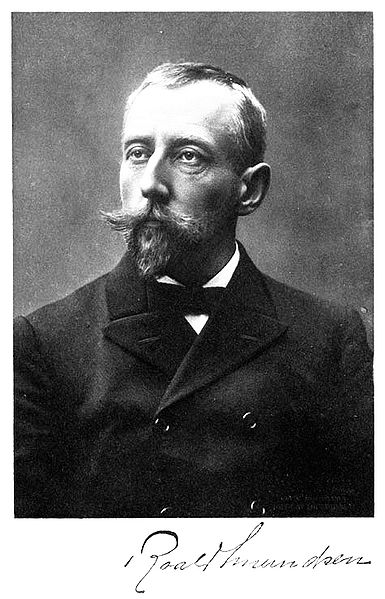
This Norwegian explorer turns up in the core book of the Hollow Earth Expedition game — but the writers decided to turn the great man into a hulking action hero.  He wasn’t hulking, first off, and he was in his 50s when he disappeared.  So here is my take on Roald Amundsen — polar explorer:

ROALD AMUNDSEN
Archetype: Explorer

Motivation: Escape

Date of Birth: 16 July 1872 (Age 64, physical, 59)
Nationality: Norwegian

ATTRIBUTES:  Body: 2   Dexterity: 3   Strength: 2   Charisma: 2   Intelligence: 4   Willpower: 4

Size: 0   Move: 5   Initiative: 7   Perception: 8   Defense: 5   Stun: 2   Health: 6

SKILLS:  Academics (general): 5, Athletics: 5, Brawl: 4, Diplomacy (Leadership): 4 (5), Firearms (Rifles): 6 (7), Investigation (Search): 6 (7), Linguistics: 7, Medicine: 5, Melee: 4, Pilot (Boats, Plane): 6/4, Science (Geography): 5 (6), Stealth: 5, Survival: 8

LANGUAGES: Norwegian (native), English, French, German, Spanish

RESOURCES & TALENTS:  Artifact 2: Latham 47.02 seaplane; Followers 2: Leif Detrichson, pilot from Latham 47.02; Iron Will

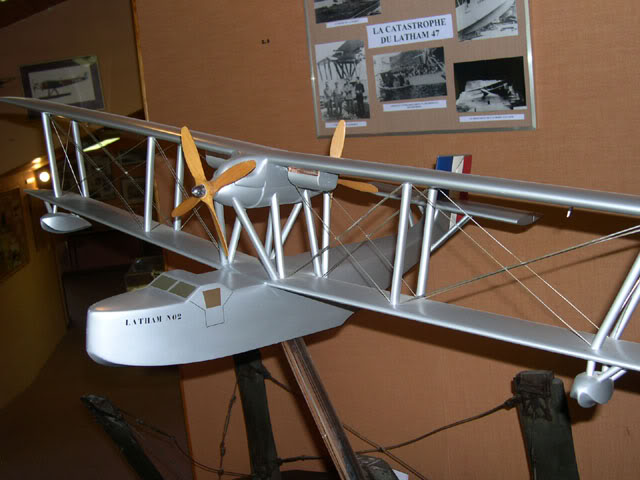
And his plane…the Latham 47, number 2.

This twin engined seaplane was constructed in France by Societe Latham & Cie for Amundsen specifically.  He would use the vehicle to attempt the rescue of Umberto Nobile’s failed expedition to the North Pole.  Lost while looking for Nobile, most of the world thinks the great polar explorer dead, but in actuality, his plane and crew were sucked into the Interior World through the North Polar Entrance and have been seeking a way out of the Hollow Earth for eight years (for them, it has seemed only about three.)

LATHAM 47.02

Size: 4   Def: 4   Struc: 12   Speed: 106   Range: 900 mi   Ceiling: 16,000′   Han: 0   Crew: 6   Pass: 4   Cost: n/a

The Latham 47.02 has seen better days.  she was damaged in the entry to the Hollow Earth, has run out of fuel and been hard landed on the water.  Her pontoons are patched, as has her canvas hull, the engines have been run on sustandard fuels and the vehicle requires a CRAFT/MECHANICS 2 test just to fly each time.  Specially rigged fuel bladders have halved the cargo load of the vessel to about 500 lbs. with crew, but give the plane a range of 1500 miles.

(Note the same dual engine nacelle style as R.100 — a pusher propeller in the back, a puller in the front…)

Started a new Gorilla Ace! adventure this evening:  Murder on the R.100.  I wanted to do something different after a swath of superscience pulp advnetures, followed by the Chthulu-y one shot for the minor players on Wednesday.  I decided on something period and pulp-appropriate:  a murder mystery.

It started out simply enough as a teaser for an upcoming adventure, but I liked the setting — and found enough info on it — that I wanted to use it.  What to do on an airship..?  R.100, for those not into all things dirigible, was one of the last rigid-hull airships constructed by the British in 1929/1930.  She was constructed by the Vickers Company and the Airship Guarantee Company — designed by Neville Shute of On the Beach fame.  While Vickers was building her, the Air Ministry constructed R.101 — the goal was to prove that government could exploit air travel better than the private sector.

R.100 ran multiple seasons to Canada and back with a flawless service record.  R.101 suffered massive cost overruns, design flaws, construction snafus, and n her maiden flight to India went into the Normandy soil like a flaming lawn dart.  In response to being proven wrong, the Air Ministry canned the whole lighter-than-air project.

But that doesn’t work for my pulp game set in 1936!  In our universe, Vickers convinced the Air Ministry to continue the Imperial Ariship Scheme, but they are the sole operators.  R.101 did burn, but R.102 has been a success, and R.103 is soon to launch and replace the aging R.100.

(The US Navy program saw the loss of USS Akron under mysterious circumstances [it will turn up eventually], and USS Macon didn’t suffer her catastrophic failure.  USS Miami just launched.)

Some Hollow Earth Expedition stats:

Length: 719′   Diameter (largest): 133′  Gas Volume: 5.2 million cubic ft.  Usable Lift: 54 tons   Range: 4500 miles.   Ceiling: 15,000′ (usually flew at 2-5000′)

Size: 16   Def: 2   Struc: 18   Speed: 85   Handling: -2   Crew: 37   Passengers: 50   Cost: $2.5 million or so…

Traits:  Gas Bag — it’s bloody big and bullets go right through it without doing much.  First 2L are simply swallowed to empty space.

(In our version, R.100 has flown for seven years and her engines were upgraded form Rolls-Royce Condor IIIBs to Kestrals — lighter and more powerful for a top speed of 90 and 56 tons of usable lift.)

We set up the environment — the strange tramp steamer-like quality of the passenger area (nowhere as luxurious as Hindenburg), the open, airy quality of the ship, the poker games and communal dining lounge, and the relaxed, romantic atmosphere of the promenade decks with their large windows looking down on the Atlantic.  It’s roughly a 3 day trip from Cardington sheds in England to Montreal’s docking tower.   Most of the passengers are Canadian government and British business types.

Then one of the crewmen goes missing, and the search is on through the cramped catwalks, girders, exposed equipment of the interior of the hull, and even had a walk along the top of the hull during one sequence on a guide wire and harnesses for the riggers (for fixing damage to the canvas.) Eventually the missing man found bludgeoned to death and hidden in the button-up passenger compartment of a Canadian MPs SS100 Jaguar!  Who killed him, and why?

I haven’t finished the adventure and players read the blog so I’ll not spoiler it, but it’s a decent set up for a game…

Here’s more on R.100 and her sister ships.

I did a one-shot adventure for a truncated Wednesday night gaming group.  I put it together very quickly, as I had few players than expected — one cancelling last minute.  I took ran a quick Lovecraftian horror “issue” of Gorilla Ace!…without the gorilla or his wife.  The background players got to step forward and use their talents.

Dr. Stanford — physician and scientist — and Dexter Vincetti, the group mechanic and inventor team up with an MI6 agent.  The two are approached by an old acquaintance of Stanford’s, a physicist with occultist leanings — actually a member of a splinter group of the Hermetic Order of the Golden Dawn.  He hypnotizes them to get information he needs to complete a dastardly machine, the intention of which is unknown to them.  There’s a fight later with zombies — reanimated corpses controlled by strange black slug-like creatures.

This leads them to a meeting with Aleister Crowley — secretly working for HMG whenever there’s a matter like this.  He’s been watching the physicist, who has a houseguest…a strange Egyptian man who is known to the world by various names.  This creature is a vanguard for menaces so ancient and vast as to be incomprehensible.  And he thinks they intend to let them into our world.  The machine he is building will amplify mystic powers to achieve this.  (How does Crowley know?  Does it matter?)

They raid the mansion of the physicist and confront him while he is performing his ritual, releasing these creatures into the world.  They fend of the evil until Dex reverses the polarity on the spiraling quantum whatsinator and sends them back to the deep beyond.

The adventure ran smoothly, was fast and fun, but I discovered that doing horror is truly hard to do.  You can do creepy fairly easy, but truly scary …tough.

It’s 101 degrees in Albuquerque today.  One of the players had a crappy day at work. Another two are having some personal troubles.  One player forgot his character and had to call up a version from online.  Not the best set up for a night of gaming.

But it was one of the better gaming nights I’ve had…period.

First off, we made shepherd’s pie for dinner — hand mashed potatoes, hamburger fried with onions, garlic, green oni0ns, salt, pepper, paprika and mixed veggies.  Absolutely delicious.  Blue Moon’s honey summer ale with lemon.  A good start.

The adventure was already underway — Gorilla Ace! and his “Flying Circus” have stopped an attack by radium-powered robot men (“Radio Men” for their remote control.)  They are investigating the parts necessary to build the thing and eventually, they find the warehouse the radio signals to control the machines is coming from.

The first fight is right out of the gate this night — two big metal robots with Bren guns on their arms v. Gorilla Ace with his Tommies.  The other characters fight Bulgarian henchmen.  One character gets into a chase through the London Undergound on hoop cycles.  (Stats in another post.)  Pacing is fast and the fight is won.

The chase leads to the underground lair of the Phantom — a Zinovievite communist on the run from Stalin’s purge, and fighting the fight against the British monarchy (which he sees as siding with the fascists in Germany against the proletariat.)  Character, Gorilla Ace’s wife, is captured in the James Bond-esque lair in the catacombs of London.  His plan:  use a mole drill train to dig through the Underground to Parliament, where the king is giving an address to Parliament on the eve of the 1936 Summer Olympics, and blow up the lot.

GA! and his compadres find the lair, thanks to the investigative talents of Dr. Robert Stanford and with the aid of the Special Branch and Scots Guardsmen, raid the lair in a massive fight with black rollneck sweaters Russian and Bulgarian toughs.  Lots of breaking glass, gunfire, fistfights (including one on a darkened catwalk in the catacombs that the hero lost, allowing the villain to escape.)

They stop the train and drive it through the streets into the Thames as it explodes.

Pure pulp.  The pacing was fast, smooth; the players were in their groove and really got into character, playing up their flaws and strengths to the hilt.  Style points were flowing back and forth like a tennis match.   They were challenged, they won out, lost the villain appropriately, and everyone had a fantastic time.

Sometimes, it doesn’t matter how everything else is going, and you have that perfect game night.

I just did.

I’ve been gaming for 30+ years and one thing you can be sure of:  people will not show up.  Sometimes it’s because they’re just not that interested, sometimes it’s a group dynamics thing…and sometimes (often) life just gets in the way.  People graduate from high school or college and get jobs.  Jobs that have weird hours are the worst — if the player’s on a night shift, or works in the filnm industry…  They get or have a boy/girlfriend, or get married and now the significant other/spouse is dictating their time.  They have a kid — the ultimate time sink.

It’s rough for gamemasters to deal with people not showing.  Sometimes it’s just a nuisance, sometimes it feels like rejection.  The more work you put into the game, the more likely you are to be peeved with people dropping out for a week here, two weeks there.  Remember, most of the time, it’s nothing personal.  If it is, dump the player.  It’s better to lose a player than to have personality conflicts at the table.  It’s fine for players to be at each other’s throats…not for the players to be.

There’s a few options you have to deal with no-shows, depending on why they’re happening.  If it’s because a friend or gamer is uninterested or busy with other things they’d rather do, simply back burner their character and press on with the understanding the invitation is always open, but they shouldn’t feel pressure to show up.

This can be difficult in campaigns that are more than a dungeon crawl.  Especially if you’ve worked them into the plot line and have to extricate them from the  main storylines.  It’s annoying when you’ve crafted an action or other scene that plays to their strengths — especially if it’s an important scene and no one else has the skills needed.

Now, say you’ve got that player off the main roster — you can give them the henchman, aide, native guide, character that is often in the background, but not necessary to plotlines to take over when they are present.  Another thing we like to do, if it’s just for a session every once in a while is let another player run the character.  It’s fun for the player, often, to give his/her spin on the character.  Or the GM simply bumps him/her into an NPC position and plays the character (sometimes I have other players roll for the various checks, but I run the character…)

Never just off a character because the player’s not showing up.  They will not appreciate it.  And you might lose a player permanently.

Some examples:  I have a player that works in the film industry — he’s either working all the time for three to ten weeks, or he’s dead broke.  Either way, a bout four months out of the year, he can’t afford to make it to the game, since he commutes an hour to get here.  No problem:  his characters were very important, but not in a position that they couldn’t be the force off stage (like his battlestar commander), or the guy that goes missing in the jungle, only to reappear at a crucial moment in Hollow Earth Expedition.

Another was having trouble at home and needed to get out of the group for a few months.  No problem: we switched to another game until he came back, then picked up where we left off.  (I tend to rotate campaigns to keep things fresh, anyway.)

One player went to Scotland for a year:  her character was badly injured and has been in rehab therapy, only just getting better in the last played adventure.  She’ll be ready to go in a few weeks, when her player returns.

The best advice I can give:  never burn your bridges.  You never know if someone will hove back into your life a couple of decades later (as has happened with a few people), whether your girlfriend or boyfriend will dump them and they’ll be back, or if they get a schedule change.

Foremost, don’t just chose gamers…chose gamers that are friends.  Do things outside of gaming together when you can.  Friends last.   And they usually show up.

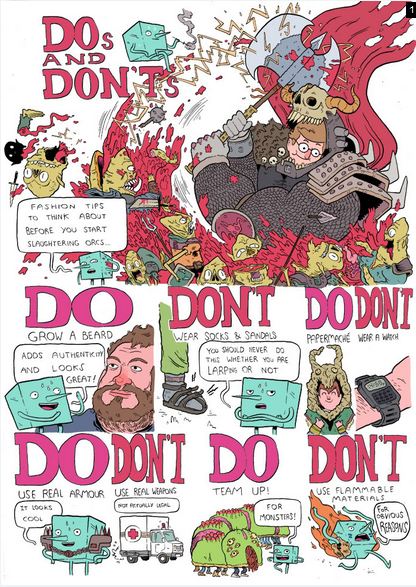
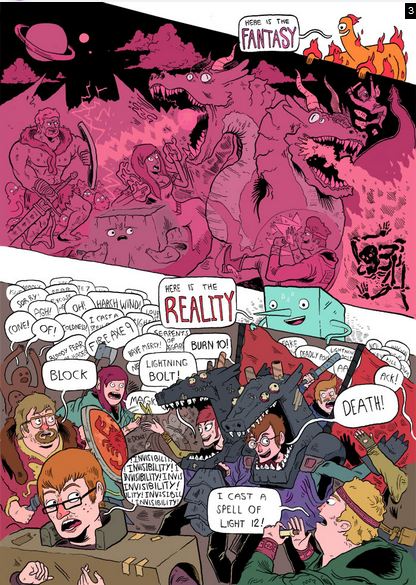
I’m not a LARPer.  I’ve never been ashamed of being a gamer, but I never thought going out of my way to let everyone know the levels of my geekiness was a good idea.  Nevertheless...courtesy of Nick Edwards:

No…not the comic book Phantom, but the villain in our latest Gorilla Ace! game.  The Phantom is a shadowy figure, a Russian expatriat and former Bolshevik that escaped the wrath of Stalin.  He’s settled in London, where he controls a nefarious network of criminals/anarchists/communists bent on the destruction of the ruling class that they see (arguably correctly) as sympathetic to the Nazis.

It is known that the Phantom is some kind of mechanical genius, often designing fantastical devices to aid him in his quest for international revolution.  He has attempted robberies of the Bank of England with a mole drill, designed radio-controlled explosive devices, each invention more impressive and advanced than the last.  Most of his work is done personally, but he has contracted, coerced, or threatened specialists to aid him in his work.

The Phantom has a cadre of 50-100 mooks, but has two to three times that number 0f supporters that supply his men with places to hide, weapons caches, money, and other aid.  Most of his support is in the Russian expatriate community, and is strongest in Bayswater and in the East End.

Here are some of the latest incarnations of his incredible inventiveness:

RADIOMEN

The “radiomen”, a term coined by Dex Vincetti — mechanic and inventor for the Gorilla Ace! Flying Circus — are 8′ tall metal humanoid automatons.  They are armor plated monstrosities with the servomotors and strange elastic pulley systems (muscles) protected behind plating capable of stopping most handgun rounds.  The are somewhat vulnerable at the joints.  Their head is a helmet-like object with a single glowing eye that looks much like a miner’s lamp.  The lensing is highly complex and shoots heat rays that can kill with a single shot.  The center of the lens has a camera system that seems to have highly acute short-range vision, but would be somewhat myopic.  There is a speaker grill in the “face” that gives the radiomen a terrifying grimace.  A short antenna stub sticks up out of the back of the head, offset to the right.

The radioman is powered by a strange series of dynamos and electric motors powered by a radium core located in the armored chest cavity.  The brain of the radio man is encased in the head, and is an advanced electromechanical computing device rigged into a wireless transceiver, allowing the machine to be remotely given instructions or controlled.  The range of the wireless transmissions is most likely limited to a quarter mile in the urban environment.

Body: 6   Dexterity: 2   Strength: 5   Charisma: 0   Intellect: 1   Willpower: 2

Size: 1   Move: 7   Perception: 3   Initiative:  3   Defense: 8   Stun: 6   Health: 10

Traits: Giant (+1 Size), Strong (+1 Strength), Tough (+1 Body)

Flaws: Automaton, Conspicuous (-2 Stealth), Maintenance (needs a Mechanics 3 test before each mission)

Skills: Athletics:6 (Jump: 7), Brawling: 8,  Firearms: 4, Gunnery: 4 (Eye Beam: 5)

Weapon:  Eyebeam — Damage: 4L   Attack Rating: 9L   Range: 50′   Speed: M   Rate: A; Punch:  9N

**The Intelligence and Willpower of the Radioman can be exchanged for that of the person remote controlling the device.

HOOPCYCLES

Powered by a 980cc parallel twin motor from a motorcycle, the hoopscycle is a marvel of invention.  The vehicle has a single seat with a stearing wheel that operates a gyroscope, aiding in the maneuvering of the single wheeled craft.  It is incredible fast and maneuverable, and very very loud.

Size: 1   Def: 6   Struc: 6   Speed: 110mph   Hand: +2   Crew: 1   Pass: 0   Cost: n/a

« Previous PageNext Page »