Here’s a piece from Michael Paukner. There’s some beautiful stuff at his site.
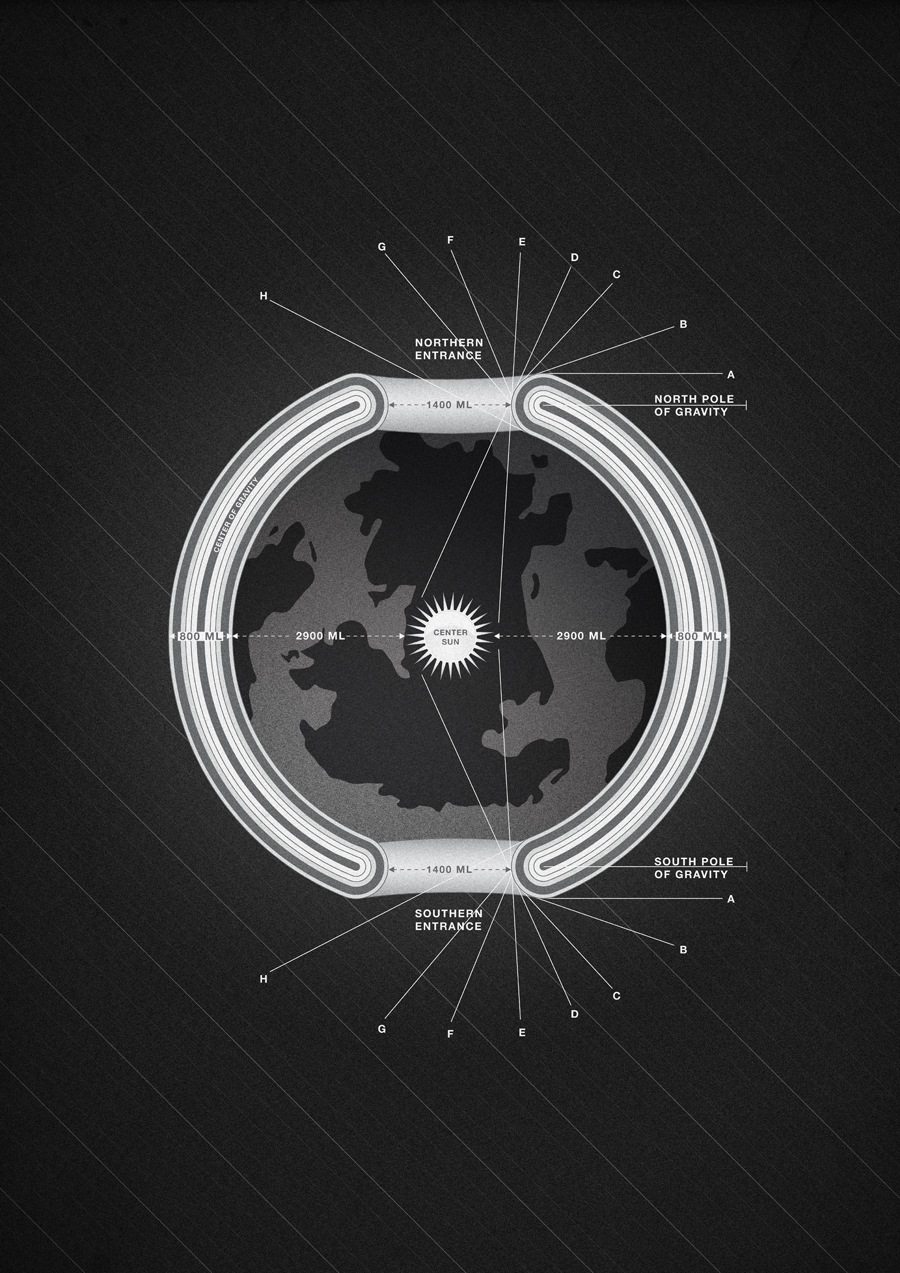
14 July, 2010
11 July, 2010
A friend of mine is gearing up to run a Dr. Who campaign, using the new rules set from Cubicle 9. One of the rules bits he liked was their set up for Time Lord regeneration, where the appearance and abilities are randomly selected. It’s a good idea, in keeping with the show.
I had another idea that dovetails with this: randomly select a member of the gaming group to take over the role of the Doctor (or whatever Time Lord) and have them be the new “actor” for the series.
8 July, 2010
Recently, I ran the 1936 National Air Races for our Gorilla Ace! pulp campaign. HEX has some fairly crunchy rules for chase sequences in Secrets of the Surface World, pg. 145 (sidebar), which is essentially what a race is. The problem I found with the SOSW rules are that they cut into the flow of a cinematic/comic book action sequence — you have to take the base combat speed, add the base speed in feet of the vehicle times the number of successes. It’s not complex, but it requires a sudden jump into math, and that can throw the players out of the moment.
I decided to run the races differently. One of the races was the Thompson Cup — a 10 mile course through pylons at different altitudes (but usually quite low to the ground) with 10 laps total…I had the characters roll for each lap — their PILOT sill plus the Handling of the aircraft. They were competing against some of the best pilots in the world, so I used the average assuming the pilots they were racing had a Dexterity 4, Pilot 4, and a +2 Handling: they had to beat a 5 per lap to lead the race.
Any successes were added to their next lap test — so if one pilot got a +2 success (a 7), they added that +2 dice to their next test. If they missed the test by two, then had a -2 dice to their test. There was also a lower success point that, if missed, meant they lost control of the vehicle (a PILOT 2 in this case and totally arbitrary…) Another thing I added was a reliability test for the vehicles at the beginning — race planes are testy beasts and the characters’ mechanic had to run a test at the beginning of the race. A failure would mean some kind of mechanic issue that would put the character out of the race.
This systems moved fast and kept the excitement of a fast moving race.
For the Bendix Cup — a transcontinental race — the length of the contest was such that running all 15 hours or so would also not work. For an endurance/ navigation based race, I set up legs for the trip — in this case, New York to Cincinati, Cincinati to St. Louis, St. Louis to Midland Texas, Texas to Los Angeles. Each leg requires a MECHANICS test v. 2 — a failure results in an incident where the pilot would have to put the plane down safely and would be out of the race; the other test was a navigation test that the pilot (and if they had a navigator a joint test) vs. 2 during the day, 3 at night.
Modifiers for the distance test are different: Handling isn’t an issue, speed is. So in this case, I took the average speed of a racing plane (about 250mph) and gave a +1 die bonus for each 25 mph over the average, -1 die for each 25mph under the average. The number of successes adds to the next leg’s test and the success is cumulative. During a leg where they had to stop for fuel (usually about ever 900 miles) they would lose -2 die due to the time on the ground.
I think these guidelines can work to aid in a fast paced chase sequence, as well. The chased car escapes once the die benefits are either higher that the pursuit car’s driver skill rating (for instance, a mook chasing you with a faster car [assume a +1 die bonus], a +2 handling, and skill rating of 6 for a total of 9 [average 4+] is lost when the die benefit from your successes is higher than 4+). Another option would be to give the bonus from successes to a DRIVE test to do some maneuver that would hide the vehicle from the pursuer — park behind a building, make an unexpected turn into an alley, take it off-road and park behind a convenient copse of trees — with a contested DRIVE (pursued) vs. PERCEPTION (pursuer) test. If they don’t see you, you lost them.
3 July, 2010
A lot of the games I like are set in the Victorian period and the 1930s. As a historian, I have a tendency to get really wrapped up in the actual history of the eras we’re playing in — there’s so much actual neat stuff that I want to stick more closely to history than I probably should for a role playing game. Still, often the players are jammed into a historical event that happened in an ancillary role or I change history. I always throw in tons of real folks from the period, and occasionally will do a League of Extraordinary Gentlemen-style addition of cool fictional characters (I’m considering adding Indiana Jones and Jake Cutter to my Hollow Earth Expedition campaign as background characters.)
So, should you change history in your RPG? Depends on the nature of the game. If you’re not doing alternate history, you could have your players do lower-level stuff: detective work in Los Angeles in the 1930s, fighting side battles in WWII…but it’s much more fun to throw them into a major event and let them either take the reins or in some way have an effect.
Tonight, the Gorilla Ace! crew flew in the 1936 National Air Races. One character won the Thompson Cup instead of Michel Detroyant, and also won the Women’s Air Derby. But through engine misfortune, they didn’t change the outcome of the Bendix Cup — won by Louise Thaden (the first woman to do so.) I would have let them win, if they had rolled well enough. They met Alexander de-Seversky (head of Seversky, later Republic Aircraft) and Gorilla Ace was hired to fly the SEV-3 in the Nationals. Howard Hughes and Vince Bendix had minor roles, as did aviatrices Jackie Cochran, Louis Thaden, Laura Ingalls; avition greats Roscoe Turner (and his lion mascot, Gilmore), Ben and Maxine Howard — to name a few.
No matter if you’re doing “real” history or pulp adventure, use the people and events of the time to set the stage and give your campaign a little verisimilitude. Yes, you might have aether flyers in the 1890s, but that doesn’t mean that you wouldn’t have the colonial campaigns that happened not occur; you still have the same prime minister in the UK, and president in the US as in real life…but maybe there’s something different about them. I have airships in my pulp campaign being used for commercial and military use when in actuality the British airship scheme folded in 1931, and the US Navy program had pretty much ended with the decommissioning of Los Angeles — history is different, but there’s enough that’s the same to make it comfortable for the players. There are giant robot men in London in the pulp campaign running on radium-powered engines, but it’s not common technology.
Play with history. Your games will be better for it.
2 July, 2010
This week, one of our gamers informed me as we were packing up to leave that one of his LARPs was looking to reschedule…and they wanted the night we were gaming with said friend. Ordinarily, we’ll shift nights if someone has a work, school, or travel commitment — it’s no big deal — but to be told “Hey, I want to play in this game…can all of your guy rearrange your scedules for me?” left me a bit miffed. Still, we were able to work it out.
But for a day or two, I found myself slightly angry and depressed over the possibility of losing a good gamer due to the scheduling issue. That got me thinking about an earlier posting about managing no shows. In essence, I needed to heed my own advice: Don’t take it personally, try to accommodate the most number of the group, and press on.
It also brought up an interesting issue for gamers: all gaming groups break up. you might not lose everyone, but sooner or later, someone moves away, has a new schedule, gets divorced, gets a job, has a kid…and you lose a gamer or more. It’s especially traumatic if the one leaving is the GM — the guy/gal that has been telling your stories for months or years. The story ends (often unfinished, in my experience…)
It shouldn’t be a big deal; after all, it’s just a game. But it’s not always the case. Like that movie or TV series you love to watch, or that book series that you buy every volume of, the storylines of your game can get into your psyche and become something you are viscerally connected to. (Think of how many people were upset at the cancelling of Firefly, or were truly honked off because The Sopranos or Lost, or Battlestar Galactica didn’t end like they thought it should.) Stories enrich your life and give you something to talk about other than politics or who’s doing what with whom, or what the weather is like — especially as the characters and plot are something you are directly involved in, not a passive observer.
It hurts when a character you truly enjoyed is lost, but if you lost the whole universe, as well — right in the middle of the story — there can be a sense of loss, of things left undone. Yes, it’s kind of stupid — it’s a game. But it happens nonetheless. Also, there’s the need to find another gaming group (or another hobby…), and that can be jarring if one particular day is set aside for a certain thing, be it a favorite show, a game, working out, girls’ night out. A change can throw everything into a tailspin.
But as Solonon was told (or King Attar, if you buy into the saying being a Persian one): This too shall pass.
27 June, 2010
There’s nothing more iconic for a retro-future or pulp game than the addition of airships to the skies of your universe. These elegant giants are romantic and nostalgic — a macro for setting the scene. (Although I have seen some complain (fairly, I think) over on io9.com that they are a lazy means to set your movie/book/campaign apart from reality.)
A key to using airships is to realize the realities of dirigibles. They are massive, yet very fragile. Gunfire is unlikely to do a lot to them, but they don’t provide much cover from fire if you’re inside. Incendiary bullets, if the ship is running hydrogen as lifting gas = bad f@#$ing day. But a helium buoyant vessel is unlikely to be taken down by machinegun fire. Bullet holes simply do not allow enough of the lifting gas to escape to disable the craft quickly.
Airships are somewhat susceptible to weather. USS Shenandoah was destroyed when she ran into a double squall line over Ohio and was tossed up and down at rates of climb much higher than her ability to valve gas and relieve pressure on her balonets (the bags holding the gas.) She broke up, but most of the crew survived and free ballooned the two halves of the ship to the ground. The year before, she had been torn off her mast by a hurricane and survived the experience with minimal damage.
The use of hydrogen was seen as a major issue for the airship, but most of the German commercial vessels saw no troubles due to the use of the explosive gas; they had extensive regulations for not running through storms that would create strain on the gas bas or create static on the hull (ignored in the case of Hindenburg), they did not allow smoking (save for a special room in the same airship.) Hindenburg actually landed on the chimney of a house in Brazil in her first season of operation. A lit one. The ship didn’t explode. Graf Zeppelin never had issues with fire. Neither did R.100 –a British airship that ran flawlessly for several seasons.
Americans had no troubles with hydrogen. They were a major manufacturer of helium, and US dirigibles floated on the noble gas. (It was, however, expensive – $150/ cu ft. compared to $1/ cu. ft. of hydrogen…hence why the Navy got cheap and halved the number of values on Shenandoah, ultimately leading to her destruction.) American airships were hampered by other technologies. These vessels were more practical, early on, than an airplane, and their development outpaced the instrumentation and design philosophies that would have made them safer. Barometric altimeters gave incorrect altitude readings, and in the case of USS Akron accounted for the destruction of the ship when it flew into a storm — lower pressure gave a false higher altitude reading and the vessel, while trying to climb had no altimeter at her tail — at 900 or so feet long, the tail was much closer to the ocean and the ship foundered when she took on water at the tail. Her sister, Macon, was destroyed because Goodyear hadn’t thought to run the tail through in a single cruciform, as the Zeppelin Company did. In a high crosswind, the tail became a big airfoil and tore off. The ship might have survived that, but the control lines to the rudder tore the lifting gas bags at the aft and the ship dropped like a stone.
Here is the major issue of the zeppelin: weight. Like all aircraft, they have limitations in how much the can carry. Granted, they carry tons of material, but rain on the hull can reduce her lifting capacity by a ton or two. Hitting the ocean with your tail increases the weight of the ship dramatically.
The British had terrible luck with their airship program from a combination of government micromanagement of design and construction (R.101), but they also had a cadre of commanders that did not understand the airship was not a ship. It wasn’t made of wood or steel and mishandling them could do catastrophic damage (sort of like the difference between your crumple zone enabled automobile and old steel cars… One of their commanders had a propensity for running their airships up onto their moorings too quickly and damaging them…but he was aristocracy and his connections kept him at the conn.)
Here are some excellent resources for learning about airships, how they handle, their strengths and weaknesses:
Pretty much anything airship historian Douglass Robinson wrote, but specifically “Up Ship” for the US Naval airship project and Graf Zeppelin and Hindenburg for the later German vessels, and The Zeppelin in Combat (which is concerned with WWI vessels, but gives an idea of the problems of airship combat.)
Smith’s The Airships Akron and Macon (US Naval Press) is excellent, as is Althoff’s USS Los Angeles. Archbold’s Hindenburg: An Illustrated History is a lovely coffee table book that is good for allowing the players to get the feel for these craft. Higham’s The British Rigid Airship is another excellent resource on the entirety of the UK Airship Scheme.
Online, The Airship Heritage Trust has a nice website on the British program, with some pages on the German and American ships. The University of Colorado has a site here. US Naval airships are discussed here and here. The US Navy has more on them at their historical site (search airship.)
27 June, 2010
To play or not to play…music, that is. Over the years, I’ve tried to incorporate music into the gaming experience. For me, it started with having a bit of mood music on in the background while playing — appropriately bombastic classical for fantasy campaigns, James Bond themes for espionage or action games. The ambient soundtrack could create a certain mood, but more often than not it didn’t really effect play.
With the airing of Miami Vice in the 1980s, I was influenced by the use of key musical numbers to enhance moments on the screen, and I attempted to emulate that with the use of “game soundtracks” — bringing in music for key scenes. It kind of worked; it kind of didn’t. One: the use of music was a tip off to players that something was coming up — an emotionally important scene, a car chase, a shootout. It lessened surprise. Partly, I think it didn’t work well because of the nature of the delivery at the time: cassettes. They were slow to activate, with clunky devices to produce the soundtrack. It also was just one more thing to tote around with you.
Eventually, I went back to the ambient mood music for a while, and while it didn’t necessarily distract (but could), it didn’t really add anything. DVDs didn’t solve the problem of queuing up the soundtrack elements, but once I started to run games off of a laptop, the opportunity to use .mp3 files queued properly to create music for key moments was possible and much easier.
The problem remains that you have to stop what you’re doing — however briefly — to set up the appropriate clip, stop it when done. And you still tip off the players that something is about to happen. Now, I usually use a music clip as a “title sequence” — something to get people’s attention and let them know we’re starting play.
While I’m not against use of music to create a soundtrack for a game session, I’ve just never found it that effective.
24 June, 2010
Something I’ve always done when describing a scene is make noises. I describe the gunfight with a fairly descent representation of what they are hearing (well, as good as you can do with limited vocal talent…I’m not the guy from the Police Academy movies.) I’ve making a rumbling sound for a scene with a spaceship fly by (preferably accompanied by a miniature being presented) gives the players a bit more verisimilitude than just describing it as a “thunderous rumble”. A .45 auto has a deeper, less sharp crack than 9mm…you can replicate that.
Think of it as less writing a collaborative novel and more like a comic book, or a movie. A “THUD!” or “ffffffwunk!” is better than “He hits you…you take 3 points…”
Making noises improves your storytelling in another way…it requires a level of abandon. You throw yourself into the telling — doing whatever it takes to enjoy yourself, as much as entertain the players. It’s more fun for you, and for the players, as well; a happy GM is much more open to the fun of a game, than one who considers it an art (it is), a science (nope), or looks at it as a craftsman or a professional. When I’m writing up an adventure, I come at it from a writer’s perspective: I research, I grind out material…but when it’s time to play it’s time to PLAY!
23 June, 2010
Fabio Pastori gives us a little coolness for the Hollow Earth Expedition crowd. Hits the comic stands on August 15.

23 June, 2010
Here’s a quote from an NPC in our Battlestar Galactica game describing the difference between the sea and space to an Aquarian rook…
“The sea is like Poseidon…by turns giving and kind,then angry and aggressive; at some point, it will try to kill you. Space is like Hades: cold, uncaring and terribly patient. It won’t hunt you, but it won’t help you. It just waits for you to screw up…then it quietly helps you on your way.”

 The Black Campbell