Roleplaying Games


The weekend gaming group had a few nibbles on games to play.  I like to rotate the games to keep them fresh for the players and myself.  There was fairly unanimous agreement to do a 1930s pulp game, which turned into Gorilla Ace!, there’s a modern espionage game in the works, and a Serenity game.

The Firefly ‘Verse is an interesting setting, partly because it was so open to interpretation and exploration.  13 episodes and a movie barely cracked the surface of what the Alliance was about, how the society worked, but the 19th Century vibe coupled with spaceships worked for every one of us.  I’ve run a few campaigns already, and have found that (for me) a few tweaks to the on-screen setting are needed to make the ‘Verse fly…

1. More tech.  The Rim and Border worlds are more primitive than the Core, but they still have their share of high technology — from flimsy news sheets with moving visuals, to lasers, to holographics — which we have seen on screen.  The addition of other high tech devices will spice the setting up and not get it too bogged down by the Western feel.  Lack of technology should be due to legal restrictions and the newness of settlements on the Rim.  (Although the American West saw heavy use of new technologies, in mining and agriculture, in steam power and weapons…)

2. Show the dichotomy of life between the haves and have-nots.  We only see the Core once in the series in the episode Ariel, and the sky-island condos of  the rich on Bellerophon in another.  The suggestion is that there is magic-levels of technology in the Core.  To really drive this home, it’s necessary to get your characters out and about the ‘Verse, so they can see the hand-to-mouth existence on the Rim, juxtaposed against the comfort, wealth, and health of the Core.

A combination of these idea would be an early episode I had in our first campaign where the characters traveled to Osiris to steal a priceless Monet — one of the few left from Earth-That-Was.  The policing on Osiris was high-tech:  aerial surveillance, think tanks for the police (a la the Tachikomas from Ghost in the Shell, but much less kawaii…), some evidence of cybernetics (which the game designers included in their Six-Shooters & Spaceships sourcebook.)  Guns that were less home-made local knock-offs of Colt Peacemakers, and more like Glocks or the FN FiveSeven.  Jet-powered hoverbikes (’cause there’s no way that can go wrong!)

The show never really got a chance to shake it up, and the Big Damn Movie got to play a bit more with the level of toys in the ‘Verse with love-bots and ubiquitous surveillance that could be monitored from anywhere on the Cortex.

3.  Decide why the Alliance is bad/good.  This is frequently a problem with sci-fi series.  In Star Trek, the Federation is simply wonderful.  Life is good because people are fed, clothed and housed.  But there’s not real exploration of what makes the UFP so damned peachy.  I envisioned 150 worlds of people attending adult education classes and doing execrable art, while the people motivated to excel wound up in Starfleet.  It was the technology utopian paradise…and it would be utter, stifling and boring, with little incentive to get off your ass to do something.  (That’s my take, at least…)  In Battlestar Galactica, we don’t really get a look at the Colonies and society until the last few episodes…what is it, exactly, that the characters have lost?  Families and friends, sure; but how about all those places and things that make life worth living?

Flesh out the setting.  You don’t have much of a choice with 13 episodes and a movie.  The trappings are out there:  Quantum Mechanix did a fantastic poster-sized map of the ‘Verse as a star  cluster, showing distances that is easily used by a GM to flesh out transit times and give you an idea of the real estate.  However the main issue is, like the Federation, what makes the Alliance good or bad.  The Alliance is portrayed in the show and movie, not unsurprisingly, as an evil empire; the characters are the Confederates of this Western parable and the Alliance is the big, bad Union, come to take away their states’ and personal rights.

I’m taking the approach in the upcoming campaign that it’s simply a meddlesome, well-meaning bureaucracy that — as well-meaning, meddlesome bureaucracy do (think the EU, and if they had acutal [shudder!] power, the UN) — thinks it knows best for you.  There’s rarely malice, save to those that would stop them from making the policies that they wish, or those that would deny those bureaucrats the positions they feel they so richly deserve…and often do not!  (Does this sound vaguely familiar today?)

The ‘Verse, for me, is a setting I can sink my teeth into because the politics of it are so close to the big battle I see coming in the 21st Century (but Charles Stross seems to discount in a recent post on his blog):  the push and pull between libertarian/individualist types who just want to be left alone to live their lives…and the statist/technocrat/progressive types who feel they know better how to live your life than you do.

With that meta-conflict in the back of the mind, every slight can seem part of a plot to remove your personal sovereignty.  Just look at some of the rhetoric coming out right now about the current administration.  If you are an Alliance supporter, every bit of opposition looks like treason, or at the very least, idiocy on the part of those that would be “helped” by the imposition of Alliance technocratic bureaucracy.  The politics can always leak into the character’s lives, no matter what scale of campaign you are running.

I have a new modern espionage game the weekend players would like to do, and found myself trying to piece together the angle I wanted to go for.  The current administration and the foreign policy are decidedly unfriendly to the intelligence community, and my understand from some of my friends left in the industry is that the lawyers are back in charge.

Playing a game fraught with dangers from the oversight committee, and the thick with drama tension caused by getting out your paperwork on time seemed a bit daunting.  So I decided to go with a private intelligence company.  There’s plenty out there, and they’re frequently working on contract for the government — allowing short term missions for the national good, without all the hassle (or support) of government bureaucracy.

So…

VERITAS INTERNATIONAL:  Based in New York and London, Veritas is the brainchild of a CIA and an MI6 officer.  The group utilizes a few small teams of specialists in the field, as well as a cadre of analysts and software experts to provide a number of services to their customers.

The main mission profiles that Veritas will be handling range from dignitary and VIP protection, hostage rescue and negotiation, blackmail and fraud investigations, industrial intelligence gathering, and security consultancy.  Also they can be contracted for short-duration missions by intelligence and military agencies for action in Afghanistan or Iraq, etc…

Characters are just starting to come together, and I’ve yet to pin down the upper management NPCs, but its a good start.

Pressed by economic realities of the Great Depression, Hudson decided to create a cheaper alternative to their Essex line:  the Terraplane.  It was introduced by Amelia Earhardt, and it the favored car of gangster John Dillinger.

The Terraplane came with an inline-6 cylinder motor, or an optional 4-liter inline-8.  Powerful and reliable (the Terraplane 8 set a record for the Pike Peak climb that wasn’t broken for 20 years…), the Terraplane is one of those vintage names that don’t come up much and provide a bit of flavor for a 1930s pulp game.

1933 ESSEX-TERRAPLANE SERIES 61 DELUXE

Size: 2   Def: 4   Struc: 8   Struc: 80 (90 for the I-8 engine)   Han: 0   Crew: 1   Pass: 4   Cost: $600 ($700 for the I-8 version)

Terraplane_De_Luxe_Sedan_1936

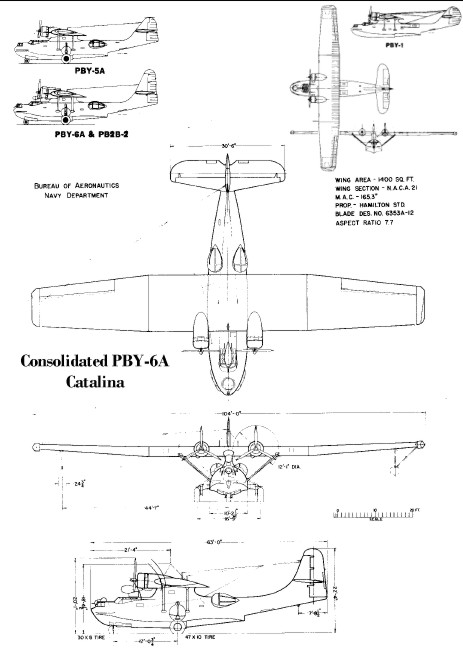
Introduced in 1936, the Catalina would become one of the best known and widely used scout seaplanes of World War II.   Most of the early PBYs went to the US Navy, but explorers with connections to Army or Navy Intelligence would be able to lay their hands on one with a Bureaucracy (Military) +Connections or Rank 4.

While the stats presented here are for the PBY-5A (the most common of the variants), the variations of the engines, etc. would provide little change in performance, but the weaponry would change from model to model.  (Changes made — the Catalina is in the Secrets of the Surface World book.  While I brought the Defense rating in line with that, the other ratings on crew and passengers are more appropriate.)

CONSOLIDATED AIRCRAFT PBY-5A “CATALINA”

Size: 8   Def: 6   Struc: 18   Spd: 195 mph   Rng: 2520 mi   Ceiling: 15,800′   Han: -2   Crew: 8 (3 civilian)   Passenger: 3 (10 civilian)   Cost: $90,000 (new)

Standard Armament:  2 M1919 .30 in forward turret, 2 M2 .50 machineguns in side bubbles, 1 M1919 .30 in aft hatch, 4000 lbs. of bombs, torpedos, etc.  On civilian Catalinas, that gives you 2 tons of storage.

PBY-6A_BuAer_3_side_view

Standard crew positions:  pilot & co-pilot, bow gunner, flight mechanic, radioman, navigator, and two waist gunners.

pby-1-consolidated-catalina-vp11

Battlestar Galactica: The Plan apparently has a sequence where one of the basestar hybrids is having a geggy turn in which it implies the Colonies are in a trianary star system, or that they orbit three stars in close proximity.

Makes more sense to me, but your mileage may vary.

I write all my adventures on my computer.  I collect photos of gear, people, vehicles — anything to aid in setting the mood on games, be it faces for people’s character sheets (I find it helps people get into the feel of their character), to what your gun/car/spaceship looks like.  There’s PDF versions of game books.  Everything the GM needs to run a game.

But sometimes it’s simply impractical to bring all your crap with you.  Or someone steals your laptop.  Or you spill coffee in it.  Or the hard drive crashes catastrophically with much gnashing of teeth and Shakespearean drama.

At a time like that it’s nice to have backed up your data.  It’s also nice to be able to just bring everything you need with you in a pocket and use someone’s laptop at the game session (oh, come on — someone’s gonna have one!)  Hence my plug for memory sticks.

I bought a SanDisk 32gb Ultra Backup.  It’s about the size of a stick of gum (but thick — about as thick as my cell phone.)  Doesn’t matter what brand; I’m not shilling for one type or the other.  But 32gb!  I have everything from my writing, to my games stuff, to pictures and music on this thing.  And I still have space.  It’s more than enough that I could travel with this, plug it in to whatever machine I can lay my hands on, and either work, game, or what have you.

If you work with a nonstandard word processor, like I do (WordPerfect…it integrates pictures better than most word processors [although, to be fair, Word 2007 does a good job]) a stick this size has enough memory you could probably drop programs you need onto it, if you know the machine you’ll be using doesn’t have it.

I highly recommend one of these high-storage sticks or even a small external hard drive for the GM on the go.

There’s always poker chips for giving out plot points.  This is apparently the suggestion for Deadlands.  For Battlestar Galactica, I intend to use the myriad of spent 5.7x28mm casings I have from my P90 and FiveSeven handgun (the platform for the colonials’ pistols.)

I tried it out last night for our Hollow Earth Expedition game (although it really should have been .45acp) and the players seemed to love it!

Most of the game systems I’ve enjoyed over the years have had a little fudge factor built into them to get the player around the cold, hard curve of probability.  Some of my players have the preternatural ability to roll crappy….all the time.  The one player it doesn’t matter if it’s dice, his HP scientific calculator programmed to do random rolls, or a dice program on his PDA…luck dumps in his pie.  Usually at the worst time.

My first encounter with “hero points” was the James Bond: 007 system from the early ’80s.  This allowed you to skew the result of a roll, or lower damage taken (in a system that could be especially deadly, I might add.)  DC Heroes, the Cortex system, Hollow Earth Expedition, Savage Worlds, and many others now utilize this “get out of death” feature.  Figuring out how to award and use them, however, is occasionally tricky for new players and GMs.

A few recent incidents in our play has given me a few new insights to awarding and using points.  So I’m passing the savings on to you, faithful (or feckless) readers…  (I’m going to just use the term “plot points, for simplicity sake.)

Player-awarded plot points:  a lot of GMs are iffy about ceding some power to the players.  I’m finding increasingly, it aids in the fun when players can say “he should get a point for that!” as they did last night.  A crusty old pilot character snapped off a completely period-appropriate, and totally sexist, comment to the female character.  Brilliantly done, I might add.  That was the response from everyone.  So I awarded a point.  When players think another player is worthy, it’s usually because what they did is worth the award.  (I rarely respond to a player saying “I deserve a plot point…”)

I award the points for good roleplaying on the spot.  And fantastic ideas they come up with.  Or setting appropriate maneuvers like “I want to leap off the wing of our Catalina and into the Amazon canoe, while shooting at the monster.  Can I do that?”  Hell, yes!

A bit more R-rated, I had a guy playing a playboy character who wanted to make sure his “equipment” was up to snuff.  Can I give a point to be well-hung?  Absolutely.  And I gave him a point last night for rescuing an Amazon at great risk to himself…all so he could help her onto a canoe, by grabbing her ass.  Appropriate for the character.  Have a point.  His girlfriend got pissed and cut him off for the night, causing him other troubles and making the group a bit less cohesive.  Point to her; completely in character.

In Battlestar Galactica, one player had a Cylon involved with another main character who spent most of his plot points to get her pregnant.  Why?  The Cylons are trying to breed.  Also, it’s giong to cause lots of trouble for both characters in the now to distant future.

Give points out liberally.  If the players think it’s a great idea, and you think it’s going to up the ante on fun, go for it.  It gets the players to use their flaws and character design for something other than beating up the monsters or bad guys, and make play more fun all around.  They should sped them liberally, too, to make the best of their character schitcks, be they something as shallow as “looking awesome.”

Another use I recently found for plot points.  Sometimes, there’s something in the script that really needs to happen.  You don’t want to railroad the characters, but you really want to now have to rewrite things on the fly.  Last weekend, I had a spy game going where the players were really short handed, had captured and questioned the major henchman, and had to stage a raid where they could only leave one guy to watch him.  It would have to be an NPC.  We all know where this is going — I need the baddie to escape and draw the players to the big final action sequence.

They know this, but they want to 1) knock him out, 2) coup de grace him, 3) formulate some other idea that will take 20 minutes of game time to plan/explain.  So I offered them all a plot point to just get on with it, leave him with the NPC, and let things proceed apace.  One of the player’s later responses:  the GM bribed us to let the bad guy get away.

Bribe them.  “It’s not railroading if they agree,” as Uncle Bear says.

This started as a toss-off, but now one of my players has not only talked me into letting him play it, but he’ll be the “lead” in the serial:  Rowland Cabot (Brian Blessed) is a Welsh flying ace who finds his brain/mind transferred into the body of a gorilla by a mad scientist, thus becoming…

GORILLA ACE!

I am now very excited about this campaign…

Just a quick note to suggest The Unit DVDs as a place to get some ideas for espionage or military-based games.  There are only four seasons, so with a little creative shopping (or who knows…you might find ’em on these interwebs!) you should be able to get the whole set for cheapish.

I’ve shot through the first season and found it a good source for adventures for my next James Bond-ish campaign.

« Previous PageNext Page »