Roleplaying Games


“Party Support: For whatever reason, sometimes you’ll want a character in the party that’s controlled by you. Party Support is the ability to integrate a GM-controlled character (GMPC) into the party without hijacking the leadership or stepping on toes. I’ve seen a lot of advice against having GMPCs, but sometimes they’re necessary and, when used properly, they can add a lot to a campaign…” Walt Ciechanowski

That quote comes from a comment on the The GM Levels Up from John Fredericks over on Gnome Stew. I have a link for the article in the other piece from today.

Your characters are rarely going to be working alone. They’re going to want some help from time-to-time from  that NPC that has skills they need, or they just plain like and want around on an adventure. Maybe your setting is someplace where they are always going to have access to this character — a starship exploring the galaxy, a military unit on patrol, a spy agency with a team assign to aid them. These NPCs can sometime take on a life of their own, and sometimes the GM gets attached to them as much as the players do their own characters. These characters can sometimes straddle the line between NPC and PC — what Walt is calling the GMPC.

We’ve all encountered it, and every GM to some extent is guilty of this: that support character you created really is your PC, just not in name. I had a major NPC in our Battlestar Galactica game who became a major plot device and was arguably more important to the story than the heroes. However, the heroes were still in charge of their lives, and still got the majority of the screen time. This character had a certain deux ex machina moment…but other than that, she rarely got to “do her thing.”

Some GMs and players hate the idea of the GMPC, but I would submit, to a certain extent, you can’t avoid it. There’s always going to be the NPC that just speaks to you as a GM and you will want to keep them in your pocket for whenever you can. If the players also took to the character — no issues. If they don’t, no issues.

Example: I have several NPCs currently supporting the party in our Dungeons & Dragons group — a few of them are well fleshed out, already: Steven, the Down’s Syndrome horse wrangler who is a savant with animals and if he ever gets into a fight is gonna cream someone. I like the character concept but he doesn’t seem like a first string support character.  His father-figure is a gruff scout for the legions, but he has a soft spot for the troubled young man and recognized his talents. He even got a full name, Titus Germanicus, and a full write up. (But on the last point, so did the others…) Carona, the troublesome satyress, on the other hand is the sort that is on the cusp of GMPC — she’s teaching the bard new spells for his panpipes, and she’s a thief. She’s already a point of romantic interest for a few of the characters, and well…I like the character. She’s also the only NPC I have a visual for.

I didn’t choose her to be in the party. They did. It was originally supposed to be an encounter to have the monk have some doubts about his quest to battle demons and tielfing, when presented with something that looked like the enemy, but was — essentially — good.

That’s the points of contention, I think. If there’s a GMPC that all the players like, it’s less likely to be an issue than, say, an obnoxious addition no one wants around but the GM is always finding ways to include. The other point of failure for the GMPC is when tey start taking the limelight away from the PCs, or they are obviously “better” at things than the PC. The PCs are the ones “in the credits.”

It’s alright for an NPC to be that mentor that is better than the characters for a time. Obi Wan Kenobi should have been light years better than Luke Skywalker at, well, everything, but he’s an old man and he has a role to play. Mentors have to let the players go, at some point, or be struck down as a motivator. That’s just good drama. But if the GM is playing Obi Wan as a quasi-PC for himself and decides only Obi Wan gets to do cool stuff…well, he’s just being a jerk.

Don’t be a jerk.

I’d submit the GMPC isn’t an issue if you reign yourself in and let others play. Just like, if you are a player, you don’t hog all the air and time.
John Fredericks over at Gnome Stew has a nice piece on gamemasters and how they “level up” or get better over time. His skill progression idea is pretty close to what I’ve seen on a bunch of folks, and I myself arced through in a similar manner.

Read it here. 

We opened this week’s Dungeons & Dragons 5th edition game with the party on the other side of the Limes Germanicus — the series of walls and berms that separate Germania Major (Roman territory) from Germania Magna (where the Alemmani barbarians live.) They have entered these lands close to where modern-day Mainz is, at the conflux of the Rhine and Moenus (Main) Rivers and are pushing east into the lands of the Chatti.

A recap of the characters and their mission: they are led by Legate Quintus Marcellus, a former legionnaire who has been asked to act as an envoy for the empire by the Augustus, Gratian — the 16 year old heir to the throne who is battling for the same against the machinations of his largely Frankish and Alemmani general staff. He was, a few years ago, the boy’s mentor while they were on campaign. Next is Decurion Carrus Zwergi, a dwarf of the Jurazwergi tribe in the mountains near lake Constance. Known as Carrus the Goblin or Vandal Killer, he was given a commission leading the troop of irregulars protecting Marcellus on his mission. The are aided by a priest, Aurelius Augustinius of Hippo (know to our world as Saint Augustine) who apparently is under the protection of Apollo, as is the senatorial-class bard/brat Marcus Calvinus — both of them magic users empowered by Apollo. There is a former anchorite monk, an Aasimar, named Icio Zacchariuswho is being led by the archangel Michael to find and destroy a tiefling looking for some kind of powerful magic-user to aid the Adversary. They are joined by several Roman auxilliary troops and a satyress named Carona, whose people were destroyed by this tiefling, known as “the Seeker.”

Their first stop of note was a small trading town on the other side of the border, where they got their bearings and spoke with the elder of the town about the situation on this side of the wall. This is an area of foederati — treaty-bound Alemmani, mostly Chatti and Matteucci tribes, but further are the Vangiones…also currently allied, if only marginally, with Rome. they were told the area was safe to Romans, and press on to the Chatti “capital”, Stragen, (after a fashion) to speak with their King Pilenses.

On the road through some forest, however, things go awry when the party is attacked by a group of what they think are bandits…these guys, however, are skilled and led by an assassin. The fight was vicious, with most of the PCs catching some form of injury, minus the Cavlinus and Augustinius, who were far enough back to not be directly in the fight until near the end. The characters were generally doing poorly with their rolls, while the bandits were wracking up a surprising number of criticals. Fortunately, most of them were at disadvantages thanks to the bard’s “vicious mockery” and bad terrain.

Eventually, they were able to take down the bad guys, with Carona dropping two by using her “ram” advantage and hitting them with her horns. The assassin, on the other hand was holding up despite an onslaught of multiple characters, before trying to escape. He was put to sleep by the bard.

Now captured, the bard and satyr interrogated the men — she used the “frighting strain” as per the Monster Manual. (I built a Satyr PC race for the Fight Club 5 app using the MM data, but made her a bard and for her spell slots gave her all the alternate spells from the “Panpipes” sidebar.) Terrified, they got a disadvantage vs. the bard’s high charisma and spilled it: They had been hired by one of the tribunes that had been against the mission, and had thought elevating a simple Roman like Marcellus (who left the legion under a cloud, but mysteriously with a military diploma and his retirement land and pay…) to a senatorial rank was folly for the new, and not quite yet, emperor. Trying to kill a legate is  treason under Roman rule, and Marcellus has the ability as a legate and commander on detached duty to render judgment. Carrus then executed them with his axe.

But, wait…these guys are supposed to be “good!” That’s their alignment — Marcellus is lawful good, and did everything by the rules; Carrus is neutral good and these guys were “all bad”, to quote Harry Tasker in True Lies. This is another instance where the moral issues and legal issues of the Roman period clash to a point with the typical D&D alignment system. Is it possible for something to be “good” or “evil” by our standards, but the mores of period would say differently? Slavery is “evil” today, yet until 1792, it was normal and ubiquitous around the world. People would even willingly enter into slavery to have a job/housing/security. Executing traitors or assassins without a real trial might seem “evil” today…but it was the law, and most would have considered just, in 375AD.

Eventually, they get to Stragen, the seat of King Pilenses, where after some tense introductions — What are the Romans doing showing up out of the blue? Did he bring a legion with him, and if so, why are they not here..? — they were able to sound him out about the goings on in Germania Magna.

They found out that there is a lot of migration of tribes from the East, moving ahead of the Ostrogoths and a group of Sarmatians that appear to be led by someone called Aiton (the Seeker.) They have heard that traveling with them is some kind of horror which has been destroying whole villages. The main troublemakers for Rome out here are the Lentienses, a Celtic tribe (elves) who are trying to win the Alemmani tribes over to their side. Led by King Priarius and based south near the Danube, they are claiming to have the means to stop Aiton. It is convincing a lot of those tribes not wedded to peace with Rome to consider his offer. Even Pilenses has been courted by these Lentienses.

The key, he thinks, is the Vangiones tribe of the Alemmani. They hold Locoritum, once a large Roman town on the Moenus, about three days travel through the river valley and the heavily forested Spettus Hills. The group stayed the evening and the next morning were planning to set forth.

Some of the character beats included Carrus getting lucky with Carona…then the bard, Calvinus, getting lucky after a night of debauched music-making for the Chatti king. Now the dwarf is confused, angry, and jealous. Also, she had given them presents for saving her from her attackers…most of it lifted from some people (like the set of figurines of the Greek gods for Augustinius and the lovely gold beard bands for Carrus), or paid for with money she’d pickpocketed from people (like the new lute for Calvinus.) There’s no way this could go wrong…right?

We picked up with our heroes last night (after a spectacularly good batch of jambalaya…yay, me!) the morning after young emperor — although there seems to be some dissension in the ranks as to whether he should become emperor — Gratian asking Quintus Marcellus, the former legionnaire, to return to service as an imperial ambassador to the tribes on the other side of the German Line. This would make him a legate — a senatorial rank that would permanently elevate him from simple Roman citizen to one of the elites. Damn right, he took the job! Additionally, Gratian and the selection of military leaders around him were so impressed with Carrus the Goblin Killer that he was asked to join the Roman Army as a “decurion” — the leader of the small cavalry band that would support Marcellus in his mission. This auxiliary force are considered “speculatores”, or “scouts” (’cause “spy” is such a dirty word…)

We picked up the action with Aurelius Augustinius, our cleric, and Marcus Calvinus, the bard, waking in bed with the pair of sisters they were celebrating their good fortune with, and hearing the return of their father — an important man in Augusta Treverorum. They quickly dressed and exit through the bedroom window with Marcus biffing his athletics test and falling comically out of the window. The pair then retired to a gashaus to have breakfast and celebrate their night of revelry.

Icio, the aasimar monk, spent the night in contemplation over the Bible the local church had, a product of two monk’s life’s work. The Vicar of Trier (what the local Franks and Alemmani call Augusta Terverorum) gives him a primer on the Alemmani language so he might spread the word in the barbarian lands he’s going to. Linking up with Aurelius and Marcus, the trio spot a young woman being chased by a half dozen toughs, who drag her into a arched alleyway between buildings. Without a thought, Icio jumps to the rescue.

They find a pair kicking the girl, while their friends egg them on. It’s smelling like it’s about to get rapey or murderous…maybe both. Icio pulls the classic up run up the wall to do his death from above spinning staff and backfist atttack on the two assailants, with a crit success that knocks the teeth out of one. Marcus bards up and lights the place up with “fairie fire”, while Aurelius blasts a shot of scared flame into the roof overhead. The combined violence and magic scares the young men, but not before the girl leaps up and headbuts one of them insensate.

Icio has a moment of righteous anger at seeing her for the first time: the cloven hooved feet; digigrade, furred legs; the rams horns on her head — is he nephalim? (The damned, or what the folks from the Near East call tiefling.) No…he can sense his opponents, and he can’t sense her nature. Moreover, an crit insight (he was rolling very well last night) makes him think this is a wild, and generally good, creature. She is Carona — a satyress or faun — from Dacia. Her tribe was wipred out by a group of Goths and she has been migrating west, relying on her wits and the occasional good graces of the faun communities throughout Germania. What she doesn’t tell them is that the six men were chasing her because she had just picked the pocket of the lead “rich bastard” and they were in pursuit.

The three convene to their inn with her to question her about the barbarian lands. She notes that Marcus has the “gift” — his music can summon magic. She can teach him to use it. For the character of Carona, I used the satyr listing in the Monster Manual as a template for a PC race, then built her in the Fight Club 5 app as a 2nd level bard/1st level rogue, and let her have all three of the Panpipes spells from the MM as her cantrips.

Meanwhile, Carrus and Marcellus get set up with the appropriate clothes for the rank. Carrus is somewhat miffed at the Roman outfit — a uniform of a Roman centurion– but Marcellus is quite chuffed to be wearing the uniform of legate, complete with a purple trimmed red cloak. they put together their small band — a Alemmani huntsman, a Saxon spy, their companion Verenor from the caravan, a pair of scouts from the auxiliaries, and their wrangler, a Down’s Syndrome animal savant named Steven than the huntsman treats as a sort of surrogate son. Steven is sensitive, and is able to chose the perfect mount for each of them. (I originally was thinking of writing Steven up as a paladin — a guy that “just knows good and bad”, but the wrangler angle felt better.)

The group finally meets up, convinces Carona — who has just been through the lands they’ll be traveling in — to aid them in their mission.

There was a second dinner with Gratian and his court, where Marcus’ uncle tells him the political landscape is changing…and not necessarily for the better for the party. Gratian’s troops are not supporting him for emperor, but instead seem to have been convinced (most likely by his senior generals) that backing his 4 year old step-brother is the way to go. Specifically, they are hoping the popular and well-connected in Constantinople Empress Justina (Valentinian’s last wife) might keep the money flowing from the Eastern Empire and provide a support from Emperor Valens. Gratian is not happy with this turn of events.

Angered by the obvious bullshit of this, Carrus explodes into defense of Gratian, and with his first 20 of the night, proceeds to berate and humble the assembled legates and tribunes. Marcellus makes the suggestion that at the very least, Gratian should keep command of the army and the regions of Gaul, as augustus (junior emperor.) They don’t make a lot of friends in the court, but they impress the old and wily Merobaudes, the Frankish king that is Gratian’s lead general.

After that they decided getting out of the city and away from the court intrigue was a good idea. They are also very aware that the success of their mission could reshape the empire…or ruin Gratian and anyone connected to him. Like them.

After a five day trip in which Marcus is trying to learn Carona’s cantrips, and Carrus is increasingly smitten with the creature, they arrive at the Limes Germanicus, the border of the Roman province of Germania. The line is a moat with a sharp berm 20′ high and topped with a wooden spiked wall. They’ve arrived at a castle that provides access through the wall under the command of a senior centurion. After a night’s rest and a study of the maps they have, the party crossed through the gate to the bridge over the moat and the road into the wilderness.

They are now on their own…

Several elements of the campaign are falling into place. I’ve been holding to magic, while present, is rare and powerful — something the 5th edition rules don’t do well for the former (Does everyone know spells? Really?) and excels at for the latter. I’ve been essentially assuming no one outside of the PCs have magic unless it is specific for the plot. This is an extraordinary group — an assimar or “demi-angel”, a cleric and bard blessed by Apollo…maybe the satyress’ presence is also something the Olympian (or the Christian God) arranged, as well.

I’m not a high fantasy fan, so keeping this gritty and based in an alt-history universe has been a main goal. The politics and intrigue of Late Antiquity/Early Medieval Europe have, so far, provided a richer backdrop than a knock-off Middle Earth could. Now, as they are heading into the wilds, I’m starting to loosen up on that. The addition of the faun is the gateway into more traditional fantasy (although we have already established that Marcellus’ common law wife in Britannia, a Celt, was an elf.)

The price on all Black Campbell adventures on DriveThruRPG have been reduced to $1.99!


The next volume of our Dungeons & Dragons campaign opened with a “talking about our feelings” sort of episode…okay, it was more of an expository, set the stage for the action episode.

We started the night with Icio the monk waking in the middle of the night. He slips out past the sleeping Aurelius the cleric in the tent they are sharing, knowing it was dreadfully cold but not feeling it. Drawn by a sense of purpose, he winds up going through the light conifer  patch to the Saravus (Saar) River, where Michael — the angel that speaks to him — is waiting to inform him that the creature he seeks, now calling itself Aiton (seeker), which killed his mentor, is looking for someone. A person of great power. He will have to be ready to accept help from an unexpected source, one that will challenge his beliefs and prejudices.

Aurelius Augustinius wakes in the middle of the night to a raven’s insistent crowing. He slips past the sleeping Icio and is led by the bird to the river’s edge, where he sees Icio kneeling before the angel. His old, dead girlfriend — her brown eyes glowing a gray-blue — tells him that Michael is Icio’s master, and that his faith might come between them…but that he will be a loyal and helpful companion. There is a powerful creature of titanic capabilities out there and forces are seeking it. If they find and turn this creature to evil, it will be a threat to man and gods; if turned to good, it will provide a bulwark against dark forces that are stirring.

The angel and the…whatever…is using the vision Aurelius’ girlfriend to put him at ease see each other: Michael informs the creature he should not be here. The creature informs him that they are not so different, and their goals coincide. He also tells him in no uncertain terms that Aurelius is “his…his gifts are from me, not your master.”

They both wake in the morning. Neither left the tent. They somehow coexisted in a dream.

The party has finally reached Augusta Treverorum as the news of Emperor Valentinian’s death is rocking the area. Apparently, the emperor — a foul-tempered man — died of a fit of apoplexy while “negotiating “with the Quadi tribe. They present themselves to the local prefect with the dispatches of their endeavors against the Vandals. After a short wait, they are ushered into the presence of the augustus or junior emperor, Flavius Gratianius…or Gratian. He is overwhelmed to see Marcellus, the former legionnaire, again, and the party learns that he was once the bodyguard/mentor of the young man when he was six or seven. He remembers Marcellus fondly, and they are all rewarded for their service to Rome with 5 solidi — the equivalent of a centurion’s pay for a year.

They also figure out there is more going on that means the eye. The young augustus’ general, the French king Merobaudes, seems to have a great deal of sway over the young man. There’s something not quite right.

After a bath and change of clothes, Icio visits the Vicar of the town, where he find the priest has been somewhat successful in converting the locals, and is currently working on an amenable Gratian. He is shown the church’s Bible, just brought from Ireland, and for the time, the monk is able to hold a completed copy of the Scriptures.

Later, they are at a social dinner with the finest of the city. This includes Calvinus the bard’s uncle, to whom he was sent after he refused marriage to a politically connected Christian girl in the hopes he could work his silver tongue on Eastern Roman Emperor Valens. He gets to tell their tale and impress the company. Meanwhile, Gratian clues Marcellus and Carrus the dwarf in on the political situation: The frontier is in turmoil despite a new treaty with any of the Alemmani (German) tribes. However, the Lentienses tribe is trying to browbeat other tribe into joining them against Rome in the wake of the emperor’s death, and the retirement of one of their most important generals, Theodosius.

They have no really sense of the land beyond the Limes Germanicus (the German Border) and they need someone to suss the lay of the land and try to strengthen the backs of Rome’s allies in the territory north of the Danube. He offers Marcellus a commission to re-enlist as commander of a small band of speculatores (scouts) who will ride into Germania and try to do just that. He will have the rank of legate — an ambassador — and Carrus, who s very popular with many of the tribes, will serve as his decurion (centurion for cavalry.) For Marcellus this is a two-fold win: he gains a senatorial rank! and he washes away the stink of his early release from the military (with full honors) for aiding in stopping his commander from a mutiny. He’s a snitch.

He takes the commission, and his companion all join the mission with him. We left with them getting ready to fill the rest of their ranks for the trip over the wall and into barbarian territory.

Nights like this there’s not a lot of “kill the monster, get the treasure”, but it was good set-up for the characters. We got our first look at Michael the angel and his obfuscation while directing Icio; we also got the implication on Aurelius’ apparition that he is a son or a hero of Apollo (hence the raven.) What is dangerous enough to pull the Christian and Roman gods together? We got more background on Aurelius — his dead girlfriend and an attempted forced marriage by his family caused him to run to Europe, similarly that’s why Calvinus is in exile. Marcellus is a loyal Roman, but a snitch with an elven common law wife in Britannia and possibly a kid…and a friend to the new emperor-to-be. Only Carrus didn’t get much fleshing out because the player was out for the night.

Not every night have to be about hack and slashing. So far, our heroes greatest rewards have been a handful of gold coins and a sword or battleaxe. Focusing on character development and story moves the game away from the more traditional (and in my opinion, lazy) dungeon crawl toward something much more interesting. The only sticking point, really, is the abundance of magic 5th Edition wants to throw at all the characters. The cleric, bard, and monk all have a certain bit of magic to them — the latter because of his aasimar heritage; the more gritty, alternate history version of the game is occasionally hampered by this, so the explanation — thus far — has been that these are all extraordinary people brought together by divine machination for an important purpose.

So far, so good, considering I haven’t run D&D since high school, 35 years ago.

Man, I’m getting old…


So, we were down two players but decided to press on, as it gave one of the new players some more screen time, so to speak. We opened up on the cleric, who was split off from the party because the player was away doing a birthday dinner with his wife (Really! Some people’s priorities! chuckle…) Aiding the Prefect of Ariolica and their main force of 80 Vigiles from the city, with another 60 or so dwarves from the Jura Mountans — Jurahold, home to one of the PCs, Carrus Zwergi (aka Carrus the Vandal Killer, aka Carrus the Goblin Killer…)

The Romans meet the goblins of the Vanhalis clan of Vandals on a snow-covered foot path a few hundred yards from the abandoned dwarven town they’ve been renovating — or rather their captives taken from Timo’s Ford have been renovating — and Augustinius the Cleric tries to help Prefect Abrecan convince them to give up their hostages and leave the area. The task is made harder by the angry dwarven contingent, that want their leader, Smaigo Zwergifuhr — killed just before the introduction of Carrus and two other characters — avenged. The goblins know they are on the back foot here, but Augustinius’ Insight test gives him the realization that with their women and children only a few minutes away, these Vandals are going to fight to the death if they think they can find a way out of this.

They try to defuse the situation but a runner from the village comes bearing news of the raid the other characters conducted the game session before. This led to a battle between highly unmatched forces…but big ones. So, what to do to manage a mass combat sequence in Dungeons & Dragons? A fight like this is generally outside the tropes of the game, at least at the most basic level. My first thought was “Crap, I’ve got to cobble together some mass combat rules!” My second thought was — “Why can’t i just manage this like a swarm? There are swarms of rats, bats, insects, etc..why can’t we have a big swarm, like a “force” with stats like a creature and just have a player roll for the Roman force, and another for the Vandals?” (I still think this is a viable idea, by the way!)

Then I bothered to google “D&D 5e mass combat rules” and found a quick and dirty set of mechanics from the Unearthed Arcana setting. (Here you go.) The basic idea is to have a “leader” and use his challenge rating plus a modifier for the number of folks. This is your Battle Rating. This gets added to your attack roll on a d20 and based off of the failure or level of success, you find out if the other force is routed or destroyed, etc. There is a morale system (the Romans started with a +2 for steady, and the goblins +4 for “highly motivated”) which adds into the commander’s initiative test and for whether the forces hold or break. It’s simple, it’s quick, and it does suggest that you zoom in periodically to let the characters do their stuff — in this case, the cleric got to throw a few spells around, but the Vandals quickly were overrun and chased back to their village.

Meanwhile, the other portion of the party planned and executed an excellent feint to draw the last of the Vandal warriors into the back door of the cavern the bad guys had been holding their hostages, where they could winnow their numbers down. The heroes then bashed them up with aplomb. I really am shocked by how effective even 1st level characters are in 5th Edition, but by Level 3, they are positively lethal, especially the fighter (including the spell-less ranger class that Carrus is) and monk classes. Magicians are pretty effective, as well; cantrips are now useful, rather than pathetic. (Lookin’ at you, Mage Hand.)

With the Vandals vanquished, our heroes rejoined the Roman and dwarven forces in the village. the women and children were chained and taken by to Ariolica for the slave markets, even though goblins are considered lazy and untrustworthy laborers. Which brought up a thing consistently raising its head — alignment. What’s “good” and what’s “evil?” Icio, the Christian monk has some pretty strong opinions on that, including the worship of false gods…but his fellows are “good” and worship other gods. Lawful is pretty straightforward — slavery was legal and a form of punishment (as was simply killing everyone and razing the village…but these are good guys) in Rome (and until 1792, save for the occasional experiment here and there, legal and normal in almost every country.

So what’s good and evil? If a follower of Satan, or Loki, or Dionysus, for that matter, does things that are “godly”…are they good? A similar conversation on this can be found in Plato’s The Trial and Death of Socrates, if you want to read about a fat old blowhard that pissed off a  town enough they made him drink hemlock.

Since I wanted a game that wasn’t the usual high fantasy shtick, I’ve found myself with a campaign in which moral and religious questions are central, and the heroes might not be all that. It also meant that raiding a goblin village where the bad guys had been on the run from other worse guys meant no magical items and not bags of loot randomly dispersed about the premises…their reward was in good dispatches to the emperor, in the good will of the people around them, for the monk the conversion of a village, and some coin here and there. The biggest rewards were a warhammer made by the finest blacksmith in the hold (Carrus’ father, actually) and a similarly excellent gladius for the former legionnaire, Marcellius — a +1 to hit for their great balance and workmanship.

That brought the first volume of our D&D game to a close. We left off with the characters deciding to head north for Augustus Treverorum with the dispatches of the action for the emperor. But even on horseback, with the snow the best speed they can hope for is 10 days to get there…and a lot can happen in a week.

So…my daughter was playing “animal rescue” with me this morning and at one point we needed to leave the HQ in her cardboard box “jetski snowmobile…with wings that pop out…” to save the jaguars. We were going to find them at the jaguar temple.

So — the next adventure scenario for fate and Ubiquity will be Secrets of the Jaguar Temple. It will take place in Mexico, most likely, about 1937. There will be a temple. And jaguars. No word yet on the possibility of jetskis that turn into snowmobiles.


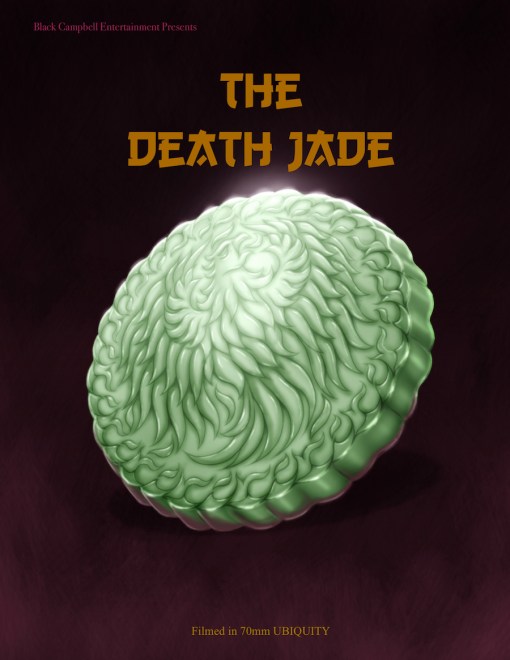
After four months of delays, we finally managed to finish The Death Jade. This adventure scenario is set in 1936 Shanghai. Rumblings of war are being heard in the International Settlement of Shanghai as the characters are hired to find a priceless artifact from ancient Chinese history — the Donguin jade, part of the fallen star that allegedly prophesied the end of the First Emperor’s reign, and which is said to carry his soul! The first man hunting the jade, Count Rusikov, has gone missing, and as they track his steps, they must stay ahead of Japanese and communist spies, and dodge nationalist warlords.

The Death Jade is live on DriveThruRPG.com for both Fate and Ubiquity. This 25 page adventure module costs $2.99.

ubicover.jpeg

One of the things that made my return to Dungeons & Dragons, and specifically 5th edition, so easy was the use of two apps I downloaded. I’ve already done a quick review of them here, but I hadn’t actually deployed them for play until Thursday night.

We tuned up the characters using Fight Club 5 to check our maths, and the characters changed a bit, but — I suspect for the cleric, especially — for the better. There was an update a few days ago and the app still works very well. I plugged in a lot of the class features that weren’t in the app and backed it up to iCloud to not lose them. It took a few hours of typing, but it was worth it. I suspect that it wasn’t they didn’t finish the product, but that they are working from the SRD for licensing reasons. Anyway, it works well.

Finally, it was time to give the system a run. We started with the characters having their caravan hit by Vandals (goblins) on the way to Augusta Treverorum. I had put the basic notes for the encounter, added the six goblins they would face and the stats for the NPC guards that were with them, and the possible loot they might get into the first Encounter, then added a second — a show down in a small hamlet where the people had been disappeared, apparently by the same tribe of Vandals. Again, adding the creatures, adjusting their weaponry and stats, was easy. i could have added maps, as well, but hadn’t gotten to that.

GM5 has a compendium built in with monster stats and XP ratings, weapons and spell data, equipment lists, etc., as well as a GM screen like pop-up that allows you to handle a lot of the basic rules without cracking a book. It also has a built in die roller that I didn’t use, instead opting for physical dice. In the two hours of play, I had one of the players, who had the Players’ Handbook open look up some equipment damage and some bits on spells to speed play, but otherwise, I didn’t crack a book for the two and a half hours until it was time to hand out XP.

With GM5 and FC5, you don’t have to even tote a book to your game session, you just need your iPad to run a game. You can even load up character sheets into it, if you need to, just in case someone forgets their stuff.

They are definitely worth the $2.99/app in the App Store. I don’t know if there is a comparable app for the Android (I’m assuming so, but there’s a few threads on the interwebz that suggest otherwise…), but if it’s by the Lion’s Den guys, that would be it.

Substance: 4 out of 5 — it’s very useful and mostly complete. You will have to add a few bits here and there. Style: 5 out of 5 — it’s a good looking app. Is it worth it? Absolutely.

« Previous PageNext Page »