Roleplaying Games


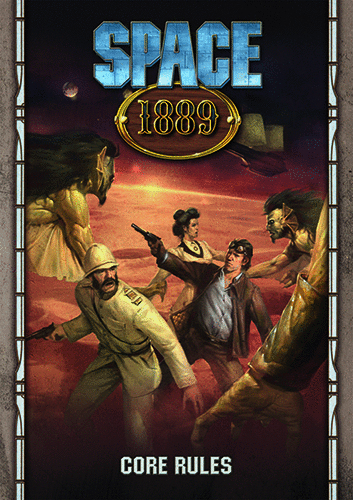
I remember the first time I saw the original GDW Space: 1889 in The Compleat Strategist near Rittenhouse Square– I was living in Philadelphia and the main games our group was playing were either superheroes (DC Heroes by Mayfair), or espionage games (using James Bond: 007) and cyberpunk Cyberpunk (by R. Talsorian.) The look of the game was intriguing enough, with the great David Dietrick art — one of the big boys in game cover art at the time — and a quick look through the interior was enough to get me hooked. There was a board game, Sky Galleon of Mars, that tied in and allowed you to make the jump from the RPG to a wargame and back, and there were about a dozen supplements and adventure books published before GDW died. I have the book I bought a quarter century ago sitting in front of me as I write this.

After a bit of stumbling to put together a game, I wound up running some form of Victorian science-fiction — usually in the Space: 1889 universe — from 1990 until 2004, when I started to drift toward ’30s pulp and Exile’s Hollow Earth Expedition. The game was one of the reasons I went into history, my specialty was Early Modern and Modern Europe until my doctorate (mostly due to the shoddy condition of the European section of the college) when I drifted into Modern US (which strangely coincided with my move to Hollow Earth Expedition.)

A few years ago, there was a Savage Worlds version of this, the original “steampunk” (gahd, how I hate that word!) game, and I have a PDF of that, as well, but never found SW made much sense, mechanically. Close to that time, it was announced that Clockwork in Germany was doing a version using Ubiquity — the rules set from Hollow Earth Expedition. In 2013, the Kickstarter for an English-language version was posted by Angus Abramson — who I worked for in the early days of Cubicle 7 on the Victoriana line — and his new Chronicle City house. I missed the Kickstart for this, having already blown dough on the Revelations of Mars book by Exile a month earlier (still not @#$%ing close to done…) Well, the PDF just dropped for sale yesterday with the print book not far behind, and I had a chance to do a quick read-through this afternoon.
space1889

The new book is very true to the original. There’s some difference in the verbiage and the arrangement of the book, but most of the setting is unchanged, with additional material for Germans on Venus that was most likely part of someone at Clockwork’s campaign prior to resurrecting the game. There is new artwork, some of which is an update of pieces in the original book, some of which is original. The quality is true to the original book, as well — mostly black and white pieces and the occasional color plate. The maps of Mars and Venus are updated and look better than the original, but when I looked at them side-by-side, they are “the same.” There is the alternate history from the original book — Edison’s flight in an airship with ether propeller to Mars, and the other alternate history moments. There’s a gazette for Earth, Mars, Venus, and Mercury. Here and there, you can see where the new publishers added bits and bobs to flesh out the worlds — new gadgets and gear, a few locations and “worlds in the ether”, etc.

Character generation is nearly the same as you would find in Hollow Earth Expedition, but there is a specific set of rules for older, more experienced characters that looks a lot like the character creation house rules we’ve been using for our HEX games. There are a few traits and flaws that are setting specific, the Status Resource is very slightly more fleshed out, but otherwise it’s the character generation from HEX. One of the things that I noticed was there were no real traits that differentiated the Martians from the human characters in the game. (Here’s my take on the setting species.) I would have expected something to take into account the acclimation to lower gravity and pressure, but Space: 1889 also has a much more friendly Mars than reality — heavier gravity and atmosphere than most alternate Mars settings. (Over a few campaigns, I started using a Mars with .5G, rather than the .9G of this game, and lower pressures, making mountain travel dangerous for Earthlings.)

Rules-wise, it’s Ubiquity: roll the number of dice (any even sided will do — even a coin) equal to your skill plus the connected attribute and beat the number of successes. It has the “take the average” than makes Hollow Earth Expedition work so well when fighting mooks and the like — the GM doesn’t have to do a lot of rolling and the action moves quickly; characters that just need a pass/fail result can take the average when they know it’s higher than the needed successes for the same reason — getting roll playing out of the way of role playing. If you know HEX, you can pick up and play this.

Style: The original game was pretty sharp for it’s time, with good color art and crappy line art for the rest; the new version is average RPG quality art for the black and white art, decent color. I’d go 3-3 1/2 out of 5. Substance: Unless you plan on really digging into political intrigue and the like, the book is good enough to launch into a campaign that night, and the rules are complete enough to handle mot situations. 4 out of 5. Is it worth the $56US for the print and pdf combo? If you are into this genre, yes; if you are an old Space:1889 fan that wants a better set of mechanics than the execrable ones from 1989, absolutely; if you’re just curious..? No.

Extra Review Goodness!
loa

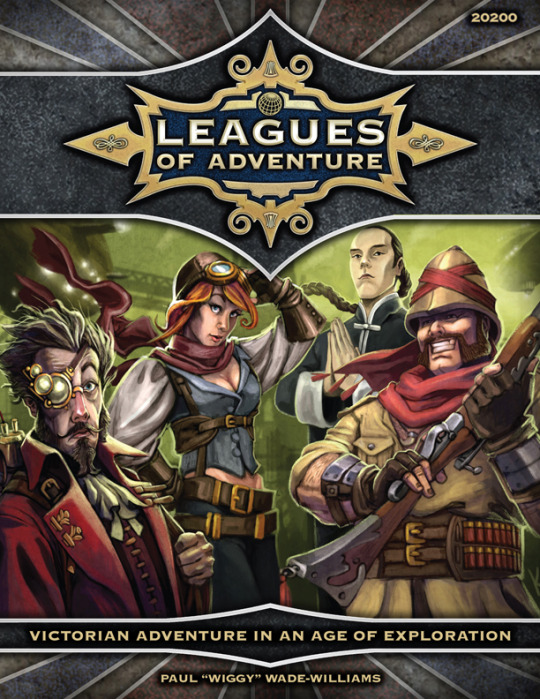
So, let me stack this up against the closest thing to its peer — Leagues of Adventure, also a Ubiquity-powered game set in a Victorian science-fiction alternate universe. This one is published by Triple Ace Games. Again — the mechanics, character creation, etc. is no different from Space: 1889 or Hollow Earth Expedition, but there are a few places where Leagues of Adventure excels: in the character creation section, there is a great bit on the Rank Resource, and how it ties to the various real and invented clubs of the period. Being a member of a club was almost essential for the well-heeled gentleman, and certainly for the aristocrat. Like Space: 1889, the Status Resources is pretty sketchily defined, but at least Space:1889 makes room for people below the rank of peer or wealthy middle class (bravo!) Also, Leagues provides rules for Inventions — something Space: 1889 (like the original) glosses over. Characters as inventors seem to be an afterthought in Space: 1889, but there’s a nice set of rules for it in Leagues and a goodly selection of weird steam- and clockwork-powered science!

Style: 4 out of 5 — the Art is superior RPG quality, full color, and the layout is nicely done. Substance: There’s a lot on the society and the basics of the Victorian period, and the rules are more comprehensive than Hollow Earth Expedition was… 4 out of 5. Is it worth the price of $30 US for the book? Absolutely. Is it worth the $18 for the PDF — no. Buy the book.

Now, here’s my suggestion: I would be surprised if Clockwork and Chronicle City didn’t do some kind of reprint or series of splatbooks for Space:1889, and TAG already has one book out and another with weird inventions on the way…if you’re a Space; 1889 or Victorian speculative fiction RPG fan — buy them both and mix and match the bits and bobs you need to build up your setting. (It’s what I’m doing.)
That’s it! you’ve finished that epic (or not so) campaign. Months or years in the running, the players have enjoyed themselves so much that when it comes time for the next game to be played…they want more. Perhaps you felt like the game universe was moving in a direction that lent itself to something new and fresh and you all want more. Time for Game II: The Revenge of Game!

Like movies and spin-off TV show, there’s a lot to recommend about the sequel. There’s a built in interest for people who liked the last one. It’s a familiar universe or premise, and maybe a familiar character or two to help ease the audience into the next cast. They also have several problems that come along with them. So first:

WHY DO A SEQUEL?

Maybe there were things in the game universe that were left unanswered, or tantalizing bits on the side that people wanted to explore but there was no time? “What about that alien race we discovered? What were they up to?” “Remember that legend about the fall of Zarus? We should have adventured our way to that side of the map!” “What the hell was that cult up to — the one we were investigating before we all went made and were institutionalized?”

Maybe the players just aren’t ready to let that character go. “You know, Jack escaped the Wing Kong exchange, but was that it..? What if he ran into some other occult group in, say, New Orleans?” “The rebellion might be over, but i don’t think Wedge would just hang up his wings just yet.” “After fighting terrorists, I think my guy would go into business doing international security.”

WHY NOT DO A SEQUEL?

“How can the same thing happen to the same guy twice?” was one of the best lines from Die Hard 2 because it directly addressed the unlikely nature of someone called to be a hero then returning to regular life finding themselves playing the hero again. Bilbo Baggins had an adventure. Then he went home. Had he been fighting another dragon the next week, folks might have been a bit less intrigued by The Hobbit 2: Another F’ing Dragon. The main danger of the sequel is doing the same thing over again. It’s like the first one, but with bigger CGI ‘splosions!

HOW TO DO A SEQUEL

There are a few routes you can take in a sequel or spin-off game. Doing a new campaign requires a new focus. Maybe your sci-fi campaign was doing head-of-the-week exploration like a certain franchise we know; the next should be focused on something else — maybe long-term politics between the good guy organization and the prosthetic-headed alien we really liked the last time; or a static location where people come to you like Babylon 5, or some colony world that provides the opportunity for adventuring, while being connected to the rest of the parent universe.

Jump the action a couple of decades and include one or two of the old players as more mature, playing the mentor to the new characters. You could conceivably come back in a generation or two and see what the children of the players are doing. Did Bolbar the Barbarian’s kingdom really stand for 100 years as was prophesied, or did he spend himself into the poorhouse and wind up with his kingdom gobbled up by the larger Empire of Whatever?” Did your daughter wind up being a Jedi in the New Order? Did your grandkid follow the ol’ WWII hero (you) into the military or CIA to fight terrorists?

Another way to change the flavor of the game is to try a new set of mechanics in the same universe. Say you were playing 1930s pulp using Hollow Earth Expedition or Savage Worlds. The players love their characters, but they’ve been sold on your early Cold War game. You could rewrite the characters in their post-war form in James Bond: 007 or Spycraft and have them working for the new CIA with a Bondesque spy-fi vibe (itself just really a post war pulp style.) Hell, Atomic Robo has specific rules for playing a game with flashbacks, allowing you to tie new adventures to historical ones.

Aside — If you wanted to do flashbacks to adventures in the old campaign, you could do something old like use one system for the modern stuff, then return to the old game system for the flashbacks.

An example of a sequel campaign would be the Star Trek campaign I started in 2000. It was set just post-Dominion War and I carved up the Trek canon to make a more believable, consistent universe. the first game was mostly interested in post-war politics. We dealt with the Federation more — how a post-scarcity society with access to androids and sentient spacecraft (the big metaplot of the first campaign) might look. It got increasing transhuman as we battled Borg incursions and an ancient race of self-relicating machines. The sequel campaign was about a decade after that — sentient starships and androids were commonplace, as was storage of transporter patterns — essentially ridding the biological races of death. This campaign was deep space exploration focused, but the real adventure was dealing with how the new technology introduced in the first game was changing the lives of the characters. there were carry-over characters in secondary roles, minor characters that were now leads.

The campaign was good but hit one of the issues of a sequel campaign…it was just different enough that it no longer felt like Star Trek. There were the trappings, but as the characters got more used to the transhuman future-meets-Trek setting, it lost some of its luster.

YOU THINK SEQUELS ARE HARD? TRY A PREQUEL (PLEASE, DON’T!)

“Wow! I wonder what a show about the Federation before there was a Federation might be like!” “I wonder what the Galaxy was like before the Emperor took over.” “Hey, maybe Indiana Jones should do something with mystic stones before he “doesn’t believe in hocus-pocus”…”

Do I need to continue?


Recently, in our Battlestar Galactica campaign, the characters made the trip to Kobol (the notes on the episode here) in which they “find” the Lady of Kobol, Athena, in addition to the map to Earth. Using her “coffin” — actually a highly sophisticated 3D printer for biotechnology — an injured and dying character was transformed into the Olympian goddess of war.

Genetically-engineered by the TITANs thousands of years ago, the Lords of Kobol had been modeled on the Greek myths of Old Earth. The idea was to capitalize on the archetypes as leaders for the human race that the Titans recreated on Kobol long after destroying the Earth (and those that inhabited it) they were created on.

ATHENA possesses all the “memories” of the stories and myths surrounding her namesake, as well as her various incarnations since she was created by the Titans. These were stored in the genetic code of robust virii that were stored in the Arrow of Apollo after the last living version committed suicide in shame over the Olympians’ inability to protect Mankind from the Blaze, and their own creeping dementia.

She was reactivated when the crew of Galactica found her tomb, and a security program identified them as friendly. She used the body mass of the critically injured Colonel Aeria Evripidi to remake herself. Pressed for time and under attack by Cylon forces, Athena chose not to remake herself, but rather “improve” on Evripidi so that she could be in action as quickly as possible. Once resurrected, she claims her purpose is to aid the Colonials in locating the Earth and the 13th Tribe, but also to get them past the “Guardians of Earth”, as they will know her.

Athena suffered intense pain as the virus used to rewrite Evripidi’s genetic code did its work. She still resembles the woman, although her appearance is expected to change slowly over time, but genetically she is a Lord of Kobol. Athena is preternaturally intelligent, a master of recursive thinking and strategic planning; and physically is strong, fast, and athletic. She possesses many of the memories and skills of Colonel Evripidi, but is a very different creature.

ATTRIBUTES: Agility d8, Strength d8, Vitality d8, Alertness d10, Intelligence d12+d4, Willpower d12; Initiative d8+d10, Life Points **22

ASSETS: **Goddess of War & Wisdom d6 (Adds to Perception-based tests), Immunity to Disease d8, **Physical Exemplar d10 (Adds to all physical tests, Quick Healer d8, So Say We All d6

COMPLICATIONS: Divine Purpose d12, Insatiable Curiosity d6, Multiple Personalities d6, Overconfident d4, Uncanny d4

SKILLS: Artistry d4, Athletics d6, Covert d4, Craft d6, Discipline d6 [Leadership d10], Guns d6, Influence d6, Knowledge d6, Mechanical Engineering d6, Melee Combat d6 [Spear d8], Perception d6 [Tactics d12], Perfrom d4, Pilot d6, Survival d4, Technical Engineering d6, Unarmed Combat d6 [Brawling d8]

AEGIS ARMOR: Move 4W to stun, ignore all stun. Design is lightweight with HUD in helmet.

SPEAR: Damage d6W, Range [thrown] 15 yards [18 for Athena]; Energy Weapon Damage: d10W, Range 200 yards, Ammo unknown

**These Assets are much wider in scope than traditional Cortex Assets to cover the supranatural nature of these creatures. Rather than using the scaling rules from the Cortex Core rulebook, I decided cribbing a page from Cortex Plus might work better here. I was on the fence about adding the Physical Exemplar to the Life Points, but decided to give her the same benefit as Tough d8.

Recall this is a “watered down” version of the original. Pressed for time, instead of remaking herself, Athena used what she could as a framework. We’ve already seen corpses of the Lords or at least their spawn through the campaign. they were often between 6’6″ and 7’2″ tall with muscle and bone mass half again that of a normal person. An actual Lord of Kobol would be (and should be) awe-inspiring to say the least.

A quick look at TV and movies and you might notice something, 1) “It’s amazing how England looks nothing like Southern California”, and 2) it’s always sunny…unless something dramatic is about to happen. It always rains at a funeral. It’s never foggy unless there’s a killer stalking in the mist. Weather can be a very good means to not just create a challenge for your players, or for establishing atmosphere in a scene, but it can also help define the space the players’ characters inhabit.

Example 1: Most folks know Scotland is a rainy place…but as we said in the Army, “It’s one thing to know it’ll suck, and another to feel the suck.” Scotland doesn’t just have rain — it’s got a plethora of ways it can rain. It’s often foggy in the mornings around the resepective firths (bays.) There’s “smir” — that mist that is statically charged so it stick to f@#$%ing everything. Wearing glasses? Good luck seeing. Wanted to check the map on your phone? Say that screen got wet faster than immediately, didn’t it? There’s drizzle. There’s a soft rain. There’s downpours of such astounding frigidity as to take your breath away. Snow. Sleet. And it can go on for longer than Noah was floating about.

As one of my cousins once wrote on Facebook, “I’d go for a walk, but I don’t have a boat.” People don’t do well with things when they’re uncomfotable. Sure, they can ride to the occasion — but cold, wet feet are simply the worst!

How could this affect the characters? When there’s a deluge of freezing cold water, people tend to look down. They tense up. They naturally look for someplace where the air isn’t trying to drown them. That’s a bit of a bitch in a footchase down the shops in Sauchiehall Street, ennit? “Whaddya mean ye lost him?” “Well, sir, it was pissin’ doon and…”

Example 2: What’s a car chase like in the snow?

Example 3: You live in Victorian London — or modern day Shanghai — it doesn’t have to be a dark, smoky night for the “London Fog” of industrial filth to have some kind of an effect. Shame you got all dolled up to meet that important person, but your white shirt is now a sort of grey-yellow when you arrive hoping to make the best impression. Maybe you’ll got allergies. Or asthma. Shame about losing that guy in that footchase on the Bund because you were hacking up a lung from your 400 pack a day habit of just breathing the air. What’s it like to try and finish a fistfight when you’re hacking up a lung from the soot?

Example 4: What about it being sunny and warm all the time? It’s lovely in the Southwestern American desert. Except you get thirsty. And sunstroked in a matter of minutes or an hour. Maybe you were fine when you were out there, but not that you’re indoors and mostly hydrated again, you want to sleep. For a week. It’s a bit hard to concentrate on sorting through those clues when you want to collapse on your desk and sleep. Or you’re getting ready for the Nasty Brothers, of whose kin you just shot saving that Wells Fargo stage, but man! this chair is comfortable!

Example 5: You’re in Houston. Or anywhere along the Alabama to Texas coastline. It’s 100F, somewhere between 100 and 600% humidity, and you’d be drier in the shower. Your clothes stick to you. You feel like you’re breathing sweat and decaying fish soup. You’re not certain if you’ve gone incontinent or that sweat in your underwear. You’re only goal is to get into an air conditioned building that makes the climate something approaching a sauna instead of a credible facsimile of Venus.

Example 6: Speaking of space…what’s it like in a spaceship? They outgas a lot of humidity. The air is nosebleed dry and static electricity is a constant danger. What about the spots where there might be heavy water use? Mold and mildew! Better get cleaning.

Example 7: Low or high gravity. Sci-fi games are good about putting this in there rules sets, but I’ve yet to see anyone do more than lip service to different gravity. Even habituated, it’s a beast to have that chase or fight in half gravity on Mars. Or in a centrifugal gravity torus. You thought that ball was going to fly straight, but look at that! Physics! What about heavy gravity? Suddenly, you’re not a svelte 170 pounds, but 210…your knees and feet hurt all the time. It feels like you’re walking or running uphill, all the time. You’re out of breath, headachy, and a bit tired because your blood isn’t getting to the brain that well.

Creating character for your location doesn’t just make for verisimilitude, but creates the space as an ancillary character. The place becomes important not just to the plot, but something interesting in an of itself. How did Miami become a sort of character in Miami Vice, or Burn Notice? How did Louisiana define True Detective? Making the setting ‘real” can create of love of the place — think about Babylon 5: after five seasons, the space station felt like a real place that you wanted to visit; watching her scuttled is nearly painful.

How would the character of the place play into where players go willingly, or dragged there complaining endlessly? You couldn’t get me to go to Houston with a cattle prod and the promise of a million a year salary…no, wait, that last bit would work. But I’d hate every second of it. I love the desert, but I’m from environs where it’s cold, wet, and dark a third of the year. Move back? Screw that! (But it’s better than Houston.)

Weather or climate — it fells create your setting as much as the look of a place.


The series of tubes is afire with responses to John Wick’s Chess is Not an RPG: The Illusion of Game Balance in which the game designer gives us a rambling examination of issues with role playing games, gamers, game masters, and why we should get off his lawn… In between his grumpy old man professing, Wick gives us a bunch of good ideas, a few mediocre ones, and a fistful of attitude that was most likely designed to “get the conversation going.”

The main point, however, is “Do these rules help you tell stories?” It’s a good question, and Wick is known for his being part of the artsy indie game community where “role play should win out over roll play.” One of Wick’s tricks is to tailor a game for the setting and the types of stories it is supposed to engender. Strip the junk out and play. It’s a good philosophy for a game master, and one I subscribe to, despite my tendency to create wee rules mechanics for stuff that might not need it.

Because if the most important part of your game is balancing the damage, rate-of-fire, range modifiers, damage dice, ablative armor, dodge modifiers and speed factors, you aren’t playing a roleplaying game. You’re playing a board game.

And you need to stop it. Because all that crap is getting in the way of telling a good story.

He’s right, it can, but it needn’t, but knowing that the effective range of an M4 is pretty accurate inside 250 yards,  has an effective range of 550 yards, but is still capable of doing some damage at twice that…you’re just really unlikely to hit someone out there. It is useful to telling the story in a way that aids verisimilitude — if the setting calls for it — but reducing the game to that, that’s bad.

As a GM, your job is to help the players tell the stories of their characters. “Game balance” has nothing at all to do with telling good stories. It’s an archaic hold over from a time when RPGs were little more than just really sophisticated board games. Or, as someone once told me, “An RPG is a strategy game in which you play one hero rather than a unit of heroes.”

Wick doesn’t hold to this idea. Neither do I, which was why I wandered away from the Dungeons & Dragons crowd very early into gaming. It’s why i don’t mix miniature games and RPGs, like i used to back when we played Space: 1889 regularly. I realized that swapping from role playing to busting out the boards and pieces broke the narrative flow. It was cool it it’s own right, yes…but it didn’t move the story along. For our Battlestar Galactica game, where military maneuvers are occasionally very important, I like to set out some of the Titanium series BSG toys and use the little plastic raiders and vipers from the Battlestar Galactica board game to aid in visualizing what is happening, even though the show itself often didn’t really show you the tactics of a battle…it wasn’t important to the story.

What matters is spotlight. Making sure each player feels their character had a significant role in the story. They had their moment in the spotlight. Or, they helped someone else have their significant moment in the spotlight.

Absolutely…and let’s use the Galactica campaign as an example: if you have a bunch of guys playing fighter pilots, the tactics and the one on one combat is important and should be played out. Or if you are in a spy game where a character has to make a tough, 2710 yard shot at a Taliban commander with your Accuracy International .338 Lapua (thus also gaining the longest shot record)  then that weapons table Wick hates so much actually is useful. For the “mundane” 800 yard shot, though, the specs of the rifle are relatively unneeded.

Having blasted game masters for being too rule-bound and board gamey, Wick then turns his attention to both GM and player with this tidbit:

The reason roleplaying games are a unique art form is because they are the only literary genre where wewalk in the hero’s shoes. We are not following the hero, we are not watching her from afar, we are not being told the story. As Robin Laws now famously said, “A roleplaying game is the only genre where the audience and the author are the same person.”

I highlighted that particular tidbit — a unique art form — for a reason. It’s this attitude that takes the fun out of the indie games for a lot of players and GMs. Is role playing an art? Sure — everything can be an art. Changing the oil of your car can be made into art. My last encounter with this “you just aren’t trying hard enough to play correctly,” was playing in a game with Mark Diaz Truman — who intimated that people don’t like certain games (or more specifically his game system) because you haven’t played it enough, or aren’t role playing enough… wick again:

I don’t want you to think I just get rid of combat mechanics. On the contrary, for Vampire, I usually get rid of that whole Social trait thing entirely. Why? Because this is a roleplaying game, and that means you roleplay. You don’t get to say, “I have a high charisma because I’m not very good at roleplaying.”

My response to that is, “Then, you should get better at it. And you won’t get any better by just rolling dice. You’ll only get better by roleplaying.”

If you want to get good at playing chess, you play chess.

If you want to get good at first-person-shooters, you play first-person-shooters.

If you want to get good at roleplaying, guess what?, you roleplay.

He’s right — if you just role the dice and let the GM describe what you do, you aren’t getting better at role playing. But thats’ not enough for Wick, or Truman, or the collection of post-deconstruction RPG designers:

…[y]ou are not playing a board game. You’re playing a roleplaying game.

Start acting like it.

This attitude is arrogant, elitist bullshit, pure and simple. Here’s why: for those of us who have to, say, work a 10 hour day, or run all over the f’ing world with our kids, games are a chance to relax and have fun — and sometimes you just ain’t feeling it. Rolling how you do in an encounter is perfectly acceptable because maybe you just aren’t super charismatic, even if your character is; just like you might not be an expert in hacking, though your character is. My response to this artsy crap is, “Well, Mr. Fancy Pants GM — why didn’t you set up a computer system for me to actually hack? Let’s go take our computer science classes together so we can really dig down and make this art.”

The argument that you have to play a certain way is that dumb. Are you having fun? Then you’re doing it right.

For some time now, we’ve been stomping all over the canon of the reimagined show with our campaign. I figure if you’re going to roleplay in an established setting you’ve got two real choices — adhere to the established material and slavishly model it, or work in the interstices between the events of the movie/show/book…or that what you like, throw caution to the wind, and do it your way.

I’ve used all of these techniques — from playing on the edges of the Babylon 5 universe in a campaign back in the late ’90s, to throwing a large part of the franchise out the window for a Star Trek campaign a few years back. With my first Battlestar Galactica campaign, I did the second fleet thing — a smaller group looking to find a new home, working from the flashes of insight of an oracle in the fleet and an alternative book from the Sacred Scrolls. It worked well, but with the collapse of that gaming group, I tried something new — throwing out the stuff I didn’t want and building anew.

Adama: gone; replaced with a player character, Commander Pindarus. The Final Five nonsense: gone. The humanoid Cylons are actually from Kobol, and are agents of the blaze known as Seraph. I borrowed the Ship of Lights for the Blaze and the Seraphs from the old ’70s show. Added: more science fiction elements, archeological hints that the Cycle of Time has repeated for at least three or four times. And our people finally set down on Kobol this time in the midst of a civil war between the Seraph and the centurions they had created and those from the Colonies they coopted into working with them. The goal was the same: find the Temple of Athena and the roadmap to Earth.

We had established that the war and the Fall of Man was to bring them “home” under the loving embrace of “the Blaze” — the one true god…except it’s not. We had a ton of exposition under fire this last session, and some of it involved what the Blaze is/was.

After a great cliffhanger (literally) in the week before, we launched off into characters on the ground mission rappelling out of an old Olympian temple or palace while the ruins were being blasted apart around them. They’d already lost one (former) PC, scads of NPCs, and lost a major NPC — the love interest of the commander — when she broke her back falling from the building. Still alive, but paralyzed and barely able to breathe, the characters carted her to the Temple, where they used the Arrow of Apollo to open the tomb — to do this, the arrow had to be shot at a “lock”, which opened the tomb.

The tomb, however, was more of a command center for the Goddess of War. Athena presented as a hologram, demanded from them their intentions, and learning they were from the 12 Tribes, demanded a “sacrifice” — the injured and dying member insisted she be used, as she was the obvious choice and the Athena specter agreed. She was loaded into the sarcophagus of the goddess (empty), and a vial of something inside the Arrow of Apollo was loaded at the hologram’s direction into a panel of sorts. The sarcophagus went to work doing something horrific — laser light and milky liquid a la the resurrection ships — while the hologram gave them the night time sky from Earth stuff from the show, but followed it up with a zoom out to show that they are about 1100LY from the world, on the other side of the Orion Nebula. They can be there (safely) in about 300 days.

The sarcophagus was done, by this time, having repaired the injured colonel and “infected” her with the DNA of the original Athena. While her appearance won’t change — the body is mature and while it might change over time — she still looks like the colonel, has many of her memories, but has also had Athena’s memories programmed in somehow. The newly restored Athena gives them the low-down:

The Blaze is Hades, a jealous “god” who should have been the King of the Lords of Kobol, as he was the eldest, but was usurped by Zeus. At least, that is the memories, the legend, they had been created with. In truth, they are the creations of the TITANs, some kind of advanced machine intelligence that destroyed their makers…humans, then in a bout of regret, recreated life from Earth on Kobol and gave them the Lords to rule over them and help them develop. The Lords started to take the PR too seriously, especially Hades, who after the rebellion and exodus of the Ophiuchan or 13th Tribe (of whom he was the patron god), he followed them and discovered the TITANs. Intrigued by their investigations into the nature of the universe, he “saw the face of God” and went mad, fashioned himself as a god, and returned to Kobol to instill order and gain the adulation of his peers and their human charges.

Except it didn’t work out that way…and for ten thousand years or more, they’ve played out this story — over and over — with Hades hoping for the “right” outcome: he as the one God, worshipped and loved by his followers. However, just as humans created their machines that destroyed them, and the TITANs created the Lords that fashioned themselves as gods and viewed Man as their creation, and just as Man created machines in their image, the Blaze created Seraph as a replacement for his departed brothers and sisters, the Lords of Kobol.

The history is fractal — from the massive superintelligent TITANs, to the Lords, to the Blaze, the humanoid Cylons/Seraph and the humans…the same hubris to create a perfect slave destroys the maker. Athena, having remembers other iterations of the story, threw herself from Olympus not in despair over the colonies leaving, but to set her mind-state free to be transmitted to “follow the course of the Blaze” and find a way to stop him. She has been waiting for a millennia for someone to find her, having been beamed home 1000 years ago.

While this was happening, Galactica found out the mission on the ground was rapidly going FUBAR, and they jump in to nuke the Blaze’s citadel on the ruins of the “City of the Gods” on Kobol — the Tower of Dis, a massive diamondoid structure that is mostly computational substrate, but also an active energy weapon system. It’s dug into the planet to feed on geothermal energy and according to Athena, has the records of every Seraph, human puppet, Lord of Kobol, and who knows what else stored in it. If Hades escapes, the cycle will just start all over.

While Galactica  is locked in a tense fight with the Cylon fleet over the planet, and the missiles are on route, Athena and Hades have a snark off that ends with her revealing the one thing she has left: her father’s thunder. She lets the ship and the ground crews know it’s a trick she can do only once…and they have three minutes to be outside of the magnetic field of the planet. With a strike of her spear on the floor, she sets the weapon in motion.

A few more NPCs and almost two PCs, were lost trying to evac to the SAR raptor had had just gotten to them (One of the characters was physically hurled by the increasingly strong Athena into the raptor.) and they manage to barely clear the planet as the magnetic field starts to amp up sharply and the planet starts showing signs of volcanic activity all over the globe. The magnetic field collapses down to the surface and increases to a sci-fi ridiculous level and destroys the Blaze…and Kobol.

The Cycle is broken. With the roadmap to Earth they head back for the fleet.

There was a great moment when the mission returns when the commander realizes that Athena is no longer his lover, and has his nervous breakdown in private. They also learn from her that while they have the map, they will need her to get past the “Guardians of Earth”, who will need to see someone they “know.” Hence the need to take biomass and retool it with her DNA. There were some intimations that the TITANs may be “near” Earth, and that the Blaze may or may not be destroyed. If not, they will need to attract the attention and aid of the TITANs to stop him.

If the characters follow their own plans, the fleet will split with Galactica leading the ragtag fleet of civilians to Earth, while Pegasus takes the other military assets and fights the much weakened Cylons with hit and run attacks designed to distract the enemy from the fleet’s escape.

So that’s an example of how you can take the material from an established property or universe, keep a lot of the elements (and even enhanced them), and still go your own way.

After a session or two of buildup and planning, the characters finally popped the trigger on the mission to find the Tomb of Athena on Kobol they called Operation PARTHENON. They had the benefit of a ton of intelligence from the damaged basestar they had found a few sessions ago — PHOTINT of the area, some idea of disposition of forces, and they know that with the skin jobs and centurions fighting each other, the attention will be off of a possible Colonial incursion. That said, they knew the mission was going to be extremely dangerous. They have a secondary mission after recovery of the “roadmap to Earth” of destroying the Tower with a nuke delivered from Galactica.

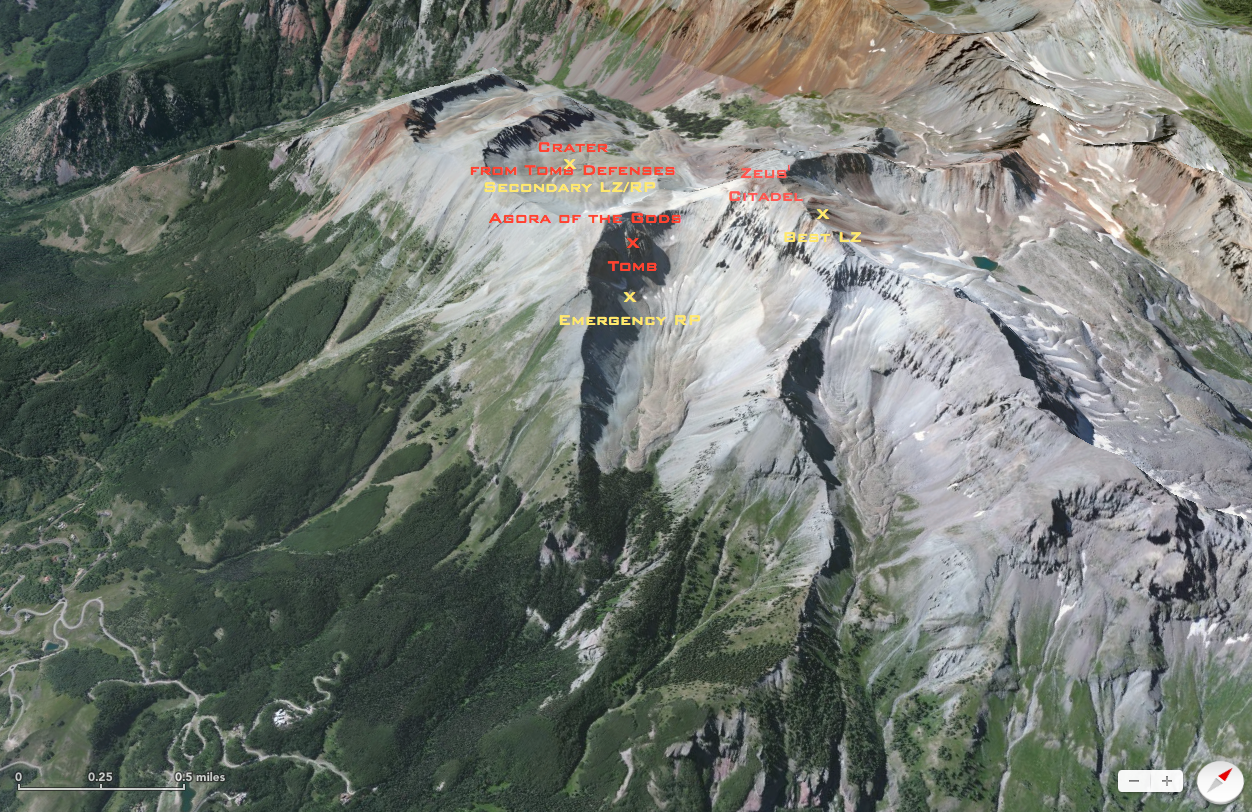
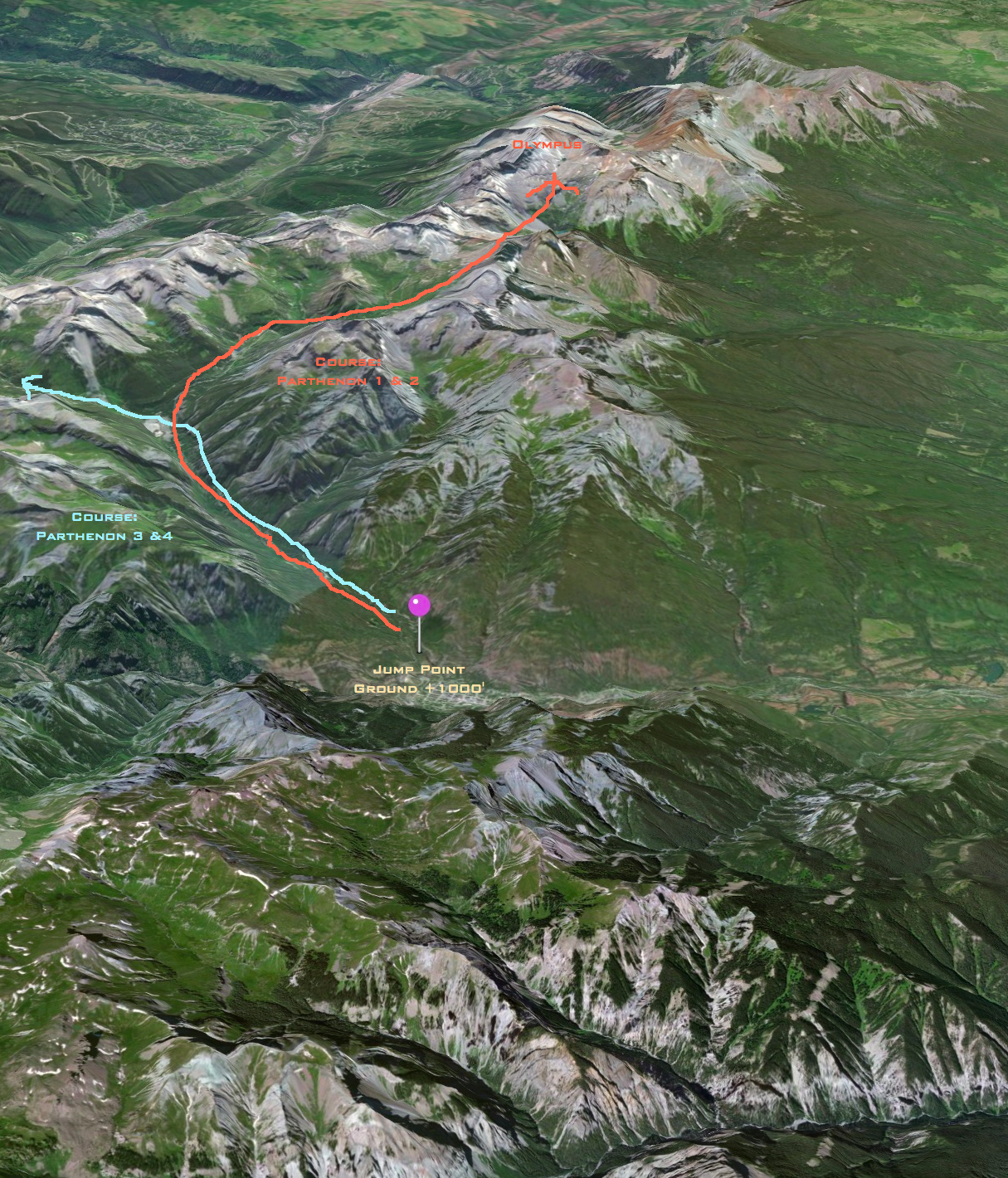
The mission entailed four raptors doing a LAAI [Low Altitude Atmospheric Insertion] jump. Parthenon 1 & 2 were carrying the ground mission, Parthenon 3 & 4 were ECM raptorsthat immediately took off through the mountain passes, hoping to draw any Cylon attention away from the ground mission. I put together a series of PHOTINT pieces for the players to work with on my iPad. Example: here’s the basic layout of what’s left of Olympus, overlooing the “City of the Gods” in the valley below, which is dominated by the massive Tower of Dis — the “home” or headquarters of the Blaze on Kobol, and now either the HQ for the centurions or the skin jobs (they don’t know which…)

olympus

And the insertion…

insertion plan

In this case, the Deiopolis (City of the Gods) is in the valley in the upper left. There is another inhabited (or not due to the civil war) city to the north (off the pic to the right.) For these aids, I pulled up Maps on the computer, killed all the notations (set to satellite view), and then captured the window and added the rest with Seahorse. (I’m on a Mac.) I threw together a Keynote/Powerpoint presentation for the mission…because Powerpoint, once invented, is like the herpes of an organization; you can’t get rid of it. Standing in for Olympus/the City of the Gods is Telluride, Colorado. It was the closest I could get to my verbal description of the area.

The insertion is a close thing — they get the coordinates right, so no one winds up in a mountain, but going off of what was on screen and what we’ve established in the game, the jump effect creates a split second of vacuum around the raptors, which are moving at supersonic speeds, but that bubble collapses immediately. I rated the effect as a FORMIDABLE for the pilots. Parthenon 1 and 4 biff their rolls, lose control, but managed to make their recovery rolls at HARD. Had they missed, the raptors would have crashed.

The ground assault cuts through tight canyons and put down out of sight of the Tower of Dis, which can see much of the ridge that Oympus is on. One of the player’s characters did an excellent job with his ECM rolls and they go unobserved for almost 20 minutes while the ground team moves to Olympus and climbs a small rock face. Once in Olympus, however, they get spotted by strange boa snake meets lamprey meets robot sentries and the fight is on!

About this time, Parthenon 4 gets shot down, Parthenon 3 runs out of its decoys and other EW gear and jumps back to Galactica, which is waiting at about 30SU from Kobol (about the orbit of Neptune, if this were our solar system. They are 4 hours from knowing what is going on….

Except. The ground team gets aggressed by not just raiders, but directed energy weapons from the Tower that are destroying the ancient ruins around them. Heavy raiders bring in centurions and in a heavy exchange of fire, a few of the raiders and heavy raiders are destroyed. Unfortunately, Parthenon 2 is disabled and the crew injured; it is unable to make space. Parthenon 1 is damaged, but still in the game, but it is only a matter of minutes before the unarmed craft will be overrun.

In Olympus, the ground team loses four of their eleven members, and they finally move to rappel down to the Tomb of Athena. We cliffhangered (literally), with the group descending just as the Tower obliterates the buildings near them, possibly endangering the team. The raptor crews are either injured and about to be hit by a 12 man squad of centurions, and Parthenon 1 can’t stay on site much longer…

The session ran long — almost until 11pm, instead of the usual 930-1000 time. Only one of the (former) PCs had been killed, a few minor NPCs, and there was the chance of two major NPCs from the show (Starbuck and Helo) buying it.

Between rewatching Role Models and reading up on the Jedburgh Ba’ tradition, I realized something that can improve on the verisimilitude (a word I use because i love the sound of it, and it makes me sound smarter than I am) of your RPG setting. People play games, watch games, beat each other up over games…always have, always will.

Here’s some basic ideas for games your players’ characters might play:

There medieval football, the closest to which today would by the Jedburgh or Kirkwall game of ba’ (ball…with a Scottish accent.) You choose two destinations — one for the Uppies, one for the doonies (downies) from either end of town. There’ a designated person to “throw up” the ball, usually a leather hand-stitched thing about 4″ in diameter, sometimes adorned with ribbons, etc. The goal is to get the ball over the destination point up the town or down. You play in a mob — none of this small numbers crap — and it can take all day. The big honor of keeping the ball goes to someone on the winning side.

Rugby/football/soccer — There are other obvious variants of football. Some even use your foot, NFL fans. Rugby is a nice one — it’s like American football, but without all the padding and helmets. Score points by getting the ball into the goal, and have fun pummeling other people into the grass. Soccer is a bit more civilized, with mostly kicking, rather than throwing and carrying the ball, as in football and rugby.

Keep It Up — Volleyball, beach ball, tennis, badminton even jai alia are keep it up games. Drop the ball, the other side gets a point. There might be other rules, etc., but this is the basic game. Jai alia just adds the extra fun of a hard ball moving at high speeds for greater injury potential!

Get It In — Basketball, Battlestar Galactica‘s pyramid, Rollerball — all are versions of this: Get the ball, throw it in the basket/hole/whatever for points.

Ball games typically are team sports, with teams as small as doubles up to the mob scrums of handball. Team sports, like their older brother political parties, inspire intense — often idiotic — loyalty and pride. They can have a lot more subtext than just colored jerseys — they imply where you are from, your religion, your politics. Get asked in Glasgow is you are Rangers or Celtics, and they’re not just asking if you like blue or green; are you Catholic or Protestant. On a Friday night after a few pints, this could lead to a beat down in the wrong neighborhoods.

Speaking of beat downs: Contests of skill, strength, etc. are fun. Arm wrestling over a few pints? Always good. Archery or shooting contest? Obstacle courses? Boxing/karate/cage fighting matches — these are ways to have the characters earn some dosh or respect without having to run a mission of some kind.

The other major gaming you see is racing. People will race anything. If slugs were big enough to ride, we’d race ’em. Dog racing, Pinewood derbies, horse racing, bicycles, trains (yes, there have been train races),motorcycles, cars, boats, planes, spaceships — we either ride ’em or watch ’em. For powersports, half the fun is when the person biffs it. Everything from regulated tracks with warning flags, and rules for not trying to wreck other racers, road rallies where you go from point A to B, timed events (to prevent crashes), demolition derbies — add some nasty terrain and speed and it gets fun.

Games of chance: People love the easy money, and the thrill of maybe winning is enough to have people playing the Redneck Retirement Fund weekly across the United States (the lottery, for those trying to figure out the putdown…) Dice. Cards. Roulette (with or without the gun), pachinko, dominoes….the quick way to handle this in game is to have the players roll some kind of gambling skill or attributes appropriate to the matter. But if the game is the point of the adventure — say, you’re running Casino Royale as a scenario in a espionage game — why not bust out the cards for some high stakes action? Even if it’s just a few hands, it will change the flavor of the session. (I bought triad cards for Battlestar Galactica for just this thing, but the characters have been a bit to busy for games, lately…) Now add gambling to any of the situations above and you can add drama to the events.

Can you make a simple game played in a session as intense and “important” as fighting the bad guys? Have a look at Role Models — a lightweight comedy that is actually much more respectful and understanding of geek culture than something like Zero Charisma. The climactic SCA/LARP battle is not life threatening, but for one of the characters, it is central to who he is — losing the scrum to the “bad guy” really is that important, and despite the characters using boffer swords and dressed like members of KISS (seriously, see this movie!), the audience does feel that this is high stakes, even if it is stupid to some of the characters.

We play role playing games because we want to be something, if only for a few hours in the safety of fantasy, extraordinary. The brave fighters, the canny wizard or hacker, the fighter pilot, the plucky thief, the social diva — whatever…we want something larger than life.

Most games are set in different periods from ours. Maybe it’s the faux medieval fantasy world, Renaissance or Enlightenment pirate settings, Victorian science fiction,  interwar pulp action, or futuristic settings. the draw is the difference from your modern day life. Even espionage games typically do the spy-fi settings where you drive expensive cars, sleep with comely enemy agents, shoot things indiscriminately, and maybe — if you’re lucky — you get to blow up a volcano secret base. The point being: it’s not reality.

However, the need for verisimilitude in a setting is important for audience (your players) buy-in. So how real should you go? The societies of pre-industrial nations aren’t known for their open-minded stance on gender, race, or sexuality. Combine that with class issues and the thought of living pre-1920 should put most people off. Set that reality dial too high and you will exclude certain character types, and by extension, certain demographics of players.

Race relations were not exactly stellar prior to …well, ever. And being a woman before the first sexual revolution of the 1920s was not conducive to a life of high adventure and being treated as an equal. And what if you were poor? Not a lot of crofters had the option to race off and explore the world unless they were wearing army red. How do you handle this?

First off, no matter how real it is for the NPCs, the players are special. There are always exceptions to the rule in history. Boudica was a warrior woman who wasn’t about to take crap from anyone, but lived in a world where women were second-class citizens of the Roman Empire. We’ll get back to her in a moment. Joan d’Arc was a peasant girl and maybe a lunatic, but she was an excellent general. Mary Read was a successful pirate. Jane Digby and Lola Montez were different stripes of female adventurer when is was not acceptable. Tom Molineaux was a successful boxer, despite being black, in the 1830s. The Lafayette Escadrille had a black pilot, and plenty of women and minorities found escape in early aviation.

They are the exceptions, the special ones…the ones the players are playing.

Gender and class come together here very well — the women mentioned are not middle-class. The typical view of the domestic goddess raising kids and doing what her husband told her, while quaint, was typically a middle class thing. Aristocrats like Boudica (a Welsh queen), or Jane Digby (the former Lady Ellenborough), or the spy Lady Hamilton had the freedom to buck convention because they were wealthy or well-connected, and their eccentricities — while decried — often made them popular figures. Conversely, the poor woman could find herself with more options than the middle class woman by sheer virtue of having nothing to lose, and that they were “invisible” to proper society. By the time you get noticed, like Lola Montezz, you’ve used you talent or sexuality to become the lover of the King of Bavaria. Lower-class women pretty made the West — that madam, that landowner whose husband died…they were the ones that made Western society, not the cowboys and prospectors.

Similarly, even during the height of the slavery issue, freed or scaped blacks like Frederick Douglass traveled freely and openly spoke their mind. Jews might find themselves in a sticky situation in Nazi Germany — unless the were much-needed scientists — but with money and connections, you might still slip by. The exceptions should be the exceptions.

That doesn’t mean you should shy away from race or gender or class issues. Giving your players realistic impediments can (and should) be frustrating, but they should be able to outsmart, outfight, or out-politic their foes. They should have detractors who decry their stepping out of place or take steps to ruin the character socially, but there should always be those folks that back them. It’s actually pretty realistic, historically.

Example 1: I often ran Victorian sci-fi games. One of the players chose to play aristocrats almost exclusively. Why? Because of the freedom than money and connection gave her characters to flaunt convention and get away with it. She played almost exclusively characters that were socially adept and attractive — the sort that thrived in the nooks and crannies of the Victorian period.

Example 2: A young Chinese street urchin, female, who was able — because she was young, a girl, and Chinese was the perfect spy and go-between for the Western male characters in 1936 Shanghai. She was always in danger of physical or official abuse, was often hungry and dirty…but her utility allowed her to tag along on adventures.

Example 3: A black woman who had gone into prostitution in our Victorian game, but who managed to seduce the right men, gain some level of financial stability and notoriety, then launched on a series of adventures with the other characters who — being the exceptions to the rule — were at least tolerant of the character.

Example 4: A female Martian in a Space:1889 game got involved with an American cowboy wandering the Red Planet. Despite their string of high-profile adventures and relative acceptance by Martians, human religious types viewed their union as “bestiality.” this caused them troubles, but not insurmountable ones because they are the heroes.

Here’s a briefing sheet that went along with a briefing to the characters regarding the history of Kobol. This is, of course, specific to our campaign, so feel free to ignore it — but it also shows what can happen when youtake the bit and run in a different direction than “canon.”

History of Post-Exodus Kobol

Analysts: Gaius Baltar, PhD — Colonial Science Minister; Ambra Gallardo, PhD — Chief Astronomer, Galactica

Based on ELINT and SIGINT collected by the ships of the fleet, and the data recovered from Basestar 32, the intelligence compartment of Gaactica, in conjunction with the science ministry, has gleaned certain facts about the history of Kobol from the time of the Exodus of the 12 Colonies to current day.

BF is Before Fall, or the year of C Day.

~2200BF: The Thirteenth Tribe flees Kobol ahead of the War between Man and Gods. They settle on a place called Earth.

~2200-2100BF: War between Man (those rejecting the leadership of the Lords of Kobol) and the Gods. The population of Kobol is seriously reduced.

~2000BF: Arrival of “the Blaze” — an “angry, jealous god” — who we now believe to be the Lord of Kobol, Hades, returned from his efforts to find the Titans to aid in the war.

The Twelve Tribes of Man flee to the Colonies. The trip takes almost six months.

~2000-1500BF: Collapse of Kobol civilization and rise of the Blaze. Rules from the Tower of Dis.

Population of Kobol about 6 million — about 0.01% of pre-war levels. Pogroms of polytheists reduces this to a million or so. Tech level collapses to about TL2-3 (Iron Age.)

The Blaze was apparently not “present” through most of this period.

~1500-1000BF: Slow development of Kobol civilization to TL5 (industrial revolution). Humanism and religious schisms.

991BF: Creation of the Holy Kobolian Empire.

978-765BF: Religious wars between monotheists, polytheists, atheists, etc. Rise to TL6 (Advanced industrial revolution.)

789BF: Creation of the Republic of Cumae.

764-760BF: First World War. Destruction of HKE .

760BF: Establishment of multiple new countries in HKE territory.

760-700: Rise to TL8 (Information Age.) First spacecraft launched. Population rises to ~2 billion.

697BF: Small scale nuclear war between Soldiers of the One and Cumae. Destruction of most large political entities. Collapse of population to 500 million. Drop to TL5-6

509BF: Return of the Blaze and the Gift of “the Twelve”, also known as “Seraphs.”

508-500BF: Resistance to the Twelve. Population drops to 160 million. Establishment of the Rule of the Seraph (the Twelve.)

509-450: Rise to TL9 (Microscale engineering and early space travel.) Discovery of signals from The Twelve Colonies.

440BF: Development of the jump drive: TL10.

430-400BF: First of the Seeks — looking for other human settlements.

425BF: Discovery of the Twelve Colonies. The political situation is deemed too volatile to intervene.

401BF: Discovery of the remains of the Pleiades Colonies of Man. Recovery of the Aurelian Prophesies.

375BF: Rise to TL11. Development of the Cylons — cybernetic servants for the Seraph.

350-300BF: The Second Seek (for Earth.) Unsuccessful. All vessels lost.

299-200BF: The Third Seek.

299-250BF: First introduction of monotheism into the Colonies by Kobolian agents.

276BF: Discovery of New Ophiuchi — a small colony of the 13th Tribe.

275-200BF: “Recovery” of the Ophiuchi settlers.

250BF: Loss of Seekers to possible location of Earth.

120-55BF: Involvement in the establihsment of Soldiers of the One and other monotheist groups, including the Eleusinians, in the Twelve Colonies.

Seraph involvement in the development of the Cylon.

52-40BF: YR1947-59 — The First Cylon War.

40BF: Seraphs stop the First Cylon War to save Mankind.

39-30BF: Incorporation of the remaining Colonial Cylons into Kobolian society.

18-1BF: Third Recovery of the Twelve Tribes — influencing Colonial society and preparation for possible war.

17BF: Assassination of President Guderian before Cylon infiltration can be revealed.

5BF: Replacement of Lord Lucan and insertion of Seraphs into Colonial society in an attempt to prevent war.

1BF: Operation UNDERTOW and discovery of Cylon infiltration. Seraph realize war in imminent and decide to move early on “recovering” the Twelve Tribes, hoping to force them to Kobol and submission to the Blaze.

THE FALL OF MAN: Cylon attacks on the Twelve Colonies. Galactica leads a rag tag fleet to safety.

C+64: Battle of the Blaze. Major Crius Muir, an oracle and CAG of Galactica, leads two and ten vipers to strike at the Enemy through the fire. The Blaze disappears without warning after Muir rams the “Ship of Light” with his fighter. The Cylons flee the field and no contact is made until C+77.

C+66: Caprica 6 releases the centurions from behavioral control. 60-70% of the centurions revolt against the Seraph.

C+67-70: Spread of the Cylon Revolt in the fleet.

C+70…: Cylon Civil War (Second Resistance to the Seraph.)

C+77: Discovery of Basestar 32. Intelligence on Cylon strengths, location of the Tomb of Athena, and other important strategic finds in Colonial hands.

Battle of Kobol between Cylon fleets. At least 14 basestars engaged in combat with each other.

C+105: Operation PARTHENON — Colonial mission to find the “map to Earth” from the Tomb of Athena.

« Previous PageNext Page »