Roleplaying Games


This post was inspired by a similar post on Gnome Stew (whichI would link to, but the site seems to be down at the moment) by Don Mappin. In it he asked if children were appropriate as player characters in a game. His primary concern was about power inequities between the characters — if you’re playing a 12 year old, you’re not really on the same level with the adults. Most likely, you’ll have to listen to what they tell you…or do you?

The comments seem to suggest most of the readers found the idea acceptable, save for one opining, “…a child PC would be like a one-legged cheetah man and I wouldn’t allow it…”

Well, that’s your loss, ennit? Most recently, my wife played an 11 year old Chinese street urchin named “Shanghai Sally” or “Monkey” (no racism there…nope!) during our Hollow Earth Expedition campaign. She was the employee of an PC, Roland “Boss Banana” Kessik (half Chinese,  half-Scot — his racist sobriquet came from the Chinese gangsters he worked for.) Small, physically weaker than most of the opposition, but fast and athletic, she was a challenge to play. Yes, she listened to Kessik’s orders. Yes, she tended to listen to the other adult PCs. But like child characters from movies, television, or books, she did her own thing. In a fight, she needed to use the environment to either escape, or gain the upper hand. (She once used a big brass rolling bellboys rack to knock a bad guy through a plate glass window.) Like Short Round, she had her uses — she was a street kid and knew how to get around unobserved, slip into places she shouldn’t be, and knew kids who knew…pretty much everybody. (No one much pays attention to street kids…)

So how can you use a child character? (Or a one-legged cheetah man…? I can think of a few.) Let’s look at a few kid characters from movie and TV franchises, and literature. First off — who is a “kid”.

In the Middle Ages, you could be a page as young as six. Would you get dragged on your master’s adventures in a D&D game? Probably. Figure the strengths of a youth — small size, innovative thinking, a tendency to blend into the background until needed. Maybe make the kid a 1st level thief (or whatever the hell their calling it in the edition you play.)

Who is a “kid” in, say, the Victorian period? You could be tried as an adult in the UK for any crime committed as a child, and many street kids were intimately involved in the criminal underworld — see Oliver Twist. In a historical or steampunk game, the kid has a lot of uses — the street urchin thief or enforcer. (Child soldiers, for instance, are notoriously violent.) Are the other characters military folks — the kid could be a drummer, or flag bearer, or a quartermaster’s aide delivering ammunition during the battle. In Napoleonic times, kids shipped out as midshipmen — officersin training. This is how Horatio Hornblower gets his start. Billy Budd was a sailor in his early teens. Huckleberry Finn and Tom Sawyer…

What about the smart kid? Thomas Edison was inventing by the age of 20. He had saved a child from being hit by a train in his mid-teens. Think of the precocious genius characters — they’re annoying often (Wesley Crusher — whose awfulness was a function of crap writing than the actor), but they can be useful. Maybe he’s the kid that just “gets” machines. I recently had a character like this for a Hollow Earth one-shot I ran; the engineer of the small tramp steamer was a late teens Italian kid who could make anything mechanical work. They just made sense to him.

Who’s a child in the 1920s or ’30s? By this point, the idea of a specific period called “childhood” that should be cherished or considered important to a person’s development has come into vogue. You could be tried as a juvenile and avoid prison for all but the most serious crimes. But when did childhood end? Legally, it was 18 to be an adult, but rural kids were working in their early teens. Get outside of the developed nations and childhood was still just a word. Some examples of child characters would be Short Round from Indiana Jones and the Temple of Doom, or even the young Indiana Jones from the television series. .

In modern day, what is childhood. You could argue it stops about 45, nowadays, but legally it’s 18 (unless you want to own a gun or drink in the US, then it’s 21…even though you’re more dangerous with your vote.) In modern fiction you have kids battling government jerks in ET, or finding lost treasure in The Goonies, or stopping nuclear armageddon in War Games. (The ’80s were a truly great period for the kid hero in movies.) How about something more realistic? How many kids are involved in gangs, the drug or sex trade, or violence? How can this be used?

Science fiction, as with historical game, are an excellent setting in that you can give kids leeway to act like adults, even if their abilities are up to snuff. Let’s take Luke Skywalker — he’s a late teen (or supposed to be.) He’s whiny, idealistic, and often just clueless. But he’s brave and he’s a hell of a pilot…and eventually he becomes a Jedi. Even the execrably written Annakin Skywalker shows some of the tropes from above — good with machines, good as a pilot. Weesley Crusher — genius: He can fix things, act as comic relief. Paul Atreides is a young noble and a combat expert. Child heroes populate a lot of the fiction (check out Cory Doctorow’s works.) And we haven’t even touched on alien children…

Children as PCs might not be appropriate for every campaign, but they certainly don’t need to be reflexively ignored as a character archetype. The player, however, needs to realize that there are going to be certain limitations and weaknesses to the youthful character — this is what makes the child character interesting and challenging; keeping yourself in that mindset is difficult, but can be quite rewarding.

Author’s Note: Sorry if this post was a bit disjointed. I’ve been trying to turn it out for two hours, while entertaining my daughter (or rescuing her from getting her foot caught in a piece of furniture.)
There are a few things I think are important to keep in mind for the new gamemaster running a game for the first time (or anyone, really…)

1) Preparation: I know a lot of GMs are down on preparation, but I think it’s important to have a decent working understanding of the rules, and to have an idea for a basic plot or adventure for the group.

Knowing the rules at least well enough to know the basic mechanics, say, attribute+skill+die roll vs. a target number is essential. Yu don’t have to know the specific modifications aiming, or called shots lend or take away. you can fudge those the first time if you can’t find the rule right away.

Having a basic plot for the initial story makes it more interesting to the players and is more likely to lead to enjoyment. Players like it when their characters achieve something. They might not follow your mental script, but have a few essential scenes — waypoints to the final event — will help push the plot without feeling like you are railroading them. (More on that in a moment.)

2) Confidence: Okay, you’re new to the rules yourself, the adventure feels a bit kludged, and you’ve got, essentially, stage fright. Don’t show it. Loosen up and enjoy yourself; this isn’t a job. As military officers are taught — look like you know what you are doing…especially when you don’t.

As long as things are happening or characters are interacting well, they’ll often miss glaring plot holes they might notice in a movie or book…because they are (kinda) living it.

3) Be flexible. The players aren’t always going to do what you want. If you need them to pick up on Clue A at a scene, but they don’t bite, roll with whatever they are doing and put the clue in the new location or scene. Maybe they kill the bad guy early or they go through your cool action scene with mooks (and this will happen with annoying frequency)…now they find out bad guy is actually the lead henchman for the new bad guy. Okay, they got through the action scene that was supposed to be tough like they were walking down the street to catch a bus; let them bask in their reward and at the next scene hit them harder, or perhaps make the reward less impressive. “We took on the entire gang of Shen Ho to find…a shipment of bananas? Where’s the [insert prize] that was supposed to be here?” Nearly dead mook, “Shen came and got it an hour ago…they’re loading it on a truck for…ack!”

4) Have fun. If you aren’t having fun GMing, hand off the responsibility to someone else (if someone else will do it.) It’s a game.

Last night was one of those nights where everything is just a bit off. The day started off badly, continued to be problematic with a finicky, sick kid. We were shifting the gaming venue to the lovely house of one of our group for the night, (And I mean, lovely!) so I have to coordinate to pick up one of the gamers, so that meant juggling the schedule with the wife so she was home early enough to get me out the door for the rendezvous. This was all accomplished with enough time to stop at the liquor store and pick up an on-sale six-pack of Blackthorn cider for the group. So far, so good.

My gamer nearly misses the rendezvous because he thought I wasn’t in my car; fortunately, I see him before he gives up. On the trip to the game — a trip I’ve done half a dozen times, so far — I simply miss the turn off and drive 4 miles out of my way. And miss the turn coming back. No big deal; amusing, if anything. Eventually, we all manage to get to the game. Food has been provided by the host — good stuff! We eat, we chat, and it’s time to play.

Except while I remembered to bring drinks, and my computer, and my books…I forgot the file folder with the characters in it. Crap! Do we have a printer? No! Simple — email the files to another gamer that has his laptop and tablet…except they’re out of power! We go Old School and I have to jot down the characters. this takes half an hour. We’re now getting toward 8pm.

Finally, we get going and have a blast — it was Hollow Earth Expedition last night. The teaser for the new character takes a bit longer than I wanted, mostly because i was having a blast. My descriptions, however, were a bit off; I’ve had a cold all day and I’m a bit fuzzy by 9pm. Press on!

We make it through the session and everyone has fun, despite the stumbling blocks. Takeaway? Roll with it and have fun.

CODA: After all this, I drop my gamer at home, and nearly get sideswiped by some college douche in a souped up Honda rice burner (a Civic, I think, but it was hard to tell a few seconds later.) He tries to jump the line of traffic getting onto I-40, biffs it at the last minute and gets ploughed into by the pickup in front of me. The Civic is tossed into scrap, the pickup loses control and hits the wall.

After checking on them both — the kid is hospital bound and good riddance, you idiot; the truck driver is just dazed from having his airbag break his face — I have to sit for half an hour until they clear the path onto the highway. This on ramp is too dangerous to just back up.

Eventually, I check my texts, find out I have to run a medicine errand for the wife, and get home just before midnight.

Last week saw a shift in our Battlestar Galactica game from the going on aboard the battlestar to civilian characters on Canceron. The former CSS agent, Chaplain, has been cleared of Cylon influence, but he is unlikely to ever hold a clearance or a government position. It’s been a month of recovering from the brain surgery that took out the Cylon CPU and transceiver in his head, but Chaplain is damned if he’s going to sit on the sidelines. We got a nice scene of his with a mind map he’d made from what he remembered from the cases he was working against the Cylons — printouts, 3×5 cards, pictures, etc. joined with colored twine to mark relationships.

He hits the Technology Futures Conference in an attempt to make contact with Gaius Baltar, one of the subjects of interest in his research. He links up with another character, Dar Arris — troubleshooter for Vergis Corp looking into their latest operating system roll out guaranteed to make people’s lives better by networking your smartphone, computer, home electronics, Home Robotics robots, etc. He’s discovered there are strange bits of code that won’t compile, the updater points to unusual addresses. He brings it up with his boss, who kicks it up the local HQ. The VP in charge of developing the new OS is another of Chaplain’s suspects.

Eventually, they go over the code, the subject of hacking, what the Cylons could be up to, and the implications of the Vergis executive being connected to them. The two decide to team up and investigate the situation. The night ended with them walking in to find Arris’ boss tied up and three armed men in the room waiting to kill Arris. Chaplain takes a shot at a giant “the Rock”-like man who dodges the headshot at point blank range and proceeds to punch him in the chest and across the room.

Cliffhanger!

We’ve all had some version this guy/gal in our groups. They get their moment in the spotlight during the session and just don’t seem to be able to let it go. Maybe they’re someone that every day is a “me day.” Maybe they don’t get to play often and just get overly-enthusiastic. Maybe they GM much of the time and are used to being the center of the group. (cough me cough) Maybe they’re the wannabe actor/tress for whom attention is the thing, more than the play. Maybe they just talk…a lot. (You can tell what spurred this post, can’t you?)

So how do you shut down the spotlight hog without hurting their feelings, being to obvious about it, or being a jerk? If you tend to be a hands-off GM, it’s going to be harder to move the action along than if you are a bit more active. For me, as a narative-type who likes to be involved more with the play than a simple “What do you do?” sort of GM, it’s a matter of engaging the player first, then shifting the focus of of them in a way that feels natural.

Example: The GIQ is doing a bit of expounding on the legal complexities of the adventure or mission the characters are on. It should be a simple bit of exposition, but the player (as well as the character) is a lawyer. And a bit long winded. Okay, knock off the “a bit”. He’s been on a roll for about five minutes, already, and has missed the queues from one of the other players — the equivalent of “Read you. Press on.” In the interest of advancing the plot and letting other characters get a bit of “scene time”, it’s time to step in as a GM.

At this point, I engage the player sort of like a director talking to an actor. Get into his mind space, or his emotional state with a few pointed questions. I’ve got his attention now. I shift the attention to the character he was talking about — how do you feel about this? What’s your perception of the information? Now the attention is on the other player and I can get the other players back in.

Now, I’ve found that 9 times out of 10, you’ve just fixed the problem. But sometimes GIQ is not going to want to relinquish the spotlight so easily. If you have successfully moved the attention — even for a moment — a simple upraised finger  (a “wait” finger) should do to keep that player sidelined long enough for the other players to get their say in for the scene, then return the spotlight to the player, or move on.

This is the gentle way to use social judo to take control of your game when necessary without coming off as a jerk.

Any other techniques out there?

Developed as an alternative to the 5.56mm round for the US Special Forces, the .300 Blackout cartridge is designed to give the benefits of the heavier, larger caliber .30 round, but allow for the performance of A 9mm  submachinegun when fired through a suppressed, short barreled rifle (SBR.) Most importantly, the Blackout cartridge does not require modification of the bolt, unlike the 6.5 Grendel or 6.8 SPC. The .300 Blackout round hasn’t been adopted as of yet, but is starting to find popularity with civilian shooters looking for a more powerful AR-style rifle.

M4 SBR .300 Blackout

PM: 0   S/R: 2/10   AMMO: 30   DC: F/H   CLOS: 0-12   LONG: 40-70   CON: +3   JAM: 98+   DR: -2   RL: 2   COST: $1800

GM Information: Without a silencer, the SBR has a DC: of G/I. In a standard 16″ barrel carbine M4, the .300 Blackout has the same stats as the M16 from the Q Manual, except for the DC: J/L and ranges of CLOS: 0-15   LONG: 50-80.

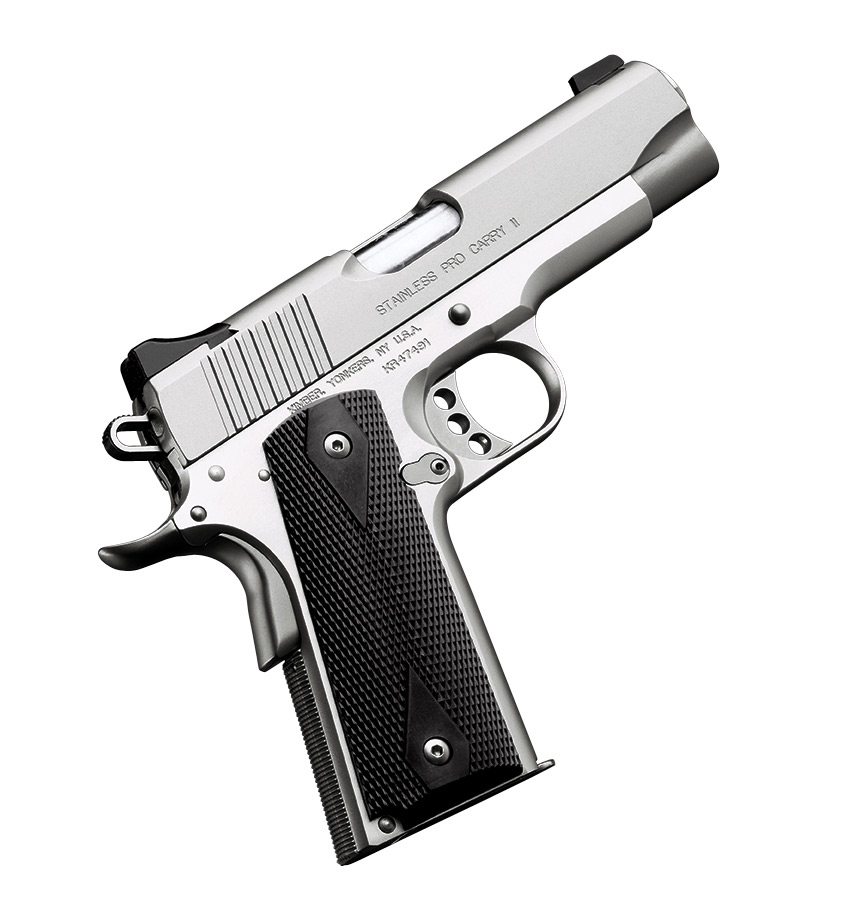
In honor of my new carry piece, here’s the Kimber Stainless Pro Carry II (but the stats should be about the same for the Super Carry, and any of the Pro Carry line.) The Pro Carry uses a stainless steel slide, but an aluminum frame to cut down on weight. There are also some MIM metal parts in the design, as well, that shooters complain about but the majority of Kimber owners don’t appear to have had serious troubles with them, other than steel followers in magazine scratching the aluminum frame near the feed ramp.

1264253093

KIMBER Pro Carry II/Super Carry II .45mm

PM: +1   S/R: 2   AMMO: 7   DC: F   CLOS: 0-3   LONG: 10-18   CON: -1   JAM: 98+   DRAW: +1   COST: $1000

GM Information: The victims of the .45 round receive a -2EF to their pain resistance tests. There are also 9mm version of the Pro Carry, the specs for which are:

PM: +1   S/R: 3   AMMO: 9   DC: F   CLOS: 0-3   LONG: 10-18   CON: -1   JAM: 98+   DRAW: +1   RL: 1   COST: $1000

And honestly…I’d rather have one of these — the Super Carry Pro, but that’s a look I particularly like and it would be a good match for my CZ-85 (similar in coloration.)

328-DEFAULT-L

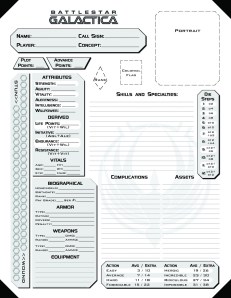
Courtesy of Jim Sorenson, here’s a few things for your BSG game. First, a one sheet character record. He normally pastes a rank pin pic and colonial flag for the character on his…

BSG Char Sheet - Jim version - Blank

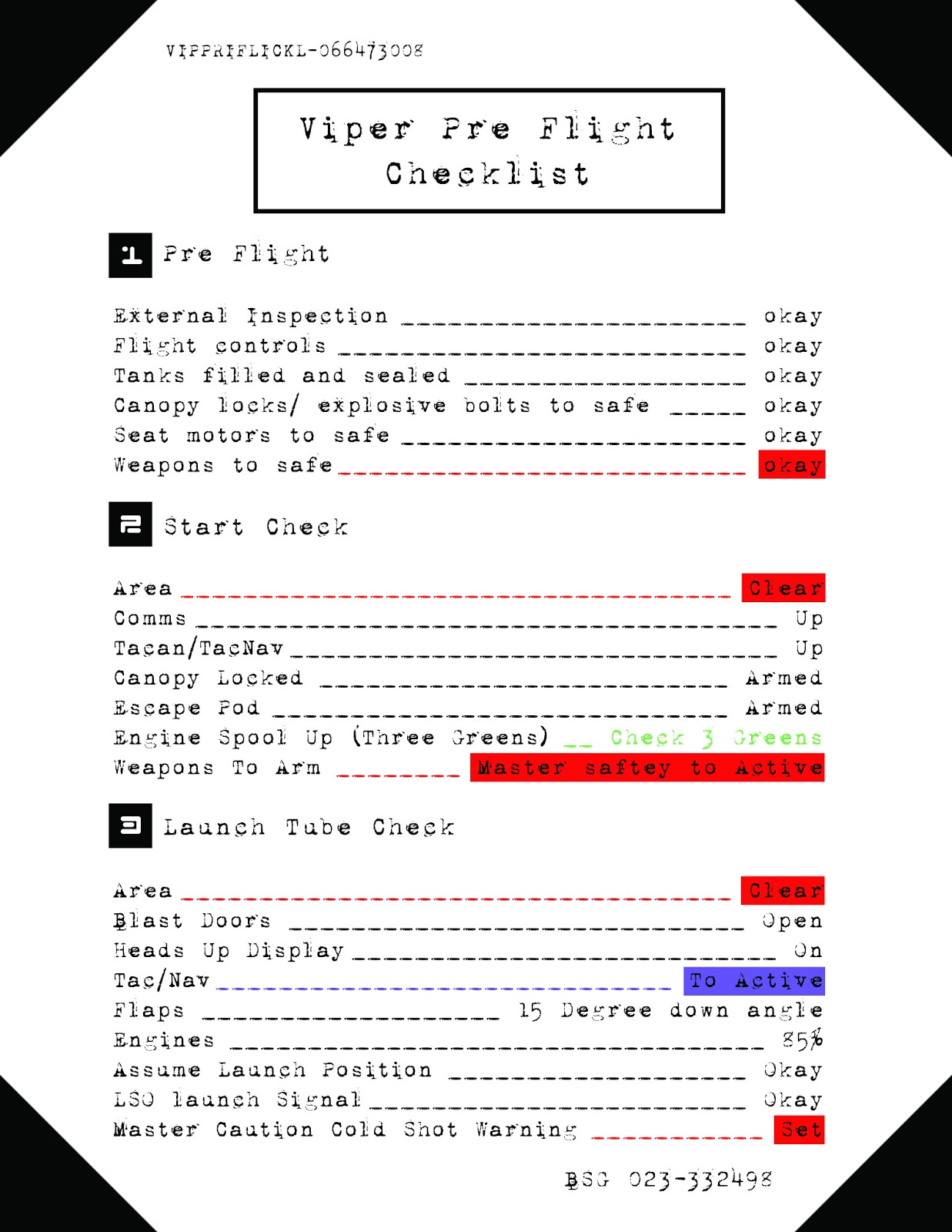
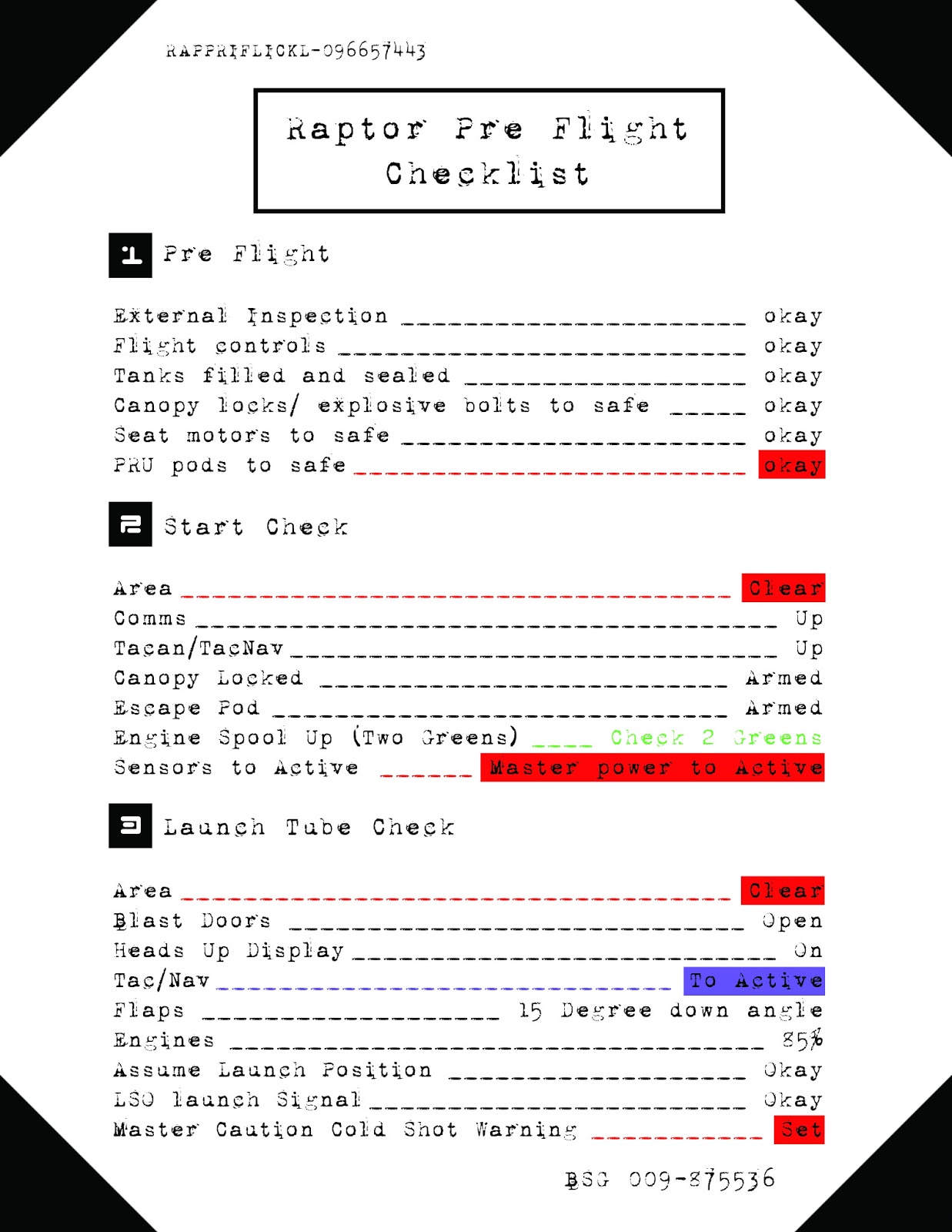
Here’s your viper and raptor launch checklists:

Viper Pre-Flight Checklist

Raptor Pre-Flight Checklist

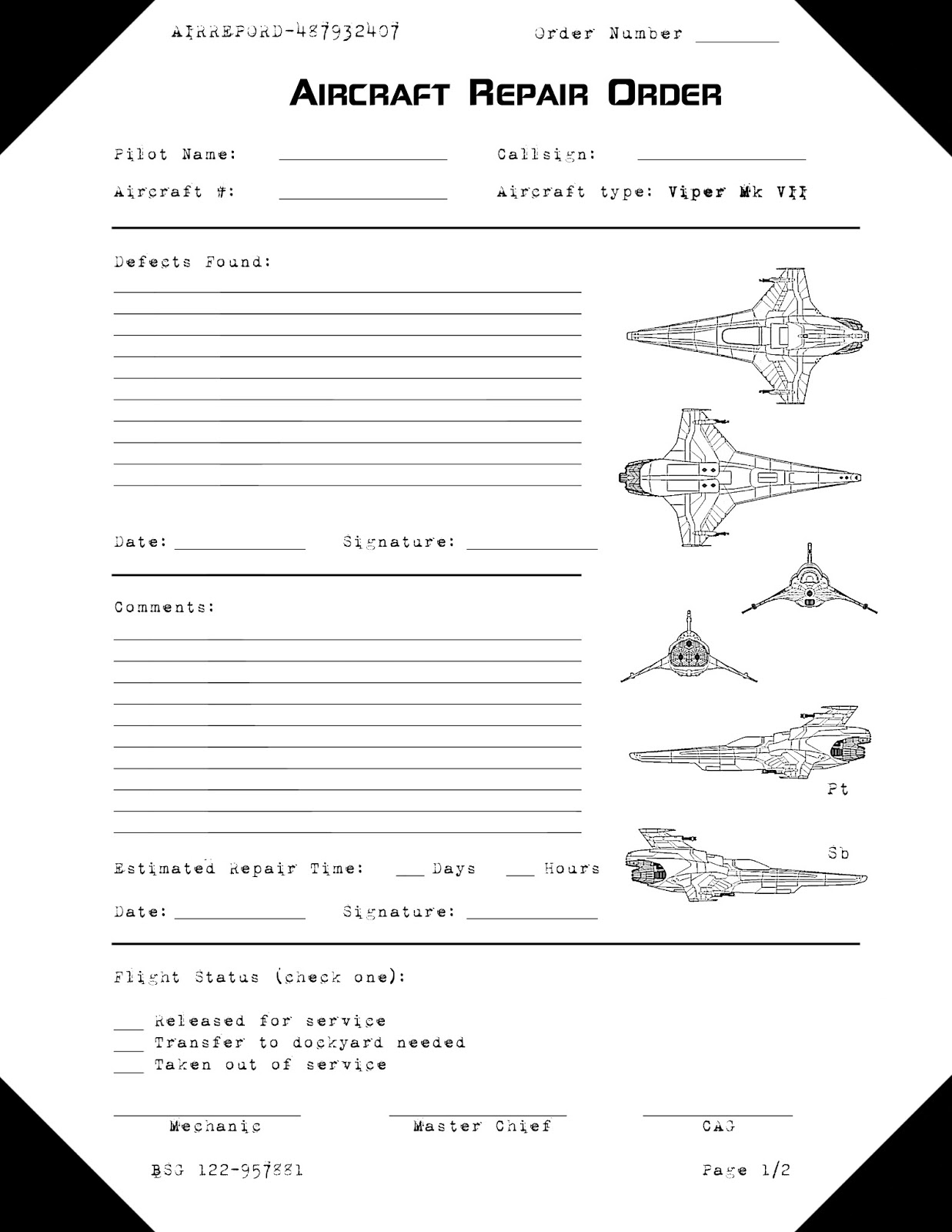
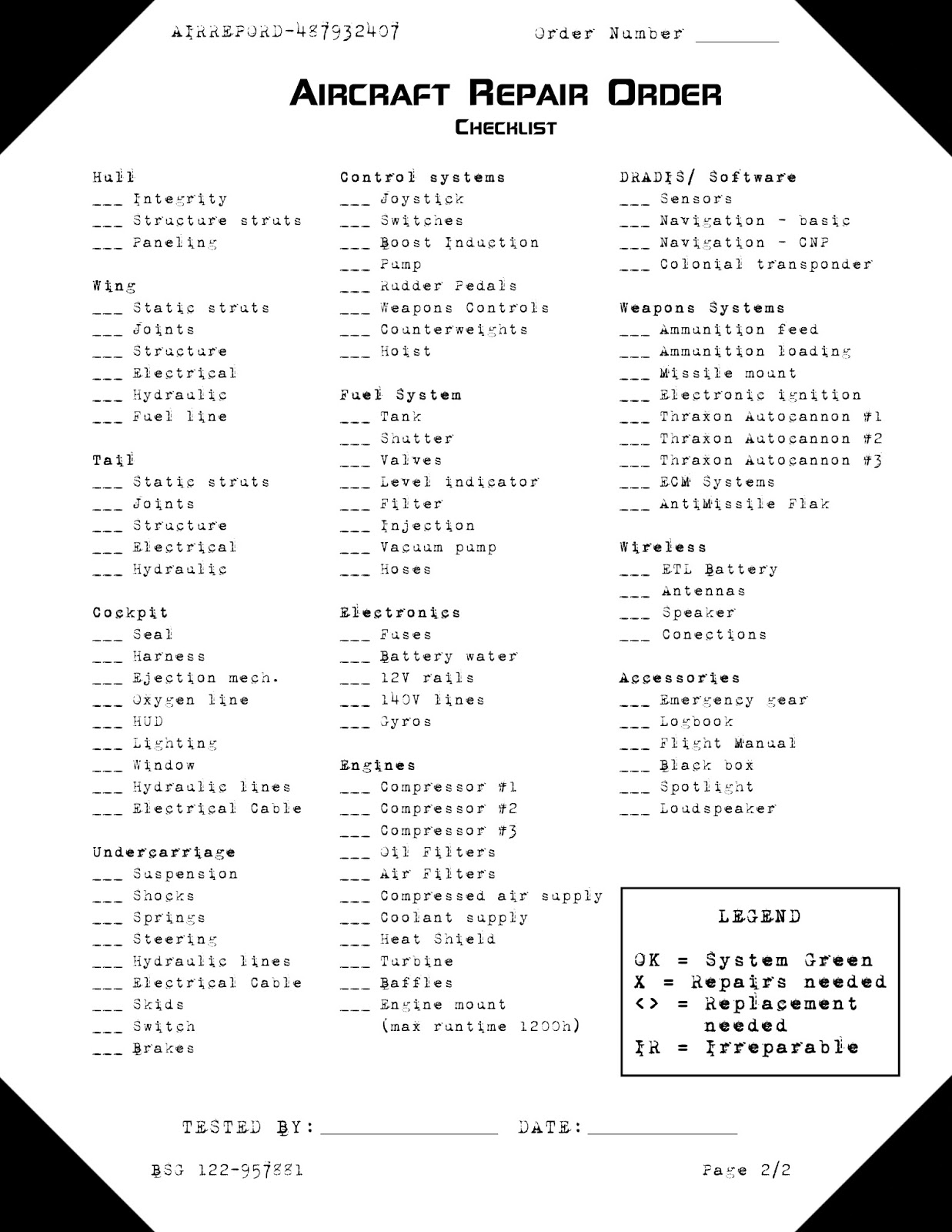
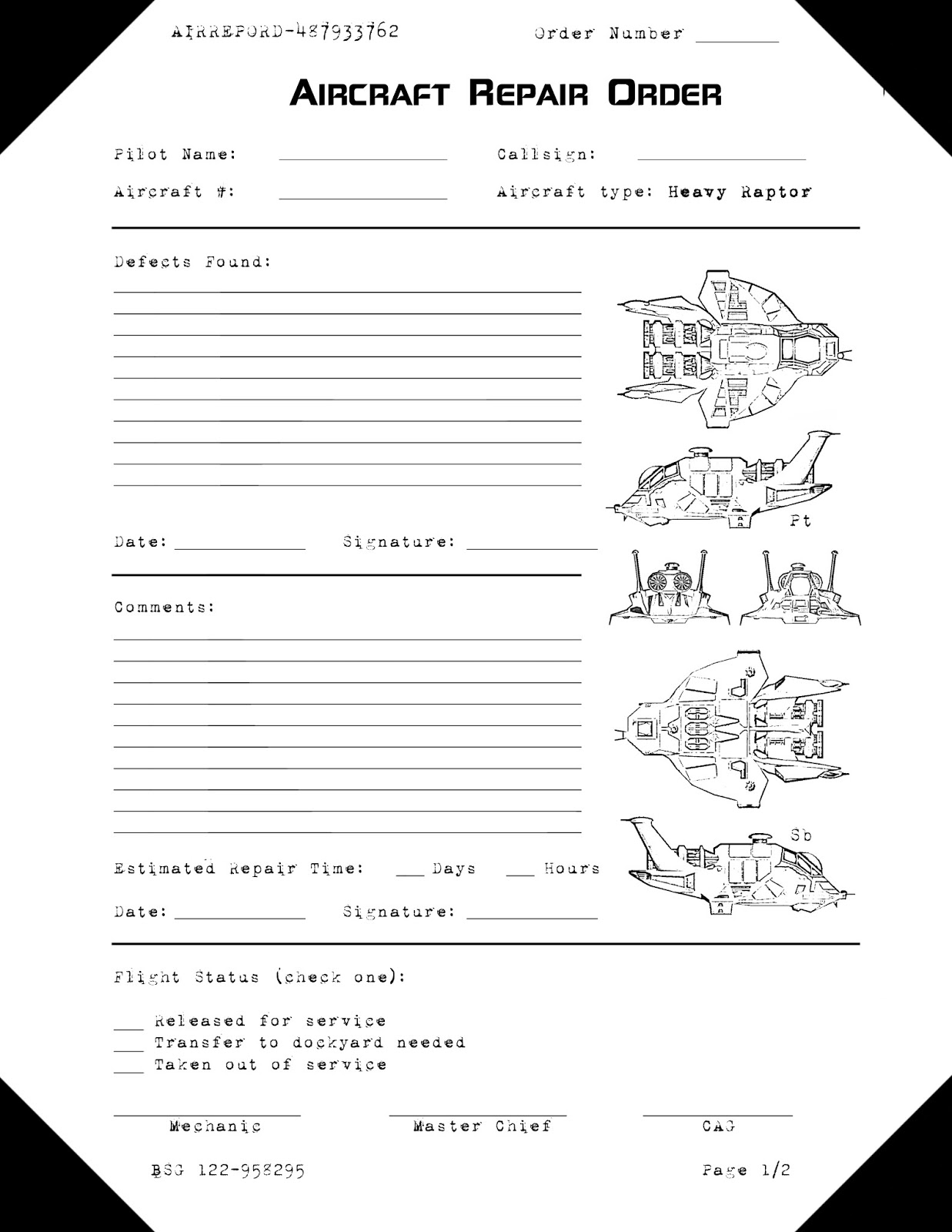
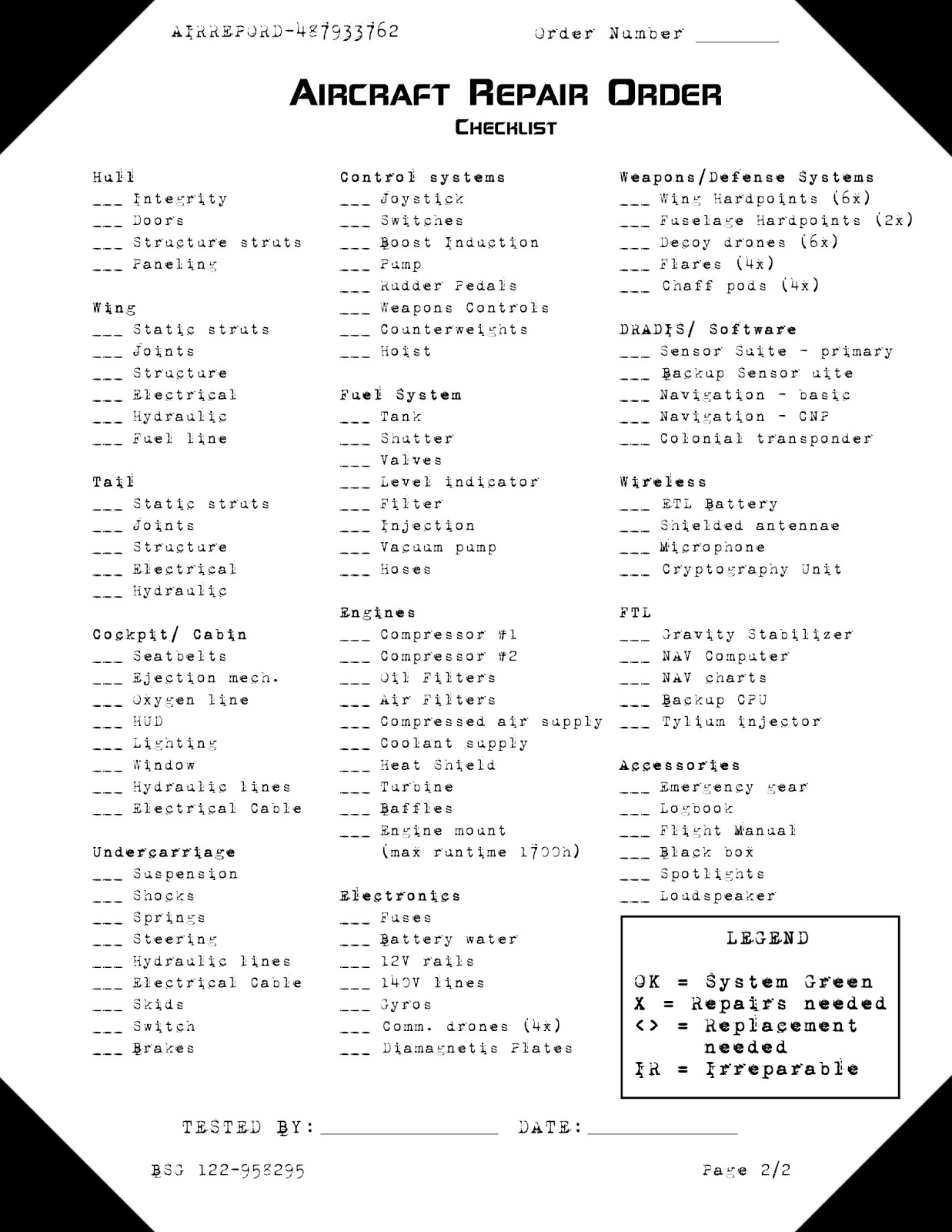
And how about a work order sheet for your rides?

Viper_MKVII Repair - 1

Viper_MKVII Repair - 2


Raptor Repair - 1


Raptor Repair - 2


Here’s an excellent ride for a femme fatale or privileged henchman — the Russian-made Marussia B2.

Russia’s premiere sports car, the B2 is a limited run (500 units), well-designed rocket that is built by Valmet — who also do the Fisker Karma. It uses either a 2.8 liter V6 turbo engine or a naturally aspirated 3.5 liter V6 engine that generates 420 or 300 horsepower, respectively. ThANKS TO IT’S 2425 lb. weight, the B2 can sprint from 0 to 60 mph in just 3.2 seconds and has a top speed nearing 190mph. The interior is cramped, but rich in leather and carbon fiber, and has an excellent sound system. Color, interior appointments, everything is full customizable (for a price) buy the customer. A base model is $130,000.

marussia-b2-13_600x0w

marussia-b2-23_600x0w


PM: +2   RED: 3   CRUS: 120   MAX: 190   RNG: 240   FCE: 2   STR: 5   COST: $131,000

GM Information: The B2 receives a +1 on Pursue/Flee and on braking maneuvers.

774481_494201923957113_35410183_o

« Previous PageNext Page »