Roleplaying Games


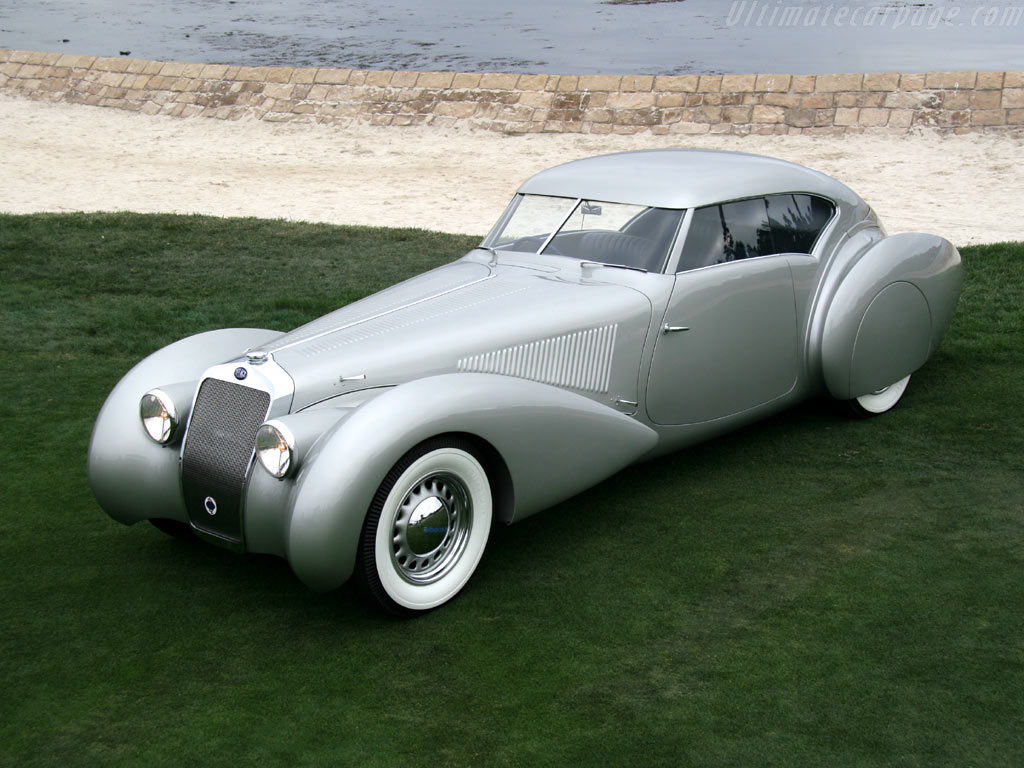
I saw this in a clip from the computer game L.A. Noire today was instantly smitten, so without further ado — the 1937-39 Delage D8-120S:

The Delage is a French automobile designed by Louis Delage (with funding from Delahayde) and powered by a 4.7 liter straight-8 motor, 120 hp (pretty darn good for the time!) Custom bodies were designed for the steel chassis (the above is a Georges Paulin’s design house.)

Size: 2   Def: 6   Str: 8   Spd: 100 mph   Han: 0   Crew: 1   Pass: 1   Cost: $10,000

I restarted my Battlestar: Galactica campaign a few weeks ago, now that the new gaming group has gelled. Right off the bat, I wanted to do something different than the last campaign, which was a “second fleet” scenario that was running alongside the at-that-time new series.

For that, I decided to follow the Caprica model and do some serious retconning on the setting: while it is still a few decades after the first Cylon War, and most of the trappings of the new show are still around, i started tinkering with the basic premise of the first few “seasons” — instead of jumping straight to the new sneak attack, as with the last campaign, I’m starting a few years prior (undefined for the players, but hinted at if they’re paying attention to the background material — the CNP is nearing initial rollout, Galactica is slatted to be turned into a museum.)

I am using a lot of the material from Caprica and Quantum Mechanix excellent Map of the Twelve Colony of Kobol for the setting — fleshing out the rest of the 12 Colonies, instead of sticking with just Caprica, Gemenon, and Tauron. Most of the characters are from the lesser colonies — Arelon, Scorpia, and Canceron.

As with last time, the characters are heavily crafted with background hooks: family and friends, favorite locales, homes, etc…all the stuff they could lose later.

New to the setting, but what could be inferred from the two shows: there are still robots a-plenty in the Colonies, but they are non-AI; artificial intelligence is banned, according to the miniseries, and I have special squads of Colonial Security Service personnel whose job is to stop illicit AI development and manufacture…but they have butler bots, sexbots (but heavily controlled — in my campaign, I’ve inferred the Cylon rebellion started with the sexbots and caretaker androids — the stuff they were trying to make as self-aware and responsive as possible), and the like. There are self-driving cars. There’s virtual reality gaming and augmented reality similar to the stuff in Caprica (or on your smartphone, for that matter.)

The Colonial Fleet has been steadily forgetting the lessons of the Cylon War and modernizing their ships with heavily firewalled networks for faster response and more precise control of the vessels. There’s a compartment of people whose jobs are computer security and the safeguards on the ships are much improved — the Cylons won’t just cut through their electronic defenses like butter…but they will, in theory, eventually win out. (Hence the need for the CNP back door.)

The Colonial government has been expanding quickly and taking it on itself to dictate to the various colonial worlds — think the European Union vis-a-vis its members. Some of the worlds are “deadbeats” (like Greece or Portugal), others are the financial engines of the colonies (these are Leonis, Caprica, and Tauron), and some are like Brussels or the District of Columbia — purely government sinks of support (Libran and Picon.) These worlds aren’t over their tribal identities, and they aren’t working together as well as the federal state in Caprica City would like. They smuggle, they play fast and loose on spending and taxation, and there’s a sense in the younger Colonials that the Cylons are gone, no longer a threat…a position the government has been fostering for political reasons for years. The fleet is always on the edge of downsizing.

The beginning episodes are dealing with the Expeditionary Task Force — a group of detached duty battlestars and militarized civilian exploration vessels that are charting the surrounding star systems, setting up mining and science stations, and conducting deep-range early-warning missions to watch the Armistice Line (and occasionally breech it.) They know the Cylons are doing the same, but neither side has caught the other outright. There are also pirate activities that muddy the waters, so that Cylon presence hasn’t been proven. There have been outposts that have gone missing — crew, cargo, ships…pirates? Cylons?

One of the things we’ll see is that people and their personal effects — diaries, media libraries, etc. go missing — but not the tylium they’re mining, not the ships and buildings. Why would pirates steal people and not the valuables? Why would Cylons kidnap people that are relatively low on intelligence value? The point is to play up a much more mysterious Cold War scenario, coupled with the sorts of internal political intrigue that make governments too slow to respond to threats — even obvious ones.

Added to this, Colonial archeological teams have been finding evidence that there was an older, advanced civilization predating the Colonies foundings by tens of thousands of years…was it the Lords of Kobol? Are their history and scriptures wrong? This is causing backlash from the religious community and portions of the political apparatus — could Colonial society have existed before Colonization? Aliens? What’s going on..? (All of this has happened before and all will happen again…maybe the gods play out this scenario over and over through time?)

The goal: eventually the characters will discover the Cylons are either training people to act as agent provocateurs or are possibly recreating them in android form…but using biological means to disguise them. There will be more than the 12 models, but they are usually not perfect copies, mentally; the 12 are the leaders and will vaguely resemble the Lords of Kobol (the whole historical cycle thing again) in their personalities, but will be monotheists. No “Final Five” stuff.

There are always challenges when putting together a group of characters for an RPG game, and a military game has special challenges. Like all groups there are the main issues:

1. Who does what? All groups specialize — Player A has a fighter, Player B a wizard and so on… In a military game, you have to decide what kind of group you need. Is it a special forces platoon or A-Team? A marine fire squad? Viper pilots on a battlestar? Various different positions on a starship?

First thing to remember for most military groups — and the US Marines stress this — you are a rifleman first. Are you an Arabic linguist? You probably handle radio work, translation or interrogation in a fire team, but you are still a rifleman. Skills will overlap, but your job in the squad might be different — for a squad, there’s usually one guy with the big radio, one with the SAW or M249, maybe one or two guys with an M203 (or if the war god’s smiling on you the new XM-25 25mm “Punisher” or six-shot 40mm grenade launcher.) Somebody might have a SMAW or Dragon for heavy targets…not everybody is carrying all this gear; weight is an important issue for the infantryman, even one that’s dropped off by a vehicle. Between your armor, MRE or two, your water Camelback, radio, ammunition, and weapon you are one hot and heavy sucker. Try running half a mile with 80 lbs of gear if you want to know why you don’t carry four weapons…I’ll wait.

For a special forces Alpha detachment there’s a 12 man team (often broken into 6 man squads) that are led by an officer or warrant officer. Everyone else is a sergeant (E5-E9) and specialize in something — communications, medical, demolitions, technical…everybody’s got a speciality, but most of the team cross-trains so that if your medic catches a 7.62mm projectile is a sensitive area, you can cover his skill set. When everyone is healthy and hale, you call for the specialist, even if your skill rating is higher than there’s for whatever reason. In real life, you don’t have a character to review — you’d call the “medic” for a first aid situation.

For games where the character do vastly different job — say you have four players for Battlestar Galactica: two want to play pilots (one a viper, one a raptor), another wants to be the chief, another the commander. Let them…it will require the GM to do a bit more work to make them work together, but — fraternization issues aside — officers and enlisted aren’t working completely separately.

2. The matter of ranks and chain of command: In a special forces team, most of the guys are going to be sergeants with maybe an officer. If the players have issues with being subordinate or superior to the other players, make the officer an NPC. Most of these teams went through hell to get selected; there’s a lot less of the military BS for the special forces, the men are much more likely to treat each other as equals, with rank being something they worry about when the brass is around.

For a military team where the players are enlisted, there’s a lot less worry about rank structure. If you’re not an NCO, you listen to the NCOs; if you’re any enlisted guy, you listen to the guys with the shiny stuff on their collars. (Caveat to this — most sergeant majors are given a lot of leeway by junior officers because 1) they have serious experience and 2) they work for company and higher level officers…they can put the hurt on you through that general, colonel, or major they work for.

If you have a mixed rank group — that being an enlisted guy, an officer, maybe a warrant officer — there are limitation to how they can interact. Most military have rules against fraternization between officers and other ranks. That will limit the “off-duty” interaction, and in the field there’s going to be a certain barrier. Simply put: the officer is your boss. But unlike a civilian boss, this guy can have you restricted to quarters, order more work on your schedule, or if they’re senior enough bring you up on charges. Sergeants and lower ranks aren’t supposed to fraternize, but they do. Warrant officers are the odd men out — you’ll see them in some services, not in others. These are technical specialists whose jobs require officer authority (say helicopter pilot in the US Army, or sailing master in the 18th Century British Navy), but because they aren’t commissioned by their government but warranted their position by command authority, they don’t often have the responsibility of commissioned officers. They’re part of the officer club, but no one looks too hard if they’re friendly with the NCOs, so long as it’s kept professional.

Next time: Some insights into military life they don’t tend to show in the movies and TV…

The role playing game is the direct descendent of the wargame, so it’s no surprise that combat — personal, vehicular, or mass units — is often part and parcel of a game campaign. Often, an RPG setting is inherently militaristic, even when it pretends not to be, and sometimes it’s very overt: Dungeons & Dragons may be high fantasy about (essentially) murdering and robbing not-so-defenseless critters stuck in an underground maze, but better camapigns involves more than a string of dungeon crawls — with chivalric pursuits like saving a village/town from orc hordes, or warring on the local (and evil) magistrate. Battlestar GalacticaStar TrekBabylon 5 — most sci-fi properties are intrinsically militaristic as the characters are often members of an armed force. Redcoats fighting Martians in Space: 1889 are commanding cloudships or commanding/fighting with military units. Espionage games are often tied to uncovering or stopping military dangers (at least during the Cold War), but special forces guys are usually the ones in the black turtlenecks backing you up in that raid on the secret subterranean base.

Military-oriented campaigns, or even police procedurals where there’s a rank structure to adhere to, have certain challenges for the player and GM alike.

The most obvious to someone who has been in service is that not all players are likely to be equal. In the military — be it the Napoleonic-era Royal Navy, the forces of some fantasy army, the Colonial Fleet, or Starfleet, not all the characters are going to be the same rank unless that is specifically how the players and GM want them to begin play. That’s just a fact of military life — someone’s always your superior, often someone is your subordinate. There’s always an idiot in the chain of command — the sort of congenital moron that’s going to get someone dead when the action starts. Sometimes, that’s going to be a player character.

So how to handle the rank situation. There’s the standard approach — everybody starts out the same rank or in similar positions: you’re all starting as Starfleet ensigns, you’re all midshipmen in HMS Victory, you’re sergeants in the Roundheads, you’re detectives or special agents in whatever police department or secret service. It’s easy, it’s fair, and if you’re group tends toward power players, or tends to run to the slightly immature, this is a great choice. All the players work up through the ranks at — they hope — the same pace.

Problem 1: That’s not how it works. In real life, you’ll get promoted at different rates simply because not everyone is going to shine all the time. Player A might be the guy that saves the platoon with a mad rush across the field, Tommy gun blazing. Player B might have been just as important to the success of the mission, flanking the Nazis while A is trying to get himself sent on to his maker…who gets mentioned int he dispatches, really? Now A’s a sergeant and B’s still a corporal.

A and B are still comrades and friends, and maybe Sergeant A listens to Corporal B’s suggestions, but in the end, unless there’s an officer in the area, A’s in charge. He makes the final decisions, and it’s on his head if it goes sideways.

Officers tend to have a bit more friendly relationship with each other, but there’s usually rules against fraternization between enlisted and officer for good reason…as Trevor Howard’s Captain Bligh puts it in Mutiny on the Bounty “You can’t expect unquestioning obedience from a partner in last night’s debauch…” So Captain C and Lieutenant D are friends and often will listen to each other’s consul, but in the end, if C gets an order from his superior, he tasks his people (including D) as he sees fit. D might ask for enhancement or clarification on an instruction; the player of D might try to convince C on another course of action but in the end, C’s the man on the spot.

Some players will have trouble with the rank structure and the notions of military order. Role playing for most of us is about getting outside the strictures of our normal lives and being the hero…so in games like this it’s important to point out early that there are consequences to too much insubordination. Even Starbuck in Battlestar Galactica can’t escape punishment for her actions, even though she’s far too valuable to the ship to just lock in the brig or cashier from the service. Even Apollo, who actively mutinied on multiple occasions was held to task for his breaking good order.

Another problem the GM will encounter at the character creation stage:  one of your players is determined to crap all over the campaign from the start and wants to play that character who’s great at what they do to the point that the command structure puts up with their crazy antics. I had one player in a recent Star Trek campaign that wanted to play that engineer that’s too too good for discipline, and isn’t really a fan of Starfleet. Well, there’s no press ganging in the Roddenberry universe, so why would they put up with this crank; it’s not like everyone in Starfleet (even Dwight Schultz’s character) is super-talented…no one with shiny stuff on their collar going to put up with a prima donna for too long.

Make sure, before you even go to pre-production — as it were — that every one is on board.

A related problem to those above: while a lot of role playing gamers join the military, not all are veterans or servicepeople…those with no experience of the service often are nervous about playing characters from a culture they really don’t understand — especially if there’s a vet in the group.

Well, you probably aren’t a half-elf warrior princess, either, but that doesn’t stop a lot of players…being an army sergeant shouldn’t either. If you have a vet in the group, they’ll be happy to throw you hints as to how to act like a soldier: what you can get away with, what you can’t, how your life is structured, how the justice system works for troops. You don’t have to be proficient in tactics, orders of battle…just have fun.

The intimidation factor is often higher for GMs without military experience running a military-based campaign for people who were in service. Don’t sweat it — use their experience to enhance the game. Ask about how UCMJ works, how rules of engagement are structured and decided upon, etc. The internet can get you a lot of the basic stuff, but it doesn’t explain that most of your day in the motor pool pretending to fix that vehicle you’ve signed for, or that all operations might stop for a day of remedial training on how not to be stupid driving after somebody in a completely different country rolls their water truck.

Like any other setting you might jump into playing verisimilitude is essential to really capturing the flavor of a campaign — if the military is involved, you should strive to capture the life, even if you have to exaggerate a few things here and there to do it. There are plenty of good movies, novels, stories that detail the life of soldiers in or out of the combat zone — read up or watch them. For franchise settings like Babylon 5, which does a better job than Star Trek at catching the military life (and honestly, what sci-fi show didn’t do a better job?), but it pales in comparison to the Battlestar Galactica miniseries, or the early seasons of Stargate SG-1.

As with anything game-oriented — first and foremost, have fun. Everything else is icing on the cake.

Do you have anything in particular you would like to see here on the ol’ blog? A review of something? Perhaps more material for a system, or some thoughts on how to handle a particular issue at the gaming table? Feel free to comment!

Essentially an upgraded M24 .308 rifle, the bolt-action XM2010 is a marvelous gun designed for the challenging Afghanistan theater. Firstly, the weapon was rechambered for .300 Winchester Magnum, increasing the range by 25% but keeping the 1 minute of angle of the M24 through a free-floating barrel with a 1-10 twist, surrounded by rails for equipment. An Advanced Armament Corp. Titan-QD Fast-Attach 10-inch suppressor that eliminates 98 percent of muzzle flash and 60 percent of recoil and reduces sound by 32 decibels. Also standard is a 6.5-20×50 variable-power Leupold scope or the AN/PVS-29 sniper night sight, adjustable stock, folding bipod.

PM: +2   S/R: 1/2   AMMO: 5   DC: K   CLOS: 0-30   LONG: 150-500   CON: n/a   JAM: 99   DR: -3   RL: 1

GM Information: With the silencer attached, the XM2010 gives a person looking for the shooter a -2EF to PER tests. The silencer also hinders the effectiveness of the weapon as follows:

PM: +2   S/R: 1   AMMO: 5    DC: J   CLOS: 0-20   LONG: 75-250   CON: n/a   JAM: 99   DR: -3   RL: 1

I was just sitting here musing on the past and present — I’ve a new daughter and it’s causing the requisite destruction to my lifestyle that every new parent who gives a crap experiences. We’re working out sleep schedules between the wife and I (we’ve got watches for the night to spell each other — I’m a night owl, she gets up at oh-crap thirty; I take the first half of the night, she’s got the morning and forenoon watches), we’re trying to figure out what we can get done between diaper changes, feedings, and paying her attention, and we’re trying to figure how the gaming group will be effected, as we meet at our place and the wife games…

That’s when I realized I’ve been playing for 31-32 years. Sometime around late 1979/early 1980 I bought the old D&D box set at Hess’ in the Palmer Mall and that was all she wrote. I’ve had a bunch of games I’ve run, systems I’ve bought and never used, games I’ve played but never bought. I did a rough count of the number of campaigns I’ve run or run in: it’s somewhere between 30-35…about one a year, and most of that I ran or co-ran. When you consider this includes failed campaigns that ran a few sessions or adventures and folded, that’s pretty impressive.

The usual high school period saw us playing in the basement cum bar in my friend Eric’s house after dinner until 9 or 10ish.  The main games were D&D, Gamma World, and first Top Secret before moving the campaign to the excellent James Bond: 007 system, Traveler. There were a few other short-lived attempts at other settings that fizzled. There were wargames, the favorite being Car Wars.

College continued much the same, with a superheroes campaign a friend ran (Champions, I seem to remember…I hated the character generation) and I ran JB:007. After I was asked to leave shortly before I would have quit, I kicked around crap jobs and my gaming was restricted to the occasional meets with the high school crowd and a single friend. The games were FASA’s popular but in my opinion highly flawed Star Trek setting and — as always — JB:007 (Is it any wonder I went into intelligence for a time?)

Said friend and I moved to Philadelphia and had one of the larger gaming groups I had up to that point (5-8.) This was my comic book phase, and the friend was a failed comic book artist. The game was DC Heroes in an original universe, and toward the end Space: 1889, which grabbed me hard.

Like Bond, Space: 1889 would be a staple series of campaigns for my groups from 1990 to 2004. It was probably the reason I finally settled on history for my profession. The system changed, playing with a few of the indie games but settling on a highly-modified Castle Falkenstein. The campaigns got steadily less speculative fiction and moved toward more alternative history. It shared time with West End Games’ Star Wars (which still kicks the ass of the WOTC lines…all of them) that went way off-the-wall, but was great fun. I played in a cyberpunk campaign, and wound up running the game because of a lack of interest from the GM, who then fired up a Shadowrun campaign that lasted a few months.

In the military, Bond and Space: 1889/Castle Falkenstein shared time with The Babylon Project — we were all B5 fans and it was the first campaign I can truly say I had go off as I wanted it to. 1) The story got finished in the 2 years it ran. 2) It really honed my skills trying to work a campaign around a TV show’s canon without interfering with the general arc of the original material, but working in a side story that was important enough for the players to feel their actions with important.

On a whim, I ran what was to be a mini-campaign, more to try out the rules set for Star Trek — first the Last Unicorn system (where I had S John Ross in the game for a while), then with the Decipher rules set, before they screwed over their customers. There were several “series”, all set around the same time (after DS9/Voyager) and which got progressively more “transhuman” as they went along. It became the main game — a classic example of a game being so much fun it went from a backup campaign to the main event. It gave way to an abortive, then a relatively successful Serenity campaign that imploded with my last game group a year ago. Due to the similar feel of the Western in space to the Victorian sci-fi of Space: 1889, it took the Victorian campaigns off the docket for the first time in a decade and a half.

The most recent stuff — Serenity, Hollow Earth Expedition — have mostly been short campaigns that either faded away or died on the vine. The surprise success was Battlestar Galactica — which I figured, like Trek and B5 before it would fall apart…it ran beautifully alongside the series “canon” while not getting in the way. Then it went the way of the last game group (usually what brings about the end of a campaign is either too many people move on and the game gets rebooted or ends.)

Looking back, the last decade has seen a steady decline in my gaming time. In the military, in college, working for a living I gamed three or more times a week. Since grad school I’ve seen a steady drop off from thrice to twice a week, to once a week with a biweekly weekend game. Now, with the child here, we’re looking at a biweekly game (the weekend one has been monthly due to school demands on the one gamer…) and I find myself wondering if my life is finally going to take away this hobby that’s been a constant in my life since 1980.

I hope not. I suspect once the initial craziness of having a newborn in the house it will allow me to get back to it, but for now, it looks like my primary creative outlet is going to take a serious hit.

Was there a point to this post? Not really…just reminiscing.

In the series, the Colonials use an assortment of rifles: for the first few seasons they are P90s (mostly likely because they had props from Stargate as well as shovelfuls of 5.7x28mm ammo — hence the move to the “futuristic” FiveSeven handgun), and toward the end of season one they’re using Beretta Cx4 Storm Carbines in 9mm.

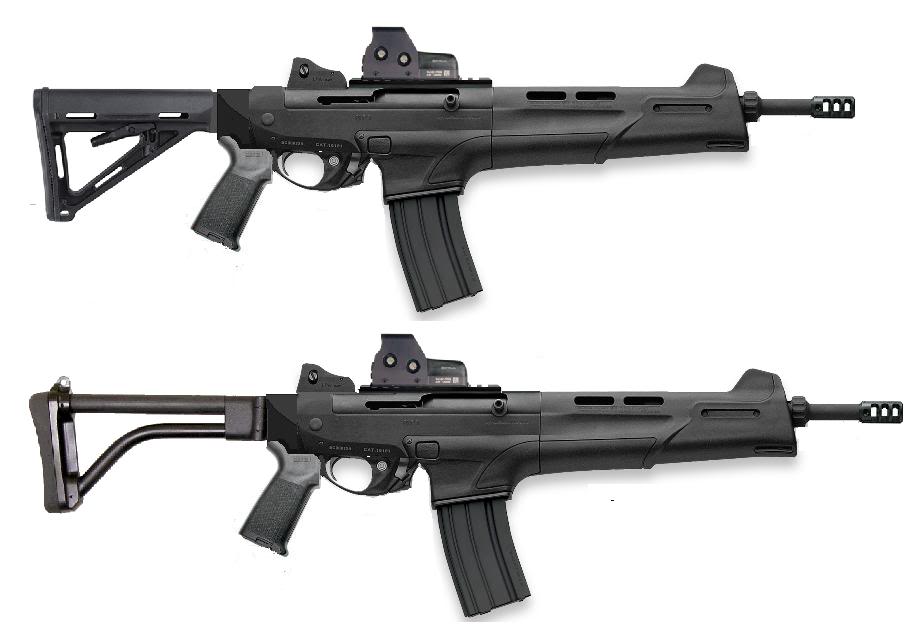
Let’s face it: a 9mm carbine against an armored mechanical monstrosity is, well…stupid. So here’s a simple retcon for you — use the Beretta Rx4 Carbine in .223. They look almost the same, but they have a “real” rifle round that, if they were loading steel tips, could punch through Cylons. The Beretta Rx4 and the Benelli MR1 look almost like the Cx4…it if had balls.

Stats for Battlestar Galactica RPG: Leo GMR1 5.56mm   Damage: d8W   Range: 125 yards   Cost: 3500 cubits   Availability: Military.  (Figure a civilian version would be semi-auto, cost half as much, and be “rare”.)

Now lets do it up for the James Bond: 007 RPG: Benelli MR1 / Beretta Rx4 5.56mm

The Benelli uses the same ARGO gas-piston system of their combat shotgun and R1 rifle series, giving the MR1 superb reliability and clean operation. The rifle uses standard M16/M4/AR15 magazines, which are released by an ambidextrous release on the receiver, the bolt release and safety are on the forward trigger guard. The rifle can be had in a solid stock or collapsible, like their M4 Super 90 series shotgun.

The MR1 is similar in power and range to AR carbines with a 16″ barrel, but the accuracy is slightly less precise — that said, the MR1 has a tendency to shot 2″ groups out to 300 yards consistently…it jus doesn’t tend to shoot much tighter. Recoil is less than on the AR series of rifles.

PM: 0   S/R: 2/10   AMMO: 30   DC: I/L   CLOS: 0-20   LONG: 35-65   CON: n/a   JAM: 99   DR: -3 RL: 2 COST: $1200

In an earlier post I mentioned I’ve been planning a co-GMed superheroes campaign and have been looking at various system to run it. A few were quickly tossed to the side, even though they’re perfectly serviceable, due to a number of reasons. The old DC Heroes from Mayfair was my leading contender because it’s easy to play and cheap to find on eBay, as it’s been out of print for over a decade. Marvel Superheroes is also quite workable, but I always found it a bit too abstract for things like distance, time, and other issues. Heroes and Champions, which favorites of many, are staggeringly complex (in my opinion) for character creation. The flexibility of these systems is due to rules overload (once again, opinion based on experience with former iterations), kind of like GURPS…I like systems where you can build a character quickly and get moving.

Eventually it was down to Icons and Mutants & Masterminds (I’m reviewing the DC Adventures rebadged game here, but all the mechanical stuff will be the same…) Funnily enough, both are written and designed by Steve Kenson, and it shows. Where Icons is a stripped down supers system with a different dice mechanic, the layout of the chapters, the basic list of powers, etc. is similar. Think of M&M as the loaded mid-szie car to the stripped-down Icons platform; Escorts and Aspires, so to speak.

In the end, I think we’re going with the new M&M, which has ditched much of the early d20 garbage for a much more sleek die mechanic.

First, the product design itself. I’ve got this in .pdf and borrowed the physical book for the review from a friend. The “Hero’s Handbook” is beautifully produced: hardcover with art by Alex Ross. The interior is gloss, heavy-stock paper, full color, with lots of high-quality comic book art done by a multitude of professional comic artists. The binding is very solid. It looks good, it feels good. Which means it is commensurately priced at $40. The electronic format is half that at $20, and is a well-done proof of the book. It resolves quickly on the iPad (my measure for whether an e-book is good or bad), unlike some of the other graphic intensive layouts (like Smallville and Leverage from Margaret Weis, which are CPU hogs and need to be optimized for e-readers.)

The core mechanic is simple: take your ability (like Fighting), power (say, Fire Control), or Skill (Investigation), and any other modifiers, add a d20 roll, beat a target number or opposing roll by the bad guys. Ranks in abilities and powers — as with the old DC Heroes roughly equate to time, weight, information amount, etc. — and are roughly exponential, with each rank being double the power, weight, whatever of the previous rank. It’s open ended but the tables go up to 30, the equivalent of 25k ktons, 4 million mile, 200 years, a billion cubic feet. Above that we’re getting into astronomic proportions. Mostly likely, your campaign will be a bit more modest to start out with.

Character creation is point based and the power level of the campaign ca  be tweaked from masked avengers levels, where the characters are more suprahuman than super, superheros, “Big Leagues” like Batman, or World Protectors like the Green Lantern or Superman. Abilities and powers are bought at a simple x points/rank, and equipment is purchased this way, as well — if you’re a gadget-based hero. There’s also hero points gained through play and used to alter scenes, activate some features of powers, better rolls, cut damage, etc. Pretty standard stuff now, but it was still newfangled when DC Heroes did it in the 1980s.

The big plus: gadgets aren’t a complete kludged mess in M&M like they were in DC Heroes. (If you get the impression DCH was my go-to supers system in the ’80s/early ’90s, you’d be right.)

Combat is straightforward, save for “damage” which is conditional…no hit points. You can be compelled or controlled by powers, dazed or incapacitated by damage, fatigued or impaired by environmental conditions, just to nake a few. they can combine and stack to work against you. If it sounds confusing, on first pass, it is. Mostly this is an attempt to give GMs a bit more wiggle room in describing injuries or power effects, but until I play the system, I can’t comment on how well it will work. (This seems to be a popular new way of handling damage or “stresses”, as it’s called in Smallville. I like the idea, but the execution could be off-putting to new role players, is my gut feeling.)

The DC-branded campaign elements are handled well, without getting too involved. In Chapter 10, it gives a glossed over review of the DC Universe (Multiverse?) history, the campaign specific cities, locales, planets, etc. There’s coverage of multi-dimensional travel and the various “Earths” of the DC comics. Chapter 11 gives a run down on the various heroes and villains of the universe.

Overall, there’s a boatload of style to the book’s look, the way they handle powers and their effects and flaws: 5 out of 5. Substance: there’s enough crunch to satisfy all but the spreadsheets for characters crowd, but it’s not too heavy handed. The DC background is good enough to run, but might seem a bit slim for DC comics fans (in which case you have the background material…it’s called your comics collection.) Substance: 5 out of 5.

Is it worth $40? In comparison to similarly priced games? Yup. Is it worth $20 for the e-book? Definitely.

Icons is a rule-lite-ish superhero RPG published by Adamant Entertainment. I’ve been tossing about a co-GMed supers campaign to take some of the gamemaster heat off of me, once the baby comes next month. We’ve looked at a couple of the systems — the old Mayfair DC Heroes, the DC Advnetures (aka Mutants and Masterminds), and the old TSR Marvel Superheroes games. Icons manages to borrow some of the best elements from these and very little of the bad.

First, the physical stuff. Icons is a nice book — brightly-colored, good paper quality, and this also shows in the .pdf version. It used Helvetica as the font for the main text, so it’s easy to read. The headers for chapters and sections are in various comics fonts and lend character to the book. The art is so-so, cartoonish, rather than comic bookish, but it’s not a deal breaker. Overall, the style is solidly average.

The meat: characters have ratings from 1-10 in their abilities (Prowess, Coordination, Strength, Intellect, Awareness, and Willpower) and their powers. The scale is very roughly exponential, like DC Heroes was, with each level being about twice the strength/power/whatever of the number below. Powers are fairly generic, and borken down by types (alteration of things, control, mental, movement, etc.) Icons has a real throwback character creation — it’s random. For most experienced gamers, I think they’ll find this annoying; for the newbie or the D&D gamer, it’s probably no big deal. There are variant rules to point-build. It’s easy and quick to build a character and I was able to build pretty much what I wanted, although this game is designed to limit your supers to levels that aren’t earth-shattering or galactic proportions. If you want to pit Galactus against whomever…this isn’t the system for you.

The basic mechanics are very easy and are reminiscent of the old The Babylon Project die mechanic: you roll 2d6 — one is a negative, one a positive — and then apply the outcome to the appropriate ability or power. (The Mighty Mongoose is letting fly on a couple of Captain Sinister’s mook. He rolls a blue d6 (positive) and a red (negative) for a 3 and 4 respectively: a -1. He has a Prowess of 5, giving him a 4 for the attack. The mooks are average folks and defend with a 3 — he’s hit and done 1 stamina point to the baddie.) It’s simple once you’ve done it a few times. The other element of Icons that’s intriguing — only the player rolls in tasks. The players are the heroes; their abilities are the important ones — they either beat the basic ability or power of the bad guys or they don’t. When attacked, it’s the same — you either succeed in your defense or you don’t. It should make for quick play.

In the Taking Action! chapter, the rules are broken out over about 30 pages. Time is measured in a novel way. There’s the usual split between action sequences and narrative time. Action time in the game is broken into panels — as per a comic book and represent an action that could be portrayed in a drawn panel. All of the character’s actions make a page — what would normally be considered a round of action. Narrative time is broken into chapters, with the chapters coming together into a issue (a complete story.) Distances, speeds, and other issues, much like TSR’s Marvel Superheroes are fairly abstracted int0 ranges like Personal (touch range), Close (melee distances), Extended (most ranged attacks), Visual, and Beyond. Materials you might break have a Strength rating (paper is 1, brick is 4) and are roughly twice as strong as the level preceding. An adult person weighs 4, a car 6 and so on… As I said, very abstract.

If you like crunch, Icons will probably not work well for you. If you like a bit of wiggle room in things, it’s a good lightweight engine for playing supers.

Overall, I’d give it a 3 out of 5 for style, a 3-4 out of 5 for substance depending on your need for solidity in your rules. It’s worth the buy and right now the Adamant .pdfs are $2 on Drive Thru RPG (they’re taking the iBooks/Kindle publishing paradigm to heart and I hope it’s working for them.)

(Disclosure: I’ve written for Adamant’s The Imperial Age line.)

Half the book — as with most supers games — describe the powers and their particular effects.

« Previous PageNext Page »