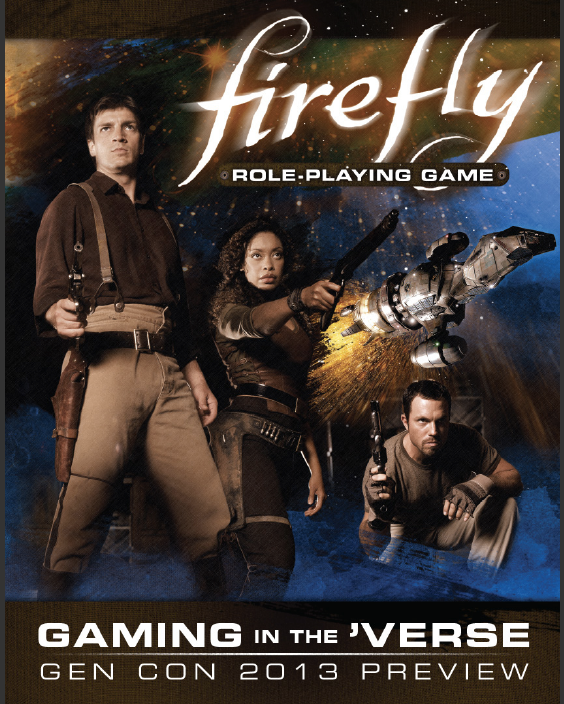
One of the things most players do when creating a character is develop some sort of hook, or “shtick” for their alter ego — it could be a defining trait, skill, weapon or look, something that makes the character easier to connect with for the player, and the others at the gaming table. Having a shtick is nearly essential for a pulp-style game: the fearless, slightly (or very) unsavory archeologist who ultimately does the right thing; the earnest, down-on-his-luck pilot that finds a rocket pack and turns into a hero; the two-gun toting “shadow” that uses his powers to cloud men’s minds fights crime in a manner that is itself highly questionable; the whip wielding Mexican (well, Californian) hero out to right wrongs…. all have something quickly definable about them.

Shtick is good. It gives a character personality almost immediately, and while it might change or develop over time, it gives you a nice shorthand for describing the character to others and yourself.

Shtick, however when taken too far, or when too well designed can actually hijack a character and make them hard to relate to, or makes them unsuited for the game world they exist in. Here’s two examples of very similar characters…one worked, one did not:

In our Hollow Earth Expedition game, we had the action sidekick in the form of Jack MacMahon. He was a Columbia-trained lawyer who couldn’t pass the bar due to being a bit thick and lazy. He was the son of a politician, rich and well-connected, a bit spoiled, and generally somewhat untalented…except when it came to having guts and fighting. Put his totemic (and at the time, very rare, Registered Magnum) in his hand and he was nigh unstoppable. He was a two-fisted, gun-slinging combat monster — but he also was careful not to go so far over the line he would be arrested for his actions. He was always in the right (well, mostly…) He was a sucker for women to the point he couldn’t hit the female ninja kicking the crap out of him. He was loyal to a fault, almost puppy-dogish.

Jack kicked ass, threw off memorable quips, and always did the stupidly brave thing. And he got his ass kicked, even when he won fights. He was human.

The character was retired when the player could no longer make it to the game. I retooled the campaign, helped one of the new players who obviously liked being the action dude build a “Jack replacement” — “Daredevil” Dan McCoy, a movie stuntman and sometime wing-walker for flying circuses with a sideline in two-story thievery. He was enthusiastic, brave to the point of lunacy, and so damned good at just about anything physical as to be unstoppable. He was a showman and the player obviously enjoyed taking him right to the limit…and over.

The shtick became unmanageable. He would get into scuffles with important NPCs they needed and screw over the other players. He notably chased down bad guys by (unnecessarily) ramming a car through the lobby of a fine hotel in Lisbon, drawing the attention of the military police (Portugal being fascistic at the time), and otherwise was a rabid dog off the chain.

The problem was the combination of the character and player made for shtick run wild, and it ruined the verisimilitude of the world, even though the other characters were also over-the-top…but in a way that was believable for the world. Think Indiana Jones. In real life, he would have had local authorities up his ass on any number of times in the real world. (But then, there also wouldn’t have been Nazis running around British-allied Egypt, either…) He was just enough, but not too much, to make the movie setting fly.

There are ways to manage shtick run wild, and you can see some of the techniques in “the best there is” characters who are suitably restrained by plot and their world. One that springs to mind is Starbuck from the reimagined Battlestar Galactica. We see her in action in the cockpit  the first few episodes of the show – she’s lunatic, better than the best, and unstoppable. So what do the writers do to make it not “Starbuck saves the day” every episode? They break her leg after a crash caused by, frankly, being too damned good in the cockpit and taking on too many Cylon raiders. She has to do other things that are outside the character’s purview.

An example of a similar combat monster/same player in out Battlestar Galactica game: SGT Cadmus is a marine that aids in trying to uncover the Cylon menace. In combat sequences against people or skin jobs, he’s the ruler of the roost. So I stuck him on a number of investigatory adventures that required him to be subtle, use his brain. He’s outside his element, but the player loved it because, eventually, he got to shine in a fight. But the character was restrained so that the shtick was important…something that, when used, made the character stand out, but didn’t stomp on the other characters’ moments in the spotlight. (Eventually, he got to meet the centurions, did very well, but was nearly killed. It gave the players a sense of how damned dangerous the toasters are close up and personal.)

Another example would be Cliff Secord from The Rocketeer. We are led to believe he’s an incredible pilot, and we see some evidence of that in the movie…but what does he he wind up doing most of the movie? Investigating crime, trying to stay out of the clutches of the FBI, and throwing punches — not his strong point. When he gets to fly, he’s a bit out of his element because of the nature of the rocket pack, until he gets the hang of it.

Another way to control shtick gone wild, other than make it a less important element of the game adventure, is to have consequences for folks that, say, blast bad guys when it might not be strictly legal. The cops could be an ever-present issue, requiring them to disguise themselves, a la  The Shadow or Batman, or Zorro. Your war on crime in the 1930s, your raid of that “evil” creature village in your fantasy setting, that murder of an important figures still-beloved zombie wife or child leads to hordes of not-shambling dead coming for your head. The forces arrayed against you are large, well-funded, have the monopoly on the legitimacy of violence, and will eventually get the character, if they don’t step it down a bit. It’s not railroading…it’s a bigger challenge.

For me, the best line is “slap dat hobbit’s dick off, yo.”

But, then again…he knows what he did:

Here’s a great little short starring, of all people, Paul Reubens (who’s really good here!), Janina Gavankar from True Blood (which I haven’t seen), and the always creepy Jon Sklaroff (great villain actor.)

This was on one of the releases on Aliens on DVD and has made its way to YouTube. It’s longer than the actual movie, but there’s a lot of neat stuff…

A bit more on the piece here.

I got permission to repost this from jetshield over on the Wizards of the Coast community boards:

So there I am, watching my group bicker (in character) about how to get into the Temple of Akargon to retrieve the Rod of Improbability that’s rumored to be there. The little one (she’s 7), comes in from the next room, taps on one of my player’s shoulder to get his attention, and says “I’ve got the key I can sell you.”

Now, most groups would probably drop out of “game mode” at this point, humor her, and get back to playing. I don’t play with most groups.

The player says to her (still in character) “What do you want for it?”

“Five thousand gold” she replies, “and an ice cream cone.”

“An ice cream cone?! What’s that? More to the point, where do I find one.”

“There’s an ice cream store over near the school, but they’re closed now.”

“What if I just give you six thousand gold instead?”

“Okay, six thousand gold…and an ice cream cone.”

“No. No. I meant six thousand gold and no ice cream.”

“No ice cream, no key.” she says with her hands on her hips and a scowl on her face.

“I’m not sure it’s worth it. We could just kick the door down.”

“If you don’t have the key, the guards will kill you. They’re really tough. You’ll never get to the door to kick it.”

“According to our sources, there are no guards. Besides, a few soldiers shouldn’t be much of a problem.”

“They’re statues that come to life if you don’t have the key.” [note: this is news to me]

“We can handle a couple statues if we have to.”

“There’s a thousand of them.”

Another player chimes in (also in character). “If she’s even half-right, we’re going to need that key. I say we get her her ice cream. We’re wasting time.”

First player: “Okay, little one, we’ll get you some ice cream. How do we find you when we’ve got it?”

“I live here, silly. I’ll be in my room.” She says, and heads off. [another note: the characters were having this conversation in a burned out ruin in the middle of a barren wasteland]

The characters head off on a quest for ice cream (minus one player, who went to the store to buy ice cream and cones).

Just thought I’d share.

The original post can be found here:  http://community.wizards.com/go/thread/view/75882/27928765/Well,_I_didnt_see_that_coming

Do I really need to tell you how to play “pretend”? You’ve only been doing it since you were about two year old…but role playing games are a bit different. While they are just as collaborative as when you were kids (some of you still are, you’ve just got two digits in your age), the structure of some RPGs require a different approach to how you play your character.

There’s a lot of theories of role playing game design, GNS, Threefold Model, Big Model, Turku (or as English-speakers might call it “immersive”)…throw all that out and ask yourself this question, “Why are you playing?”

The answer should, in part, be “to have fun with friends”, but I’ve found that’s not always the case. There’s plenty of folks who view tabletop gaming and LARPing a more social form of acting practice. Game long enough and you’ll get one of these players. They’re in character the whole time. They lift their hand or some other signature to let you know when they are out of character. It’s like dealing with Christian Bale on set. They’re great players while the game is ongoing, but I’ve found they aren’t into the socializing aspect as much. (This, admittedly, could just be my experience…but there’s been a bunch of them that have crossed my path.) Really — LARP is probably going to be more of a draw.

Others want to just socialize of beer and pretzels — a board game, computer game, movie night would be just as enjoyable. In the middle you’ve got folks who like to do problem solving and tactical exercises (here be “gronards”), and others like the storytelling aspect. The latter are even happy when they aren’t the center of attention; they want to be entertained by the story and other characters, as much as anything.

Which of these you are is going to shape your interactions with the other players and their characters. If you’re an “immersive” player (the actor) in a group of the latter folks, they’re going to love how well developed your characters are, and hate how much you try to hog the limelight. If you’re a beer and pretzels guy, you probably just aren’t going to be as into the game as the other types.

This is okay.

However, the GM is going to have to balance the group members’ goals for what they get out of the game. If you’ve got a bunch of B&P players, this is easy. Short one-shots, a few different, rules-light games will fit the bill. If you are the sort that likes character or plot-driven storytelling, you’ll want to find the balance of how immersive you want to be. Our group tends to slide in and out of character, and can often find themselves on the sideline for a while as the story necessarily focuses on one character or another. There’s no one “right” way to play. Rather, it’s about managing your expectations of what the group will be and how you want to interact.