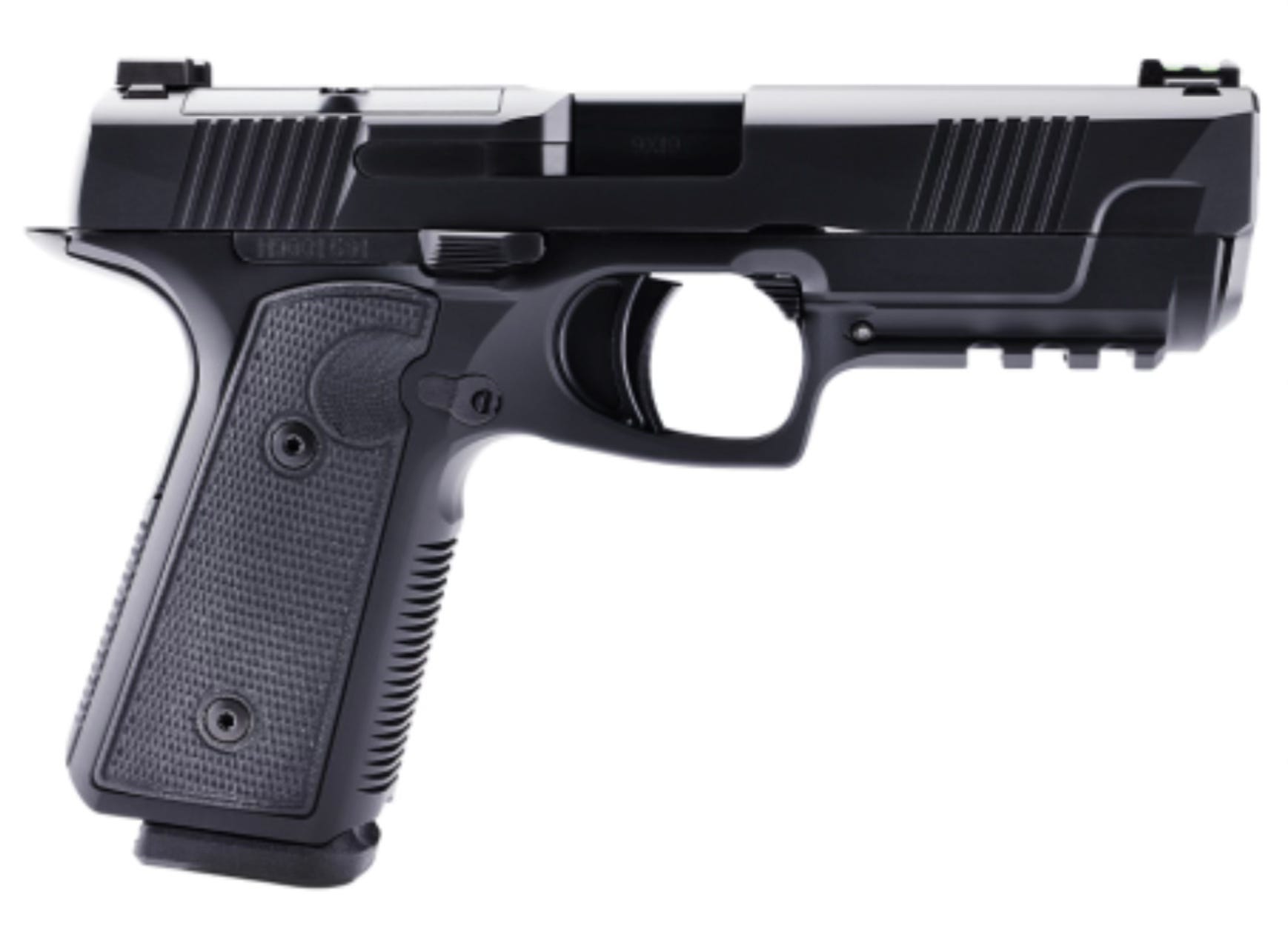
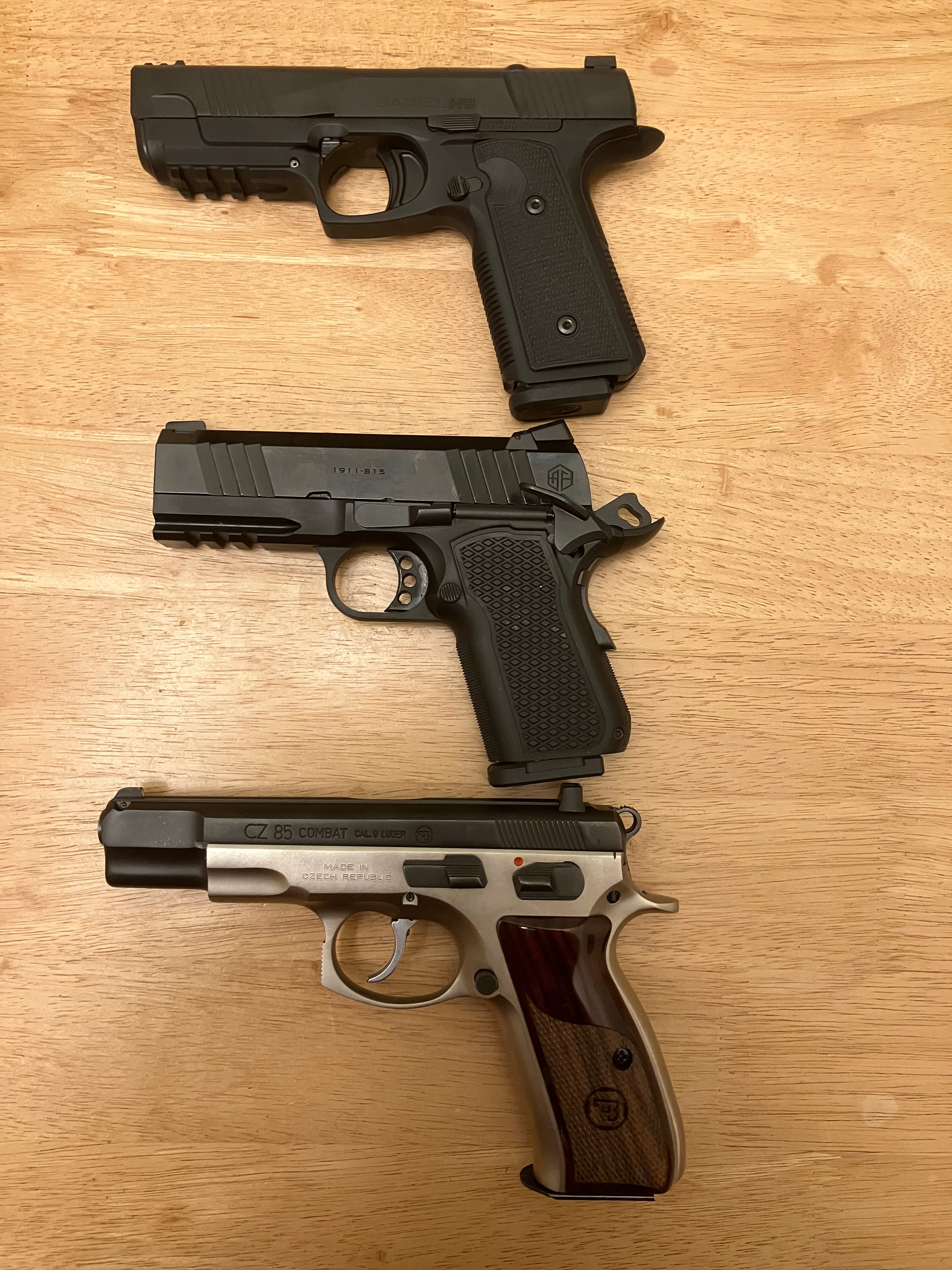
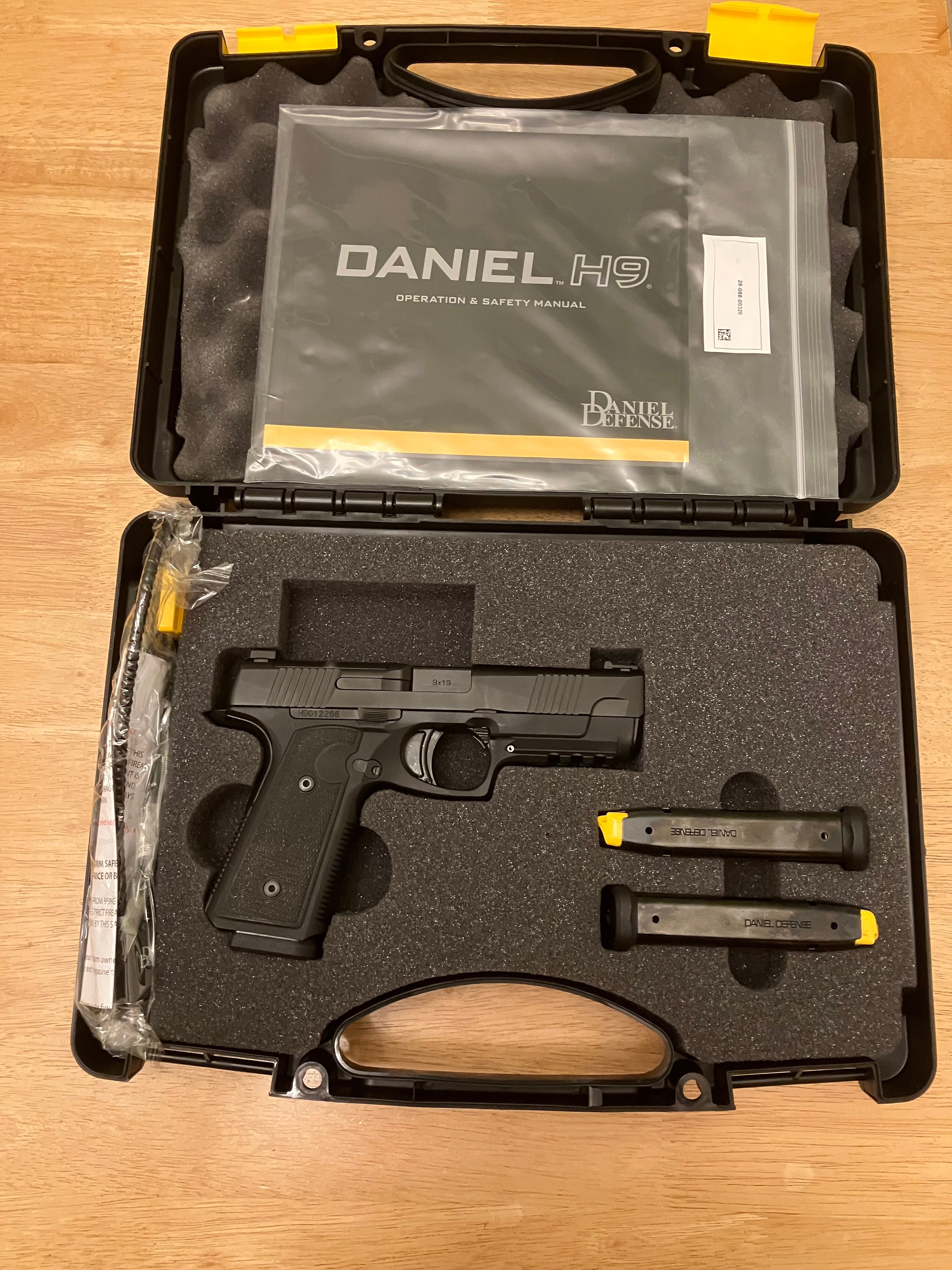
Curiosity got the better of me today. In the past, I’ve done some comparisons — the Springfield Armory SA-35 vs. the Inglis P-35 made sense. The Springfield Prodigy 4.25” vs. the Alpha Foxtrot 1911-S15. I hit the range to see how the Daniel H9, a handgun with a checkered reputation, but which for me has been an excellent firearm, would perform against the Prodigy, one of my favorite pistols. My gut was solidly on the side of the Prodigy.
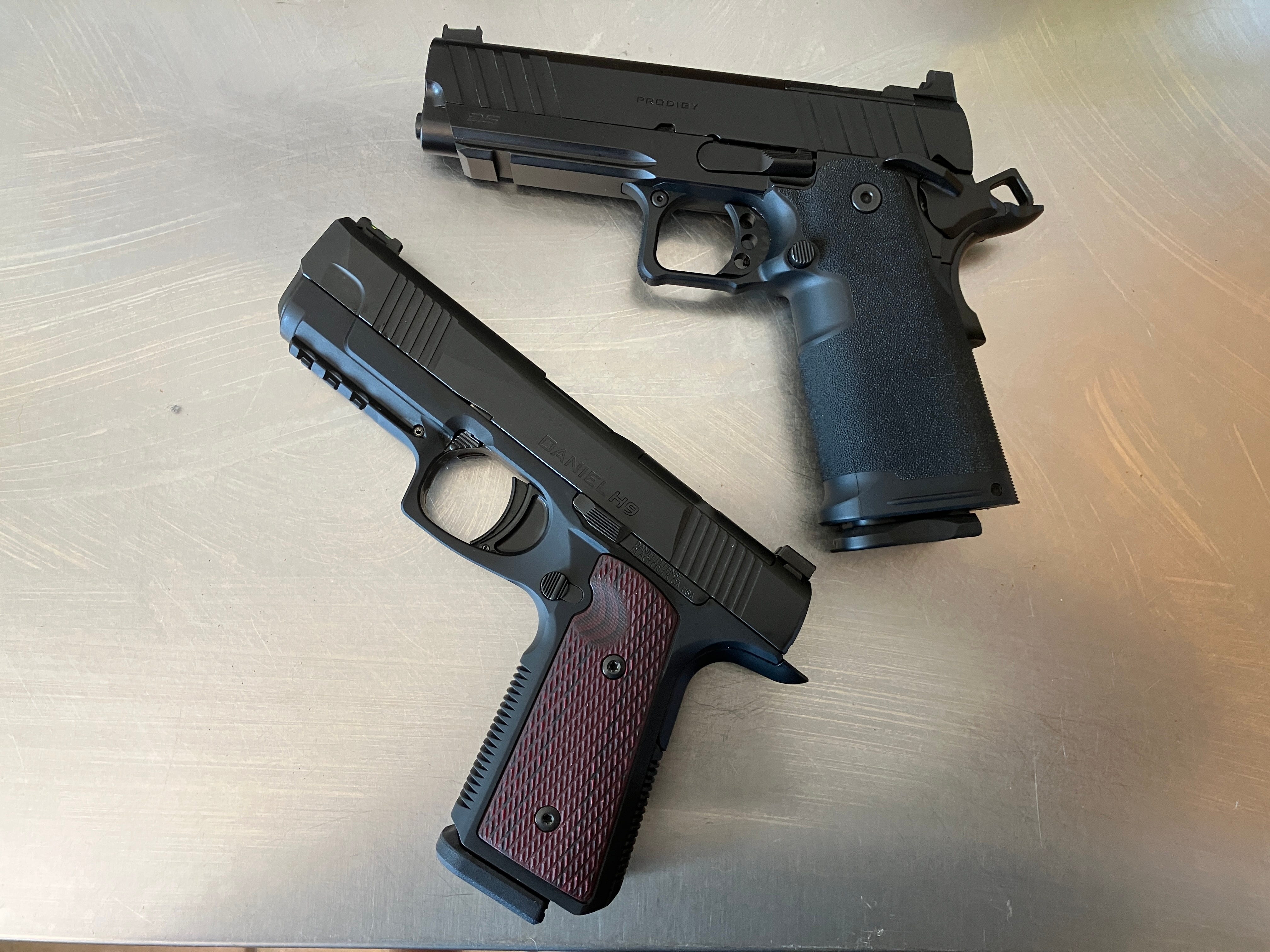
For the experiment, I wanted to be fair, so off came the light from the Prodigy, and both were loaded to 15 rounds for the longest strings. I thought this a pretty even match — the grip length is close to the same, with the Prodigy being .25” longer, but the H9 is also thinner, with a feel closer to that of the Browning High Power. The H9 grip angle is a bit more upright than the Prodigy. I tried to get a decent shot of the difference, but the reflectivity of the surface worked against me. Thankfully, Handgun Hero came through:
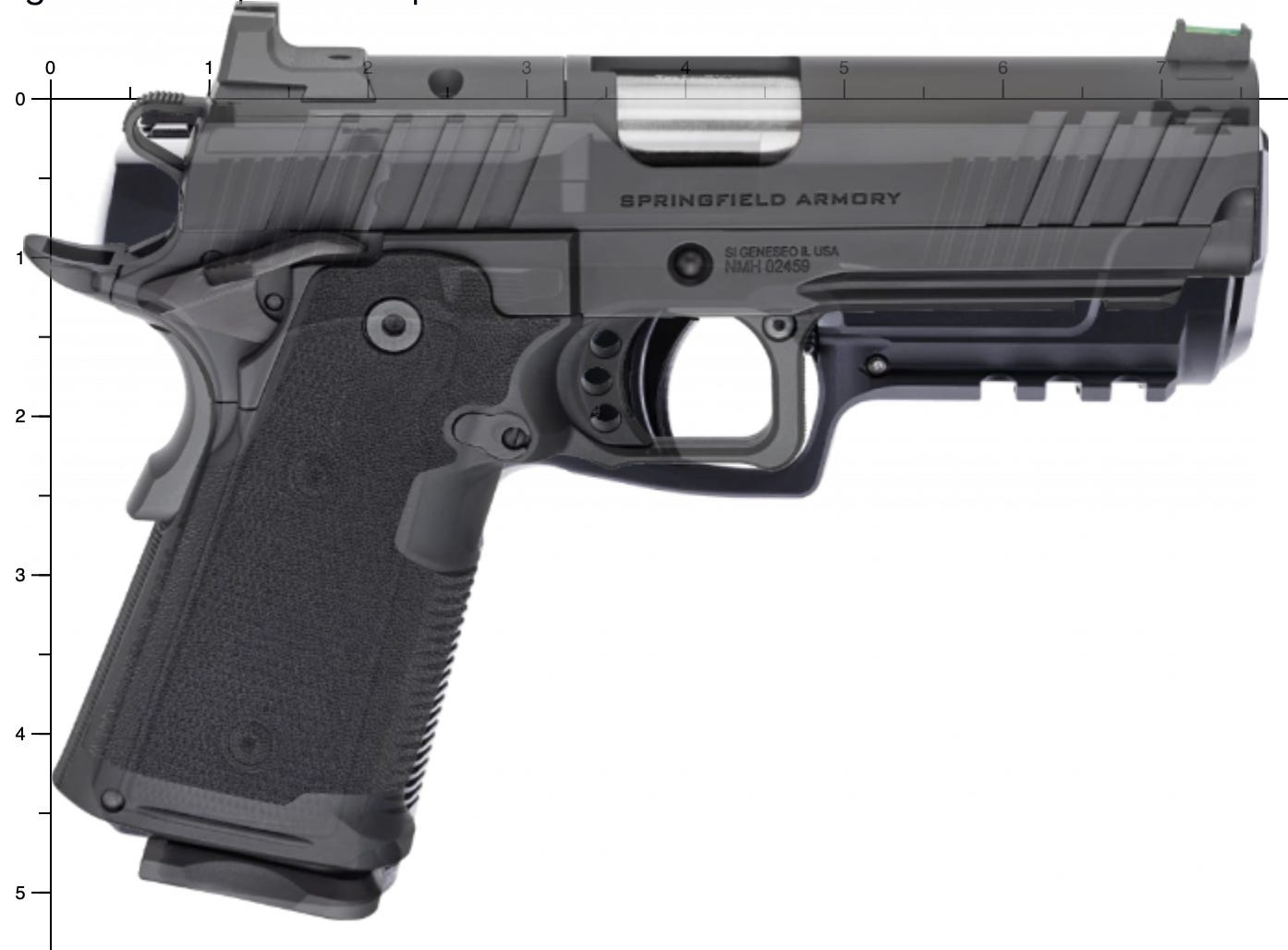
Lining the pistols up at the point where the grip and trigger guard are roughly even, you can see the angle is small, but present. The barrel lengths are almost the same — 4.25” to 4.28”, with the slide sitting back over the shooter’s hand, compared to the 2011-styled Springfield. It also shows how much lower the slide rides for the H9 over the Prodigy — the Springfield sits .6” taller than the Daniel. It’s also apparent how much lower the barrel would be when looking at the magazines side-by-side:
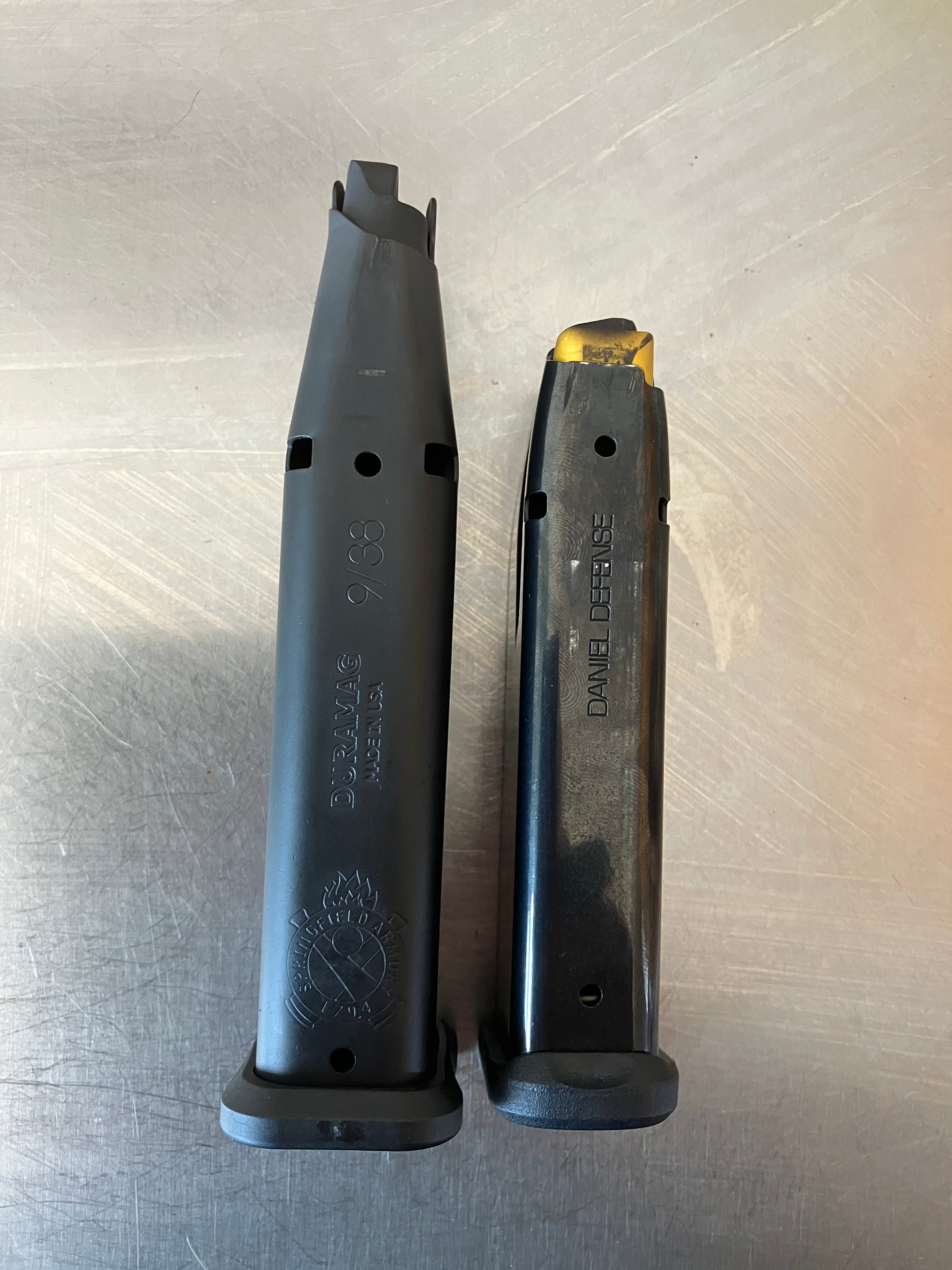
This gives them distinctly different feels in the hand, despite the “1911” grip angle and trigger. The Prodigy is ever so slightly heavier, even with two rounds pulled from the magazine, but I didn’t notice it, at all. If anything, the Prodigy feels more planted in the hand, with the H9 feeling a touch nose heavy. In shooting, the recoil impulse of the H9 is definitely more controllable: less muzzle flip and much faster return to point of aim. When firing one handed, the H9 felt much more stable in my hand; while the Prodigy felt like it was trying to squirrel to the right. (I’m a lefty.) Two-handed, the Prodigy is very controllable, but the muzzle flip from the taller slide is stronger. I’ve also seen this in the past when shooting the Prodigy next to the CZ-75 and SA-35, but in that case, the it felt like the Prodigy returned to point of aim faster than those two pistols.
The trigger on the H9 is supposed to feel like a 1911 and the weight on both was almost exactly the same — a hair under 5 pounds. The upside down safety blade throws some people on the H9; I don’t notice it at all. The trigger on the Prodigy has less takeup than the H9, but both hit a nice wall and break clean. The reset on them feels almost exactly the same. That said, I felt like I have a tendency to slap the trigger on the Prodigy more than the H9, and I saw that in some of the groupings over 100 round per pistol.
I would shoot them back to back with even number of rounds, and this also showed how the grip angle affected my point of impact. With the same point of aim, the Prodigy would hit high; if I followed with the H9, it would hit low. Start with the H9, I’d be right about on target, then the same with the Prodigy. Put that down to shooter error and the different height sights (the Prodigy have taller sights) but the picture is almost the same — U-notch with serrations on the back with a green fibre optic front. The Daniel, however, has a flat top to the slide and I find I tend to shoot a pistol better with a flat slide, as I tend to use perspective for quicker and more accurate shots even without getting as good a sign picture.
Over the course of shooting at 15 yards, unsupported, the tightest group for the H9 was three round triangle with about 0.76-.78” between them; the Prodigy produced a pair at 0.79” with a flyer that expanded that to 1.9”. On average, the groups were between two and two and a half inches, not really taking my time. Mozambiques at five yards from low port produced 2-3 inches between the initial double tap for both, and a clean center head hit for the Daniel, with the Prodigy scalping the target every time. Slow strings of six at seven yards gave sub two inch groups for both pistols, again with a slightly high point of impact for the Prodigy, slightly low for the H9.
Reliability: again, pretty equal. Using Fiocchi 115 grain ammo, the pistols were pretty dirty after the century mark, and yet functioned flawlessly. The Prodigy kicked out empties slightly forward and with a good six inch toss; the H9 pitches them slightly backward and aggressively. They tended to hit the bolster on the right side of my shooting lane and bounce into my shoulder and head. I’ve yet to shoot the H9 outside, but my guess is it will chuck shells a good couple of feet. In it’s defense, however, the Prodigy and H9 both have about 2500 vs. 2000 rounds through them. The Prodigy has never malfunctioned. The H9 has had light primer strikes if the firing pin channel gets too dirty.
So, which one “won”? If we’re talking speed of shooting and consistent accuracy at longer ranges — the H9 takes this one. Groups were consistent with one two flyers over 100 rounds and I could shoot it faster than the Prodigy. The Prodigy, however, wins hands down on reliability; it has never left me down. The H9 has suffered light primer strikes from time to time that seem to be tied to the firing pin channel getting dirty, but that’s the only issue I’ve run across. It happens rarely enough I wouldn’t be terribly concerned carrying it, but …
It really is almost too close to call, but I think the reduced felt recoil of the H9 wins this one from a shooting perspective. From a reliability standpoint, the Prodigy has it. It might be interesting to see how the H9 stacks up against the Inglis P-35, seeing as how they feel so similar in the grip. My gut is the H9 wins, but I kinda hope the P-35 smokes it.
Got a question on the grips for the H9 — they’ve VZ Grips G-10s. I thought the all black silhouette was a bit boring. — BC.