I am assuming the [your] here, as the grid didn’t specify if it was my favorite or the players’ favorite. Since I GM most of the time, this means which NPC character was my favorite to play over the course of a game. This one is easy:

CPT Aeria Evripidi, callsign Athena, in our Battlestar Galactica game. She was a viper pilot who was using the military to bolster what she figured would eventually be a career in politics. She was from a political family — her father a Colonial judge and her mother a television personality on Libran. She was hugely intelligent, tactically brilliant, a tease and practical joke player, but with a certain lack of empathy and understanding of people, and who was alternately respected or hated by the people she worked with. She would rise after the Fall of the Colonies to the executive officer position, and was eventually mortally wounded on Kobol, where she was used by the “goddess” Athena as biomass to resurrect when the Colonials found her tomb. Their personalities meshed and eventually the real Athena would subsume Aeria, but she would help lead them to Earth.

It was a fun character who was challenging to make likable, but not too much.

This is a toughy. I’ve been playing for about 40 years (damn, I’m old…) and there’s been a host of good NPCs, so picking one in particular is tough. So I’m going to go with the NPC that has been most commonly resurrected and was popular with players (from what I can tell…)

Sir Douglas August-Haide — He was a Sean Connery-esque NPC in various incarnations of our James Bond game. He’d been a 00 and was now either the head of the Special Operations directorate for MI6/SIS, in another the head of a NATO special intelligence group with wide latitude, and in another the head of a private intelligence company on contract to various governments in the war on terror. He had the James Bond swagger and humor, coupled with a lot of money and influence from knowing where a lot of skeletons were buried. He’s most recently popped up in the Sky Pirates of the Mediterranean book we’re working on as the head of the foreign Volunteer Force (or “Sky Rats”.)

He was one of those best and shiniest equipment types, banging around in the latest Aston Martin, using the FN FiveSeven and P90, etc. In the latest iteration of the character, he commands the Sky Rats from the airship he bought from the British government before its decommissioning, the R.80. He’s got contracts with the League of Nations and various insurance companies to protect shipping in the Mediterranean and his guys get the best stuff on the market.

Oh, this is a good one for me. I’ve been the “king of dead games” for a long time. Even the stuff I tend to write for at this blog should give that away: James Bond: 007, Cortex (the original), Space: 1889, and to a lesser extent Hollow Earth Expedition (not dead, but not exactly lighting up the scene, right now), old Decipher Star Trek, West End Games’ Star Wars

What gives a game staying power? Why did I use James Bond for 20+ years as my go to rules for modern or near future settings? It lets the players built what they want (within reason), gives the GM mechanics to emulate the genre effectively, and is easy to play. It could be tweaked for cyberpunk, for Stargate (easily!), and I’ve thought about using it to do ’30s pulp over Ubiquity several times.

Space:1889 had a great setting, but the mechanics were junk. Almost from the start, I was looking for ways to do it better. We used the Castle Falkenstein rules with heavy modification. We might use the Ubiquity rules, now that stuff is coming out for the setting once more. Even after Decipher humped their customers with Star Trek, I used it because the mechanics worked and were familiar enough to newbies who’d only played D&D that they could be roped into playing. Classic Cortex is now replacing Dungeons & Dragons for our fantasy campaign because of clean rules and math that makes sense, the ability to build what you want, and it encourages role playing through the trait/complication mechanic.

There are a few consistent things I’ve looked for in games over the years, and a few things that have changed. Probably the most important is a setting that hooks me. Dungeons & Dragons came along during a fantasy period in my reading, so it grabbed me. James Bond movies were always favorites, so that game and Top Secret were a draw. Space: 1889 remains one of the best settings for a game I’ve played, and all of the copycat “steampunk” with the fantasy elements, like Castle Falkenstein or Victoriana (most editions of which, in the interest of openness, I’ve have worked on) don’t quite match. for a while, a lot of the games I bought were licensed properties: there was DC Heroes and Marvel, The Babylon ProjectStar Trek (both LUG and Decipher), Star Wars (d6, period), Serenity and Battlestar Galactica… There’s more but you get the point: I like to play in universes that I like, but to me honest, I think I can do better with.

I wanted systems that gave a certain level of verisimilitude, but weren’t too complicated. James Bond, for the longest time, was the sine qua non for that: clean, fun rules; you could built your characters — none of this chance thing (and really Traveller, you can die in character creation?) The amorphous quality of FASRIP Marvel was initially attractive, but I preferred the order of DC Heroes, and we played the hell out of it. Star Wars d6 was simplicity incarnate and managed to really capture the flavor of the movies. It also won me over to game systems that are not overly complicated.

Fate seemed like it would be right up my alley, but I found the lightness of the system detracted from some illusion of realism, and I really didn’t like the “taken out” concept when applied to combat. (By that time, I’d been in the military.) However, the same ability to built what you wanted, have their weaknesses and strengths of personality count for something, and have a mechanic where the math “felt right” and which fostered good storytelling came with the Cortex system in Serenity, and made better in Battlestar Galactica.

Recent trends in RPGs have actually put me off trying new games. These massive 400+ page tomes with flashy design that is distracting (if pretty), typefaces that are hard to read, and text that is too verbose and not nearly clear enough to grasp the core mechanics (looking at you, Mödiphiüs!), all costing $60 or more — I don’t want to drop that kind of dough, and I don’t want to wade through that much material to learn a game. This is one of the reasons Tales From the Loop was so refreshing: clean layouts, short and clear technical writing for the rules, nice creative writing for the interstitial material I also don’t want to buy a game and have to buy several other books to get the full rules. Fantasy Flight’s Star Wars and the multiple corebooks and/or proprietary dice trend is an immediate turnoff because its so obviously an attempt to relieve you of more of your money than the play requires. Mödiphiüs is doing this too with Star Trek.

It is, not to put too fine a point on it, bullshit.

It’s so offputting I bought the old d6 Star Wars rules.

What I look for now (and try to create with the Black Campbell Entertainment products): clean, professional layouts and typefacing; good art, but not a coffee table book with shitty rules badly written. Good mechanics that help me play. And a great setting (again, Tales From the Loop, but also its cousin Mutant Zero.)
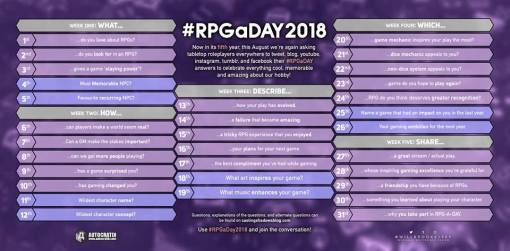
I got my first Dungeons & Dragons set — red box, if I recall correctly — in 1977 or 1978. I was on a fantasy kick about that time, and it looked fun. I didn’t know what a role playing game was, and there weren’t a lot of people who played them, but I was able to find  few folks here and there to try it out. I was hooked instantly. By high school, I had a regular group that played RPGs and board games. D&DTop SecretGamma WorldStar Frontiers, Gangbusters…we tried all of TSRs stuff. But Traveller was our go-to sci-fi game, and James Bond: 007 quickly took over as our main game.

With few exceptions, I was usually the one to run games in my groups. We had the occasional replacement GM, but it usually fell to me. Only in college did I get a regular break from GMing, and by that time, it was what I preferred. I like to play, but for me, it’s really about running games, now.

What do I love about them? Firstly, the ability to leave your life behind for a while — like with a good movie or book, except you have the ability to affect the course of the story. When I was a kid, my life made escapism was a necessity.

Secondly, I love telling stories. Everything I’ve tended to gravitate toward as a hobby or profession is linked to storytelling, or was influenced by the games I liked to play. I teach history. Why? — telling stories. I specialized in 19th Century Imperialism because of Space: 1889, then swapped to Modern American history because of Hollow Earth Expedition. I went into intelligence for a while — because of James Bond. (Who didn’t, really?)

Thirdly, it gave me friends, some of which I still have. I haven’t seen the high school gaming crew, but I can talk to them on Facebook from time to time, and something from the games might come up. I still have friends from college or the military — they are all gaming buddies. We’ve gone to each others’ weddings, watched each others’ kids.

And if you stay away from the miniature heavy games, the amount of time you spend enjoying them is the best bang for your buck.

37646164_2085857168402055_6328546693323161600_n