General Ramblings


I think that’s what I’m calling this volume of Dungeons & Dragons adventures: The Road to Heroism. Why? Because the Via Graiae features prominently in the campaign, thus far. They are in what is supposed to be deep inside Roman territory, 50 miles or so from the border, and all their adventures have been along the road.

This particular episode for the night was The Goblin Town. Our heroes had managed to convince the prefect of Vigiles in Ariolica to take a force and root out the nearby Vandal threat. With 80 men, 2 ballistas, and the party, they left the Via Graiae and headed into the snowy forests of the Jura Mountains. Along the way, it occurred to Quintus Marcellius — our former legionnaire, that they could use more aid, and that Jurahold, the dwarven village Carrus the Ranger is from, was nearby.

They arrived in a small valley where Juraborg, the dwarven town, is situated. Jurahold is carved into the mountain face above the picturesque village, and is a refuge against attack and the harshness of winter. On approach, the guard are shocked to see Carrus, but not their leader Smaigo the Zwergifuhr (who was killed prior to the introduction of Carrus, Icio the Monk, and Calvinus the bard in media res) a few weeks ago.

The force is invited into the hold and in the great hall, Lady Fega — Smaigo’s wife and ostensibly the new ruler of the tribe — does not handle the news of her beloved’s death well. The character’s stories are consistent, but biffed charisma roles meant that they were not given the warmest welcome at the news, but things did not go terribly. Carrus, however, was not content to be the guy that lost his tribe’s leader, and convinced an equal force of Jurazwergi to join them in the attack on the Vandal village nearby. (Benefits of a crit 20…) They stayed the night in the dwarven hold, Calvinus romanced a pair of dwarven twins while he was playing for the entertainment of all, and in the morning, they were off to find the Vandals.

As they were nearing the village, they could hear wolves baying — the goblins were not going to be surprised. Carrus and a few of his dwarves slipped forward to reconnoiter the location and confirmed an old Roman village that had been abandoned ages ago was inhabited and being repaired by the goblins. They got an estimate of the numbers — maybe 500, with 200-250 of that being children, and 100-150 women. That left about 100 warriors to worry about. They also spotted an old dwarven hold in the rockface of the hillside near the town that the goblins were operating out of. While watching the town, they saw a force of 50 Vandals leave to intercept the Roman advance and retreated to warn the others.

The decision was made to have a small force of the dwarves under the party raid the subterranean hold from the back door, hoping to find and free the prisoners, while the main force under Abrecan, the prefect, met the Vandals…maybe they were looking to talk? Either way, the main force has superior numbers and training; the smaller force would most likely only encounter a similar number in the hold. (The cleric stayed with the main force, as the player was out for the night.)

After slipping into the hold from the massive doors (we established that the dwarves always seem to overbuild…they’re on average 4’8″, but all their ceilings are 18-20 feet high; their door 12 feet tall! They walked straight into a guard and the monk dispatched him with a fantastic success on his attack. The next passage had three Vandals, and a cage full of the children taken from Timo’s Ford, the village from the first adventure. They dispatched the baddies and freed the kids, then pressed in, encountering 3-4 goblins per chamber.

The bard kept taunting the Vandals with “vicious mockery” — I’d never considered the hit points were as much a mental and physical structure; and this cantrip did hit points of damage. This led, in one of the fights, to me using that notion against Carrus. In one of the chambers, there were cages of prisoners under them, with a walkway running through the room. He had fouled an acrobat roll and slipped, nutting himself on the bars and temporarily at the mercy of one of the Vandals, who was able to strike at him. For the first few adventures, the characters have been first and second level, but the sheer numbers they’ve faced has allowed the to jump to 3rd level by this week’s game; a hit from a goblin a few sessions ago would have killed the character, but in this case only did about 40% in damage…I decided that was mostly from mental trauma: the swipe of the goblin’s scimitar lopped off one of Carrus’ beautiful twins braids of red beard! There was no damage, but the indignity of having his beard shorn off in combat was a distraction for the fight.

Eventually, they reached the main chamber where most of the survivors of Timo’s Ford were being shackled for the day’s work rebuilding the town. A half dozen or more Vandals were in the cavern, and before a fight could commence, Icio — the aasimar monk — lit himself up with the radiant soul ability: suddenly, this scrawny monk burst forth with inner light, glowing wings erupting from his back, and spouting off about the judgment of God and repenting their ways.

The goblins ran for their lives.

The towns folk were so awed by him, they started to ask about this god he spoke of while they were being released.

With the townsfolk released, they now had to either escape through the back door, or hold position in the defensible caverns of the hold and wait for their friends to arrive. They chose the latter. The Vandals made a perfunctory attempt to reconnoiter the hold, but a well placed pilum (javelin) by Marcellius drove them off. Weended the night with the Vandals rolling olive-oil covered burning barrels into the cavern to confuse and harass the party and their charges… (Yay! A cliffhanger ending!)

So, some of the things I/we took away from this: 1) hit points are both physical and mental damage…it is possible to describe a hit in D&D that doesn’t have serious effect as a distraction, or a momentary bit of fear or lack of surety; it doesn’t have to be an actual physical hit. 2) Fighters are much more bad ass in 5th edition at lower levels. 3) Likewise, low-level spells — even cantrips — are have more punch in 5e. Magic users are actually formidable. 4) The features and other customizable bits are fun, but can get a bit tricky to manage. 5) Having a rules lawyer when you’re still new to the system can be handy and annoying at the same time. (One of the guys has been running 5e for a while, now.)

We’ve been steadily building out this alternate-Roman setting, and one thing that’s been changing subtly is our initial take on Christianity, as a simple cult of Judaism, has morphed into an almost Alan Christianity: where 1) Jesus was an assimar, as was John the Baptist; 2) the rest of the story is pretty much the same; 3) Jesus is considered divine or divinely inspired, but not God, per se. 4) The cult of Jesus is still growing in strength and popularity, but is behind where it was in the real world. Even so, Christianity was still building, post Emperor Constantine, so we’re not as off the map as we were initially going to be. 5) Since I’ve established the Greco-Roman and Norse pantheons and creatures exist, Christianity is locked in a fight with the other religions for believers not just in temples; these gods are trying to keep their membership rolls up. This may tie into the monk’s antagonist — a nephilim (or cursed), what they call tieflings in the Levant — and what his mission for Lucifer might be.

So for fairly simple outings — defending a caravan and a town, and then rescuing the village population — the characters get to build their game world reputations, but we are steadily building out and refining the greater world, even while remaining in an area of play that is only 50 or so square miles.
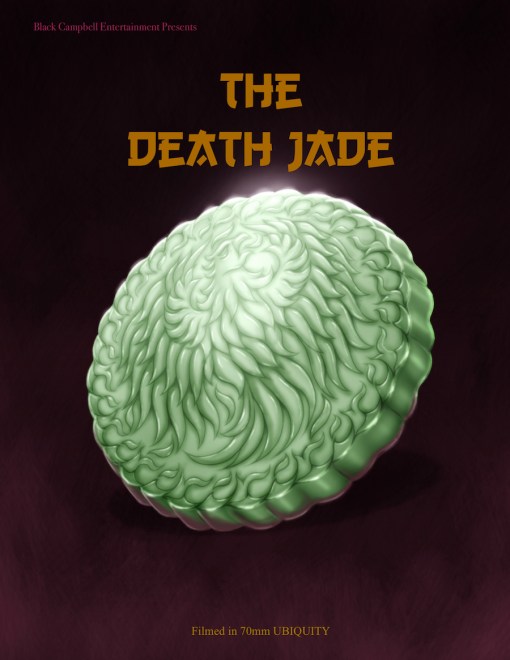
 

After four months of delays, we finally managed to finish The Death Jade. This adventure scenario is set in 1936 Shanghai. Rumblings of war are being heard in the International Settlement of Shanghai as the characters are hired to find a priceless artifact from ancient Chinese history — the Donguin jade, part of the fallen star that allegedly prophesied the end of the First Emperor’s reign, and which is said to carry his soul! The first man hunting the jade, Count Rusikov, has gone missing, and as they track his steps, they must stay ahead of Japanese and communist spies, and dodge nationalist warlords.

The Death Jade is live on DriveThruRPG.com for both Fate and Ubiquity. This 25 page adventure module costs $2.99.

ubicover.jpeg

Our D&D game picked up with the characters’ caravan, led by their dwarven ranger, finding the Graian Way — the main Roman artery to the nearest real town, Ariolica. Positioned near the Jura Mountains, Carrus the ranger knows the place, and is known to the population. While the merchants are unloading and trying to trade, the characters did a quick exploration.

The players for Carrus and Marcellus were out this week, so the latter spent most of his time arranging for the arrest of the Vandal goblins that attacked them. Carrus’ dwarven connections in the town give them the lowdown on the tribe their captives are from — the Vanhalus tribe of goblins moved into the area a few months back, but supposedly there’s a much large force of them that have moved into the area. They’re close enough to be a real concern for Carrus’ town and hold. We also learn that Carrus is a local hero for pulling together the defense of a small Graeoceli village near his people’s hold; to the locals, he is “Carrus the Goblin Killer.”

They also spot a pair of goblins who are “Alemmani” — they’ve allied themselves with that great tribe of humans and they are from the “Sweda” band of goblins. They are in town as traders in fur. They know the Vanhalus and with some browbeating, they learn the Vanhalus are much larger a group that their prisoners told them. They were expecting a band of 500…these goblins say it’s more like 5000. Even with the assumed children and non-combatants in band that large, they are looking at 200-500 combatants! They also find out villagers from Timo’s Ford have not be shopped around for slavery. Why would they be holding onto the villagers? The Sweda guess they are being used to build defenses. Your Vanhalus are hear to stay.

Marcellus, meanwhile, had made contact with the prefect of the town — an Alemmani that goes by the name Abrecan Legio (the strong legionnaire), but whom he had known in the Legio II Augustus as a centurion, Abrecan Haraldus. He supposedly had died in combat, yet here he is, appointed the prefect not by the district tribune, but by the people of the town. Things are starting to fall apart for the empire, even here 50 miles behind the front.

Abrecan is convinced by the party to pull a force from the Vigiles of the city to probe the Vanhalus camp — after all, even Marcellus’ small force has done for two dozen of the goblins. With a heavy century (100) of trained fighters, their pair of magic-users, and some siege equipment, they might be able to intimidate the goblins into giving up their prisoners.

There was some role playing opportunities — the monk, overwhelmed by the mass of human contact, retreated to a quiet place to meditate; the bard and cleric hit the Temple of Apollo to pray, then went in search of female companionship; Carrus went to dinner with the town’s dwarves; and Marcellus worked with Abrecan to start putting together their expedition for the following morning.

We had a short fight where a pair of goblins from the Vanhalus, in town to trade, spot and try to assassinate Carrus, who was stumbling home to the caravan horribly drunk. Even in his condition, he was able to put down one of his attackers, while the monk ran off the last.

We ended the night with the expedition — 100 men plus the party under Abrecan, armed in Roman style, but with a pair of light ballistas broken down and being hauled by the men, heading into the snowy forests of the Jura to find this goblin settlement.

It’s something every GM will face. You’ve started a game, and now you have new players. The second installment of our Dungeons & Dragons in an alternate collapsing Roman Empire met last night. My task for the night was to fuse two new players and their characters, plus one of the main group that had been away the week before, into the action.

When last we had left the two characters introduced in the “pilot”, they were hunkered down with a half dozen people in a small, but wealthy, caravan of merchants in the little hamlet of Timo’s Ford, a small town next to a stone bridge over a tributary of the Rhine in the Black Forest. The entire 150 or so of the town’s population had been disappeared, their homes trashed, their animals slaughtered simply for the fun of it…they were certain it was the work of the Vandals that had hit their caravan a few hours earlier, but that would mean there’s one hell of a big population of them somewhere nearby!

They were attacked by a small band of Vandals — in our game, the Vandals are goblins pushed out of Scandinavia by the people there — and they managed to dispatch them and capture one for questioning.

The new characters are a Roman noble who has been exiled from home for his antics, and who is traveling the empire as an entertainer (he’s a bard); a former anchorite — an assimar monk who is part of the Cult of Jesus, an aasimar prophet who was hung up by the Romans — and whose guardian angel, Michael, has put him on the path to hunting demons, and linking up with one of the established characters, Aurelius Augustinian, a cleric who has healing powers; and an dwarven ranger from the Jura Mountains who’s clan are tied to the Alemmani. The last is a folk hero for his selfless rescue of an Alemmani village from Vandal raiders.

They are introduced in media res — running for their lives from two dozen Vandals and their wolves through the deep cold and snow in a darkened forest. Carrus Zwergi, the ranger, has managed to find them the fastest route away from the Vandals, keeping them behind, but they have been running for an hour and collapse at the base of a snow bank to catch their breath. Where to go? What to do? The bard is stunned — where is the army!?!

They see strange lights in a little hamlet across the river…it’s Timo’s Ford, Zwergi knows. They race to the bridge fording the river and make contact with the caravan group, and voila! the characters are joined up! After taking stock of their weapons, doing some healing, while the bard boosts everyone’s spirits, Zwergi and the former Roman legionnaire, Quintus Marcellus, plan their strategy. There are a dozen of the goblins across the bridge, barely visible against the snow; they can hear the wolf with that party baying to the second wolf with another group stealthily making its way around the opposite side of the town. They don’t have much time, and only the PCs and one NPC are any kind of fighters…they have to move quick to preserve any advantage they have.

The party leaves the safety of the old Roman-styled tavern and cross the bridge, luring that group of Vandals out. Marcellus and Augustinian shoot the leader of the band, putting him down, but not killing him. They then jump into the fray, and Augustinian and the monk, Icio Zaccharius, surprise each other with their use of magic. Two magic users in one place!?! This is no coincidence. Zaccharius knows this is not coincidence, for the cleric had once visited his anchorhold in Malta and had questioned him on Jesus’ teachings. He knows Michael has put him on a path to find this man, and then to join forces to find the demon that killed his mentor…

After a hard-fought battle, they kill most of the Vandals and capture the leader. Their victory causes the other group of attackers to break off.

The next morning, having rested, the ranger gathered food for the group and their first decent breakfast was had. Next, they question the Vandals, discovering that there is a large force of the goblins just moved into the neighborhood — perhaps 100-200 fighting men, and maybe a total population — with their women and children — of 500-750. They took the people of Timo’s Ford to trade as slaves to the other tribes in the area.Most of them are even still alive.

The characters formulated a plan: the lead merchant of the caravan is going to take one of the horses and make a mad dash for the nearest Roman guard post, about a day’s ride in the snow. The rest will accompany the caravan to the nearest decent side town to see if they can gain some sanctuary and perhaps aid in rescuing the people of Timo’s Ford.

The characters have already leveled up from this adventure, and the stage is set for the obvious goal of this portion of the campaign: save the town and become heroes.

Previous posts have detailed some of the thinking so far on our new game campaign using 5th edition. Up until now, it’s been mostly a half-baked couple of idea that grew out of not wanting to do the Tolkein-Gygax high fantasy thing, which caused me to ground it in early medieval/fall of Rome period. I specified the gods and creatures of myth still exist (but are rare-ish), and that magic is present but rare enough to still have a “holy shit!” quality when it is seen; some people don’t believe it exists, even…

The world is fleshing out, partly because we have two new prospective players. One is a former colleague from my doctoral studies, and he’s an expert in this period and Christianity (and I am not) — so, no pressure!

It’s the year 1128 ab urbe condita — the Roman reckoning since the founding of Rome. (So about 375AD.) The main action, right now, is happening in the southwestern part of Germania Superior, near the Alps.

The first character, Quintus Marcellus, is a former legionnaire, an optio or the equivalent of a sergeant major/lieutenant, who started as a foot soldier after leaving his home in Mediolanum (modern day Milan) at 12 to join the emperor’s campaign into Gaul. He was under the command of a general named Magnus Maximus, and was for a time a standard bearer for Emperor Valentinian — a bastard of a man — where he befriended his young son, Gratian. He was part of Maximus’ response to the Great Conspiracy of Celts, Picts, and Saxons who attacked Roman forces and spent most of his career, after the Battle of Solicinium, in Rutupiae, the main landing port for their forces, until his mustering out a few months prior to the game. He has a Celt wife, Roua, who he had to divorce after the emperor’s decree Romans could not marry barbarians. They have a kid. He is now latrones — a mercenary — protecting caravans along the dangerous road to Augusta Treverorum (or Trier, as the Alemmani call it.)

Quintus’ wife is most likely an elf,  or half-elf based off of my original pitch for this universe — the Attacoti, Scotti, are most likely the same. Some of the Gauls we’ve established are firbolg (from the Volo’s Guide to Monsters) — and may be related to elves.

The next character was Aurelius Augustinius Hipponensis (or, to our real universe, Saint Augustine) who is traveling the empire after fleeing a bad romantic/marriage situation that embarrassed his family back in Africa. He is a cleric and healer — a magic user, and this makes him impressive (especially to himself!) He used his healing ability for the first time during a fight; so even to him, magic is something he wasn’t sure would actually do much more than parlor tricks.

The next character is (tentatively) Thomas Zaccarius — an aasimar, or “barukim” (the blessed) in our world. He is from Egypt, is a follower of the prophet (and fellow aasimar) Jesus of Nazareth, and has been called to fight demons and their evil in the world. He is a hermit when he can be, since the Jews and Zoroastrians look on him as a quasi-angel to whom they can ask for blessing and intercession with God…a situation his angel, Michael, assures him isn’t the case. He is traveling, chasing clues to find the demon that killed his mentor Haman — an event that led him to an anchorhold to hide from the world. A chance meeting with a young cleric named Aurelius Augustinius led him to venture back out. (Thus giving us a connection for his introduction…)

Hanging in the air is that this demon is gathering certain of the naphalim (or tiefling, as they are calling by the Alemmani) for some kind of evil plot that needs stopped.

This gives us a taste of our version of Judaism/Christianity in this world. Jehovah is one of many gods — maybe he’s even a god of gods, like Ahura Mazda — but the action of the Olympians and their Roman expression has happened from time to time (though less since the Greek Dark Ages…) so the cult of Jesus has not caught on as it did in the real world. The angels and demons play a proxy game with the tiefling and aasimar; so long as they stay off the playing field, things don’t get ugly…

Which brings us to the last character, a dwarven ranger named Carrus Zwergi, part of a tribe of dwarves that consider themselves Alemanni, but are foederati (treaty-bound) with Rome. He is the son of a blacksmith, and his tribe live in their great hall under the juraburge, or Jura Mountains, where they are known for their coal and iron mining. His people arrived in the mountains hundreds of years ago, and were allowed to stay by order of Tiberius Caesar, himself. They are practically Romans, but have the Nordic gods for their religion.

Run ins with the Vandals — in our game played by goblins — nomads that have recently poured in from Nordica (Scandinavia) have led the Zwergi to ask for help from the Romans in Trier, and that mission will bring all of the characters together.

Thursday night, I’m hoping.

Tonight we took a time machine back to 1984…at least attitudinally. That’s how long it’s been since I’ve run a game of D&D (I played a disastrously bad game around 1992 with a DM that gave my wife of the time a female cleric that was mute. That’s right — bitches should heal and not heard or something…) I have leafed through the latest edition of the game and found myself transported back to the Advanced Dungeons & Dragons of my youth, but with a few tweaks that appeal to my current style of gaming. I got a set of the books from a friend that had inherited them from a friend. Later I got a request from the local Meetup guys to run a game. When i mentioned this to friends, they were interested. Every few weeks, a new hint from the universe hit me: Run some D&D, dammit!

I don’t like high fantasy. I didn’t want to do a rehash of Tolkein, Martin, or any other the others… so what to do? I hit on the idea of setting it early in the medieval period: pre-knights, etc…and my historian’s brain immediately thought, “Well, why not set it in the fall of the Roman Empire? But with the Greco-Roman gods and monsters?” I bounced this off the gaming group to good response. So how to do monsters..? This led me to look through the Monster Manual and decide I was ditching most of the stuff in there. First out: Orcs. That’s Tolkein’s schtick. Orcs went back to being goblins. Then I noted the hobgoblins were pretty bad-ass in 5th edition…there’s my “orcs.”

But what about the alternate history part of it? I decided the various tribes might have stand-in creatures: the Celts are elves and Firbolg, depending on where they’re from, with plenty of interbreeding wth humans; the Vandals are goblins, the Ostrogoths are a bunch of tribes of humans and hobgoblins that have ties of fealty; the Visigoths are something worse. Dwarves, giants, other Nordic critters are out there. Likewise, there are still let-over nasties from the Olympians; there are angles and demons — and their “human” spawn the aasimar and tiefling — running about the deserts of the Western Roman Empire with ties to the Jews.

So tonight, we took the campaign out for a spin. The characters are a cleric who can cast magic, Aurelius Augustinius Hipponensis (or, to our universe, Saint Augustine!) We’ve decided magic is relatively rare, and that this represents some kind of preference by the gods. The other character is Quintus Marcellus, a recently retired optio (the second in command of a century — a sergeant major/lieutenant) who is working as a mercenary for caravans traveling on the Germania border.

We opened cold (literally) with the characters waking from their sleep on a frigid, snowy morning on the road from the Alps through the Black Forest to Augusta Treverorum, the provincial capital for Germania Inferior. During a breakfast of hot water, stale bread, and an egg taken from a nearby bird’s nest, Marcellus notes something is off, but he’s not sure what. They soon find out — a six-man band of Vandals (goblins) attacks the caravan. They’d already captured one of the four guards who was out for firewood, and after a trade of arrows, they set on the caravan. Aurelius lets fly with Sacred Flame, setting on goblin alight! This brings the attention of a Vandal archer that shoots him through the arm. After getting the arrow out, he used heal light wounds on himself. The goblins were quickly put down, including one getting stomped to death by the panicked horses of the lead wagon.

The caravan moved on along a frozen solid track of mud, arriving at a small hamlet near a bridge over a small, fast river at mid-afternoon. They note the farms around, some walled to keep in animals, have no animals about.  Then Aurelius notes there is no smoke from the chimneys…no one is home. With two dozen or so visible buildings, there should be about 120-150 people here.

Marcellus and another guard reconnoiter the town and find the buildings empty, but signs of struggle everywhere. There are indications of bloodletting, and they find a severed hand in the town’s inn. The livestock is either gone or slaughtered. Breakables in the homes have been shattered for no apparent reason and Nordic runes are scrawled here and there. The Vandals have attacked the place, but where is everyone? If they killed the villagers, why take their bodies? If they didn’t kill them, what did they do with them..?

By this time it was night and the caravan hunkered down, fortifying the tavern, a two story Romanesque building in the midst of single story stone hovels, and putting the caravan wagons and horses in the space between the tavern and stables. They light no fires, but Aurelius purifies food so they can use some of the slaughtered animals. It’s their first fresh meat in days…but it’s uncooked and barely palatable.

A few hours after nightfall, the goblins make their move — two teams of three are sniffing around looking for the caravan. This led to a fight that eventually went for the players. In the fight, they also made a point of capturing one of the Vandals for questioning. With the goblin trussed up, they were preparing to question it when we knocked off for the night.

So, we were learning on the fly some of the rules, but mostly it’s simple — roll a d20, add modifiers, hit a target number (or don’t.) I tried to keep it simple, and it was. The fights were quick, and damage was much more heavy than I remember from AD&D. The addition of proficiency bonuses, fighting style bonuses, etc. rapidly add up, making even low level characters pretty effective. Second, magic users are much more useful at lower levels. I remember spellcasters being pretty useless until they had a few levels under their belt; here, even using cantrips wisely, the cleric was a heavy hitter. I did note, during the character creation, that the attempts to give the various magic classes their own flavor leads to the most fiddly, complex bits in the game.

As to the setting — it’s still a work in development, but the flavor of the night wasn’t high fantasy, except for the magic. The environment was much less generically pastoral, with a generally wintery depressive feel, and a more menacing note between the howling of wolves, the cold, the bad food. Adding the Roman elements was more spicing than a main flavor; that may need to change, but overall, I thought it worked pretty well for a first run of a new system in a genre I just don’t do.

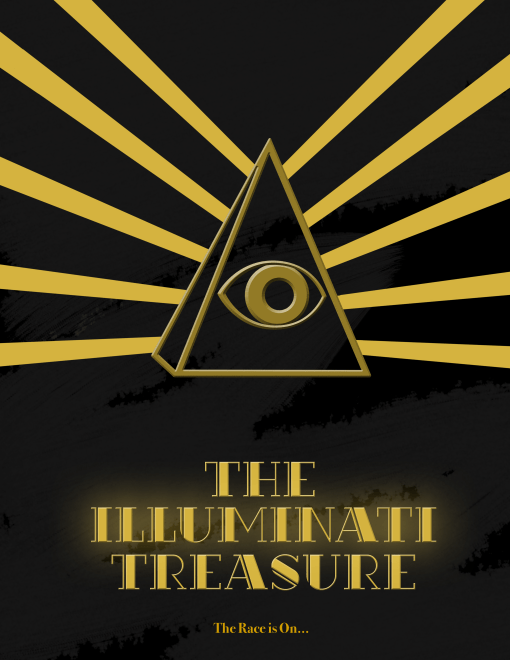
Aaaaaand The Illuminati Treasure is live in Fate and Ubiquity versions! When your Christmas party interrupted by a car crash, the driver — shot and dying — begs you to get his journal to safety. A journal with research leading to the lost treasure of the Illuminati! The race is on between Nazis and mobsters, the Freemasons, and the characters to find the treasure before the others do!

Set in 1937, The Illuminati Treasure is a fast-paced pulp adventure scenario and weighs in at 22 pages and $2.50.

Illuminati copy.png

We’ve got another new adventure scenario in the final stages of production. The Death Jade has gotten bumped repeatedly the last month due to issues with getting cover art, but hopefully should be out by the end of February.

So, this week saw everyone back and just in time for the big meet with the Emperor of Atlantis. The characters had convinced the Valhallans to join the fight to preserve Ultima Thule, and decided to bring the Soviets from the crash of SSSR-V6 back with them. The two members of the GPU unit that have been trying to recapture Olga since early in the campaign are convinced they’ll be needed to stop her, if her powers have truly been unleashed, but the characters — rightly not trusting them — leave them at home.

They head to the location they and the Atlanteans had agreed on — a neutral spot on an inland sea outside the control of Atlantis. There they found a high mountain range with a massive inland sea and near the northeastern spit of water, a huge crystal and metal building, like an upside-down ziggurat from which streams of water and clouds of steam escaped. The middle of this inverted pyramid was open, stepped leading down to a super-heated pool of water. Various “islands” with water features and gardens were suspended in the middle and the scale of everything was that of a place made for people bigger than Man.

Nearby, a large imperial ship in red and gold waited, and a few saucers were keeping the area secured. They landed on a pad, and Dr. Gould stayed inside the saucer with their pilot, planning on only revealing himself to win Olga over, if she was there; they knew he was of value to the emperor, and it was too risky to show him off. Gus Hassenfeldt, “Sky Marshal” Hunter, and Zara, with a small guard of panthermen to protect them, were directed through the upper floors of the structure to a massive suspended park with waterfalls and gardens.

There they found Emperor Mot (I settled on going with the classic Max von Sydow Ming for the general look and feel) and Olga — or Lady Morana (a Russian death goddess) — dressed in your basic black slinky femme fatale number, complete with cape, and their collection of royal guardsmen. After some banter between the sides, Gus tried to keep the conversation on peace-making: they only started the rebellion to reseat their friend Amon in Ultima Thule (done), and to rescue their friends Olga and Shria. Olga/Morana, however, doesn’t need to be saved. She is perfectly content to be the emperor’s right-hand and consort. Mot even agrees to return Shria to them, if they walk away and disband their rebellion.

Meanwhile, Olga has reached out and touched Gould’s mind, luring him to join them. There, he is surprised to find she doesn’t want to leave with them. She has everything she needs here, but they need him to save the Inner World from collapse. Mot needs him to help “turn the key” and save this world, and he needs Olga’s ability to supercharge the Atlantean technology to do it. They try to convince him to join Mot and his friends can leave in peace…he might even mean it, they think.

But Gould pushes too hard, trying to convince Olga to run away with them. She refuses — Mot has given her more than she could have out there: she has been awakened to her power, she has authority and resect, power, and when she is done with Mot, she will rule this world! The final dig — he also gave her a son. Gould falls apart and she is able to ensorcel him to leave while giving the guardsmen their orders.

The battle was fast and brutal. Gus takes out two guardsmen with rapidity, while Hunter hoses the emperor down with his Chicago Typewriter…but the .45s from the Tommy gun reflect away as the emperor raises his fist. There is a glowing ring with the symbol of the Terra Arcanum on it. He then uses telekenesis to launch Hunter over the side of the bridge to his apparent death below.

Gus grabs Zara and throws them both over the side into a water feature to escape the heat rays of the guardsmen remaining. They are sucked through some kind of tube and expelled into the central terracing of the pyramid, falling…

The gunfire snapped Gould out of it and he runs for it, just in time to see their saucer apparently explode on the concourse above! They are trapped. Then he sees his friends gone, the panthermen cut down by heat ray fire, and Mot closing on him. With a flick of the wrist, his telekinesis knocks the doctor cold. As he passed out, his last sight is Olga standing over him with that derisive look she always gives those enemies she deems beneath her.

This was a fun one, and mostly played off the cuff. I didn’t have much time to plan as I had a last minute hire at the local community college to teach history, and was scrambling to get through the paperwork and mandatory training.

I knew I wanted a big action set piece that was weird and exotic, and big — the same way the Star Wars settings like the Death Star interiors were BIG. This was their first meeting with the big bad, and we had to see him in a venue that was big, strange, and intimidating to give the character more impact, as well. The von Sydow Ming remains one of the all-time best biddies in cinema history and he was always in my mind when I was mentioning the guy as the sinister off-screen presence. He had to POP to make this work: he couldn’t be a push-over, couldn’t be anything but calm, menacing, but charming in his own way.

I was fortunate enough to bunce some ideas off of Runeslinger last night. I wanted something that had that hawkman city vibe from Flash Gordon, but bigger. He suggested the geyser idea, which I ran with and changed the venue to the giant upside down pyramid for the weird factor. He mentioned “spa o the Gods” and it all clicked. (One of the other players used the same term later in play and got a style point for it…)

Olga had to come off different. She was always quiet, violent, but with that defensive, abused quality that made her a bit human. Now they see her as a sort of Black Queen: confident, powerful, angry, and twisted. Mot has either made her into something obscene, or worse…released something that was always there. This NPC was always an enigma. I had early visions of her secretly being a GPU agent trying to find the Hollow Earth. I considered that she was just so broken that she was truly sociopathic, but hadn’t crossed the line into cold-blooded killer (but was close.) But when she got captured, I knew I had my angle — the abused creature of power that is finally trained well enough to be dangerous and now has her own agenda, which might be to see everything burn (Gould’s concern), unbridled power, or something else.

So again we pulled off a top-notch cliffhanger with a major PC captured, his girlfriend turned into a sorcerous villainess, the others falling to their deaths(?) and the emperor winning.


We were down a person for Hollow Earth Expedition this week, so with a bit a soft-shoe we pressed on with a bit of “talking about or feelings” — we saw that Gus Hassenfeldt was shacked up with his mermaid “wife” in a damaged warehouse on the waterfront, where she was out of the ever-present sun of the Inner World, and had access to water from the interior boat dock. Dr. Gould is throwing himself fully into the campaign against Atlantis in a desperate attempt to save Olga (now known as Lady Morana, the emperor’s “favored” consort…) and has been showing tactical acumen that is impressing the turncoat, General Inanna.

They visit the impressive Royal Library of Thule, where Lord Trevor and a couple of the German science team from Deutschland have been digging through the history of the Hollow Earth. They ascertained that the place was artificially created — something all the denizens seem to know — by some “Great Lord” about 1000-2000BC, to rid the world of the evils created by the “gods” of Man. They posit this might be Ahura Mazda, or even Yahweh… The Atlantans were the guardians of the gateways to this prison, and they seemed to have fallen from grace somehow. This led to the “sinking of Atlantis.” Most of their people died along the way, replaced by their servants, the vril. There are vril with Atlantean blood, but for some reason some of the Ancient tech doesn’t work for them, only for humans with Atlantean blood.

Their visit with the scientists is cut short — Atlantis is sending an envoy to parlay, responding to their request to open a dialogue. She arrives in a saucer, a slinky smart woman with a pantherwoman as a pet on a leash. This is Captain Iris of the Imperial Secret Police. She is here to suss them out, and delivers the emperor’s offer to talk, but only with the Outlanders. He sees them (rightfully) as the impetus of this rebellion, and wants to find out what they want. Everyone on the alliance side realizes this is almost certainly a trap to get their hands on the Atlantean-blooded Gould. They agree, but say that will only send Gus, but they want Olga there, and want a meet in a neutral spot. (They intend Gould to be hidden until the right moment, hoping he can win Olga back to their side.)

After Iris is away with their counter-proposal, they get more disturbing news: the German airship, Deutschland, was seen yesterday heading toward Valhalla…but why? They were supposed to be doing a goodwill tour and picking up more troops for Ultima Thule’s defense. Is it some kind of double cross? They’ve left two scientists and a platoon of their men in Ulitma Thule under Linz, a junior Obersturmfuhrer…he is as gobsmacked as they!

Gould and Gus race to Valhalla in a saucer and arrive to find Deutschland and Los Angeles both gone. King Woden was informed their attack on Ultima Thule had failed, and Obersturmbahnfuhrer Werner convinced Admiral Byrd to take Los Angeles and head for the surface. Both airships have a pair of the Atlantean saucers they were given as gigs, and they took the craft with them! (They know that Werner would have needed the LA to get out of the Hollow Earth — Gould’s brother, aboard the American airship, is the only other person they know whose presence can open the Northern Entrance.)

Woden knew the story about their loss at Ulitma Thule was a failure, but let them go. There was obviously some ulterior motive for the Outlanders decamping the Inner World. Fortunately, he has some idea of why from the same place he knew the reports of their failure were false: his new friends, the remaining crew of the crashed Soviet airship SSSR-V6! With the crew is the GPU psychic, Galina Obreva (an on-going antagonist) and her superior, Capt. Arkady “the Ghost” Lenshev, a man with the power to “cloud men’s minds.”

They warned Gus and Gould about Olga — that she had powers far beyond those they knew about. Even the Special Department of the GPU wasn’t foolish enough to train her. But if the Emperor of Atlantis has wakened those abilities in her, no one is safe — not here in the Inner World, or on the surface.

They must stop her, and they will help with the rebellion to do so…

So, I’m slowly crawling toward running a Dungeons & Dragons campaign (see the last bunch of posts), and had been playing around with a couple of D&D character generator apps for the iPad. The one that stood out was a paid app (if you wanted to build more than one character at a time) by an outfit called Lion’s Den named Fight Club 5th Edition. There look to be verions for the various d20 editions on the App Store. (It looks like they’re also up for Android…)

I downloaded the thing and played with it, and found the interface and a character “sheet” presentation on the screen to be magnificent. It calculated up armor class, ave throws, etc. etc. for me, let me pick spells, and equipment. Full service stuff. I decided what the hell and popped for the $2.99.

There were a few places where it fell down, the big one being it doesn’t have all the background packages, nor all the subraces of elves and the like — I suspect it has to do with what is available on the 5th edition SRD. That said, I was able, over the course of two hours, input the rest of the background packages and subraces and save it up to iCloud with no effort at all, especially as you could duplicate one of the existing ones (high elf, for instance) and adjust the modifiers and features for, say, a Drow. I banged out Aasimar to match the Tiefling.

It’s incredibly easy to use, intuitive, pretty to look at, and works very well. So is it worth it? Yes, even if you have to plug some stuff in yourself.

I liked it so much, I downloaded their Game Master 5th Edition app. This allows you to build out a campaign and encounters quickly and easily, but dropping in the monsters you need, the treasures per encounter, the NPCs present and even PC’s stats can be added. (I would like to see the ability to pull PCs for Fight Club…) There’s a tab for rule references, one for the bestiary, treasures, spells that describe them for you. There’s a dice roller that allows you to add mods, etc. The only thing really missing is a decent map screen. (There’s a campaign map/picture window, but it’s not useful for anything but looking pretty.

Game Master 5th Edition is definitely worth the $2.99 to unlock all the features, and reduces game prep dramatically. Is it worth it? Absolutely, even without the map functionality.

Update (Jan 2019): The D&D campaign had migrated over to Cortex from d20 last year (and we’re considering trying Forbidden Lands for the next chapter of the story, as we finally ran Tales From the Loop and liked the system…), but my kiddo wanted me to run D&D for her, so I redownloaded and ran the upgrades on these apps. They’ve improved them quite a bit. Added is the ability to print a character sheet (pics don’t transfer, so character pics need to be added separately), to save the characters as an XML in your Files folder in iCloud (I still had all the old campaign material from 2017!) and then import those characters in Game Master 5 for use.

« Previous PageNext Page »