Motorcycles


After 6000 miles or so on the Avon AM26 Roadriders, i decided I needed a new set of feet for the Thruxton. There was probably another 3000 miles left in the tread, but I suspect a combination of underinflation and the tires having been just a bit off balance in their early days was giving rise to an annoying speed wobble in the 50-55mph range — nothing too terrible, but very noticeable — so I figured nip it in the bud.

So what to do? go back to the reliable and predictable Mezlers? Get another set of the Avons with their great turning and grip, but twitchy handling in wind and on grooved concrete? Maybe pop for the fantastic but expensive Dunlop Trailmax dual sport tires? I decided to take the advice of a cafe builder friend out here and try Shinko tires.

The obvious good stuff: they are cheap — the 712s for the Thruxton were about half the cost of a set of Avons. Even with install they’re cheaper than the Avons. They seem to sit just a bit higher on the back tire than the Roadrides did. They have a deep tread, and are nicely sticky, but the lettering style is not attractive. The bad: it’s got the usual center rain groove that doesn’t play well with grooved concrete. Once mounted, I took Trixie for a quick spin on I-40 and South 14’s nice set of twisties just south of Tijeras.

The tires are fairly quiet; I noticed no road noise of note. They have a slight vibration the Avons didn’t, but it’s not finger numbing. They take input very easily and quickly.

On the highway, they do seek on the grooved concrete (and to be fair, it’s an awful stretch of road, as well), but I didn’t get the wobble the Avons liked to give me. On normal pavement, they were sure and solid. I was also catching a hard set of crosswinds coming through the canyon. On the Avons, I would really feel the wind buffeting the bike, but on the Shinkos — as with the OEM Metzlers — there was minimal buffeting.

A quick run down the twisties on S14 (and absolutely not speeding…honest), and I found out the quick response to steering input was not linear (the best way I can put it.) The Avons have a steady fall into turns that is aggressive, but predictable. The Shinkos tip in fast and get progressively move aggressive in turning as you lean. A U-turn at the end of the twisties nearly put me down as the bike hauled over harder than expected, and when I gave it gas she sat up almost as sharply, and I nearly kissed the guard rail. And this is on a bike I know well.

(Hint for you bikers: changing the type tires really can change how your bike feels — be cautious those first few rides until you relearn the new handling.)

Overall, I’m pretty pleased with the Shinko 712s, so far. I figure if I get even half the wear as I got out of the Avons, they were worth it.
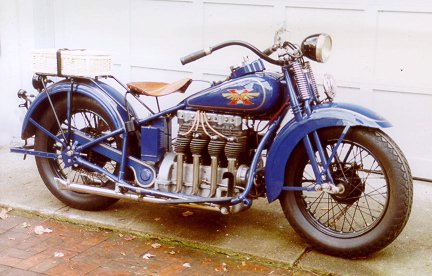
In 1929, Henderson Motorcycles released their “Streamline” bike — a powerful 1300cc four cylinder machine that allowed the bike to break the 100mph barrier. The KJ Streamline would become popular with police forces for its forgiving nature — as they could run from 8 to 100mph in top gear with no issues. The torque was impressive, allowing them to accelerate and decelerate swiftly. Not content with building one of the most powerful bikes of the time, Hnderson released a “Special” for $30 more with higher compression pistons and a larger carburetor that boosted the machine to 45hp and which hit 116mph on one run.

Henderson-1930

Henderson KJ Streamline Size: 1   Def: 6   Str: 6   Spd: 100   Han: +2   Crew: 1   Pass: 0   Cost: $450

Henderson KL Special: Size: 1   Def: 6   Str: 6   Spd: 110   Han: +2   Crew: 1   Pass: 0   Cost: $480

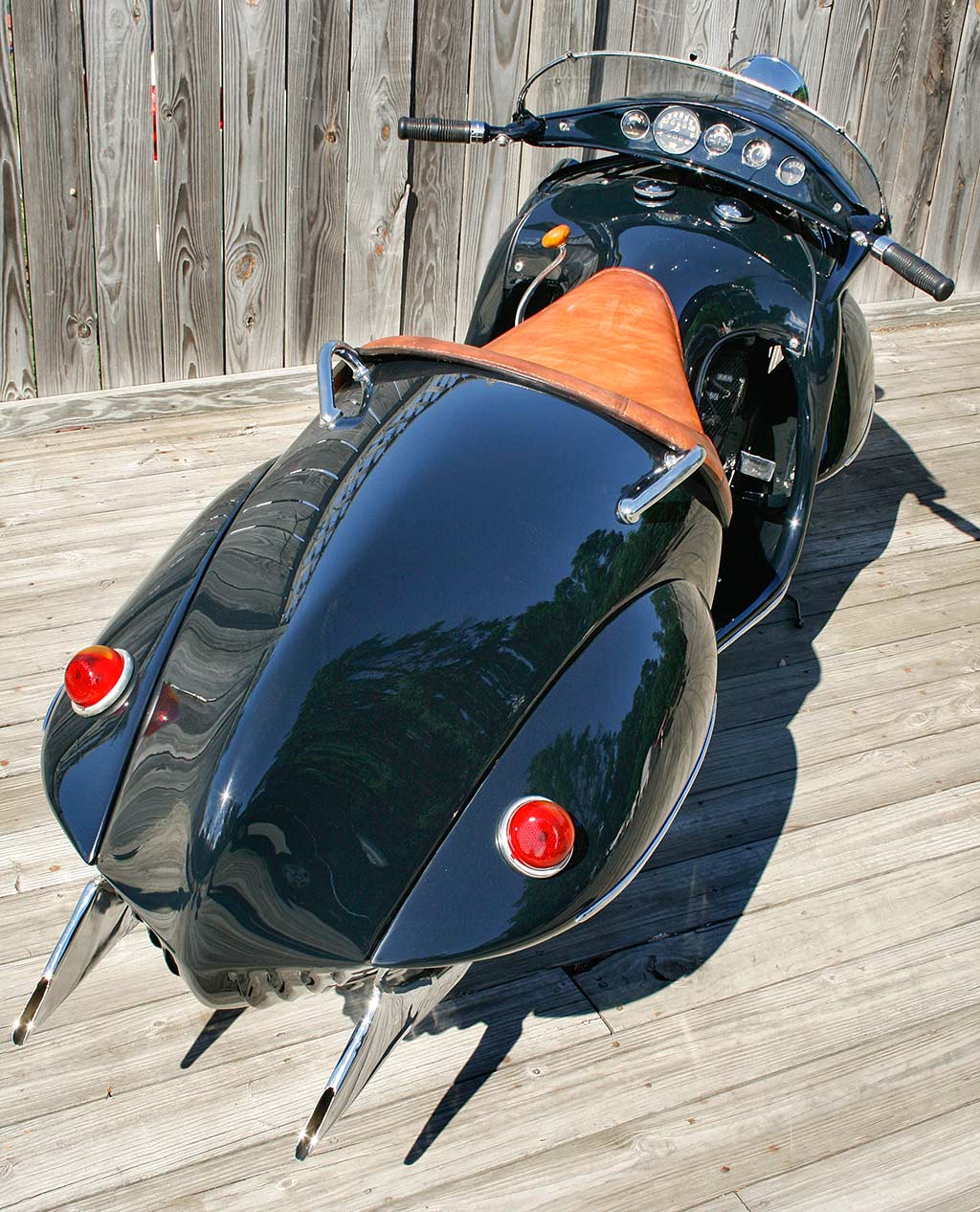
And the one that really caught the eye…

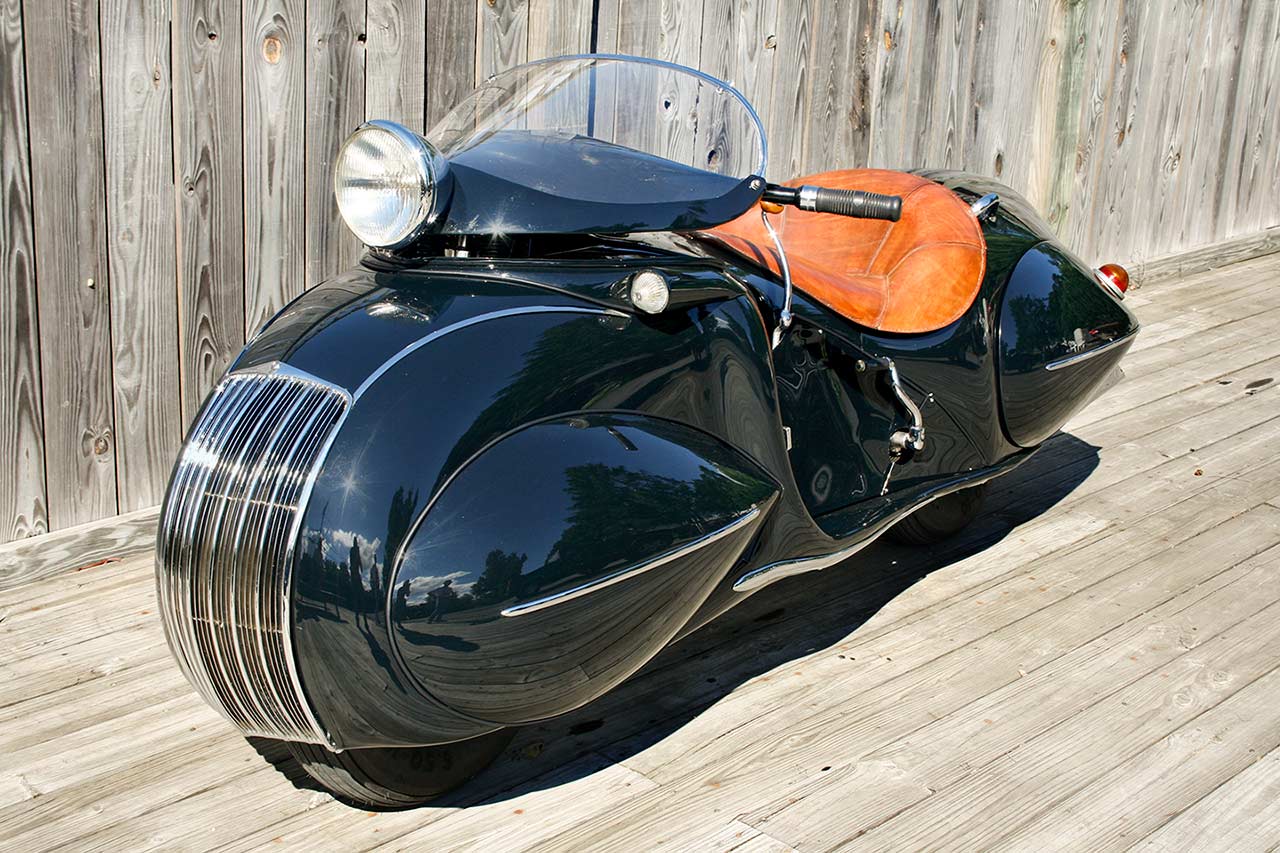
The 1934 Henderson KJ Streamline 

streamliner_1280

streamliner4_1024

This concept Streamline that came out of the impending Excelsior-Henderson merger could have been called the first scooter: it rode on 10″ wheels, had a fully-encased chassis, and a different seating position that was uncomfortable for the tall rider. The bike was heavy, a bit unwieldy in turns, and a pain in the ass to maintain:

1934 Henderson KJ Streamline: Size: 1   Def: 6   Str: 7   Spd: 80   Han: 0   Crew: 1   Pass: 0   Cost: $600

This one, however, has the most potential for pulpy goodness — of course a masked do-gooder could ride this with a boatload of style…yet no one would put together he’s on one of a handful of these things made. Cops in the 1930s just don’t put that sort of thing together. Or heavily modified, it would be the perfect platform for a “rocket cycle”…if only to do your best Brian Blessed “Flying blind on a rocket cycle!?!”

A wee break from the gaming motif:

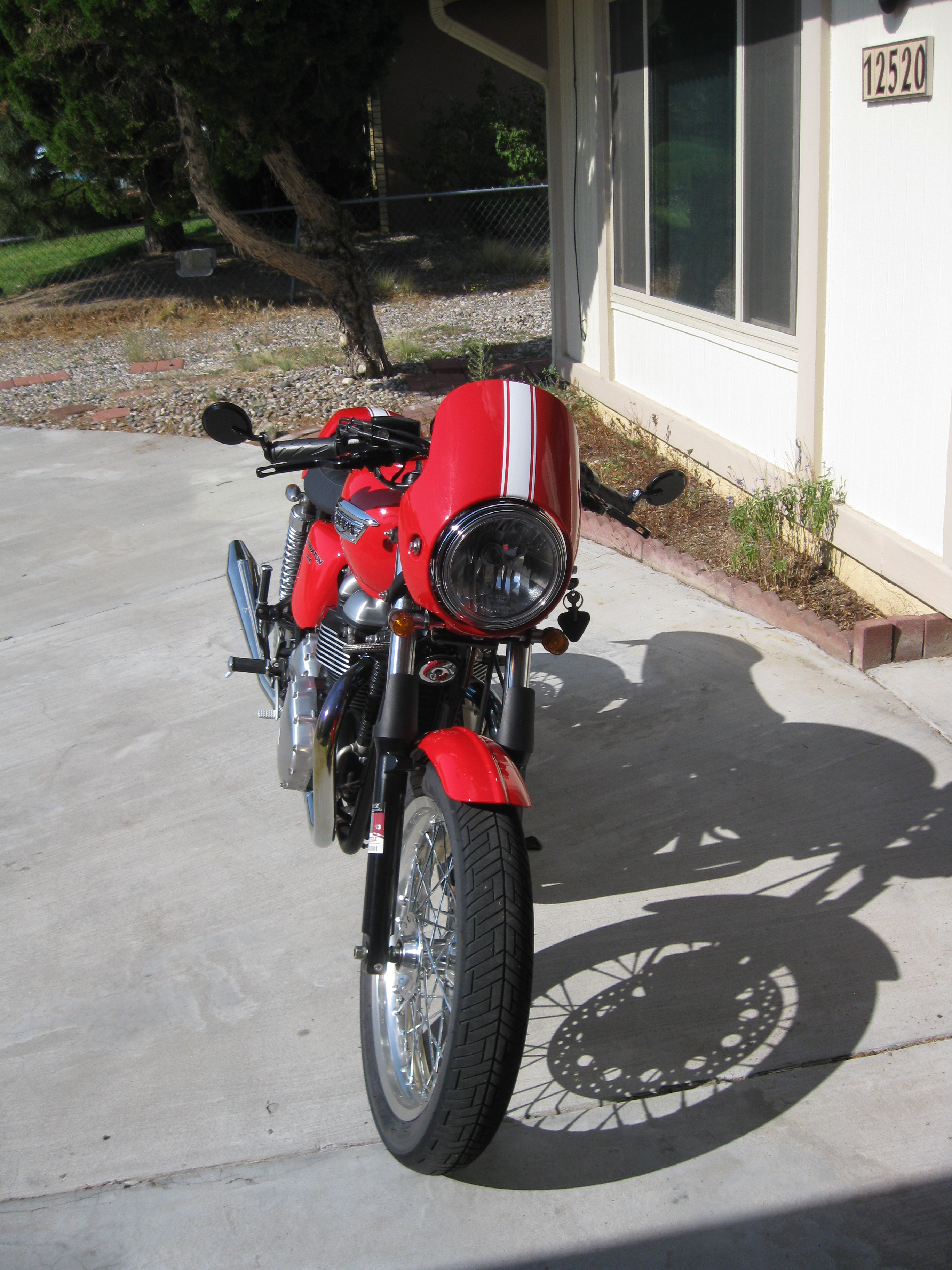
New PSR bar end mirrors, and levers by Dime City Cycles. Next, pinstriping the fender to match flyscreen:


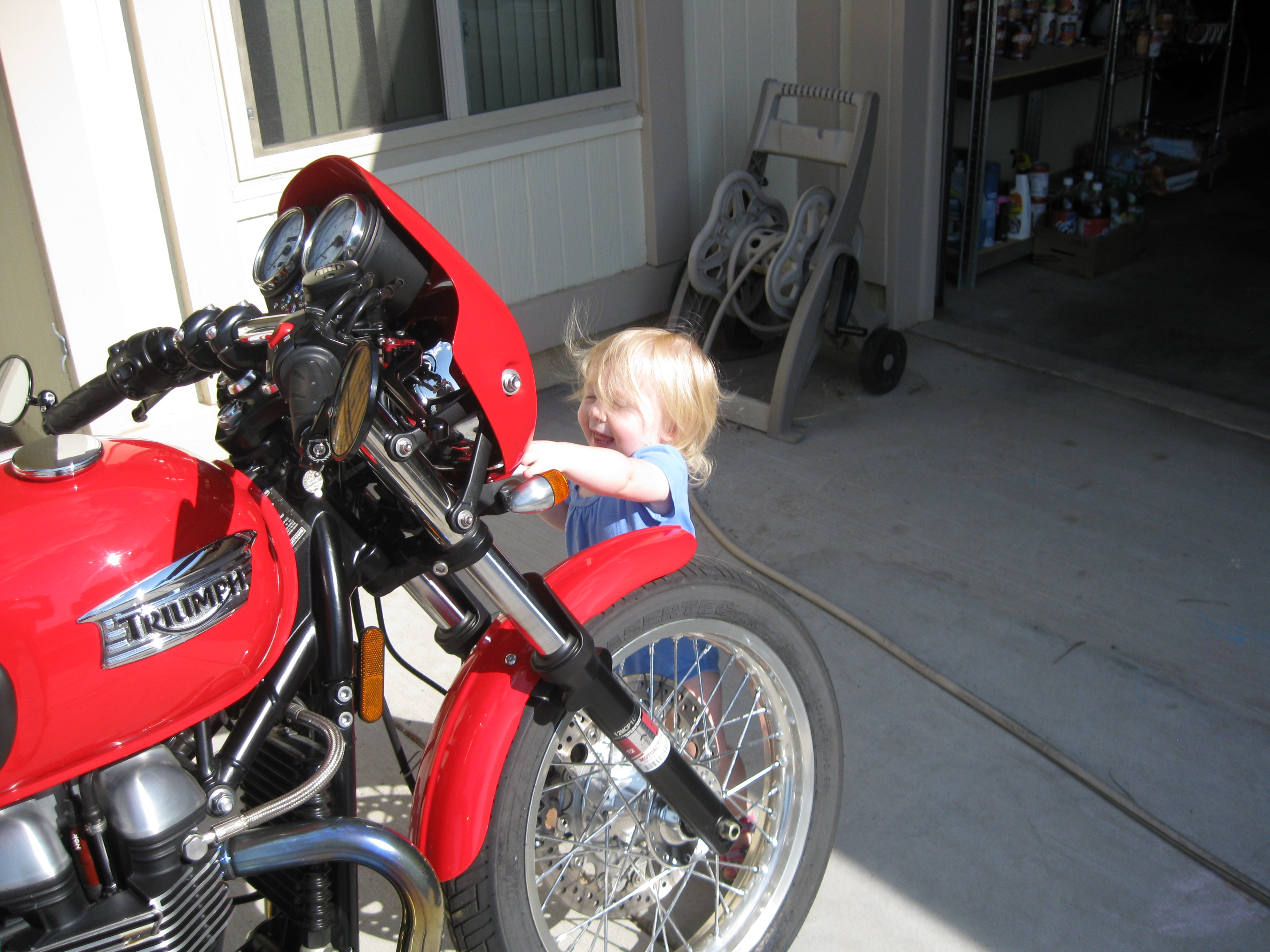
Dad tested, Sofia approved…

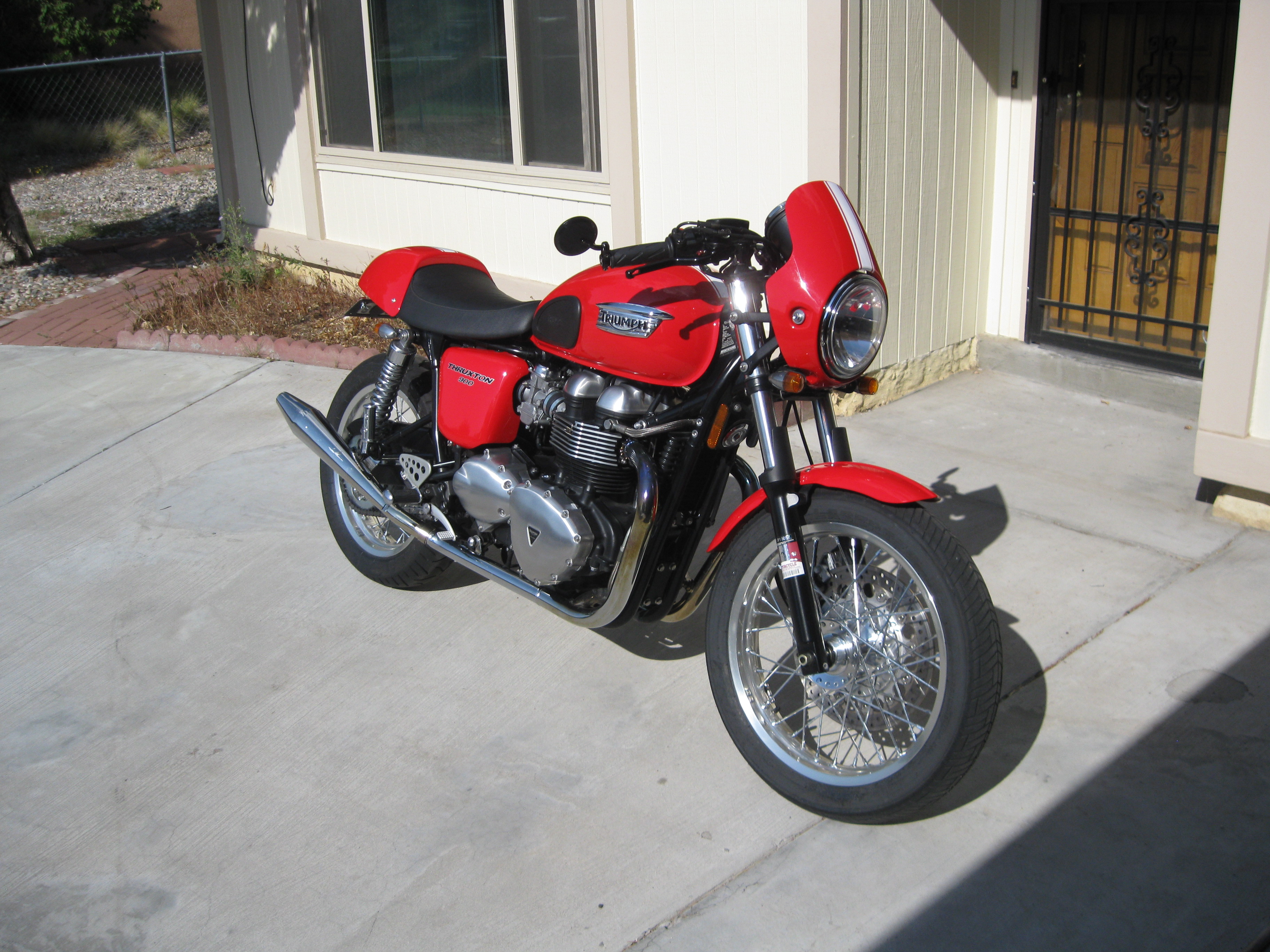
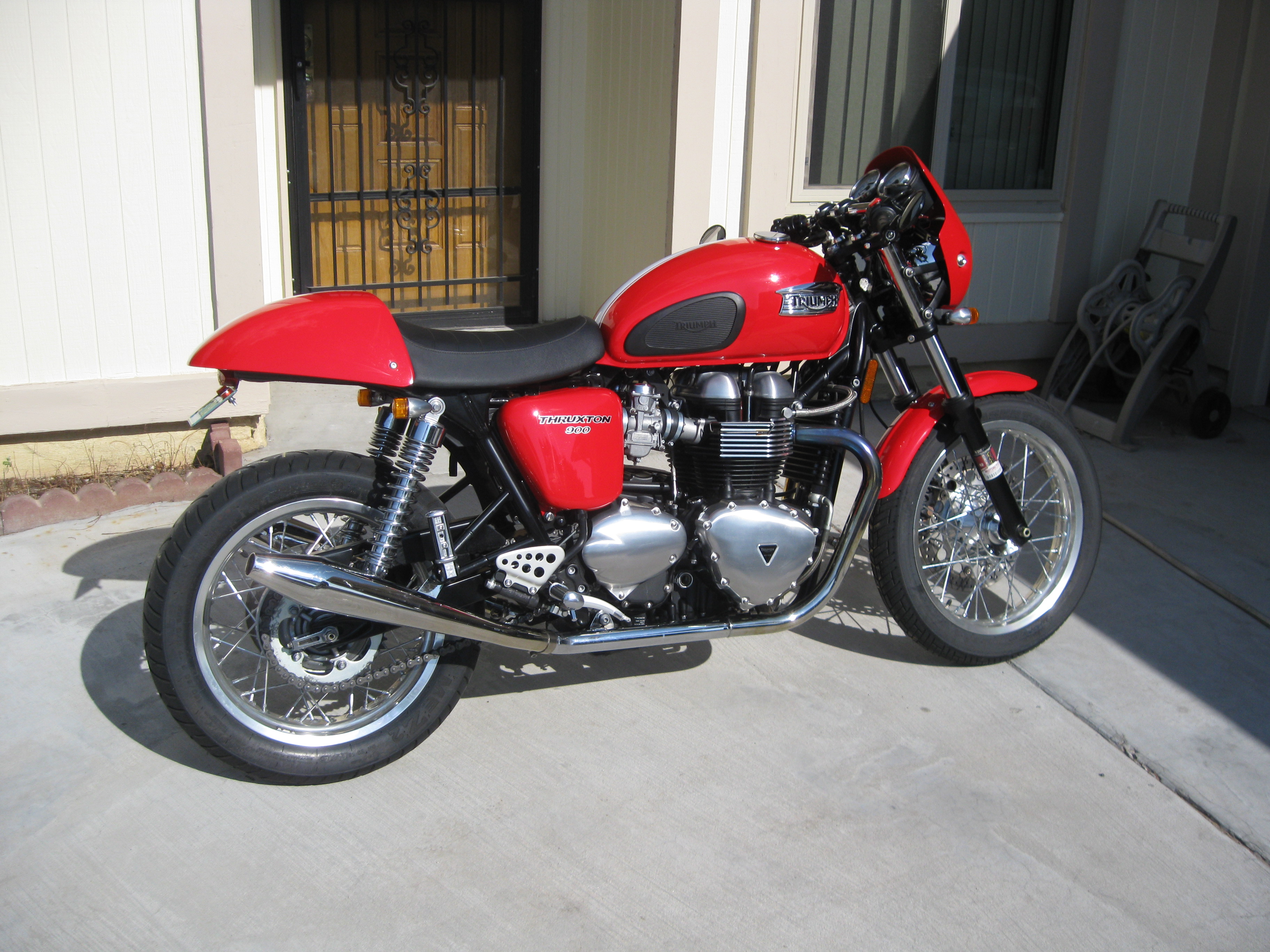
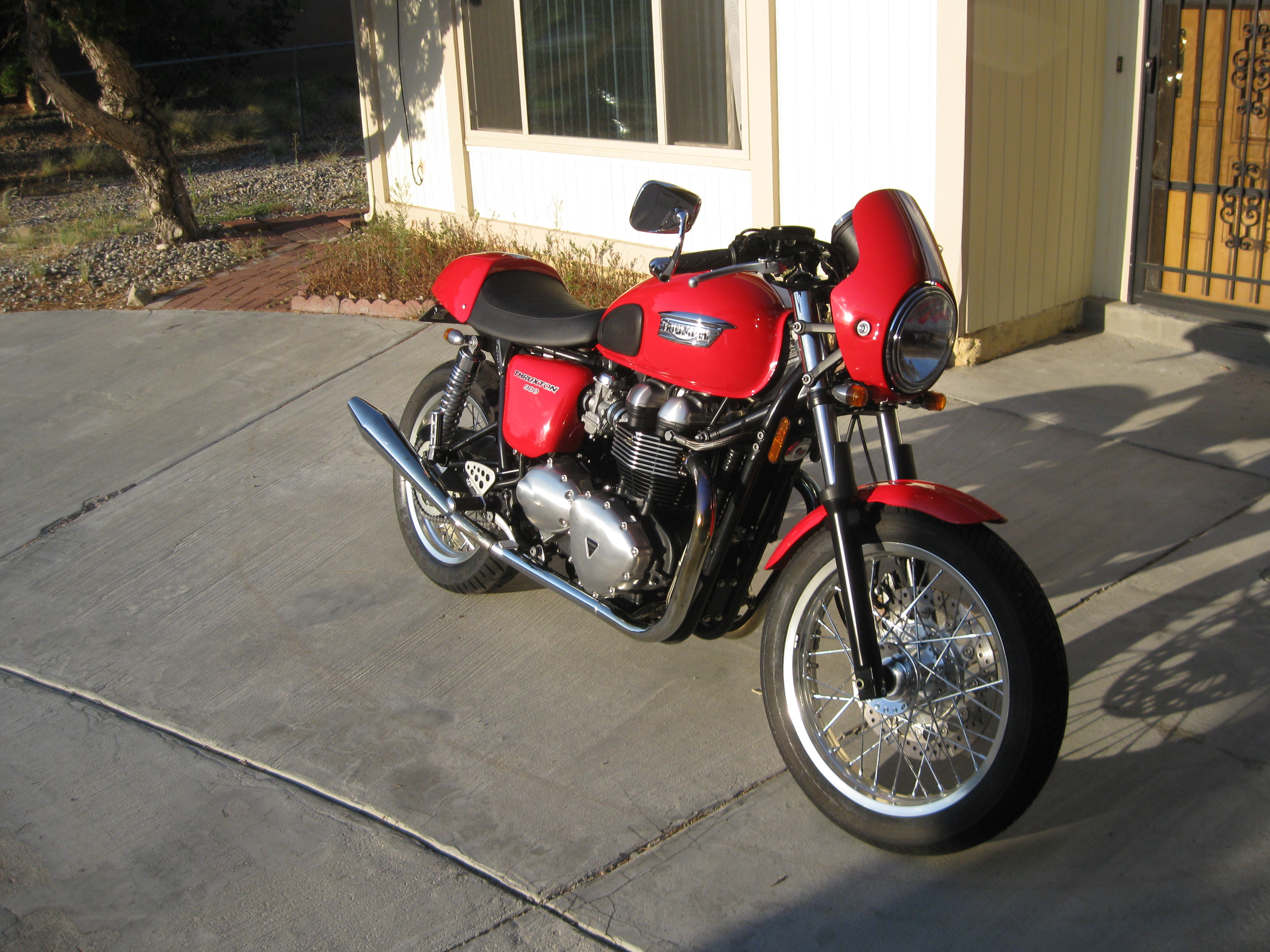
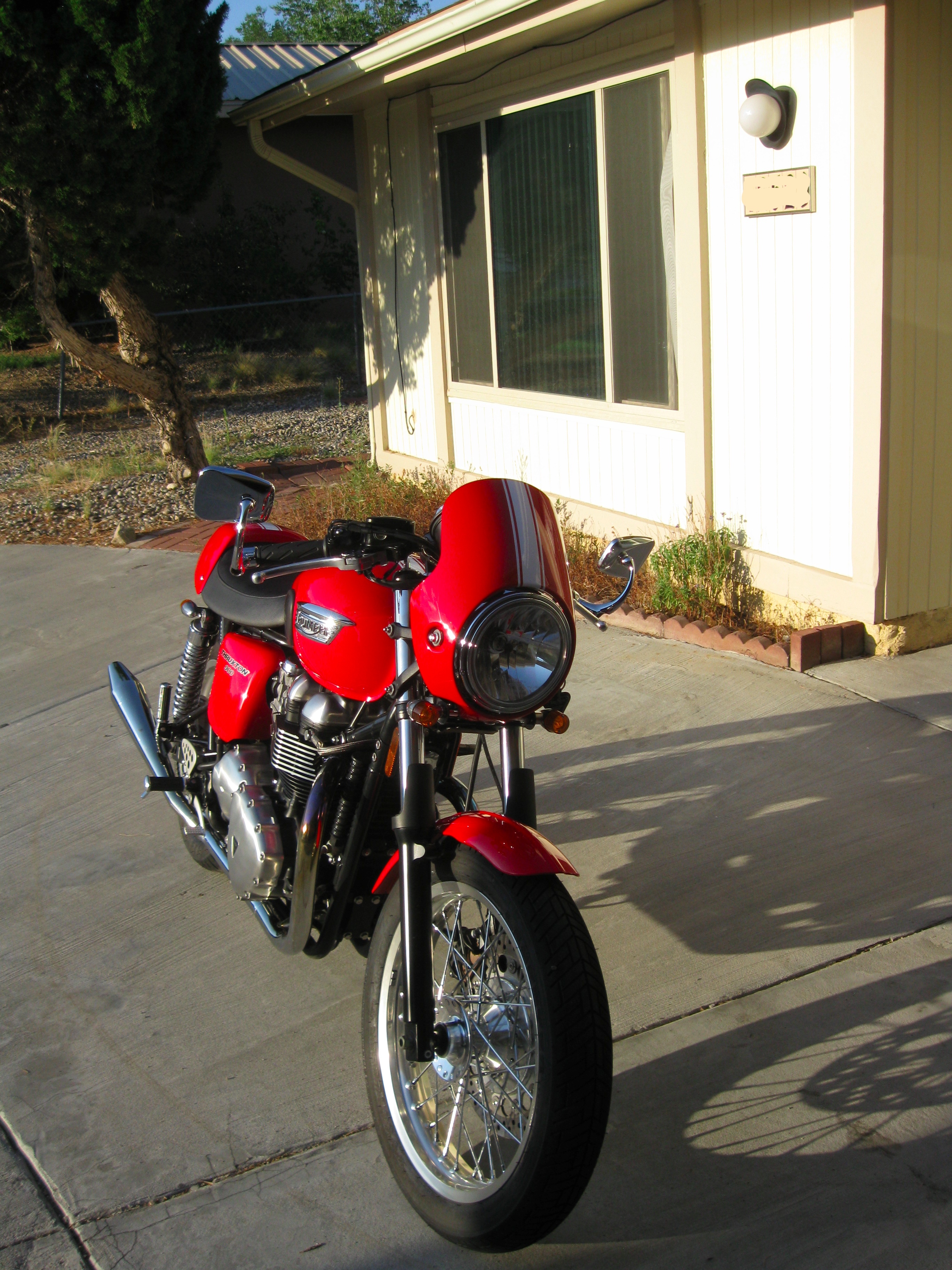
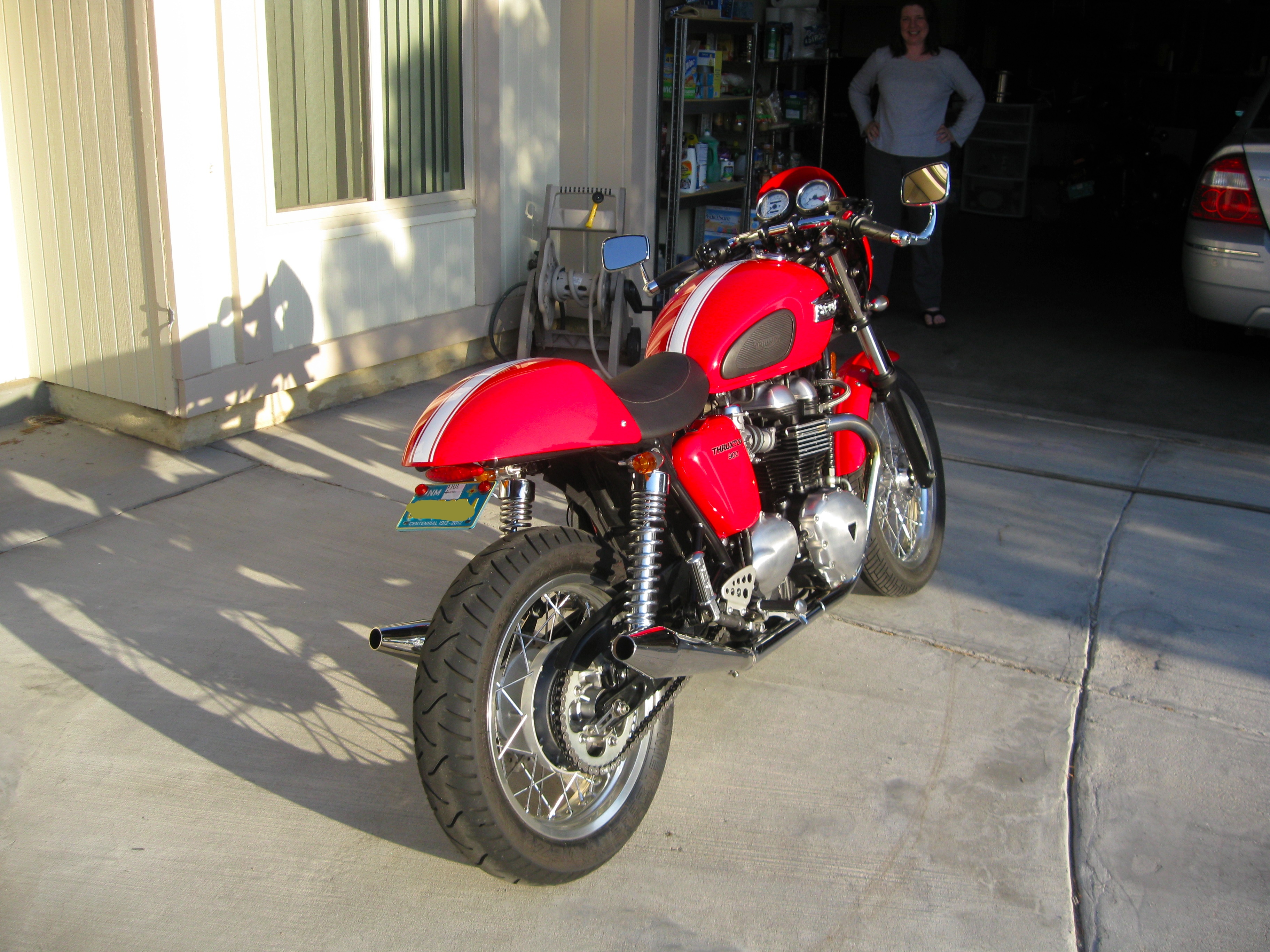
That  almost sounded dirty, didn’t it? I took Trixie, the new Triumph Thruxton (named for Speed Racer’s girlfriend) in to get her fender taken off and replaced with an under the seat cat’s eye LED tail light. The turn signals were moved, as well, and mounted on the shocks — they, and the turn signals up front, are British Custom’s brused chrome bullet lights. Next, the mirrors are going in favor of smaller bar end mirrors. The napoleons she’s got now are just to clunky. After that, the fender is going to get the triple stripe on the rest of the bike to complete the look.

Here’s she is:

UPDATE: Ooo… I found the style of mirror I was looking for, and adjustable levers from Dime City Cycles for cheaper than I could buy either a set of levers or mirrors from the local joints. I jut might have Trixie finished sooner than I thought…


i was out for my weekend ride in the country and stopped at Fastbecks, back in Cedar Crest (run by a friend of mine) just to chat and check on some parts for the wife’s bike. On a lark, I decided to take out a used Thruxton, and run it up Sandia Crest. The Crest road is a “the” ride for the Albuquerque area — it’s 120 turns in about 12 miles to the top (10,000′ or so, compared to the 6,500 at the bottom.)

Just a hint of the kind of road I’m talking about… Fastbecks is at the bottom of 536 (the right.)

On my Street Triple, the ride is pretty exciting and I’ve found my comfort level with the bikes makes for a pretty quick trip up and down. The Thruxton is, on paper, pretty gutless compared to Hecate (my Street Triple) — 62hp compared to the 110 or so with the Two Brothers pipes on the Triple; 52 ft-lbs of torque…about the same. It weighs about 50 pounds more than my bike, so I figured it would be so-so, speed and maneuverability wise.

I was in for a surprise…

Despite the more traditional retro cafe racer bulk, the bike was fast! The gearing is tall, more like a Ducati than a Triumph triple, and I was a mile down the road in second gear in about a minute. The sharp turns of the Crest were nothing for this beast. I was easily handling turns with the same aplomb as Hecate — this thing can turn! It requires a bit more muscle than the lighter Triple, but not much. The torque brings it off the line just as fast, and you don’t have to work the throttle as much. To top it off, the engine doesn’t gush heat like the smaller mill, and the Epco cafe pipes were beautifully tuned to purr and growl, but without the ear-splitting roar of the Two Brothers for Hecate. I loved it!

I took the bike for a run to Madrid, about 25 miles to the north, and back. Mostly straight road with a bunch of nice sweepers, I was looking to see how she’d feel for longer hauls. By now i was already thinking i wanted one. I got back and got a straight trade banged out for Hecate and took the Thruxton home a few hours later.

I’m breaking my mythological naming convention with this one and am calling her Trixie, after the girlfriend in Speed Racer — pretty, classy, but surprisingly tough.

The important bits: The Thruxton is a fuel-injected 900cc parallel twin, with the injection hidden in fake carbs. There is a “choke” which will fast idle the machine; I find she’s a bit sluggish when you first wake it after a while, and a quick pop of the choke gets her running right. Even flogging her to test her ability to pass at speed and to get an idea of her top speed, as well as some around town driving, I got 60mpg. Assuming this will be a high end of the fuel consumption, I’m guessing a range of 240 miles (max!), but more likely 180-200 on the 4.2 gallon tank. She is fast as hell accelerating up to about 90mph, then her power starts to drop off quickly. I absolutely was not speeding, but 110mph is definitely achievable. The wind buffeting is minimal due to the flyscreen, but above 80 you really start to feel it.

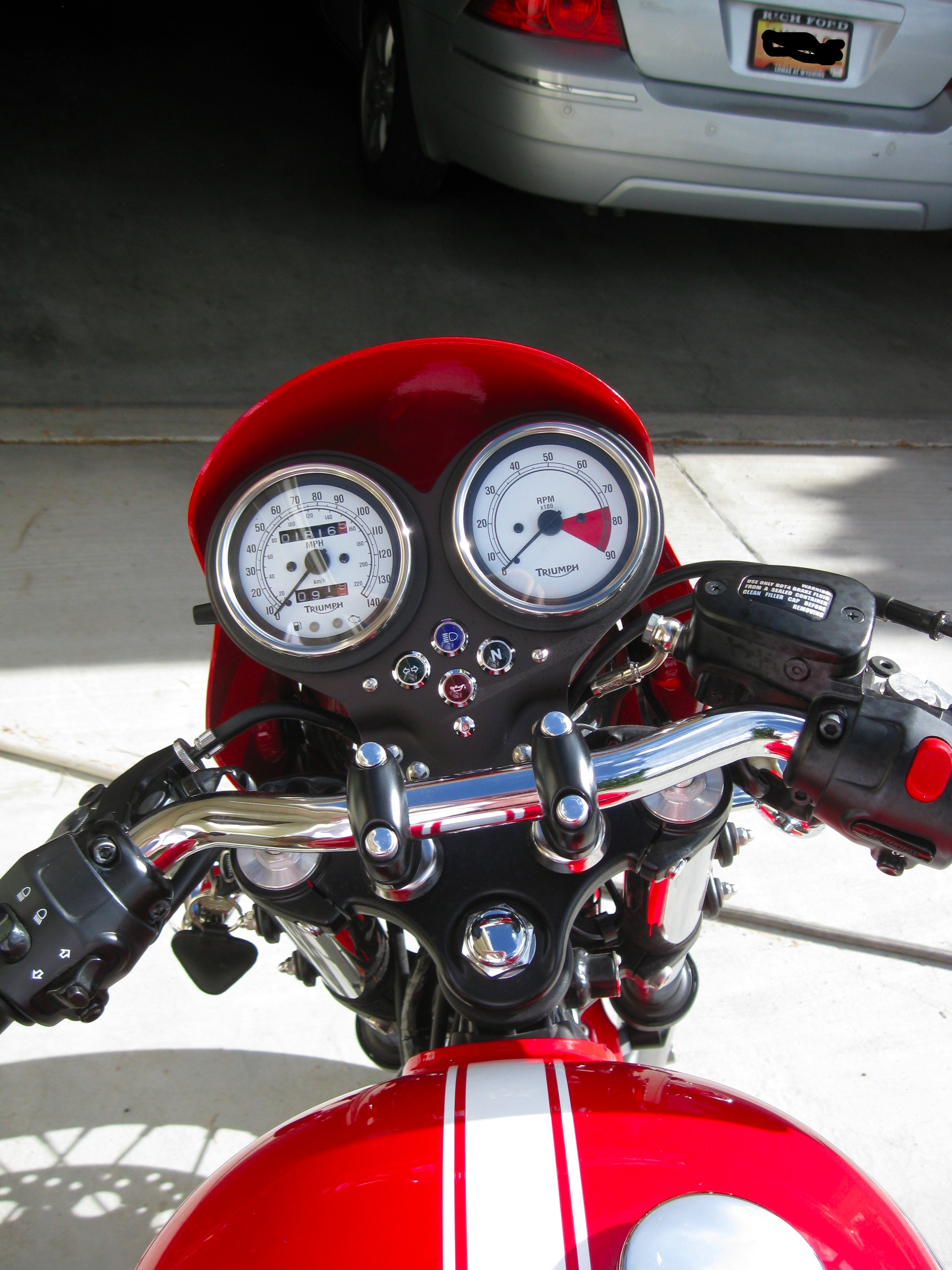
Gauges are analog — speedometer with gas and engine warning lights ont the left, tach on the right, and a cluster of indicator lights underneath. The key is on the head of the bike on the left — not the usual place for the sportbike crowd, and I’m still getting used to it.

Did I mention that i got the bike with only 1800 miles on it, compared to my Triple’s 10,000 or so?

This is insane.

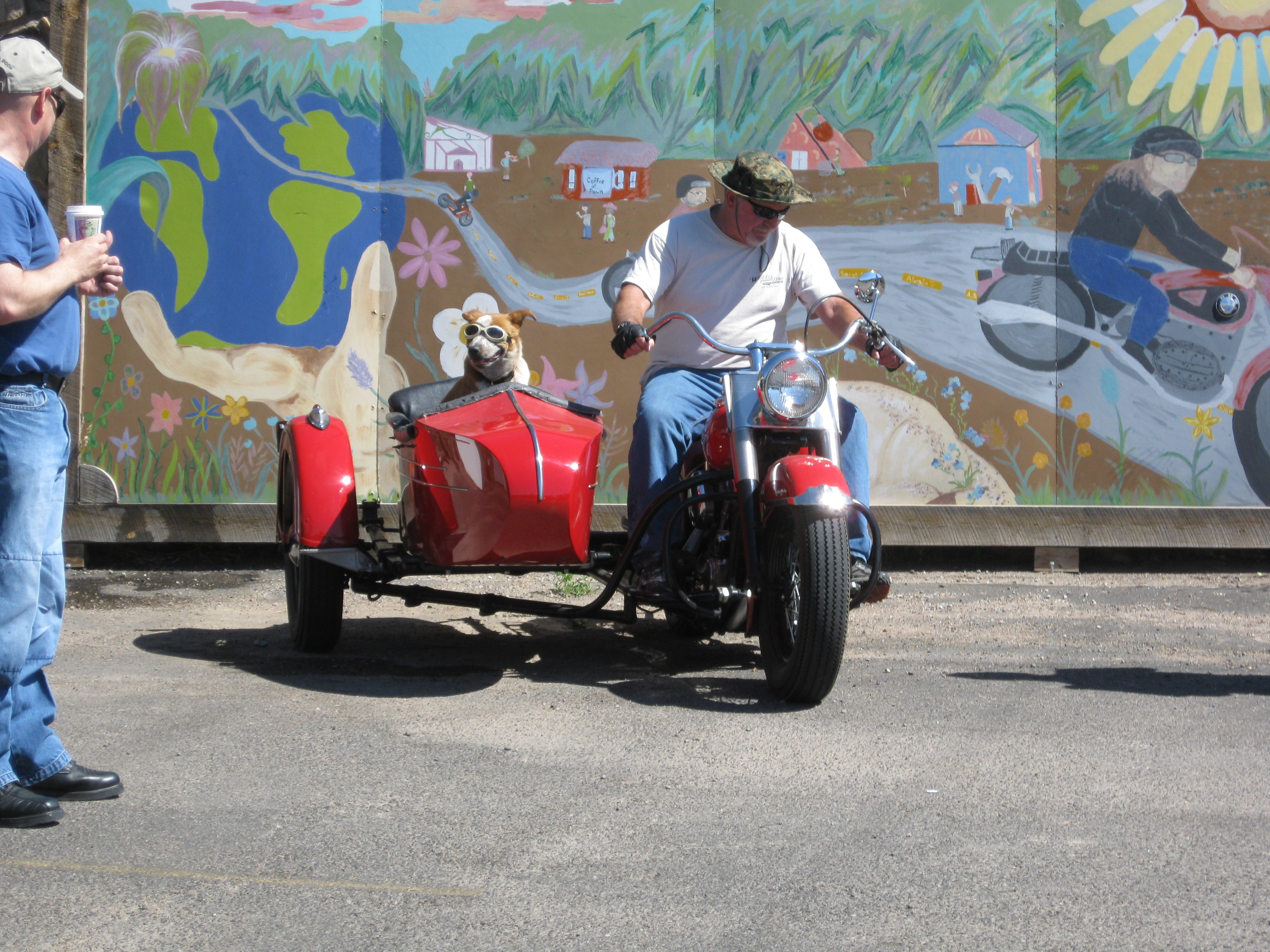
Dog with goggles? Check! 1951 Harley with sidecar? Check! Riding without any safety gear? Check. Maximum coolness? Engaged!

I picked one of these up for a song the other month and finally started wearing it on a regular basis, as we’re in that stretch in early spring in New Mexico where it’s very cool in the morning, and quickly warms up to the 60/70s in a matter of a few hours. The heavy Triumph paddock jacket I use for cold weather gets too warm quickly, the mesh jacket is too chilly below 60 or so…

River Road made a very nice jacket here — it’s part of their “vintage” collection, and it’s got that old cafe racer quality to it. Wile they call the color black, it’s more of a chocolate color. The leather is heavy and of excellent quality: I doubt a crash is going to tear through the material. There’s a pair of pocket/vents on the chest, a pair of standard pockets that zip, there’s another zip pocket along the zipper area that’s fairly spacious — it would almost fit my Walther P99 in it. Inside there’s a cell phone pocket with velcro and another velcro pocket that’s big enough for a sunglasses case. These are replicated on the zip-in quilted liner. There’s also zipper vents on the back and the arms. There are two position button-up straps to tighten the waistline.

Ventilation on the jacket is not a problem. I’ve ridden up to 80F in the jacket and been comfortable when my bike was in motion. The neck does not seal on me, so there’s always a bit of airflow. I suspect it will be on the cold side under 40F, but that means you won’t sweat to death on a summer’s ride. It’s also comfortable as an everyday jacket and looks pretty good.

The only downside for me is the lack of padding for a crash. This is a stripped down jacket to prevent road rash, not to protect your bones.

Overall, I find this a great piece of apparel for the $199 MSRP, and if you get it lower than that, it’s a steal.

« Previous PageNext Page »