Roleplaying Games


(For this piece, I’m using the Quantum Mechanix Map of the Twelve Colonies — which we use for our Battlestar Galactica RPG campaign.)

First off, I had to get a general idea of how fast BSG ships move — using the speculations over on Battlestarwiki.org, I worked out that the sublight Speed Rating in BSG is rough half the percentage of C; in other words, Colonial One with its Speed 6 is capable of up to .12C. (Yes, that means raiders are capable of .18C — really bloody fast…but it’s sci-fi. Roll with it.)

Now that we know how fast the ships can go, we need to know the distances involved in traveling around the Colonies. The map specifies an SU as the distance from Caprica/Gemenon’s barycenter to the sun — about the same as an astronomical unit (handy!) or eight light minutes. We now have distance pegged from light speed. We can get fancy and measure the orbits on the map, but I’m not quite that OCD — each of the four systems seem to have their outer planets orbiting at roughly 5-6SU. In each of the four systems, that means that the Colony worlds are never more than roughly 2.5SU away from each other.  You can assume that a trip from, say, Picon to Tauron at their furtherest from each other, take a liner like Colonial One would take about 2.2 hours, but a trip out to Persephone would be about 6SU, which would take a ship like Galactica about five hours at flank speed.

For communications time, figure the rough distance between the worlds in SU, times by eight, and double it for a return message. So if Picon and Caprica are at periapsis (closest distance) the time to cross .2SU is 1.6 minutes. If Caprica and Tauron are 1.5SU apart, receiving the latest Caprica Tonight broadcast would have a lag of 12 minutes.

What about between the stars? Helios Α and Β, and Helios Γ and Δ are both locked in barycentric orbits with each other, with a distance of 60 and 70SU respectively, and both pairs of stars are locked together at about .16LY. A message sent between Colonies in Helios A and B would take between 7.3 hours (for periapsis) and 9.3 hours (at apoapsis.) This means Galactica at full burn would take between 73 and 93 hours to cross the distance from Tauron to Virgon, depending on their position. You would have comparable times between Helios Γ and Δ.

For example: Using this map and speed rating, the old girl was, in the miniseries, hell and gone from anywhere when the attack began. It was roughly 30 minutes to get a message to Caprica, so she was 3.75SU away…out near the Erebos asteroid belt. We could assume she was on her way home from Scorpia Yards, but since they specified the ship hadn’t done an FTL jump in decades, she did it sublight. The distance between the two pairs of stars is .16LY. Even at full speed, Galactica would take almost two years to transit from Scorpia to Caprica.

That means that travel between the four stars is perfectly doable at sublight speeds and would explain why there were a wealth of non-FTL ships plying Colonial space. One thing it does suggest is that to cut down on communications latency, the Colonies use some kind of courier service(s) to move data between the two pairs of stars. I envision a kind of packet boat that jumps from, say, Caprica to Libran, does a data dump of bank records, government documents, express mail, etc. and that from a central hub the data is broadcast out to the destination worlds. Government, military, and financial data is probably shipped daily, but personal stuff might go weekly.
I’m putting together a new plot/campaign for my new gaming group. Here’s the elements, so far — 1936/37, Spanish Civil War and Spanish Guinea (Equatorial Guinea, nowadays), group hired to find missing scientist who was looking for white apes in the area. The Spanish have branded the man a criminal who is leading a revolt in the jungles. Where is he? Why would he be fighting the Spanish, especially as he is not a military sort?

As half the group is probably gone for Thanksgiving, I may run a quick caper set in Los Angeles for the pair of them. Stealing an stolen artifact from the guy looking to sell it to the Ahnenerbe. that’s all I’ve got for that one, right now…

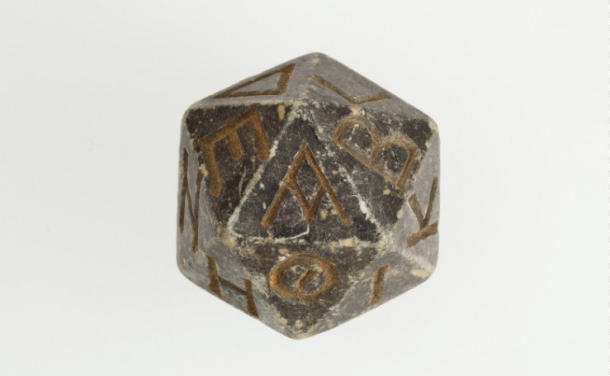
The Metropolitan Museum of Art has the oldest known d20 in their collection, from some time in the Ptolemaic era (older than 300BC.) It was found by Reverend Chauncey Murch between 1883 and 1906, while Murch was a missionary in Egypt.


I wonder what edition they were playing..? More at C/Net.

In honor of Skyfall, and the idiotic biometrically tagged PPK/S (great idea…when it works…), here’s the weapon Bond should be using when undercover (if we’re sticking with Walther.) I’ve shot one of these and was shocked by how accurate it was out to about 15 yards and how controllable, despite the low weight.

WALTHER PPS 9mm

Introduced in 2007, the PPS (Police Pistol, Slim) is one of the smallest 9mm self-defense guns available. Weighing in at 19.4 ounces unloaded, having an overall length of 6.3 inches and 5.9 inches from bottom of the large magazine to top of slide, it is easily concealable, powerful, and very accurate. Unlike the PPK, the PPS is highly reliable. The magazines come in 6, 7, or 8-rounds — the six round lies flush with the grip and is best for concealment, the eight best for grip and control.

PM: +1   S/R: 2   AMMO: 6   DC: F   CLOS: 0-3   LONG: 8-14   CON: -3   JAM: 99   DRAW: +1   RL: 1   COST: $600   GM Information: The stats are for the 6 round magazine, the 7 and 8 round raise the AMMO appropriately and lowers the CON to -2. There is a .40 S&W with the same stats, but has a 5, 6, and 7 round magazine.


Just in time for Skyfall, here’s the Aston Martin DBS…

ASTON-MARTIN DBS

Introduced in 2007 to replace the Vanquish, the DBS is a 5.9 litre 12-cylinder luxury GT automobile that brings an even more aggressive look, power, and handling to the line. The motor generates 510 horsepower and 420 ft-lbs of torque that takes the car from 0-60mph in 4.3 seconds and up to 191 mph (183 mph if through the Touchtronic2 transmission.) 85% of the car’s weight rests between the wheels and the hull of the vehicle is carbon fiber to reduce weight and aid in acceleration and fuel savings. The Adaptive Damping System, or ADS, tweaks the suspension for road/weather conditions.

The interior of a DBS is a blend of carbon fibre, alcantara leather, wood, stainless steel and aluminium surfaces. The seats both bear the DBS signature with an optional 2+2 seating configuration. The key is made from stainless steel and glass and is inserted into a special hole in the dashboard. It also has a 1000-watt Bang & Olufsen sound system with 13 speakers in 10 different locations throughout the cabin, as well as an integrated Apple iPod connector.

PM: +2   RED: 2   CRUS: 110   MAX: 191   RNG: 260   FCE: 2   STR: 6   COST: $290,000

GM Information: The DBS receives a -1EF to Force maneuvers and safety rolls associated with the same, however, otherwise it receives a +1EF to safety tests.

Q Department: The 00 section DBS vehicles are equipped with the latest in vehicular armor (-4DC to attacks), and a shielded, biometric secret compartment in the glove box that can hold a sidearm and extra magazine. There is also a vital signs monitor/ emergency defibrillator (in the glove box) and combat medic kit  (in a compartment under the passenger seat.) GPS, wifi hotspot for the agent’s cell phone are also standard.

One of the elements in our latest Battlestar Galactica campaign that would translate easily into almost any modern/future setting is the use of non-profit foundations as a villain organization. It’s a nice change from the tired “evil corporation” trope of cyberpunk, and fits well into the police state fascism of cyberpunk settings, or the world of Firefly, or spy-fi campaigns. These non-profits are generally thought well of because they appear to be honest brokers — they aren’t making money off of their policy positions (not true, of course), they claim political nonpartisanship (not true — in fiction or reality), and often have a wide reach. These groups don’t just target politicians, they get their hooks into education by providing money, and they insinuate themselves into business practices through advocacy.

Here’s a couple of groups that, with a bit of tweaking could be used in any setting:

PROMETHEUS GROUP (Battlestar Galactica version)

This is an umbrella holding trust that controls the money and operation of various non-profit foundations. They have their hooks into policy think tanks (The Prometheus Foundation), educational scholarship funds and advocacy (the Lucan Foundation), and Center for Colonial Progress (a political lobby firm that pushes social programs and funding for the same.) The group and the Lucan Foundation were formed by entrepreneur and former Virgoninan politician Count Azarius Lucan. The count is now a reclusive figure, pulling the strings after a near-fatal accident while orbital skydiving. He suffered extensive surgeries following his accident that could have allowed the Cylons to either replace him, or alter him in some way to be their master agent on Virgon.

It should be obvious how this can be tweaked for usage in any futuristic game that involves cybernetics, cloning, or even psionic manipulation. Lucan (I’d change his first name for modern settings) is a quasi-tragic figure — the former scion of whatever policies the GM’s universe deems “good” turned bad guy because of outside influence. (Better is he was always a bad guy, but he hides it well; sort of what they were going for with Dominic Greene in Quantum of Solace, but tip their hat too early.)

For a modern setting, you could just use real foundations as your bad guys; they are legion, but the Prometheus Group could be some kind of international group manipulating politics, terrorists, businesses, to create a world (dis)order that benefits them monetarily or politically. It’s world domination without the nuclear blackmail. What makes this sort of black hat organization so insidious isn’t just that they are seen as good guys, but that their monetary influence would extend throughout the political system that controls your police precinct, spy organization, military unit, or whatever — your own people don’t want to see you succeed because of the hit they will take to their funding stream, or it could implicate them in dirty deals, or simply act as an embarrassment during election time. You will be fighting both the villains and your own command structure.

It’s been two weeks since the last AAR for the Galactica game. This is partly due to the addition of two new players, so there was a lot of intro work. One of the new characters is a JAG lawyer who has been brought in to monitor the actions of the characters and their investigations into Cylon infiltration of the Colonies. They’re research has led them to suspect toaster involvement in several mega-lobby firms and non-profits…all highly politically connected. This positioning has the characters in a difficult place, where they cannot push too hard for fear of riling up politicians tightly connected to these group’s money stream. The lawyer is there to slow the investigation, as much as keep them legally correct.

The second new character is a Colonial Marine Corps sergeant who has been assigned to protect Commander Pindarus (the lead in the series). He’s a young, confident but not as smart as he thinks he is son of a fisherman from Picon, who is somewhat prejudiced toward the privileged and wealthy.

The new characters needed some intro time and the character crosstalk has increased dramatically, which is slowing the plot somewhat. This is one downside to larger groups — add a player and I find the crosstalk doubles. If you have a player who is more of a time hog than others, that also slows matters.

The plot elements the last two weeks: Things are still moving at a quick pace. The characters had rounded up a group of suspects that were tied to their main target, a lobbyist for the Lucan Foundation, an educational non-profit that does a lot of policy work. They are the main force behind trying to downsize the defense budget in favor of social programs. these people had been smuggled past the customs at Caprica City Spaceport**, and one of them was later involved in an attack on Pindarus.

Their efforts are mostly a failure over the last two episodes. They make a move to arrest the lobbyist, but when they make their move to raid the condo of the man, all electronic devices, the power goes out for a two block radius of the building. Their quarry is gone, and all of his computers and storage media are trashed due to some kind of EMP bomb about the size of an 48 ounce drink cup — it’s technology far advanced of Clonial EMP devices. They find a strange mechanical fly, as well, and think it might have been a surveillance device that saw the breach team’s approach and popped the bomb.

The mission is jeopardized by the botched raid because the condominium was in the swanky Orpheus Park neighborhood — home to a lot of business, entertainment, and political figures. (Think the Upper West Side of Manhattan…) A lot of important people were inconvenienced and are blaming the Colonial Security Service. To make matters worse, the twelve other suspects they have all die in custody — the back of their heads popping from the “kill swtich” in their cybernetics. they track down the captain that brought them in, but he’s clean of cybernetics and cooperates reluctantly, but all his information is useless — save for one piece that links the lobbyist’s activities to the elusive Count Azarius Lucan — the man who founded the Lucan Foundation that the suspect worked for, but also the Prometheus Foundation, a policy think tank that is similar in size and scope to the Tides Foundation in the real world. Lucan has been a recluse since he suffered a near-fatal accident while orbital skydiving. He lives on a private island on Virgon, and it appears the suspect has been visiting the place off the books (something the foundation VP on Caprica says he would not have done.)

It’s obvious the Cylons know they are onto them and are trimming the loose ends. There’s other elements that have been in play, as well, family and friends and other distractions to keep the players off balance.

(**Worldbuilding element: the Colonies are supposed to have a freedom of movement between the Twelve Worlds, but  because of differing tax rates on various planets and some differences in product legality, travelers are supposed to go through customs checks. It’s a misdemeanor on most worlds to dodge customs.)

This week’s game would be called a “push episode” in TV vernacular: there was some movement forward on the various plots that have been coming together. The characters raided a Ha’La’Tha safe house in an old steel mill in the former industrial sector of Caprica City. Their target was Sio Faras — the local boss for what appeared to be a major crime cell connected to the attack on Commander Pindarus (the series”lead”) and to Ceros Grama, a powerful lobbyist for an educational foundation with tied all over the colonies.

The action sequence was quick, violent, and was the new player’s first encounter with Cortex combat rules. In the end, they had several of the baddies on the deck and Faras in custody. Fearing that she might be “lowjacked” like other Cylon agents they had tried to nab, they had two raptors on station — one to provide jamming, the other to do an extract to an isolated military location…in this case, the battlestar Galactica in high orbit.

They were able to interrogate the prisoner and while she didn’t give up much willingly, they were able to break down her sotry and find out 1) she worked for a Brigadier Davos — one of the last of the HLT commanders to be arrested (a few eps back), 2) She knew she was working for the Cylons, was terrified of them, and that the Cylons were using Tauronese desire to be out from under Caprica and Colonial thumbs as a means to motivate the crime syndicate. (They did not ask if she was a willing participant in the plot. She’s not.) 3) They were able to successfully CAT scan her head and find the cybernetic implants in her head — some kind of CPU near the medula oblongata with leads into her sensory-motor region of the brain, as well as her amygdala and pain centers.

They speculate she is a human “camera” — a probe that the Cylons can collect data through, either passively or through induction of pain/pleasure/whatever. They also have the connection they need to move on Grama legally, and they now know to turn their attention to this Davos guy.

Next episode promises to be more of the same, and I have a few surprises in store for them. (A few same decisions opened opportunities for me to seriously screw with them. I think I’m taking them.) All in all, the tone — of paranoia and Cold War machinations — has been holding up to extended play and as they realize how entrenched the Cylons are, the stakes are getting higher.

There was a post by Martin Ralya over on Gnome Stew that caught my attention and spawned this post: How do you pitch your hot new game to your players? Maybe you bought a new game and the rules set is way-cool, or the setting is fascinating, or it was fun when you were at a playtest…either way, you want to run the game and need to get the rest of the group on board. Here are a few dos and don’ts that should help:

1) DO know your player’s interests and craft not just the pitch, but the campaign, toward their strengths and interests. Example: my latest Battlestar Galactica game starts before the Cylon attack to try and create a strong, vibrant world the characters will miss when it’s taken away…but also because I know one player loves high-level politics and espionage settings, and the other conspiracy mystery games. So now our BSG game is more Cold War spyhunting spy-fi than military-based post-apocalyptic survival. It’s still the same universe, it’s still got the same elements, but the flavor has been tweaked to their tastes.

2) DO make sure the game is something you’re interested in running long-term, even if it’s a one-shot or mini-campaign. This is because you never know if the game will hit big and you’ll be playing it six years later (like my Star Trek campaign from the early oughties), or if the short plot will get stretched for a month or two due to absences, etc. You have to love it as much as they do, or it’;; die on the vine.

3) DO wait to pitch the new hotness until you’ve had a chance to let your thinking on it percolate. Maybe you come out of the gate strong, but you had no major story arc, or nothing beyond the first plot. Or worse, the first session. This has been the case with me and Jovian Chronicles –a wonderful setting that I just cannot seem to figure out what I would do in that particular sandbox. Another hard one is Serenity/Firefly — great flavor, and I can come up with a few scenarios, but no big plot to tie it all together. Sure I could just do an episodic game, or let the players sandbox around, but I’ve found the latter usually bogs down into bar fights and patter in many games.

4) DON’T overdo your world prep. There’s nothing more offputting than to have to read through the 80 pages of history, social surveys, and other elements for a setting. You’re not Tolkein, and I don’t want to read the bloody Silmarillion  just to play a game. My world prep for Battlestar Galactica could be summed up in about a page. This is partly due to the nature of licensed properties; the world is mostly created for you. But just like the Colonies were this hazily defined thing for BSG because ultimately the story took place on a spaceship looking for Earth, you want just enough depth to have consistency, but not so much you cannot make stuff up on the fly. Which brings me to an other important bit once you’ve got the game going —

5) DO let the players help create the world. MAybe someone tosses off a quip about the assassination of King Whatizname 30 years ago — you didn’t have an assassinated King Whatsiname, but now there’s some set dressing and a possible plot line to work with. Worldbuilding, just like the playing of the story, should be collaborative, no matter how narrative your style (as mine is.)

6) DO play on the game being a one-shot or mini-campaign. Think movie, rather than series or series of books. Get into the characters and plot fast, and get out just as quick. That way, if it’s not got legs, you can have fun with what you have and move on.

7) Lastly, DO ask your players what they prefer to play. If it’s something that interests you at all, be enthusiastic and give the audience what they want.

It’s been a crazy busy couple of weeks, between medical and dental appointments, child issues, and other stressors, I’ve not been able to post as often as I would like. So here’s an AAR for the Battlestar Galactica RPG.

We’ve had two “episodes” so far in the new “season”, which started with the addition of a new member to the gaming group. (His blog.)

The players are, respectively, the commander of Aegis from the rest of the gaming reports (now reassigned after the “screw up” during his mission to do reconnaissance in Cylon space to the soon-to-be decommissioned Galactica) who is on a three week leave before his next command — he has effectively been beached by his political opponents in the Fleet; and a Colonial Security Service (think FBI) special agent that is on the Fox Mulderish side, seeing conspiracies everywhere (and sometimes correctly so) and who suffered a traumatic brain injury in a car accident that had him recollecting an alien abduction that was most likely just his imagination integrating the medical attention he was getting at the time (now he’s starting to think it was Cylon experimentation he suffered…)

They have been looking into Cylon influence in the Colonies. Previously, the commnader discovered that Colonial citizens have been taken and altered by the Cylons. They apparently are brainwashing, or through cybernetic implants controlling the actions of people in the 12 worlds. One of these was a high powered lobbyist working for his wife, who runs one of the premier, pro-military-industrial complex lobbying firms in the Colonies. The discovery has temporarily damaged the influence of the Pindarus Group (the firm), and given them some insight into the Cylon operations: the Cylons appear to be using lobbyists, educations foundations, politically-powerful non-profit NGOs — the highly influential, but mostly unseen kingmakers of the Colonies — to tweak military policy, create social unrest, and plant agents through the Colonies.

The two episodes (about 3 play sessions, so far) revolve around the investigation of another high-powered lawyer/lobbyist for the Lucan Group, an educational non-profit that is connected to the Democrat-Republican Party (pro-Colonial government, but seeking a more federalist system with the individual colonies having more autonomy and sovereignty) and based on Virgon. Count Lucan is a rich and powerful former member of the Virgonian government who has gone recluse after an orbital glider accident. He is also the man behind the Prometheus Foundation (think the Tides Center for level of influence). The lobbyist was spied moving people onto Caprica around the customs at Caprica City Spaceport, and this got the CSS onto him. The special agent (Chaplin) gets roped ito a most secret operation called RIPTIDE, which he is shocked is investigating Cylon infiltration. He also realizes that Commander Pindarus (the other character) is crossing the Cylon’s path on several occasions…he doesn’t believe in coincidence, so could it be the Cylons are targeting him? He pulls Pindarus into the investigation, getting him seconded to CSS for the next few weeks (something the commander is happy to be involved in.)

After a high-power gala at the local Carnoss Club, Chaplin “looks the lobbyist in the eye” and realizes how dangerous the man is. (He has the Intuition asset, making him preternaturally good t sussing out things.) He also notices the man making cell phone calls while worriedly watching the characters at the party. Shortly after they leave, Chaplin notices a tail on the commander’s car. It turns out to be a planned “accident”, where the Pindarus car is tee-boned with a delivery truck. Paranoia is a watchword for the two characters and they avoid the second part of the bad guy’s plan: using an ambulance to abduct the commander and his politically connected wife.

Through a few slip-ups due to it being 2 in the morning and people not thinking straight after the accident, the ambulance crew gets away. Later, they figure out one of the drivers was one of the people smuggled into Caprica by their suspect. They attempt to arrest the guy but wind up in a firefight. The driver, shrieking for help and apparently not in contro of his actions, hurls himself through his seventh-story window to his death.

There was a lot of investigation work of cell phone records, traffic cameras, etc. but they figure out the operation was run by Tauronese organized crime elements (the Ha’la’tha) and that the “boss” of the group is in hiding. They get her location, and once they have her, they may have enough evidence to bring in the lobbyist, who is powerful enough they are worried venal politicians and other power brokers might shut their operation down before they can get any traction.

We ended with two plotlines ongoing last night: the raid on the Ha’la’tha hideout in a former steel mill in the rundown former industrial sector of Caprica City (damn those Canceronians and their favorable corporate tax rates!), and their hopes to arrest the lobbyist. It’s pretty obvious that sooner or later they’ll be headed to Virgon to confront the  mysterious Count Lucan, and a hint of the timeline they’ve got left was dropped — Galactica is due to be turned into a museum and decommissioned in six months.


« Previous PageNext Page »