Roleplaying Games


In honor of my new carry piece, here’s the Kimber Stainless Pro Carry II (but the stats should be about the same for the Super Carry, and any of the Pro Carry line.) The Pro Carry uses a stainless steel slide, but an aluminum frame to cut down on weight. There are also some MIM metal parts in the design, as well, that shooters complain about but the majority of Kimber owners don’t appear to have had serious troubles with them, other than steel followers in magazine scratching the aluminum frame near the feed ramp.

1264253093

KIMBER Pro Carry II/Super Carry II .45mm

PM: +1   S/R: 2   AMMO: 7   DC: F   CLOS: 0-3   LONG: 10-18   CON: -1   JAM: 98+   DRAW: +1   COST: $1000

GM Information: The victims of the .45 round receive a -2EF to their pain resistance tests. There are also 9mm version of the Pro Carry, the specs for which are:

PM: +1   S/R: 3   AMMO: 9   DC: F   CLOS: 0-3   LONG: 10-18   CON: -1   JAM: 98+   DRAW: +1   RL: 1   COST: $1000

And honestly…I’d rather have one of these — the Super Carry Pro, but that’s a look I particularly like and it would be a good match for my CZ-85 (similar in coloration.)

328-DEFAULT-L

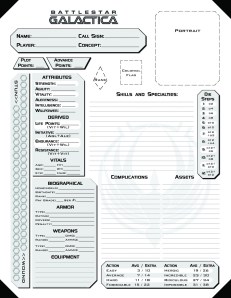
Courtesy of Jim Sorenson, here’s a few things for your BSG game. First, a one sheet character record. He normally pastes a rank pin pic and colonial flag for the character on his…

BSG Char Sheet - Jim version - Blank

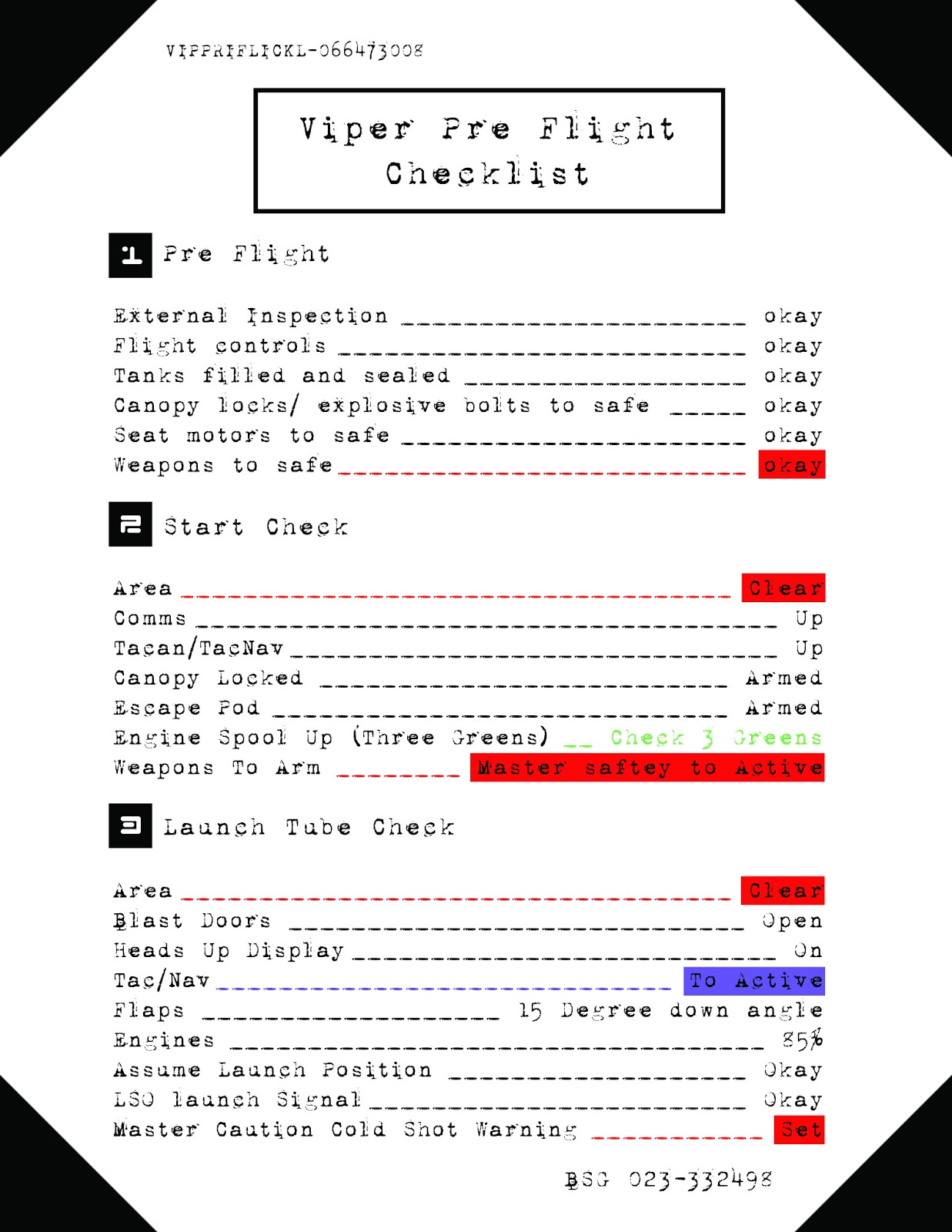
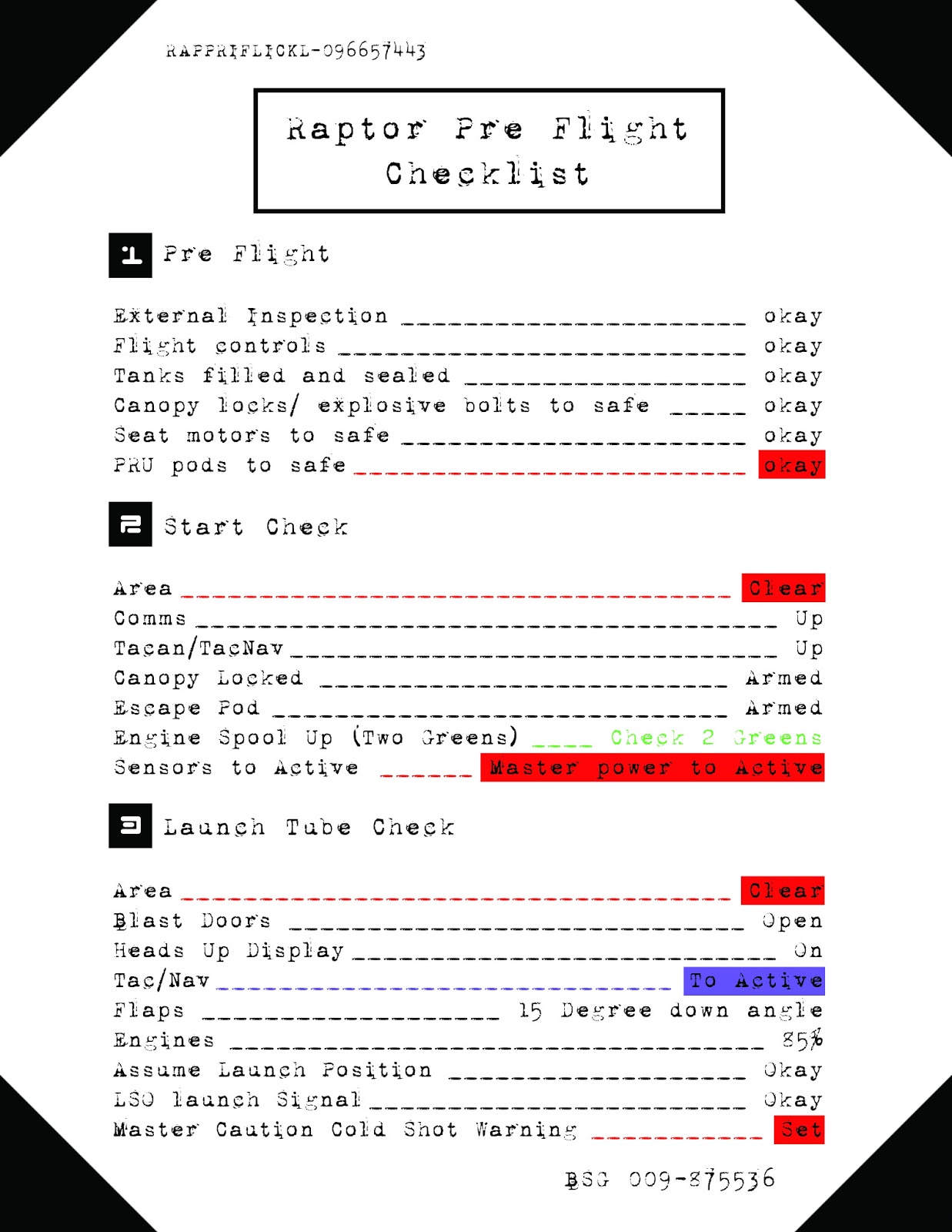
Here’s your viper and raptor launch checklists:

Viper Pre-Flight Checklist

Raptor Pre-Flight Checklist

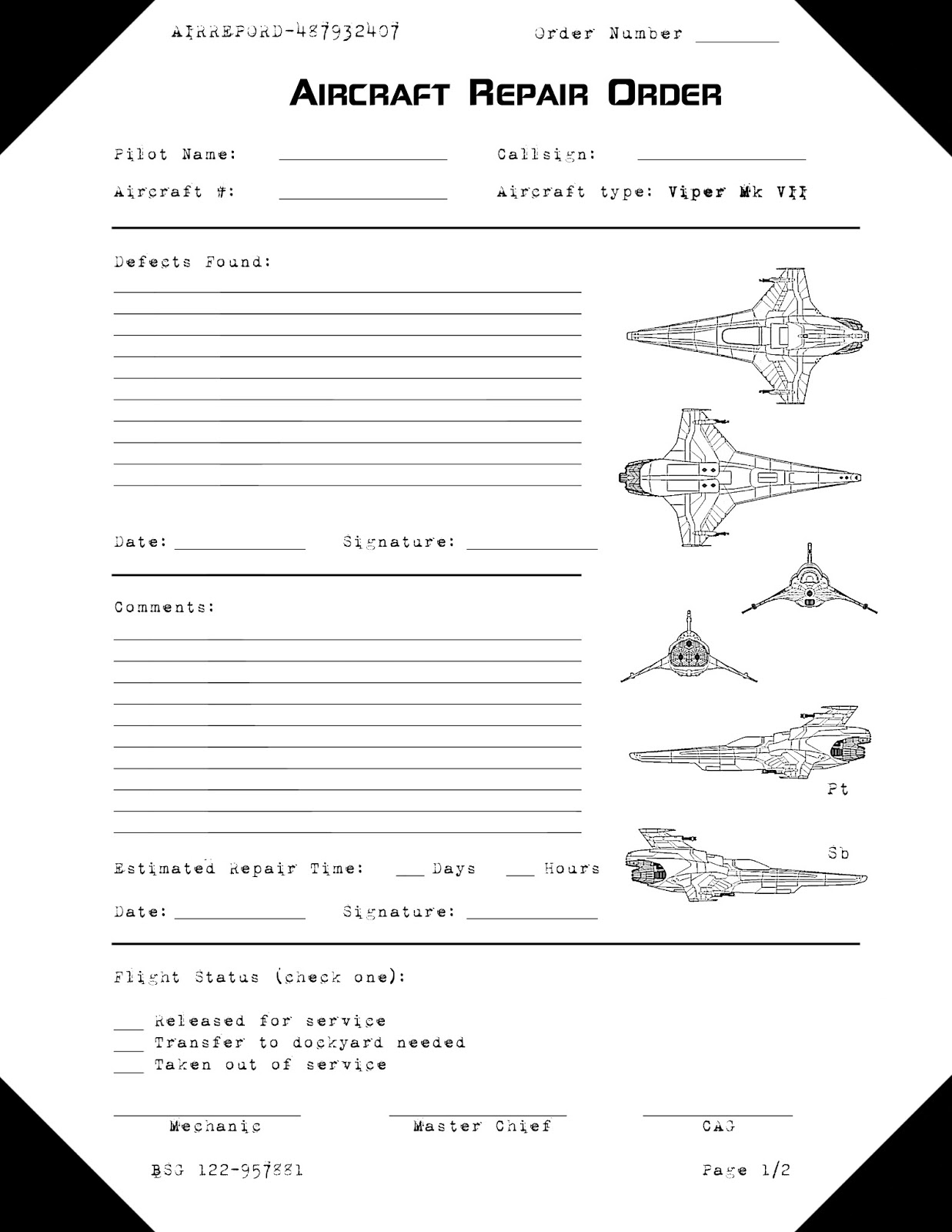
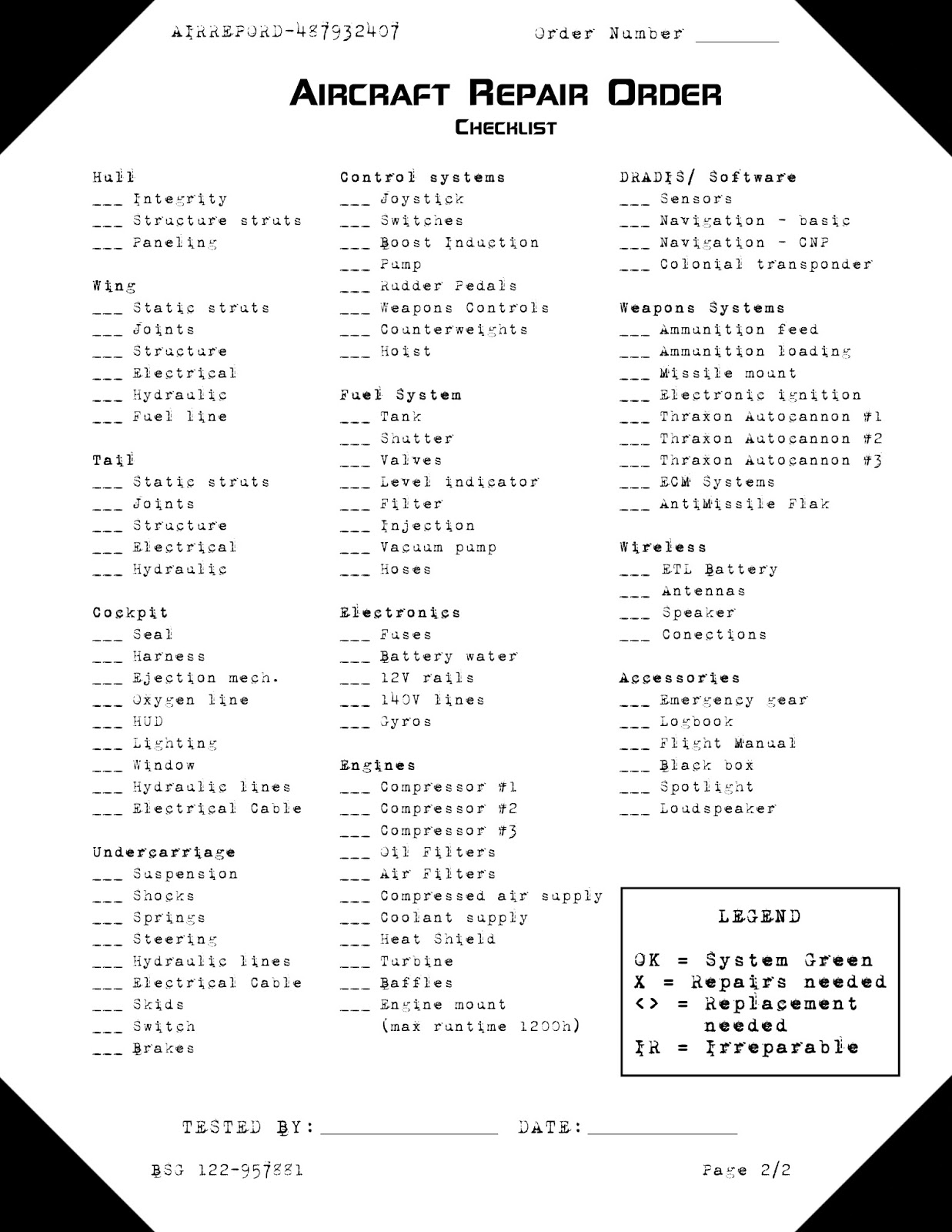
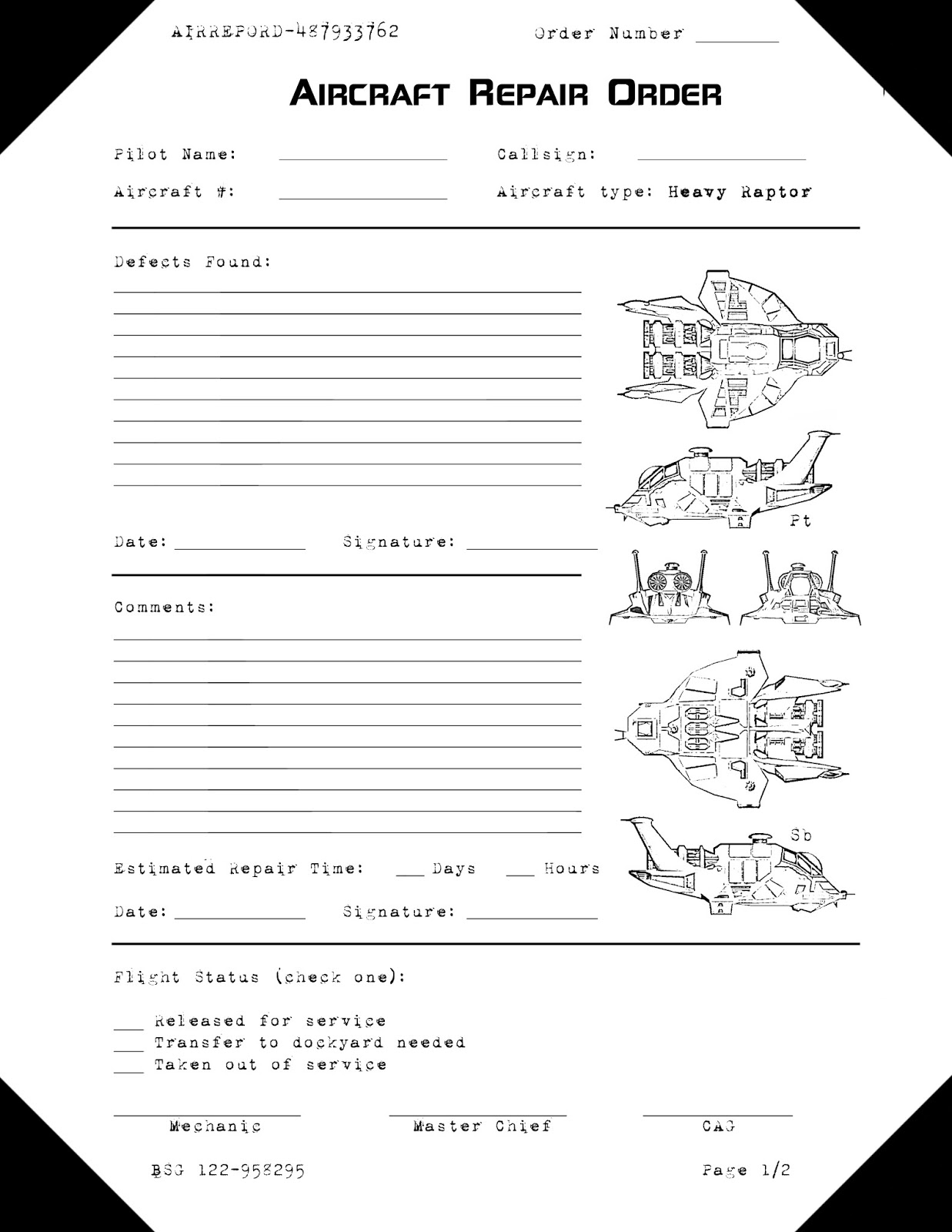
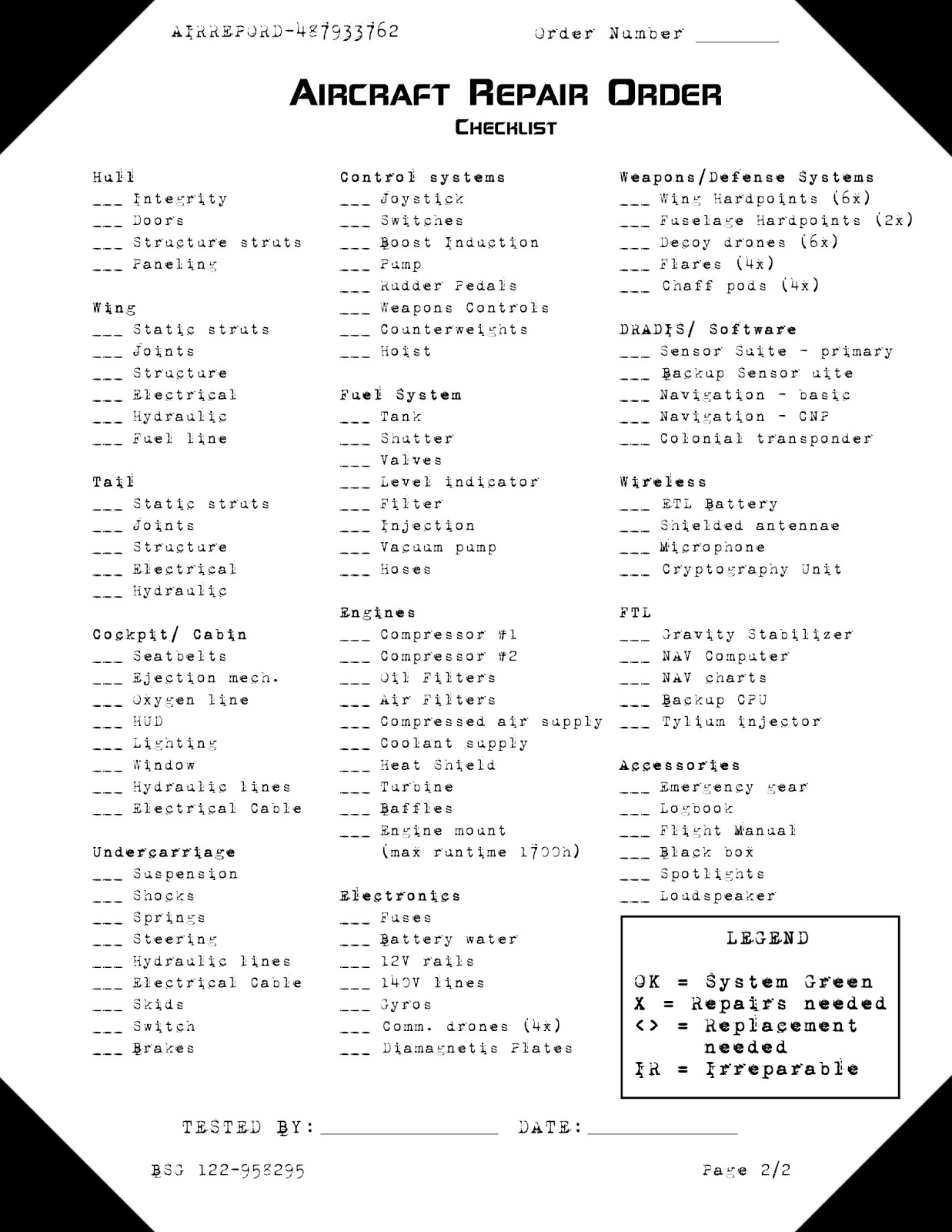
And how about a work order sheet for your rides?

Viper_MKVII Repair - 1

Viper_MKVII Repair - 2


Raptor Repair - 1


Raptor Repair - 2


Here’s an excellent ride for a femme fatale or privileged henchman — the Russian-made Marussia B2.

Russia’s premiere sports car, the B2 is a limited run (500 units), well-designed rocket that is built by Valmet — who also do the Fisker Karma. It uses either a 2.8 liter V6 turbo engine or a naturally aspirated 3.5 liter V6 engine that generates 420 or 300 horsepower, respectively. ThANKS TO IT’S 2425 lb. weight, the B2 can sprint from 0 to 60 mph in just 3.2 seconds and has a top speed nearing 190mph. The interior is cramped, but rich in leather and carbon fiber, and has an excellent sound system. Color, interior appointments, everything is full customizable (for a price) buy the customer. A base model is $130,000.

marussia-b2-13_600x0w

marussia-b2-23_600x0w


PM: +2   RED: 3   CRUS: 120   MAX: 190   RNG: 240   FCE: 2   STR: 5   COST: $131,000

GM Information: The B2 receives a +1 on Pursue/Flee and on braking maneuvers.

774481_494201923957113_35410183_o

Tonight was a bit more difficult than usual — i was trying to get a pair of new characters linked up with a pair of old characters, but one of the players didn’t show (old character) and one is no longer a part of the group, as he got a job in another town and had to move (new character.)

The new characters were Trevor FitzHugh, a talkative, hard-living pilot and his daredevil sidekick and Hollywood stuntman by day/cat burglar by night “Daredevil” Dan McCoy. We opened with them running guns and ammo to the Nationalists for a group out of Portugal. They get, apparently, set up and the drop is raided by an platoon of Irish volunteers fighting with the Republicans. They have to shoot their way out, and Dan (the player that was here), got to shoot his way out, drawing off the bad guys long enough for “Fitzy” to get the plane moving. Daring leap from horse to plane and boarding the craft? Check!

Unfortunately, in the fighting, Fitzy had taken a bullet, but plays it off until the land in Lisbon a few hours later. Once tied up at the dock in Lisbon, Dan finds Fitzy dead. Dan is now determined to find out who double-crossed them (if so…) He makes contact with a local British reporter and friend of Fitzy’s (and, I imply, a British agent) and finds out his employer has been selling to both sides, despite being in bed with local fascist businessmen. He’s also running the guns of a New York family — old character who’s player didn’t turn up, Jack McMahon.

Jack and Dr. Hannibal Drake, meanwhile, have turned up looking for Ariel Smythe, the femme fatale from the last “volume” which involved the search for Illuminati Treasure. She was responsible for the dead of Uncle Mike. They link up with the family’s broker here in Lisbon, Tom Cullen — a school mate of Jack’s — and are interrupted in their sussing out the situation in Lisbon and whether Ariel has turned up here by a drunk Dan McCoy. The characters’ stories are intriguing to each other and while they’re not working together at the end of the night’s session, they’re at least on friendly terms.

Tom takes Jack and Drake to meet his partner, Spanish businessman-in-exile Roberto Vega, who turns out to be a collector of Columbian and pre-Columbian artwork, conquistador armor, etc. Olmec/early Mayan is his preferred period and one of the pieces is a notebook from about the 1500s from an ancestor of his that catches Drake’s eye. There are drawings of a ziggurat, but the proportions are more in keeping with European architecture than Mayan. A sketch of a brick shows markings, mostly in Mayan, but a six “digit” signature using Roman masonic symbols catches his eye…could this be indications of Roman-period habitation in Mexico?

The night ended with Drake determined to get a better look at the book, Jack determined to find Ariel, and Dan determined to get to the bottom of the gun deal gone bad.

Overall, the pace was solid, if a bit slow for my pulp stuff. the players had a good time despite a series of interruptions, and I think it set the tone for the next “volume” that will lead them to southern Mexico and a run-in with a few old enemies, Jaguar worshipping natives, and possibly the first hints of a hollow Earth.

I’ve seen the idea of a “gamer’s charter” or a “social contract” addressed on a couple of blogs and gaming sites, and have found the subject curious. Perhaps I’ve been lucky and most of the gamers I’ve played with, with a number I could count on a single hand being the exception, have been adult, conscientious, and drama-free. Perhaps it’s that early on, I started being careful with the people that I’ve played with. After an encounter with one especially tragic example of the socially inept that — in this case, a 300 pound “ninja” who could do all manner of extraordinary things with his ninja perception and dexterity (yet couldn’t discern two of us slipping past him one day in our apartment annex, locked doors and all) who was creepily attached to us and was bereft of all manner of social skills — I started screening folks before inviting them to the games. I like to meet them in a neutral setting so that we can get an idea if the personalities will mesh, and that our view of the hobby is similar enough that there should be a minimum of friction.

We’ve never laid down rules. I let folks know I have a pet peeve when I’m running or hosting — give me as much notice as you can if you won’t be there, and that I dislike tardiness. It’s just an artifact of growing up in  another time and on the East Coast, where if you weren’t early, you were late. I don’t berate them if they’re a few minutes late — we just start without them, if we’ve finished eating. If there’s any real “rule” laid down, it’s that I supply dinner and except people to throw in if they eat. A few bucks, a fiver, any more and we count each five as a week paid up front. But it’s never been a contract; it’s just a gentlemen’s agreement that naturally evolved ad hoc.

In play, as GM, I try to make sure people get as equal time as I can. I don’t really stomp on scene chewers and time hogs, but shift the focus as unobtrusively as I can. Telling a gamer that they’re sucking up all the air (and I have one right now that would, if I didn’t keep close watch of the group dynamics) is just as rude as letting them do so. As GM, you can find a way to bring the other players into the mix. (I may do a post on this skill later this week…)

I suppose you could count what we do as a social contract in the Jeffersonian mold — an unspoken, but generally understood set of social norms — but most of these are “rules” of generally good behavior. If you pick adult or polite folks to game with, they should bring these generalized rules of behavior with them.

No contracts needed.

This post was written for the second annual New Year, New Game blog carnival hosted by Gnome Stew as part of the 2013 New Year, New Game challenge.

Think of it as a gamer’s New Year’s resolution — it’s a new year, and in the spirit of renewal, perhaps it’s time to try a new game. This doesn’t necessarily have to mean buying and running a new system; it could also mean trying new characters and a new campaign. Back in October, much of my gaming group had dispersed — one player was finishing their degree and had no time, another got a full-time job with much travel, and another moved to Texas, leaving just two of us.

When you lose the better part of your gaming group, it’s time to find new players, and that usually means a new campaign… So this New Year,New Game challenge isn’t quite so hard for me as it could be: I have new players and we need new games. We were lucky — we were able to resurrect the group with three new players in the space of a few weeks. It’s a good group, and has a sharply different vibe from the last.  Our previous group was more of the get-together and game as a social activity. This group is more seriously interested in roleplaying — with one of the gamers being a serious immersion player.

One of the games has continued with the new players. It was well into the plot, the “lead” was the remaining player, and first of the new players was recruited within a fortnight of the group implosion and was interested in the campaign. So the Battlestar Galactica game that has been getting attention in the blog survived. The Hollow Earth Expedition game did not. Oh, we might bring back Hannibal Drake, but the rest of the cast is changing. As a result, I have started a new campaign for the new group.

Beyond that, there’s a few games that have been attracting my attention and I would like to run. One is a homebrew sci-fi campaign that might use Cortex, or might use the Diaspora Fate rules — it’s still in the formative stages. I’ve thought about trying to run Jovian Chronicles — one of my gaming white elephants. It’s got a great setting, but in some ways the setting limits the options of the gamemaster, if they stick religiously to the setting and the metastory of the game. I don’t intend to. I also will not use the game mechanics, but instead will probably turn to Cortex.

Another way of breaking out of my comfort zone is to run one-shot games for the local gaming Meetup group. I’m running a Hollow Earth Expedition-fueled pulp adventure called “The White Ape of the Congo” early in February. After I run it, I will post the adventure notes and an after action report. Another I hope to run is a Serenity game that rips off the movie Deep Rising (a stupid but lots of fun flick) but with the monster being replaced by reavers. I may run a James Bond game later in the year…who knows?

It’s a new year, there’s a lot of new product from the indie publishers, so get our and try a new game!

Holidays and illnesses have kept the gaming schedule a bit hit or miss this last month or so, but we’ve completed another adventure in our Battlestar Galactica RPG campaign. This one saw the introduction of a new character — a fresh from training viper pilot who finds herself assigned to Galactica as her first posting, instead of her preferred Pegasus.

The fallout from the campaign thus far is finally starting to hit. Commander Pindarus, the “lead” character, and much of his command staff has been parked on Galactica as a means to cool his career off by jealous officers. (He is also a pawn in a personal tiff between the fleet admiral, Nagala, and his father, now the defense secretary.) Special Agent Chaplain, the Colonial Security Service officer that was investigating Cylon infiltration was exposed as having been an agent himself. The last “episode” had ended with their secret investigation having been outed by a major colonial news service. The assumption in the halls of power is that Pindarus ratted because he didn’t think the brass and politicians were taking the matter seriously. Without proof, however, all they could do was bench him on what is soon to be a spacegoing museum.

Pindarus’ efforts to get the political machine to acknowledge and do something about the toaster threat have, however, paid off. President Aidar is aware of the threat and is quietly shuffling his cabinet to prepare. The most important change for the characters is the return of Pindarus’ father to government. Having been ingloriously binned as presidential security advisor near the beginning of the investigations, the bellicose old man is now in as defense secretary.

This “episode” mostly revolved around the new PC, and her perceptions of what was going on aboard Galactica. To that end, I tried to structure the adventure so that while the other players were doing their own particular things, the new pilot — call sign Billboard — was usually present to witness things. The player of the new character has been documenting her reactions and opinions in a little journal he’s been sending to me. (Got him a few plot points for the effort!) The first thing she noticed was the strong animosity between the former (temporary) XO, now returned to CAG — Dipper (he’s in the miniseries) and the new one, Pindarus’ XO from Aegis, the (too?) young Major Evripidi. She meets the characters from the show that were continued into the campaign — Helo, Boomer, Starbuck. We also see JOlly (mentioned in the miniseries and reutrned in his slightly overweight, gloriously mustachioed glory.) WE’re using the Katee Sackhoff Starbuck, but without the tremendous angsty stuff that made her annoying to me.

The crew is befuddled. The new commander knows the ship is to be decommissioned in a matter of months and they are doing their last CAP of Caprica and Gemenon, before heading to Picon for the refit that would make her a museum and her disarmament at the Zeus Armory. So why is Pindarus running them hard on full-scale combat drills — complete with damage control exercises and boarding repelling operations? Why does he have the chief engineer (a cousin to Billboard) attempting to refit their FTL drive and get the ship rearmored? He says it is to put her back in the condition she was in during the First Cylon War and make her more authentic an experience for the guests.

Also aboard, is the Ministry of Education archivists, designers, and wonks — led by the Deputy Director for Public History, Aron Doral (this time more of a Oded Fehr type.) The man is slick, friendly, and seems genuinely interested in making Galactica a big attraction. They have installed a secondary, civilian network that is unconnected to the ship’s essential functions (save communications…), they’re putting up informative signage and color-coded paths through the ship, here and there, for the tour. I’m trying to give it more of a ship at the end of her life feel than the miniseries had.

Adventure seed here: The new character is put to the test when the ship receives a distress call. They were just entering Gemenese orbit when a Caprica-Gemenon liner was struck by the FTL bubble of another ship jumping in. Disabled and in a rapidly decaying orbit, they are requesting aid. Meanwhile, the vessel that had illegally jumped into orbit outside the prescribed commercial “bullpen” is racing into Gemenese orbit to escape apprehension. Galactica scrambles her alert fighters, including Billboard, to chase and monitor the ship, which is running an IFF transponder that does not register as belonging to any legally registered craft.

The rescue of the liner was done in the background, and directed by one of the characters; Billboard and the alert fighters follow the other freighter to the Gemenese surface — the Gramada Mountains, which another PC tells them is a hotbed of separatists, individualists, and illicit drug manufacturers. (Khammala and canaba are legal and used for “religious purposes” but synthetic opiates, endorphins, and amphetamines are tightly controlled.) The ship is a smuggler, moving synthetic dope from Leonis to Gemenon.

The characters have to capture the smugglers, who are armed with at least one shoulder-fired anti-aircraft missile system. Billboard nearly gets splashed, and they get cleared by Pindarus to take out the trucks. Marines in a raptor arrive and eventually take the ship, discovering weapons, drugs, and other violations of the law.

Overall, the adventure ran well. It was mostly interstitial stuff between push adventures, a chance for more character development over action. It was also a chance to set the mood for Galactica prior to the events of the miniseries.

Next week: 1930s pulp using Hollow Earth Expedition!

I’m about a quarter through writing my next novel, currently with the working title Firestorm (which is a bit pedestrian in my opinion, but will probably work well…) It’s a modern western/murder mystery set in a small new Mexico town being threatened by a massive wildfire.

Also, I’m blocking out the following novel, as well. It is tentatively titled Therapy on Two Wheels and will revolve around a widower who goes on a motorcycle trip around the country to heal himself.

Finished and turned in is a prospectus for a movie script called Only Way to Rich — a heist movie about a bunch of well-educated, but unsuccessful friends. Their hit on a casino and subsequent escape quickly goes sideways due to interpersonal issues. It might get a novel treatment if nothing comes of the film project.

There’s a good chance I may be working for Cubicle 7 again on the Victoriana line later this year. I may be contributing to the America and Africa books.

On the list is a possible Kickstarter for a “new” espionage game system from Black Campbell Publishing sometime later this year.

nij ratingsThe Q Manual gives the James Bond: 007 RPG player armor ratings for vehicles, but did not really address personal body armor. I covered this in my Q2 Manual, but thought it might be worth coming back to for those who want to understand the reason for the game specifications on personal body armor.

Level I armor is lightweight and allows for easy production of body armor that can look like ordinary clothing — a tee-shirt or a vest. They stop most light rounds — .22, .32, .380 — but does not usually take care of all of the kinetic damage. These are usually in the range of DC C to E. The armor reduces the damage class by -2DC.

Level IIA armor can handle mid-weight and speed bullets like 9mm and .40 S&W (DCs in the range from E to G.) Damage class is reduced by -4.

Level I and IIA are usually older vests or special order items, as they are considered by law enforcement to be ill suited to protecting officers from modern ammunition. The older armor also rarely protect against bladed weapons, something that most newer vests do. That doesn’t mean, however, they wouldn’t be perfect for the deep cover officer looking to have some protection, but not advertise this fact. Level I armor has the equivalent of a CON -4, Level II CON -2 to be spotted with a PERCEPTION test.

Level II armor  is is the standard for hot-weather police department and is also available to civilians in the US and a few other nations. Level II is rated to stop fast (“hot”) 9mm, .40S&W/10mm, .357 magnum+P ammunition (DCs in the G-I range.) It lowers DC by -4DC but also provides a -1WL benefit, but also cuts the Run/Swim and Stamina times by a quarter.

Level IIIA is typical of police and military units where concealment of armor is not a high priority. They are rated to handle up to .44 magnum pistol cartridges and can stop most shotgun shot (DCs in the H to J range.) It provides -6DC protection, but halves the Run/Swim and Stamina times of a character using it.

Level III is “tactical” armor, and is normally worn over clothes with MOLLE or velcro-attached pouches to carry ammunition, radios, etc. It also typically adds a “rifle plate” or “trauma plate”, which provides protection for up to .308/7.62mm rifle rounds and 12 gauge slugs (DCs in the I to L range.) It provides -6DC and a -2WL benefit, but it also halves a character’s Run/Swim and Stamina times, and adds a -1EF to Dexterity tests. Often tactical units will include a kevlar helmet that provides protection worth -4DC .

Level IV armor is rated for high-power armor-piercing rounds like the US APM2 .30-06 round. It is hot, heavy, and uses both ceramic, steel, or carbon fiber plates, in addition to kevlar fabric to protect against these high-energy projectiles. Level IV armor also nearly always includes a helmet that gives -4DC protection, but gives the character a -1EF to any Perception-based test. Also the neck roll on Level IV armor gives a -6DC rating.

One issue: these materials are, however, brittle and usually break up on impact, providing single shot protection against high energy bullets. The armor provides a -8DC  for the first impact on the vest (front or back.) However, it loses a -4DC of protection per hit where the original DC was K or higher.

As you can tell, the design intent is to drop the damage to about DC B or C, where the worst the character suffers is a light wound, but usually takes a stun. Gamemasters can add hit locations to the mix, if their players get a bit too cocky, thinking the armor makes them invincible. (See the GM Screen for hit location table.) All of this armor is generally good for the torso area, although Level IV armor is a notable exception.

Here are some examples of modern body armor:

Second Chance makes a concealable armor in Level IIa through IIIa in the Summit line. They also make a “stab-proof” twaron armor vest for correctional officers in their Prism Spike line and gives a Level IIa protection versus both handguns and blades. Their Prism Multi-Threat armor is Level IIIa.

American Body Armor (ABA) makes the Xtreme line of police vests from Level IIa through to Level IIIa.

Savvy is one of the few manufacturers of body armor specifically for females. It also provides improved impact resistance in the breast area. Their vests come in Level II and IIIa.

Point Blank makes armor for both police and military. Their Vision and Hi-Lite series are more focused on deep cover protection, and the C-Series on uniform use. They also make “carriers” — tactical vests that can have armor plates inserted into them and typically provide Level IIIa protection. Police tactical line — Level III and IV are the Dragonfire and Spider lines. Their military offerings are the IOTV (Improved Outer Tactical Vest) in Level III and IV.


« Previous PageNext Page »