Roleplaying Games


Most of these aren’t canon, but were cobbled together for our Battlestar Galactica campaign. Added them to the Twelve Colonies document in the RPG section of the site, as well.

Pancolonial Political Holidays:

Armistice Day Junius 21 — Colonial government holiday

Colonial Day Sextilus 8 — Colonial government holiday

Colonial Fleet Birthday Sextilus 12 — Military “holiday”

Pancolonial Religious Festivals:

Bacchanalia Martius (last weekend) — big drinking holiday, arts, celebrations to Dionysus.

Thesmophoria Aprilius 17 — Mostly a “women’s” holiday in cities. Big in farming communities. Honors Demeter.

Diasia Junius 6 — General Colonial government religious holiday.

Olympic Games Junius, second week every four years. Sporting competitions honor Zeus.

Panathenea Games Julius, first week every four years [midway between Olympic Games. Military-oriented sports competitions; honoring Athena.

Thargella Sextilis 19 — Celebrates Apollo.

Exodus Novilis 1 — Celebrates the tribes’ leaving Kobol. Probably not the real date.

Mars Day Novilis 11 — Celebrates Colonial veterans.

Saturnalia Decilus, last weekend. Festivals, parties, noted for costumes and masks.

Traditionally, the rich and poor, aristocrats and servants traded places for a day.

Posidea Decilus 26 — Honors Poseidon. Horse racing on Leonis, Picon, and Virgon.

Apaturia Febrarius 14 — Known as Eros Day on Caprica, honors Aphrodite.

Colony-Specific Holidays:

Arelon: Thesmophoria, Aprilus 17 — Honors Demeter. Farming fesitvals, known for drinking.

Independence Day, Septimus 12 — Celebrates the independence from Virgon.


Aquaria: Hermaia, Decilus 11 — Honors Hermes. Practical jokes, hospitality to travelers. People put out herme, small phallic stones, to bless those traveling.


Canceron: Eleusina, Sextilus 15-18 — Celebrates the mysteries of death and rebirth.

Democratia, Septimus 21 — Celebrates the creation of the Canceron global government.

Independence Day, Septimus 12 — Celebrates independence from Virgon.


Caprica: Hyacinthia, Ianarius 17-19 — Three day holiday celebrating aspects of Apollo.

Eros Day, Februarius 14 — Apaturia on most other Colonies.


Gemenon: Heraea, Martius 10 — Honors Hera.

Diasia, Junius 6 — General thanksgiving day to the gods.


Leonis: Daphnephoria or “The Hunt”, Aprilus 22-24 — Hunter’s weekend.


Libran: Athenaia, Julius 28 — Known for sporting and craft competitions.


Picon: Pohoidaia, Decilus 28-30 — Horse and boat races dedicated to Poseidon. Picon’s version of the Posidea.


Sagittaron: Lycaea , Novilis 12-14 — Honors Zeus.

Freedom Day, Octilus 29 — Celebrates independence from Leonis.


Scorpia: Dionysia, Maius 3 — Celebrates Dionysus. Best known for wishes hung on trees.

Saturnalia, last weekend of Decilus. — People change roles, wear costumes, etc. Popular vacation draw to Scorpia.


Tauron: Enyalia, Junius 14 — Celebrates Ares. Known for impromptu bouts of fisticuffs.

Our Day, Martius 2 —  Celebrates the independence from Virgon.


Virgon: Hestaia, Octilus 10 — Worship of Hestia, involves parties at home.

These holidays use our campaign specific date system:

The months of the year are as follows (assuming Sextilis is the sixth month, the year starts with March): Martius/01, Aprilus/02, Maius/03, Junius/04, Julius/05, Sextilis/06, Septimus/07, Octilis/08, Novilis/09, Decilus/10, Ianuarius/11, Februarius/12.

There’s a new Google+ gaming question running about concerning the seven games you play the most. Considering I haven’t gotten to play in a game until a few one-shots at the local game store recently (the zombies on a cruise ship was such a good set-up I even ignored my zombie fatigue to play in it…), I figured I’d go with the seven game I’ve run most often (starting with the most recent.)

1. Battlestar Galactica (Margaret Weis Productions) — 2007 to present
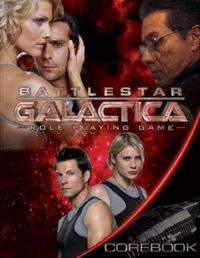
200px-BSG_RPG_CoverI first started running this about halfway through the series. Anyone familiar with this blog has an idea of the things I’ve done with the setting and plotlines to make it work for the groups, but here’s a quick recap:

The first campaign was a “second fleet” style game, with the characters having two characters each — a set of ground survivors, and members of a battlestar, Pleiades, which had been doing some deep space exploration and returned to find everything gone to hell. Galactica and Pegasus were out there, but they never were able to link up. I ran it close to the new series, canon-wise. It rand for about two or so years, then imploded with my marriage and loss of half the game group.

It was one of the games that the new group was interested in, so it came back, but adapted to fit some of the game style preferences of the players — more Cold War intrigue and paranoia prior to the Fall (coming soon!) More chances to try and stop the attacks, or possibly win them.

The game runs on the MWP Cortex rules — not the “Cortex Plus” they foisted on us with Leverage and Smallville (gag!) Character creation is fast and easy, play is not hampered, but enhanced by the rules, and it the first rules sets to come along since James Bond that I would gladly use for just about anything.

2. Hollow Earth Expedition (Exile Games) — 2007- Present

Hollow_Earth_Expedition

Ubiquity is one of those rules systems that hovers on the edge between rules lite, with fantastic mechanics like “take the average”, but bogs down a bit in too many modifiers and special rules in combat (most of which I now just ignore.) For pulp action, it’s almost perfect, and one of the licensed products using the system, League of Adventure, looks to have adapted it well to the Victorian speculative fiction subgenre.

We’ve had several campaigns using HEX. There was a game that was based in South America oin which they found an entrance to the Hollow Earth. That campaign fizzled a bit toward the end, then died for the same reasons as the BSG game. I’ve used it for the Gorilla Ace campaign, as well as an early ’40s Cold War game (Artemis Campbell — our take on Modesty Blaise.) The most recent game was set in China and has suffered the loss of most of the players, but the new group iteration looks to be interested in playing more of this.

The weak part for me is character creation, with is a bit math heavy and overly complicated (in my opinion, but at least you don’t need a Cray supercomputer like you did for early GURPS or Champions.)

Now if they’d only get the Revelations of Mars sourcebook out!

3. James Bond: 007 (Victory Games) — 1984 to present

James_Bond_007_role-playing_coverThis was my go-to rules set for anything modern. I tweaked it, back in the ’90s to run Cyberpunk effectively. It was used to run a Stargate campaign. There’s been numerous iterations of the campaign — MI6 agents, CIA, private investigations/espionage (before this became cool with the Terror War), Miami Vice style cops…

The system is a percentile dice roll under your attribute or skill x the difficulty rating. Guns and cars all have different modifiers and are much more diverse mechanically than in many game systems. This can be a hassle unless you are looking for the brand-name cache that Bond (or Miami Vice, for that matter) bring to the screen — can your Aston-Martin DB5 outmaneuver and outrun a Ferrari F355 like in Goldeneye? (Hell to the no!) But the game did do a good job of making some vehicles and weaponry more attractive than others.

Character creation is a bit more involved, and if you aren’t using the tables on the excellent GM screen (eBay!), you can occasionally find it math heavy.

It’s still my favorite system, more from nostalgia than anything else.

4. Castle Falkenstein (R Talsorian) — 1995 to 2008
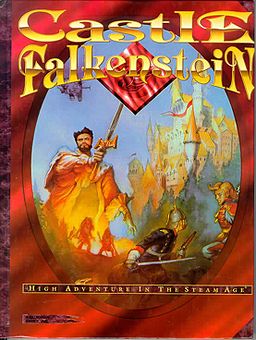
256px-Castle_Falkenstein_CoverI had already been running Victorian sci-fi since Space: 1889 came out but found the GDW rules problematic, to be kind. Falkenstein‘s card-based system (“Gentlemen don’t play dice…”) was novel, the character creation was very easy and quick — and since this game, I’ll admit that any character creation that takes more than an hour for the first go-’round annoys the pants off of me.

The weak part — the background. This was the first attempt to “Shadowrun” a Victorian game. Elves and other mythic beasts are there to get the D&D crowd to buy in; I ditch the fantasy aspects and stick to the more 19th Century speculative fiction side of things. The other was combat. The design was an attempt to emulate fencing, but not the cinematic fencing a game liek this should be putting forth. It was awful and overly complex. One of the players and I kit-bashed a combat rules set using the standard card deck of CF with the combat design of Lace & Steel to create a fast combat system that made it fun to forget guns and go with fisticuffs and swords.

The first campaign was simply Space: 1889 with CF rules to play by. It worked beautifully. The other campaigns, over time, lost the Space: 1889 elements and became more Earth-bound historical with science fictiony bits games…what can I say? I’m a historian!


5. Star Trek (Decipher) — 2000-2006
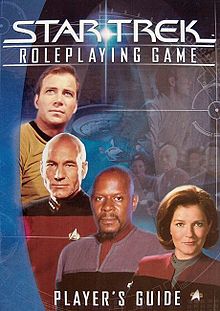
220px-ST_RPG_PlG_cov

I bought the Last Unicorm Games Star Trek sets because they were beautiful and had elegant rules systems, if they did have the dreaded race/class elements of D&D. I never got to run LUGTrek before it folded, was bought up by Wizards (IIRC), then was spun out to Decipher, which treated the franchise like a hated wife with herpes that you just can’t seem to give up.

The mechanics were solid, character creation wasn’t too much of a chore (still — races and “classes”) and for a while there it looked like this might be the one to carry the Star Trek role playing experience for a while. And like every other line, it died.

Star Trek was always the white elephant of gaming to me. Seemed like a great idea — a setting everyone is at least slightly familiar with, rich universe to plump…but it never quite worked. It felt, much like most of the series since “the Old Show”, soulless.

I originally planned it as a minicampaign for a Trekker in the group. It would up running six years. One of the things I did was throw canon right out the window. Whole movies and series were ditched. Technology was not easily and quickly convertible. No more turning the deflector dish into a can opener. The Federation was a wondrous place where everyone did adult education and bad art; the only place for the motivated and talented was politics and Starlfeet. By the end we had androids and sentient ships – it was an attempt to fuse “Singularity” style sci-fi (before it was cool) with Trek. It worked beautifully. Sadly, I think it’s one of those lightning in a bottle scenarios — I don’t expect to pull it off again.

Sticking with the idea of the stuff I ran the most successfully rather than most recently, I’m going to not put some of the games that got run for a short time. There was a decent Serenity game that I wrote myself into a corner and couldn’t plot my way out. It was also my first attempt to sandbox a game, and got to watch the characters/players wander where most people have gone before…boredom; it’s why I disagree with a lot of GM advice out there. Try not to railroad the players, but construct the adventures in a way where encounters will happen and seem natural, even though they were pre-ordained. Another would be Marvel Heroic Role Playing — which uses “Cortex Plus” and is the first of the post-Jamie Chambers stuff to really do a great job.

6. The Babylon Project (Chameleon Eclectic) — 1997-2000

show-water

This one is a bit of an odd-man out. The character creation is a bit clunky, the base mechanics easy (two dice — one a plus, one a minus, add/subtract to your skill vs. a target number), but the combat was clunky. For some reason, however, I “got it” — the damage allowed for the kind of stuff that I heard/saw in the military: serious injuries that didn’t phase a person, minor injuries that dropped a body from shock, and everything in between. Ship combat was cribbed from Full Thrust and was great.

It didn’t hurt that this was the big show for us, at the time. I’d gotten into it with the G’Kar and Londo in the elevator episode and we stuck with it through the crappy movies of the 2000s. I ran a rogue colony of “Amazons” — humans that had been protected by one of the lesser Old Ones which had pretended to be Olympians in the classical period. They were another front of the Shadow War and were allowed to do their thing without bumping up against canon too badly, until the end fight at Coriana 6.

Great characters and adventures kept it moving despite a clunky system and I’ve given thought to buying the old books online after a glancing blow with the disastrous Mongoose Babylon 5 d20 stuff. (To be fair, they too 3ed as far as they could to make it work.) It was, like the Star Trek game that followed it, a bit of lightning in a bottle. When I attempted to run a d20 version, it just sort of fizzled out.

7. Space: 1889 (GDW) — 1989-1995

300px-Space1889rpg

As with The Babylon Project, this game is a testament to how a great setting can overcome shitty mechanics. Character creation is plenty fast, the die mechanics are easy but mathematically unsound, but who cared! I was a redcoat on Mars flying a cloudship!

I bought it right off from The Complete Strategist there in downtown Philadelphia, worked through an early campaign with almost no knowledge of the period, and within two years was a bachelor degree holder in history , specializing in the Victorian period. (It’s a common thread that my professional and gaming life mirror each other…)

Even when we found better mechanics, we clung to 1889 setting queues long into the 1990s. I keep thinking of bringing it back, but the Victorian “pulp” and ’30s “pulp” have a lot of the same tropes and the guns and cars and planes of the 1930s seem to be more accessible for players. (It’s a similar problem between Space: 1889 and Serenity — both are Old West/Victorian period pieces, just one has Verne-style spaceships, the other more realistic looking ones.)

Prior to Space: 1889 most of the GMing or playing I did was either in James Bond: 007 or DC Heroes games during the Philadelphia years, so I could have made a good case for the latter as my number 7.

(Turns out Martin Ralya did something similar over on Gnome Stew…)

One of the readers is looking to maybe play in a Skype-based James Bond:007 game, if there’s anyone out there GMing one. Jonathan’s in the eastern time zone, and if you hit the comments on the JB:007 page of the site, you should be able to get his contact info. Or just sing out in comments on this post.

Passin’ it forward!

I posted the production notes for Blood & Chrome that were up on Facebook a few days ago, and have finally had time to compare them to notes on how a battlestar group might look I drew up a few years ago. So here’s my take on a miniseries-period battlestar group (BSG.)

Going with the idea that there are 12 “main battlestars” or “heavy battlestars” (I’m using the former term), one to do CAP on each colony and the surrounding shipping space, this would be the usual wartime battlestar group. Figure they’re rarely more than half strength, with half their number on temporary or detached duty.

COMPOSITION, BATTLESTAR GROUP

A combat-ready battlestar group consists of a main battlestar (Mercury, Minerva, or Columbia-class) and its attendant air group, 2 light battlestars (Erynis [Valkyrie] or Berzerk-class) and their air groups, 2 support escorts of Vanguard-class — one hospital, one an aerospatial assault unit, 4 assaultstars (Cygnus or the older Orion-class), 2 replenishment tyliers (pronounced til-i-ers; replenshiment oilers in the wet navy carry fuel, but also other supplies. They would be the refinery ships from the series), a combat support vessel (a repair ship like the Flatop from the series), and two victualing ships (basing on Blood & Chrome, these are the Celestra-style freighters.)

Assuming the support vessels are mostly civilian/merchant marine, that’s roughly 10 ships a BSG or 120 capital ships…which seems about right with Starbuck’s comment about the initial losses in the miniseries.

Considering how expensive and time-consuming peace time construction of these ships would be, I think 120-150 ships is about right.

Next off — nomenclature. I figure a battlestar is always a “group” (BSG), as per the patches in that they have an air group aboard. Any ships attached to, say, Galactica might have their own ship patch — say an escort named Diomedes is attached for longer than temporary duty to Galactica — the patch would read “Battlestar Diomedes” (or whatever you want to call your escorts; I call ’em gunstars if they’re cannon heavy, assaultstars if they’re missile heavy) and the bottom of the patch would be BSG-75, even if Diomedes herself was BSG-12, say. On her own, she’s BSG-12. (Hey, you have to keep the guys that make uniform patches in business…)

Any “battlestar” with an air group of any size is a BSG, otherwise, it’s just BS (that would be the assaultstars and gunstars.) Support ships would have registrations like DD (for the escorts like Vanguard [I’m going off of the numbering on the model for that particular ship; do whatever you feel like), RT for the tyliers, CSV for the combat support ships, and SV for the victualers.

Figure the battlestar groups during peacetime are broken up and doing missions throughout colonial space — light battlestars doing interdiction work, hospital ships aiding in disaster and humanitarian support. Escorts would also be doing policing, but would also cover the hospital ships and civilian contractor vessels doing deep space exploration, etc.

I’ll have comment on this, once I have a moment to really look at it. (20 month old girls never stop!) The following was cribbed from the Blood & Chrome page on Facebook (no infringement intended, copyright trolls!):


The Battlestar Task Group – Early Production Notes by Doug Dexler, the CG  supervisor

(Subject to change)

The Colonial Defense Force forms carrier battle groups on an as-needed basis and assigns ships to the group based on the mission. Therefore, no two Battlestar Task Groups are the same. However, a typical Battlestar Task Groups consists of the following ships:

Guided-missile cruisers (2)
These are offensive ships loaded with cruise missiles to strike planet based targets

Modern Colonial DFF guided missile cruisers perform primarily in a Battle Force role. These ships are multi-mission [Air Warfare (AW), Surface Warfare (SW), Fleet Surface Fire Support (FSFS) and Surface Warfare (SUW)] and capable of supporting Battlestar Task Groups (BTG), amphibious forces, or of operating independently and as flagships of surface action groups. Cruisers are equipped with cruise missiles giving them additional long range Strike Warfare (STRW) capability

Support Destroyers (2)
Defensive ships. They can defend against attacks by Base Stars and Raiders Destroyers.Equipped with the ability to launch missiles and lay down flak umbrellas.

CDG 51 and CDG 1000 destroyers are warships that provide multi-mission offensive and defensive capabilities. Destroyers can operate independently or as part of Battlestar strike groups, surface action groups, amphibious ready groups, and underway replenishment groups.

One stealth frigate (1) (The Reliant is a stealth Frigate)
Offensive\defensive ship. The frigate is a guided missile cruiser with a limited flight deck facility.

Can take Vipers and other attack planes into areas where a Battlestar would stick out like a sore thumb. They are shiny black

Stealth destroyers (2)
Offensive\defensive ships – The equivalent of a light cruiser.

Carries the latest in dradis bending technologies. They are shiny black

Dradis Picket Ships (6)
The fleets first line of defense. Our long range eyes in space

On the outer perimeters and often heavily attacked by Cylon Raiders. It’s the most dangerous job in the Battlestar Task Group.

Amphibious Attack Ship (2)
For putting boots on the ground. Modern Colonial Amphibious Assault Ships project power and maintain presence by serving as the cornerstone of the Amphibious Readiness Group (ARG) / Expeditionary Strike Group (ESG). Carries a combination of aircraft and landing craft.

Amphibious warships are designed to support Colonial Marine Corps tenets of Operational Maneuver From the Space (OMFTS) and Ship to Objective Maneuver (STOM). They must be able to sail in harm’s way and provide a rapid buildup of combat power ashore in the face of opposition. Because of their inherent capabilities, these ships have been and will continue to be called upon to also support humanitarian and other contingency missions on short notice.

Colonial Sealift Command (CSC)
Six Types Of Ships

Fast Combat Support Ships (FCS) – An ever shifting armada that keeps the Battlestar Task Group supplied.

Fleet Replenishment Tyliers (4)
The largest subset of Colonial Fleet Auxiliary Force ships, provide fuel to deployed Fleet ships underway, as well as to their assigned aircraft. Tyliers and the ships they refuel sail side by side as fuel hoses are extended across guide wires. Underway replenishment of fuel dramatically extends the time a Navy battle group can remain at sea.

Fast Combat Support Ships (2)
CSC’s four fast combat support ships provide one-stop shopping to the fleet for fuel, ammunition, food and other cargo. These ships are especially valuable because of their speed and ability to carry all the essentials to replenish Colonial DFF ships underway.

Dry Cargo/Ammunition Ships (4)
Four ammunition ships supply ordnance to Colonial combatants at sea, providing service through a combination of alongside transfers and replenishment lifts via Freight Trains. These ships are able to deliver ammunition, provisions, stores, spare parts, potable water and petroleum products to Battlestar Task Groups. Designed to operate for extended periods at sea.

Fleet Space Tugs (6)
These ships provide the Battlestar Task Groups (BTG), with towing service and can tow vessels as large as Light Cruisers. When augmented by divers, fleet tugs assist in the recovery of downed ships and aircraft.

Rescue and Salvage Ships (2)
CSC’s four rescue and salvage ships recover objects and stranded vessels and provide firefighting assistance. Like fleet space tugs, they are able to move objects like downed ships and aircraft. The key advantage of these ships is their ability to rapidly deploy divers to conduct rescue and salvage operations.

Hospital Ships (1)
Contains 24 operating rooms and up to 1,000 beds, including a medical staff of up to 1,200 military medical personnel.

One of the readers asked for some clarification on some of the traits that I’ve used in some of the material for the BSG game. One thing — one the pdfs, a red colored trait is a flaw. Here’s the clarifications:

BIOMECHANICAL (Asset, d2-d6): The vehicle is a combination of the biological and mechanical. It can repair itself over time, with Stun repairing as per characters at a point an hour or rest; Wounds, however, take much longer — a wound point is repaired per week, once the craft has passed it’s RESISTANCE test (VITALITY+VITALITY) and begun to heal. Most modern Cylon craft will have this.

CONSTRUCTION FACILITIES (Starship asset, d2-d6): The vessel can construct the number of planetcraft equal to its die rating a week (assuming it has the materials to build the craft in question. At d6, the machine shops are so good that with the proper raw materials, parts and vehicles can be constructed.

DIFFICULT TO REPAIR (Complications, d2, d4): The vessel is either overly complicated, has parts that are uncommon, or in some other way is a royal pain in the butt to keep running. This adds to repair and maintenance tests difficulties.

ENHANCED PERCEPTION (Spacecraft Asset, d2, d4): The vessel has its DRADIS and other sensors acting together as an interferometer to increase the acuity of the sensors. Add to vessel perception tests.

FAST THROTTLE (Asset, d2, d4): The vessel is particularly quick off the line, accelerating or decelerating faster than most vessels. In a chase, this is added to the operator’s test to flee or catch a vessel.

HANGAR QUEEN (Complication, d4): This vehicle is either a bad design, a Monday-morning build, or is beautifully designed and constructed, but finicky as hell (think a Ferrari…start it up and you need a valve job.) Anytime the vehicle is used it requires a Mechanical Engineering/Maintenance or Repair test, or it incurs d4S.

LIMITED SCANNING ANGLE (Complication d2, d4): The vehicle has some kind of blind spot in its visibility or scanning systems, and adds to the difficulty of perception tests by the vessel or its user.

MODIFIED AI (Asset, d2-d6): Cylons often find it easier to retrofit existing Colonial vehicles with a biomechanical brain and control systems. This means previously “dead” machines can operate independent of a crew (but still require maintenance from one.) If an enemy could destroy this “brain”, they could once again use the vehicle.

NBC HARDENED (Planetcraft Asset, d4): The vehicle is pressurized higher than that of the surrounding air to keep out nuclear/biological/chemical hazards. It is also constructed to minimize radioactive exposure.

SHORT RANGED (Spacecraft Complication, d4): The vessel is not designed for deep space operations and has neither the fuel, air, nor victuals to operate beyond up to an SU from its base of operations.

SLOW RESPONSE (Spacecraft Complication, d2-d6): The vessel either does not have magcat capabilities or they are limited (as in the Erynis-class.) At d2, only half of the fighter complement can be launched at a time, d4, a quarter, and at d6 a tenth of the fighter complement per turn. (I’m thinking of getting rid of the d6 and making this a d2, d4.)

SLOW THROTTLE (Flaw d2, d4): The vehicle is too heavy, underpowered, or suffers from some other design flaw that makes it slower to handle than other craft. This adds to the difficulty to flee or catch another vessel in a chase.

STEALTHY (Personal or Planetcraft Asset, d2, d4): The design of the craft, the color, or the DRADIS absorbent paint makes it had to see or scan for. Add the rating to the difficulty of to spot the vehicle.

WORKHORSE (Asset, d4): The thing is built to last. Mechanical Engineering/Repair tests have a step up to the skill die, it’s so easy to maintain.

Here’s the link for a regular reader/poster Runeslinger’s YouTube channel with a bunch of gaming advice.

Here’s a trio four “tactical” shotguns (which is a fancy way of saying they look nasty, rather than pretty implements with wood trimming) for the James Bond: 007 RPG. These are all relatively new, and I haven’t had a chance to shoot any of these but the Saiga, so the data may be a bit off. We’ll start with the oldest, most tested of the bunch:

IZMASH/SAIGA IZ-107 12 gauge

The Saiga is a 12 gauge version of the Kalashnikov semi-automatic rifle. It usually comes with a 5-round magazine (see below), but can be had with a 10-round stick magazine and there are drum magazines, as well (or questionable reliability.) Fit and finish is a bit rough, but they function with AK fortitude.

;

PM: 0 S/R: 2 AMMO: 5/10 DC: H CLOS: 0-10 LONG: 20-50 CON: n/a JAM: 99 DRAW: -3 RL: 2 COST: $800

;

KEL-TEC KSG-12

Kel-Tec is a relatively small player in the US firearms market, but they do low-cost, slightly natty-looking, but very, very high quality firearms. The KSG is their attempt to do a combat shotgun and address the perennial issue of small magazine capacity. The shotgun has two tubular magazines, side by side, with a seven round capacity each. The gun is pump action and after seven shots, the user must flip a switch inside the loading/ejection port directly next to the ends of the two magazine tubes. (Thanks, KF!)

;

PM: 0 S/R: 2 AMMO: 14 DC: H CLOS: 0-8 LONG: 20-40 CON: n/a JAM: 98+ DRAW: -2 RL: 10 COST: $1100-1500

GM INFORMATION: The KSG requires a Fire Combat test at EF5 to swap the barrels after seven rounds are fired.

;

UTAS UTS-15 12 gauge

Similar to the KSG, but much more large and imposing looking, the UTS-15 is made in Turkey and has a decent reputation for usability and reliability. Like the KSG, there are two seven round tube magazines, but the UTS automatically flips between the magazines after each pump action, keeping the weight even and removing the issue of user error.

;

PM: 0 S/R: 2 AMMO: 14 DC: H CLOS: 0-10 LONG: 20-50 CON: n/a JAM: 98+ DRAW: -3 RL: 10 COST: $1700

;

SRMArms SRM1216

The other semi-auto in the list, the SRM1216 is a new design that uses a quirky four-tube magazine that is rotated after every four shots by the operator. The four tube magazine can then be swapped quickly(ish) for a new magazine; this last action can be a bit difficult in stress conditions.

PM: 0 S/R: 3 AMMO: 12 DC: H CLOS: 0-8 LONG 20-45 CON: n/a JAM: 98+* DRAW: -2 RL: 2 COST: $2500

GM Information: After every for rounds, the magazine must be rotated to continue firing. This requires a Fire Combat EF7 test and the first round on the new tube is 96+ to reflect the operator not properly seating the magazine for use.

;

Our Battlestar Galactica campaign returned last night after a week’s hiatus, and launched straight into a fast-paced push episode. Our Colonial Security Service (our analogue for the FBI) discovered a link that they had disregarded for more time-sensitive ones — that the thirteen suspected Cylon agents they had picked up had all attended a science-fiction convention on Leonis. Researching the event, he found out it had the venue moved from he usual 2 star hotel convention hall to a swanky high-end spa on the outskirts of Luminiere, the capital of Leonis.

This is immediately suspicious, as the spa is one of those 300 qubit/night places…hardly the place that they would move a convention. The spa is isolated, high-end, and has all manner of the therapeutic treatments for stress and injury. The place, to him, “feels” important, and the photo of the owner is familiar to him, but he can’t place where. It’s a weekend, and the leadership of Operation RIPTIDE is not in for the day. Realizing the link is very tenuous, but he has this gut feeling is very important, he convinces Commander Pindarus (another PC) to get them a loaner raptor from his soon-to-be new command Galactica. (There’ a fleet tradition that if you’ve been assigned, but haven’t officially taken command, the current CO will loan you non-mission essential gear.)

The characters grab a few of the Colonial Marines that are attached to RIPTIDE but haven’t left for their weekend travels yet, snag a raptor, and jump to Leonis to check out the lead. They arrive at night and we get a view of Luminiere, the “City of Lights”. The “Old City” is very Parisian, with old, elegant buildings, a river with bridges, everything lit with old style streetlamps. The rest of the city is a riot of neon, holo-ads, reactive streets that illuminate with traffic info to supplement the heads-up on your car. It’s like Shanghai, but without restraint.

The spa is in a forest preserve outside of town, and the officer characters, Pindarus and the Riptide lawyer CPT Querro, go in with the CSS agent, Chaplain, as patrons (expensing the trip.) Their four marines, one of which is SGT Cadmus (another PC). they set up in the trees on a bluff overlookng the facility ad have a few run-ins with the guests, pretending to be other patrons of the spa. While they’re out in the rain, with the mists from the hot springs and cool rain (very atmosperic), the officers tour and enjoy the facility while Chaplain hacks the mainframe and finds a wealth of information on the Cylon operations — the kind of technology they’re using, the people they’ve used it on, and he manages to snag much of it and dumps it to a cloud drive on the LeoNet, with a timed forward to his CSS email account. He goes to find the officers and when he opens the door, there is a moment where he faces off against the wife/surgeon side of the couple that run the place.

Pindarus and Querro question the male half, a physical therapist who looks a lot like Rick Worthy. They find him pleasant and seemingly authentic, and they get him to give them a tour of the new medical facility where guests will be able to get cosmetic surgery. There they link up with Chaplain, in some sort of daze while the firmware that the Cylons put in him ten years ago during his car accident (and the inspiration for his fantasies of being abducted by aliens) — he’s been the information link that has been allowing the Cylons to stay ahead of Riptide. He has actively worked for them; they just monitor his senses and short-term memory and collected data through him — a human camera or bug.

The place is part high-end, minimalist aesthetic surgery, as advertised, but the wealth of creepy biomechanical tentacles equipped with surgical instrumetns and clusters of senors added a good creepy quality. They also see the other surgeon here…a twin or something of the owner! They quickly realize the danger they are in and the fight ensues in which we get a taste of the speed and strength of the Cylons. Even these non-combat models do a pretty good job on the characters and I had an initial worry of a total party kill. Pindarus gets pretty badly banged up, Chaplin a busted nose, and Querro — the man that almost never gets range time as a legal officer — saves the day by using a dropped pistol during the fray to drop one of the Cylons. (Chaplain got the woman.) the other surgeon escapes.

Outside, the marines get aggressed by a copy of the woman and a pair of highly-professional, but oddly robotic moving men. She drops two of the marines using a crossbow, the men have suppressed P90s that do a good job on another, leaving Cadmus alone to fight them. He takes a bolt in the ass, manages to wrestle away the P90 but it jammed (botch roll), and he wound up using the body of one of the men to catch rounds, then rolled with him down the hill they were on and off a 20′ cliff into one of the hot springs below. The woman follwed, leaping into the pool, and he stops her with a well-places underwater shot to the head (deafening himself in the process.)

The PCs link up outside the medical facility and run for their car in the parking lot. Minutes later, the medical facility (not the whole spa) blows itself all over the place in a mighty explosion. The characters inform the local CSS branch and local cops and beat a retreat to CSS HQ, where Chaplain is adamant about being debriefed immediately, the others go for medical attention.

End of play for the night. There’s a few obvious issues for the characters: What was going on with Chaplain? Pindarus is paranoid enough that this will definitely play out next session. Is the information he uploaded safe? What about the people they saw — two pairs of twins? What are the chances of that? Can the Cylons clone people? Or were they machines with flesh covering? How will the brass — already peeved over other high profile mistakes in the last few sessions — going to handle a major explosion with at least a half dozen civilians injured and off-duty three marines dead? (Not to mention to officers injured…)

I wrote this up because it featured prominently in Life, a show I rather liked…

1987 Buick Regal Grand National GNX

The Buick Grand National was one of the last rear wheel drive muscle cars the company put out. Even while they came electronically limited to 120mph, the GNX was one of the fastest American cars of the late 1980s. The turbocharged 231 cu.in. v6 motor was produced by MacLaren and would generate 276 hp and 360 ft. lbs. of torque. Only 547 were made.

PM: +1   RED: 4   CRUS: 70   MAX: 120 (165)   RNG: 250   FCE: 2   STR: 6   COST: $11,000 (new)

GM Information: +1EF to Pursue/Flee. With the rev limiter disabled, the motor will push the vehicle to 168mph.

« Previous PageNext Page »