Roleplaying Games


I’ve been watching Blood & Chrome, and on the whole I’ve enjoyed it. I have a few quibbles about seeing some of the ships from the Exodus period — Valkyrie and the Berzerk, for instance; I would have assumed these newer vessels from the big deal they made about Galactica‘s age in the miniseries and the assumption that there would have been some advance in ship design from the war to the Cylon attacks. Okay, fanboy moment over!

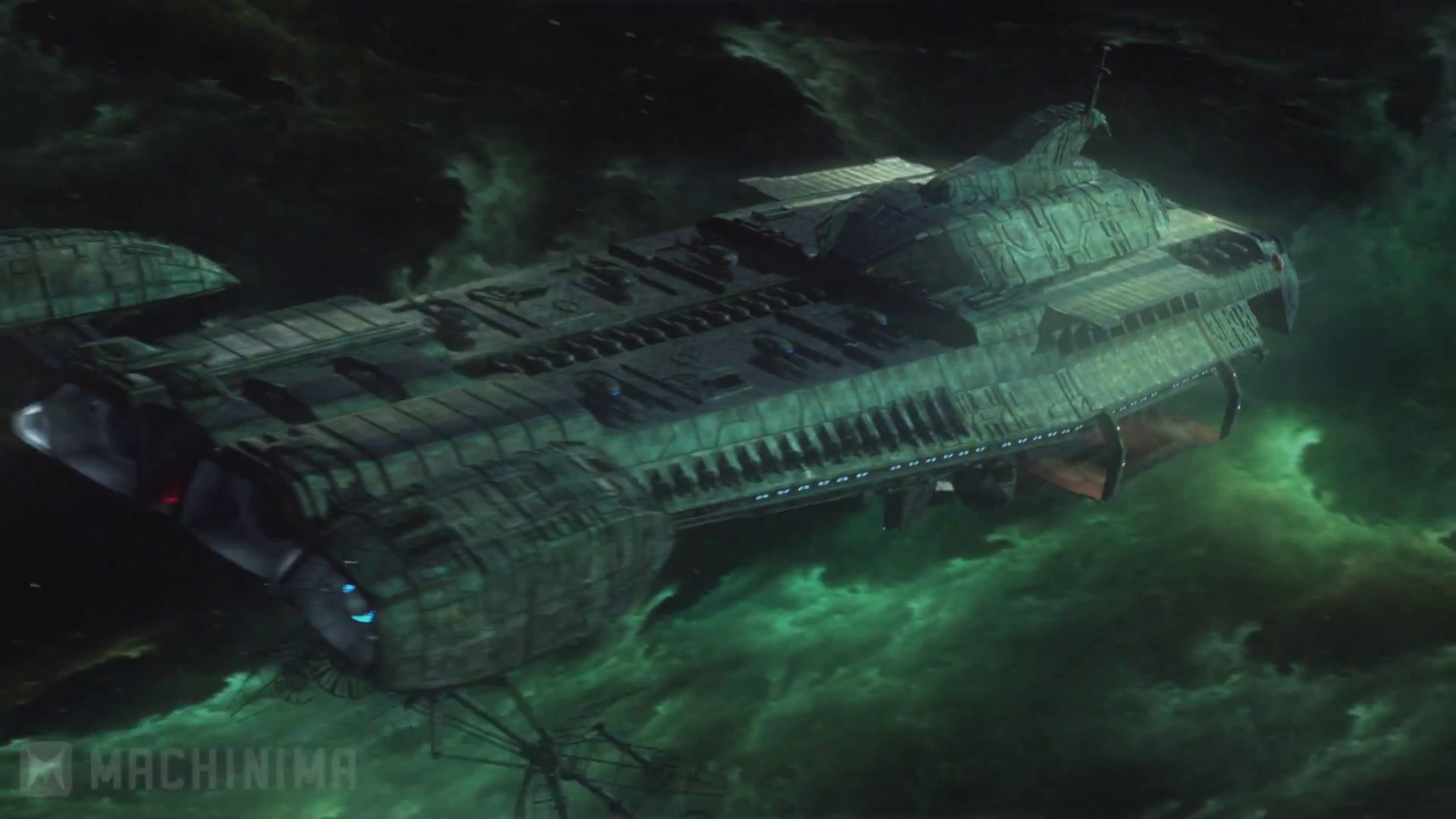
ORION CLASS BATTLESTAR (Heavy Cruiser)

[Sizes very very approximate based off of a screen cap or two…] Class: Orion   Type: Heavy Cruiser   Scale: Spacecraft   Length: 1250′   Beam: 300′   Draught: 290′   Decks: 9   Crew: 150+pilots

ATTRIBUTES: Agility: d6   Strength: d10   Vitality: d6   Alertness: d8   Intelligence: d6   Willpower: d8

Secondary Attributes: Life Points: 18   Initiative: d6+d8   Armor: 3W, 2S   Speed: 6 [SL/JC]

SKILLS: Heavy Weaponry: d4, Mechanical Engineering: d4, Perception: d6, Pilot: d4

TRAITS: DRADIS Absorbant Hull d4 [adds to difficulty to spot]

ARMAMENT: Medium Point Defense System [d10W Planetcraft scale, Skirmish Range], 12 Medium Spacecraft Scale Railgun Batteries [d10W, Capital Range], 8 Missile Tubes [d10W Medium Spacecraft scale, Short DRADIS Range], 4 Nuclear Missile Tubes [d12+d6W Spacecraft scale, Short DRADIs Range]

AUXILIARY CRAFT: 10 Vipers, 6 Raptors, 2 Shuttles

This is a best-guess Osiris from the Blood & Chrome webseries.

Thanks to reader Geoffrey Loggins who supplied us with a compilation of the errata for Battlestar Galactica. It can be accessed through the BSG Resources page, or directly at this link.

I recently ran a “teaser” session of Hollow Earth Expedition, since one of the major character’s player was away on a cruise this week and we could finish the Battlestar Galactica game we’re running. The adventure was set in 1933, about three to four years before the main campaign will be taking place. The adventure was called Tequileros.

Background stuff: At some point, to give people an idea of what’s going on in the world, I dropped a bunch of newspaper headlines… Germany has withdrawn from the League of Nations and World Disarmament Conference after allies refused their request to increase their defenses in violation of the Treaty of Versailles. The United Boeing 247 that was destroyed over Chesterton, Indiana appears to have been due to a bomb. “Machine Gun” George Kelly and his wife Kate have been convicted of the federal crime, under the LIndbergh Law, for kidnapping oilman Charles F Urschel and Kelly is to be one of the first inmates of the new prison the feds just took over from the army — Alcatraz. Congress is considering the effort to amend the Constitution to end Prohibition. Willy Post has done the first solo circumnavigation of the Earth by plane in just under eight days.

The characters are in San Diego County, California for whatever reason. They will at some point be at a restaurant or public space where they will be asked by Treasury Agent Dennis Dunn and San Diego County Sheriff Matt Mitchell to form a posse. They have word that one of the big bootleggers in the city is about to receive a massive shipment of tequila from Tijuana. The tequileros are trying to avoid interception by moving the booze over the border out in the desert to the east of town.

They will need to track down the most likely avenue of approach, either through talking to the Mexican zoot suiters (it a bit early for them, but it’s too good a flavor to not use) or by combing the desert using tracking skills. Eventually, they’ll find Lucas Saavedra, the local bootlegger, out in the middle of the desert with a big bag full of cash and four mooks that are there to take possession of the trucks the Mexicans are bringing over. Two Ford BBs or a similar 1.5-2 ton pickup will come over the line in a dry wash with a driver and a “shotgunner” — probably armed with a pistol and shotgun — and 4-6 of mounted and armed guards for protection. Saavedra and his mooks will be similarly armed, but if you need to bump up the difficulty, give someone a BAR or a Tommy Gun. (It’s pre-1935 gun regulations.)

I like running historically-based games — 1930s pulp, Victorian speculative fiction (I’m not calling it steampunk!) — and one of the challenges is setting the scene realistically enough for the players to feel they are in another time and place. One way to do this outside of describing the immediate setting — the small number of cars, the trollies, the advertising of  1930s New York City, for example. Another way that I’ve found is useful is to include newspaper headlines.

Both of the periods mentioned above had healthy news industries, with kids hawking papers on the street corner. Extra! Extra! Read all about it! Germans pull out of the League of Nations! For periods where there are papers, or radio, or television, you can have news in the background to give your game world a more full flavor…you could even use it for foreshadowing on later adventures in your campaign. Maybe you mention the breakdown of diplomatic relations between Japan and China in the early part of 1937 a few sessions before you send the characters to Shanghai on the eve of the Japanese offensive on the city.

(For this piece, I’m using the Quantum Mechanix Map of the Twelve Colonies — which we use for our Battlestar Galactica RPG campaign.)

First off, I had to get a general idea of how fast BSG ships move — using the speculations over on Battlestarwiki.org, I worked out that the sublight Speed Rating in BSG is rough half the percentage of C; in other words, Colonial One with its Speed 6 is capable of up to .12C. (Yes, that means raiders are capable of .18C — really bloody fast…but it’s sci-fi. Roll with it.)

Now that we know how fast the ships can go, we need to know the distances involved in traveling around the Colonies. The map specifies an SU as the distance from Caprica/Gemenon’s barycenter to the sun — about the same as an astronomical unit (handy!) or eight light minutes. We now have distance pegged from light speed. We can get fancy and measure the orbits on the map, but I’m not quite that OCD — each of the four systems seem to have their outer planets orbiting at roughly 5-6SU. In each of the four systems, that means that the Colony worlds are never more than roughly 2.5SU away from each other.  You can assume that a trip from, say, Picon to Tauron at their furtherest from each other, take a liner like Colonial One would take about 2.2 hours, but a trip out to Persephone would be about 6SU, which would take a ship like Galactica about five hours at flank speed.

For communications time, figure the rough distance between the worlds in SU, times by eight, and double it for a return message. So if Picon and Caprica are at periapsis (closest distance) the time to cross .2SU is 1.6 minutes. If Caprica and Tauron are 1.5SU apart, receiving the latest Caprica Tonight broadcast would have a lag of 12 minutes.

What about between the stars? Helios Α and Β, and Helios Γ and Δ are both locked in barycentric orbits with each other, with a distance of 60 and 70SU respectively, and both pairs of stars are locked together at about .16LY. A message sent between Colonies in Helios A and B would take between 7.3 hours (for periapsis) and 9.3 hours (at apoapsis.) This means Galactica at full burn would take between 73 and 93 hours to cross the distance from Tauron to Virgon, depending on their position. You would have comparable times between Helios Γ and Δ.

For example: Using this map and speed rating, the old girl was, in the miniseries, hell and gone from anywhere when the attack began. It was roughly 30 minutes to get a message to Caprica, so she was 3.75SU away…out near the Erebos asteroid belt. We could assume she was on her way home from Scorpia Yards, but since they specified the ship hadn’t done an FTL jump in decades, she did it sublight. The distance between the two pairs of stars is .16LY. Even at full speed, Galactica would take almost two years to transit from Scorpia to Caprica.

That means that travel between the four stars is perfectly doable at sublight speeds and would explain why there were a wealth of non-FTL ships plying Colonial space. One thing it does suggest is that to cut down on communications latency, the Colonies use some kind of courier service(s) to move data between the two pairs of stars. I envision a kind of packet boat that jumps from, say, Caprica to Libran, does a data dump of bank records, government documents, express mail, etc. and that from a central hub the data is broadcast out to the destination worlds. Government, military, and financial data is probably shipped daily, but personal stuff might go weekly.
I’m putting together a new plot/campaign for my new gaming group. Here’s the elements, so far — 1936/37, Spanish Civil War and Spanish Guinea (Equatorial Guinea, nowadays), group hired to find missing scientist who was looking for white apes in the area. The Spanish have branded the man a criminal who is leading a revolt in the jungles. Where is he? Why would he be fighting the Spanish, especially as he is not a military sort?

As half the group is probably gone for Thanksgiving, I may run a quick caper set in Los Angeles for the pair of them. Stealing an stolen artifact from the guy looking to sell it to the Ahnenerbe. that’s all I’ve got for that one, right now…

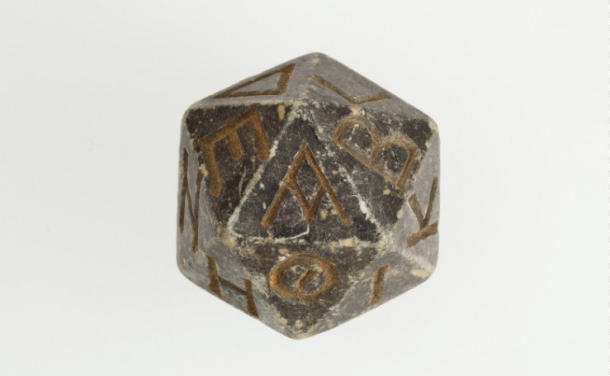
The Metropolitan Museum of Art has the oldest known d20 in their collection, from some time in the Ptolemaic era (older than 300BC.) It was found by Reverend Chauncey Murch between 1883 and 1906, while Murch was a missionary in Egypt.


I wonder what edition they were playing..? More at C/Net.

In honor of Skyfall, and the idiotic biometrically tagged PPK/S (great idea…when it works…), here’s the weapon Bond should be using when undercover (if we’re sticking with Walther.) I’ve shot one of these and was shocked by how accurate it was out to about 15 yards and how controllable, despite the low weight.

WALTHER PPS 9mm

Introduced in 2007, the PPS (Police Pistol, Slim) is one of the smallest 9mm self-defense guns available. Weighing in at 19.4 ounces unloaded, having an overall length of 6.3 inches and 5.9 inches from bottom of the large magazine to top of slide, it is easily concealable, powerful, and very accurate. Unlike the PPK, the PPS is highly reliable. The magazines come in 6, 7, or 8-rounds — the six round lies flush with the grip and is best for concealment, the eight best for grip and control.

PM: +1   S/R: 2   AMMO: 6   DC: F   CLOS: 0-3   LONG: 8-14   CON: -3   JAM: 99   DRAW: +1   RL: 1   COST: $600   GM Information: The stats are for the 6 round magazine, the 7 and 8 round raise the AMMO appropriately and lowers the CON to -2. There is a .40 S&W with the same stats, but has a 5, 6, and 7 round magazine.


Just in time for Skyfall, here’s the Aston Martin DBS…

ASTON-MARTIN DBS

Introduced in 2007 to replace the Vanquish, the DBS is a 5.9 litre 12-cylinder luxury GT automobile that brings an even more aggressive look, power, and handling to the line. The motor generates 510 horsepower and 420 ft-lbs of torque that takes the car from 0-60mph in 4.3 seconds and up to 191 mph (183 mph if through the Touchtronic2 transmission.) 85% of the car’s weight rests between the wheels and the hull of the vehicle is carbon fiber to reduce weight and aid in acceleration and fuel savings. The Adaptive Damping System, or ADS, tweaks the suspension for road/weather conditions.

The interior of a DBS is a blend of carbon fibre, alcantara leather, wood, stainless steel and aluminium surfaces. The seats both bear the DBS signature with an optional 2+2 seating configuration. The key is made from stainless steel and glass and is inserted into a special hole in the dashboard. It also has a 1000-watt Bang & Olufsen sound system with 13 speakers in 10 different locations throughout the cabin, as well as an integrated Apple iPod connector.

PM: +2   RED: 2   CRUS: 110   MAX: 191   RNG: 260   FCE: 2   STR: 6   COST: $290,000

GM Information: The DBS receives a -1EF to Force maneuvers and safety rolls associated with the same, however, otherwise it receives a +1EF to safety tests.

Q Department: The 00 section DBS vehicles are equipped with the latest in vehicular armor (-4DC to attacks), and a shielded, biometric secret compartment in the glove box that can hold a sidearm and extra magazine. There is also a vital signs monitor/ emergency defibrillator (in the glove box) and combat medic kit  (in a compartment under the passenger seat.) GPS, wifi hotspot for the agent’s cell phone are also standard.

One of the elements in our latest Battlestar Galactica campaign that would translate easily into almost any modern/future setting is the use of non-profit foundations as a villain organization. It’s a nice change from the tired “evil corporation” trope of cyberpunk, and fits well into the police state fascism of cyberpunk settings, or the world of Firefly, or spy-fi campaigns. These non-profits are generally thought well of because they appear to be honest brokers — they aren’t making money off of their policy positions (not true, of course), they claim political nonpartisanship (not true — in fiction or reality), and often have a wide reach. These groups don’t just target politicians, they get their hooks into education by providing money, and they insinuate themselves into business practices through advocacy.

Here’s a couple of groups that, with a bit of tweaking could be used in any setting:

PROMETHEUS GROUP (Battlestar Galactica version)

This is an umbrella holding trust that controls the money and operation of various non-profit foundations. They have their hooks into policy think tanks (The Prometheus Foundation), educational scholarship funds and advocacy (the Lucan Foundation), and Center for Colonial Progress (a political lobby firm that pushes social programs and funding for the same.) The group and the Lucan Foundation were formed by entrepreneur and former Virgoninan politician Count Azarius Lucan. The count is now a reclusive figure, pulling the strings after a near-fatal accident while orbital skydiving. He suffered extensive surgeries following his accident that could have allowed the Cylons to either replace him, or alter him in some way to be their master agent on Virgon.

It should be obvious how this can be tweaked for usage in any futuristic game that involves cybernetics, cloning, or even psionic manipulation. Lucan (I’d change his first name for modern settings) is a quasi-tragic figure — the former scion of whatever policies the GM’s universe deems “good” turned bad guy because of outside influence. (Better is he was always a bad guy, but he hides it well; sort of what they were going for with Dominic Greene in Quantum of Solace, but tip their hat too early.)

For a modern setting, you could just use real foundations as your bad guys; they are legion, but the Prometheus Group could be some kind of international group manipulating politics, terrorists, businesses, to create a world (dis)order that benefits them monetarily or politically. It’s world domination without the nuclear blackmail. What makes this sort of black hat organization so insidious isn’t just that they are seen as good guys, but that their monetary influence would extend throughout the political system that controls your police precinct, spy organization, military unit, or whatever — your own people don’t want to see you succeed because of the hit they will take to their funding stream, or it could implicate them in dirty deals, or simply act as an embarrassment during election time. You will be fighting both the villains and your own command structure.

« Previous PageNext Page »