Here are a few of the house rules we’ve developed over the years to make Castle Falkenstein flow faster and better.

1.  Each player and the GM get a deck of cards for play.  Discards get shuffled back into your own deck.  This seems to speed play by not depleting the a solitary player deck.

2.  New combat rules…

Initiative options for gunfighting — an opposed Perception and/or Gunslinger test.  (Skill is in the Six-Guns & Sorcery book.)  For fisticuffs or fencing, draw a card from your fortune hand and add to the applicable skill.

One we use for speed and a bit of random chance: for brawling and fisticuffs, as well as for gunfights in the same is all characters and the GM cut their fortune deck and add the result to their fisticuffs, fencing, gunslinger, or firearms skills — whichever is appropriate.  It’s a fast way of knowing who goes first and is more random than drawing a card for the action.

Once initiative is determined, firearms tests are conducted as per the usual rules — marksmanship or gunslinger test+card drawn from the fortune deck v. athletics draw of their target.

Fencing/fisticuffs is where we changed things up a bit.  This is the only time the fortune deck changes from the standard 4-card hand.  Characters with skills of good or great gain another card (5), excellent or extraordinary two more cards (6.)  this represents the greater number of opportunities a more skilled fighter can see/exploit.   This is the number of cards they will have for the whole of the action round.  It is replenished at the end of the round.

Those with initiative go first, making their attack.  Attacks do not have to be skill suit specific (i.e. clubs for fisticuffs.)  Instead, the attacker chooses a “line of attack”  based on the cards in his deck.  He can choose upper (torso and head represented by diamonds), middle (arms and abdomen/groin represented by hearts), or lower (legs/groin represented by clubs.)  Spades are an all purpose card used to defend on any line of the attack and represent the ability to dodge and weave out of the way of an attack.

The face value of the card (if in the correct line of attack) is added to the appropriate combat skill.  If the player chose upper, but had not diamonds, they can play multiple cards of other suits — each adding one.  [Yes, players have had to do this…]  The defender must play a card of the proper suit (an upper attack requires an upper defense), but if they don’t have the right suit, they can play the spade for full face value, or any number of the other suits in their hand at a face value of one.

Example:  Sir George is fighting the nefarious Han Ping with swords.  George has the initiative and goes for an upper attack.  He pullss a 10 of diamonds, giving him an 18 with his great fencing, and holds it, waiting to show.  He calls the line of attack, and Ping’s player draws a card from his deck.  He has no diamonds, but does have a jack of spades.  With his good fencing, it’s a 17 — doing Ping an injury. (You can use the original rules for weapon damage and injury or the Comme il Faut with this…I prefer the CiF, myself.)

Had Ping gotten an 18 (a queen of spades or hearts), he would have stopped the blow.  If he stopped the blow, or was still able to act, he would pick a line of attack, Sir George would defend.

Changing initiative:  Once a player/NPC has initiative, they keep it unless on of three things happen: 1) their attack on someone fails by three or more points (UNLESS they pull a spade of equal or higher value to the attack card!), 2) they are struck by their opponent after having made an attack, 3) the opponent disengages from the fight.  Once the opponent has initiative, they keep it until one of these factors is met.

Example:  George clipped Ping, but the injury was not serious.  Ping strikes back with a quick slash lower (clubs) with a 4 of clubs: 10 total.  George has nothing in clubs or spades!  He plays two hearts for a total of 10.  He stops the blow and retains initiative.  The fortune hands are replenished.  (5 for George, 4 for Ping since Ping has one hit to him [ordinarily, with a GOOD fencing he’d have 5.])  George has crap  cards, however:  he plays a 4 of hearts for a total of 12.  Ping draws a 6 of spades:  he equals George to stop damage and beats the face value of the attack with a spade…he takes initiative for the round unless George can beat his next attack by 3 (or has equal or higher spade to the attack card.)

EFFECTS OF INJURY:  each injury taken lowers the fortune hand of the character 1 card.  This is the only time the fortune deck can drop below 4 cards and reflects the effect of injury on the person and the limitations they have to exploit openings in combat.

When you no longer have cards, you can no longer fight and drop unconscious for the rest of the scene.

STOP HITS:  Sometimes, you can make a desperate attempt to stop an incoming attack.  You don’t have the right suit or a spade to defend.  If the player has a 2 or 3 in their hand, they may “stop hit” — attacking to stop an incoming attack.  The unresolved attack card is placed face down on the table and the attack defends against the stop hit as normal.  If successful, their original attack follows through.  If their defense fails, the original attack does not happen and the card is discarded.

If a stop hit succeeds by three or more, the defender gains initiative.

Example:  Ping goes for a head strike and lays face-down his queen of diamonds.  George’s player, seeing the delight in the other player’s eyes, knows his 3 of diamonds isn’t going to cut it.  He calls “stop hit!  Upper!”  Ping’s player has no other diamonds and his queen is committed.  He has no spades and plays all three of his remaining cards for a total of 9.  George hits with an 11.  He injures Ping again, and stops the attack, but does not gain initiative…

JOKERS:  Jokers play like a 15 on an attack or defense, but also give a special bonus as an attack or defense.  In an attack, the player may chose to disarm their opponent, grapple, or knock them down or back.  A joker played in defense allows the defender to disengage from the fight, and either run for it or find a better position and retest for initiative, if they want to reengage.  I have allowed them to disarm their attacker if they succeeded by a wide margin (3+.)

If both players draw jokers, the defender gets to disengage without harm, but the attack may disarm them.  Initiative is redrawn.

GRAPPLING:  conducted as Physique challenges using the ability suit (clubs.)

I’VE ONLY GOT SPADES….AND INITIATIVE:  You lose your attack.  You just couldn’t see an opening.  You do not lose initiative next round unless the other player succeeds in striking you.

MULITPLE OPPONENTS:  There are only so many openings that can be exploited by multiple opponents.  For each extra attacker, the GM may add a card to the attack fortune hand (which is a base of 4 cards.)  Example:  4 guys jump Sir George on the Wapping Docks.  He pulls his swordcane and gets his attack fortune hand of 5 for his great fencing.  The attackers have 7 cards in their hand (4+3 extra attackers.)  The opponents only get one attack/round, but they’re more likely to hit.

While a bit fast and loose, these combat rules make combat fast! and aid in giving a sense of what your character is doing.  Calling lines of attack gives ideas for what they are trying to do and gets away from the “18!  I hit!” mediocrity of a fight sequence.

Have fun!
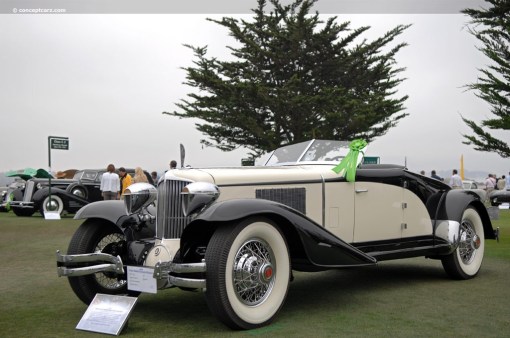
This is the ride for Dr. Stanford in the upcoming Gorilla Ace! campaign:  the 1930 Cord L-29 Cabriolet.  (Stanford’s is equipped with the rumble seat, not the weird dorsal fin that this model actually possesses…)

30-Cord-L-29-Limousine-DV-09_PBC_011930 CORD L-29 CABRIOLET

Powered by a 125hp inline-8 motor, the Cord is the first car to use front-wheel drive, allowing it to be lower to the ground than many of its competitors, and improving handling.  The styling is from one of Cord’s American coachworks.

Size:  2   Def: 6   Str: 8   Spd:  90   Rng: 200 mi   Han: +2   Crew: 1   Pass: 3   Cost: $3300

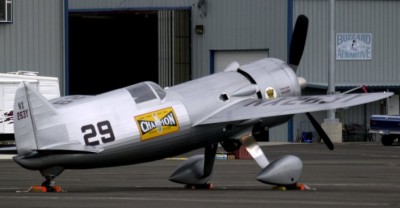
As part of the upcoming Gorilla Ace! campaign, a race plane was required for one of the characters…created by one of the other characters.  Ladies and Gentlemen, Boy and Girls!  Premiering at the 1935 Bendix Cup, the #4 plane piloted by Mrs. Jackie Cabot:  the Vincetti Sportster 1!

17

VINCETTI SPORTSTER 1

Designed by Dex Vincetti and built by Vincetti and the Cabots with funding from Union Oil and Champion (the spark plug manufacturer), the S1 is a braced low-wing monoplane powered by a 1000hp Pratt & Whitney R1690 radial engine (bought used as salvage and tinkered with by Vincetti.)  The airframe is unusual for a racing airplane:  to save weight, the wings use spruce spars, the ailerons plywood, and the fuselage a combination of steel tubing and aluminum, covered with doped canvas.  She is 21′ in length, with a wing span of 26′, and a dead weight of 1500 lbs.

Size: 2   Def: 6   Struc: 6   Spd: 300 mph   Rng: 900 mi   Han: +2   Crew: 1   Pass: 1*  Cost: $6,000   Flaw:  Requires Maintenance before each flight (Mechanic vs. 2)

(The Vincetti Sportster 1 is portrayed by the Wedell-Williams #44…SCR)

JACQUELINE “JACKIE” TAYLOR CABOT

Brave (bordering on reckless,) beautiful, and talented, Jackie Cabot is the daughter of circus performers.  She grew up as a carnie, traveling the country with her family.  She was an acrobat and high-wire performer, but became a wing-walker and aerobat after the addition of Flight Lieutenant Rowland Cabot to the playbill.  She and the older Englishman quickly became close and he taught her to fly.  She gained her license the day after her 18th birthday…and the day of her wedding to Cabot.

She is an original signatory to the Ninety-Nines (International Organization of Woman Flyers), and was a barnstormer and airplane racer throughout the 1930s.

Height: 5’5″   Weight: 130 lbs.   Hair: Blonde   Eyes: Blue   Age: 27

Body: 2   Dexterity: 4   Strength: 2   Charisma: 3   Intelligence: 2   Willpower: 3

Size: 0   Move: 6   Perception: 5   Defense: 6   Initiative: 6   Stun: 2   Health: 6

SKILLS:  Acrobatics 3: 7 (3+) (Balance: 8 [4]), Athletics 3: 5 (2+), Brawl 1: 3 (1+), Con 2: 5 (2+), Craft, Mechanic 2: 4 (2), Craft Carpentry 1: 3 (1+), Diplomacy 3: 6 (3), Drive 3: 7 (3+), Firearms 1: 5 (2+), Gambling 1: 3 (1+), Pilot, Aircraft 4: 8 (4), Ride 2: 6 (3), Streetwise 2: 5 (2+), Survival 2: 4 (2)

RESOURCES & TRAITS:  Agile, Artifact 2: airplane, Contacts 2: aircraft industry & 99s, Fame 2: aviatrix

FLAWS:  Addiction, tobacco; Gloryhound, Overconfident, Thrillseeker

LANGUAGES:  English, Spanish (bad)

ROBERT STANFORD, M.D.

Part of the Stanford family in California, Robert is a child of privilege with an excellent education and a need to prove himself.  He tends to try and think his way out of situations, but is more than talented enough to use his fists.  He studied at Stanford as a legacy baby, and is a certified physician.

He is also an adventurer and member of the Explorer’s Club.  A mountain climber, licensed pilot, and a practitioner of jiujitsu and kendo.  He has traveled around the globe, hunting in Africa, climbing mountains in Europe and Asia, and running free clinics in Central and South America.

Height: 5’10”  Weight: 180 lbs.  Hair: Blond   Eyes: Blue   Age: 30

Body: 2   Dexterity: 2   Strength: 3   Charisma: 2   Intelligence: 4   Willpower: 3

Size: 0   Move: 4   Perception: 7   Initiative: 6   Defense: 4   Stun: 2   Health: 5

SKILLS:  Academics (History) 1: 5 (2+), Athletics 3: 6 (3), Bureaucracy 2: 6 (3), con 1: 3 (1+), Diplomacy 2: 4 (2), Drive 1: 4 (2), Firearms 2: 5 (2+), Investigation 3: 7 (3+), Jiujitsu 2: 5 (2+), Linguistics 3: 7 (3+), Medicine 3: 7 (3+), Melee 2: 5 (2+), Pilot (Aircraft) 2: 4 (2), Pilot (Ships) 2: 4 (2), Ride 2: 4 (2), Science (Chemistry) 3: 7 (3+), Survival 1: 5 (2+)

RESOURCES & TRAITS: Artifact 2: custom katana & wakisashi, Connections 2: Explorer’s club and medical community, Fame 1; Los Angeles, Refure 1: House/lab in Beverly Hills, Status 1: Doctor, Wealth 2:  $650/mo (total)

FLAWS:  Curious, Condescending, Danger Magnet, Something to Prove

LANGUAGES: English (native), French, German, Japanese, Latin, Spanish

DEXTER “DEX” VINCETTI

Dex is a young man, brought up on dreams of success in America (his parents are originally from Italy) and a combination of science fiction and comic books.  These inspired him to begin inventing various things, from improved devices to building a race plane for the Cabot team for the 1934 Bendix Cup.

He is a shy, but good natured man with intense curiosity that gets him into trouble regularly.

Height: 5’8″   Weight: 155 lbs.   Hair: Brown   Eyes: Green   Age: 25

Body: 2  Dexterity: 3   Strength: 2   Charisma: 2   Intelligence: 4   Willpower: 3

Size: 0   Move: 5   Perception: 7   Initiative: 7   Defense: 5   Stun: 2    Health: 5

SKILLS:  Athletics 2: 4 (2), Brawl 1: 3 (1+), Bureaucracy 1: 5 (2+), Con 2: 4 (2), Craft, Mechanics 3: 7 (3+), Demolitions 2: 6 (3), Drive 2: 5 (2+), Firearms 1: 5 (2+), Gunnery 1: 5 (2+), Investigation 2: 7 (3+), Linguistics 1: 5 (2+), Pilot, aircraft 2: 5 (2+), Science, Engineering 3: 7 (3+), Science, Physics 3: 7 (3+), Streetwise 1: 3 (1+), Survival 1: 5 (2+)

RESOURCES & TRAITS:  Calculated Attack (Firearms), Intelligent, Jury Rig, Quick Repair, Skilled assistant, Status 1: inventor & mechanic, Weird Science (engineering & physics)

FLAWS:  Curious, Mad Science (gains style point when his inventions cause trouble for him or others), Shy

LANGUAGES:  English (native), Italian, Spanish

The stats aren’t wildly different between this vehicle and the one that would replace it the next year (previously written up.)  Here is the car that was the fastest on the planet as of 1938…

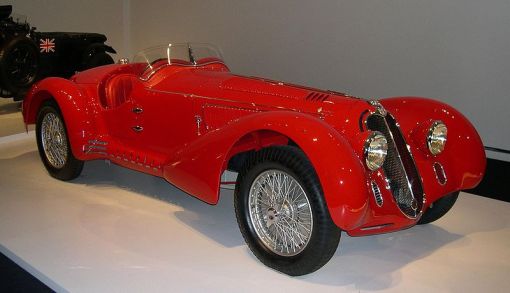
This is the “corto” or short-chasis version of the 8C, with Superleggeria bodywork by Carrozzeria Touring of Milan.  It is one of five made.

The motor is a 2.9 liter inline 8-cylinder engine with twin Roots superchargers and two updraught Weber carburetors.  It generates 180 hp (although two race versions produced 220 and 300hp respectively.)  It has a 4-speed transmission, fully independent suspension, 17″ brakes to stop the 2755 pound vehicle.  The 38 gallon fuel tank gives the car almost 350 miles of range.

800px-1938_Alfa_Romeo_8C_2900_Mille_Miglia_34_3

3096446321_4bd74f01d4_o

m

Alfa-Romeo 8C 2900B Mille Mglia Spyder

Size: 2   Def: 6   Struc: 6   Spd: 130mph   Rng: 350 mi   Han: +1   Crew: 1   Pass: 1   Cost: $10,000

As part of the upcoming Serenity campaign that I’m hoping to co-GM, I started working up character ideas.   Here’s mine:

GAVIN “SPENCE” SPENCER

Former colonel in the Alliance military, Spence was a lifer in the military, exploring the moons and worlds of the border and rim, and aiding in the preparation of terraforming operations.  He commanded several small vessels over the course of his career, but looked like he was going to be forever stuck in the company grade ranks, due do his lack of interest at the Ministry of Colonization.  The Unification War saw him given command of vessels, working up from gunboat to cruiser in the five years of conflict.  He was on the cusp of promotion to birgadier when the armistice was signed.  Disgusted by the conduct of the war, he retired quietly, and with friends all over the ‘Verse, and in every walk of life.  Now he does a combination of shipping for MINICOL, collects bounties on felons, and does important people favors.

AGL: d8   STR: d6   VIT: d6   ALE: d10   INT: d8   WIL: d10

Initiative: d8+d10   Life: 16   Endurance: d6+d10   Resistance: 2d6

ASSETS:  A Moment in Time d4 (He is very good at boxing his feelings until they can be addressed later.), Born Behind the Wheel: d4 (Spacecraft), Friends in Low Places: d2, Friends in High Places: d4, Leadership: d4

COMPLICATIONS:  Acrophobia: d4, Amorous: d4, Loyal: d4, Things Don’t Go Smoothly: d4

SKILLS:  Athletics: d4, Covert: d2, Discipline: d6, Guns: d4, Hvy. Weapons: d6, Influence: d6, Knolwedge: d4, Mechanical Engineering: d2, Perception: d6, Pilot: d6 (Gunships: d10), Planetary Vehicles: d4, Scientific Expertise: d4, Survival: d4, Technical Engineering: d6, Unarmed Combat: d4

AINETT MASSEY

Mechanic for the ship, Massey is a former technical specialist in the War on the Alliance side.  She was conscripted from her home on Hera, and was part of the 32nd Repair Battalion.  She was an observer of the Battle of Serenity Valley, but saw little direct action.  She is 26, and has been making a decent living as a mechanic.  Recently, she broke up with her long-term boyfriend, and joined the crew to get offworld and away from her troubles.

AGL: d6   STR: d6   VIT: d8   ALE: d10   INT: d10   WIL: d8

Initiative: d6+d10   Life: 16   Endurance: 2d8   Resistance: 2d8

ASSETS:  Allure: d2 (Tall, dark, and leggy), Computech: d4 (Good w/ electronics and hacking), Fast on Your Feet: d2, Mechanical Empathy: d4

COMPLICATIONS:  Allergy (Peanuts): d4, Nosy: d2, Superstitious: d2 (Fatalistic)

SKILLS:  Athletics: d6, Covert: d4, Craft: d6, Discipline: d2, Guns: d4, Hvy. Weapons: d2, Influence: d6, Mechanical Engineering: d6 (Repair: d8), Melee Combat: d2, Perception: d4, Pilot: d4, Planetary Vehicles: d4, Scientific Expertise: d2, Survival: d4, Technical Engineering: d6 (Repair: d8), Unarmed Combat: d2

“BIG JIM” STONE

A mountain of a man, James Stone was working as a mercenary before the war.  He has been a small-town sheriff, Alliance marshal, soldier-of-fortune in various brush wars, and on the payroll for both the Alliance and Independents during the war.  He is currently a bounty hunter — his favored profession.  Man is the most challenging game.

AGL: d6   STR: d12   VIT: d8   ALE: d6   INT: d6   WIL: d10

Initiative: 2d6   Life: 20   Endurance: d8+d10   Resistance: 2d8

ASSETS:  Friends in Low Places: d4, Mean Right Hook: d4 (Does d4B damage in HTH), Nose for Trouble:  d2, Talented Investigator: d2 (Added to Investigate and Search), Tough: d4

COMPLICATIONS:  Chip on your Shoulder: d4, Memorable: d2, Portly d4 (He’s big-boned…no, really),  Ugly: d2

SKILLS:  Athletics: d6, Covert: d6, Discipline: d4, Guns: d6, Hvy Weapons: d4, Influence: d2, Linguist: d2,  Melee Combat: d6, Perception: d6, Planetary Vehicles: d6, Survival: d4, Technical Engineering: d4, Unarmed Combat: d6 (Brawling: d12)

Added to this motley crew is Berin Kinsman’s “Doc” Tucker, doctor and all around smart guy.  The initial description comes over as a sort of Flashman-esque figure…

Back in the late 1980s, like a lot of other geeks, I really got into comics books.  For me, it was Matt Wagner’s Grendel that really pulled me in, and other indie titles like Fusion, Albedo, Airboy were my real delights.  I also was a fan of the big two, depending on the book.  So it was only logical that my roommate and I would begin role playing superheroes.

The big boy on the block was Champions, with a character creation process than made GURPS look quick and easy.  Not have all day to crunch numbers, I looked for a simpler system.  We tried Marvel Superheroes, but the system was too quirky and seemed a bit abstract.  Finally, we settled on DC Heroes, by Mayfair.

Character creation was still very open, allowing the player to customize his character by buying his attributes, powers, and skills.  Attributes were broken into physical, mental, and spiritual aspects, each with a specific attribute to attack/defend, a “strength”, and a rating that was used as damage.  After than powers and their levels were bought, then skills (which were secondary, in many ways, to the powers.)

The best part of the system was the AP idea:  ratings in attributes and powers equated to weight, time, distance measurements, allowing the GM to be able to easily know how far the knockback of a punch might take a character, or how far one could fly in a certain instance of time.  The scale was exponential:  each level was double the amount a person could lift, distance they could run/fly, etc.  It made for a very easy system to run, and allowed for running almost any power level.

The weakest part of DC Heroes was the gadget and gadget construction rules, which were kludged at best.

There is still a decently large following of the game online, and I got my set out of a used bookstore for $6.  If you are looking for asupers game that isn’t d20, and doesn’t require a Cray supercomputer to build a character, DC Heroes might fit the bill.

Back in 1989, Space: 1889 came along — a role playing game set in a hybrid world of Victorian speculative fiction.  It quickly garnered the appellation “steampunk” (which I bloody hate!), and spawned a sub-genre of science fiction that is still quite niche, but with rabid followers.   For me, it woke an old love of history and culminated in my work on a doctorate in history.

I loved the setting of Space: 1889, but to be blunt — the system was a disastrous kludge (something I expected from GDW’s role playing lines.)  Since then, every Victorian-period campaign I’ve run has been in search of a system.  In 1994, R. Talsorian (prior to going belly up, for the most part) released Castle Falkenstein.

The book itself was gorgeous.  Rarely, in that time, did you get such high art values in an RPG book.  Most of it was full color (not unusual now), with a story-like narrative that explained the world setting and the rules at the same time.   It laid out the alternate Victorian world that was both Vernian science fiction and fantasy combined.  There were chapters on society’s rules of the time — for courtship, precedence of nobility, dueling…all very well done.

The last hundred pages dialed down on the mechanics of the game, which were designed to facilitate LARPing of CF.  Character creation was swift and somewhat free-form, involving picking skills in which you were “poor”, “good”, “great”, “exceptional”, or “extraordinary.”  All others were considered “average.”   The player was encouraged to keep a diary, like a character from a Victorian novel outlining their past and recording their activities in the game.

The mechanics of play were relatively simple:  your skill ratings gave you a numeric value which was modified by a novel randomizer:  playing cards.  (Because gentlemen do not play at dice in the Victorian period.)  The suits had different aspects:  clubs were physical, hearts emotional, spades social, diamonds intellect/ knowledge based.  Players drew a four card “fortune hand” and play the cards so the characters could have to beat a certain difficulty, modified by a card or cards from the gamemaster’s fortune hand.  Simple, fun, and it allowed players to strategize their actions in play.  Can’t beat the villain, can you try to talk him down and play for time?

The only place that Castle Falkenstein fell down was combat, which was overly complex with series of holds and actions that were an attempt to capture the flow of fencing.  I feel it failed miserably.  So much so that a friend of mine and I banged out house rules, in a night, that have served us well for a decade.  (They were cobbled together from a combination of Lace and Steel and Castle Falkenstein.)

The game would generate six books, including a fantastic guide to Victorian ethics and “rules of society” Comme il Faut, which I recommend for any Victorian period game (along with my guide to London for Victoriana, The Smoke.  End shameless plug!)  There was a seventh book on the Ottoman Empire put out by Steve Jackson Games.  There’s plenty of material to play this universe and all of the books have high production values and crunch.

Style: 5 out of 5, Substance: 5 out of 5.

Now, an aside!

While I highly recommend the game, one of the first things I did was ditch the magic and monsters and port the setting of Space: 1889 over.  The system has performed well for me for 13 years, even without the fantasy elements.

The upcoming James Bond: 007 campaign is coming together.  Berin Kinsman posted his character, Carlos Milian, on his blog a few days ago, and I did a revamp of my wife’s character for the campaign:

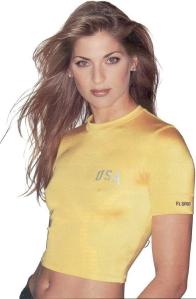
Danielle Marie Vegaamazing

Father, Tomas Vega, was a Cuban-American State Dept. diplomat, now a functionary at Foggy Bottom.  Her mother is a French equestrienne.  She was born in Marseilles, France, and was raised with money, with the family traveling frequently to different postings.  Was a competitive equestrienne until age 13 (she got too big), and is an avid mountain climber, skydiver, and SCUBA diver.

Attended Princeton and was on the track team from 1998-2000.  Was on US Olympic team as a triathlete for the summer games in 2000.  Graduated in 2001 with a business degree and a minor in romance languages, and joined the FBI.

Was put on the Joint Counterterrorism Task Force in 2002 as an financial analyst (forensic accounting), but went into the field in 2003 when connections between Latino gangs and Al-Qaida operatives surfaced.  Several high-profile arrests in 2005 and her cover was considered “irretrievable.”  Moved to RICO in 2006, based in New York, but quickly became bored.  Left FBI in 2009 to join Veritas International.

Age: 30   Ht: 6’3″   Wt: 156 lbs.   Appearance: Good-Looking   Fame: 80  Rank: 175 (built with 6000 pts.)

STR: 9   DEX: 10   WIL: 15   PER: 10   INT: 10

HTHD: B   Carry: 101-150   Speed: 2   Stam: 36 hr   Run/Swim: 55 min

Fields of Experience:  Business, Forensics, Law, International Law, Skiing/Snowboarding, Skydiving

Weaknesses: Adrenaline Junkie, Close Personal Ties

Skills: Boating 5 (15), Charisma 3 (18), Driving 8 (18), Evasion 12 (22), Fire Combat 6 (16), Hand-to-Hand Combat (Savate) 8 (17), Interrogation 8 (18), Languages: English (native), French 10 (20), Spanish 12 (22), Lockpicking 5 (15), Mountaineering 8 (20), Riding 9 (21), Seduction 6 (15), Stealth 3 (15)

Preferred Weapon:  SIG-Sauer P229 .40S&W

Vehicles:  BMW 650i convertible (blue), BMW R1200GS Adventure (orange and black) motorcycle

One skill suggested by the rulebook, but glossed over in James Bond: 007 RPG is languages.  It’s one of those skills that Bond never has a problem with — like the explorer Richard Burton, he just always seems to know the local lingo.

For real agents, that’s not so.  in fact, one of the main skills looked for by intelligence agencies is languages…the big ones are Arabic, Farsi, Korean, and Mandarin.  One (cheaper) option is make the languages a Field of Experience.  They have, at least, a working fluency in the language and never have issues with communications.  This would negate a good chance at role playing and deprive the GM of an excellent obstacle for the players — misunderstandings and/or complicatiosn caused by lack of communication.

The other is make them skills.  I favor this option.  This would mean characters would have to buy a Language [specify] and drop points in.  Charisma rolls would be effected by the language skill — I will often shift the Ease Factor of a charisma or seduction test based on the success of a language test.  Get a Quality Rating of Excellent might give a +1EF, or Very Good or Good your normal EF with modifiers, an Average would impose a -1EF on the charisma test, and a failure would mean you could simply not communicate your meaning.