So, we ended the last session of our Hollow Earth Expedition campaign with Gus Hassenfeldt — in typical form — leading a company of Waffen-SS that were aiding with the collection of specimens to return to the surface world against the forces of General Inanna, who showed up with the Imperial Warship Shiva while USS Los Angeles and Deutschland were away, the airships being driven off by a tropical storm.

With predictable results… Supported by the heat ray batteries on Shiva, and with air cover from three light saucers, the Germans met a superior number of Atlanteans in the big clearing in which the warship had landed. Within two minutes, half his number was captured or killed, and the rest routed and falling back into the cave complexes the cargo cultists from the destroyed Sanctuary had been living in.

The rest of the survivors and German soldiers, under the leadership of Lord Amon and now-Gunnery Sergeant Hunter, retreated into the caves, to draw the Atlanteans in and take them down. Without their air cover, and without the artillery of Shiva, they stodd a better chance of survival and escape. However, while setting up in one of the larger caverns — one with a collapsed section of roof that had allowed for water to run in and a small grotto of plants to grow — they found themselves looking up at the underside of Shiva…and an opportunity! Taking every able-bodied cultist and soldier, they led them up the slick and dangerous rocks to the ground under the warship.

During this time, the Atlanteans had prepared to go into the caves — 300 soldiers armed, armored, and well-led. They had removed their injured, taken the Germans injured captive, and were pushing into the caves. With the soldiers gone, Amon knew there were only 50 or so crew; they had just as many people and the element of surprise. The characters boarded the ship through the open bomb bays, only to find the ship being prepared for battle — but not to repel them. Rather, another group was attacking, and the ship was taking hits from above! After a brief skirmish or two, they took control of the ship’s batteries, only to find the ship under attack by the hawkmen! Inanna’s saucers were cutting up the waves of hawkmen, and Hunter and Gus turned the heat rays of Shiva on her saucers, downing two of them.

Amon and Gould led a team to take the bridge, finding Inanna there. Amon stayed the troops from killing her, believing her a better bargaining chip against the emperor. She was one of his greatest military officers and one of his consorts, after all. With control of the ship, they sealed her up and with the aid of the hawkmen, quickly subdued the Atlantean soldiers.

The hawkmen, they learned, had spotted Shiva approaching, and assuming the ship would turn its guns on the Aerie after dispatching Gould’s group, launched their attack. General Akator, their leader, brings their princess’ pledge to join the fight against Atlantis.

After a day of Gould treating the injured, Hunter getting the survivors and Germans settled in to sound the ship and have her ready for a fight, and Gus seeing to getting the one downed saucer recovered, they were able to start talking about what to do next. They got the hawkmen to release their prisoners. Amon talked some of the Atlanteans into joining them, and was pushing the others to head for Ultima Thule while they had the momentum, and take back his city.

They were stopped by the arrival of Los Angeles and Deutschland, which had been late returning after they encountered Shiva. Inanna had realized they were Outsider ships and assumed they were aiding Gould and his group. They damaged both airships, but Los Angeles used their Tesla electroforce gun — which had earlier been altered to disrupt the repulsion field of the Aeire but had never been used — to almost destroy Shiva. All three ships ran for it.

Admiral Byrd and Obersturmbannfuhrer Werner joined them on Shiva, and the machinations began in earnest. Inanna is questioned, and during the interview they find out that Olga is now known as Morana (the Russian goddess of magic and death), that she is the emperor’s favored consort for her “powers”, and that the emperor has been training her. Inanna opines that she is likely to be even more dangerous than Mot, himself. She is descended from creatures even more ancient than the vril, or the Atlanteans. Things like her come along rarely, and they are always agents of destruction.

Inanna then tried to convince Byrd to give her asylum from Amon. Amon tried to convince the two commanders to join his quest to free Ultima Thule — to which Werner immediately agreed, but Byrd pointed out he was outside his purview; this is a scientific expedition, and the United States doesn’t go around attacking nations without provocation. The characters suspect that Amon might use Shiva to not just battle Atlantis, but replace the emperor. Gould is worried the Nazis will cozy up to Amon for their benefit, and Byrd isn’t trying to stop them.

In the end, the characters decide that Shiva has to be the flagship of their alliance, not Amon’s city, and they work hard to convince him to accept this. They decide with the leaders of the various rebel forces to place command in the hands of a outsider, not one of the various factions. Hunter suddenly finds himself, as the only guy with real military experience (except Lord Trevor, Zara’s uncle, who was a captain in the Royal Army, but is also suffering shell shock…) finds himself commander of Shiva and a Sky Marshal of their combined forces.

With 200 hawkmen warriors, 50 hale Waffen-SS, 46 cargo cultists (including Zek, their resident mechanical genius), a handful of “walker” merfolk (merfolk with legs), and the characters, they now have the opportunity to gather allies from some of the local tribes and advance on Ultima Thule.

This was one of those sessions where a single moment changes the course of a campaign. I had assumed we’d see another slaughter, and the characters running for their lives in the jungles of the Hollow Earth. I was planning for that eventuality.

While prepping, I realized the size of Shiva — 900×700′ — was large enough that portions of it would cover the cave complex. I added that in for flavor, and the players ran with it. The fact they’d drawn the Atlanteans into the caves meant they could stage a relatively easy assault on the warship with close to equal numbers and surprise. With the ship in their possession, they now have the means to retake Ultima Thule and possibly take the fight to Atlantis.

It also saw the balance of power in the characters shift from Gus and Gould as the “leads” toward Hunter being a powerful character. He’s been one of the better fighters, and his USMC background has come up a few times — including Byrd making him the master-t-arms on Los Angeles — and played right into the course of the game.

And we get to call someone Sky Marshal…which just sounds all manner of pulp.


It’s that time of year. Time when holidays and kids’ Christmas Show at school, and anniversaries get in the way of gaming. Tonight we were short a gamer, so we turned our efforts to playtesting Murder on the Hindenburg, one of the up-coming adventure scenarios Black Campbell Entertainment is producing.

Playtesting is one of those things that seems like it a bit redundant. Maybe you played the adventure once with some friends and figured you’d just turn it into a product. Sounds great. The problem is that often, a scenario is tailored fairly specifically for the players and their characters. They don’t always translate well when you want to publish them for more generic use.

White Ape of the Congo was originally created as a short Meetup group game. The goal was to introduce folks to Ubiquity and score a player or two. (It worked.) Later, it was tested again with another group, and I tweaked the pre-generated characters based on the experiences to make the adventure and the characters work as smoothly as possible.

The Zugspitze Maneuver was originally a one-shot introduction to gaming for a player. It was a solo mission, so the jump to a scenario for 2-6 players was a tough one. (I settled on 2-5 players.) This required changing the reasons for the mission, creating characters that had reasons to be there, and adapting scenes to fit multiple players. The second playtest went well, but revealed likely actions and outcomes that I hadn’t planned on. The module got better.

Murder on the Hindenburg was designed for 2-5 players; we had three tonight. They took the two characters I suspected would be the most popular, and who the adventure was tailored toward, but they were very good about talking to me about how the other two characters could be integrated better. (I’ve got a really good group. Yay, me!) The adventure played in a single session of about 2.5 hours — considering they sidestepped two scenes, it ran about as long as it should have. (I planned for three to four hours.) I spent an hour and a half after the play tweaking the adventure to make it play smoother, give the GM more options and heads-ups for what players might do. It got better.

Playtesting is like reading a story you’ve written aloud. Sometimes, the stuff that looks good on paper doesn’t sound good coming out of your mouth. That’s when you know what it will sound like to a reader in their head. Playtesting, especially with different groups of players, lets you experience different styles of play and tactics that players might use — the stuff you never plan for, or didn’t think about.

Just like a plan never survives contact with an enemy, an adventure never fully survives contact with a player. Playtesting helps you work out the kinks.

Next time, I think we’ll be playtesting The Death Jade. I’m looking forward to it.

Here’s the cover of our latest offerings for Ubiquity and Fate:

tzm6-1-copy

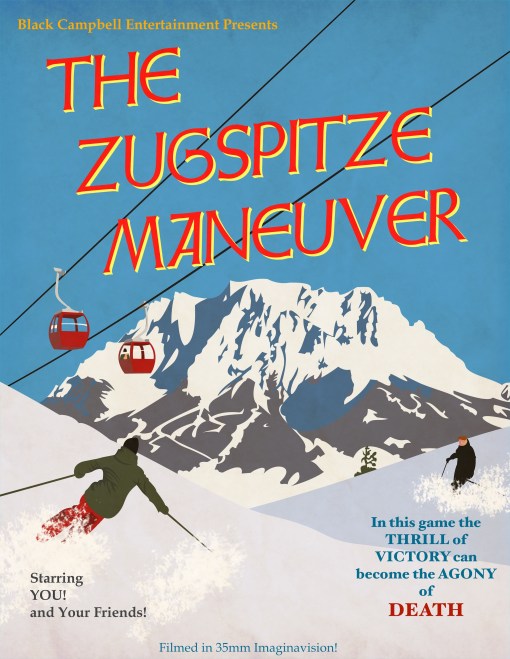
Set in 1936 during the Winter Olympics in Garmich-Partenkirchen, the adventure revolves around rescuing a spy inside the Nazi government and a list of people the SS are targeting. There’s four pre-generated characters designed to fit the scenario. The maps and cover are done by Matthew Bohnhoff, probably best know for The Shrieker podcast. (Here’s the episode where he interviewed me, prior to Black Campbell getting off the ground…)

We were going for a 1930s movie one-sheet crossed with a travel poster from the period. It is on sale through Drive Thru RPG at a cost of $2.50.

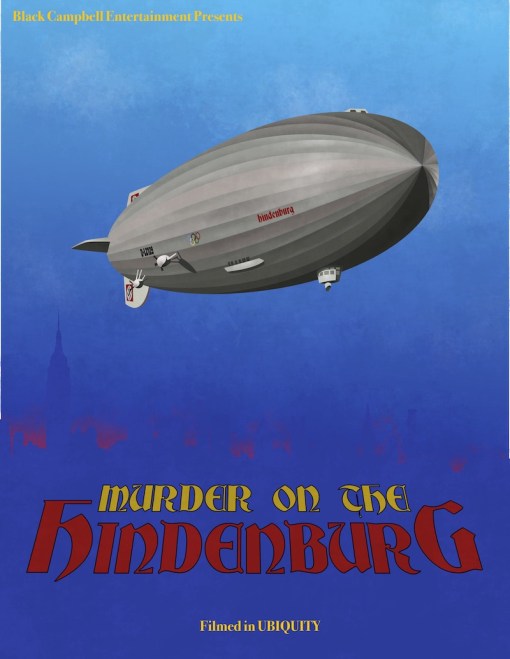
Just up today is  Murder on the Hindenburg, on DriveThruRPG for Ubiquity and Fate role playing games.

moth-ubiquity

This 22-page adventure scenario is in the style of the ’30s closed-room murder mysteries. You’ve taken a flight on the most prestigious and modern means of transatlantic travel there is. Two days to Europe surrounded by the rich and famous of the world. But when steel magnate Stefan von Eckhardt dies under mysterious circumstances, it’s up to you to find out who the killer is before Hindenburg reaches Frankfurt!

The adventure has four pre-generated characters that would well fit the scenario, but players could easily make or substitute their own. It was designed to be played in a single session of two to three hours.

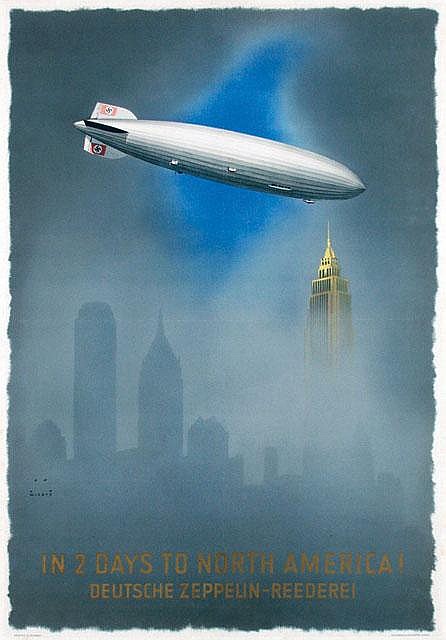
Matthew Bohnhoff, again, did duty for the cover, trying to get a mix of the ’30s movie one sheet and the actual DZR and DELAG posters by Jupp Wiertz (the following was the inspiration for the cover…)

h3297-l16975458


After running Hollow Earth Expedition for the last six months or so, I’ve started to note some issues with the game design. When the game came out in 2006, it was slick and quick compared to many game systems, but with the rise of Fate, Cortex, and other mechanics, it’s become downright clunky.

One of the biggest issues is dice modifiers, which I addressed in this post.

Where I’m finding consistent issues comes from the Secrets of the Surface World sourcebook, specifically the magic and invention rules. I suspect that Jeff Combos has a formula he uses to try and keep inventing gear and spells, etc. balanced. Other Ubiquity fans and designers have been reverse engineering the system to try and figure this formula out. I went another way with Sorcery.

First, why?

Simple. Sorcery is handled like weapons, for all intents and purposes. There are mods for range, for area or effect, for the number of people affected, for “basic rituals.” Other rituals have their own modifiers based on what they do and what they do it to. This is all in the name of balance, and it was why magic users in early editions of Dungoens & Dragons were, until they reached a certain level, utter useless. “I’m a fighter, I get these mods all the time!” “I’m a wizard, I can make a magic light appear for 10 minutes once a day!”

Magic in pulp games (I’m specifying this because Hollow Earth Expedition fits a genre, and should fit the tropes and expectations of that genre) should unbalance the game. That’s why the bad guys have magic, and rarely — if ever — do the good guys. They overcome through grit, luck, and in the case of Jack Burton, because it’s all in the reflexes.

Second reason — psychic powers are very well done in Secrets of the Surface World. Mentalists aren’t invulnerable, they’re not all-poweful, but they are powerful. Why was the Shadow so dangerous? He could cloud your mind; you didn’t see him coming. A guy who can control your mind is dangerous, but you still get a Will test. And they just do it.

Magic in HEX is hampered by table and table of modifiers to your dice pool which, in effect, render sorcerer less useful than a 1st level wizard in AD&D. Worse, they have to take five rounds — an eternity when your opponents have guns and harsh language — to launch…if you succeed. More worse, you only have a ritual per skill level. So your sorcerer with the 6 skill rating and 4 Intelligence only knows two spells. One is probably casting a light spell for 10 minutes once a day.

This isn’t Ming the Merciless, or David Lo Pan, or any number of magic using bad guys in pulp comics. So how to make magic feel more like the comics and movies?

First: Number of rituals known. The number of rituals a sorcerer can know is the skill rating, not the level. You have a rating of five, you can know five off the top of your head. If you have a book or scroll, etc. you can still use that spell, but it takes longer and you’re not as likely to succeed. (More in a moment.) Now, you have to gain access to learn those spells — you might not start with them. There’s your game balance.

Second: The Rank of the skill is the base difficulty (unless skill test is contested by another character…) So a Cast Light ritual might be Rank 1. A sorcerer with a skill rating of two could just take the average and bust this out. Oooh! Magic is cool! Now, maybe he’s using Drain Life on you. That’s a Rank 3, but it goes against your Body. Their difficulty is 3 minimum because that’s how hard it is to do, but if you have a Body 4, you get to roll eight dice (or take the average of 4.)

Three: The minimum number of round requires to cast a ritual is equal to the Rank of the ritual. However, in the name of balance, if there are modifiers to the difficulty, the GM could increase the time of the ritual. So a Bless would take one round, a quick muttering of incantation and some hand waving; opening a portal to Summon and ancient Horror would require 30 seconds (5 round) minimum, but other modifiers might lengthen that time.

Fourth: Modifiers. Geez, the number of modifiers! Here’s a good rule of thumb — ranges are simple in pulp movies, shows, and books: you can touch them (no mods) , you can see them (+1 or a +2, maybe), you can’t see them (+4). A villainess doing sympathetic magic on an unsuspecting target on the other side of town has a +4 to their Curse (Rank 2) because they are across town. To do the spell in the first place requires a piece of something from the victim (blood or hair, say) — so that counts as touch range. Ignore the modifier. They have a skill of six; taking the average, they can levee a -2 die curse on the target.

Area effect v. specific targets: Use Size here. Up to human size is Size 0 — no mods. Size 1 gives a +1 to the base difficulty. Size 2 is up to 14-15 feet: +2 to the difficulty. But say trying to effect two particular targets in a Size 2 area that has a crows of people — each person adds a +1 to the difficulty because the caster has to be discriminate.

On other skills, simplify the modifiers. Animating the dead? That’s Rank 4, but the corpse is badly decayed — +2 difficulty; he’s a skeleton +4. Is it big? Size 2, say? Add +2. Simple. Levitating something? That’s a Rank 4, so it’s damned hard to start with. So instead of worrying about the size of the object, go with “size matters not” — or if there you want a modifier, it’s the size of the thing. Size 2 — +2.

Keep it simple It still makes success hard for a sorcerer, but they are more likely to kick ass this way than it you nickel and dime them on their dice. Magic should be big, flashy, and powerful in a pulp game — something to be feared and hard to overcome.

So, working on adventure scenarios for Hollow Earth Expedition and Ubiquity in general has illustrated (for me) one of the flaws in its design…adding and subtracting to the dice pool. Over the last year, I’ve noticed that adding to a pool feels natural for most players and is easy enough to do, but subtracting — while still easy — is less intuitive. And this is something that Ubiquity relies on — modifiers to the number of dice in your pool.

What this can quickly do is render a competent character completely ineffective. You have a six dice in something, but with the range, other difficulty you are reduced to, say, two. You are, effectively, able to complete a task with a one difficulty. (Yes, you can roll a two, but essentially, your average is one.)

Here’s my suggestion for GMs. Cut the dice modifiers entirely. If something is at twice the range, don’t chop the player’s dice pool by -2; add a +1 modifier to the defense of the target. No one die, a one. It’s taking the average, but it’s quicker to pull one off  or add it to a total. And alway apply it to the difficulty, not the players roll. It puts more on the GM, but I’ve found it speeds play quickly.

The other benefit is environmental effects don’t get stupidly powerful. Oh, it’s dark and a bit misty — that’s -4 dice! So that could be an effect of 0-4; or take the average of two. Add it to the difficulty and press on. It becomes pretty intuitive for the GM to hand-wave some things quickly.

“Oh, you are trying to run across a snow covered field in the dark. That’s a +2 to a normal Difficulty of two, so roll your Athletics v. a 4.” Done. Easy. You don’t even need a chart.

For style chips, we’ve been using something similar. It always seemed a rip-off to make a player pay a style point for an extra die; we’ve always just given them a +1 to their total. (Making style points useful…)

The impetus to this idea came when I started working with the Sorcery rules. Which are, to my eye, a hot mess. But more on that next post…

Last week ended on a major cliffhanger — Gould and Amon kidnapped by the hawkmen they’d come to ally with, Gus — trying to stop one of their warriors — was clinging onto another whose wing he had trapped in his grapple as they plunged to their almost certain deaths in the ocean below, and Los Angeles and Deutschland were fending off the squadrons of hawkmen with their .50 cals and strange “gauss guns” respectively.

We sorted the Gus situation immediately this week. He continued to grapple with the hawkman warrior, but realized too late why they were falling. With his wing freed, the hawkman was able to slow, but not arrest their fall and was knocked unconscious when they hit the water. He was, however, able to slow them enough that Gus survived, conscious. He proceeded to swim, dragging the warrior, toward the shore.

Overhead, Gould and Amon were roughly deposited in the great square in front of the hawkmen’s forum. It was obvious that the place was worse for wear since the last time they’d been here — evidence of a fight, and damage from heat rays were all over the place. Worse, the leadership had changed. Princess Aditra was now in charge after the execution of her husband, Prince Sycrat, by General Inanna’s forces. This was all their fault; their dreams of opposing Atlantis led to the destruction of the hawkmen’s power! They were immediately carted off to the underside of the Aerie, led through the massive central chamber of the floating mountain where they saw the great machine that was keeping the whole place aloft. They were then tossed into a cage and hung out under the rock with other captives, suspended above the swirling “Hole in the Ocean” that they had fallen into the last time they were here.

Hunter was dispatched with Lady Sigrun (he was hooked to her, so she did not have to try and carry him) to try and parlay for their people’s return, but he was sidetracked when he spotted Gus in the water. Sigrun made a low pass and realized he needed help — massive creatures were circling in the waters underneath him! Sigrun dropped hunter on Los Angeles‘s top, cut loose the safety guide line, and went to save Gus. She was able to hook a line on him, but the weight of Gus and the hawkman was too great for her to lift them out of the water. Instead, they were dragged along, prompting a Kronosaurus to surface and take a bite, taking the hawkman in the process. Before it could make another pass at Gus, however, it was attacked by other creatures — the mermen! (This was thanks to a judicious use of style points earlier.)

Gus was quickly rescued by the merfolk, which took him back to the grotto in the cave structure under the nearby headlands. While waiting for someone that he could speak with to come, Gus decided to search the caves and found the last 46 survivors of Sanctuary, including Erha. Her father, Zek — who they now know to be Zebulon Edward Koenig, a Terra Arcanum agent and protege of Nikola Tesla who was lost here in 1908 — was away with a band of people trying to signal the airships they’d spotted.

Temporarily stymied in their rescue attempts by Sigrun’s jetpack being low on fuel, Los Angeles made a pass by the headland, dropping Hunter and a few others in the “landing basket”, so they could try to find the Sanctuary survivors or Gus. This led to a reunion with Gus and Zek. After returning to the airship, Gus volunteered to try and get Gould and Amon back. Flying to the Aerie with Sigrun, he pulled off a spectacular success on his diplomacy test, convincing Princess Aditra to release the men, that their suffering at the hands of the Atlanteans wasn’t due to their former alliance, but because the hawks were so reticent to really throw in! With Sigrun at his side, claiming Valhalla’s friendship with the United States and the Third Reich, the hawks finally caved. They would agree to speak later, once they had “seen how they handled what was coming…”

Back with Los Angeles, the decision was made to gather living and dead specimens of plant and animal life that would aid in definitively proving the Inner World’s existence. With the support of the scientific community, Byrd expects they could launch a much larger, better equipped mission to try and make more friends, and exert some influence in the Hollow Earth. Werner, over on Deutschland, agrees to aid the effort, loaning himself and his troops to aid in capturing the dinosaurs and other creatures.

Additionally, Gus makes contact with the merfolk, only to find out that he is now the father of a “walker” — a merman with legs — with Princess Osha. Reeling from the revelation, Gus is torn at first, but quickly falls under the mermaid’s spell. He and Gould convince her father, King Triton, to send a delegation back with Los Angeles to the outside world. Sentient creatures can only strengthen their case!

For days, they trap, hunt, and cultivate, but before they can start moving their specimens to the ships a tropical storm forces the airships to decamp for safety’s sake. They are left for three days in torrential downpours and thunderstorms. When it clears, they are confronted not with the return of their airships, but the arrival of the Imperial Warship Shiva — a massive flying craft filled with light war saucers and hundreds of troops! Ordered by General Inanna to surrender, they take refuge in the caves. As Shiva lands and begins to disgorge troops, Gus gives the order to the Nazi troops to attack quick, before they can react! For the Fatherland!

A hundred SS troops charge the superior number of Atlantean troops, as heat rays and bullets are exchanged in the shadow of the mighty warship when we left off for the evening.

White Apes of the Congo is out for Fate and Ubiquity — if you haven’t had a look, they’re available for $2.50.

Our next release, The Zugspitze Maneuver, is done with writing, art, and layout, and is just waiting on the cover art. ETA December 1.

The Death Jade, a get to the McGuffin first adventure set in Shanghai, is done with writing and layout, and is only waiting on the cover and some character profiles to be added. ETA December 23rd.

Murder on the Hindenburg — just that, a murder mystery set on the airship Hindenburg, may jump the queue if editing and character profiles get done before The Death Jade. ETA is December some time.

Two more adventures — The Treasure of the Illuminati, and The Mellified Man — are in the writing phase and should drop early next year, if we can afford the art.

I think I’m gonna need a Patreon page.


The characters found themselves starting the night with members of the science teams from Los Angeles and LZ-128 Deutschland led by RADM Byrd and Werner, attending a dinner in their honor in the Great Hall of Valhalla. Their hosts were naturally curious, asking about their world, countries, customs, weapons. This led to a demonstration of the utility of Hunter’s marine saber vs. the heavy broadsword of one of the warrior vril (with Hunter dressed in woman’s armor — the only stuff small enough for him.) Hunter did the Corps proud and beat the bigger, stronger opponent, gaining the nickname “martin” (as in the small, but vicious tree weasel) from the vril.

They spent the next week exploring the place — the massive halls and streets of Valhalla, seeing the communal dining, the workers — mostly humans from the surrounding villages that come here for service (“It’s considered an honor,” one tells Hunter.) — and eventually the Mountain Hall, the depths of the place where the strange dwarves like those they encountered with Ivora the Magnificent toil building weapons, armor, and making the place run. They have technology, but the denizens of Valhalla eschew it for a simpler lifestyle.

Gus got to go on a hunt with them, impressing the Valhallans with his shooting prowess thanks to the scoped Griffin & Howe .375 magnum he uses, taking shots at a quarter mile! Gould and his brother researched the history of the Inner World (or Asgard to these people) and the Germans and Gus both copied maps of the place.

After a week, they realize the Valhallans have been pumping them for intelligence, as much as the teams have been the people that live here. Byrd an Werner have been opening dialogue and relations with the leaders, and have secured enough blau gas to fuel the airships, as well as wrangling a representative of Valhalla to join them on their mission to make contact with other people. They re also in search of irrefutable proof of their trip to the Hollow Earth. Pictures won’t be enough — they need live specimens to bring back. The team convince Byrd that a trip to Sanctuary is a good idea. They can hunt small dinosaurs, maybe convince one of the half-man racs to join them on the trip back to the surface world.

The representative chosen is Lady Sigrun, one of the Valkyrie, who joins them on Los Angeles, to the chagrin of Werner and the Germans. She is disappointed to find out the ships are essentially big balloons…these are not real warships!

Their course will take them 2500 miles, over dangerous mountains and around treacherous weather, but they finally reached the Aerie — home of the hawkmen — near the Sanctuary. They were met with formations of the hawkmen, closing in on their ships. Byrd and the party climbed to the top of the hull, where the marines were preparing the .50 machineguns. Using the white flag and attempting to contact the swarms of hawkmen warriors, Amon called out to them, identifying themselves.

Without warning, a small group broke away and looked like they were going to land. Instead, they grabbed Amon and Gould and flew over the side of Los Angeles. Gus Hassenfeldt attempted to grab one of the warriors, hampering his one wing, and sending Gus and the warrior tumbling in a deathly embrace over the side of the airship toward the ocean below! Hunter and Byrd had the marines fire warning bursts to try and clear the hawkpeople off, but Deutschland — seeing the attack and hearing the machineguns — opened up with their strange “gauss guns”, hosing the area with magnetically-accelerated ball bearings.

Their peaceful first contact a shambles, Gould and Amon captives of the hawks, and Gus on his way to a crushing impact on the surface of the ocean below, we broke for the evening…

We had a break to test play The Zugspitze Maneuver while one of the regulars was out on work travel, and took up our Hollow Earth Expedition campaign against tonight. We had ended on a cliffhanger — the party’s airship, USS Los Angeles having followed the massive German LZ-128 into the lensing effect of the Northern Polar Entrance, only to be tossed and twisted as they made the transition into the Inner World…could the decade-old airship — not the most robust of vehicles — survive the forces?

In short: yes. After a tumultuous passage, the crew of Los Angeles set about finding their position, gaining altitude from the snow-capped mountains below, and looking for their opposition. They quickly find the German ship three miles off their starboard bow, similarly drifting on the winds and conducting repairs. The Soviet semi-rigid had followed them through the entrance, but looked to have crashed five miles away in the mountains. After radioing to Deutschland, LZ-128, the learned that the ship was captained by Earnst Lehman — the most famed airship captain in DELAG (the Zeppelin cruise line) and that the mission commander is an Oberststurmbannfuhrer named George Werner — the same Werner that had led the Gestapo expedition to Tibet, and whom was assumed dead in a plane crash with the other Nazi survivors after they left India. Himler himself had promoted and tapped Werner to lead the new expedition, which had opened the entrance thanks to a civilian guest…Aaron Gould, David’s brother!

The two airships formed an alliance and after speaking with Amon about the possibilities of finding fuel — the Germans use blau gas, a form of propane and hydrogen that is similar enough to coal gas to easily distill; and Los Angeles gasoline, but her engines can easily be converted back to blau gas — they decide to risk going to Hyperborea, home of the “white vril” — the albino-like vril from the north — who live in Walhalla. After a day’s travel at half speed to conserve fuel, the airships find the massive, city carved out of a mountain.

walhalla_1896_by_max_bruckner-610x454

Walhalla (1896) by Max Brüchner

They are immediately intercepted by a dozen of what appear to be hawkpeople…but they are women in armor, their wings part of some kind of rocket or jet pack they use to fly: the Valkyrie! Led by Mist, they demand to know what the ships are, and their intentions. (The size of the vessels, and their lack of knowing they are lighter-than-air craft, make the twin dirigibles highly intimidating…) Admiral Byrd and Dr. Gould manage to convince them of their non-beligerancy, and to be allowed to seek harbor at the mountain hall.

After some complex maneuvering to use a huge lightning rod as a mooring mast, they put Byrd and the party over the side, and from Deutschland, Werner and two of his archeologists, Herman Wirth and Wolram Sievers — both “experts” in Thule mythology. These men are fervent anti-Semites, who are desperate to find a way to access the Hollow Earth without the Gould brothers, and who cannot bear the thought that these targets of Nazi racial hatred are closer to the Aryan perfection than they are!

Led through giant mythic halls of the city that are like something straight out of Thor, and surrounded by hugely tall, beautifully Nordic looking, armored and armed warriors (men and women) who are part Marvel extra/part SCA, they are brought before King Woden and his queen, and questioned. Along the way, they reveal that they were the rebels that were killed by Emperor Mot’s people; lost to the ocean! He is wondering why they shouldn’t just turn them over to the Emperor to curry some favor.

The party convinces the king to listen to their petition to open relations between Hyperborea and both Germany and the United States. They could work together against Atlantis, but Woden is cautious there — while he and his warriors would welcome a fight with Mot, and believe they would win…the time is not yet right. However, if they could forge an alliance with the mermen and hawkmen once more, he would consider it. Along the way, they find out that the dwarves that live deep in the mountain can make the blau gas for the airships. they are dangerous, treacherous creatures, but they know their place.

After, an offer of dinner and debauchery has the combined landing party back on Deutchland to carefully pick people to represent the mission. They decide on the scientific contingent (including the party), the admiral and Werner. They also meet David’s brother, safe and sound, and under the protection of Captain Lehmann. Gus manages to convince Werner to release the brother Gould under a promise from the admiral that he will be returned when they attempt to transit out of the Inner World. Werner, meanwhile, starts to cultivate Gus with his personal, signed copy of Mein Kampf and a Nazi party lapel pin. Gus, ever the optimist about his nation, takes the gifts…where might this lead?

We ended there for the night, with a new faction introduced, new technology, and hopefully some interesting character development. They have yet to figure out how long they have been gone, but it’s been a while.

The second release for Black Campbell Entertainment is nearing completion — this will be an adventure scenario for Fate and Ubiquity, as with The White Ape of the Congo. Currently, it’s looking like it’s going to come in around 20 pages, with art and maps and will most likely sell for $4.99.

The Zugspitze Maneuver is a spy thriller that takes place during the 1936 Winter Olympics in Germany. The characters have to make contact with a operative who has Gestapo list of suspected private and government agents working against the Nazis that needs to get to your employer so they can protect them.

Writing, interior art, and editing is complete, and layouts have begun. The cover art will be by Matt Bohnhoff. We’re shooting for release in the first week of December, if all goes well.

Following that will by The Death Jade (working title) — set during in China on the eve of the Second Sino-Japanese War.