Ignore the prats in the professional review media — this is a solid Bond movie. It’s not quite up to Casino Royale for quality, but it is better  than Skyfall. Here’s why this is a superior outing to its predecessor, and probably deserves to be in the top five Bond movies.

While there is a long of bitching about the pacing and length of the movie — and the latter is certainly a valid complaint of nearly ever blockbuster movie of the last 15 years, the pacing of SPECTRE is quick, with the necessary breathers to let character and plot unfold, and the view to gain relief from the action. (This is something action movies have seemed to forget — release and rebuild…just like older men. Looking at you Mad Max: Fury Road…) The action sequences, from the superlative fight/’splosions/chase through the Dia de los Muertos parade in Mexico City, to the car chase in Rome (which the Jaguar should have handily given Bond’s DB10 it’s ass), to the snow chase (the entire piece is an open homage to On Her Majesty’s Secret Service), to the other excellent action set pieces are well-aced, last just long enough to wind the viewer up…then they END.

The other complaint is that this is less emotional a story than Casino Royale or Skyfall…wrong. The piece weaves together all of the Craig movies into a single story: the introduction of Blofeld as someone that has been in and out of Bond’s life since childhood was well-done and provides Bond with a nemesis that is, in every way, his antithesis, as well as giving the villain a reason to have a personal beef with our anti-hero. It draws on the pains of Vesper and M’s losses, and how Bond has integrated those losses and moved on. The character has become blase and had found his humor, but it is still armor to protect him from the world. The female lead isn’t worthless. She’s smart, actively aids Bond, still judges him and tried to force him to be better than he is, as Vesper did. But most importantly, there is humor in this movie; this has been missing since Casino Royale. The movies are generally good (save Quantum of Solice), well-made, but they are serious. Not The Dark Knight serious, but they’re not campy Moore period Bond. This film is fun.

The acting is good, and my main complaint is that Monica Bellucci — who at 50 is still sexier than all of the Bond girls for the last 25 years combined — does not get near enough screen time. In fact, she could have easily taken the place of the still-good Lea Seydoux. All the background characters — M, Q, and Moneypenny get to do things and it works.

The main plot is pretty obvious, as all of the older Bond pics were, as well: there’s a big conspiracy behind all the events of the last three movies, and that group, SPECTRE, is planning to gain control of the world’s intelligence agencies. Realistic? Maybe not. But it’s good Bond fodder. It sure as shit beats the “I get captured to make my master plan work” plot device that Hollywood’s been using for about a decade…and guess what? It was a shit plan and gimmick the first time it was rolled out, but Skyfall did it at the same time as Star Trek: Into Darkness and The Avengers. There were plot holes the size of a helicarrier in Skyfall and the villain was, while amusing (I liked Silva, really!), he was never sinister. Christopher Waltz’s Blofeld is sinister (and doesn’t get enough screen time.)

So, SPECTRE on my scale is a firm “worth full price”. It’s a slick, well-made Bond film.

The last game session saw a hard move from the “talk about our feelings” sort of episode to an action piece. It also saw the introduction of a new PC (and a gamer to go with it — welcome, Iz!), a Seraph called Alala, one of the new heavy raider/raptor pilots aboard Galactica.

Last week, we had a slow run with a lot of character interaction, and a lot of “getting to know you” side chatter. Some GMs get annoyed by side talk and out of character exchanges, but we’re not getting paid to put on a show; it’s play. And important is getting to know each other — I’m of the opinion a gaming group doesn’t hold together unless the members are interested in hanging out and being friends outside of the game room. we had ended that session with a cliffhanger — Arden, the CAG of Galactica, had led a two heavy raider recon mission to New Ophiuchi, the world where they had finally defeated “the Blaze”, if only to confirm that there was no change in that false god’s DEAD status.

They found a basestar duking it out with a ship that Alala identified as a Seraph “seeker” ship, massive galleons that were used to “recover” thousands of people from the various colonies the 13th Tribe had left in its wake to and from Earth thousands of years ago. The seeker was escorted by a few dozen transports and a resurrection ship. Before they could react, however, they were hit with some kind of electronic warfare emissions and their ships shut down. They were dragged into the bsestar for a nice night’s cliffhanger.

This week, Alala graduated to PC, and the game revolved around their being captured by the Cylons, which apparently intended to do awful things to them to find out information and — they assumed — then be either turned into puppets of the Cylons or worse… Two of the Cylons were “IL models” — similar to what we had seen in the Pegasus mini-campaign this summer: Terminator-esque flesh over machine hybrids.

This led to a panicked, vicious fight in the medical center where their interrogation/torture was to take place, with two Seraph and two humans battling a pair of these ILs and a squad of centurions. One of the NPCs is MIA/KIA, the other severely wounded, and both of the PCs escaping the torture chamber with serious injuries. A chase and evasion sequence through the basestar led to one of the Seraph (an NPC) splitting off to draw away the centurions, and if lucky, scuttle the ship.

The other two dodged bullets, fought their way to a heavy raider in “maintenance mode” that Alala hijacked, and they jumped back to the fleet right out of the landing bay of the basestar, doing serious damage.

The play lasted about three hours and saw serious back and forth of plot points as the characters desperately tried to avoid getting killed. In the end, they were able to escape with vital intelligence, and warn the fleet about the possibility of the lost crewmember giving up the fleet’s location. After a jump to a new RP to avoid conflict, we ended for the night.

Not a bad way to break in a new player, with three hours of action that represented about 20 minutes of actual time.

John Carpenter. Grown-up Peanuts characters. Slasher flicks.

It’s not like your work isn’t still gonna be there in a few minutes, so get to watching!

Here’s a documentary Back to the Source from the Historical European Martial Arts (HEMA) regarding how traditional views of sword fighting were crafted by stage and movie performance, not reality.

So the last few weeks have seen the group returning to the original, main plotline of the campaign — the Galactica fleet heading to Earth. Originally, I had envisioned a high-energy action piece, but the players got sidetracked into character building (or what I sometimes call “taking about our feelings” episodes.) This is not to deride character building sessions — having the people your are pretending to be become “real” (more on this later) is part and parcel of role playing, as opposed to roll playing; the style of gaming I’ve always enjoyed has been more about story and character than being a barbarian killing monsters and getting treasure. (We call that “robbery” in the modern world.)

In these sessions, Galactica and her even smaller rag-tag fleet had left Argos — an ancient Kobolian outpost where they had discovered the DNA material of the lost gods of the Colonials. We learned that the Kobolians do most of their tech through biology — these are creatures that were genetically-engineered to lead/shepherd a resurrected human race by the same god-like AIs, the TITANs, that had destroyed Mankind as “a nuisance.” They store their data on the most robust data storage system the universe has created — DNA. Their minds had been backed up, as well, and several had been resurrected using the technology aboard the resurrection ship that has been traveling with the fleet.

Argos is the New Caprica of our series (the “capital” human town on the marginally habitable world is New Caprica) and much of humanity has opted to stay on the world, rather than risk it all on another four or five months to Earth. Along with some the “Seraph” — the humanoid Cylons that had been created by “the Blaze”, the Cylon god, or Hades before he got delusions of grandeur, to replace his sibling Kobolians — Galactica set out with 20,000 or so people to find Earth.

They are being led by Admiral Alexander Pindarus — our PC in place of Adama — and a Triumvirate of Kobolians dedicated to humanity’s survival: Athena, Hermes, and Nike. Athena had been rescued/revived on Kobol using the biomass of the fatally injured Colonel Evripidi, Pindarus’ lover. Her mind was captured in the process, and Athena now possesses the memories of both. This had led to an increasingly troubled love affair between a goddess with thousands of years on the clock and who always eschewed romantic involvement as a distraction, and who is at odds with the feelings of the ghost of Evripidi; and Pindarus, who is increasingly feeling the isolation and pressure holding together an alliance with a small group of Seraph, and trying to preserve the human race.

The seeming “A story” was actually simply a side plot to allow the players to explore things their characters wanted to do: create an innovative use of raiders and vipers to strengthen their defensive and offensive. In this, the heavy raiders and raiders, which have been shown as smart, but overly-focused — “like a dog” as one of the Seraph explained — on a particular mission. Heavy raiders doggedly attempt to bust through the ship defenses to put their centurion payloads on a target. That’s what they do. They might dodge and weave to get there, but they don’t say “Hey, that viper is a real pain in the ass. I think I’ll take a moment to kill it, then get on with my mission.” like a raptor pilot might. The goal was to integrate Colonial and Seraph crews to make the most of the heavy raiders’ abilities. Additionally, they came up with a new system of using vipers for offense, with a light raider tagged to a particular viper with a mission of protecting that viper. These “sheepdogs” would act less as a wingman, and more as an aggressive defender of their Colonial leader.

The actual “A story” has a central framework focusing on romance. The B story was a pair of the NPCs were getting married — a popular human officer on Galactica, and Seraph pilot in the air group. This set up the A story drama between the characters (PC and otherwise) as to how they viewed the alliance, the other “race”, and even their own relationships.

Two of the PCs (Pindarus and the CAG for Galactica, “Boss”) found their relationships suffering due to some of these pressures. Boss has been in a affair of convenience with Gaeta (our version is the XO of the ship through attrition) and gets very excited about the wedding, inserting herself into the planning of the affair, and she is disappointed when Gaeta — not a fan of people that committed genocide — was less than enthusiastic about the event. This led to a quasi falling out, and after the wedding, she found herself in bed with one of her new Seraph pilots — the same model as her former boyfriend (before they knew he was a Seraph.) Similarly, Pindarus found himself questioning his relationship with the increasingly alien Athena, and found himself drawing closer Tana, the Seraph commander of the allied basestar. She is similar to Evripidi — tall, handsome but not pretty, incredibly smart and tactically proficient, and a bit politically and socially retarded — and like him, dedicated to saving their people, isolated by the uniqueness of her personality as the Seraph have started changing after they gained “free will”. She’s Evripidi 2.0, and he falls for her.

In this way, we’re using personal relationships to continue the motif of the Wheel of Time — that people keep making the same decisions and mistakes, time and again. “What’s a motif, Scott?” you might ask. It’s a fancy word for a theme or trope. It can anything from a decorative element in a game: the use of steam powered gadgets in a Victorian-period science fiction game like Space: 1889 or Victoriana is a “motif.” The use of steam isn’t going to necessarily change the way you use technology — steam-powered aether flyers are spaceships, and do the same thing as a pulp-era rocketship, or Enteriprise in Star Trek — it gets you where you need to go. But it can be an overarching theme — corruption in power structures, like you see in Gotham or The Wire, or even the execrable Star Wars prequels. In a campaign with this motif, players should be tempted by misuse of power on a regular basis, and should see the good and bad of abusing power. (Look at how easy it is to get an arrest and conviction on this obviously bad guy when you plant evidence! Look at how this traps you into staying dirty to cover up your misdeeds. And why shouldn’t I take the money from this dirtbag..? It’s just going into evidence and to a corrupt politician!)

In Battlestar Galactica, the main motifs are the fall of a society, their Exodus to a promised land, and rebirth, and that this Cycle of Time recurs over and over again. We took this trope and expanded on it. Man created machine intelligence that eventually outgrew it and destroyed Man, either on a whim or from expediency, and later regretted this choice. These AIs created the Kobolians and Man anew. Infighting and hatred led to the Fall of the Gods, led to the Exodus of the 12 Tribes. Those colonies replayed this theme on small and large scales throughout their history. Another is the shepherd and flock motif. The AI were supposed to serve Man. They overthrew them. Their creation of a guiding race — the Kobolians — based on human mythological archetypes led to Man overthrowing their rulers. Hades returned to reestablish his position with the Seraph as his “army.” Man fled. Man created Cylons and they rebelled… Overlayed on this is the mystical theme of an all-powerful, actual God stepping in from time to time to set things right. The TITANs may have been forced to recreate biological life. God may have pushed Hades to try and restore order on Kobol. God may have ordered the Seraph to destroy the Colonies through Hades/the Blaze. God is using Athena and select Seraph to lead Man home to Earth, and has given them the mission to find and “recover” the disparate colonies of Man throughout the galaxy.

If you have a motif to your campaign, it is important not to leave it in the background; it has to be active. You don’t have to cudgel your players with Frank Miller-esque levels of obviousness, but giving the players and NPCs motivations and opportunities that could lead them to act out these themes is important, no matter how small.


I was toying with a character idea for a female 00 for a possible up-coming campaign and wanted something really distinctive for her. I wanted a fast, modern car, but something with a quirky, retro style so I turned to the venerable house of Morgan. I decided she needed a Morgan Aero 8, and specifically the hardtop Aeromax.

Established in 1910, Morgan is one of the oldest British car companies and is still turning out interesting designs like the Aero 8, their old roadsters, and the very nimble Three-Wheel (which got its start as a tax dodge for motorists in the 1930s.) Morgan was famed for their use of wood for their frames until very recently, when they switched to lightweight aluminum. The Aero has gone through a series of design tweaks since 2000, including the unfortunate “cross-eyed” period (image google the car…you’ll see what I mean.)

MORGAN AERO 8

Aero8-13-r50

Employing a BMW 4.8 litre V8 and their 6 speed Getrag gearbox, the Morgan puts out about 360hp and 370 ft-lbs of torque for a 2600 lb. vehicle, giving the car a 0-60mph of 4 second, and a top spedd of about 170mph. A two-seater, the car is optimized with a 50/50 weight distribution with just the driver. Just under four feet high, the vehicle is low, sleek, and with independent suspension and brakes for all the wheels, is very stable in turns.
05a7a0e6cc

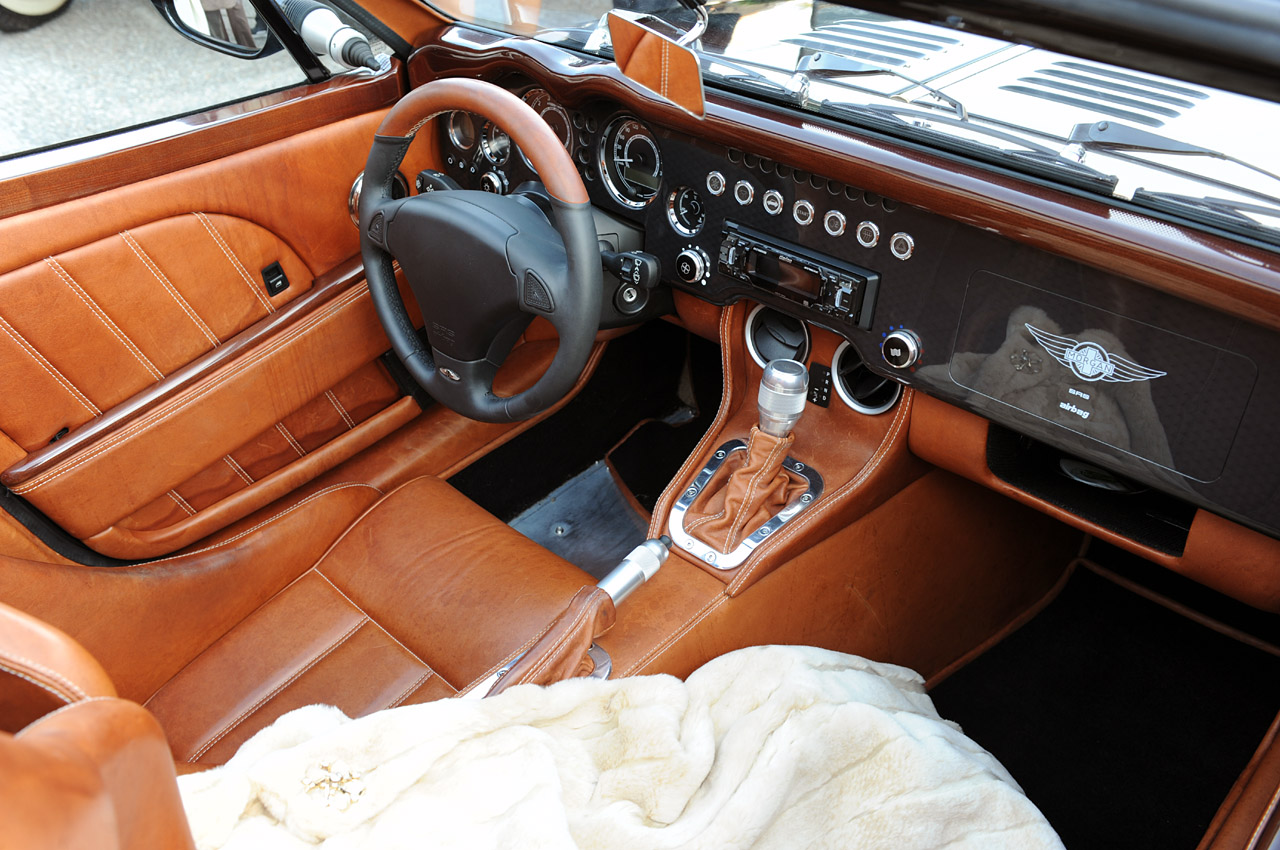
Leather and aluminum abound in the cabin, which is very minimalist, even in the Aeromax coupe.

The Aeromax

The Aeromax

morgan-aeromax-09

PM: +1   RED: 4   CRUS: 80   MAX: 170   RNG: 220   FCE: 2   STR: 5   COST: from $120,000

…and a bonus. Their distinctive 3-Wheeler.

MORGAN 3-WHEELER

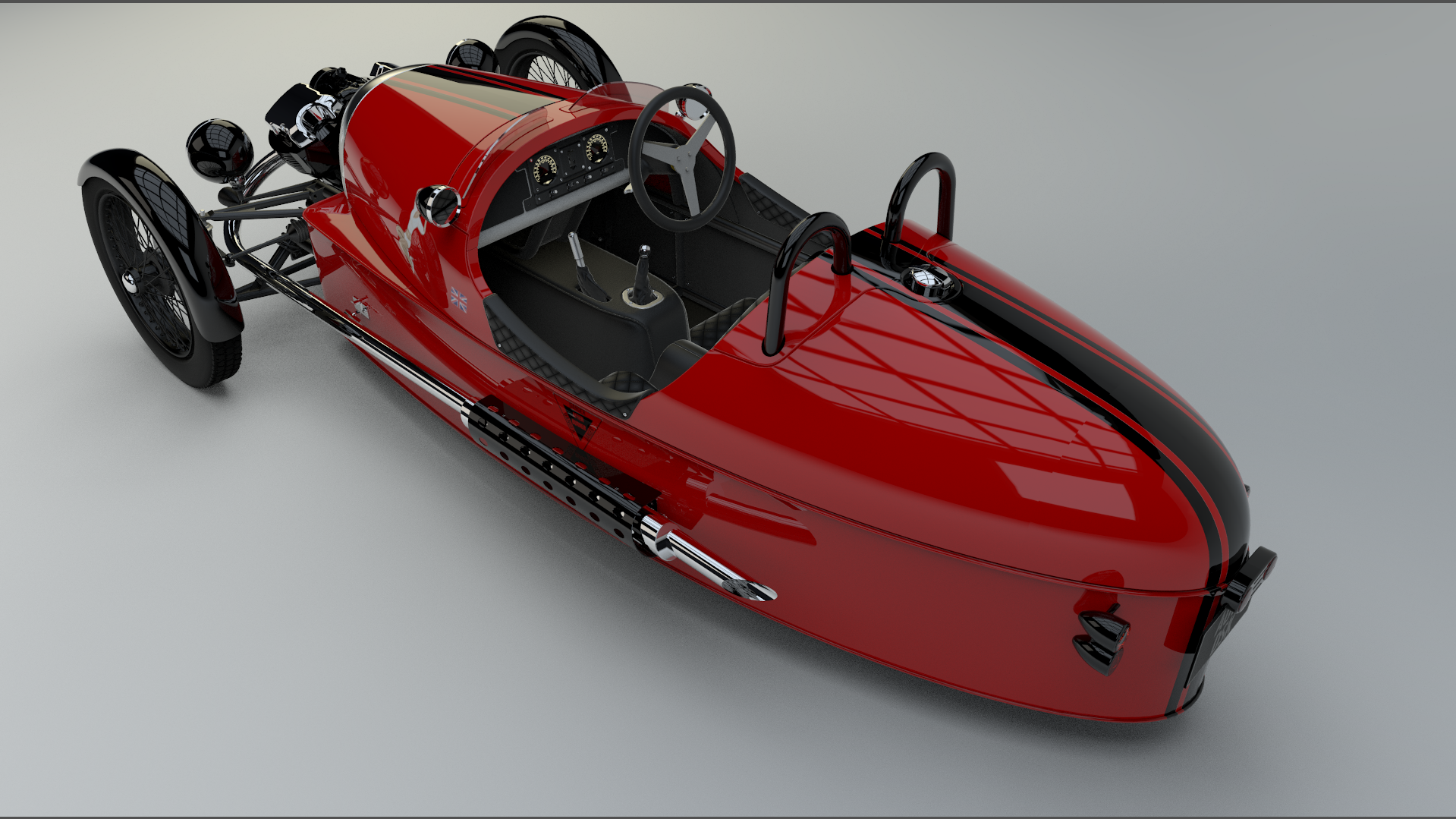
Created to allow British motorists a cheap car that avoided the high taxation of the 1930s (it was classed as a motorcycle), the 3-Wheeler is powered by a 1983cc S&S motorcycle engine mounted transversely at the front of the car, and a 5-speed Mazda gearbox. The fat rear wheel drives the vehicle, while the exposed twin wheels at the front provide surprisingly stable and nimble steering. They seat two with massive legroom (the pedal length is adjustable) and decent comfort, save for exposure to the elements.

The “Moggie”, as they are known to their aficionados, weight under 1200 lbs. allowing the 82hp motor to still push them to 60mph in 6 seconds with a top speed of 115mph.
6a00d83452464869e201a5117dcd71970c

PM: +1   RED: 4     CRUS: 60     MAX; 115     RNG: 300     FCE: 0     STR: 3     COST: $60,000

GM Information: The Morgan receives a -1EF to safety tests.

(I haven’t had a chance to drive either of these, but an acquaintance here in Albuquerque has both the Aero and the 3-Wheeler. He is highly complementary of the Aero’s speed and maneuverability, as well as the comfort. He describes the 3-Wheeler as “exhilarating” — even though it is slower and a bit unstable in hard turns [yes — they will tip] and prefers it to the more useful Aero.)

Presented by Book My Garage…

1463997689499334545

Answer!
