Space Cowboys are cool. Since the release of Cowboy Bebop, and followed up with spiritual cousins Firefly, Serenity, The Mandalorian, and The Expanse (at least the TV series) — people getting by with existential issues in space has given us some of the best sci-fi TV ever.

So I was pretty excited a year or two ago when the Cowboy Bebop roleplaying game rolled up on Kickstarter from a little company out of Italy (and if it’s not Sweden, most of the really good stuff is coming out of Italy, right now). I got the PDF in a few months back and perused it and was…underwhelmed. I held off of any kind of review, though, until I had the physical product. I’ve noticed, of late, that when I read the PDF of a game, I don’t always get what I’m looking at. Something about the screen (usually an iPad) and my periodic astigmatism makes it a pain to read for long periods of time; and the inability to quickly index back and forth means I don’t always get a clear picture of mechanics if they are quirky (as is the case here) or badly written (pretty much trying to find rules in any Modiphius product. Seriously — editors and a good index, guys.)

Well, I’ve go the book and GM screen in and it’s time to give a first impression. I’m not going to call this a review until I’ve run the game. I get the impression a lot of my issue with the game comes down to verbiage and not how the game would actually run. More on that in a minute.

The physical book is very well done. The paper and binding quality is easily on par with most stuff on the market. It’s chock full of official artwork and screencaps. The layout is double column and in a very readable typeface. It was written in Italian and translated to English, and the translation is top notch, with only a few spots when a better word choice might have been appropriate. It’s edited well — I caught no typos or layout issues. The book runs 272 pages — about normal for an RPG corebook. The GM screen is on solid cardstock with a wraparound on the front of the crew of Bebop, and the basics for running the game on the back. And I do mean the basics. As screens go, I found this one lacking a lot.

Allora, onto the meat. The system is a d6 die pool based on the approach you want to take to solving a problem, what “tab” you are in, and whether or not your approach is narratively appropriate to the story. To explain: the session is essentially split into what most of us would understand as “acts”, like in a play or show; they call them tabs. I should have a look through the Italian version to see if they use act there. You get a die for the first act, 2 for the second, and 3 for the third; the difficulty of tasks also increases. Roll the dice and beat the target number. Simple there.

How you approach the task is important. The approaches are essentially “attributes” — rock is trying to act under pressure; dance is more related to a combo of dexterity and stamina; blues deals with spirituality or self-awareness…wisdom, if you will; tango is a charisma-based approach; jazz is smarts, skill, improvisation. The music-based nomenclature is appropriate to the source material, but could be confusing as hell to those who might be looking for a more traditional set of attributes for their character. I will admit I really liked the idea on first read, changed my mind on the second reading and thought it overly subjective, but now I’m leaning a bit back to my initial impression. I can see, however, this will be a point of failure for the game group at first.

Another aspect of the system is the use of “clocks”. This is the number of successes needed to pull off a objective. There are multiple ways to bust up these clocks — 4, 6, 8, etc. Hell, you could do a 1 or 2, I suppose. There can be a few of these running coterminously; you could have an investigation clock looking for your bounty, and have a threat clock pop up due to a fight scene. You need to succeed at one or more of these for the act you are in. The GM or Big Shot — in keeping with the in-show TV program alerting bounty hunters to marks — can also have clocks running for the opposition. If they get the clock cleared first, that’s a failure.

There are hits and shocks as “damage”. Hits are the successes of the players; shocks are the GM’s game currency and can be spent to increase difficulties later. Shocks are gained when the players roll a 1 or based on the something in the act. You absorb these by taking a wound on your approach. Two wounds and you can’t use the approach for the rest of the session. You can also clear a shock by marking a “bullet” — this is a clock of sorts where you get six bullets before something in your past comes up to haunt you. There are examples of play in the book that help with all of this, but on first read it was confusing as hell. I think if the GM can come to grips with how this works (or just ditch it for a number of successes must be accrued by a certain number of tests) the game will run smoothly. But there will be a learning curve for the GM. The players will have an easier time of it once they get past the approaches idea.

Each of the approaches also gets a trait that, if the player can weave it into their description of what they’re doing, aids in the die pool. This can be things like a personal description, a piece gear, clothing, etc. You have a key memory and a “groove” — a basic schtick you can use in play.

The group gets to choose a “mothership” — their base of operations — and a personal vehicle, either a small spacecraft like Spike Spiegel’s Swordfish, or the like.

The rest of the book is a guide to the Bebop universe — the criminal factions, corporations, and other players in the solar system. There’s source material on the gate system that allows the characters to get around space, the various worlds and asteroids, and an episode guide that is, I think, too long. I would have liked a bit more background material, but they stayed very faithful to the anime. (I may be in the minority, but I rather liked how the live action series buffed out some of the universe.)

So…is it worth it? I honestly don’t want to say, yet, but would prefer to kick the tires on it and see how it plays. That said, if you are a Cowboy Bebop fan and want to support officially licensed material for it, or you are a completist that wants to have all the hot steamy jazz you can get…go for it.

Contrasting Cowboy Bebop is Orbital Blues — a “…game of sad space cowboys, your crew of desperate and downtrodden outlaws do what they can to make ends meet. They travel across a music-infused space-western universe filled with retro-future technology, plagued by heartbreak and the haunting shadow of the blues.” This rolled up as a Kickstarter a few months back for Afterburner, a new expansion to the original book. Since the original was included in one of the bundles for a reasonably price, I jumped on it, as I was still as bit on the fence about Cowboy Bebop. Soul Muppet Publishing is out of Nottingham and publishes a number of rules-lite games.

Right now, I only have the PDF for Orbital Blues, but the layout allows for easy reading. It’s filled with retro artwork, a clean layout that looks like the print book is probably on the size of the 5×7″ Fate books. The typeface is clean — Helvetica Neue, I’m guessing — and sized well. We’ll see how the physical book looks when I get it.

Orbital Blues is a rules-lite system trying to do a lot of the same things that Cowboy Bebop is doing, but without a lot of the chaff, which you can see in its 108 pages. The characters have three stats: Muscle, Grit, and Savvy — easy enough to intuit what they do: physical stuff, willpower stuff, and smarts/skills stuff. Stats run from -1 to +2 and get added to a 2d6 roll when something happens that requires an ability check. If you have some form of advantage (“The Upper Hand”), you get an extra die and drop the lowest; when disadvantaged (“Against All Odds”) roll three dice and drop the highest. Beat the target number…which is always an 8. If it’s harder than usual, it’s “against all odds”, and when easier “the upper hand”. Gear can also provide bonuses. Dead simple.

A note on mechanics: if this sounds a lot like Traveler, I agree, except the main mechanic is also used for combat, so that isn’t more complicated than a normal task — something that does crop up in other rules-lite systems. A target of 8+ on two dice is about 41.6% to succeed. That seems pretty low. Admittedly, the 3d6 of “the Upper Hand” should mitigate that with about a 68ish%. (Keep in mind, I’m really not a mathematician — so be kind, numbers people!)

You have health for physical injuries, and Blues for a rating of psychic impact of things happening to you or what you have done. Get enough blues, you will accrue a “trouble” — something karmic this way comes. You start with a trouble and a gambit — a schtick you can use. For every two troubles, you get a new gambit.

Like Cowboy Bebop, you choose your ship and gear and get rolling. Ships and vehicles have three stats, as well, and take damage directly to the stat. Once they’re at zero, the ship is either dead, dead in the water, or blind.

The rest of the book is given to 40 pages of example NPCs, bad guy groups, and vehicles. The last 50 pages or so outline one particular star system, Sutler, is great detail with locations, groups, NPCs, etc. The Orbital Blues setting is interstellar, not interplanetary like Bebop, and is an excellent jumping off point for crafting one’s own setting.

At $20 or so, is it worth it? I’m willing to jump on this one untested and say yes, if you are looking for a space RPG that’s lightweight, has room for expansion, and you’re on a budget.

So…which one is better for Cowboy Bebop? I honestly, at this point, don’t have an opinion, but if I had to guess, most folks will be more happy with the simplicity of Orbital Blues. We’ll see how some testplay on CB goes, then I’ll revisit this.

it rained all over me today while riding to work. So after a day of freezing my ass off in wet jeans while dealing with my students, I came home to the desire for something bracing. Here’s what I made:

2 oz. Bulleit Bourbon, 2 oz. Santa Fe Distillery Apple Brandy, a teaspoon of the juice from the Maraschino cherry jar (plus one cherry). Stir and serve room temperature. Tastes good, bit of a kick, and very simple.

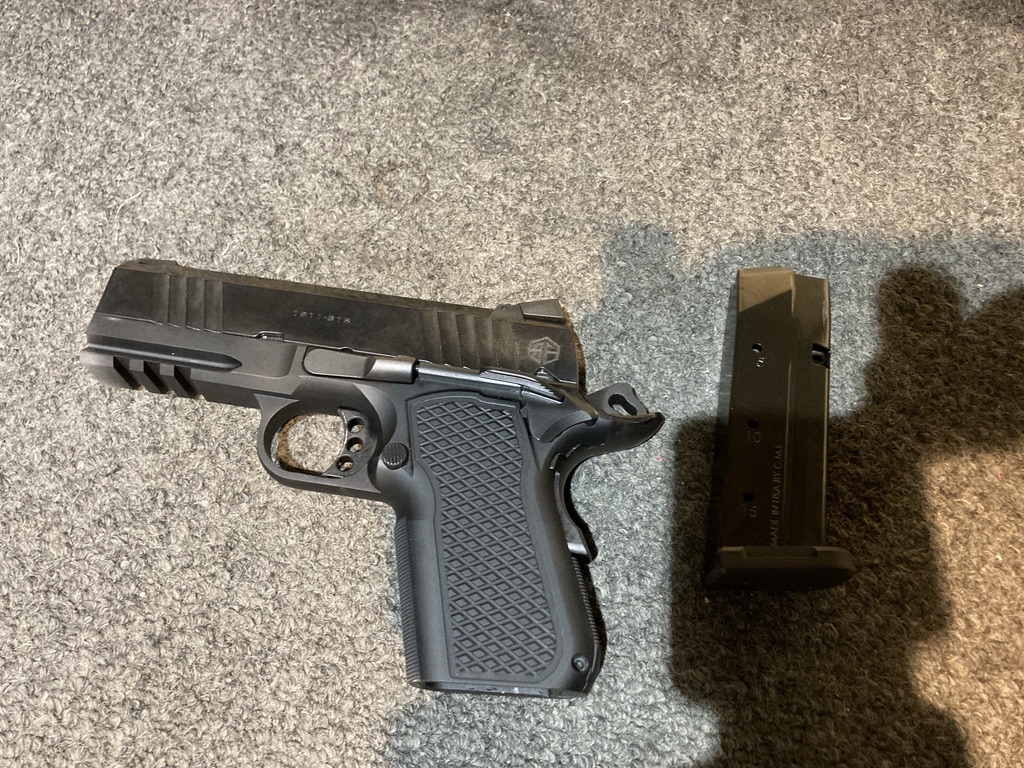
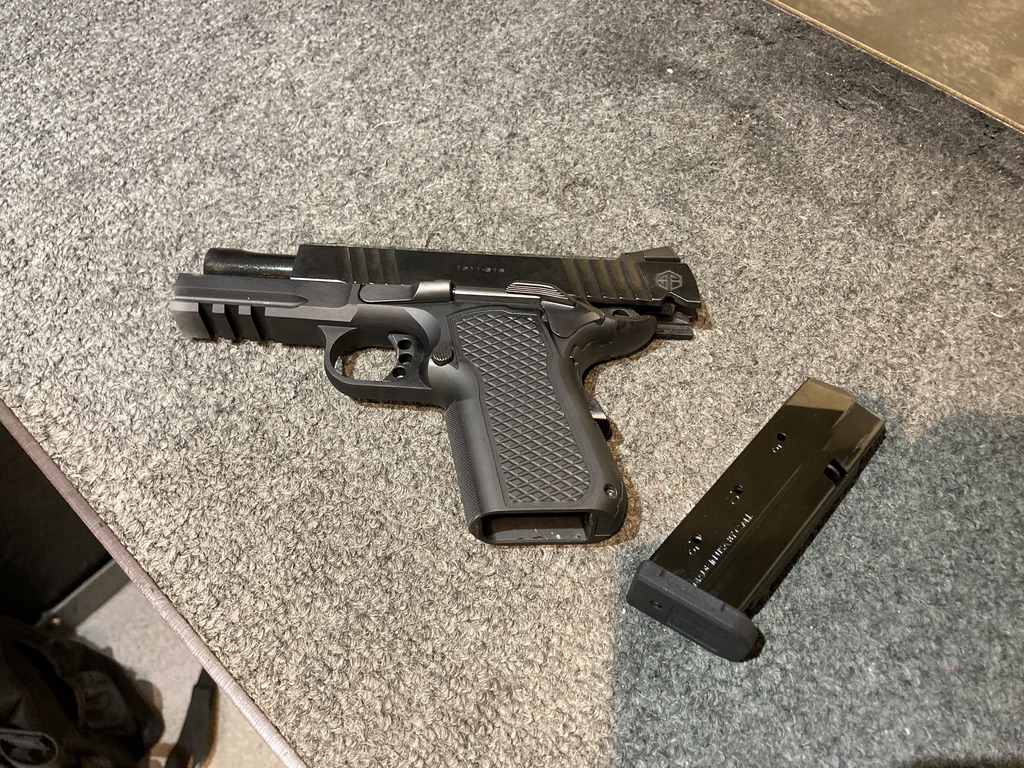
I got a chance to shoot one of these this past week. I traded time with a guy at the local range — a few mags on his S15 for a few mags on my Prodigy. There’s one of these in my local gun store and having handled it, it seems surprisingly good quality for a 1911 from a company I’ve never heard of, and which has a few surprising features.

The company is based in Georgia but is owned by a South Korean company. Their 1911s seem to be pretty popular based off of the YouTube videos I’ve perused, and the S15 has garnered some love. So, at the gun store I noted this: it has a great finish — a glossy, absolutely glass-like finish that makes the slide run very easily. Markings are minimalist. The top is forged steel, the lower is T6 aluminum and thinner than most 1911s. The grips are part of the receiver and not separate pieces which seems to be key to keeping the width small. The trigger is mid-line 1911 good, which means better than nearly all striker fired pistols, and better than most stock 1911s. There’s no play in the slide or the barrel lockup. The bull barrel is crowned and also finished in the same DLC (diamond-like carbon) coating the slide has. All the usual 1911 goodies are here — grip safety, a beavertail to protect the hand, a bobtail to aid in concealment, and a small rail on the 3.25″ barrel. Novak sights are adjustable and won’t impress all but I like them. No cut for an optic which might make some balk, but it like it. It has a flat top to the slide making it perfect for perspective shooting.

But the big draw for some is the use of the Shield Arms S15 magazine. Chambered in 9mm, the S15 has a 15 round capacity. It will also use Glockl 48x 10 round magazines without a hiccup, if you’re in a shit state that limits your ammunition capacity.

Here it is on the bench…

How did it shoot? Flawlessly. The guy had alonst a 1000 rounds through it without issue and I fired a box of 124 grain without no problems at all. Recoil is very mild and the slide speed is fast enough to you’re back on target almost immediately. It threw the shells consistently slightly forward and about two yards.

Taking my time, I got one 2″ ragged hole at 15 yards. Drawing and point shooting, I still put all of the metal into the 10 ring at 10 yards save for two flyers. It is very very good.

Drawbacks: There’s no ambi-safety and we’re well past time when this should be standard on any 1911 over the $800 range. Hell, Tisas and Girsan throw them on most of their 1911s, but Kimber, Springfield, and others just can’t seem to grasp the “economy of scale” argument. There’s no optic cut for you gotta have a red dot guys.

One trip isn’t enough to adequately rate a gun, but first impressions? It looks great, shoots accurately, and seems (at least from a sample of one) to be pretty damned reliable. For the $1200ish price tag, it just might be worth it as a CCW.

I bough the the 4.25″ Prodigy at the start of the year (2023) and I’ve been running it steadily every since. It’s relatively lightweight — a similar weight to the Springfiend Hi-Power clone — small enough to conceal without much effort, and it is utterly spectacular for accuracy. The complaints about needing a better flared magwell I think are overwrought; I’ve never had an issue with a magazine change. If there’s anything, it’s the plate/ rear sight assembly gets a bit loose after a few hundred rounds and needs tightened. I may just Loc-Tite it. I’m not planning on running an optic.

If I had one gripe — and it’s a small one — I would like to have had a flat strap to the slide. Over the years, I used a lot of pistols with a flat top and it made perspective shooting (using the flat to “run a road” to the target) quick and accurate without needing to use the sights save for more precise shooting. It’s why the Walther PPK suits me so well, why I love my Kimber Camp Guard and can shoot them quickly and with minute of bad guy accuracy while moving.

Reliability at 2000 rounds is this: one failure to go into battery, but that might have been me limp-wristing it while shooting one-handed. Even if it wasn’t, that’s a 0.05% fail rate. That’s completely acceptable for a self-defense handgun. Here’s the wear so far for 2000 rounds: pretty standard wear along the barrel sides and top where it impacts with the muzzle opening on the slide. Minimal wear on the locking lugs on the slide — this is better than most handguns I’ve seen at this round count. Wear on the rails and the top of the lower frame is well within what I would expect. The outer finish is still pristine, ever with holster use.

I know some folks had trouble with the initial run of the Prodigy — especially the 5″ version, but my experience with the commander-length has been just shy of flawless. For $1400 or so, it’s definitely worth it.

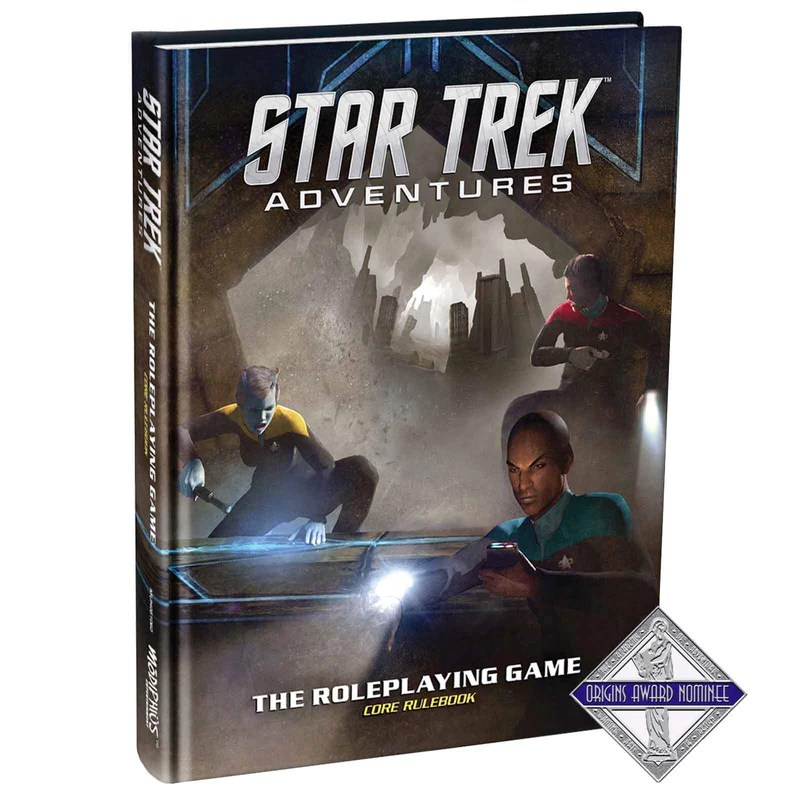
The game group finally came to grips with the 2d20 system when one of the players relieved me as GM to run Fallout back at the start of the summer. The system was manageable and with some knowledge of how it worked, I looked over the Star Trek Adventures core book I had a PDF of and decided “what the hell” and picked up the hardcover core book, the Utopia Planitia guide, and the Discovery guide, as well as a GM screen and the dice sets.

Quick backstory: back in the midsts of time, our group was one of the playtest groups for John Carter of Mars when Modiphius was rolling it out. We had found the rules almost indecipherable — not so much that the core mechanic is difficult (but it is a bit overly complicated), but that the writing was disorganized and, well, bad. We wound up dropping out of the playtest because we couldn’t get through an evening without throwing our hands up and making it up as we went. I didn’t touch 2d20 again, and avoided the games tied to it like the plague. Fallout seemed a bit better written and not running it meant I could learn the system without the annoyance of running the game, as well.

Back to Trek: I had run a “season” of Star Trek using the old Decipher rules, set in the second season of Discovery thanks to the excellent addition of Anson Mount’s Captain Pike. The writing was tighter and better than the uneven first season, and since the drop of Strange New Worlds, I’m a Trek fan for the first time since Enterprise screwed the pooch back in the early aughties. We had a good time with a system that was still mostly familiar, although it has some stumbling blocks.

For “season 2”, I swapped us to 2d20. The characters ported over very easily and were pretty close to what they were in Decipher. The combat monster Andorian was a bit more combat monstery, and the hot shot pilot was even better, but most of the characters were spot on. We built them up out of the book, then I double checked what I was doing with an excellent STA website. Our ship — USS Fearless, one of the last of the Walker-class, came together nicely, as well. The characters are defined by six attributes and six skills called departments (science, command, etc.) and it works nicely — though there can be some confusion as to which attributes handles what, and with a good argument, I let players use alternate departments. There are focuses which give extra successes, and values that can generate advancement milestones and determination points — one of the game currencies, in addition to momentum (called threat when the GM gets momentum, because two names for the same thing isn’t going to confuse some folks…)

I banged up a few “short treks” to ease the players back into their characters and system (a shore leave, then a save another ship from a strange anomaly adventure) before diving into our first action episode. I quickly started ignoring the Determination points rules; like Fallout there’s two different meta-game currencies…one too many. Another problem was that the determination rules’ index location was not where the actual rules for their use was.

The characters escorted a convoy of humanitarian aid ships to Coridan — a major producer of dilithium that was hit hard by the Klingon War, only to find out the Orion Syndicate had been “aiding” the world…by repairing then running their dilithium mines for the Coridanites. There was a street fight after making contact with a Starfleet Intelligence agent (and Orion female — their abilities are sharply curtailed in STA). The fight went great until — where are the stun rules for the phasers? A quick flip through the book to phasers…then to combat… turned into a long flip through the book. While another player tried to find the rules, I hit up the interwebz…nothing. Some players have loads of stress points, but the average seems to be in the range of 16. You’re not getting that kind of stress in a phaser rifle hit, so you can’t emulate the show where most humanoids go for nappy-time when you stun them. In the end, I house ruled that the character or NPC hit had to do a Fitness+Command or Security vs. the number of stress they took, or be stunned and unable to do anything for a number of rounds equal to the stress hit (or however long the plot needed them out for.)

The rules for extended tests work pretty well — we have a hacking scene where the characters had a gated activity: get onto the roof of a building (they beamed in overhead and paraglided in), patch physically into the building antenna and make it look like the hack was local and not from the starship, get past the security, and download the material. I set the Work rating as 10 successes and a Magnitude 1 (they would need to successes to succeed). Worked well, no issues. There was another fight using our stun rules, though it went lethal quickly.

After their missions to the surface, the Orions overreacted to the Federation agents getting data that showed the Orions were trading Coridan’s dilithium for Klingon surplus ships (I was using the Eaglemoss ships from Discovery for their cool gothic aesthetic…I have to admit, I hated the Disco Klingons, at first, but warmed to them when you could actually see what the ships looked like) and this led to a four on one fight between Fearless and a Bird of Prey, and three Orion Interceptors. This was our chance to try out the starship combat for STA, and I figured this was going to be as muddled as finding a straight answer to how quickly to healed stress and injuries. (Again…half the stuff you need was not where the index said it was.)

To our pleasant surprise, starship combat really worked well. We had a station card from the GM screen for everyone — pilot, ops and engineering, tactical, and the players used the inspired “minor character” rules where they could quick generate a bit player they could play to assist them in their actions. (It’s also excellent for when a character isn’t present — now you’re playing Ensign Snuffy in the redshirt… now find out how the monster works!) Initiative usually starts with the PCs and each station gets an action that can aid the others or can do their particular schtick. The bad guys get an action between the PCs, and the players can choose who goes when on the PC turns. We found this worked very well and allowed the players to strategize their actions and feel like they were actually more than just there to roll for a hit on another ship. Ops and Engineering don’t just fix damage here; there’s a lot of planning — fix some damage or manage the power track? Like the shows, the ships blow power on their maneuvers and firing, etc., and that has to be replaced by the operations manager or engineer, or you’ll find yourself unable to do much. By doing this, they were able to evade fire, set up advantages for a firing solution, manage the shield damage, and badly wreck the Orions while taking minimal damage themselves. Of all the sections of the game mechanics, this was probably where Star Trek Adventures shines the most.

The rules aren’t bad. For most basic tests, it works just fine. Combat is a hot mess once you aren’t punching or using melee weapons. Like many RPGs that tried to tackle the ST universe, they often run afoul of the damages the weapons do: phasers just vaporized people in the show. That could make for a short run for a character in combat. You would also think, for a show where the phrase “phasers on stun” is uttered a lot, having stun rules would be a good idea. Starship combat? Excellent.

Advancement is based on “milestones” — did you use or buck your values? Did you stick to the regulations, screw up, lose people under your command, etc.? These stack up and give you the ability to swap ratings on things, or with the arc milestones increase scores, add foci or values. One excellent bit — you can spend your milestones on minor characters that regularly aid you or the ship. The milestones also gives you dice to roll against your Reputation — another aspect of the game that the index doesn’t send you to “how to bloody use it” but rather a bland — you have reputation blurb. It can be spent for medals and commendation, or promotions. It looks like it was also supposed to be able to be used for social tests, but that’s not in the core book — it’s in the Klingon sourcebook. Helpful. There’s almost no real direction given on reputation and I’ve been house ruling on it.

But now for the real problem with Star Trek Adventures…it’s badly written. The rules should be easy to parse out, but there’s so much side chatter about momentum and determination that you can miss the main rule mechanic — roll two or more d20, get below the combo of attribute and department. If you get below the department — that’s an extra success (or two if it’s a focus.) Momentum can be used to buy extra dice, or a number of other things; determination does much less. you could easily combine the two into one currency. The problem with STA and other 2d20 products is that the rules are haphazardly scattered about the book — sometimes in places that defy reason. Worse, the index page is utterly f$%king useless. Half the things you would look for aren’t there, are under a different name, or send you to a page that the thing is mentioned but the use of which is not provided at that spot. Like determination. Or reputation. It feels like the book was churned out fast, an editor was employed sporadically, and they chucked it out the door. It’s been a few years since STA debuted…by now they should have fixed some of this with a second edition. (And the Klingon campaign book does, to an extent.)

So…is it worth it? This one’s a bit tough. The system is perfectly serviceable for most situations. It’s (I think) supposed to be on the rule light side, but isn’t. Personal combat needs serious reworking and starship combat is excellent. Advancement — both the milestones and reputation mechanics are half-baked. Character creation is quick and easy, and creature creation similarly easy. NPCs can be presented as novices or experienced, etc. with stock ratings like Attribute 9 and department 2. The ability to create a background character on the fly and let a player run it so they are in the scene is inspired. There’s a lot of good, but just as much that’s just…not finished for a major licensed product that’s been out for a while. Lastly, it’s a hot, damned mess from a writing, editing, and indexing standpoint, and that’s just not acceptable for a $60 book. So — if you want to run a Star Trek game and don’t want to do the heaviy lifting to write up material for a system you like, yeah, it’s sometimes a pain in the ass but worth it. If you are looking for the system that really captures the flavor of the series-eses, it’s not quite there. If you want a seamless play experience — nope. We’re at least six weeks of play into the season and I’m still looking rules up while trying to run the game.

But, as always, your mileage may vary.

Simple. James Bond:007 RPG by Victory Games. It dropped in 1983 — some about the time of Octopussy. (A terrible entry, especially considering the excellent George MacDonald Fraser wrote it, but after the much superior For Your Eyes Only — bleh!) It was published for about four years and was an a real break from the d20 TSR offering, Top Secret, which hove too tightly to the “class” idea (assassin, spy, whatever), and which still used a random damage system.

JB:007 allowed you to build your character for points, so you could get close to what you envisioned. It had a rudimentary weakness system that could have been buffed up a bit, but it was a start. The system was mostly straightforward — attribute and skill gave a base number, then that was modified by the difficulty. (This required some rudimentary math, so that was not popular, but they had a chart on your character sheet to help. Combat was not radically different from other tasks and the quality of your success dictated the damage you did, not a die roll, which a lot of new system still use and is still, I submit, stupid. Even Cortex used your success as the base damage, plus a weapon damage rating.

The guns, the knives, the cars and boats, the gadgets — all had specific ratings from the speed it could fire to damage, to range and accuracy, as well as how likely to malfunction. This was way cool in the ’80s, and later for someone who tried a lot of cars and shot a lot of different guns. The product placement idea wasn’t overt, but it was there.

They had a series of modules based on the movies and which they altered the plots or the action pieces to be a surprise. There was a combat simulator game that I ignored, and a few setting and equipment guides (which inspired the Q2 Manual here on Black Campbell).

I ran spy games, police procedurals, even a cyberpunk campaign and a Stargate game using this rules set from 1983 until about 2010, when for some inexplicable reason — I just didn’t want to deal with the spy genre anymore. The reasons were really inexplicable, but there were a host of them that converged at the same time to make it “not fun” anymore.

Lately, I’ve been eyeing the rules and thinking about how to run a spy game that decouples the characters from governments and their obvious run toward authoritarianism. simpler stuff like mercenary work ala Extraction or Kingsman.

I think I’m going to have to go with Space Opera — a truly terrible set of mechanics for a sci-fi game. I think we got through a session before throwing in the towel. Another that’s obscure today, but was supposed to be SPI’s answer to GDW’s Traveler was Universe. I mentioned it in another RPGaDay post — I don’t remember much about it other than it was percentage-based, I think, and there’s was some cool stuff to it — but the coolest bit was the tremendous star map that came with the game.

I also tried The Morrow Project, a post-apocalyptic game with terrible rules for combat that were so damned table and dice roll oriented that a single gunshot could take minutes just to figure out what happened. I seem to remember that you figured the trajectory of the bullet, cut of the knife, whatever through the victim and what that did to their stats as well as general health. I might be wrong, on some of that but it played like a forensics examination.

Over forty years of gaming (man, I’m old), there’s too many to count, so I’ll go with the most recent one that sticks in the mind. This was the first Dungeons & Dragons campaign I’d run since the 1980s, back in 2016-17. The setting was an alternate Roman Empire with low magic, monsters being either rare or stand ins for the various tribes (hobgoblins for Vandals, for instance). The characters had been traveling for a while and had come across a village that had been wrecked by a troll, and who was still sorting through the loot when they came upon him.

The characters leapt into action and proceeded to start getting their butts kicked by the creature, who was incensed that they were coming to steal his things, and that “stealing was wrong”. The monk character, suddenly inspired by the troll’s focus on the injustice of them coming to steal from him and attack him when he hadn’t hurt them, he started to try and preach to the troll. He apologized for their actions and in the end converted the troll to what would later be a half-assed, barely understood collection of folk ideas, bits of Bible, etc.

They escaped with their lives.

In a later, follow-up campaign set in Arthurian, end of Roman Britain, the new characters ran across the troll — twenty years later, running a parish in the Cotswolds and shaking down travelers using the bridge next to his church for alms while protecting/terrifying the life out of the locals as their priest. It was a last minute, unexpected callback that the group loved. His understanding of the Scriptures hadn’t improved at all.

Ooo — good one! Easy one for me: I’d like a second edition of the Alien RPG using the Blade Runner/Twilight:2000 die mechanics. The die pool of d6s for Alien, while simple, seems to weirdly, not lead to the number of successes it statistically should. We had a mathematician playing in the game for a while and even he noted the frequency with which we didn’t get successes, but should have. The BR version of the game uses different dice for attributes and skills — d6 through d12, as you get better and get a 6 on at least one to get a success. Every 6+ is a success, and over 10 is an extra success. We’re finding it works better, and there’s something tactile to rolling different types of dice that gamers just seem to like.

We’ve all got ’em. That game you bought that looked cool, or was a licensed franchise you like on TV or whatever, or you used to play and just don’t anymore, or everyone just wants to play D&D… The orphan taking up room on your shelf that you’re not going to play, but keep because — just maybe — one day it’ll happen.

I’ve got a bunch of these. Sometimes I buy them to steal ideas, or the art s pretty to look at, or I liked other products with the same mechanics –either way, there’s a host of these things sitting waiting to entertain my gaming group (or not…they might suck.)

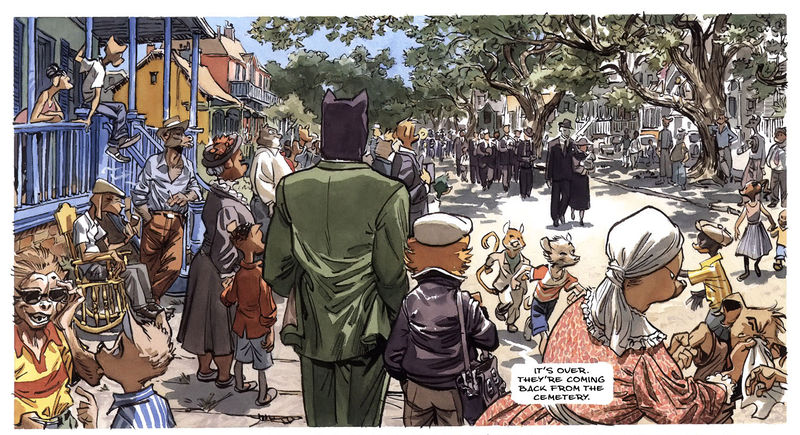
Some are new and we just haven’t gotten to it. The obvious one here is The One Ring — the new Free League version. I bought it because the wife is a Tolkein nut but we just haven’t gotten to it. There’s settings for D&D: Odyssey of the Dragonlords, or Age of Antiquity — a Rome-based campaign that, had it published on time, would have been useful when I was running a Rome-based D&D game. There’s Forbidden Lands, another Free League game. I bought it to possibly play a more realistic and brutal version of D&D. Blacksad is still waiting for its test run. I never got a chance to run Firefly, and honestly, I bought it to have material for the original MWP Serenity game; I do not like the Fate-ified version of Cortex that has been their go-to since the Leverage game came out. There’s the perennial outcast — Jovian Chronicles, a rich and interesting anime-inspired hard sci-fi setting. The mechanics are awful. Similarly, I was really pumped for Altered Carbon. I liked the show (haven’t read the books) and the initial art, etc. looked promising. It’s a hot mess — mostly due to it’s use of symbols for everything that makes the rule book all but unreadable. There’s Capers — a superheroes meets Prohibition America. Look interesting; haven’t gotten to it yet. Another old one — Aces & Eights, a Western RPG that has some weird mechanics to it. There’s a host of interesting material that I’ve stolen for other Victorian-period games, but the game itself looks like a hot mess. But again — fantastic background material.

So what have you got on the shelf you haven’t played and why?