October 2009
Monthly Archive
31 October, 2009
Back in the late 1980s, like a lot of other geeks, I really got into comics books. For me, it was Matt Wagner’s Grendel that really pulled me in, and other indie titles like Fusion, Albedo, Airboy were my real delights. I also was a fan of the big two, depending on the book. So it was only logical that my roommate and I would begin role playing superheroes.
The big boy on the block was Champions, with a character creation process than made GURPS look quick and easy. Not have all day to crunch numbers, I looked for a simpler system. We tried Marvel Superheroes, but the system was too quirky and seemed a bit abstract. Finally, we settled on DC Heroes, by Mayfair.
Character creation was still very open, allowing the player to customize his character by buying his attributes, powers, and skills. Attributes were broken into physical, mental, and spiritual aspects, each with a specific attribute to attack/defend, a “strength”, and a rating that was used as damage. After than powers and their levels were bought, then skills (which were secondary, in many ways, to the powers.)
The best part of the system was the AP idea: ratings in attributes and powers equated to weight, time, distance measurements, allowing the GM to be able to easily know how far the knockback of a punch might take a character, or how far one could fly in a certain instance of time. The scale was exponential: each level was double the amount a person could lift, distance they could run/fly, etc. It made for a very easy system to run, and allowed for running almost any power level.
The weakest part of DC Heroes was the gadget and gadget construction rules, which were kludged at best.
There is still a decently large following of the game online, and I got my set out of a used bookstore for $6. If you are looking for asupers game that isn’t d20, and doesn’t require a Cray supercomputer to build a character, DC Heroes might fit the bill.
30 October, 2009
Posted by blackcampbell under
Roleplaying Games
[4] Comments
Back in 1989, Space: 1889 came along — a role playing game set in a hybrid world of Victorian speculative fiction. It quickly garnered the appellation “steampunk” (which I bloody hate!), and spawned a sub-genre of science fiction that is still quite niche, but with rabid followers. For me, it woke an old love of history and culminated in my work on a doctorate in history.
I loved the setting of Space: 1889, but to be blunt — the system was a disastrous kludge (something I expected from GDW’s role playing lines.) Since then, every Victorian-period campaign I’ve run has been in search of a system. In 1994, R. Talsorian (prior to going belly up, for the most part) released Castle Falkenstein.
The book itself was gorgeous. Rarely, in that time, did you get such high art values in an RPG book. Most of it was full color (not unusual now), with a story-like narrative that explained the world setting and the rules at the same time. It laid out the alternate Victorian world that was both Vernian science fiction and fantasy combined. There were chapters on society’s rules of the time — for courtship, precedence of nobility, dueling…all very well done.
The last hundred pages dialed down on the mechanics of the game, which were designed to facilitate LARPing of CF. Character creation was swift and somewhat free-form, involving picking skills in which you were “poor”, “good”, “great”, “exceptional”, or “extraordinary.” All others were considered “average.” The player was encouraged to keep a diary, like a character from a Victorian novel outlining their past and recording their activities in the game.
The mechanics of play were relatively simple: your skill ratings gave you a numeric value which was modified by a novel randomizer: playing cards. (Because gentlemen do not play at dice in the Victorian period.) The suits had different aspects: clubs were physical, hearts emotional, spades social, diamonds intellect/ knowledge based. Players drew a four card “fortune hand” and play the cards so the characters could have to beat a certain difficulty, modified by a card or cards from the gamemaster’s fortune hand. Simple, fun, and it allowed players to strategize their actions in play. Can’t beat the villain, can you try to talk him down and play for time?
The only place that Castle Falkenstein fell down was combat, which was overly complex with series of holds and actions that were an attempt to capture the flow of fencing. I feel it failed miserably. So much so that a friend of mine and I banged out house rules, in a night, that have served us well for a decade. (They were cobbled together from a combination of Lace and Steel and Castle Falkenstein.)
The game would generate six books, including a fantastic guide to Victorian ethics and “rules of society” Comme il Faut, which I recommend for any Victorian period game (along with my guide to London for Victoriana, The Smoke. End shameless plug!) There was a seventh book on the Ottoman Empire put out by Steve Jackson Games. There’s plenty of material to play this universe and all of the books have high production values and crunch.
Style: 5 out of 5, Substance: 5 out of 5.
Now, an aside!
While I highly recommend the game, one of the first things I did was ditch the magic and monsters and port the setting of Space: 1889 over. The system has performed well for me for 13 years, even without the fantasy elements.
29 October, 2009
Posted by blackcampbell under
Roleplaying Games
[2] Comments
The upcoming James Bond: 007 campaign is coming together. Berin Kinsman posted his character, Carlos Milian, on his blog a few days ago, and I did a revamp of my wife’s character for the campaign:
Danielle Marie Vega
Father, Tomas Vega, was a Cuban-American State Dept. diplomat, now a functionary at Foggy Bottom. Her mother is a French equestrienne. She was born in Marseilles, France, and was raised with money, with the family traveling frequently to different postings. Was a competitive equestrienne until age 13 (she got too big), and is an avid mountain climber, skydiver, and SCUBA diver.
Attended Princeton and was on the track team from 1998-2000. Was on US Olympic team as a triathlete for the summer games in 2000. Graduated in 2001 with a business degree and a minor in romance languages, and joined the FBI.
Was put on the Joint Counterterrorism Task Force in 2002 as an financial analyst (forensic accounting), but went into the field in 2003 when connections between Latino gangs and Al-Qaida operatives surfaced. Several high-profile arrests in 2005 and her cover was considered “irretrievable.” Moved to RICO in 2006, based in New York, but quickly became bored. Left FBI in 2009 to join Veritas International.
Age: 30 Ht: 6’3″ Wt: 156 lbs. Appearance: Good-Looking Fame: 80 Rank: 175 (built with 6000 pts.)
STR: 9 DEX: 10 WIL: 15 PER: 10 INT: 10
HTHD: B Carry: 101-150 Speed: 2 Stam: 36 hr Run/Swim: 55 min
Fields of Experience: Business, Forensics, Law, International Law, Skiing/Snowboarding, Skydiving
Weaknesses: Adrenaline Junkie, Close Personal Ties
Skills: Boating 5 (15), Charisma 3 (18), Driving 8 (18), Evasion 12 (22), Fire Combat 6 (16), Hand-to-Hand Combat (Savate) 8 (17), Interrogation 8 (18), Languages: English (native), French 10 (20), Spanish 12 (22), Lockpicking 5 (15), Mountaineering 8 (20), Riding 9 (21), Seduction 6 (15), Stealth 3 (15)
Preferred Weapon: SIG-Sauer P229 .40S&W
Vehicles: BMW 650i convertible (blue), BMW R1200GS Adventure (orange and black) motorcycle
28 October, 2009
One skill suggested by the rulebook, but glossed over in James Bond: 007 RPG is languages. It’s one of those skills that Bond never has a problem with — like the explorer Richard Burton, he just always seems to know the local lingo.
For real agents, that’s not so. in fact, one of the main skills looked for by intelligence agencies is languages…the big ones are Arabic, Farsi, Korean, and Mandarin. One (cheaper) option is make the languages a Field of Experience. They have, at least, a working fluency in the language and never have issues with communications. This would negate a good chance at role playing and deprive the GM of an excellent obstacle for the players — misunderstandings and/or complicatiosn caused by lack of communication.
The other is make them skills. I favor this option. This would mean characters would have to buy a Language [specify] and drop points in. Charisma rolls would be effected by the language skill — I will often shift the Ease Factor of a charisma or seduction test based on the success of a language test. Get a Quality Rating of Excellent might give a +1EF, or Very Good or Good your normal EF with modifiers, an Average would impose a -1EF on the charisma test, and a failure would mean you could simply not communicate your meaning.
28 October, 2009
I’ve been playing the James Bond: 007 role playing game since 1983, when the game was released. The system was more cinematic, and seemed to capture the feel of modern action films much better than it’s competition, Top Secret.
Character creation was tailored to allow the player to create the character they wanted, rather than accept a series of random rolls. One of the stranger elements of the design was “fields of experience”…essentially skills that the game designed found were useful, but didn’t fit into the design well. Most of these FOE are knowledge-based skills, things like military science, or skiing. They have little real “mechanical” use, vis-a-vis skill resolution.
A few years back, I ran a Stargate campaign using JB:007, and one of the modifications to the system I made was in the FOEs. Here are some suggestions on how to make them useful…
FOEs that have some tie to physical skills:
Fields of experience like “American Football”, “Cricket”, or “Football/Soccer” not only allow you to know the rules of the game, the players and teams, etc. but could lend an Ease Factor bonus to some skills. Say your character isn’t just an (American) football fan, but played it in college, this FOE might give them a +1EF to Hand-to-Hand Combat tests involving tackling, or give a bonus to Evasion tests where they’re powering their way through a crowd by shouldering through. Get creative! FOE like “Skiing” should give the character a bonus to Evasion tests.
Mental-oriented FOE like Military Science of Political Science might lend a EF bonus to Intelligence tests involving those areas of knowledge. Forensics might lend a +1EF to Perception tests when looking for evidence. Computers could lend the same to Cryptography tests to hack into a system, or to Electronics when looking into how to connect a tap on at a phone box, figuring out which blade in the server is the one with the data you need to steal…
This makes the Fields of Experience more than just toss off additions to your JB:007 character, and gives the players a better grasp of who their characters are.
27 October, 2009
There are a lot of players and GMs in search of each other out there. I’ve known a lot of people that simply can’t find other players, or can’t find people willing to try a particular role playing game. I’ve had this issue myself, but find the gaming famine doesn’t normally last long for me.
There are a lot of tools out there now for gamers looking for each other. There’s Nearby Gamers, through which I’ve found a few gamers (and funnily had near misses with people who would later join up by meeting in different places), there’s things like Berin Kinsman’s new Role Play Media Network and fandoNM (for New Mexico, mostly…) There’s the RPG store bulletin board, comic stores, university clubs.
Mostly, however, I find it’s best to simply not be shy about the fact you play games. It’s how I’ve linked up with several players and recruited people from outside of the hobby.
Once you’ve found someone who is interested, and you’ve passed a few emails or phone calls back and forth, I suggest meeting the person in a neutral place — a coffeeshop, lunch place, wherever, so that you can talk about not just gaming, but things in general. See if they’re the kind of person that will fit with your group, that will want to deal with you. Gaming buddies who are just gaming buddies, don’t tend to hang on for long, in my experience. Friends stay. Also, it helps you weed out the weird and dangerous without letting them know where you live. (As a friend just said, “it’s kinda like dating…”)
To find good gaming groups that will be cohesive and lasting, looks for friends first, and gamers second.
25 October, 2009
The weekend gaming group had a few nibbles on games to play. I like to rotate the games to keep them fresh for the players and myself. There was fairly unanimous agreement to do a 1930s pulp game, which turned into Gorilla Ace!, there’s a modern espionage game in the works, and a Serenity game.
The Firefly ‘Verse is an interesting setting, partly because it was so open to interpretation and exploration. 13 episodes and a movie barely cracked the surface of what the Alliance was about, how the society worked, but the 19th Century vibe coupled with spaceships worked for every one of us. I’ve run a few campaigns already, and have found that (for me) a few tweaks to the on-screen setting are needed to make the ‘Verse fly…
1. More tech. The Rim and Border worlds are more primitive than the Core, but they still have their share of high technology — from flimsy news sheets with moving visuals, to lasers, to holographics — which we have seen on screen. The addition of other high tech devices will spice the setting up and not get it too bogged down by the Western feel. Lack of technology should be due to legal restrictions and the newness of settlements on the Rim. (Although the American West saw heavy use of new technologies, in mining and agriculture, in steam power and weapons…)
2. Show the dichotomy of life between the haves and have-nots. We only see the Core once in the series in the episode Ariel, and the sky-island condos of the rich on Bellerophon in another. The suggestion is that there is magic-levels of technology in the Core. To really drive this home, it’s necessary to get your characters out and about the ‘Verse, so they can see the hand-to-mouth existence on the Rim, juxtaposed against the comfort, wealth, and health of the Core.
A combination of these idea would be an early episode I had in our first campaign where the characters traveled to Osiris to steal a priceless Monet — one of the few left from Earth-That-Was. The policing on Osiris was high-tech: aerial surveillance, think tanks for the police (a la the Tachikomas from Ghost in the Shell, but much less kawaii…), some evidence of cybernetics (which the game designers included in their Six-Shooters & Spaceships sourcebook.) Guns that were less home-made local knock-offs of Colt Peacemakers, and more like Glocks or the FN FiveSeven. Jet-powered hoverbikes (’cause there’s no way that can go wrong!)
The show never really got a chance to shake it up, and the Big Damn Movie got to play a bit more with the level of toys in the ‘Verse with love-bots and ubiquitous surveillance that could be monitored from anywhere on the Cortex.
3. Decide why the Alliance is bad/good. This is frequently a problem with sci-fi series. In Star Trek, the Federation is simply wonderful. Life is good because people are fed, clothed and housed. But there’s not real exploration of what makes the UFP so damned peachy. I envisioned 150 worlds of people attending adult education classes and doing execrable art, while the people motivated to excel wound up in Starfleet. It was the technology utopian paradise…and it would be utter, stifling and boring, with little incentive to get off your ass to do something. (That’s my take, at least…) In Battlestar Galactica, we don’t really get a look at the Colonies and society until the last few episodes…what is it, exactly, that the characters have lost? Families and friends, sure; but how about all those places and things that make life worth living?
Flesh out the setting. You don’t have much of a choice with 13 episodes and a movie. The trappings are out there: Quantum Mechanix did a fantastic poster-sized map of the ‘Verse as a star cluster, showing distances that is easily used by a GM to flesh out transit times and give you an idea of the real estate. However the main issue is, like the Federation, what makes the Alliance good or bad. The Alliance is portrayed in the show and movie, not unsurprisingly, as an evil empire; the characters are the Confederates of this Western parable and the Alliance is the big, bad Union, come to take away their states’ and personal rights.
I’m taking the approach in the upcoming campaign that it’s simply a meddlesome, well-meaning bureaucracy that — as well-meaning, meddlesome bureaucracy do (think the EU, and if they had acutal [shudder!] power, the UN) — thinks it knows best for you. There’s rarely malice, save to those that would stop them from making the policies that they wish, or those that would deny those bureaucrats the positions they feel they so richly deserve…and often do not! (Does this sound vaguely familiar today?)
The ‘Verse, for me, is a setting I can sink my teeth into because the politics of it are so close to the big battle I see coming in the 21st Century (but Charles Stross seems to discount in a recent post on his blog): the push and pull between libertarian/individualist types who just want to be left alone to live their lives…and the statist/technocrat/progressive types who feel they know better how to live your life than you do.
With that meta-conflict in the back of the mind, every slight can seem part of a plot to remove your personal sovereignty. Just look at some of the rhetoric coming out right now about the current administration. If you are an Alliance supporter, every bit of opposition looks like treason, or at the very least, idiocy on the part of those that would be “helped” by the imposition of Alliance technocratic bureaucracy. The politics can always leak into the character’s lives, no matter what scale of campaign you are running.
24 October, 2009
I have a new modern espionage game the weekend players would like to do, and found myself trying to piece together the angle I wanted to go for. The current administration and the foreign policy are decidedly unfriendly to the intelligence community, and my understand from some of my friends left in the industry is that the lawyers are back in charge.
Playing a game fraught with dangers from the oversight committee, and the thick with drama tension caused by getting out your paperwork on time seemed a bit daunting. So I decided to go with a private intelligence company. There’s plenty out there, and they’re frequently working on contract for the government — allowing short term missions for the national good, without all the hassle (or support) of government bureaucracy.
So…
VERITAS INTERNATIONAL: Based in New York and London, Veritas is the brainchild of a CIA and an MI6 officer. The group utilizes a few small teams of specialists in the field, as well as a cadre of analysts and software experts to provide a number of services to their customers.
The main mission profiles that Veritas will be handling range from dignitary and VIP protection, hostage rescue and negotiation, blackmail and fraud investigations, industrial intelligence gathering, and security consultancy. Also they can be contracted for short-duration missions by intelligence and military agencies for action in Afghanistan or Iraq, etc…
Characters are just starting to come together, and I’ve yet to pin down the upper management NPCs, but its a good start.
24 October, 2009
Posted by blackcampbell under
Roleplaying Games
1 Comment
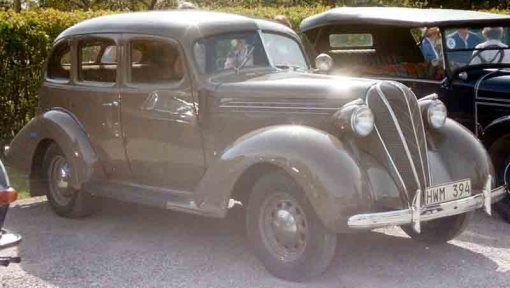
Pressed by economic realities of the Great Depression, Hudson decided to create a cheaper alternative to their Essex line: the Terraplane. It was introduced by Amelia Earhardt, and it the favored car of gangster John Dillinger.
The Terraplane came with an inline-6 cylinder motor, or an optional 4-liter inline-8. Powerful and reliable (the Terraplane 8 set a record for the Pike Peak climb that wasn’t broken for 20 years…), the Terraplane is one of those vintage names that don’t come up much and provide a bit of flavor for a 1930s pulp game.
1933 ESSEX-TERRAPLANE SERIES 61 DELUXE
Size: 2 Def: 4 Struc: 8 Struc: 80 (90 for the I-8 engine) Han: 0 Crew: 1 Pass: 4 Cost: $600 ($700 for the I-8 version)
24 October, 2009
Posted by blackcampbell under
Roleplaying Games
[2] Comments
Introduced in 1936, the Catalina would become one of the best known and widely used scout seaplanes of World War II. Most of the early PBYs went to the US Navy, but explorers with connections to Army or Navy Intelligence would be able to lay their hands on one with a Bureaucracy (Military) +Connections or Rank 4.
While the stats presented here are for the PBY-5A (the most common of the variants), the variations of the engines, etc. would provide little change in performance, but the weaponry would change from model to model. (Changes made — the Catalina is in the Secrets of the Surface World book. While I brought the Defense rating in line with that, the other ratings on crew and passengers are more appropriate.)
CONSOLIDATED AIRCRAFT PBY-5A “CATALINA”
Size: 8 Def: 6 Struc: 18 Spd: 195 mph Rng: 2520 mi Ceiling: 15,800′ Han: -2 Crew: 8 (3 civilian) Passenger: 3 (10 civilian) Cost: $90,000 (new)
Standard Armament: 2 M1919 .30 in forward turret, 2 M2 .50 machineguns in side bubbles, 1 M1919 .30 in aft hatch, 4000 lbs. of bombs, torpedos, etc. On civilian Catalinas, that gives you 2 tons of storage.
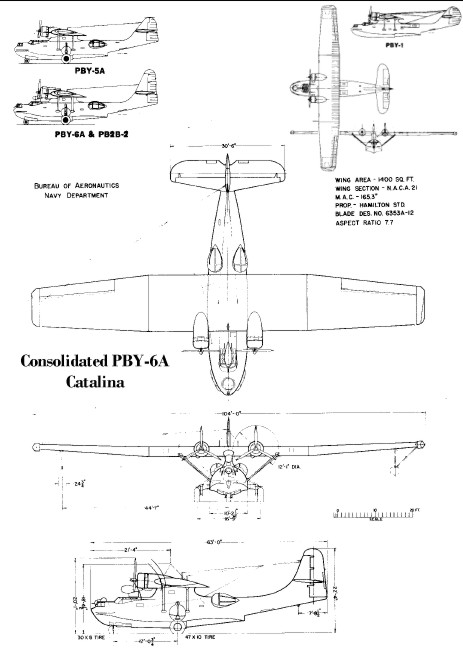
Standard crew positions: pilot & co-pilot, bow gunner, flight mechanic, radioman, navigator, and two waist gunners.

Next Page »
 The Black Campbell