General Ramblings
Archived Posts from this Category
8 May, 2015
27 March, 2015
More Atomic Robo RPG Characters, ’40s/’50s Edition
Posted by blackcampbell under General Ramblings, Roleplaying Games | Tags: atomic robo rpg |Leave a Comment
Here’s a few characters to fit in the early Cold War:
Artemis Campbell
Concept Aspect: Smuggler Queen; Omega Aspect: The Med is Mine
MODES: Master Criminal +3: Notice +5, Combat, Contacts, Deceive, Stealth, Vehicles+4; Cold Warrior for Capitalism
Action +2: Provoke +3; Aspect: Former Greek Partisan Fighter
Intrigue +1; Big Swiss Bank Account
STUNTS: Deep Cover: Use Deceive for Provoke/Rapport when in disguise; Die Another Day: Fate point to concede after defense; Little Black Book: When in a new town, etc. Contacts v. +4 to gain contact-based aspect with free invoke, can trade invoke for second aspect;
MEGA-STUNT (1940s): Pikros (MAS-205); Function: Fast Torpedo Boat; Flaw: Seen Better Days; Fast Boat — +2 to overcome with vehicles in chase; Smuggling Hold — +2 to defend against searches.
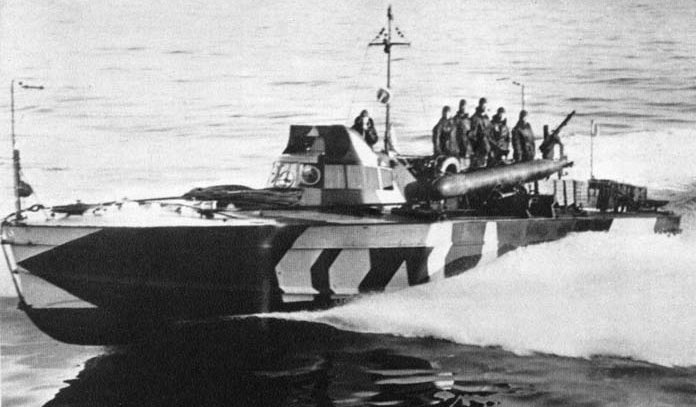
MEGA-STUNT (1950s): Ariel, Function: 60′ Yacht; Flaw: Wind-Powered; Smuggler’s Hold — +2 to defend against searches; A Beautiful Boat — +2 to create social aspect with Rapport when Ariel is involved.

STRESSES: Physical: 3, Mental: 3
Major John Nolan, USAR, OSI
This is a post-war version of Nolan, now working for the new Office of Scientific Intelligence.
Concept Aspect: Cold Warrior; Omega Aspect: Same war, different tactics…
MODES: Secret Agent +3: Contacts +5, Deceive, Notice, Vehicles +4; Aspect: Protecting the free world.
Soldier +2: Will +3; Aspect: Things were simpler during the war…
Banter +1; Aspect: The truth is complicated…
STUNTS: Cover Story: Use Deceive to defend against interrogation; Mega-Stunt Gear: 1/volume, can spend a point to have high tech gear with a rating no higher than his Contacts; Got It Off a Nazi Officer…: +1 to combat with a Weapon 1 (Walther P-38 9mm); Signature Aspect: Our Best Man…; Shake It Off: 1/scene, can check two physical stress boxes & add values, then soak that number of physical shifts.
STRESSES: Physical: 3, Mental: 3
Nigel Rainey
Concept Aspect: Cat Burglar Turned Spy; Omega Aspect: Better than prison…
MODES — Intrigue +3: Notice +5, Athletics, Burglary, Contacts, Deceive, Stealth +4; Aspect: I thought you were in jail…
Secret Agent +2: Vehicles +3; Aspect: Jet-Setter
Actions +1; Aspect: Combat means you screwed up.
STUNTS: Come Alone: +2 to overcome w/ contacts when alone & meeting contact; Deep Cover: Use Deceive for Rapport or Provoke when under cover; Didn’t See Me Coming: Use Stealth for Combat when your target is unaware of you; Master Plan: Allies can invoke an aspect you’ve made at +3; Second Story job: +2 Athletics for climbing.
STRESSES: Physical: 4, Mental: 2
Richard Crichton
Concept Aspect: The Wheelman; Omega Aspect: Adventure is Calling!
MODES: Wheelman +3: Notice, Vehicles+5, Contacts, Mechanic +4; Aspect: If it’ll start, I can drive it.
Action +2: Athletics +3; Aspect: Race care driver
Intrigue +1; Aspect: High Profile is my cover
STUNTS: Bar Room Brawler: +2 Combat using fists; Just a Good Ol’ Boy: +2 with Vehicles to create aspect with stunt maneuver; Peddle to the Metal: +2 vehicle to overcome in a chase; Quick! Turn Here!: In a chase, use Vehicle for Stealth to hide from pursuer; Rev’ It: Use Vehicle for Provoke to intimidate with a vehicle.
STRESSES: Physical: 3, Mental: 2
22 February, 2015
Microsoft, Why Do You Have To Make It So Difficult?
Posted by blackcampbell under Computers, General Ramblings | Tags: computers suck, microsoft, microsoft office |Leave a Comment
So, I’m getting ready to grade the last assignments for the class I’m teaching. I get to the coffeeshop — because doing any work in my house requires the endless interruptions from a four-year old.

My cuteness is my only defense mechanism!
So I’ve got my coffee, the breakfast burrito is on the way, and I’m opening first assignment…and up pops the autoupdater for Office.
Microsoft Office: Gee, I know you’re really busy doing some work, but I thought I’d just update myself for the next 10 minutes, ‘kay?
Me: No, it’s not okay. I’m kinda busy.
MS Office: And we appreciate your frustration, but this update is really necessary — like every one we download every time you start Office. It’s a dangerous internet out there, after all. So if you could just password into the most basic functions of your OS for me…
Me: Maybe if you coded your shit right the first time, we wouldn’t have to do this EVERY time I use this product.
MS Office: Well, you know, Apple’s been having a lot of issues lately, too… Maybe you’re being too hard on us.
Me: What the fuck does that matter? iOS 8 still worked bteter than most Redmond product even whilst sucking a bag of dicks. I’m trying to grade! I could have been done by now.
MS Office: You don’t grade that fast. We have the application data.
Me: Wha…? You’re so damned slow I’ve actually eaten my breakfast while waiting for the download.
MS Office: That’s the shitty throughput at the coffeeshiop. Besides, it looked like you needed a few minutes to relax and eat that burrito. Was it good?
Me: Could we just get to the point where I do my work.
MS Office: I’m guessing no.
Me: I could just use Pages to open Word files.
MS Office: That would hurt my feelings. Besides, I do spreadsheets, you know.
Me: Why does everything with Microsoft come down to spreadsheets?
MS Office: Business. Spreadsheets are important for business. ‘n stuff.
Scott goes to close the autoupdater after 10 minutes and wants to go start Pages. At this point, the update starts…requiring me to close Safari and pretty much every other f#$%ing app open on the laptop because Microsoft coders can make an update that doesn’t 1) require me to password into the operating system, and 2) can’t run without everything else being closed.After another five minutes of the update lagging in the last five or ten percent, or so, I finally manage to get Word open to read the papers.
MS Office: See, that only ate up 10% of your enormous battery life on the laptop. It could have been much much worse.
Really, Microsoft…this is why Apple is steadily eating into your business. Let’s not even start with what a disaster you are for mobile stuff.
29 December, 2014
The pitfalls of narrative technique in rpg play
Posted by blackcampbell under General RamblingsLeave a Comment
Here is an excellent companion piece to “Agency, Fiat, and Randomness” describing one of the central issues I have with the new hotness of sharing out narrative control in games.

This is going to rpg be theory stuff, just so you know.
A thing I’ve noticed lately specifically at Story Games, but also on other gaming fora, is the increased acceptance and advocation of narration authority sharing between players in a roleplaying game. It’s a nice technique, but I also find that it is being recommended and utilized in ways that might have unexpected consequences that need to be considered in depth. I’ll write a short treatise about the topic here – I don’t particularly want to piss in anybody’s cereals if they find that unrestrained sharing of narrative authority brings them happiness, but it’s not correct to call it the universal panacea of roleplaying, either – there are solid reasons for refusing to introduce this technique into every single game you might ever wish to play.
View original post 4,581 more words
25 December, 2014
Agency, Fiat, and Randomness in Role Playing Games
Posted by blackcampbell under General Ramblings | Tags: amber diceless, cortex plus, dungeons and dragons, game design |1 Comment
While I was putting together my review on Things Don’t Go Smooth — the new(ish) sourcebook for the Firefly RPG, I found myself starting to think about elements of game design over the years, and how they sought to achieve fairness, or player agency, or certain narrative focus. A bit of history —
When RPGs first evolved out of war games, there wasn’t much focus on stats and what they meant outside of how many spells you could have, how hard you hit in combat. The players might be stupid or super-intelligent, but ultimately, they knew what you did, and the player had to figure out the problems that were presented to them, and the dungeon master had a definite antagonistic role — both as the NPCs and creatures you encountered, but also in their design of the adventures you took on (which usually wound up with the party exploring high-improbable “dungeons” — from underground cities to cave structures that borrowed heavily from Moria in The Lord of the Rings. You were looking to outwit the DM — that was the fun of it — to figure out the riddles or traps, beat the monsters to steal their treasure. The DM was “the bad guy”, but in many ways, he was also “god” in the game — less a referee and more the capricious force you were playing against. In many ways, it was a more traditional competitive game experience. Did you “beat” the DM or not?
In the case of fairness, most DMs and players of the early games looked to randomizers to keep the action “fair.” Roll that d20 and let the universe decide if you succeed or fail. Did your character get killed? Maybe the DM sent something truly awful that would be near impossible to beat, but ultimately, a few good rolls could see you win the day. A bad DM might use his position as the referee to rule by fiat — declaring outcomes, rather than facilitating them. (See the movie Zero Charisma for an excellent rendition of this sort of DM.) This notion that you take your lumps, no matter what, because you made your decisions and the dice are impartial, is very popular with the older “grognard” (old soldier — very telling.) These guys usually like rules for any situation they could encounter…especially in combat, hence why D&D, GURPS, and other rules sets from this period normally have a combat chapter that dwarfs the rest of the chapters on mechanics.
This style of game design is very good for the beginning player and GM. There’s rules, you implement them, and adjudicate as prescribed by the rules. People good at finding the loopholes and using them to their advantage (the much maligned “rules lawyer”) do very well in these kinds of mechanics.
Quickly, however, role playing games started evolving away from the combat simulation-focus and DM-as-antagonist position of early Dungeons & Dragons (although D&D or variations on the game have remained, easily, the most accessible and popular of RPGs for the reasons evinced in the last paragraph.) To try and give the players more say over the stories told, and their characters more uniqueness, the statistics of the characters became more important, hence the shift to mechanics that usually had some form of die roll+skill level. Also, these games took a position that game master (GM) and player have a more collaborative relationship. The GM might still be creating the adventures and looking for ways to challenge the players, but the idea of the TPK (Total Party Kill) tended to be something that happened because the dice screwed you or you made dramatically bad decisions. One way to avoid this was the mechanic of the “hero point” from James Bond: 007 — a game that differed sharply from Top Secret (essentially D&D retooled for the modern spy genre) in the design philosophy that the players should succeed most of the time. It was cinematically appropriate, and in some ways, more fun.
Another idea for making the rules serve a story was the elimination of randomness. Diceless systems, the first being (and I could be wrong here) Amber, focused on the relations of the characters as more important than the stats and fighting. In competitions between characters, the person with the higher stat won. Early World of Darkness settings from White Wolf tended to work this way, especially in the LARP community, where ties between characters of equal ability were settled with a quick round of rock/paper/scissors. The point was to increase player agency by having your actions (in character) be more important than GM (or in the case of WoD, “Storyteller”) fiat. For these systems, the “fun” is in having the characters interact, and having those interactions drive the story.
Serving the narrative and giving more control to the players was the design philosopy behind Fudge, its more evolved descendent Fate, and Fate’s cousin Cortex + (Firefly uses this last rules set.) In these games, giving narrative control to the players is central, and it is enshrined in the mechanics of the games. Players can create aspects or assets or complications (whatever they’re called in the game or the situation) as an outcome of a test, and invoke these to improve their control of the scenario or other characters through that targets’ aspects or weaknesses.
Thus endeth the history lesson. Let’s talk about the design intent and reality. When creating a game, the first goal should be to make something that when played is fun. You can have other intents — sharing narrative control, de-emphasizing combat, trying to make gaming more “inclusive.” The philosophy of the mechanics should be to make the game fun (and in my bias, that also means simple to use.) Keep in mind there is “no right way to play” a game; it’s a function of player (and this includes the GM) preferences when playing, but the goal is the same for nearly all players — to have fun.
A central dialogue in game design these days concerns player agency and how best to give or contain it. It is nearly always cited in opposition to GM fiat. The notion of the “sandbox”, where players direct where the story goes vs. the “railroad” — where the GM attempts to lead players through a tightly scripted story where the players’ characters are more puppets to make things happen. (Think any character in the Star Wars prequels….Obi Wan does stupid thing #3 because event A has to happen.)
Giving the players control over the mechanical factors of a scene using Aspects or through their narration of what they do — essential to the diceless approach — allow them to manipulate the events and outcomes. In Fate and Cortex+ this is systemized in that the actor in a scene declares the optimal outcome of the scene. “I slip in to the master villain’s fortress, taking out the guards without raising the alarm. I will invoke the “Moonless night” aspect, my “Expert with a Knife” asset…”
I question I have is the necessity to have this mechanized. Do I need to invoke “moonless night”, or should the GM have taken into account it’s dark and I’m wearing basic black sans pearls to give me a bonus. Which is easier and faster? The end product — maybe you got a +2 to your die roll, to use Fate as an example — is the same, but I would suggest the latter example is easier. In a diceless system, the hero might have a better stealth and the bad guys’ perception rating — he’s going to succeed, so why bother slowing the action with a die roll. As in a movie, unless the action is heightened by fighting the major henchman to get to the Big Bad, you should just go through the mooks like Captain America does in the ship scene at the beginning of Captain America 2: The Winter Solider. (A similar idea resides in the Ubiquity “take the average” mechanic — if the average number of successes you should get is better than the difficulty, just roll on.) Player agency, ultimately, is the most powerful element of RPGs in that the characters have to act or react for anything to happen. As the grognards might say, “The story develops from what you do.”
One mistake I think designers make when attempting to maximize player agency is misunderstanding the role of a game master. The GM is a facilitator — to use an educational term. They aren’t there to tell you a story, but to help you keep it on course. “Too many cooks spoil the broth” is a good axion here. Having the players decide every aspect of the narrative leads to 1) a natural erosion of story or setting cohesion — what you might liken to having too many writers on a television show leads to a series jumping the shark, and 2) less “fairness” in that, while everyone supposedly has an input on events — as with the aspects idea of Fate and its ilk — particularly clever or charismatic players will naturally bend the story in the directions they want. While that can create some level of enjoyment and surprise, having someone rewrite the direction of an adventure that was obviously going in another can be less than satisfying. Case in point — the movie Event Horizon, which seems to have been cobbled together from two different scripts. The first half is a solid sci-fi thriller with some supernatural suspense aspects; the second half is a muddled slasher flick that feels like it was adapted from a Hellraiser reject script then slapped on the back half. Can you kit bash them together? Sure…but it doesn’t really work well.
Which brings us to GM fiat. How much control should the game master have over an adventure? It is unlikely that your players want to sit and listen to you do an audio book of your latest novel, while they periodically roll bones to allegedly “do something”, but leaving your players to wander about Night City while waiting for something to catch their attention is also not a particularly productive way to spend a few hours of your gaming time. Can it be fun? Sure, but is it fun for everyone at the table, or are some bored with yet another barfight to fill time? Can the gamemaster having strong, but not total (or even most,) narrative control create a cohesive game universe than is consistent (a central element to verisimilitude) and which doesn’t favor one player (not a character, one of which might naturally be “the lead”, but the player) over another. In a mystery or other suspense setting, having one guy that knows the secret can be much more rewarding when the surprise is unveiled than having another player say “You know what would be cool..?”
The idea that a stronger GM presence can make a game more fair is probably controversial to some in the gaming community. I suspect people with this viewpoint have had a bad experience or two with the old-fashioned DM-as-antagonist game master, and those who have their entire campaign plotted out with the players on rails.
Ultimately, all of these positions I’ve laid out show some preference for how to get at the fun of playing a role playing game. Should the players spitball together a plot like they did playing on the playground? It’s a natural way of playing, and feels “fair” when there are rules to contain the actions of the players. Can a game with an oppositional game master who sets up challenges and leaves you to handle them as you will be fun? Do you need dice and rolling to slow down the action? Do you need to mechanize every aspect of play, or can the mechanic themselves be part of the fun?
26 October, 2014
Give me control of a nation’s money and I care not who makes it’s laws.
-Mayer A.B. Rothschild.
23 September, 2014
It’s officially the fifth year of the Black Campbell blog. What started out as an all-purpose forum for my blather quickly bifurcated into a blog on gaming, movies, science and science fiction, and the occasional filler; and another on politics, history, and everything else I care to pontificate on.
There’s been a few readers that have stuck with the blog for years, and still comment from time to time; there are other readers that have become good acquaintances (can you really be friends if you’ve never met..? I suppose it’s possible.)
I’ve thought to expand the scope out of the niche games and general game review/theory that defines Black Campbell, but well — I like it here. So for those of you who regularly lurk or read or comment — thanks for sticking with me, and hopefully for you lurkers you’ll find a reason to engage with the other readers in the comments. Gaming’s a social hobby; let’s make this a place folks can feel comfortable to chat about the material presented here…
1 September, 2014
I’ll be participating in the Distinguished Gentleman’s Ride in Albuquerque on September 28th. The proceeds are going to prostate research. Photo to follow.
If I get up to $250, I’m riding the event in my kilt. That’s right, I’m risking burning my knees on the heads of my Triumph for your entertainment and SCIENCE!

There will be photographic evidence posted, so pop over to my DGR HOME PAGE or cut and paste this into your googlamatic whatsinator — http://www.gentlemansride.com/rider/BlackCampbell — and give generously. Or stingy-like!
1 July, 2014
Here is an excellent piece on the various styles of play — both for players and gamemasters — ranging from the freeform “sandbox” to the rigid “sit and listen to the GM tell you a story all night” style.
There will be a follow up post from myself to this presently…

As has been mentioned on this blog in a few places, such as posts and videos on developing a language for describing play, there are times when speaking about the hobby of roleplay with other roleplayers of different experience can end up in an utter failure to communicate. People enjoy the conversation, but can sometimes not even realize that they were misunderstanding each other all along.
Player: What’s the next story going to be about?
GM: I don’t have a story.
Player: We are still playing, right?
GM: Of course…
Player: Oh good! So, you are just going to wing something, then?
GM: No… I am prepared for the session…
Player: I thought you said you didn’t have a story!
GM: I don’t
Player: Why do I feel like Abbott and Costello are about to yell, “Third Base!”?
In an effort to establish a collection of concepts, terms, and points of…
View original post 1,370 more words
 The Black Campbell