Roleplaying Games


This week, we picked up where we left off with the campaign-style adventure for the Alien RPG from Free League:

The characters, with the help of a pair of scientists and a synthetic (Stella 12) attached to the crew of Honest Mistake were investigating U.S.C.S.S. Cronus, a Weyland Corporation vessel missing for almost 80 years. This ship is the setting for the scenario Chariots of the Gods, which we played to test the system before attempting a campaign. They had learned the ship had put down on Luther Colony inthe GJ1256 system because of irreparable issues with the drive system, and that there was some kind of contagion aboard.

The characters moved aft from the bridge, having heard voices, and found the two hapless terraforming techs that had been dispatched from a nearby atmosphere processor, and another man (Cham, the roughneck from the scenario, and in our game, the undercover synthetic working for LaSalle Bionational. ) But not before they come face-to-face with the results of the denouement of our playthrough of Chariots: a bloodbath involving a woman who is terribly mutated, her head apparently mildly elongated, her eyes hazed over, and her limbs stretched and strange. She has been killed with a half dozen .45s to the torso and is clutching the helmet of the shooter, a redheaded woman going ripe who died when the helmet — torn from its suit — had cut her carotid artery. Another woman lies just inside the medbay, her skin turned slightly translucent, like the mutant outside, but nowhere near as turned.

The men have been searching the ship in compression suits and rebreathers. Cham, the last survivor of the U.S.C.S.S. Montero, has been trapped here for weeks. As for the contagion: the doctors of Cronus had come up with a vaccine to the disease that created the horror in the vehicle bay, but it wasn’t always effective, instead mutating the recipient, like Miller, his captain; and Clayton, the shot to Swiss cheese mutant and former corporate rep on Cronus. At that time, they get a warning from the bridge — the Weyland synthetic is active and has warned them about the rogue synth on the ship. they did very well on their observation tests and realized this was Cham, but not before he disarmed Max, breaking his trigger finger and nearly wrenching the helmet from his suit.

Wade, protecting his brother, gave chase and finally shot the android down with his Mateba 10mm. They then had to start piecing together the situation from Ava 6, the Weyland android, the notebooks of the scientists and a data core that had been gathered up by one of the Montero crew. They found two of these in a hidden EEV, still alive but in cryosleep. The ship had set down on 26 Draconis 𝛃 and had suffered some kind of infection from an archeological dig. The crew had taken aboard vials of some kind of fluid that seemed related to the disease and in an attempt to inoculate the crew ad cobbled together a vaccine that was only 90-95% effective. Stella and Ava, working with the scientists, Kumbe and Mignault, began working on an improved cure, while Wade, Jensen, and Pugh did a sweep of the ship for any more surprises. Jensen then began downloading what he could get out of the ship’s computer, while Wade and Pugh set the ship’s reactor to overload on a code typed in from any console. Honest mistake, meanwhile, buttoned up and waited — if things went awry they would take off and destroy the ship; otherwise, the landing party would set the ship to scuttle and get back aboard in time to get out of the blast radius.

Simple.

Except the spores, which Stella had surmised were some kind of nanotechnology, had infected one of the workers, Said. The two had been sequestered in the room with the medpods for the two or so hours the crew was doing their thing. While the characters were working, Said gave birth to a bloodburster, which killed Said’s partner, then escaped into the air vents. Stella burned the room to prevent any other issues, but with the creature loose, Wade went to get Jensen from the MU/TH/ER compartment on Deck A. The two men met at the forward junction, but before Jensen could climb down to B Deck, wade was grabbed by the juvenlie bloodburster, injured by its claws in the leg, but he was able to kick it off. Jensen opened fire on the critter and missed and the chase was on.

Max and Pugh were on their way to aid the screaming Wade when the alien attacked, knocking Pugh to the ground and doing the classic evil, slobbering grin schtick. Pugh tossed it off, Jensen had a clear shot by blew his stress roll and panicked, freezing up. Wade opened up on the thing, emptying his Mateba (this has become his thing, and it tied nicely with the Overkill talent he has). The creature was killed, but not before it did a tail stab on Max. I ignored the “automatic” head hit and had it impale him, instead. Slumping to the ground, Max was out of the fight. Wade’s shots sprayed acid all over the place and it melted Pugh’s foot, requiring Ava and Mignault to amputate, while Kumbe and Stella managed to save Max’s life.

While the scientists did emergency surgery on Max, Stella and Ava finished the vaccine for the 26 Draconis infection and gave it to the people exposed to the air — Wade and Pugh. We ended with Wade finding out Max would live. He, Pugh, and Jensen were all trying to rest — Jensen doing well with the drug addiction he’s picking up, and Wade from the alcoholism he’d already kind of had from play. Meanwhile, Pugh began to change as the vaccine turned him into an abomination. Wade had been dozing but realized something was wrong at the last minute…he was disappointed to find Pugh turning into one of the monstrosities, and turned on him.

With a “Aw, Pooch…” from Wade, we ended for the night.
The game group tried out the Alien game by Free League over the holidays, and like their other offerings, we found it easy to create characters and get to playing quickly. After running through the “cinematic play” Chariot of the Gods scenario that came with the preorder game, we turned our attention to trying out a campaign game.

I wanted to tie it into how our Chariot game ended, with the last PCs put into cryosleep by the turncoat android Lucas, who then had to battle (post credits) the damaged bu trevived android from the adventure’s setting, the research ship Cronus.

Our first session involved the characters getting hired by a fixer in Tokyo, Ari Jacobson, who had a bit of corporate espionage on the menu. The players were Wade and Max Jones — a team of brothers. The first is a former marine and screw-up (the player wanted to play against his favored type and go “dumb); the latter is a corporate spy type hoping to get his brother back on track. The other two were a hacker, Jensen, and a former marine pilot, Pugh. The team was rounded out by an android, Clay, whose job in the mission was to capture a high-ranking officer of the LaSalle Bionational company, use a “dream reader” to get information they needed to allow Clay to impersonate the official and gain access to information on a mission to salvage a long-missing ship, USCSS Cronus.

There was the usual bit of getting the kit the needed, shadowing the mark, and then attempting to take him in his hotel room. The fight led to gunfire, and the characters had to think quickly to extract their target and leave as little evidence as they could. Once they got him to the “dream factory” they were able to use interrogation techniques and a dream reader helmet to question the mark, who was drugged unconscious.

In the second session, the characters convinced Ari — who was concerned by the police and corporate security investigating the disappearance of the mark and his security team — that they could still pull off the mission. Jensen hacked the security company’s database and replaced the information on the mark’s original security with their own. Then they waltzed into LaSalle Bionational’s small Tokyo offices and managed to fast talk their way inside. Clay was able to impersonate the mark perfectly, accessed the data with Jensen’s help, and find what they needed — Cronus was an old Weyland Corporation ship that had been damaged too badly over the years to get to a Bionational facility and their agent, Lucas, had it put down on the nearest colony…which was unfortunately a Weyland-Yutani colony.

With this information in hand they returned to Ari, who was in the process of paying them when they were raided by a corporate hit team using armed drones and a pair of unmarked police APCs. They were able to escape, but Clay was damaged, captured, and his memory hacked. While the characters looked for a way out of Japan and away from their pursuers, they were able to use their military contacts in town to get aid from a former Colonial Marine Corps officer. Within minutes they were whisked to the airport, flew in a private hypersonic to Los Angeles, and were offered money and new IDs to investigate Cronus before Weyland-Yutani did. They, they realized, were working for the United Americas, who were pissed with W-Y over the loss  of their ship Sulaco. 

The next session involved meeting their new partners (including a new PC to replace Clay; the player inadvertently picked the synthetic, again). The crew of the independent scout Honest Mistake are led by Captain Dunn, and include Akoye, the engineer, and Wei, the pilot. They have a jailbroken Weyland series 12 android, Stella, who has been repurposed to aid in scientific and medical tasks. They also have a pair of scientists, a Canadian biochemist (Mignault), and a Kenyan doctor, Kumbe. They were dropped into hypersleep and two weeks later the ship was in the GJ1256 system, closing on Luther Coloney, a fairly new “shake and bake” colony.

On their approach they were attacked by a Class D Skiff — a small interstellar vessel armed with missiles. This was our chance to roll out the space combat rules, and the fight was over quickly. Detection was accomplished, the skiff got an advantageous position, but missed Honest Mistake, but Pugh was able to put the skiff in front of their ship and Wade hit it with the ships light railguns. It was a solid hit and the skiff rolled nothing for their armor. The railguns ripped the little ship stem to stern and killed it instantly.

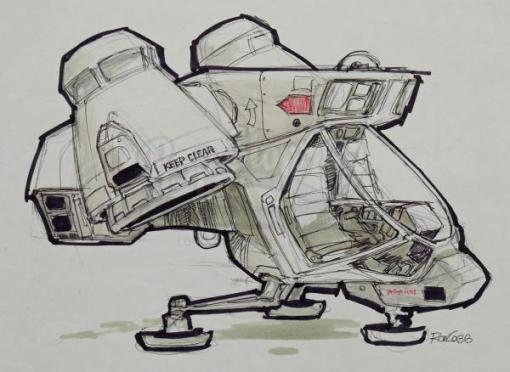
Suspecting they were on the clock, they took the ship down to the landing site of Cronus, finding a Cobb-styled jumpjet there.

215153_2

A pair of W-Y terraforming engineers had been dispatched to check out the hulk and had arrived only a few hours earlier. The team left the HM crew to mind the ship, and with the scientists and Stella, entered Cronus. They found a dead neomorph on the vehicle bay deck, the metal around it corroded and melted by acid. They bagged the critter in some plastic tarp for return to Honest Mistake and began a quick recon of the ship, arriving at the bridge. Along the way, they see dead bodies of the Montero crew from the Chariot of the Gods adventure, as well as loads of damage on the bridge. They also find the badly damaged, but reparable, Ava 6 — the ship’s synthetic.  Stella and Jensen were able to fire her back up, but not before Wade heard movement and voices aft near the science labs. The rest of the team went to investigate, missing Ava’s warning when she woke “You are all in terrible danger!”

This was a surprise. I haven’t had a chance to fire this, but a friend has and gave me the run down on the pistol compared to the venerable FN FiveSeven.

RUGER-57™ 5.7x28mm Pistol

ruger_15.jpg

Introduced in 2020, Ruger stepped in to save the 5.7x28mm cartridge, which has been limping along since the early 1990s. The caliber has a small but loyal following, but outside of a few custom offerings for rifles, the round was relegated to the overly expensive FN FiveSeven and the accompanying P90 personal defense weapon and its civilian carbine versions. Adding to the caliber’s troubles was an infamy for being a “cop killing” because of its ability to penetrate soft armor decades ago. The manufacturers of the 5.7mm cut the power of the round, dropping its speed from a blistering 2100fps from the pistol to a mundane 1600fps, placing it on par with .22 magnum. coupled with the expense of the round, this limited the popularity of the 5.7mm.

Ruger has stepped in with a similar pistol to the FiveSeven — a hammer-fired semi-automatic that has a 20 round (metal, not polymer like the FN), and with a thinner, more ergonomic grip. Unlike the FN, the safety is placed at the back of the receiver, like many handguns and is ambidextrous. The slide has a cut in the front, top-side to reduce weight and aid in function. This and the lower bore axis of the Ruger mean faster follow up shot and even less felt recoil than the already very easy shooting FN FiveSeven.

Limited commercial reloaders can reproduce the velocities that made 5.7mm a decent self-defense pistol, and Ruger is pushing manufacturers to offer more 5.7mm offerings.

PM: +2   S/R: 3   AMMO: E   CLOS: 0-8   LONG: 15-22   CON: +1   JAM: 99+   DR: 0   RL: 1   COST: $800

GM Information: Most commercial rounds for the 5.7mm have a DC: D and reduce armor effects by one. For military and specialty loads, the round halves armor ratings. Both commercial and military rounds hav a -1WL to inanimate objects.

(I carried a FN FiveSeven for years and loved it. The weight was almost non-existent, like carrying an airsoft gun. Even with an anemic round, 20 in the mag was enough to do the trick. I also had a P-90, which was easily my favorite “long” gun. But the wimping out of the round’s speed and power, and the expense of the bullets led to me abandoning it for the Walther PPQ. I’m hoping to get my grubby wee paws on this thing soon to try it out. SCR)

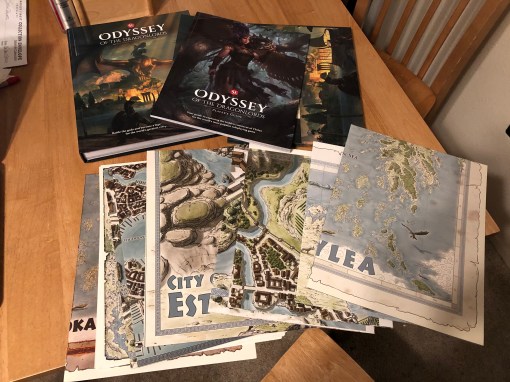
I love me some Greek mythology, so when I saw a Kickstarter for Odyssey of the Dragonlords for D&D 5E, I jumped on it. I had already gotten a copy of the similarly themed Arkadia, but Odyssey is a real step up.

IMG_0967

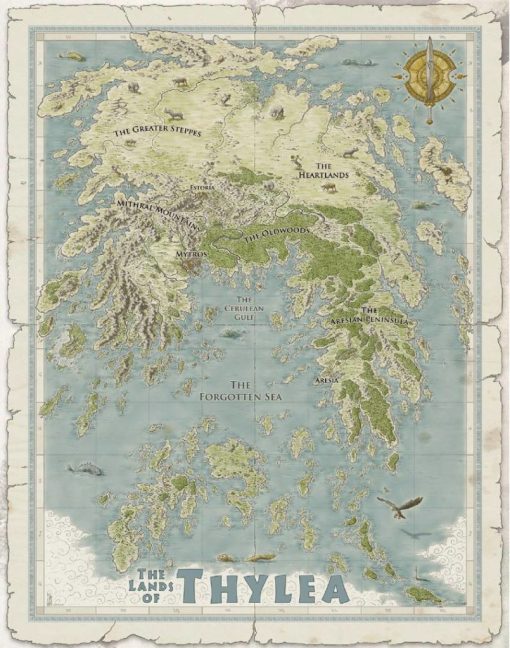
The packages came in a few days ago with the main book, a smaller Player’s Guide, a GM screen that has important setting related information, and two dozen maps of the world. Some of these are city maps, others orthographic-style maps of the islands, there’s a pair of world maps, and also a constellation guide to the night sky of the setting, Thylea.

odyssey-of-the-dragonlords-20979-805x1024

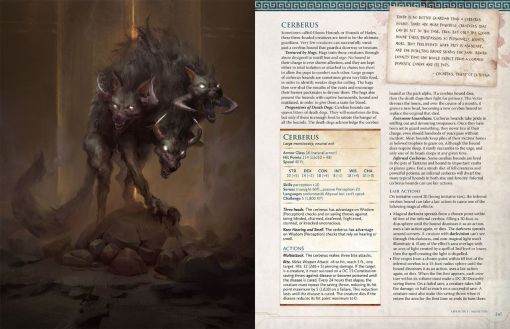
The maps are lovely, but they’re nothing compared some of the internal artwork.

cerberus-1167094

IMG_0969IMG_0968That’s just a taste…

The setting is rich, and like Arkadia, does a riff on Greek mythology without pulling straight from them. There are fewer gods, and there are a trio of “titans” that are the scenario bad guys. The book is broken up in quests that string together to form an epic campaign. It’s good stuff, with detailed maps and writeups of the cities you should visit and the people you will meet. You could get away with throwing a lot of this out and just sandboxing the world, and still get a lot of use out of the material presented, should you wish to ignore the campaign.

The artwork and the flow of the campaign outline feel very much like this was a pitch for an RPG video game that the authors — some of them from Bioware (creators of Mass Effect).

Is it worth it? I paid $75 for the entire set with maps, screen, and the two books and feel i got my money’s worth with room to spare. The entire project is fabulously pretty, well-bound on good gloss paper, and well worth throwing money at the ubiquitous Mödiphiüs. (As of this writing, I hadn’t seen it pop up on their website.) You can also make a late pledge at Kickstarter.

The editing work on the Fate version of The Sublime Porte is almost done, and the work on the Ubiquity version is complete. We’re just waiting on the art before assembling the book for publication.


IMG_0901

Over the Christmas break we had a few of the regulars in the gaming crew out for family travel, etc., but were joined by one of my gamer buddies that floats in fr a session or two every year or so. He was interested in the new Alien RPG by Free League, andsince I had gotten the bundle in a few weeks earlier, we got together with the rest of the group that was left in Albuquerque to play through the Chariot of the Gods adventure Andrew Gaska wrote for the game.

Yes, there will be spoilers. If you’re playing through this adventure, feel free to come back afterward.

Running the adventure made the cards in the bundle useful. Outside of that…not so much. Every character in the module is presented, so if you have someone come in late, they can play some of the characters that eventually wake up at the end of the first/ beginning of the second act. There’s gear cards, which were somewhat useful so I didn’t have to flip through the book for data on the weapons. Spacesuit cards would have been nice, however. I would suggest to Free League a second set of cards that’s just gear and initiative cards; they’d be more useful.

The dice — you don’t need ’em, but the yellow stress die with the facehugger for 1s really works to enhance the flavor of the game. On that note, stress builds fast in the game. When the characters have a stress die or two, they usually aided the player — the die mechanic, like most of the FL games needs you to roll a 6 to succeed on a die, with multiples giving you more damage to deal out, to aid people that failed a test, or to take some kind of benefit. On a facehugger, you have the chance of panic. We rolled a lot of panic tests in the playthrough, but it wasn’t until you started to hit five or six stress die that you were humped. We had a player drop his shotgun in the first encounter with an “abomination”, and later fled his companions. Others had the shakes or froze up. No one completely lost it. The stress mechanic works well, though I found myself ignoring the extra stress die characters got when panicking, as you already accrue another when you roll a facehugger. However, panic often spreads, so I did use the extra stress die to those around him when panic ensues.

The basics: the crew of a freighter on a milk run discovers a Prometheus-style ship adrift for the last 76 years. It’s Cronus, a missing science vessel that went out to 26 Draconis and was never heard from again. The company wants the ship boarded, repaired, and retrieved with all the scientific data and samples. The corporate weenie character, Wilson, however, see Special Order 966 — which orders the return no matter what and, of course, all other priorities are rescinded.

We ran the boarding and the initial investigation of the ship, but I had the ship in deep cold, in addition to the foul air specified in the adventure. The characters took excellent precautions and didn’t get out of their suits until toward the end of the adventure. Which leads me to the consumables rules — the game stipulates a facehugger on a stress die results in losing a consumable. In the case of the spacesuits, that would have meant 4 fails to the suit not working. I ignored that and went with a suit has a standard 2 shifts (5-10 hours) of air if the wearer is taking it easy; 1 shift if working hard. Past that, the consumables kicks in. This gave the crew the time to avoid some of the nastiness until the second act, but also made some of their tasks more difficult — they missed some of the clues they might have been able to exploit, like science team notes that they couldn’t flip through because of the bulky suit fingers, etc. Consumables worked best for weapons and the panicked spray and pray of Aliens. In the first encounter with the abomination belowdecks, the Rye character let loose with an EVA gun and on a facehugger, dumped the magazine. Now they were screwed.

I made some changes to the flow of the adventure to crank the tension. The ship is dark and in deep cold until they get the reactor online. They had missed the abomination in the scene, but I had it hold off until the ship warmed up in the second act. The loss of Montero happened at the end of the first act, which made people suspicious of the single NPC that had been aboard, Davis. I had played with the idea of making her the android, but in the end made that Cham the roughneck because the player wasn’t around for the second session. With Montero gone early, they were stuck on Cronus and had time to start repairs. They fixed the air scrubbers first, releasing the 26 Draconis pathogen into the ship.

Second act started after some intra-party conflict over Davies, then I had the Cronus crew come out of cyrosleep. They started to get the basics of what happened and took the crew down to medbay. At the same time, the roughnecs started their repairs on the ship — Rye in the reactor area, and Cham getting ready to EVA. He discovers Ava 6 in the cargo bay, where she had been trying to effect repairs on herself but wound up shutting down.

The first abomination gets the crew scrambling. They finished it off easy, but Captain Miller’s helmet on her suit got broken. At the same time, chaos ensued in the medbay with Cooper’s bloodburster. Davies wound up injuring it, but it escaped to return for act three, as a juvenile bloodburster. Clayton, the corporate rat from Cronus took this opportunity to abandon everyone and hide in her suite, where she recovered her pistol and the data on the alien goo.

Act three saw the characters get a moments rest in the bridge with the Cronus crew. While trying to come up with a plan, Johns turns abomination and the fight was on. A panic roll failed by Miller, she wound up blowing the mag on the pulse rifle they had found in the armory, and since she had two facehuggers, I had the burst hit the medic from Cronus. They find Clayton, who is turning, and right at that moment, the bloodburster was back. Miller, who was starting to turn, was killed fighting to get the creature off of Davies. Davies was killed when Clayton attacked her and cut her jugular while trying to rip pff her helmet. Wilson panicked and ran, and with the help of the roughnecks, they vented most of the ship, killing Clayton. With the aid of Ava 6, they got the ship’s engines working but were now running low on air. Not trusting the cryotubes, they used the EEV in Clayton’s cabin to go into cryosleep, leaving Ava to get them home. At this point, Cham took action and fought Ava for control of the ship. This all happened in the final moments of the game. As we are thinking of a campaign game in the universe, I am thinking of building out from the ending I had in mind and making Cronus the McGuffin to get started.

So how did it play? It took about 5 hours total to play the adventure, which was nicely written and pretty tight for plot. I made some changed — moved Montero‘s demise forward, backed up the waking the Cronus crew, cut the number of survivors on Cronus to the basics to cut the number of NPCs and heighten tension. I left out the mercenary vessel for act three as things were going badly enough. In the end, we had a three of the PCs make it to the end of the adventure, although the chances Wilson and Rye survived after Cham’s “Lucas” personality kicked in are low. The players had a blast, and it was fun to run horror — even though I think it’s very difficult. The stress die mechanic helped a lot with that.

I’ve not been a fan of horror games, mostly because it’s very hard to set up the right atmosphere, and because of an absolutely disastrous first encounter with Call of Chthulu in the ’90s. I’m not a fan of the “go insane or die” game; most of the Alien movies have the chance of promise of someone making it out alive (save the execrable Alien 3, and honestly, none of those characters — Ripley included — were likeable enough to care about).

So having played it, I’ll admit, I’m intrigued to try a game in the universe that focuses on corporate espionage, some exploration, and the synthetics angle, leaving the xenomorphs and Engineers for later in the campaign.

Introduced in 2017, the P-10-C is the latest striker-fired offering from Česká zbrojovka or CZ, the famed (and highly underrated) firearms manufacturer in the Czech Republic. It is slightly larger and heavier that the popular Glock 19, but with a more natural grip angle that makes for more comfortable shooting and better accuracy than its Austrian competitor.

p10c.png

The P-10 series has a polymer frame with interchangeable backstraps for different sized hands, highly aggressive grooving to aid in control of the pistol in wet conditions, and an ambidextrous magazine release and slide stop. It also has a similar trigger safety to the Glock pistol, and a firing pin block that prevents the pistol from accidental discharge. Unlike other CZ pistols it does not feature a magazine disconnect safety that renders the pistol safe when a magazine is out of the gun. The barrel is stoutly designed with a black nitride finish that is weather and water-resistant, and the slide rails are all-metal, not metal pin embedded in the polymer, unlike the similar PPQ or Glocks. Robust would be an excellent word for the build quality. The trigger press is four and a half pounds with a reset comparably short as that of the Walther PPQ and with an audible reset. This makes the pistol very quick for follow up shots, but can lead to accidental second shots for those unused to the reset.

If can be had in 9x19mm and .40 S&W.

PM: +1   S/R: 3   AMMO: 15   DC: F    CLOS: 0-4   LONG: 10-18   CON: +1   JAM: 99+   RL: 1   COST: $550

GM Information: In .40, the P-10-C has an S/R of 2 and a AMMO of 12.

Black Campbell comments: This is one of the better striker fired pistols I’ve shot. The trigger is damned close to as good as the Walther PPQ, which is hands-down the best out of the box, and as good — if not better than — aftermarket triggers for any striker fired pistol. I find you have to use your first joint on the trigger, rather than the middle of your trigger finger pad, when shooting, but that could just be me. The grip is aggressive but the pistol doesn’t squirrel around in your hand, which some of the old CZ-75s could. It seems to like 124-grain ammo the best; 115 shoots a bit high. Accuracy seems to tighten a bit at longer ranges (20-30m). 

Continuing to post Star Trek: Discovery period ships for those CODA fans out there.

CLASS C SHUTTLECRAFT

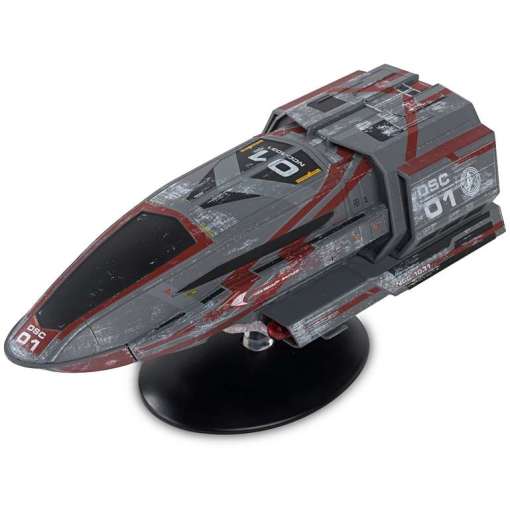
Here’s one of the ships I’ve really liked in the new series…the shuttlecraft! The weird red striping is cool. Here’s a pic of the Eaglemoss model (which is quite nice — heavy, well-built, but a bit nose heavy for the positioning of the landing gear.)

ssduk019_1

SIZE: 2     STRUCTURE: 10     CREW: 2+10 passengers     CARGO: 20     TRANSPORTERS: 1 cargo     LIFE SUPPORT: Class 1R (BB)      OPERATIONS: Class 1R (BB)     SENSORS: Class 2 (+2/+1/+1/0/0  D)     IMPULSE DRIVE: SBB (.5c/A)     WARP DRIVE: WE-5 (3/4/5  C)     ARMAMENT:  1 Type II Phaser arrays (2/2/1/0/0/ A)     DEFENSE SYSTEMS: PFF-2a  (Protection/Threshold: 12/2  Reliability: B)     MANEUVERS: CMD -1   HELM +2   TAC: -1

MAGEE CLASS FAST SCOUT

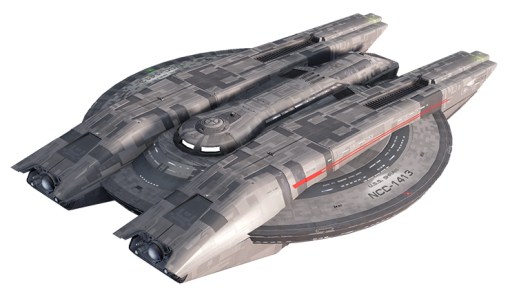
We saw this little ship at the Battle of Two Suns and in the amusing Short Trek involving tribbles. The idea is that these were used as a testbed for new warp designs, as well as small escorts.

Star_Trek_Shran_1413_740

SIZE: 4     STRUCTURE: 25     CREW: 80     CARGO: 40     TRANSPORTERS: 2 personnel, cargo     SHUTTLEBAY: 1 (2 shuttlecraft)     LIFE SUPPORT: Class 3 (D)     OPERATIONS: Class 3 (D)     TRACTOR BEAM: 1 dorsal/aft    SENSORS: Class 2R (+2/+1/+1/0/0  C)     IMPULSE DRIVE: SBE (.5c/D)     WARP DRIVE: PB-32 Mod 3 (6/7/8  C)     ARMAMENT:  4 Type II Phaser arrays (3/3/2/0/0/ A),  2 Mk12 IF Photon Torpedo Launchers (3/3/3/3/3 A);    DEFENSE SYSTEMS: PFF-2a  (Protection/Threshold: 12/2  Reliability: B)     MANEUVERS: CMD +0   HELM +4   TAC: +0     TRAITS: Small Warp Signature — +5TN to Sensor rolls to discover/locate ship, Vulnerable System, Throughdeck Warp Nacelles: When 1 block of propulsion damaged, also check a box of life support.

NIMITZ CLASS COMMAND CRUISER

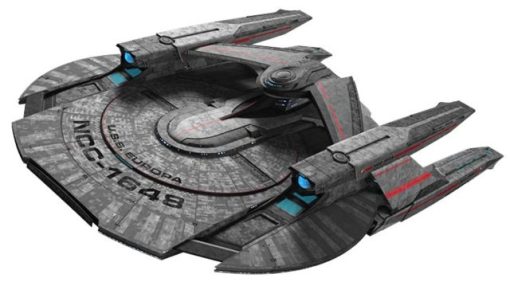
Here’s the “admiral ship” they created for the series. Of the Eaglemoss stuff, this is the most disappointing of the ships for detail, but I suspect the CGI models were pretty thin, as this was banged out for a quick set of shots during the Battle of Two Suns and is quickly destroyed; it most likely didn’t need to be terribly detailed. The bridge was originally supposed to be under the roll bar, but later was added. I prefer to think of that as some kind of observation/science area with the bridge still in the dish.

fed_europa-640x354

SIZE: 6     STRUCTURE: 40     CREW: 300     CARGO: 60     TRANSPORTERS: 3 personnel, cargo     SHUTTLEBAY: 1 Aft  (7 shuttlecraft, 3 workbees)     LIFE SUPPORT: Class 3 (D)     OPERATIONS: Class 3 (D)     TRACTOR BEAM: 2 dorsal/aft     SENSORS: Class 3 (+3/+2/+1/0/0  D)     IMPULSE DRIVE: SBD (.6c/C)     WARP DRIVE: PB-32 Mod 3 (6/7/8  C)     ARMAMENT:  8 Type II Phaser arrays (4/4/4/4/4/ B), 12 Mk12 IF Photon Torpedo Launchers (7/7/7/7/7 C) DEFENSE SYSTEMS: PFF-2a  Protection/Threshold: 12/3  Reliability: B     MANEUVERS: CMD +3   HELM +0   TAC: +3


Way back in 2002, I had picked up the new Decipher Star Trek RPG. I had liked the Last Unicorn Games version, but we hadn’t played it. The same team had moved on to Decipher, which had made their name in card games in the 1990s. I had a couple of friends at the time that were die-hard Trekkies, and I decided to run a post-Dominion War campaign for them. I had anticipated a short mini-campaign; nothing extended or extravagant. It wound up being a game that ran for almost four years in different “series” that built one on the other.

The company had issues and eventually the RPG folded around 2006. (As usual, it seems every Star Trek RPG collapses as soon as they do a Klingon sourcebook.) It was a quick collapse, leaving fans of their CODA system wonder WTF? If you look around the site, you’ll find a lot of the fan-made stuff, including a lot of my earlier work on Artilects and other aliens not included in their Species book.

About six months ago, I wanted to take a break from the 1930s game we’ve been playing for about a year. I really wanted to get back to some space opera and it was down to Battlestar Galactica or Star Trek. I had already run an epic (in the classic sense of the word) BSG game that last five years and was one of the better bits of GMing I’ve done in about 40 years of gaming. About the same time, one of the players got me access to Star Trek: Discovery — which I was unenthused about, but liking the idea of a series not based on the captain, I figured I’d give it a try.

I loved the aesthetic of the show (which I see as a reboot and not a prequel, no matter what the producers say), and saw some potential in a modernized Trek universe. When season two rolled around with the fantastic portrayal of Captain Pike by Anson Mount (and tip of the hat to the writers for getting the character right), I was in. I picked up a few of the Eaglemoss models for the series’ ships. I was originally doing the old-time fanboy thing and rejecting the Klingon aestethic, but my young daughter’s excellent critique of the look of the vessels, and the desire to break away from the Japanese samurai in head makeup, led me to go all in on the look and new style of the Klingons. I did, however, keep the Andorians with the moveable antennae from Enterprise.

With that lengthy intro, what’s Decipher’s CODA like and is it a better option than the 2d20 system that Modiphius has been using for the setting? Right off the bat, I’ll start with this: I despise the 2d20 system. We were on the playtesting for John Carter and found the rules badly written to the point of the game being unplayable. There were simply too many moving parts for the players. CODA ain’t perfect by any stretch, but it’s much easier to play.

The basic mechanic is simple: roll 2d6 plus a character’s attribute modifier (like D&D, the actual attribute rating is meaningless) and the skill level added together and try to beat either a similar roll if opposed by another character or NPC, or a target number. This basic mechanic holds true throughout the game, including the ship combat. There are also class and race traits, features, etc. to modify your rolls. I’m not a fan of the race/class thing, but Decipher was under the thumb of the mighty Wizards of the Coast from the start, and at least they didn’t force them to go d20 — which I understand, at the time, was what WotC wanted. There’s an option for randomly creating attributes or picking them; skills and other character elements are chosen during a short background and career package build. You can build beyond the basic starting character with advancements. I’ve found for basic department head level characters, you want to give the players about 5-6 advancements to get started.

Combat is fast and can be pretty deadly. The weapons of Star Trek are pretty damned deadly. Firefights are over and there’s not a lot of leeward for characters. The old Star Trek game we had saw most of the players lose a character or two over the course of play. Hand-to-hand and melee combat, on the other hand, takes a while — especially if you have a tank of a character. First aid and medical attention is pretty good in the future, and if you survive, they can usually fix you up. (With the Discovery aesthetic, a lot of this is cybernetics. I went with the idea that if it was something they could organic 3D print, you would get a skin graft or organ replacement using your own DNA, but for major limbs or other complicated structures, it’s easier to just have engineering whip up a robotic part in the manufacture lab.)

Starship combat was pretty good in this game. It was designed to give everyone on the bridge something to do. Certain maneuvers required the helm, tactical, and operations guys to hit targets, and the commander to do the same to pull something off. Engineers were busily jury rigging repairs, medical teams were aiding injured. the ships were fairly evenly matched — which is something we see even between largely mismatched sizes and capabilities in vehicles in Star Trek — hell, a Bird of Prey killed Enterprise D. It’s how good the characters are that matters. The basics of Trek are there, as well. So long as the shields hold, you’re golden. You still take damage; the shield absorb some, but not always all of the damage; if you lose shields, you’re dead and pretty quickly.

By today’s standards, save for D&D, there’s a lot of fidlly bits — off-hand modifiers that are a bit ridiculous, heavy mods against you for extra actions, in the name of game balance, but overall, it’s a serviceable and clean system. You can find the PDFs around the web with ease, and the books turn up from time to time.

Is it worth it? Yes, if you want to play Trek and don’t want to pay the premium prices that Modiphius is charging for the 2d20 system. (Don’t get me started on their sourcebooks — just hit up the Memory Alpha site online. That’s where most of it came from.)

On another note, I’ll have up more CODA versions of Discovery ships in the next few days, I hope.

When I saw the pre-order call for Free League’s Alien Role Playing Game back in August I jumped on it. The wife encouraged me to go for broke and get the full set of stuff for the game, and after a long way (but really, not that long for most RPG publishers…) the game came in last week. The order came with a PDF of their “cinematic” adventure Chariot of the Gods plus a stripped down version of the rules, minus character creation and other parts of the rulebook, but after receiving the set, the PDF held about 2/3rds of the core rules.

IMG_0901.jpg

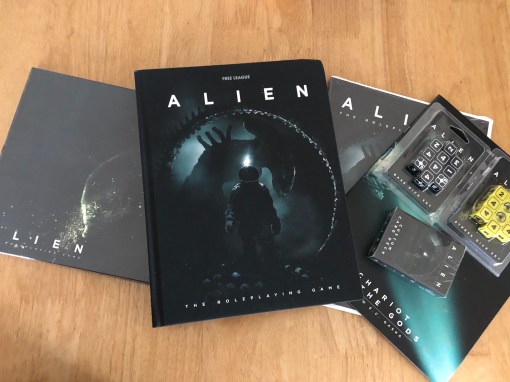
So here it is: For the bundle I got the rulebook (without the fancy cover option), the adventure booklet, a GM screen (with most of the needed charts in it), a set of specialty Alien dice and a set of yellow “stress” dice, as well as a deck of cards that for initiative, gear, and pre-gen characters for the Chariots adventure. Lastly, there’s a map of local space with the settled worlds, and a set of carboard counters for handling more tactical movement/fighting.

Production quality is high, as it was with their Tales from the Loop, and Things from the Flood games. The hardcover is well constructed, the binding superb, and the interior is well laid-out for ease of reading and finding rules. The print density on this thing is high with lots of black. A lot of the pre-order folks were complaining of intense chemical smells from the book and when I got mine in, you could smell the ink — this is due, most likely, to wanting to punch the product out before Christmas. The artwork, as with the other books I mentioned, is gorgeous and highly-atmospheric. The dice are well-done and seem to be rolling pretty randomly. I’m not one of those gamers that has to test the balance of my dice, nor do I obsess on their randomness, but after a few throws, they seemed to be pitching without any tendency to a particular number. The cards are pretty and used for drawing initiative, but otherwise they are pretty useless. The map is gorgeous; the counters are so-so.

The rules are a variation of Free League’s d6 dice pool where you need a 6 to succeed on a test (and sometimes more 6s to succeed at harder tasks, gain more damage in a fight, or get some kind of benefit from the extra successes.) If you’ve played Tales from the Loop or Forbidden Lands, the core mechanic will be familiar. Character creation is simple and quick, as with those other products — you have four stats: Strength, Agility, Wits, and Empathy, and each has three skills tied to them. You get to split 14 points between the attributes, and ten for skills. Your health is tied to strength. There’s a career specific trait you can take from some choices (or make your own up) to aid the character in a certain way, and there is the signature item — a thing that the character can use to relieve stress, as well as relationships — a buddy and an adversary — between the character and the other PCs/NPCs. There are also rules for playing a synthetic — whether a sleeper like Ash, or a more robotic version like Bishop. Synthetics have higher stats and don’t take stress, but they cannot push rolls, do not have signature items to assist them, and damage can affect them more more harshly.

Stress is the big mechanic for the game. When a character “pushes” a roll on a skill test, rerolling for a better result, they gain a stress die that is applied to the roll. On a 6, they’ve got a success; on a 1, they panic. When panicked, they have certain actions imposed on them. Some gamers might not like the mechanic forcing their characters to act in a certain way for a few turns, but getting players to respond realistically to fear is difficult, I find, and this is a way for the game to address that. This also means that a little stress actually is beneficial and can help the character, but too much and you might lose control of yourself. It emulates the reactions of horror movies pretty well.

There’s a lot of material on the world of Alien — some of the corporations, the politics, the governments are covered extensively and provide a lot of options for adventuring without even encountering the eponymous monster. There is a lot of data on the alien, but not so much on the Engineers. The other aliens that were thrown in are a bit bland, but there’s plenty of room to throw in your own stuff, and there’s a lot of folks already hacking the game for use with other horror franchises. Surprisingly, there are rules for space combat — something we haven’t seen in the Alien movies, but its a nice touch.

So is it worth it? The set cost me $100 (the core book was about $50 when last I checked) and yes it is. The production values are top-notch, the game system is light and ease to use and modify, and the background material is dense enough to allow even the most casual fan to jump right in. The pre-orders have been filled and they game should start turning up on store shelves by December 10.

« Previous PageNext Page »