Roleplaying Games


Chases are an integral part of the pulp genre, which Atomic Robo most certainly inhabits, and our first two sessions of the game have included chase sequences — a delivery van vs. a giant kaiju crab, then a motorcycle vs. car/boat chase in the Philadelphia Naval Yards of the 1940s. Going off of the rules in the game, this can be done one of two ways — if it’s to be a short chase, say you have to get far enough to find a place to hide, or the opponent only has to go a short distance to escape, you can play it as a straight challenge, or you can run it as a contest — where the PCs have to get a certain number of victories in a certain number of rolls (we did the latter…)

But to really give chases character, something they really need to get that pulp flavor, you need something a little extra. One thing you can do is break the chase into a number of zones, each having its own particular stunt or setting to overcome while trying to catch the bad guy. You can also set a victory parameter for when the prey in the chase escapes. Since characters in the same zone are assumed to be able to get into direct conflict, lets assume this is “close” range — if the pursued can gain a victory in a chase over their opponent, they get to be a zone away and can only be attacked by long arms (let’s call this “long”) and also gain a +1 boost to their next chase test. If they can gain a second success, they are two zones ahead and are at extreme range with a +2 boost for the next test. With three victories, they have escaped. If you want to make it more interesting, if the opponent “steals” a victory from their prey during the chase, and close the distance. A success with style — for either side — would count as two victories.

The end point of a chase would be one of two events: the prey either gains 3 victories and escapes, or the pursuer is successful in catching their opponent by gaining a success in while in the same zone — perhaps they’ve tackled the guy, or cut off the fleeing suspect and stopped their car.

You can make the chases more interesting by allowing different skills. Perhaps during the car chase in which your characters are involved, they have managed to gain a zone from the bad guys. Instead of using Vehicles, they might choose Stealth, and try to hide the car in a convenient alley or behind that semi truck; maybe they bailed out of the car and hide (Athletics) — a success would count as another victory, mechanically, but would give the chase more character.

If the pursuer has caught them, there’s always the possibility of fighting. Maybe the pursuer has gotten a victory on a chase contest and has now “caught” them…the characters might decide to fight by using their vehicle to try and force the other off the road — you would use Vehicles or Combat in a direct challenge here with the stakes being the other car is disabled or crashed, or they are caught.

Example time: the opening motorcycle chase in Skyfall is an excellent example of giving zones their own character. The chase starts in a Crowded Bazaar, in the same zone. It progresses through Busy Streets, then onto Angled, Tiled Rooftops, before jumping though a big window into Covered Bazaar, then to Moving Train (where it turns into a foot chase.) There are five zones — each with decent character in their Aspects — and in Skyfall it would seem that the bad guy is never able to gain more than a single victory from Bond, before they are on the train. Bond “catches” the guy on the roof and the action moves from a chase contest to conflict.

Opponents, of course, could also throw aspects on scenes, as per the rules, to give these scenes more character, like Stained Glass Window on the Covered Bazaar scene — you’re going to have to take that bike through the window to follow!

These are just a few ideas to give chases a bit more character in a Fate-based game.

The second installment of our Atomic Robo game went well last night. In it, we jumped from the modern day (see the last play report a bit down the page) to Philadelphia, 1943. This first of several WWII “issues” was titled “The Philadelphia Experiment” — in which the Strategic Science Division and Office of Naval Intelligence tried to cloak a destroyer, USS Eldridge, with some Teslatech they got from the inventor’s destroyed labs (this was established in the comics…) They have no idea how it works, and the players tried to do some brainstorming to figure it out.

One of the players has a “Gearhead” weird mode we made up (see Finch from the She Devils) — a WAVES aviation machinist’s mate that just has a knack of gizmos. She realizes it pulls its power from the Earth’s magnetic field, somehow. During the test, the ship is cloaked or gone for ten minutes, but for the crew — one of the PCs was aboard — it’s a harrowing few seconds of bulkheads dematerializing, strange electric effects, and other weirdness. A later brainstorming session they decide that it might have created some kind of Einstein-Rosen bridge.

Note: the brainstorming sessions are less fun than I suspect they would be for a bigger group — we have two players and a GM, right now, and that cuts down on the back and forth banter I think these sessions are supposed to generate. Still a great set of mechanics, though.

The science is interrupted by imposter FBI agents collecting the plans to take them to the vault on the Philadelphia Naval Yards. A foot chase ensured that led to a throw down with local mobster mooks. While the PC naval officer was fighting and interrogating one of the suspects, the WAVE and an NPC member of the SSD chase down a shore police jeep with the other bad guy on a messenger’s Harley-Davidson. The officer learns the mooks have been hired by a dame — English — and they are taking them to the rendezvous by boat and grabs the a nearby Chrysler Airflow and tried to catch up in the chase.

It’s taking some getting used to throwing aspects on zones and scenes — I’m used to doing that on the fly and narratively — but we’ll get there, I think. The chase wound up on the wharf, where the baddies were transferring to a launch. The Chrysler wrecks into the jeep and takes out a mook, and the harley hits the Chrysler and the whole shee-bang winds up in the Delaware. Now with the bad guys having a big lead, they give chase in another launch that wound up with a wreck and gun fight in the marshes south of the yards.

The bad guys got away — the players got fate points for conceding so we could continue the story — but they find out the English dame is possibly Eurasian and was holed up in a boarding hotel on Carpenter Street that the naval officer knows. Turns out, he’d had a drunken night a few weeks back with the girl and knows what she looks like. He has to talk his way out of being a suspect in the whole issue and vows to catch her, convincing the SSD leader to take him on the mission to stop her.

They track her on a TWA transcontinental flight to San Francisco and give chase, requisitioning a B-25 that was headed to Crissy Field. That was the end of Issue 2. Next week, issue 3: The Face of the Enemy.

The general consensus is that this version of Fate runs very smoothly and quickly. The mechanics are simpler, in some ways than the gigantic list of aspects you have in normal Fate (5 compared to 10.) I’ve noticed we’re plowing through adventures in about a 2.5 hour session, rather than the usual two 3 hour sessions of something like Battlestar Galactica. Partly, that the pulp genre nature of clipping along on a story rather than wallowing in character development, partly the mechanics lend to a faster play (we think.) I’m still not a huge fan of the +/nought/- dice mechanic, but it’s not awful. I rather think the Cortex Plus d4-d12 is a bit more fun, if only because it entertains the classic fun of rolling polyhedral dice.

I’m not won over from classic Cortex for some of the campaigns I’ve got in mind for the future, but this version of Fate and the pulp universe of Atomic Robo lends itself well to doing some of the niche campaigns (a ’40s spy game, a ’70s blaxploitation/James Bond-style action game) and allows me to connect these disperate ideas I’ve had in a single campaign and system of rules.

So far, so good.

So, we finally got the first session/”issue” of our Atomic Robo game up and running. In it, the characters are playing agents of the Office of Scientific Intelligence — a superscience spy agency, ala SHIELD, that likes to think of itself as the stand-up spy agency. They see the antics of Majestic 12 as dangerous and counterproductive…but do a lot of shady stuff, as well.

The characters the players picked were Agent Craig Scott, the smooth-talking ladies man and bureaucrat; the other chose the parkour-action engineer, Agent James Crille. The discarded characters became NPCs — a cryptobiologist and a Silicon Valley roboticist.

The first issue was more of an introduction ti the mechanics, the universe, and the flavor of the game: the team was dispatched to Ōshima, Japan to investigate a possible cover-up of what was going on at the Fukushima nuclear reactor by the company running the place, a division of Big Science! Hojin (Big Science! from the comic.) They slip in, use robots to investigate they are running from a panel van, disguised at power company employees. They biffed a few rolls during their brainstorming as to the strange green fluorescent material and unusually low radiation and temperatures in the reactor room, (Recently reported in real life…) so I had their activities discovered by Big Science!, who dispatch Science Team Super 5 — a Power Rangers-esque team of hero scientists from the comics.

Scott proceeds to hit the Deceive skill hard, playing it up as him being — gaijin and all — a member of the power company thrilled to meet them and asking for autographs. A great roll made better by the player going fanboy in the extreme and speaking in Japanese! They’ve just about made it out without issue when an earthquake strikes. The other player and NPCs witness something moving in the reactor: a giant monstrous thing that eats their robot. Said kaiju monster then busts out of the plant: it’s a giant crab, several stories tall, breathing atomic fire, and rampaging through the city.

Science Team Super 5 makes their attempt to fight the creature with no luck, but dispatches Scott and company, with Guardian Pink to grab their giant “monster stomping robot” (that was one of the aspects) to fight this “folly of man” (one of the crab’s aspects.) Rocket launcher action, giant robot armed with giant sword piloted by our parkour hero and Guardian Pink, and loads of collateral damage later, and they’ve taken the creature down.

This included using the “collateral consequence” rules to keep Scott from getting fried with a 8 shift physical harm when the crab lit up Big Science!’s local HQ with the atomic breath. Later, Scott used a contact-based stunt to create an aspect on the JSDF officer that had come to arrest them; he was a friend of Scott from the ’90s when they “fought the yakuza together.” His team safely free of jail time for espionage or destroying section of Ōshima, they find out the earthquake was some kind of seismic and gravitational event out in the Bonin Islands. An island has mysteriously appeared in the space of three hours, wrecking havoc on the weather and seas around it, and creating tsunamis.

They are contacted by OSI and told to meet up with a carrier group near the event. After a helicopter ride in which they watch the recon flight of an EA-18G Growler that loses power as it nears the island and is lost. The team brainstorms that the island is the creating the weather, oceanic, and gravitational anomalies and might itself be an island sized machine of some sort.

They arrive on the carrier and get briefed by the group’s admiral on a mission by the US Army Corps of Engineers’ Strategic Science Division in November 1943…

That was the cliffhanger for the night.

Overall, the game played swiftly and with almost no need to look in the book at the rules. There were a few issues with using stunts and aspects but those were sorted out quickly. The big thing we missed was using fate points like plot points in Cortex to “get out of death” by buying down damage.

I’ve only quizzed on player so far on the mechanics, but the quick consensus was that the stripped down Atomic Robo version of Fate played much quicker and easier than Fate normally does, and that it well suited the tone of the comics and the style of play it was trying to evoke. I only had to explain bits of the rules for the Fate newbie for 5 minutes or so; the rest was on the fly. I did think that it might be handy to have some Post-It notes for tracking the aspects. Atomic Robo doesn’t have as many crowding up the field as, say, Firefly, so it was much more manageable, but the stickies will make it more convenient. For Fate points, we used spent 5.7mm casings, like we do for Battlestar Galactica…works great, as they are small and a bunch fit in an old Fossil watch box (that has something about Peace and Love on it.)

The only real issue was balancing the opposition to the characters. The crab was a bit over powerful, so I stepped it down a bit to fit better. We thought that having another player would aid in the banter that the game seems to want to create with the brainstorming rules — again, mimicking the style of the comics.

Overall, I was very pleased with the first run of the game, even though it was a short intro session, and I’m looking forward to next week, when we flashback to 1943.

For those who are interested…the Fukushima Crab Monster!

FUKUSHIMA CRAB CREATURE

Modes & Skills: Superb +5 Kaiju: Atomic Breath, Physique, Provoke, Tooth and Claw +6 (Epic); Aspect: City-Stomping Monster. Great +4 Mutant; The Folly of Man. Good +3 Crab: Combat +3; Claw!

Stresses — Physical: 5 Mental: 2

Stunts: 10 stories high! Bulletproof and fearproof. Physique to defend against other attacks. Weapon 4 for strength attacks; Wake of Destruction: Success w/ Style & FP to cause lowest collateral damage consequence in addition to any other harm; Atomic Breath: Weapon 4

…and on the other side…

GUARDIAN MECHA

Modes & Skills: Great (+4) Mecha: Athletics, Combat, Physique, Provoke +4; Aspect: Monster-Stomping Mecha.

Stunts: Walking Tank: Use Physique vs. combat, Armor 2; Advanced Sensor Suite: +1 to Notice; Giant Melee Weapons: Weapon 4

Stresses: Physical 4 Mental (use character’s)

We’ll be starting out first Atomic Robo game — something I’ve been looking forward to doing for months, now. Our first volume The Perils of Science! will start in modern day, but several of the middle issues will take place in 1943, during World War II.

One of the “special guests” in one of the issues, taking place at the Philadelphia Naval Yards will be…

ROBERT A. HEINLEIN

Concept Aspect: Science-Fiction Engineer, Omega Aspect: Pulmonary Tuburculosis

Modes and Skills:  Good (+3) Banter: Provoke, Will +4, Contacts, Deceive, Empathy, Rapport +3; Aspect: Failed Politician. Fair (+2) Science!: Aeronautical Engineering +4, Naval Engineering, Notice, Physics +3; Aspect: Thin line between science-fiction & science fact. Average (+1) Action: Combat +2, Athletics, Physique, Vehicles +1; Aspect: Best swordsman in the navy!

Stunts: Do the Math!: 1 fate point to use Will for one Science! skill for a scene; Forceful Personality: Use Will for Rapport when attempting seduction or initial attempts to befriend; Mind Over Matter: 1/scene, can check a mental stress box to absorb a physical hit; Storyteller: If talking to people for a few minutes, gains a free boost on them in Deceive or Rapport tests; Will Over Illness: 1/issue, can take a complication and add the value to a single test.

Stresses:   Physical 2, Mental 4

At the time, Heinlein was a naval reserve officer (lieutenant) working as an aerospace engineer at the Philadelphia Naval Yard, where he met his true love, the amazingly intelligent and redheaded “Ginny” Gerstenfeld., a lieutenant in the WAVES.

He will be working the the Strategic Science Division to try and create a device to cloak ships from radar and sight using confiscated Teslatech after the explosion at that famed inventor’s home/laboratory.

It’s been a while since I’ve thrown up an AAR for our Battlestar Galactica game, mostly due to a series of missed nights here and there, and a plotline that didn’t finish ’til last week. When last I wrote an update on the campaign, we had once again faced down The Blaze, or Hades, who was attempting to regain control over the Cylons and the humanoid “Cylons” or Seraph using an old shard of a TITAN. The ensuing battle was brutal and a lot of people and Seraph from a rogue basestar that the fleet had allied with wound up dead, and one of their vessels, Cygnus, destroyed.

The two surviving ships limped back to Argos, an ancient Kobolian outpost that had been left, more or less, unprotected during the mission. Among the survivors were the Lords of Kobol ATHENA, HERMES, and HEPHAESTUS. The last began directing repairs and refit to the two warships with an estimated time of about two months to finish. This gave us the choice of jump the game two months and get on with it, or delve into the politics and personal responses to battles with gods, three different races trying to coexist in an uneasy alliance, and some sci-fi exploration of the giant city and citadel the Kobolians had been driven out of by the Blaze 3000-4000 years ago. We went for the latter…

One of the main plotline that dominated the next weeks involved the settling on Argos to harvest food and collect food animals, as well as to do archeological work at the citadel. Earlier, the DNA and DNA-storage of memories for the Kobolians had been found, and the bodies of these lords resurrected. POSEIDON is the main antagonist in this mix — he’s trying to get the Citadel up and running, and is generally fixated on trying to recover the Olympian archives from their DNA storage…but the machines of the place are millennia old, and one of the PCs — a computer engineer turned policeman in the fleet — and Dr. Baltar have to cobble together patches to get their machines to read the data. Other Kobolians include the violent, frat boy-ish ARES, Athena’s major domo NIKE, and ARTEMIS, who is mostly gathering women into her own little cult and hunting animals with abandon. Over the course of the adventures, they were finally able to crack the database and find out that 90% or so of the DNA was still legible. Massive amounts of history, technical achievement, and the DNA and memories of 256 Kobolians were recoverable. More on that in a moment.

Meanwhile, one of the PCs, a veterinarian-turned-medic who had been working on the issue of Seraph reproduction (and with Baltar cracked it) has stirred up some animosity between the Seraph of the vessel Resurrection 3 and ATHENA, the prime minister to the interim president. (We’ve already had a coup attempt that killed many of the government officials.) Tensions are high, so that when a strange virus that eats the silica-based circuitry of Seraph turns up — giving encephalitis-like effects and causing data disruption during direct communications between models — things quickly spin out of control.

The characters manage to quarantine the diseased Seraph — the humans are immune, save those with “puppetry” implants — but the Health Minister, Dr. Michael Robert, sees his opportunity to destroy the Seraph once and for all. He infects the vet and clears her to go back to her research on Resurrection 3, where she immediately spreads the infection to several dozen Seraph. After the fleet isolates the ship and shuts down the various Cylon ship networks, they are able to contain the outbreak. However, it becomes quickly apparent this was no accident, and the marshal’s service that handles the civilian policing figures out that Robert was at fault. Under questioning by police, aided by Hermes, Robert admits he tried to commit genocide.

Athena has to take this to the Seraph, who want blood and are ready to spill it for satisfaction. She and the vet are able to talk the Seraph down, but the Fours — who suffered the brunt of the infection — are not pleased with the prime minister’s solution: Robert will stand trial for his actions with a tribunal of Kobolian (Poseidon), human (ADM Pindarus), and Seraph (a Nine — our version of Leoben) presiding. They are expediting the trial, but this is not enough for the Fours, who conspire in their model, and with some help from the Fives (a vicious female model in our campaign) and some Sevens (Ares-like warrior) launch an attack on the prime minister and the Kobolian who had set themselves up on Resurrection 3 to control the impressive biological labs and other medical equipment.

They use cyanobacteria to make tetradotoxin and manage to nearly kill NIKE, but only injure Athena. In a brutal bit of combat, the goddess of war takes down about three dozen Seraph, in our first real look at what she can do when fully armored, armed, and angry. The commander of the basestar, a Three that’s not fully trusted by her people as she was suggested by the Colonials, is trying to hold everything together before they find themselves in a fight with the mostly repaired Galactica; their basestar, on the other hand, is surrounded by flattops and foundry ships working on her…they are in a terrible tactical position.

There was a lot of politicking and trying to convince both sides to stop making the same damned mistakes over and over…allowing their hatred and past to drive them into retributive actions. In the end, they manage to keep their shaky alliance together, especially after the Robert trial finds him — almost by necessity — guilty. This angers a lot of the Colonials who saw him not as a prospective mass murderer, but as a hero to the people. In the end, the efforts to keep the fleet together to continue to Earth have mostly failed, with 40,000 or so remaining on Argos, while 17,000 travel with Galactica and Basestar 19 to that mythic world.

One of the things was saw was the different Seraph, now avoiding the dangerous use of direct electronic communication between their units, starting to take on different characters. Just among the Threes, one self-hating sleeper agent that had helped destroy a major base is now firmly on the side of the Colonials and is even in a love affair; the commander of the basestar is increasingly interested in military camaraderie and a developing friendship with the admiral that started more out of necessity and is now about how alike they are; another is trying to develop a sense of humor and is terrible at jokes… The Seraph are becoming people.

The rump fleet left for Earth at the end of the last adventure, leaving the people under the care of Poseidon’s citadel. The sea god had a number of his fellow Kobolians resurrected using fancy flesh 3D printing, etc…onyl to find out that Athena had convinced one of the techs to bring back one particular DNA signature. Instead of ruling as king here on Argos, Poseidon found himself facing a new ZEUS.

We’re now taking a break to do some Atomic Robo, but the last “season” of our now four year long campaign will focus on the weird posthuman/transhumans of the worlds near Earth, as well as checking in on what happened to Pegasus, which – realizing the Seraph/Cylon war put them in an advantageous position, returned to the Colonies to try and destroy toasters and save more survivors on the 12 Worlds.

We should be getting back to Galactica later in the summer, I suspect.

The April 2015 RPG Blog Carnival is being hosted by RPG Alchemy with the subject of “The Combat Experience.” I was mulling over what to do for this particular subject and found I had two or three different things that came to mind, so I’m going to do a series of posts regarding the “combat experience” in role playing games. Let’s roll…

Other than the obvious issues of matching the tone and expectations of the genre your are gaming in, another thing that can affect and mold the players’ experience of combat in a role playing game is the set of rules mechanics being used. The mechanics can easily affect tone, verisimilitude, and player expectations for battling the forces of evil.

When I first started gaming, Dungeons & Dragons and Traveler were pretty much it, but soon TSR had GangbustersTop Secret, and Gamma World — all using the early d20 mechanics. Those were created for use with high fantasy wargaming with role playing bolted on as an after-thought. The rules promoted a tactical mentality, and a tendency — if not need — to use battle maps, design adventures that were fairly detailed. For the spy genre, which was already near and dear to me, d20 Top Secret  had some serious issues, and it was delight for me to read the James Bond: 007 game that hit the shelves around 1983.

The rules push more roleplaying, with attention to weaknesses and skills, the quirks of specific gear, cars, and guns. It had a bunch of specific rules for things like gambling or seduction that, today, seem unnecessary, but combat…combat and chase rules were the shining spot of the rules. The game used a single d100 role, and based on the difficulty, your result had a “quality” to it. Ten percent of the needed number (so 9 or lower on a 90, for instance) allowed you to do much higher damage than an acceptable (46-90, in this case…) Damage was based on your hand to hand damage, which was based on your strength (plus a modifier), and for guns the damage was based on the muzzle energy of the weapon. Novel, and good for making the game feel realistic. But it was also a James Bond game — the heroes couldn’t just bite it without some chance of success, so it had the “hero point” mechanic, now common in a lot of games, that allowed you to buy down damage, improve a roll, etc. The game, for all its quirks, was wonderfully suited to the tone and expectations of the James Bond subgenre of espionage films — more pulp than reality.

GURPS was already out, and the intense mathematics of the character generation made it uninteresting to me, but one thing I noted was that its attempt to be everything to everyone meant it did everything acceptably, but nothing particularly well (Your mileage may vary.) Traveler handled quasi-realistic sci-fi well, and the system was simple, but the random character generation — like that of D&D, and other games was off-putting after the ability to craft your character to your concept, like you could in James Bond: 007. JB:007 would be my go-to rules set for the next 20 years or so, for modern and even some sci-fi settings. It had enough “crunch” to feel real, but enough wiggle room for storytelling to trump pure tactical simulation.

I dabbled with superhero games through the late ’80s, the height of the comic resurgence that is now informing most of the superhero movies these days. There was Champions, which really allowed you to dial in on character creation, but was so detailed and math oriented that you needed to buy time of a Cray supercomputer to build a character in less than a week. There was Marvel Superheroes (FASRIP) which had a very informal and unstructured feel to the rules that I found I didn’t like. I was looking for more crunch, more realism in my superhero games at the time (a holdover, no doubt, from cutting my teeth on JB:007.) I wanted to know how far I threw my villain, or how many walls he punched through from knockback, and I found that in the wonderfully metric and mathematical DC Heroes that Mayfair released. WE played the hell out of DCH for two years, until Space:1889 caught my eye, but looking back at it, there was a lot to like about the bare bones of Marvel, and I suspect that it would well match the tone of a four-color supers setting.

Later, I found Marvel Heroic from Margaret Weiss to be one of the best RPG rules sets to come out in years. It was perfectly suited to its subject — a Cortex-version of Fate, really — that was freeform enough to let you do what you wanted, and allowed for dramatically different power levels to work together. Hawkeye like characters might not be able to injure the Hulk, but he could distract, set up complications that would slow the opposition down, while Iron Man could blast the bejeezus out of him. Death was a possibility, but in the comics, no one stays dead (unless you want to lose the rights to that character down the line!), so the Fate complications that injure or impede the character, rather than killing them, is completely appropriate to the genre. The initiative system was superb — the guy with the best reflexes goes first, and then choses the next player or GM, leading to a very nice flow in combat, and allows for character to do their schtick. Example: maybe Captain America can’t hurt the robots from the trailer for Avengers 2 much, but he can throw his shield at Thor (essentially giving him dice for the attack), who then knocks the shield through baddies with his hammer like he was looking to set the Hall of Fame record for longest hit.

Space: 1889 is another excellent example of how mechanics affected play. The setting was superb, and the mechanics lent themselves well to traditional wargaming style RPGing. This was obviously the point when one looks at the extensive line of miniature and the cloudship war game that accompanied the release. But the rules weren’t great for dealing with role playing, and while it handled mass combat well, personal combat was unremarkable — the rules didn’t necessarily hinder play, but they lent nothing to the Victorian speculative fiction setting the game was placed in. I spent the middle of the ’90s trying to find a rules set that would better emulate the Space: 1889 setting. I liked the Castle Falkenstein mechanics, but they were kludged in many places.

With one of our players of the time, I kitbashed a combat system that would fit the playing card as randomizer main mechanic (which was light, swift, and excellent.) I tweaked the rules so that every player had a deck of cards of their own, and drew a number of cards for a hand. This allowed them options; they could plan their actions because they had a sense of what they could do — have a strong heart in the hand? Maybe talking your way out of a situation was better than trying to fight or slip away. Our combat system replaced the fencing-based action/pauses they had and created a more pulpy mechanic where the cards in your hand matched lines of attack — head, body, lower, or defense only. It played swiftly and was tremendous fun, and allowed for swordfights and fisticuffs that were much more fun than blasting the opposition with guns — and after all, Victorian sci-fi is more about two-fisted adventure than running guns on the fuzzies (although there is certainly a place for that.)

The next set of mechanics to come along that suited the setting were the Cortex rules set by Margaret Weiss. They used it for their SerenityBattlestar Galactica, and Supernatural lines. It was a rules-lite system that allowed you to build your characters with a number of assets and flaws that helped or hampered them mechanically, and allowed for the accumulation of plot points (see the hero points above) and by doing so pushed storytelling over tactical simulation. It’s an excellent set of rules, and combat is well simulated with your damage being based on how much you surpassed your target number (plus the weapon’s damage die.) It is eminently, easily tweakable to fit a genre — as is obvious by the various iterations of Cortex Plus. It’s pretty much my go-to system –as evidenced by the heavy support for the old Cortex this website gives.

There are other games that had been well-suited to what they were trying to accomplish, but were very focused, s a result. Twilight:2000 was well designed to model military survival after a nuclear war, but the rules could be clunky, hard to manage, and did not really push role playing (I found; you may love it, and that is okay!) The Morrow Project was an mess of a role playing gam, but simulated gunshot injuries well — no surprise that many of the rules evolved out of a dissertation on ballistics and gunshot injuries. If you’re looking for realism in your violence, that’s the place to go.

In addition to addressing the expectations of your players, and the tropes of the genre you are playing in, choosing the right system can aid or hinder the sort of experience you want the players to have when addressing combat. Choose wisely, as a really old knight once said…
 

The April 2015 RPG Blog Carnival is being hosted by RPG Alchemy with the subject of “The Combat Experience.” I was mulling over what to do for this particular subject and found I had two or three different things that came to mind, so I’m going to do a series of posts regarding the “combat experience” in role playing games. Let’s roll…

The obvious question for me is “How do you role play combat?” I suspect the key to an effective fight scene in a game is to match style of combat to the genre being played and the expectations of that milieu. If one is playing low fantasy in the Conan-style, brutal but over the top descriptions that delight in the gore being created seems appropriate; high fantasy like The Lord of the Rings has a more nuanced approach, where good and evil are important, as is your intent. The violence could be brutal or not, but how it reflects the intent of the characters, and hence affects them in the aftermath is something to think about.

For a setting like Enlightenment-era swashbucklers — musketeers or pirates — the combat should be fun and elegant, the descriptions should be more about the fancy maneuvers and how they use their environment. Do you swing from chandeliers? Use the ratlines to avoid the stabs of that gap-toothed buccaneer? How do the opponents speak to each other — this is the period of respect for your enemy, repartee while fencing, not unfairly blasting your opponent with a pistol when swords have been offered. Similarly, Victorian-period games lend themselves to fisticuffs and swordplay over guns (unless you’re in the West…then strap up, greenhorn!)

For pulp games — the era that brought us the trope of masked avengers who use their fists and gadgets over guns (Batman, Daredevil, etc…they’re all the watered down version of the more vicious Shadow or Doc Savage.) These should be fights with strange opponents from Oriental martial arts and mystics, to torturous Nazis, or Thompson-weilding gangsters. While dangerous, that shot to the shoulder never has the hero worrying about an irreparable shattering of the shoulder ball, or a permanent tear to the innerspinatal rotator cuff, or a gushing, torn brachial or subclavian artery. Shoulders were ready made for bullet catching. Same with thighs — the femoral artery does not come into play.

But a military game set in one of the great wars, or fighting terrorists in contemporary times might be better suited to more graphic and realistic portrayals of violence, where theres little honor in surviving, bullets do either incredible damage or surprisingly small amounts, but lordy you really don’t want to get stabbed. (I have. Trust me.) Dealing with the horror and stress of combat might be an excellent driver for the characters to grapple with, and graphic descriptions of the damage done to the opposition (or to your character) might enhance the verisimilitude of the setting. Here, guns aren’t magic…they have an effective range, limited ammunition, and double gunning it while jumping across a room screaming “aaaaargh!” isn’t advisable. You might break something when you land. Body armor’s only so good, and injuries can be with you for multiple sessions.

For science fiction games, again, the tone of the setting is important to keep in mind. I don’t know how many groups I’ve seen playing Star Trek want to turn it into some version of Aliens or Starship Troopers. You stun you enemies in Trek…or try. You might punch out a Klingon, but there’s usually some soliloquy to working together that has to be delivered before you go get your tunic’s shoulder sewed back together. Babylon 5 might similarly require the good guys to try and favor honor over expediency, but in Battlestar Galactica that’s kinda stupid, since the toasters aren’t going to play fair, are they?

How about superhero games? There’s a tendency for some GMs to want to go “realistic” with people that can tear down a building with their hands. Think about that for a sec… Realistic with a character like Batman, Green Arrow, or Daredevil (seriously, check out the Netflix show — it’s amazingly good!) is doable. The character might get chewed up, but either they have an excellent medic cum butler, magic herbs, or jut go back into the fray badly injured. Dark and rainy, noir settings (neon, people…neon), and moral ambiguity work well with these settings — they are the descendants of the Shadow, after all.

This does not work for four-color heroes like Superman (talking to you, DC!) Good and evil might have some shades of gray, but the heroes are good, and the bad guys are bad. You might destroy a city block in a fight, but you’re probably being applauded by the public and the real estate companies, not sued by the insurance companies or on trial for reckless endangerment. You can cut a fine line with a campaign that draws from the likes of The Incredibles, but the tone is still a light one, not some brooding, angsty screed. Four color heroes fight in the day, over the city, where people can exclaim, or in a secret base or in space; they aren’t kicking some random criminal’s ass in an steam-filled alleyway.

For the combat experience you want, you have to know the tone of your game, your setting, and more importantly, your players and their expectations. If the characters are expecting a gritty sic-fi setting, talking uplifted otters might not (although they are unquestionable awesome!) If you are the scions of a society dedicated to rationality and peace, whipping out the blaster and burning down your enemies shouldn’t be something encouraged but doing so should entail a funky sound effect and a person that disappears neatly (Star Trek), or collapses in an amazingly bloodless heap (Babylon 5.) If you’re storming Normandy beach in your WWII game, body parts and blood, terror and deafness from noise, a confused description of the battlefield that involves confusing the players, just as their characters would be is perfectly acceptable.

Genre, however, isn’t the only thing to keep in mind. Player expectations are equally important and the players and their characters don’t have to have the same “experience.” Are your players squeamish? Maybe a detailed inspection of their opponents entrails they just slipped on isn’t the way to go. Are your players expecting their players to do incredible things while they fight crime in the underbelly of 1930s Shanghai? Realistic combat where they don’t mow through hordes of books might be disappointing, and there better bloody be some chop socky going on. Even if terrible things have happened to nice people, unless necessary to the tone and expectations of the players, you can alway just tell them they are horrified by the carnage they have just witnesses, or inform them the women are lamenting volubly.

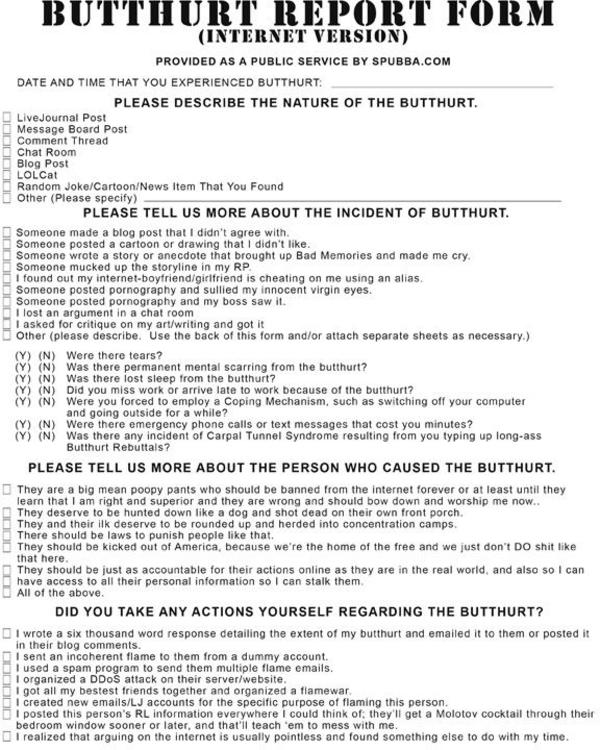
Before we get all butthurt about the rest of the piece: 1) About the only people I discriminate against a folks with bad tattoos…you obviously make bad decisions, but hey! that’ll look great at 65! 2) I live in a state with a RFRA and that didn’t lead to flaming pyres with homosexuals roasting upon them. 3) As a libertarian (or “real liberal”) I don’t care what you do, so long as you don’t scare the horse, and everyone’s on board with it. So check the pro- or anti-gay bullshit at the door if you choose to comment.

Oh, you might need this…

butthurt-form

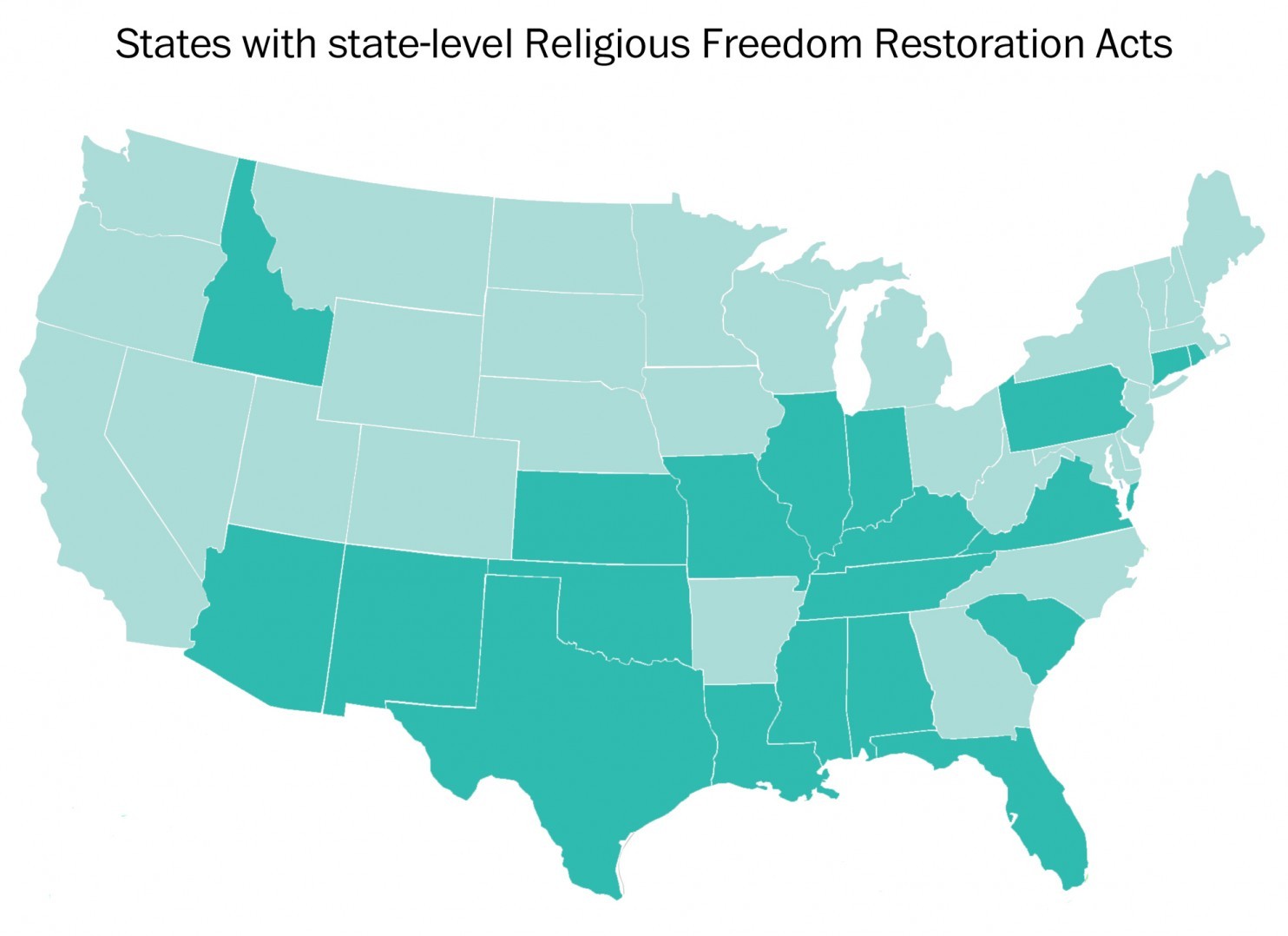
Indiana joined the ranks of 19 other states, and the federal government, that have some version of a Religious Freedom Restoration Act (or “riff-ra”) last week and the interwebz melted down with deliriously outrageous outrage. Apparently, the passage of this bill will lead to some manner of Auschwitz-style oppression of homosexuals in the state. You’d be well forgiven for thinking this if you’ve been getting your news Facefuck Facebook or some other mainstream media outlet (except Fox…then civilization is imperiled by the protests.) However, unless you are protesting and boycotting the other states on the map below, you’re a fucking hypocrite…or just really uninformed. You choose:

imrs

So doing what I know not a single one of the people complaining on Facebook has done, I RTFM (military folks know what this means, for the rest of you…) I read the damned bill before I opined. Novel, I know. Here’s a quick comparison of RFRA for those of you who can’t click here and read it.

What RFRA does, in this case, is — as in all of the other instances of this sort of law — establish that the state cannot “burden an individual’s exercise of religion unless the burden is of a compelling government interest and is the least restrictive means of furthering that interest. Here are some examples of what that means:

  1. The government’s compelling someone to do something that violates his religious beliefs, or prohibiting someone from doing something that is mandated by his religious beliefs.
  2. The government’s denying someone a tax exemption or unemployment compensation unless he does something that violates his religious beliefs, or refrains from something that is mandated by his religious beliefs.
  3. As to state and federal constitutional regimes, it’s not clear whether the above also applies when the objector’s conduct is merely motivated by his religious beliefs (e.g., the objector thinks it’s a religiously valuable thing for him to stay home on the Sabbath, rather than a religious commandment) and not actually mandated by those beliefs. The federal RFRA, many state RFRAs, and RLUIPA expressly apply to “any exercise of religion, whether or not compelled by … a system of religious belief.”
  4. The beliefs need not be longstanding, central to the claimant’s religious beliefs, internally consistent, consistent with any written scripture, or reasonable from the judge’s perspective. They need only be sincere.

RFRA laws got their start in 1993, mostly due to the 1990 Employment Division v. Smith decision (Google it — research is good for you…) with a federal law that “statutory presumptive entitlement to exemption from generally applicable laws.” This doesn’t not abnegate other civil rights or legal obligations, but places the burden — rightfully — on the government not the plaintiff and states the State cannot compel you to do something against your conscience. You know, that conscience that people respect until it doesn’t align with their conscience.. RFRA, as The Washington Post tells us, are “…about accommodating religious belief, not authorizing discrimination…” no matter what Tim Cook’s (or your Facebook friend from England or France or Germany, or wherever they are whinging from) opinion on the matter might be.

“But, Scott,” someone is currently wheezing through their vapors, “It will be used to discriminate against gay people!” 1) Happy people are cool and shouldn’t be discriminated against, no matter their sexual orientation, but in case you mean homosexual, then 2) no it fucking won’t. How do I know? Let’s look at a few cases where RFRA laws were involved in legal cases concerning discrimination by businesses against homosexuals.

New Mexico has a RFRA. We’re also a recent cynosure for religious vs. homosexual personal rights. Here’s some ways this has played out.

1) In 2006, a New Mexico church was using hoasca tea in their ceremonies…because it gets you high, if we’re going to be honest, but let’s assume that it is vital to their communications with whatever Almighty they worship. The federal government used the Controlled Substances Act to seize their hoasca and harass the membership. In a rare moment of protecting the interests of the people, the Supreme Court found against the government, thanks to RFRA.

2) Last year, a Elaine Photography was found to have violated the civil rights of a homosexual couple when they refused to provide services for their wedding. So right there is your precedent for why the Indiana law won’t discriminate against gays. It’s settled law.

But that’s just New Mexico, you say? I read in The Atlantic that it’s different in significant ways! Nope. But it says that religious protections exist even when the government isn’t involved in the case…well, that’s the pesky First Amendment for you; you can’t discriminate against me because I’m Christian, Muslim, Buddhist, an agnostic, or a Scientologist. Well…Scientologist…

It also establishes that companies, not just non-profits have the right to religious protections, similar to the Texas RFRA. This is due to the recent Burwel v Hobby Lobby decision. And what about Burwell v Hobby Lobby you ask? Even the creepily progressive rag Slate couldn’t find fault here –even Sam Alito, not a favorite of the Progressives, said the ruling was not a “…shield [for]…religious practice to escape legal sanction…” So that’s, again, precedence set by the Supreme Court of the nation. Nowhere, over the two decades of RFRA, has it been used successfully to discriminate against homosexuals.

You are, simply, wrong.

So why is everyone so fired up about this law? Here’s the truth: Progressives are trying to get in front of the 2016 election, in which Indiana governor Mike Pence was seen as a strong contender for the Republicans. They only wish this was happening in Wisconsin so they could go after Scott Walker. It’s political theater produced to make people who read headlines like they were the full story have a visceral, emotional reaction that goes viral on FaceTwitSpace.

You have, simply, been used.

Now, if after all that, you still want to boycott GenCon, here’s some good reasons — the prices for airfare,  admission, hotels, and food are too bloody high and Indianapolis should pay the price for their perfidy. Or so I read someplace.


Blaxploitation time!

Napoleon Jones

Concept Aspect: Undercover Brother; Omega Aspect: I Ain’t No Sell Out!

MODES: Martial Artist +3: Athletics, Combat, Notice +5, Physique, Stealth: +4, Will +3; Aspect: Bad-Ass Mutha f@#$er

Action +2: Provoke +3; Aspect: When you need me, I’ll be there…

Intrigue +1; Brother can’t be too sure…

STUNTS: Dragon Style: +1 combat in hand-to-hand, Weapon 1; Jive Talkin’: Use Will for Deceive or Rapport when “being bad.”; Lightning Reflexes: Go first in combat; Pain Ain’t Nothin’: 1/scene, check two physical stress and add, soak that value of physical harm; Ten-Oxen Punch: Fate point to break inanimate object

STRESSES: Physical: 4, Mental 5

Harry Milquetoast

Concept Aspect: Gentleman Spy; Aspect: Queen and Country

MODES: Banter +3: Contacts, Deceive, Provoke, Will +4; Aspect: Manners Maketh the Man

Action +2: Notice, Vehicles +3; Aspect: Judo Expert

Secret Agent +2; Aspect: This Requires the Greatest Discretion

STUNTS: Black Umbrella: +2 Combat using ‘brawley; Could You Help Me?: Use Deceive for Combat to attack unsuspecting opponent; Judo Black Belt: When defending with Combat, a success with style give a three shift hit to opponent; Signature Aspect: Britain’s Top Agent; Tech Sent This…: 1/volume can spend a Fate point to have a Mega-Stunt gadget limited to Contacts rating.

STRESSES: Physical: 3, Mental: 4

…and his sidekick…

“Coco Pebbles” Post

Concept Aspect: Breakin’ Barriers; Omega Aspect: I Ain’t Nobobdy’s Squeeze!

MODES: Banter +3: Contacts, Deceive, Provoke +4; Aspect: I Know a Guy…

Secret Agent +2: Notice, Vehicles +3; Aspect: I’m kinda new at this…

Action +1; Aspect: Kung-Fu Mama

STUNTS: ‘fro Pick: +1 combat, Weapon 1; Funky Kung-Fu: When defending with Combat, a success w/ style give opponent a 3 shift physical hit; I Don’t always Get Captured: A fate point allows her to concede after a defense; Impeccable Timing: Fate point to go next in combat;

MEGA-STUNT: Where’d You Hide That?: +2 to defend against search when in tight or revealing clothing; a Fate point allows her to have either 1) a small gadget to add +1 to a skill to overcome/create and advantage 1/scene OR, 2) have a Weapon 1 for 1 scene.

STRESSES: Physical: 2, Mental: 4


Here’s a few characters to fit in the early Cold War:

Artemis Campbell

Concept Aspect: Smuggler Queen; Omega Aspect: The Med is Mine

MODES: Master Criminal +3: Notice +5, Combat, Contacts, Deceive, Stealth, Vehicles+4; Cold Warrior for Capitalism

Action +2: Provoke +3; Aspect: Former Greek Partisan Fighter

Intrigue +1; Big Swiss Bank Account

STUNTS: Deep Cover: Use Deceive for Provoke/Rapport when in disguise; Die Another Day: Fate point to concede after defense; Little Black Book: When in a new town, etc. Contacts v. +4 to gain contact-based aspect with free invoke, can trade invoke for second aspect;

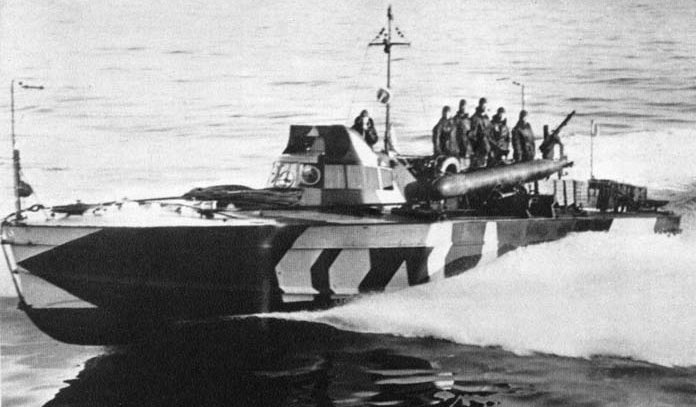
MEGA-STUNT (1940s): Pikros (MAS-205); Function: Fast Torpedo Boat; Flaw: Seen Better Days; Fast Boat — +2 to overcome with vehicles in chase; Smuggling Hold — +2 to defend against searches.

MAScamo

MEGA-STUNT (1950s): Ariel, Function: 60′ Yacht; Flaw: Wind-Powered; Smuggler’s Hold — +2 to defend against searches; A Beautiful Boat — +2 to create social aspect with Rapport when Ariel is involved.

sylphe under spi 1

STRESSES: Physical: 3, Mental: 3

Major John Nolan, USAR, OSI

This is a post-war version of Nolan, now working for the new Office of Scientific Intelligence.

Concept Aspect: Cold Warrior; Omega Aspect: Same war, different tactics…

MODES: Secret Agent +3: Contacts +5, Deceive, Notice, Vehicles +4; Aspect: Protecting the free world.

Soldier +2: Will +3; Aspect: Things were simpler during the war…

Banter +1; Aspect: The truth is complicated…

STUNTS: Cover Story: Use Deceive to defend against interrogation; Mega-Stunt Gear: 1/volume, can spend a point to have high tech gear with a rating no higher than his Contacts; Got It Off a Nazi Officer…: +1 to combat with a Weapon 1 (Walther P-38 9mm); Signature Aspect: Our Best Man…; Shake It Off: 1/scene, can check two physical stress boxes & add values, then soak that number of physical shifts.

STRESSES: Physical: 3, Mental: 3

Nigel Rainey

Concept Aspect: Cat Burglar Turned Spy; Omega Aspect: Better than prison…

MODES — Intrigue +3: Notice +5, Athletics, Burglary, Contacts, Deceive, Stealth +4; Aspect: I thought you were in jail…

Secret Agent +2: Vehicles +3; Aspect: Jet-Setter

Actions +1; Aspect: Combat means you screwed up.

STUNTS: Come Alone: +2 to overcome w/ contacts when alone & meeting contact; Deep Cover: Use Deceive for Rapport or Provoke when under cover; Didn’t See Me Coming: Use Stealth for Combat when your target is unaware of you; Master Plan: Allies can invoke an aspect you’ve made at +3; Second Story job: +2 Athletics for climbing.

STRESSES: Physical: 4, Mental: 2

 Richard Crichton

Concept Aspect: The Wheelman; Omega Aspect: Adventure is Calling!

MODES: Wheelman +3: Notice, Vehicles+5, Contacts, Mechanic +4; Aspect: If it’ll start, I can drive it.

Action +2: Athletics +3; Aspect: Race care driver

Intrigue +1; Aspect: High Profile is my cover

STUNTS: Bar Room Brawler: +2 Combat using fists; Just a Good Ol’ Boy: +2 with Vehicles to create aspect with stunt maneuver; Peddle to the Metal: +2 vehicle to overcome in a chase; Quick! Turn Here!: In a chase, use Vehicle for Stealth to hide from pursuer; Rev’ It: Use Vehicle for Provoke to intimidate with a vehicle.

STRESSES: Physical: 3, Mental: 2

« Previous PageNext Page »