Roleplaying Games


One of the things about episodic television is the need to fill time. You can’t always be fighting monsters, or criminals, or aliens — sometimes you need to resolve certain character elements and hit that number of episodes for the season. In movies, holding the same level of energy or action can quickly become boring (for example, watch Quantum of Solace). The same thing can apply in your game — not enough variety in the flavor of your sessions can lead to action fatigue. How many dungeon crawls can you do? How often can you be walking to a f#$%ing volcano, or fighting the forces of evil.

Sometimes, you want to explore your character. What does he or she do in their down time? How are the handling the emotional strains of an adventurer’s life? — those friends or family lost, the setbacks, the victories..? How’s their love life? Every once in a while, taking a step back and letting the characters unwind, or address other kinds of challenges.

An obvious example of this sort of session is the entire, odious, soul-sucking second season of The Walking Dead. (Guys — the kid’s bloody dead. Get on the road.) There’s the boxing episode of Battlestar Galactica  — great idea, middling execution. There’s the horrific, one of the characters is secretly a very talented rock star who gets the opportunity to perform at the talent show to benefit crippled kids. (Seriously — for a horror game, this could be a new terror unleashed!)

So if you’ve been kicking the crap out of monsters for a few months, maybe it’s time to sit around a campfire and talk about your feelings…

Phantom Badger Light Assault Vehicle

Photos_08_PhantomWorks_700x466-660x439

The US Navy needed a small, light combat vehicle for reconnaissance, rescue, or combat situations that could be dropped from the V-22 OSprey. What they got was the Phantom Badger by Boeing. It crams a 240hp multi-fuel motor and five personnel into a jeep-like chassis that is just 60 inches wide, barely 13 feet long and has a range of roughly 300 miles.

The Phantom Badger has four wheel drive and steering, allowing for incredibly tight turning radiuses, and can ford up to three foot deep waters, hit 80mph on a paved road, and has interchangeable parts with most other US military vehicles, as well as a modular rear deck that can be reconfigured with a simple wench set.

The craft can either use a .50 caliber M2A1 machinegun on the rollbar behind the driver’s compartment; and two M249 5.56mm SAW for the two rear-facing seats; or it can carry up to six litters for wounded. One can be carried in a V-22, two in a Chinook helicopter or C-130, and ten can fit in a C-17 transport.

PM: +1   RED: 4   CRUS: 50   MAX: 80   RNG: 300   FCE: 2   STR: 5   COST: n/a

GM Information: The Phantom Badger receives a +1EF for off-road conditions. In a roll-over crash, the passengers receive the same damage as the craft, rather than one WL lower.

A few months back I did a review of the initial “beta” release of the new Firefly role playing game by Margaret Weiss Productions. The physical book is yet to arrive, but the .pdf went on sale a few days ago. I’ve gotten a copy of the game and just finished perusing it. So…review time!

The electronic book is 367 pages (including two for the covers) and is $19.99  on DriveThruRPG.com . As I expect from MWP, the art direction, layout, and overall look of the book is superb: full-color with a nice sepia-toned page color that evokes old paper, yet has tabs that give it a more modern flavor. The font will be great in print, but the serif is a bit difficult to read on the iPad’s screen (non-Retina) for my LASIK-modified, slightly farsighted eyes. Most of the art is either screencaps from Firefly episodes, or photos of models in appropriate clothing, etc. The text box sidebars occasionally get a bit busy. The weakest link in the art direction is with the character archetype pages, where the standard quality of RPG artwork reigns. It’s not terrible, but when compared to the original photo material, it stands out as anachronistic.

There is an excellent episode guide to the series that acts as a framework for presenting NPCs (or GMCs, as the game refers to them), spacecraft, and other episode-specific items. There’s an almanac to the ‘Verse that utilizes what looks to be the Quantum Mechanix Map of the Verse.

The rules set is very similar to the excellent Marvel Heroic Roleplaying that the jerks at Marvel pulled the plug on — in other words, a fusion of FATE and Cortex. For those who have played FATE, it will be mostly familiar, except for the use of standard polyhedral dice (d4-d12, no d20) rather than Fate Dice. The characters have three attributes: Mental, Physical, and Social, they have distinctions similar to the aspects of Fate, and skills from d4 (untrained) to d12. You put together a dice pool of applicable attributes, distinctions, and skills (plus other dice with use of distinctions and plot points, etc.) Ships or other vehicles of significance also have similar stats and are built almost the same way.

The mechanic is player dice pool vs. a game master dice pool that is either based on the same elements for the GMCs, or on a scene difficulty (d4 to d12) and any scene distinctions, assets, or complications. The GM decides what the stakes are in a test, or in combat a defender chooses the outcome. It’s easy enough to get a hold on the basics, but some of my players have found the ability to basically do whatever you can explain/pay for with plot points adds “too many moving parts” and makes it difficult to track what is going on.  While I don’t find it that complicated, I can see where — especially for new players and GMs — the looseness of the rules might be confusing. As with MHR, Firefly might benefit from GMs ignoring a lot of what you can do with plot points and “Big Damn Hero” dice, etc…

The appendix has a Chinese glossary to help players achieve the appropriate feel of the ‘Verse, as well as a master distinctions list to help build a character. There’s a schematic of Serenity (which looks to be based on the Quantum Mechanix material, as well), with close ups of her control console and engine, as well as the Maps of the ‘Verse. Lastly, there are interactive character and ship ships you can modify and save. (There are also free sheets on Drive Thru.)

Substance: 5 out of 5 — the book covers the series very well, has a complete rules set that doesn’t require any splatbooks (though I’m sure they’re coming…) Style: 4 out of 5 — the writing has the folksy tone of the show, and this might bother some (but I doubt it will the target demographic), the page design is mostly great but can be a bit busy here and there, and the character archetype and example artwork is sub-par compared to the rest of the book, otherwise it would be a 5 out of 5.

So…is it worth $19.99? If you are going to buy the book, no; go through MWP and order up the physical book/pdf combo. If you just want the e-book, yes — it’s worth it.

At some point in the near future, I’m hoping to do an alpha/beta test and run the same one-shot using this rule set, then the original Cortex rules from Serenity, then give a better comparison review.


Looks like the .pdf version of Firefly has dropped, which means the physical copies of the book should be getting printed soon. That puts it on target for the early June date that Amazon is showing.

Here are a few special-operations weapons for your James bond:007 RPG campaign…

HECKLER & KOCH P11 Underwater Pistol

p11Developed in the 1970s, the P11 is a bulky weapon for use by combat divers. It uses five battery-ignited sold rocket propelled 7.62x100mm darts, each in their own barrel. The weapon cannot be reloaded by the operator, but must be returned to H&K. The range of the weapon varies according to the depth of the operator, and is only good for 100 feet or so in air.

PM: 0   S/R: 1   AMMO: 5   DC: G   CLOS: 0-1   LONG: 6-10   CON: +1   JAM: 98+   DRAW: -1   RL: n/a

GM Information: The P11 has a PM: -2 and ranges of CLOS: 0-2 and LONG: 4-10 in the atmosphere. For every 20′ depth after the first, the LONG: range decreases by one. Once the lower rating of long range is equal to close, all shots are long range.

On the Russian side of the fence:

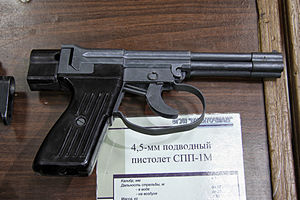
SPP-1 Underwater Pistol

300px-SPP-1M

Made by TOZ (Tulsky Oruzheiny Zavod) in 1971, the SPP-1 fires 4.5x40mmR steel darts each in one of the four barrels of the pistol. Unlike the P11, the SPP-1 has a break-open action allowing the operator to reload the weapon. The barrels are smooth-bored and use hydrostatic effects to stabilize the round; in the air, the weapon is highly inaccurate.

PM: 0   S/R: 2   AMMO: 4   DC: F   CLOS: 0-1   LONG: 4-8   CON: +1   JAM: 94+ (98+ for M version)   DRAW: -1   RL: 4

GM Information: The SPP-1 has a PM: -2 and ranges of CLOS: 0-1 and LONG: 4-6 in the atmosphere. For every 20′ depth after the first, the LONG: range decreases by one. Once the lower rating of long range is equal to close, all shots are long range.

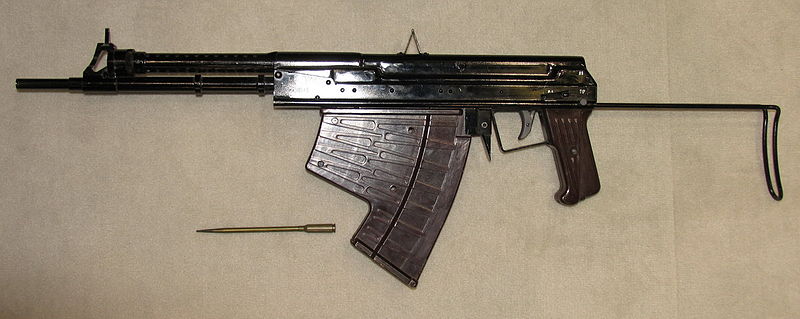
APS 5.66×39mm MPS Underwater Assault Rifle

800px-APS_underwater_rifle_REMOV

The APS was specially designed for Russian combat divers and uses a proprietary 5.66mm round that fires a steel dart from a specialized rifle casing. The gun is a smoothbore and uses hydrodynamics to stabilize the round. Out of the water, it is inaccurate, short-ranged, and without the buffering effect of water in the action, sees a dramatic rise in wear from use.

PM: 0   S/R: 2/6   AMMO: 26   DC: H/J   CLOS: 0-2   LONG: 6-10   CON: n/a   JAM: 93+  DRAW: -3   RL: 2

GM Information: The APS has a PM: -1 and ranges of CLOS: 0-1 and LONG: 6-15 in the atmosphere. For every 20′ depth after the first, the LONG: range decreases by one. Once the lower rating of long range is equal to 2, all shots are long range. Used in air, the APS has a JAM of 90+, but the action is rendered useless on a jam and cannot be repaired in the field.

And the newest entry by the Russian military is the:

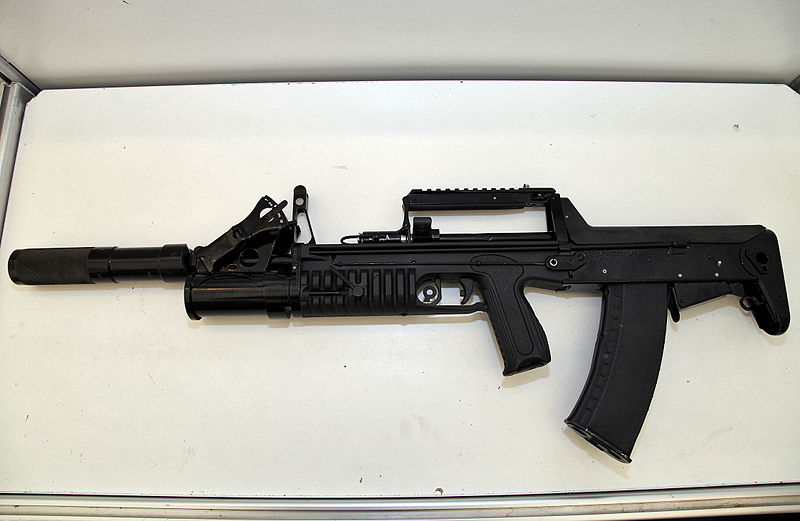
ADS 5.45mm Amphibious Rifle

800px-5.45mm_ADS_rifle_-_InnovationDay2013part1-44

Designed to overcome the inherent issues of an underwater weapon, the ADS was designed to be used in water or in the air, using a standard AK-74 magazine for 5.4rx39mm ammunition. Spetnatz and combat divers need to carry two different types of ammunition (the 5.45x39mm PSP for underwater, and any of the standard 5.45mm on land) to use the weapon, but the action does not suffer damage as the old APS did, and the effectiveness of the weapon is retained on land.

PM: 0   S/R: 2/10   AMMO: 30   CLOS: 0-20   LONG: 40-90   CON: n/a   JAM: 98+   DRAW: -3   RL: 2

GM Information: the range of the ADS is CLOS: 0-4 and LONG: 7-14 in the water, with -1 to the LONG range for every 30′ below the first. When the lower number of the LONG range reaches 4, all shots are long range.

For the VOG-25 40mm grenades used in the launcher:

PM: 0   S/R: 1/2   AMMO: 1   DC: J (area)   CLOS: 0-30   LONG: 40-120   CON: n/a   JAM: 99   DRAW: -3   RL: 1

Yes, the game is defunct. I still like it. And one thing i noticed wasn’t present in the otherwise excellent modeling of the comic book style is knockback in fights or throwing things. Anyone familiar with Fate will now tell you the answer (as I’m about to…otherwise, I would be writing this): it’s a Complication. You want to have the Hulk run into a bad guy and knock him through a building? The Complication is “distance” and the you probably need to throw a plot point and add another effect die for damage to the building to put the target baddie through it.

Similarly, if Captain America wanted to toss a Hydra bad guy over a railing into the water below, it’s a Complication — say, Out of the Fight d6. To get rid of the distance complication, they would have to do some kind of run/climb/fly/movement action with the effect die knocking down the complication.

There you go — now start knocking the bad guys around!

This time Amazon is saying June 8, instead of April 14. This game has more delays than Obamacare.

I think I’m going to cancel my order and when/if this actually sees release, I’ll buy it. In the meantime, I’m waiting for my physical copy of Mindjammer to come in. At 500 pages, it’s a bit of a monster to go through for character and campaign planning.

We were finally closing our “season finale” of the Battlestar Galactica game last night. The session before had seen two character deaths, and one nearly done for. And that was the first act… Last night saw three major plot moves, the most important being the culmination of the Lucky character’s plot arc, the next most the settling of Admiral Cain and Pegasus into the fleet.

The second act revolved almost exclusively around the defense council — led by President Pindarus (the father of Galactica‘s commander, a PC), player character VP Jones, the defense minister, and the security minister (another PC) — interviewing Cain about her actions since the Fall of the Colonies. There was a hard push for her having tried to execute her XO for refusing and attempting countermand her attack (this time on a Tauron shipyard the Cylons were using — a prime target, but a highly dangerous one), another for her stripping the Scylla and civilian ships for parts. They are not aware, yet, of the condition of the Six in the brig.

In the end, despite serious reservations, and her seeming unwillingness to submit to a change in operation command from her to Galactica, the characters decided having Cain and Pegasus‘ firepower was more important than pursuing her missteps while she was — to her knowledge — the only Colonial ship, and the entirety of the human race, left in the universe. She was on a mission of revenge — they convince her the missions has changed; she is now the guardian of mankind. The character in the game (and the show, I submit) is a creature of duty…having the civilian fleet and tens of thousands of people has given her new perspective. Much like the post-resurrection ship attack in the show, the admiral is getting time to breathe and reassess her situation.

As the admiral and the commander character were returning to their ships, the Cylons jump in right on top of the fleet — well within the defense perimeter, and the shooting starts. Two Cylon basestars jump in and are escorted by a massive, glowing, crystalline vessel — the Blaze that has been repeatedly seen in Lucky’s visions. He knows that this is the moment of truth — when the “two and ten vipers” have to ride into the flame (the Blaze.)

The next act was all battle. We used an even more stripped down very of the fleet combat rules in the BSG page here on the site. For each capital ship action, there would be two squadron level actions, and two personal fighter or raptor actions. The Cylons jump in and hammer the civilian and warships. Cloud 9 — which houses the government in our game (why stay on a small liner when you can have conference rooms and spacious cabins, and the best food still in the fleet?) — took a good hit, Pegasus got banged up, and they almost lost their wee escort vessel, Cygnus. One liner would eventually be destroyed.

The squadron combat was handled simply — both sides got to roll their alertness or intelligence, and their tactics skill, plus any assets applicable. The number rolled was the number of enemy fighters or raptors destroyed over a one-to-two minute period. The side with more numbers got a die step on the skills. This time around, I had the Cylons running with higher pilot and tactics skills to represent the experience the killed raiders had passed on to the Cylons. It was brutal — 40 vipers and 10 raptors lost over the course of the battle, and similar numbers for the Cylons.

In the end, Lucky and the squadron of rookies take a run at the Blaze, with their vipers attacked by strange ‘shard-like” glowing fighters or missiles that, on impact, simply disappeared their target. (We didn’t go into it, but they were destructively uploaded to the Blaze’s memory.) Lucky is the only one, thanks to liberal plot point use, to ram the Blaze. Having been prepared as an instrument of “God”, he is able to remain conscious of himself, even as he is incorporated into the Blaze. There was a virtual reality journey through Hades to the citadel of the Blaze, Dis, guided by the young girl/angel that had been helping him prepare. Finally, there was a battle of wills to destroy the Blaze, and Lucky wakes in an infirmary — his memory hazy, more like a dream, to find he is Colonel Aurelius, formerly of the battlestar Pleiades. The implication from the uniform flashes, etc. is that he is now resurrected 7000-8000 years in the past as the man who wrote the Aurelian Prophesies they used to guide them in the game ’til now. (It was also fan service for the gamer who was in the last iteration of the game…where the ship was Pleiades and Aurelius was the oracle.)

As for the “current” portion of the campaign, as Lucky hit the Blaze, there was a brilliant flash and the ship of lights was gone. The Cylons, stunned by their god abandoning them, fled and jumped away.

The goal was to keep the mystical elements of the show, but leave “god” more undefined and open to interpretation, but also to set up the idea that the Cycle of Time has seen a steady collapse of “gods” from once-near-omnipotent machine intelligences, through the Lords of Kobol, to Man and the Cylons. Like the Greek myth it’s stealing from, each “age” sees the heroes and gods as less — more flawed — than those who came before. It also allowed for us to have a heroic goodbye to a main character who has been in the campaign, but played by two players, before the current player leaves for San Francisco. (Selfish bugger!)

The final act saw the fallout of the battle and the shake up of the command structure the government demanded. The players mourned the loss of the popular Lucky, started putting the fleet back together with officers moved around, promoted or demoted. The president punished Cain tangentially by demoting her pet CPT Shaw, and her XO, Fisk for the Scylla incident (they opened fire on civilians, after all.) Other characters were moved to Pegasus to “keep an eye on” the admiral and to help her integrate into the fleet.

Overall, it was an exceptional game night. We ended, instead of the usual 9:30-10pm, at 11pm and none of us had noticed the time. Afterward, several of the players were obviously thrilled with the way the “episode” had gone and how the story is unfolding.

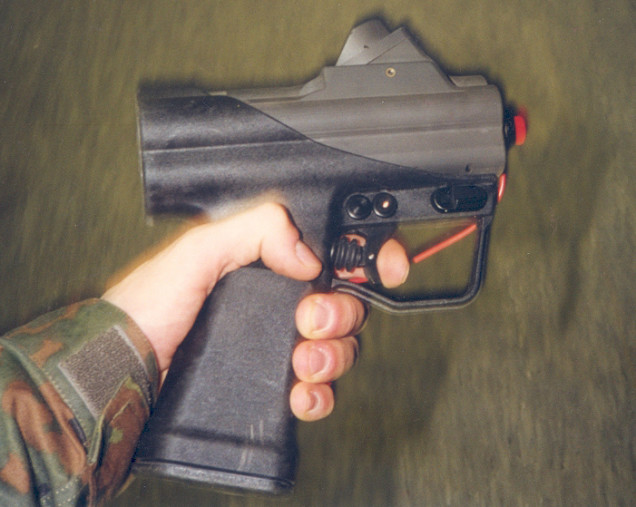
The last two sessions of our game have been particularly brutal for the players’ characters — in two session, we’ve lost three PCs, almost lost another, and scads of popular NPCs, to boot. Over the years, I’ve seen a lot of players lose characters, either to bad rolls, bad decisions, a hostile GM, etc. Their reactions have varied from one player that claimed he was haunted by his character in a dream (the character [read, player] thought his death heroic, but he had actually done something incredibly stupid) and was upset that he wasn’t getting respect; to players who were overjoyed that their character went down doing something incredibly heroic, and just about every variant between. No matter the event, losing a character that you’ve invested a lot of time and effort on breathing life into, that you have used to vicariously experience danger, adventure, and heroism, can be a traumatic experience.

There are a few key points for players and gamemasters to keep in mind at point. First the players:

1) It’s only a game. It’s fantasy. It might not feel that way; good role playing can make the characters seem as real (and sometimes more so) that actual people in your life. But they’re not. And like all good things, they will eventually pass, as well, if the game goes long enough.

2) It’s not personal. Sometimes the dice screw you. (As infamously cried by a player in one campaign, who dropped to his knees in a moment of frustration and bellowed, “My dice are fucking me!”) Sometimes no amount of tweaking and hand waving by the GM is going to save you — as in the six, count ’em, six botches a player rolled trying to get control of his fighter in the middle of a massive battle, only to punch out and get humped on that last test, as well. Sometimes…it’s your time.

The same goes for when you make a bad tactical error in the game. Maybe you shouldn’t have read from the Book of the Dead. Maybe aggressing that company of Martian warriors armed with harsh words and stick wasn’t the epitome of strategic brilliance. Maybe taking that turn at high speeds on that twisty road by Lake Como in the spy agency’s Aston Martin was ill-advised. (That’s how they killed two DBS sedans while driving them to the shoot for the initial chase sequence in Quantum of Solace. Not while filming it. While commuting.) Sometimes…it’s your time.


2b) It’s not personal…except when it is: Yes — there are the old school DMs that take an adversarial pose in relation to the players and their characters, but that’s less common today. Your GM is (probably) not gleefully killing characters for his own enjoyment, then ritually burning your character sheet or keeping it as a trophy in his death room like some serial killer. Unless he is. Then it’s either time to find another person to play with, or it might be insanely cool in a freaky sort of way. YMMV. And on that note –A GM obviously looking to off your character might indicate an out of game issue that needs to be brought up and resolved.

Just don’t do it in his character death room.

3) If you are so torn up over a character’s death or incapacitation, or their failure, or their losing a loved one… you should reconsider your hobbies, at least for a little while.

As to the game master side of the equation:

1) If you are looking to off your player’s characters as a punishment for not showing up (more on this in a moment), or because you had an argument over whatever, or you’re just a malicious jerk like the lead character from Zero Charisma — see point 3 for the players. You’re not creating high drama; you’re being a jerk.

2) Try not to kill players’ characters when they are not there that night. a) It makes you seem like a jerk, b) the player is likely to see it as “punishment” for not attending, c) especially if they’ve been playing the character for a while, it makes the player feel they’ve been stripped of their agency. “I wouldn’t have done X” is a common refrain here.

This is one that I try to hew to, but inevitably, there’s going to be that “big fight” night that one of the players — usually one that’s going to be in the thick of things — doesn’t show up. At this point, I try to use GM fiat to avoid putting them in the crosshairs, but sometimes that just doesn’t work. I think we’ve only had it happen thrice in the last two decades that someone’s character was topped while they weren’t there. (Last week being the second time.)

3) Try and give the player some kind of “moment” in exchange for the loss — maybe the hero got blasted by that narco hit squad, but remember that grenade..? Good thing he had it to do a last action and save his team mates, huh? Or as their starfighter is coming apart around them, they set the nose toward the bad guy’s ship and do a bit of damage (or destroy it, if they roll well enough…) Or in the case one of the characters the other week, he last action before dying was to unlock his phone so the others could gain access to his notes on the bad guys. Or even just a nice dramatic death — something cool to go out on. (Think Tom Hanks’ shooting his .45 futilely at the German tank in Saving Private Ryan…useless, but damned cool.) I remember an early D&D campaign where my fighter had died, back to a tree, surrounded by bad guys — but he had provided a distraction for the rest of the team to achieve the victory over the Big Bad. This sort of thing gives the player something to hang their memories of the character on.

Characters’ deaths can be a hard moment in a gamer’s life, but it can also be a heroic memory to frame the character and campaign. Even useless deaths, in the right kind of game, can provide the proper tenor for campaign — “I can’t believe he’s gone…it was so useless!” is a very appropriate thing for a Call of Chthulu game, for instance, but sucks for a Hollow Earth  or other pulp style game. And while the character might be gone, there’s no reason you can’t reskin him or her with a slightly modified personality or stats — there are plenty of gamers who play the same thing (kinda like Harrison Ford or Paul Rudd…if the formula’s working, no need to change it.) There are gamers who like new and interesting challenges — character death gives you the opportunity to try something new.

In the end, it’s just a game.

The pace ticked up dramatically over the last couple of sessions, and tonight was no different. The “season finale” episode titled The Blaze saw a pair of players’ marshals investigating the attempted murder of the CAG character, who has been receiving divine visions throughout the campaign, and finally understands that he is an instrument of God and is supposed to destroy “the Blaze” — the angry god that started the war between the Lords of Kobol and the exodus of the 12 Tribes to the Colonies. He discovers that God is a rather impersonal creature, but that the endless Cycle of the story the Blaze has been telling — its attempt to become God after “staring to long into Its Face” — has destroyed Man, the Lords, and other civilizations for millennia. He is at peace, knowing that his time is coming and that he can finally break this endless cycle of violence.

The marshals investigate the Cylon “priest” and his cult members and through their investigations realize that his movements connect with another series of investigations (more of a group of conspiracy theories) one of them has been tracking to a private yacht of a former building industrialist. They mount up and head for the yacht in the company of the marines, led by LT Thorne, send by Pegasus to “help” them.

On arrival, the one marshal’s sixth sense is going haywire. They discover the industrialist is a Cylon puppet, and that the ship is some kind of biomechanical horrorshow that is used to create puppets for the Cylons to use in the fleet. There was a spate of combat that left all the marines dead, one of the player characters on death’s doorstep. During the fight, they made an unfortunate decision: trying to save the injured character, they had the raptor copilot take him off to the medical ship while calling for reinforcements. This left them with no way off the ship. Their discovery had triggered the ship to set itself for self-destruct. By the time they had figured this out, the other marshal had been shot critically. They accounted for two Cylons and the industrialist puppet along the way.

The ships around the yacht picked up the energy surge and had to move off, leaving the two characters left to try a desperate move of venting themselves and hoping for the SAR raptor’s crew to catch them. In the catch, the marshal lost his grip and would die in space. The pilot character lost his grip when the yacht exploded and hit the raptor with debris. He also died.

This was just the first act…we’re not even to the good stuff, yet. Two different players lost a character, and another has one down for at least 2-3 weeks of game time. The loss of Thorne before the Boomer interrogation removes one of the hot button plot elements that led to trouble in the show and might lead to a more civil relationship between ADM Cain and the fleet.

« Previous PageNext Page »