Roleplaying Games


Our current Hollow Earth Expedition campaign has been belting along nicely with a good, fun pulp flavor, and while there were many good moments we’ve had, the most impressive — for me — that we saw from one of the player’s was Gustav Hassenfeldt, our scrupulously honest, moral big game hunter, finally lose his temper with the bad guys as two dozen of them swarmed in on our heroes while they were resting from an earlier attack at a plantation in India.

While the others were smartly arranging their defense of the building, Gus grabbed his trusty Griffin & Howe .375 magnum bolt-action and a handful of spare rounds, and race to the second floor, where he proceeded to pick off five of the offending COMINTERN agents in the space of two rounds (about 10 seconds.) Each shot was miraculously deadly — essentially headshots, done in near darkness, on running targets shooting back.

It was the first time that Gus had been able to really do his schtick through the entire campaign. He’d either been in first fights, or used a small handgun on offending giant creatures, but it was the sheer amount and speed of carnage he wrecked that was truly impressive.

This is a tricky one, for me. I’ve only gotten to “just play” a few times over the few years, and that was in a short lived, unfinished Wild Talents game (good game, terrible system.) In it, I played a Scottish telepath working for the big, oppressive superhero bureaucracy that ran the world. His ambition and skills led him to eventually work against this group, and it was looking like we might not quite pull off my intended coup when the game just sort of …stopped. A not uncommon thing for many campaigns.

There were a lot of good moments in the play, but nothing that really stood out for me. So looking out over all the gaming I’ve done, there are a few moments that stand out, and most of them were not mine…

The final battle in our high-school Dungeons & Dragons game, oh so many years ago, where my character kicked in the door to the main chamber of the Big Bad’s sanctum, only to be faced with hordes of minion bent on turning him into sausage, and turning tail with a aaaaaaaaah! that led them away so the other characters could get to the bad guy wihtout interruption.

That time my friend’s James Bond character managed to flip a Lamborghini Countach — no easy feat — in the middle of a chase sequence after a “are you sure you want to do that?” moment.

The moment our two main heroes were coopted by the supervillainess in our DC Heroes campaign in the late ’80s, and became the de facto secret police for the new European Empire.

The weird kid that was in my Space: 1889 game charging hordes of Oenotrian soldiers after running out of ammo shouting about how he would bring down the “might of the British Army”, only to get — predictably — slaughtered. (He would then claim to have been “haunted” by his character in a dream because he hadn’t been “given respect” by the other characters… At that point, I thought it best he take a break from gaming.)

Similarly, there was the time the bounty hunter in our Star Wars game was surrounded by stormtroopers and after being disarmed, asked them, “Do you want my hold out blaster?” to the groans of the other players.

Same campaign, that time our old jedi in a Star Wars game first went to the Dark Side and started speaking in a deep Shakespearean accent. He would later atone. Then go bad to the Dark. Then atone. He got to the point he had a lightsaber that would go from a lavender blade to a dark purple when he was having a case of the evils. Oh…and he collected chairs from every place. Those cool imperial chairs from the Death Star. Chairs from Stardestroyers. A stool. He had a warehouse of chairs he never used.

The Babylon 5 game I ran during my time in the army, where the one Starfury pilot got the insanely good roll on his pyrrhic run against an Earth Alliance Omega-class destroyer…and his shot damaged the rotation gears on the living habitat, immediately shredding the ship at the midline.

Or the fight between the 12 year old street urchin and a Chinese assassin in a hotel lobby in Shanghai in our 1936-set Hollow Earth Expedition game, where she used a luggage rollaway to defeat him, Jacky Chan style.

But my proudest moment, this year, would be that moment, temporarily playing one of the other player’s characters (he was away on work travel so I was running him as an NPC): Part of the group was being attacked by Indian communist agents in our Hollow Earth Expedition game. They were stopped by a “broken down” car acorss the road, then boxed in by two motorcycles, with gunmen riding pillion. The players took off in their Alvis Speed 20, knocking down a motorcycle, but Gus Hassenfeldt — the big game hunter I was playing — slid off the back of the car, took the gunman’s pistol, grabbed the bike, and rode it into another bad guy, then ordered the rest at gunpoint to lay down their arms, lie face down, and wait for the police. And rolled well enough they did it.

I thought I really captured the personality of the character as the player had portrayed him.

After decades of punching out good adventure scenarios that only see the light of day with my groups, and to a lesser extent the readers of this page, I decided to attempt to do more with these games than reminisce…

And so, Black Campbell Entertainment has gotten it’s federal and state business licenses, so we are officially in business! Right now, we’re concentrating on getting out a series of pulp-oriented game modules or adventures or whatever the hell we’re calling them these days.

The first is The White Apes of the Congo. This will be a 35ish page adventure book that will come in a few flavors — Ubiquity (Hollow Earth Expedition), Fate (Spirit of the Century), and Savage Worlds — with cover art by comic artist Bill Forster.

After that, we will have a 1936 spy adventure, and another set in Shanghai where the players are looking for a mystical, or cursed, MacGuffin.

Following these baby steps, we’re looking at period-specific setting books: 1930s Shanghai and Istanbul, noir Los Angeles, Victorian London… And in the offing, a modern espionage game.

We’re also working on a screenplay.

Stay tuned. Big changes coming sometime around October.

Last week, one of our players cancelled out and at the same time we had a guy sitting in for a session…what to do? Go with an NPC in the current adventure? (I had an idea that would dovetail in nicely…) Do a one-shot? Board games — I can recommend Thunderbirds for cooperative grops, and Xtronaut for competitive types. Have a movie night?

These are all good ideas when you have incessant scheduling problems (the downside of having a larger gaming group. This week, most likely, we’ll have another two players out — one’s at GenCon, one’s working. (I really need a new hobby…) So this week, the answer will most likely be board games or a movie night, depending on if the one player is stuck working.

Last week, the answer was a one-shot. I decided to do a backstory one-shot on one of the new characters in the ongoing Hollow Earth Expedition game, John Hunter. We’re alluded several times to his misadventures on a mysterious island being how he got wrapped up with the secret society, the Terra Arcanum. So, I decided to do a one-night story that would tell the tale and be done, in case the one guest player didn’t come back.

So — how to tell this story in a 3 hour block of time? Hollow Earth Expedition, while a quick-playing game system, isn’t quite slick enough, and I needed to give the players a bit more of the heavy-lifting for the story and background development. I turned to Atomic Robo. It’s the fastest, best-playing version of Fate, in my opinion, and character creation is slick and quick. Four players were crafted (for the most part) in under half an hour.

The first act/hour was introducing the characters in media res — staging a burglary on the Order of Prometheus, a secret organiation dedicated to unearthing and using ancient knowledge. One of the players was a history of ill-repute looking for Atlantis, and chasing the tale of a “vanishing island” in the Indian Ocean that a Roman traveler once identified as that mythic place. The Order has two maps — one by Marcus Maximus Tinto, said roman adventurer, and another by the only survivor of a shipwreck from 1900 that had the coordinates of the island (not shown on any map, of course.)

The other players are John Hunter, in 1926 he’s a “man who can get you anything” in Paris; a member of the Terra Arcanum who is supposedly a smuggler, and who is along for this ride to stop the revelation of the island’s position; and a skeptical geologist.

They steal the maps, do a brainstorming session to figure out where the island is, then the historian — who has “More money that sense” as an aspect, gets them a crappy tramp steamer they take from Marseilles to the island’s position. His calculation give them the most likely time the island will show, and sure enough, the isalnd arrives under a suddenly-forming storm, giant rogue waves that suck them into an inlet where they beach on the hulk of a WWI submarine.

They have limited time to explore — they don’t know how long the obviously volcanic island will stay “visible”, and they speculate that the place may be “hydraulic” in some fashion — the pressures from the ocean flor rising the island and lowering it periodically…but how are there plants and animal life, much of it from different geological eras, present? They follow trails inland in the increasingly bad weather and light, and eventually run into a native tribe that captures them in a big skirmish, dragging the historian and Arcanum agent to their villge, which is surrounded by a giant boma of thorn bushes and large bonfires.

A rescue attempt is put together by the geologist and Hunter, while the others ascertain from the natives — who speak a form of Sanskrit not heard since pre-Harrapan times! — that every generation or so, the island is pulled to another world, where sometimes the every-present sun sets.  The Hunter and the geologist stage a daring rescue that revolves around setting the boma on fire as a distraction, and using their lone Chicago Typewriter to lay down fire and scare or kill the native warriors with a spray of .45ACP.

They elude their pursuers, dodge massive creatures whose footfalls shake the ground, and escape to their steamer in time to set sail before the island disappears behind them.

We closed out the night with the Arcanum agent planning on recruiting as many of their valiant band as possible.

Scheduling getting you down? Maybe it’s time to do something different for a session or two. The one thing I’ve found over 30+ years of gaming: if you don’t meet regularly, forget campaigns…you won’t be able to keep the momentum and interest.

There have been a lot of good to great sessions over the last year of play, so it’s hard to choose a “best session” out of what has been an exemplary year of gaming. For me, the best session came in April, with the successful conclusion of our long-running Battlestar Galactica campaign.

The campaign was started back in 2011, after the collapse of the long-standing game group prior to that. That group had been, in various configurations, going since 2003, and after losing two of the core players, the rest of us cobbled the group back together for a phenomenal run of Hollow Earth Expedition and the start of BSG. It had begun as a “redo” — taking elements from the old game and improving on it. Over the next almost five years, we lost half of the group to Texas and other life changes, leaving me and one of the players from the original group to soldier on for a few months before we finally picked up the third regular member. Others came and went, but the trio of players — all really into the game — remained the new core.

The small number of players made scheduling easier and kept the game focused and on track. We increasingly diverged from the reimagined show, with more sci-fi elements in which the Lords of Kobol eventually played a much larger role in the story, and the motifs of cyclical time, recurring themes of self-destruction, loomed large. I had to tweak and twist, and roll with the players’ decisions, but in the end, the story ended very closely to what I had hoped for.

How often does that happen?

The story ended with the characters finding Earth, populated by the 13th Tribe. Happy ending…and we could have left it there, but I had always envisioned a coda to the game, that last episode that would put a bow on it. In that coda, we picked up 20 years later, at a Settlement Day celebration for the arrival of the rag-tag fleet and the creation of the Earth Allied Government. The players got to see their players, older, well-established in the politics of the new Earth, and the interstellar politics with the Lord of Kobol they had found, the survivors on the Twelve Colonies, and another group of colonies out by the Pleiades. It was a nice send-off for the players that had the same vibe as Babylon 5‘s “Sleeping in the Light” episode. (Exactly whatIi was hoping for…) After that, we had a short act where, 500 years later, the Pleiades Colonies were attacked by the machine soldiers of the “Olympians” (the descendants of the Lords of Kobol), who were looking to support the recently disgraced “Leader Baltar” starting the whole story over again.

To have a long-running campaign come in 1) completed (ho often does that happen!?!), and 2) finish the story fairly closely to what you intended is nearly unheard of. I had finished a less ambitious Babylon 5 game in 1999 that had been running for two years, but that had been much tighter to canon of the show, playing around the edges of the main story, rather than just striking out from the base conceit to do our own thing entirely.

For those reasons, that sessions was probably the best session of my entire gaming life.

For the first 2016 RPGaDay, the question is: Real dice, dice apps, or diceless — how do you roll?

This is a good question, as how to randomize was central to the design of the upcoming system for a game we’re working on at Black Campbell Entertainment. It’s not just do you use dice or apps or no, but what kinds of dice that interests me of late.

When Dungeons & Dragons hit in the late ’70s, the idea of different kinds of dice — not just the classic cube of old, but different Platonic shapes — was novel. Half the fun, I would propose, to D&D was rolling all these weird dice. Prior to that, some of the box sets had chits to randomize your actions. Roll a d20 — pick a chit from the “d20” pile; that was nowhere near as fun as throwing a d20.

Other games, like Traveler, right off the bat, tried to make themselves different by sticking to the d6. This was good in that 1) you usually had a set of these, somewhere; and 2) they were familiar. Using a pair or trio (as in GURPS) of d6s seemed “simpler”, even if the math was not. Some games looked to move to percentiles — using a pair of d10s to give you a flat distribution that was easy to grasp.

During the late ’80s up to the start of the new century, I tended to prefer these one type of die systems. I loved James Bond, but always wanted to shed the d6 for initiative. I liked West End’s d6 system for Star Wars…other than needed a wheelbarrow full of bones to have that Stardestroyer shoot. White Wolf used d10s. Easy, right? Who needs a half dozen types of dice!?! And there is something to be said for this approach. (There was also a certain “Get off my lawn” quality to thumbing my nose at how OGL d20 was invading every damned game put out about the turn of the century/millennium.)

But with the release of Cortex and Serenity in 2005, I found myself rolling different types of dice for the first time in decades. (I actually had to go buy a set of polyhedrons for my ex-wife; I was already using dice apps on my laptop.) There is a certain tactile delight to knowing you’re rolling a crappy trait or skill with a d4, or a great one with a d12. They sound different when they hit the table; they look different; they feel different — and that, for many gamers, is part of the experience. So much so that when I stated working on our game system, I found myself shifting away from the initial d100 mechanics that I had envisioned.

Because even on a dice app, rolling different dice is fun.

Which leads to the real question that was asked: How do you roll? I started using a laptop to run games and store my notes, etc. around 1997. For some games, if the system is easy enough, I use my iPad. One thing I like about going paperless was that I no longer had to tote books and notebooks and dice around. I could show up with my computer and go. (And since the battery technology has improved so much, I rarely have to even have a power cord.) I started using dice apps early on. This wasn’t so hard when we were playing the single dice systems of the ’90s, but returning to polyhedrons required being a bit more discriminating about my dice programs. There are plenty that will work with d20 games, but aren’t sophisticated enough to do multiple types or dice rolled together and added (or not.)

Since making the switch to a Macbook Air in 2010, my choices for a good dice app are even more reduced. Pretty much, the best I’ve found for my purposes is Dicy. It’s free. You don’t get a nice animated dice screen, like I do with Dicenomicon (you can find it in the app stores for iOS and Android) — which I have on my phone and iPad.

Dicy allows you to do some tweaking for presets and roll groups, but I’ve yet to use those. Having run Battlestar Galactica for five years (Cortex system), I just needed to add the dice together, and there’s a checkbox for that. There are a few on the MacUpdate site other than Dicy, but you might run into security issues when downloading them. Another that works well is Bones, which I downloaded, with others to look at for this piece. I was going to look at DiceBag X and Polymatic, but the MacUpdate wbsite now bundles crapware with their downloads unless you are a paid user so [expletive deleted] those guys. I tried Rock n Roll Dice — which I think was the one I used for PC, before the Air — but the Mac version didn’t work on my laptop. (Another I seem to remember using was DiceMage.)

Dicenomicon is a graphic dice roller for tablets and mobile phones; I wish they’d do an OSX version  and now they have it as an OSX app. You can find it for $2 in the App Store. You see/hear the dice roll, but you are limited to 10 dice total on the mobile version; the OSX version doesn’t have this limit. The mobile version can be customized, however, to roll just about any randomizer you can think of, including Fate dice, coin rolls, etc. It’s free. (Seeing a pattern?) The Mac version is currently limited to the usual d4 through d100. You cannot alter the background, just the dice colors. I hope this will be changing.

If you do most of your playing using a computer, tablet, or phone having a dice app is near-indispensible. It’s less to carry. It allows the GM to roll secretly, if needed. As a player, I tend to let the GM hold onto my character sheets for me, and all I bring is my phone (since I usually have it anyway) and there’s dice.

However, I understand the tactile delight of rolling physical dice, and I still do it, from time to time. As for diceless systems, I’ve not tried any outside of the half-assed “rock-paper-siccors” to randomize a game while traveling in a car, once.

So what about you? Dice? Apps? And do you have suggestions for the various platforms?
We started the evening with a flashback to Lady Zara sneaking back into her home with her Uncle Trevor waiting up. She’s just wrecked her new car racing in nighttime London. One of these days, he predicted, she and her fast friends were going to get into a situation they could not recover from…

That leads her to wake under a pile of bodies in the wreckage of the war saucer Aruna. Gus Hassenfedlt had already been awake for a while, triaging the dead and wounded from the crash. Of the 14 “Atlanteans”, only 8 survived, including Lord Amon and Shria, the pilot. The other characters were pretty banged up, and with Gould giving him instruction, Gus bandaged and treated most of the wounded, while the doctor tended to the party.

Afterward, Shria sounded the ship and found one of the “power crystals” that ran the motor that malfunctioned had shattered — she’s never seen anything like it! There’s damage to the forward propulsion units, as well. The ship isn’t going anywhere.

Gus, Hunter, and Amon set a watch around the saucer, only to aggressed by a herd or pack of allosaurus. In the fray, Hunter is badly injured, but Gus and the others in the fight manage to kill the four towering carnivores. At least now they have plenty to eat.

After a few days, they are discovered by a dozen people in riotous clothing — brightly colored (although the theme of white and red-striped canvas pants, shirts, etc. seems to recur) and adorned with bits of junk and widgets. Led by Zoppo, a brave but stupid man, they learn they are from “the Sanctuary” — only a day’s travel away on the coast. They had come to give offerings and the welcome the Atlanteans in their sky craft! Eventually, they discover they all speak English, the holy language of their “Captain.”

With no other options, they set out to find the Sanctuary, which turns out to be a settlement that adorns the sides of a wrecked two-stack ocean liner, the SS Grand Pacific. The front is opened like a toothed maw, the back is obviously broken, and there are boats tied around the keel. Overhead, a red and white-striped blimp is moored to one of the stacks.

But the real shocker is what’s out to see — a mountain of rock with a city on top, floating over the water. This, they learn from Amon, is the Aerie…the home of the “hawk people.”

Taken aboard Sanctuary, they meet the “Captain”, the last remaining crew member of the vessel, which launched from Liverpool for Melbourne in June 1893. Evan Hollander is the captain, and he is very pleased to receive the Vril/ Gould suddenly realizes they’ve been  played…these are not Atlanteans, but the people that the pirate king, Trihn, had tried to sell him to!

We left off for the night there, with the characters surrounded by cargo cultists, in their hulk of a home, and their Atlantean friends exposed as fakes.

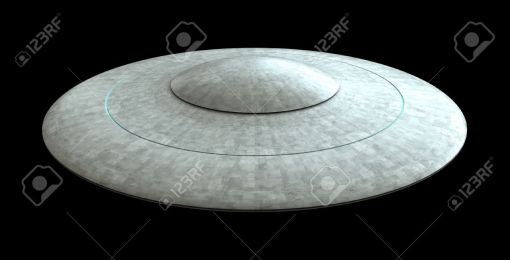
In the course of play last night, the players encountered a flying saucer from Atlantis. This vessel, the Flying Saucer Aruna, is too much fun not to share —

10704740-3d-render-of-flying-saucer-ufo-isolated-over-black-background-Stock-Photo

Flying Saucer Aruna

Size: 4   Def: 6   Strc: 10   Spd: 350   Han: +2   Crew: 2   Pass: 16; Weaponry: Dual Heat Ray Turret — Size: 1, Damage: 10L, Range: 500′   Rate: Beam** Speed: A

** The “beam” rate is the same as autofire; the turret can sweep targets with a steady beam of death. The ray guns will work as long as Aruna has power. Aruna‘s power crystals are sensitive to power foci that effect magical ability.

Aruna and similar light saucers have a diameter of about 30′ and the crew compartment is circular, occupying about half the actual space of the disk. On the Atlantean suacers, there is usually an Atlantean swastika of some form:

atlantean swastika.png

Image of the saucer is copyright Dimitar Marinov and used without permission. No infringement is intended, so if you want it pulled, D, just say so. SCR


So the characters return to Lhasa and the Eye of Shambala. We had a lot of character interaction with the 13th Dalai Lama and his prime minister, as well as a bunch of descriptive stuff about the night sky. Our inner world has no night, so they drank in the Milky Way in all its glory, as one can at 15,000 feet.

They managed to negotiate the use of five mules for the trip and gear up, ready for a big scientific expedition. Coming through the Eye, they almost immediately are set upon. The mouth of the cave where the Eye resides is blocked by a log-weighed net, and a dozen armed and armor-wearing men dash out of the trees. They’re carry strange-looking rifles, and are backed by a large flying saucer!

The commander of the flying machine is a “Lord Amon” — a Vril, although he’s claiming to be Atlantean. (Are they the same? We don’t know yet!) The characters pleasantly surprised me by not fighting or running — what I had planned for — but patiently trying to communicate. Hunter, the Terra Arcanum overseer, managed to get a great Linguistics test that allowed him to use his Trait Atlantean Language — he’d only read the language, never heard it spoken, but was able to quickly make himself understood.

Amon seemed pleased to have found Gould, whom they identified with some kind of crystal that would glow when in proximity to an Atlantean. (So shouldn’t it have been glowing while Amon was holding it..?) After some cordial talk, an invitation to them to come with him to Atlantis is rendered and they all hop in the “war saucer Aruna.”

The craft is amazingly futuristic, with a metal skin that allows them to see out as if it were glass from the inside. The controls are different, seemingly easy, and the woman flying it, knows her stuff. But in short order, they realize there is a problem. The one engine is kicking out way too much power! Gus Hassenfeldt, the big game hunter, quickly surmises it is Olga’s ability to amplify psychic or magical power that is messing with the ship. They attempt to mover her away from the offending engine, and this causes instability. A botched roll by another character leads to the pilot being distracted and jostled just enough that she biffed the control test, and Aruna spins out of control!

The characters all get tossed about at the flying saucer comes out of the sky at high speed, and crash lands in the jungles! With that, we ended for the night, with a cliffhanger (as one should in a pulp game.)

So, we’re on the Modiphius playtest for the upcoming John Carter of Mars RPG, and finally got a chance to play the packet of rules they’d sent to us. My interest and hopes for the game were quickly dashed by an absolutely disastrous experience.

Straight off, the packet did not specify how the main core die mechanic worked; I had to open the Conan quickstart file, which — while indisputably beautiful — is a monstrously large file due to this and was absolutely killing the iPad, speed-wise. I thought I had that simply basic rule down, but the players were continually asking the same question about it, so I second-guessed myself and that was that. What had started out at a good clip quicklyy bogged down to my flipping back and forth and trying to read through the dense colors of the highlighting the design team had throughout the playtest file.

Professional tip for developers/editors of any type #1: when sending something to a group of people, keep the highlighting colors as low contrast as possible. It’s damned near impossible, for instance, to read black type through a deep red highlight.

Professional tip #2: When describing a process, be specific, be simple, and assume congenital idiocy. No, most of your audience isn’t stupid, but they might be busy, as many of us are, or they’re former PhD students who no longer can stomach reading after 400 books in 3 months, and they’ve only skimmed the file. “That’s their fault!” you cry. Nope. Be simple, direct, and specific. How does the die mechanic work, in this case.

So, 2d20 is actually relatively simple, but describing it might be hard. In the case of this game you add two stats and try to get below their total. If you do, it’s a success; if you’re below the highest attribute on any die (or is it on all dice — this is where they fell down) you gain two successes; below the lowest stat, three successes. Say you need four successes (which they did not bother to explain was what D4 meant), you roll two dice and hope you get low enough on one or both dice to get four successes. So you could, in theory, get upwards of six successes on 2d20, or more with use of “momentum” (More on that in a moment.)

Really not that complicated. Any extra over what you need is “momentum”, which can be spent for yet another d20 on a following action, on damage, or a number of other things. Damage comes off of the attribute/stats you used to defend. The mechanics aren’t that bad, but the packet was a hot mess to read through. You should not have to go to another playtest book on another related game to understand what you’re doing. (Yes, it’s a work in progress, but assume no one has read your other stuff.)

Strangely, my five year old immediately grasped the rules. She wanted to play desperately, but when things bogged down, she got bored and wandered off. Shortly after, I pulled the plug on continuing and we pivoted to Hollow Earth Expedition for the rest of the night.

Which bring me to a sidenote, as I am working through product development, myself: Conan, both the Quickstart packet and the book in development are beautiful. A lot of the new RPG books are full-color, loaded with graphics, art, and high-quality layout work. They really are gorgeous. But they are 1) expensive, 2) staggeringly heavy on the pdf file sizes, and 3) for all this is supposed to help set the tone for players…I’m not so certain this isn’t working against some of the publishers.

The expense of making these books is high. The art costs, the layout costs, the fine paper and full color costs, the hardcover costs, and they’re often bloated 300+ things of late, so they’re heavy — which makes shipping (especially international) cost-prohibitive in the extreme. (Drop over to Fred Hick’s blog to read more on how shipping can crush a successful Kckstarter.) I love to love and feel of these books, as well as others…but part of me wonders if this focus on the aesthetic over the substance isn’t becoming a problem.

Some of these fancy products mean counter-productive color choices where contrast between text and background color or patterns interrupt the ability to read the rules. The focus on sounding appropriate to the setting (Firefly was a good example of this) can help set the mood, but make understanding how the hell the rules work difficult. You don’t want to sound repetitive or boring to the reader, but you are also describing a process — it’s technical writing, really — and clarity, brevity, and simplicity rule the day when teaching something to a person.

So I suppose my question is — do we need all these gorgeous books, or do we need a return to more simple layouts, good clear writing that cuts the size of a game book from a 300 page, $60 tome to something more in lines of 150 pages and $25-30? Maybe grayscale will do. Maybe black and white, save for a few color plates, will do. (It would certainly make the pdfs easier to use!) Maybe softcover will do.

« Previous PageNext Page »