So I head an intriguing ad on the radio while in the car the other night about a New Mexican distillery that was producing a single malt finished in mesquite. I loves me some single malt action — I have a couple bottles of Scotch in the house at the moment, but figured what the hey, hit Total Wine (great prices!), and picked up a bottle of Santa Fe Spirits Colkegan Single Malt.

image1


So how is it — in a word: great. It’s a powerful 92 proof, as compared to the strong 86 proof of my favorite, Lagavulin. The flavor is very different from Socttish single malts — it has a nice light honey color, much like a Speyside, and the nose is pretty mild with a bit of a floral/fruity note. However, the flavor is strong, warm, and spicy. Once swallowed, the aftertaste flares up with a nice woody, spicy note.

It runs about $46 a bottle and might not be available too far from New Mexico — this looks to be a single barrel bottling.

While I was putting together my review on Things Don’t Go Smooth — the new(ish) sourcebook for the Firefly RPG, I found myself starting to think about elements of game design over the years, and how they sought to achieve fairness, or player agency, or certain narrative focus. A bit of history —

When RPGs first evolved out of war games, there wasn’t much focus on stats and what they meant outside of how many spells you could have, how hard you hit in combat. The players might be stupid or super-intelligent, but ultimately, they knew what you did, and the player had to figure out the problems that were presented to them, and the dungeon master had a definite antagonistic role — both as the NPCs and creatures you encountered, but also in their design of the adventures you took on (which usually wound up with the party exploring high-improbable “dungeons” — from underground cities to cave structures that borrowed heavily from Moria in The Lord of the Rings. You were looking to outwit the DM — that was the fun of it — to figure out the riddles or traps, beat the monsters to steal their treasure. The DM was “the bad guy”, but in many ways, he was also “god” in the game — less a referee and more the capricious force you were playing against. In many ways, it was a more traditional competitive game experience. Did you “beat” the DM or not?

In the case of fairness, most DMs and players of the early games looked to randomizers to keep the action “fair.” Roll that d20 and let the universe decide if you succeed or fail. Did your character get killed? Maybe the DM sent something truly awful that would be near impossible to beat, but ultimately, a few good rolls could see you win the day. A bad DM might use his position as the referee to rule by fiat — declaring outcomes, rather than facilitating them. (See the movie Zero Charisma for an excellent rendition of this sort of DM.) This notion that you take your lumps, no matter what, because you made your decisions and the dice are impartial, is very popular with the older “grognard” (old soldier — very telling.) These guys usually like rules for any situation they could encounter…especially in combat, hence why D&D, GURPS, and other rules sets from this period normally have a combat chapter that dwarfs the rest of the chapters on mechanics.

This style of game design is very good for the beginning player and GM. There’s rules, you implement them, and adjudicate as prescribed by the rules. People good at finding the loopholes and using them to their advantage (the much maligned “rules lawyer”) do very well in these kinds of mechanics.

Quickly, however, role playing games started evolving away from the combat simulation-focus and DM-as-antagonist position of early Dungeons & Dragons (although D&D or variations on the game have remained, easily, the most accessible and popular of RPGs for the reasons evinced in the last paragraph.) To try and give the players more say over the stories told, and their characters more uniqueness, the statistics of the characters became more important, hence the shift to mechanics that usually had some form of die roll+skill level. Also, these games took a position that game master (GM) and player have a more collaborative relationship. The GM might still be creating the adventures and looking for ways to challenge the players, but the idea of the TPK (Total Party Kill) tended to be something that happened because the dice screwed you or you made dramatically bad decisions. One way to avoid this was the mechanic of the “hero point” from James Bond: 007 — a game that differed sharply from Top Secret (essentially D&D retooled for the modern spy genre) in the design philosophy that the players should succeed most of the time. It was cinematically appropriate, and in some ways, more fun.

Another idea for  making the rules serve a story was the elimination of randomness. Diceless systems, the first being (and I could be wrong here) Amber, focused on the relations of the characters as more important than the stats and fighting. In competitions between characters, the person with the higher stat won. Early World of Darkness settings from White Wolf tended to work this way, especially in the LARP community, where ties between characters of equal ability were settled with a quick round of rock/paper/scissors. The point was to increase player agency by having your actions (in character) be more important than GM (or in the case of WoD, “Storyteller”) fiat. For these systems, the “fun” is in having the characters interact, and having those interactions drive the story.

Serving the narrative and giving more control to the players was the design philosopy behind Fudge, its more evolved descendent Fate, and Fate’s cousin Cortex + (Firefly uses this last rules set.) In these games, giving narrative control to the players is central, and it is enshrined in the mechanics of the games. Players can create aspects or assets or complications (whatever they’re called in the game or the situation) as an outcome of a test, and invoke these to improve their control of the scenario or other characters through that targets’ aspects or weaknesses.

Thus endeth the history lesson. Let’s talk about the design intent and reality. When creating a game, the first goal should be to make something that when played is fun. You can have other intents — sharing narrative control, de-emphasizing combat, trying to make gaming more “inclusive.” The philosophy of the mechanics should be to make the game fun (and in my bias, that also means simple to use.) Keep in mind there is “no right way to play” a game; it’s a function of player (and this includes the GM) preferences when playing, but the goal is the same for nearly all players — to have fun.

A central dialogue in game design these days concerns player agency and how best to give or contain it. It is nearly always cited in opposition to GM fiat. The notion of the “sandbox”, where players direct where the story goes vs. the “railroad” — where the GM attempts to lead players through a tightly scripted story where the players’ characters are more puppets to make things happen. (Think any character in the Star Wars prequels….Obi Wan does stupid thing #3 because event A has to happen.)

Giving the players control over the mechanical factors of a scene using Aspects or through their narration of what they do — essential to the diceless approach — allow them to manipulate the events and outcomes. In Fate and Cortex+ this is systemized in that the actor in a scene declares the optimal outcome of the scene. “I slip in to the master villain’s fortress, taking out the guards without raising the alarm. I will invoke the “Moonless night” aspect, my “Expert with a Knife” asset…”

I question I have is the necessity to have this mechanized. Do I need to invoke “moonless night”, or should the GM have taken into account it’s dark and I’m wearing basic black sans pearls to give me a bonus. Which is easier and faster? The end product — maybe you got a +2 to your die roll, to use Fate as an example — is the same, but I would suggest the latter example is easier. In a diceless system, the hero might have a better stealth and the bad guys’ perception rating — he’s going to succeed, so why bother slowing the action with a die roll. As in a movie, unless the action is heightened by fighting the major henchman to get to the Big Bad, you should just go through the mooks like Captain America does in the ship scene at the beginning of Captain America 2: The Winter Solider. (A similar idea resides in the Ubiquity “take the average” mechanic — if the average number of successes you should get is better than the difficulty, just roll on.) Player agency, ultimately, is the most powerful element of RPGs in that the characters have to act or react for anything to happen. As the grognards might say, “The story develops from what you do.”

One mistake I think designers make when attempting to maximize player agency is misunderstanding the role of a game master. The GM is a facilitator — to use an educational term. They aren’t there to tell you a story, but to help you keep it on course. “Too many cooks spoil the broth” is a good axion here. Having the players decide every aspect of the narrative leads to  1) a natural erosion of story or setting cohesion — what you might liken to having too many writers on a television show leads to a series jumping the shark, and 2) less “fairness” in that, while everyone supposedly has an input on events — as with the aspects idea of Fate and its ilk — particularly clever or charismatic players will naturally bend the story in the directions they want. While that can create some level of enjoyment and surprise, having someone rewrite the direction of an adventure that was obviously going in another can be less than satisfying. Case in point — the movie Event Horizon, which seems to have been cobbled together from two different scripts. The first half is a solid sci-fi thriller with some supernatural suspense aspects; the second half is a muddled slasher flick that feels like it was adapted from a Hellraiser reject script then slapped on the back half. Can you kit bash them together? Sure…but it doesn’t really work well.

Which brings us to GM fiat. How much control should the game master have over an adventure? It is unlikely that your players want to sit and listen to you do an audio book of your latest novel, while they periodically roll bones to allegedly “do something”, but leaving your players to wander about Night City while waiting for something to catch their attention is also not a particularly productive way to spend a few hours of your gaming time. Can it be fun? Sure, but is it fun for everyone at the table, or are some bored with yet another barfight to fill time? Can the gamemaster having strong, but not total (or even most,) narrative control create a cohesive game universe than is consistent (a central element to verisimilitude) and which doesn’t favor one player (not a character, one of which might naturally be “the lead”, but the player) over another. In a mystery or other suspense setting, having one guy that knows the secret can be much more rewarding when the surprise is unveiled than having another player say “You know what would be cool..?”

The idea that a stronger GM presence can make a game more fair is probably controversial to some in the gaming community. I suspect people with this viewpoint have had a bad experience or two with the old-fashioned DM-as-antagonist game master, and those who have their entire campaign plotted out with the players on rails.

Ultimately, all of these positions I’ve laid out show some preference for how to get at the fun of playing a role playing game. Should the players spitball together a plot like they did playing on the playground? It’s a natural way of playing, and feels “fair” when there are rules to contain the actions of the players. Can a game with an oppositional game master who sets up challenges and leaves you to handle them as you will be fun? Do you need dice and rolling to slow down the action? Do you need to mechanize every aspect of play, or can the mechanic themselves be part of the fun?


Somehow, I’d missed that Margaret Weis Productions were kicking out Firefly supplements at an amazing rate this year. I picked up the corebook about a year ago, and our gaming group did an A/B tet between Firefly and the older Cortex Serenity game to see how they compared. Later, I played in a pickup game with one of the designers of the game, just to see how it ran with someone who really knew the system. Follow the links to see the original review of the game and other observations.

Knowing there was an opportunity to spend money I didn’t have to, I ordered up Things Don’t Go Smooth and Smugglers’ Guide to the Rim for the game. I should be receiving hardcopies soon, but USPS is apparently in full-blown FUBAR mode this holiday season, so they got bounced back. However, MWP provides buyers of the book with a free .pdf of the game, and while the Smugglers’ Guide is not out, TDGS was. This review is going to concern itself with the e-book version of the supplement.

First off, the book is essentially a sourcebook for GMs — the first three chapters are a catalogue of new bad guy NPCs and their organizations, henchmen, and hideouts or ships. There’s a chapter on new ships and distinctions for the same, and a chapter specifically on running the game, and fleshing out towns and cities. There are two adventures that I haven’t read through (I don’t tend to run canned adventures), and an appendix of the new rules and distinctions. The book weighs in at 238 pages, and two pages of character/ship sheets.

The writing is solid, and the editing — which used to be a weak spot in early MWP productions — has caught most, if not all, errors.  The art design and layout is similar to that of the corebook: it’s full-color, pretty, and uses almost no “game art” — that middling quality stuff gamers expect — in favor of screen caps from the show, CGI art, and photos of characters in setting-appropriate garb. The pdf is well-designed, with heavy linking from the table of contents, and hyperlinks on key terms throughout the book. This is one of the big strengths of MWP e-books; they are excellent for use on a tablet or laptop, if that’s how you access your books in play.

The collection of NPCs are good. They are well-designed and fleshed out, as are their support networks. There’s a nice choice, from corporate spies, to crime bosses, to privateers and pirates. There’s a section on using Reavers effectively. The new ships are good, but the artwork does not alway match the description of the vessel — if you’re going to do ship art, make it match the vessel on the page.

The Scheming and Narrating chapter is particularly good for helping new and inexperienced GMs, especially in dealing with the use of assets or complications. In play, one of the issues I’ve seen with Firefly is that the complications can become a bit overwhelming for newcomers. You are encouraged to make them…a lot of them, and tracking and using them was one of the consistent complaints I saw in various play sessions. Unlike Fate, where you often have to spend a Fate Point (plot points in Cortex and Cortex +), Firefly lets you use any one that makes sense in play. This can give you Shadowrun-esque dice pools, but more to the point often “systematizes” elements of play that might be better handled in narration.

Case in point: There’s some great stuff on using the setting to create appropriate complications — like “The Building is on Fire d6” which could definitely be used to help or hurt you, or “Dark and Spooky d6”, which could be used to help a stealth roll or create mental stress from fear or unease. But there was an example that immediately highlighted the issue with just making complications or assets for everything — “Calling for Help d8”. The characters a trapped and calling for help…wouldn’t this be assumed to be the case? Do you need to systematize “Walking in a Straight Line d6”? Without having to use plot points to invoke these complications, as you might in Fate, requires the GM to really sit on the players when they get out of hand. However, that is against the stated goal of Fate like systems, which seek to have the players have more narrative control.

For all these observations, Things Don’t Go Smooth is an excellent, and well-made sourcebook to help GMs bootstrap their campaigns, or fill them out without having to do all the heavy lifting. I suspect, if I run a campaign, i will be using several of the bad guys and their organizations. The GM guidance is good for those who aren’t accustomed to running a game, but will be mostly weak tea for the experienced one. The adventures looked lie they would be good for pickup or convention games, and probably could be mined for material for a self-created campaign.

The physical book is a softcover, but judging from the pdf will be a handsome thing. It’s retailing for $35 (with free pdf download if you buy on the MWP site or from a “preferred retailer.”), and Drive Thru has the ebook for $13. So is it worth it? If you are playing the game, absolutely to either format. If you’re playing occasionally or just need to snag a few things from the book, electronic version might be better

Style: 5 out of 5 — it’s a gorgeous sourcebook, much better production values than necessary for a splatbook. Substance: 5 out of 5 — I was surprised I gave it this, but there’s a whole acre of bad guys and groups to choose from, new distinctions for players and ships, and some good GM advice. It’s a buy.

This week saw our last game of the year, most likely. (Damn you, holidays!) However, we did get the chance to start a new arc for the fleet, post mutiny and coup.

The first half of the night was concerned with picking up the pieces after the whole of the elected government was killed off. Rather than reconstitute the tradition set up of a quorum, there will be a council of ship captains, who will report their concerns to the small bureaucracy that is still mostly in place. Logistics Minister to handle food and other supplies; a morale and welfare minster for the necessary “bread and circuses” to keep people stuck in 74 tin cans occupied and out of as much mischief as possible; a justice minister (also our head and only judge) to handle criminal cases (and who is overloaded with the coup conspirators); a health minister; and a security minister controlling the civilian police force. The commander of Galactica, a PC, is doubling as defense minister — he is the last word on military matters. There is an “interim president”, which sounds better than “president placed there by the very angry military commander that just had his president dad murdered.”

The big move was the Quorum of Priests who demanded Lady Athena of Kobol rule them. She declined, but took the position of prime minister. She is not legally empowered to make policy or law…but everyone knows that she is guiding the whole show, now. This has actually created more stability in the fleet, despite her having to spend several weeks selling the people on the new government and more importantly, the announcement of the alliance with the Seraph (humanoid Cylons) of Basestar 19.

There was a lot of politicking and changing of the guards — including the PC pilot who was cousin of the mutiny leader finding herself as CAG — but this was overshadowed by two new plotlines:

1) The inclusions of Basestar 19‘s ships, including Resurrection 3. We introduced a new PC — a Leoben-like “messenger” model. This one, named Devet Cavil as a tip of the hat to the new show, is trying to find stability and answers in the wake of The Blaze turning out to be a false god (Hades, armed with Titan’s technology, to be specific) and his continuing revelations from God. He is convinced Athena is the key to figuring it out…what does she know? He has a second problem — the Seraph that have recently been “decanted” are showing odd personality traits — they are very docile, and overly amenable to the policies of the Ones and Twos…are they being programmed? Is this a move by a few of the models to be more equal than the others?

This is leading toward some espionage and politicking in the Cylon fleet.

2) They have gotten close enough to have their first distant survey of Earth’s star. This has raised morale (if only the mutineers had held their fire a few days!), but more important is that as they have moved past the stellar nurseries of the Orion Nebular group, they are picking up what look to be super high frequency and bandwidth communications from dozens of systems in the Orion Spur. These are between 500 and 1000 years in the past…but this section of the galaxy looks to be alive with settled worlds! What might be waiting for them out there, even the Seraph/Cylons — who had sent “Seeks” into the area to find humans to bring under the embrace of the Blaze — can’t know…

So we are about to wander further away from the show, and more toward the post/transhuman elements that have been hinted at throughout the campaign. We know the TITANS created the Lords of Kobol to rule/supervise the humans that they recreated on Kobol after destroying Earth. We know Hades left with the Ophiuchan Tribe (the 13th Tribe) and apparently contacted the Titans, and in his effort to find “God” or understand the universe, went mad and came back as “the Blaze” to overthrow the Olympians on Kobol and rule over the people there. He eventually created the Seraph (our humanoid Cylons) in the image of his brothers and sisters he destroyed, and had them reign in his stead, and also send them to find the rest of humanity and bring them under his gaze.

What we’re finding out: the Seraph lost any of their Seeks to unknown elements at Earth and other worlds near it. We now suspect that the Titans or humans from Earth or the 13th Tribe have settled this region of space…but the transmissions seen suggest they are far more advanced technologically than the Colonials or Seraph; what might they be encountering soon?

We’re in the home stretch of the campaign, and the flavor of the game is moving more toward a combination of the spiritual, but also more transhuman sci-fi. I’ve pretty much got the main elements of the next few episodes mapped out, but only can really plan an episode or two ahead of where I am, as player input is driving us in directions I hadn’t anticipated. (I know my players well enough to usually know where they’ll take us…this hasn’t been the case of late.)

Majestic 12 a bit too fast on the trigger and under the radar for you? Here’s a faction for our upcoming “pilot” game to see if the group is interested in running the Atomic Robo game:

Office of Scientific Intelligence:

Formed out of the United States Army Corps of Engineers’ Strategic Science Division (SSD) in 1946, Office of Scientific Intelligence was the more legitimate face of superscience research and was immediately tied to the new Atomic Energy Commission with the passage of the McMahon Act. The “theft” of their science division led the intelligence and military community to push Majestic 12 on the president in 1948.

The SSD had been formed by the Department of War in 1930 in an attempt to recreate some of the developments of Telsa Heavy Industries — specifically Atomic Robo — but also other “superscience” organizations around the world. The focus on research and legitimate scientific inquiry continued throughout the early years of OSI, which would later become conflated with the Air Force organization of the same name. By the late 1960s, however, OSI increasingly shifted from R&D toward intelligence gathering and analysis. Plowing the same ground as MJ12 and Daedalus, OSI was frequently at odds with these groups, particularly as they were not competing for budgeting.

OSI was renamed and the mandate shifted toward more science-related counterintelligence with the Energy Reorganization Act of 1974 to become the Division of Energy Research. DER survived the 1977 creation of the Department of Energy, only to be re-renamed in 1992 to the Office of Scientific Intelligence.

US Corps of Engineers’ Strategic Science Division (SSD) — 1930-1946

Mission Statement: Scientia est Victoria (Knowledge is Victory)

Mode: Average (+1); Resources (R&D +3) — after 1942-1946: Mode: Fair (+2); Resources (Transport +4, Armory +3)

Office of Scientific Investigations — 1946-1974

Mission Statement: Protecting the Nation Through Science!

Mode: Fair (+2); Resources (R&D +4, Transport +3) — after 1960 (R&D +4, Intel +3)

Division of Energy Research — 1975-1992

Mission Statement: The Secret Sword of Science!

Mode: Fair (+2); Resources (Intel +4, R&D +3)

Office of Scientific Intelligence — since 1992

Mission Statement: On the forefront of science!

Mode: Fair (+2); Resources (Intel +4, R&D+3)

I finally got around to Netflix bingeing on the first season Agents of S.H.I.E.L.D. — which I had been less than interested in seeing when it premiered 1) because i don’t have cable and making time for a show isn’t my speed, anymore, and 2) I thought the premise a bit lackluster, and 3) I wasn’t hearing great things from the fanbase. So, what did I see?

The allegedly weak first half of the season wasn’t. I’m a big fan of spy-fi, and this was a generally good example of the genre for TV. I think the fans were expected the superhero/supervillain of the week sort of thing, so this would be an understandable let down. The supposed better back half wasn’t that much better, but finally pulled all the disparate elements together, at a better pace (until the last episode or two, where it bogged down, in my opinion…but that’s the hazards of the 22 episode seasons that US broadcast television seems unable to break out of.)

The acting is good. It’s obviously Clark Gregg’s show — Agent Coulson is the glue to the piece and they managed to make it work. They don’t run to long on the “secret” of his survival, but give you just enough by episode eight or so to be satisfied, then build on it a bit toward the end of the season. The characters around him are a big cliched — the geeky, combat weak scientists (Probably the strongest performers of the cast, and at least they got a real Scot for the Scotsman.); the girl hacker fighting the system with a dark secret; the tough chick that supports the captain Coulson; and the bad ass turned traitor. It’s a pretty standard Joss Whedon set of characters so better than about 75% of broadcast TV.) We get some great guest players, as well — Saffron Burroughs as a quasi-foil senior SHIELD officer, Bill Paxton (playing Bill Paxton…but here it works) as the hard-charging leader of another team, Samuel L Jackson (with nary a “motherfucker” for the ear but he does get to shoot guns), Cobie Smulders (in a less likable version of the Hill character), and Jaimie Alexander (not great) reprising their roles, and the always good Patton Oswalt. (Whom you need to see in Justified‘s fourth season — seriously!)

The plots are generally good, but the Whedon-y slow burn through the season gets a bit long in the tooth by the end of the 22 episodes. We learn Coulson’s secret, we deal with the collapse of SHIELD following the events of Captain America 2, but are left until second season to explain the hacker, Skye’s, big reveal. The season’s bad guy, the Clairvoyant, is revealed well, and actually was a surprise to me. Character development is solid, and the characters remain consistent, and some of the half-develop stereotypes — May, for instance — finally get some decent fleshing out. The hacker, though, still the weakest of the bunch. The release of the supervillain prisoners from “the Fridge” gives us the chance to expand the show from a spy show with some superscience into a spy show with super-powered bad guys.

Overall, I think the quality of the show was more consistent than others have opined, and that it’s a good counterpoint to the movies, which are increasingly more superheroic as they go on. I’m looking forward to seeing season 2.

The final acts of our mutiny arc were played out this week. Previously, one of the player characters connected to the black market, and who had been the Security Minister until it was discovered his aide was a Cylon, led a coup d’etat against the government. He and one two of his conspirators did for the entire Quorum of Twelve, as well as the president (the father of the commander — played, funnily enough, by the same guy with the coup leader.) Once they had secured the quorum chambers and president’s office (on Cloud 9 in our game because no politician is going to “rule” from a bitty liner…), they set about finding out what was going on with the mutiny on Galactica.

This play session was mostly on the battlestar. Of the two players there that night, one had his viper pilot and a veterinarian-turned-medic (and budding mad scientist researching Cylon infertility); the other had his coup leader and commander of Galactica as their characters. The viper pilot is the cousin of the mutiny leader — a very popular engineer who is also a master organizer, and whom managed to pull of the mutiny in a matter of minutes. They engineered a malfunction of the communications while most of the pilots (the majority of the officers) were out on an exercise, raided CIC, and placed the command staff in the brig until the mutiny was complete.

Things start to go wrong when some of the mutinous pilots with marines in tow try to capture the Three — who had been a sleeper in the Colonial Feet and is wracked with doubt and guilt over her actions — the commander had put back in uniform (along with our version of Boomer.) She was in the infirmary giving eggs for the vet’s experiments, along with Lady Athena — the Lord of Kobol they picked up in the Tomb of Athena. The mutineers attempt to take them into custody, only to get mangled badly by the two of them. (With some help from the vet.)

Athena sends the Three (call sign Trey) to round up the loyal officers currently being held in the pilot’s briefing room by one of the mutineers and the pilot PC, who was having a crisis of conscience. The PC decided she needed to find out what was going on and was being held at gunpoint when Trey arrives to aid her. The loyal pilots break out — some headed for the brig to rescue the command staff, some headed to the CIC to aid Athena, who had disappeared to go “get dressed for the party” — getting into her high-tech (yet Greco-retro looking) armor, with shield and energy-weapon firing spear.

A lot of the violence happened off-camera, but the vet (as their field medic) aided Trey, Helo, and a few others in rescuing the commander and his staff — who then headed for the CIC. The pilot PC, with Starbuck, and a few worshippers of Athena headed for the CIC and managed to link up with Athena before she raided the place on her own. In the ensuing fight, a bunch of the mutineers got dropped, but the pilot managed to talk down her cousin, who wound up in the brig. The Lady of Kobol chewed through the opposition scarily easy; the first time they’ve really seen her in action.

By the time the coup leaders called into Galactica to check on the situation, the ship had been retaken (or at least the CIC), and they were surprised to find themselves not talking to their woman on the inside, but Athena — who told them she was coming for them next. This lead to a chase to capture the coup leader, who was ultimately shot down.

In the end, both players each lost one of the troupe of characters, some of the former PCs were killed, and a host of main supporting NPCs went under the bus.

The players were left with a badly fractured fleet, a sudden loss of a lot of their officer corps, about half the marines of the fleet dead, and no political leadership. they instituted an interim president and decided to run with a periodic meeting of ship captains to manage the big issues, but they need to get the bureaucracy back online to keep supplies and services going. There was some talk of martial law, and the pilot PC is looking to fill their badly depleted ranks with pilots from the humanoid Cylon fleet they are weakly allied with; another idea is not to intermingle the pilots, but have the Cylons — now that everyone knows they’re out there — join the fleet to bolster their air assets.

The next episode, however, will show us that things aren’t exactly stable on the Cylon side of things, and that their “leadership” hasn’t bee playing on the up and up…

Maybe she wasn’t based specifically on Doyle, or the hundreds of other women that served in OSS, SOE, and other agencies during the war, but it’s a worth title.

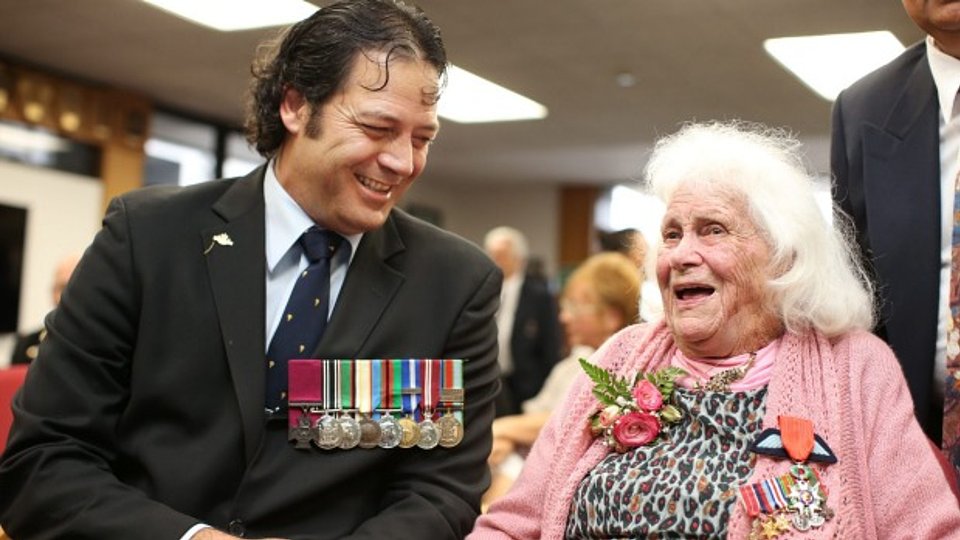
The young New Zealander Doyle joined Women’s Auxiliary Air Corps in 1941 following the death of her godmother’s father — whom she considered her grandfather — by Nazis. She was quickly recruited into the Special Operations Executive and her most famous exploit was parachuting in behind enemy lines prior to the Normandy invasion, where she posed as a French girl named Paulette. She bicycled around the combat zone selling soap to Germans and collecting intelligence on them. Her 135 messages helped craft the battle plan for D-Day. She frequently lived off the land. Her combat skills were on par with male agents. She was taught by a cat burglar to scale buildings.

She didn’t tell her kids about any of this until 1999 when a son discovered her story while researching D-Day. And just this November, after 70 years, she was awarded the Chevalier French Legion of Honour Medal, one of the highest military awards the French have.

1416940168526-meet-the-real-life-agent-carter-phyllis-latour-doyle

Then there’s the rest of them…

medals.jpg


You can read more about her here.

Here’s a stills gallery.